
Reviewed · MEDICI TOURS
Florence: Guided Medici Tour
The most revealing part of this Florence walking tour is the link between Medici power and Renaissance art. You move from the family palace and its dazzling Chapel of the Magi to a secret place where Michelangelo learned to sculpt under Bertoldo, one of Donatello’s pupils.
I like the way the tour connects famous names to real rooms, rival families, betrayals, and political victories. I also like the guide-led storytelling, with Christina and Francesca earning especially warm praise for their passion, humor, and patience. The main caution is the price, $152 per person, and the fact that Palazzo Medici has occasionally been closed without enough warning.
In This Review
- Key points to know before booking
- Why the Medici story works best on foot
- Palazzo Medici and the family’s first great statement
- Benozzo Gozzoli’s Chapel of the Magi
- Michelangelo’s secret sculpture connection
- The Strozzi, Albizi, and Pazzi rivals
- The guides make the difference
- How long the 2 to 3 hours feel
- Is $152 per person good value?
- Who should book this Medici walk?
- Booking details worth checking
- Should you book the Florence Guided Medici Tour?
- FAQ
- Where does the tour meet?
- How long does the tour last?
- What places are included?
- Is admission included?
- What languages are available?
- Are private tours available?
- How much does the tour cost?
- Can I cancel the booking?
- Can I reserve now and pay later?
Key points to know before booking
- The Medici story begins inside Palazzo Medici, often described as the first Renaissance palace in the world.
- The Chapel of the Magi is the visual centerpiece, with Benozzo Gozzoli’s celebrated frescoes.
- Michelangelo’s early training gets its own stop, including the connection to Bertoldo, a pupil of Donatello.
- Florence’s family rivalries shape the walk, with attention to the Strozzi, Albizi, and Pazzi.
- Strong guiding is the tour’s main asset, especially with guides such as Christina and Francesca.
- The tour lasts 2 to 3 hours, and private or small-group arrangements are available.
Why the Medici story works best on foot
The Medici were not simply wealthy patrons who paid artists to decorate buildings. They helped shape Florence’s government, social order, architecture, and artistic identity. Their rise involved money, alliances, political calculation, religious ties, enemies, and occasional danger.
That is why I like seeing their story on foot. A palace, chapel, courtyard, or nearby rival residence gives the history a physical setting. Instead of trying to remember a long list of Medicis, you can connect Cosimo the Elder with the family’s rise, Lorenzo the Magnificent with its cultural glory, and Piero the Unfortunate with the problems that followed.
The route also helps separate television drama from documented history. The tour points out locations connected with scenes from the series The Medici, but its real value is learning about the people behind the characters. You hear about Lorenzo, Cosimo, and Piero alongside the families who challenged them.
The walk is especially useful if Renaissance Florence feels like a parade of unfamiliar names. A good guide turns those names into a sequence of choices and consequences. That storytelling is where the tour earns much of its value.
More Medici trails:
- The Best tour in Florence: Renaissance & Medici Tales – guided by a STORYTELLER
★ 5.0 · 12,316 reviews - The Best Tour in Florence: Renaissance and Medici Tales
★ 5.0 · 10,810 reviews - Florence: Renaissance and Medici Tales Guided Walking Tour
★ 4.8 · 1,549 reviews
Palazzo Medici and the family’s first great statement
The tour begins at the main door of Medici Palace, where you should arrive 15 minutes before the scheduled start. Look for the guide holding a sign that reads The Medicis Group Tour: Lorenzo The Magnificent, The Dynasty, The Palace and the TV Series.
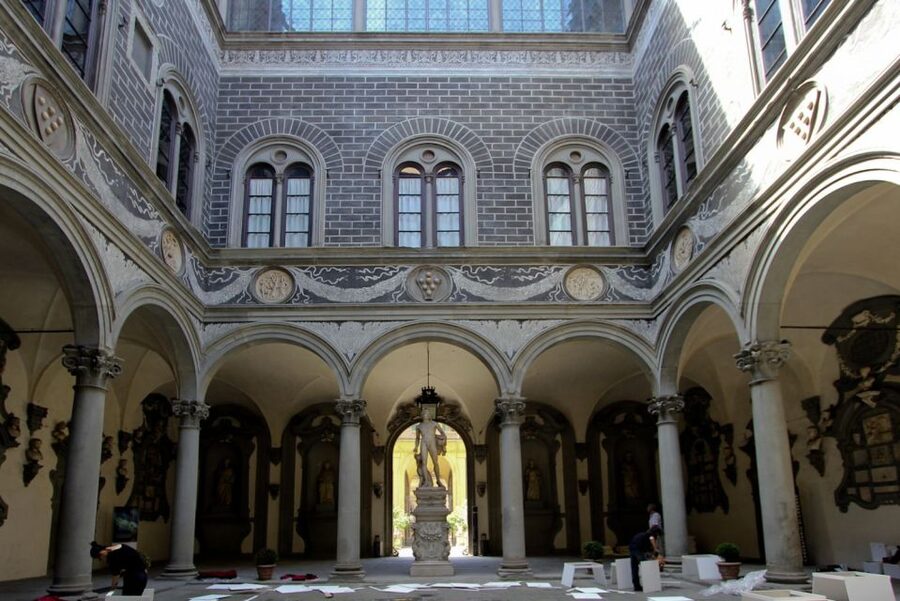
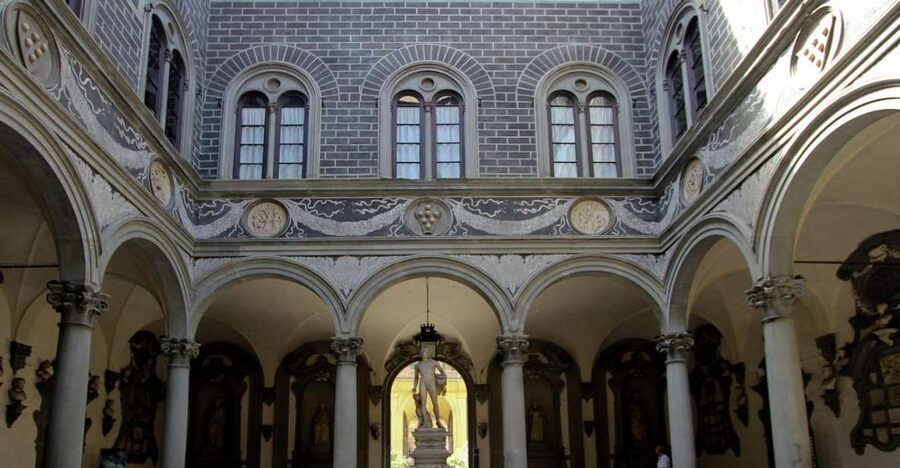
Palazzo Medici matters because it represents the family’s first major architectural statement. It is described as the first Renaissance palace in the world, and its design shows how the Medici turned private wealth into public influence. This was not just a home. It was a carefully measured display of status in the heart of Florence.
Inside, your guide puts the building into its political setting. The Medici had to look powerful without appearing to rule as outright kings. Every architectural decision carried a message about taste, restraint, money, and authority.
I find this kind of context more useful than simply hearing dates. The palace lets you ask why a banking family needed such a residence, how it presented itself to Florence, and why rival families might have viewed the building with suspicion.
The palace is also one of the places associated with the television series. That connection can be fun if you know the show, but you do not need to have watched it. The strongest part is comparing the dramatized Medici family with the people who actually shaped the city.
One practical warning matters here. The palace has been closed on at least one recent occasion, while the Chapel of the Magi remained available. Because the tour includes reserved entrance tickets, I would still confirm the current visit details before setting your day around the full palace portion.
Benozzo Gozzoli’s Chapel of the Magi
The Chapel of the Magi is likely to be the visual high point of the experience. Benozzo Gozzoli painted its walls with a procession of the Magi, filling the small space with richly detailed figures, costumes, animals, and symbols of Medici prestige.
This is not a quiet side room that you rush through on the way to something bigger. The chapel shows how the Medici used religious art to place themselves within a sacred and political story. The family appears close to the procession, linking its public identity with devotion, wealth, and influence.
I would pay close attention to how your guide reads the frescoes. The figures are not only decorative. Their placement, clothing, and associations help explain how the Medici wanted Florence to see them.
The chapel also offers a useful counterpoint to Palazzo Medici. The palace tells you how the family presented its power through architecture. The chapel shows how that power was wrapped in faith, ceremony, and art.
One recent booking had the disappointment of arriving when the palace was closed, but the Chapel of the Magi was still described as a highlight. That makes the chapel worth seeing in its own right, not merely as a backup stop.
Michelangelo’s secret sculpture connection
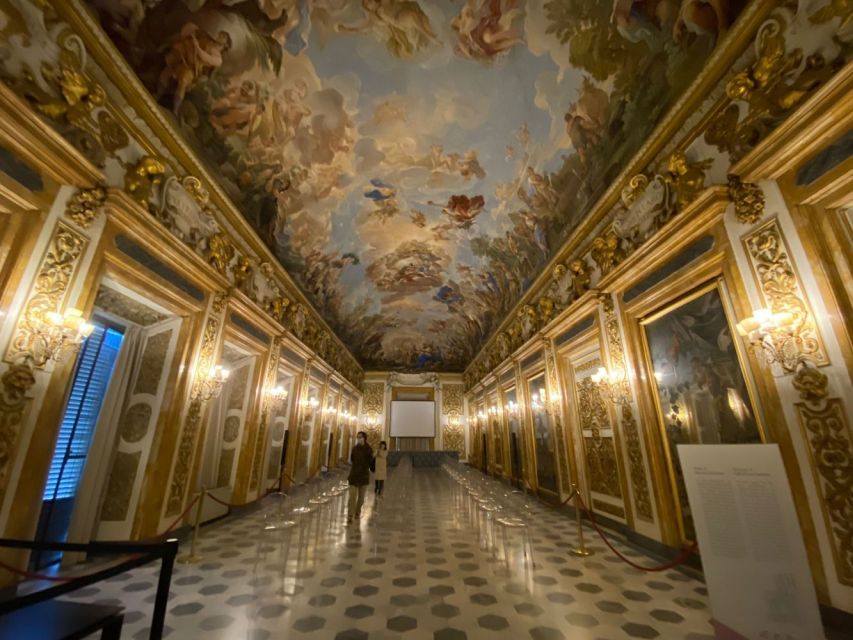
The most unusual part of the tour is the visit to a less-publicized place where Michelangelo learned to sculpt. He studied under Bertoldo, who had been a pupil of Donatello, placing Michelangelo within a direct line of Florentine sculpture.
That detail gives the Medici story a more personal angle. Instead of meeting Michelangelo only as the finished genius, you see him as a young artist learning within the Medici circle and its artistic network.
The phrase secret place should be treated as a description of the stop’s character, not a guarantee of an entirely private or unknown site. The supplied details do not identify the location by name or explain exactly how the visit operates. Still, the link to Bertoldo makes it one of the tour’s most distinctive features.
I like this stop because it explains that great art does not appear in isolation. Artists learned from teachers, worked within workshops, and depended on patrons. The Medici family’s role becomes clearer when you see how its support affected the training of artists who later changed European art.
If Michelangelo is your main interest, ask the guide to explain what is known about this stage of his education. The advertised focus is on where he learned to sculpt, so this is a chance to ask questions that a general Florence walk may not cover.
More Florence options worth a look before you decide
- Florence: Duomo Cathedral Guided Tour
★ 3.9 · 5,970 reviews - Uffizi Gallery Small Group Tour with Guide
★ 4.5 · 4,923 reviews - Florence: Accademia Gallery Guided Tour
★ 4.6 · 4,156 reviews - Florence: Duomo Guided Tour with Optional Dome Climb Upgrade
★ 4.1 · 3,706 reviews
The Strozzi, Albizi, and Pazzi rivals
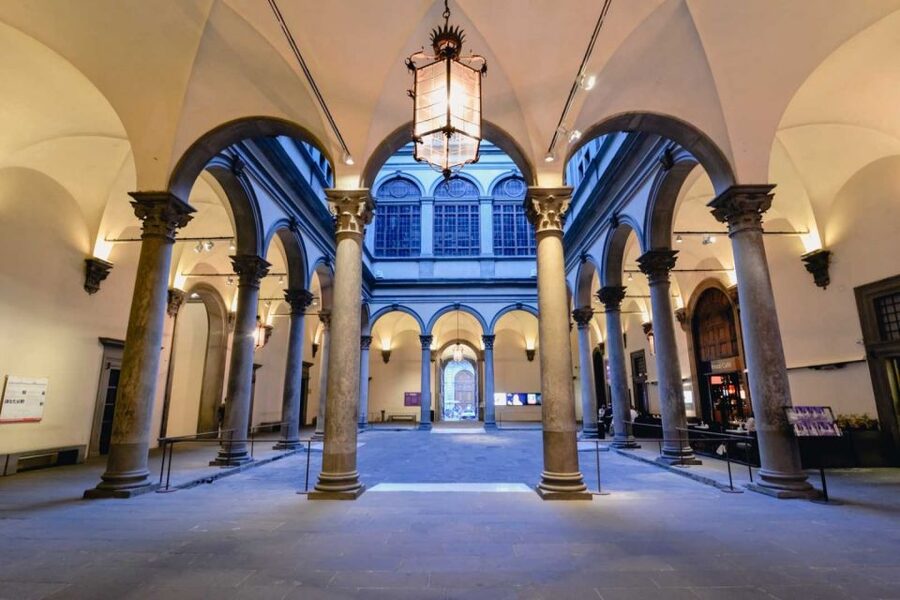
The Medici did not build Florence’s political story alone. The tour also brings in enemy families such as the Strozzi, Albizi, and Pazzi.
That wider view is important. A Medici-only story can make the family seem like the natural owner of Florence, but its position was contested. Rival families had their own wealth, networks, ambitions, and objections to Medici control.
The Pazzi are especially important to the story of betrayal and danger, while the Albizi and Strozzi help show that Florence was shaped by competition among powerful households. Your guide uses these rivalries to explain why the Medici faced repeated obstacles even after gaining influence.
The experience is described as a walking tour of the most symbolic Medici places, with attention to palaces connected to enemy families. The exact access to each rival palace is not specified, so I would expect the guide to explain their role and point out relevant sites rather than assume entry into every building.
This part will suit you if you enjoy political history more than a simple parade of beautiful interiors. It also helps you understand why Florence’s Renaissance was not a peaceful golden age. Art flourished alongside ambition, faction, and fear.
The guides make the difference
The tour is offered in English, French, German, Spanish, and Italian. The guide service may sometimes be provided in two languages, so ask about the language arrangement when you book if you want a fully single-language experience.
Guide quality is the clearest strength here. Christina is repeatedly singled out for being passionate about Florence, kind with questions, entertaining, and personable. Francesca is praised for her fun approach and the number of stories and details she shares.
Those qualities matter on a history walk. Palazzo Medici and the chapel provide the setting, but the guide explains what you are seeing and why it matters. A flat recital of dates would make the family tree hard to follow. A guide who can shift between architecture, gossip, politics, and art makes the same rooms much easier to remember.
You should also feel free to ask questions. One of the strongest descriptions of Christina highlights her patience and willingness to respond to questions. That suggests the experience works best when you take part instead of simply following along.
The guide may be able to adapt the conversation to your interests, but the tour remains a structured visit. If you want a highly specialized art-history lecture or a full-day study of Renaissance Florence, this 2 to 3-hour experience will be too short.
How long the 2 to 3 hours feel
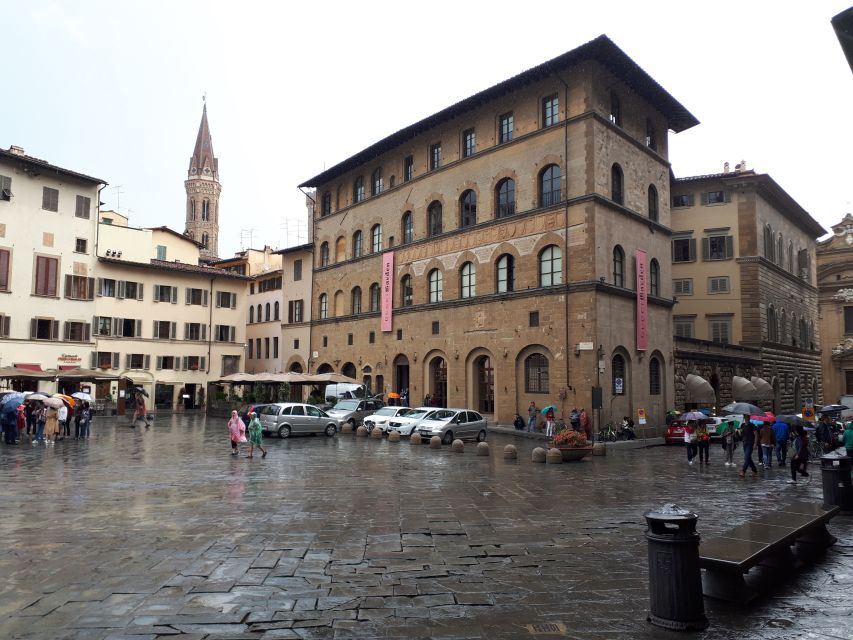
The advertised duration is 2 to 3 hours. That is enough time to focus on Medici sites without consuming your entire day, but it is still a substantial walking activity.
I would schedule it when you are ready to concentrate. The story includes several family names, rival houses, artistic connections, and political turns. You will get more from it if you are not rushing to a train or trying to squeeze in another timed attraction immediately afterward.
The meeting point is easy to identify: the main door of Medici Palace. Arriving 15 minutes early gives you time to find the sign and avoid a poor start.
The tour is offered as a private or small-group experience. Group size affects the feel of a history tour. A smaller group usually makes it easier to hear, ask questions, and stay close to the guide in busy Florence streets, while a private option gives you more room to shape the discussion.
The available information does not specify the exact walking distance, number of stops, or pace. Plan for a walking tour rather than a seated lecture, and wear shoes you can use comfortably for several hours.
Is $152 per person good value?
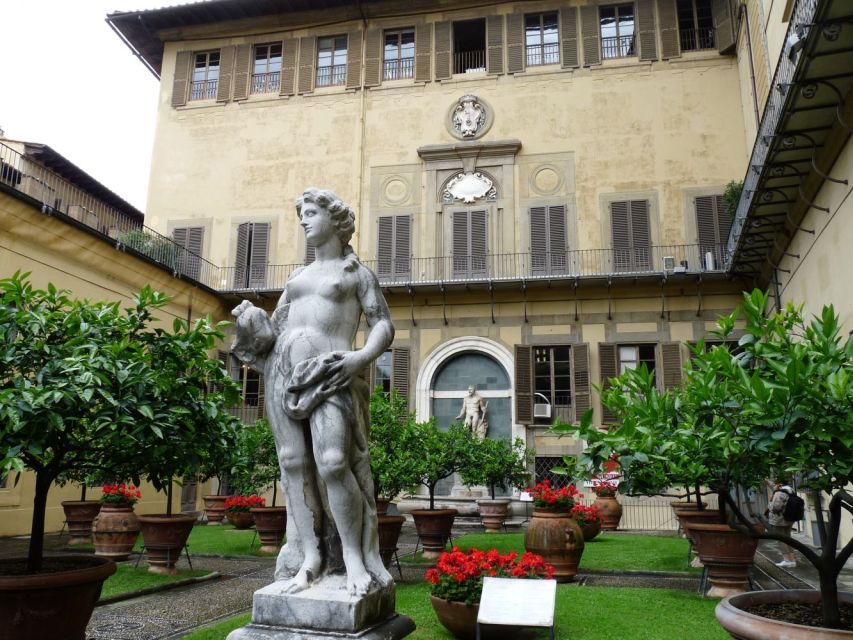
At $152 per person, this is not a bargain-priced introduction to Florence. I would compare it with the cost of separate admission, the benefit of reserved entry, and your interest in the Medici before booking.
The fee includes an expert local guide and entrance tickets with reservation. That matters at a major Florence attraction, where time spent arranging tickets or waiting can cut into a short visit. The price also covers a focused theme rather than a general city orientation.
For me, the tour offers fair value if you want a Medici-centered explanation and choose a private or small-group format. The family’s story is complicated enough that a good guide can save you considerable preparation time and make the buildings easier to understand.
The value is weaker if you mainly want to enter Palazzo Medici and look around independently. You are paying for interpretation, connections between sites, and the guide’s ability to make sense of the family’s rise and rivalries.
The comments from David point to the central tradeoff: the tour can feel expensive, but an outstanding guide can make the cost easier to justify. I would book it for the depth of the presentation, not simply for admission to the buildings.
Who should book this Medici walk?
I would recommend it to you if you enjoy Florence’s political story, Renaissance art, or the personalities behind the monuments. It is also a good choice if you watched The Medici and want to separate screen drama from the city’s actual families and locations.
First-time visitors can benefit from the structure, especially if Cosimo, Lorenzo, Piero, the Pazzi, and the other names are beginning to blur together. Returning visitors may appreciate the more focused look at the Medici palace and Michelangelo’s early training.
Families with older children and teenagers could find the stories easier to follow than a formal museum visit, though the provided details do not state a minimum age or a child-specific format. I would ask the operator about that if you are booking for young children.
You may want a different experience if you prefer to move quickly, avoid indoor historical sites, or spend your Florence time on a broad overview. This tour stays close to one family and its circle, which is its strength and its limit.
Booking details worth checking
You can cancel up to 24 hours in advance for a full refund, and the reserve-now, pay-later option lets you hold a place without paying immediately. Those terms are useful when your Florence schedule may change.
Starting times vary, so check availability before planning other timed admissions. The meeting instructions ask you to arrive 15 minutes early at Palazzo Medici, and I would take that seriously.
Also confirm the status of Palazzo Medici shortly before the tour. A past closure created confusion for one participant, and the experience may be less complete if the palace cannot be entered.
If you are booking a language other than English, ask if the guide service will be bilingual. That is allowed under the tour conditions and may affect how much time is spent in your chosen language.
Should you book the Florence Guided Medici Tour?
Book this tour if you want Florence explained through the Medici family, not just admired from the outside. The Chapel of the Magi, Palazzo Medici, the Michelangelo connection, and the rival families give the walk a clear story arc.
I would be comfortable booking it with the understanding that the guide is the key part of the value. Christina and Francesca receive especially strong praise, and the best version of this experience will depend on the person leading your group.
At $152, I would not choose it casually. But if the Medici, Michelangelo, and Renaissance politics are high on your list, the focused route and reserved admission can make it worthwhile. Confirm the palace opening status, arrive early, and ask about language arrangements before paying.
FAQ
Where does the tour meet?
The meeting point is in front of the main door of Medici Palace. You should arrive 15 minutes before the tour begins and look for the specified Medici group tour sign.
How long does the tour last?
The tour lasts approximately 2 to 3 hours. Starting times vary, so you need to check availability for the date you want.
What places are included?
The experience includes Palazzo Medici, the Chapel of the Magi, and a secret place connected with Michelangelo’s early sculpture training. The tour also discusses sites and palaces linked to rival families such as the Strozzi, Albizi, and Pazzi.
Is admission included?
Yes. Entrance tickets with reservation are included, along with the local tour guide.
What languages are available?
The tour is offered in English, French, German, Spanish, and Italian. The guide service may sometimes be provided in two languages.
Are private tours available?
Yes. You can choose a private or small-group format, depending on availability.
How much does the tour cost?
The listed price is $152 per person.
Can I cancel the booking?
You can cancel up to 24 hours in advance for a full refund.
Can I reserve now and pay later?
Yes. The reserve-now, pay-later option allows you to book a place and pay nothing at the time of reservation.
Latest additions around Florence
- Florence: Cathedral Tour & Brunelleschi’s Dome Climb Ticket★ 5.0 · 3 reviews
- Palatina Gallery and Pitti Guided Tour in Florence★ 5.0 · 3 reviews
- Florence Uffizi Gallery Skip-the-line Tour w Art Historian Guide★ 5.0 · 3 reviews
- Private Tour: Pisa and Lucca from Florence★ 5.0 · 3 reviews
- San Gimignano Bike Tour (SOFT)★ 4.5 · 3 reviews
- Florence: Tour of Florence by rickshaw★ 5.0 · 3 reviews
- Center of Florence by golf cart★ 5.0 · 3 reviews
- From Firenze | Chianti day tour in a classic car★ 5.0 · 3 reviews
Medici Tours, compared.

The Best tour in Florence: Renaissance & Medici Tales – guided by a STORYTELLER
Read our review →
The Best Tour in Florence: Renaissance and Medici Tales
Read our review →
Renaissance and Medici Tales Guided Walking Tour
Read our review →
Guided Tour of Medici Family Secrets and Chapels
Read our review →
Pitti Palace, Palatina Gallery and the Medici: Arts and Power in Florence.
Read our review →

Medici Legends & Renaissance Wonders: Florence Small Group Tour
Read our review →Browse the lists this tour appears in