

Reviewed · ACCADEMIA GALLERY TOURS
Florence: Accademia Gallery Guided Tour
Michelangelo’s David is the star of this short Accademia tour, and you get to study it from several angles rather than simply walk past with a crowd. I like the separate entrance, which can save you from a long wait, and I like the way guides such as Claudio, Elvis, Elisa, and Ana connect the statue to Florence, Michelangelo, and the Medici.
The main tradeoff is time. An hour is enough for David and the gallery’s best-known works, but not for a leisurely museum visit. Some visitors also found the headset audio fuzzy, so sit close to your guide and speak up if you cannot hear clearly.
In This Review
- Key points to know before you go
- Why David is worth a guided visit
- Meeting at Piazza delle Belle Arti
- Entering the Accademia without the public queue
- The first look at Michelangelo’s David
- Michelangelo’s unfinished Prisoners
- Lippi, Ghirlandaio, and the Florence collection
- Florence, the Medici, and the Renaissance
- How long the visit really feels
- Timing, crowds, and the best value
- Who should book this Accademia tour
- Should you book it?
- FAQ
- Where does the Accademia Gallery tour meet?
- How long does the tour last?
- What language is the tour in?
- Is museum entry included?
- Does the tour include skip-the-line access?
- What artworks will I see?
- Can I bring luggage or a large bag?
- What identification is required for children?
Key points to know before you go
- David gets the attention he deserves: The guide explains the statue’s details, purpose, and connection to Florence.
- Skip the long public queue: Your ticket includes guaranteed entry through a separate entrance.
- The tour goes beyond one statue: You see Michelangelo’s unfinished Prisoners and paintings by Filippino Lippi and Domenico Ghirlandaio.
- A historian leads the visit: English-speaking guides have included Claudio, Elvis, Elisa Raimondo, Ana, Victoria, and Oxsana.
- The format is short and focused: Plan on about one hour, with the option to remain inside afterward according to the experience details.
- Pack light: Large bags and luggage are not allowed, and children need a passport or ID card, with a copy accepted.
Why David is worth a guided visit
Florence has no shortage of famous art, but David is different. The statue is enormous, sharply detailed, and displayed in a room that lets you see it from more than one direction. You can notice the alert expression, the oversized hands, the tension in the body, and the way Michelangelo made marble seem ready to move.
Without context, you may spend a few minutes taking pictures and then wonder what else there is to see. A good guide gives you a reason to look again. The commentary here focuses on Michelangelo’s working methods, the meaning of David for Florence, and the way the artist’s sculptures fit into the wider Renaissance.
I especially like the connection between the artwork and the city outside. David was not created as a generic decoration. The biblical figure became a symbol of Florence’s independence and strength, which helps explain why the statue matters far beyond its technical skill.
This is also a useful tour for anyone who finds art museums difficult to read. You do not need a background in sculpture or Italian history. The guide points out what to notice, explains why it matters, and leaves you with a clearer picture of Michelangelo as an artist rather than just a famous name.
More Accademia and David visits:
- Florence: Timed Entrance Ticket to Michelangelo’s David
★ 4.6 · 16,983 reviews - Florence: Michelangelo’s David Skip-the-Line Entry Ticket
★ 4.5 · 12,764 reviews - Florence Accademia Gallery Tour with Entrance Ticket Included
★ 4.5 · 6,148 reviews
Meeting at Piazza delle Belle Arti
The meeting point is in Piazza delle Belle Arti, the main square near the Accademia Gallery. Look for the sign marked Florence with Elvis Guided Experience. Give yourself enough time to locate the square and your guide, since arriving at a museum meeting point at the last second can create needless stress.
The practical benefit of meeting outside is that the guide can organize the group before entry and direct you to the correct access point. Several people found the meeting area easy to locate, and one guide was noted for wearing a bright pink outfit that made her easy to spot.
Your guide speaks English, and headsets are supplied so you can hear the commentary while standing in the gallery. This is important because museum rooms can be crowded and noisy. Still, the audio equipment has not been perfect for everyone. One person found the radio static distracting, while another said slower speech would have helped with hearing. If you have trouble catching words, move near the guide and ask for a repeat.
Entering the Accademia without the public queue
The tour includes guaranteed museum entry and access through a separate entrance. That matters most during Florence’s busiest periods, when the regular queue can stretch around the building. One visitor described a wait of more than three hours on the day of the tour, while the guided group went through security and entered without that delay.
Skip-the-line access is not the same as skipping security. You still pass through the museum’s checks, and large bags or luggage are not permitted. Carry only what you need for the visit, and keep a passport or ID card available for children. A copy is accepted according to the tour information.
At $53 per person, the price is higher than simply hoping for a quiet moment at the museum entrance. I see the value in the combination of reserved entry and a live guide, especially if your Florence schedule is tight. The price feels less attractive if you already have strong art training, dislike group tours, or plan to spend several hours examining every room on your own.
The first look at Michelangelo’s David
The route leads to David, the Accademia’s main attraction. The guide normally begins by helping you take in the whole statue before directing your attention to smaller features. That order works well. You first see the force of the figure, then learn how the face, hands, stance, and proportions build its effect.
You can look from different sides, which is far better than a single rushed viewpoint. Pay attention to the contrast between David’s calm expression and the readiness in his posture. The guide can also explain why some parts of the body appear deliberately emphasized, a useful detail for understanding how sculpture communicates from a distance.
This is where the headset earns its keep. You can listen without needing to stand shoulder to shoulder with the guide. The downside is that a headset can make the visit feel less personal if the sound is poor, so do not remain silent if the volume or clarity fails.
The strongest part of the experience is the interpretation. Guides have been praised for being passionate, patient, entertaining, and easy to understand. Elisa Raimondo was singled out for her enthusiasm for Renaissance art. Oxsana was described as a walking encyclopedia of Michelangelo, while Claudio was repeatedly praised for clear storytelling and a good sense of humor.
Those names do not guarantee who will lead your departure, but they give you an idea of the guide style available. The best commentary appears to combine facts with storytelling rather than reciting dates. That makes a difference when the museum visit is only an hour long.
More museums worth an hour:
- Florence: Skip-The-Line Uffizi Gallery Timed Entry Ticket
★ 4.5 · 27,832 reviews - Florence: Leonardo Interactive Museum Entry Ticket
★ 4.5 · 11,763 reviews - Uffizi Gallery Small Group Tour with Guide
★ 4.5 · 4,923 reviews - Florence: Accademia Gallery Guided Tour with Entry Ticket
★ 4.6 · 2,253 reviews
Michelangelo’s unfinished Prisoners
After David, the tour turns to other Michelangelo sculptures, including the unfinished Prisoners. These figures are valuable because you can see the artist’s idea of forms emerging from the stone. Instead of a perfectly polished body, you see rough marble and partially released limbs.
I find these works useful for understanding the physical challenge of sculpture. A finished statue can look effortless, but the Prisoners show the hard material, the stages of work, and the uncertainty between a block of marble and a human figure. A guide can help you compare the rough surfaces with David’s smooth finish.
The Prisoners also keep the visit from becoming a single-artwork photo stop. Several people appreciated that the tour explained these sculptures alongside David, giving Michelangelo’s work a clear sequence. If you have already read about David, this section may be the part that adds the most new perspective.
Do not expect a full study of every sculpture in the museum. The focus remains on Michelangelo and the pieces most closely tied to the gallery’s appeal. That is a strength for a first visit and a limitation if your priority is the entire collection.
Lippi, Ghirlandaio, and the Florence collection
The Accademia is not only a home for Michelangelo. The guided walk also introduces paintings by Filippino Lippi, Domenico Ghirlandaio, and other artists. These works help place Michelangelo in the artistic world of Florence rather than treating him as an isolated genius.
The painting rooms offer a change of pace after the large sculptures. You move from the physical weight of marble to painted figures, religious scenes, and the visual language of the Renaissance. Your guide can point out how artists worked within shared traditions while developing their own styles.
This part of the tour is brief, so do not expect a room-by-room museum lecture. Instead, think of it as a frame around David. The paintings show the artistic setting that made Florence so important, while the guide explains why the city drew ambitious artists and powerful patrons.
The balance depends on your guide and the size of the group. Some guides focus strongly on David, while others give more time to the surrounding collection. If you want more detail on Lippi or Ghirlandaio, ask a question during the visit. Guides have been described as willing to pause and answer questions.
Florence, the Medici, and the Renaissance
The historical section is one of the main reasons to choose a guided tour rather than enter alone. You hear about the Medici family, their power in Florence, and their connection to Michelangelo. The point is not just to memorize a famous family name. It is to understand how artists, patrons, politics, and public identity worked together.
Florence’s Renaissance did not happen by accident. Artists needed commissions, workshops, materials, and patrons willing to support ambitious projects. The Medici were central to that world, and their relationship with Michelangelo helps explain how his career developed.
A good guide can also show how public art carried political meaning. David was a biblical hero, but in Florence he could represent courage and resistance. That extra layer makes the statue easier to appreciate once you leave the gallery and continue through the city.
This context is especially useful for first-time visitors. You may recognize the names Michelangelo and Medici, but the tour connects them in a compact story. It also gives you a way to understand other Florentine sights later in the day.
How long the visit really feels
The advertised duration is one hour. The supplied schedule also breaks the experience into guided time with David, a gallery visit, and another David segment, so the actual flow may feel like a focused museum circuit rather than a single speech beside the statue.
An hour is a sensible length for this gallery’s main highlights. You get the central sculpture, the unfinished works, selected paintings, and historical context without reaching the point where every marble figure begins to blur together.
The short format works well before another Florence activity. You can pair it with a walk through the nearby center, a church visit, or a meal. It also suits families and people who want a clear introduction rather than a full art-history course. A family with two children under five and a double stroller found the guide accommodating, though you should still plan around the no-large-bags rule.
If you want quiet time for photographs or close study, ask whether you may remain inside afterward. One guide allowed the group to stay and look around once the formal tour ended. This is a useful bonus, but it should not be treated as a guaranteed extension for every departure.
Timing, crowds, and the best value
The tour is most useful when the regular queue is long or your schedule has little room for uncertainty. A late afternoon departure was praised for having fewer people inside and making photographs easier. Crowd levels change, so no time can promise an empty gallery, but a later slot may be worth considering if the available schedule suits you.
At $53, you are paying for three things: entry, time saved at the door, and interpretation. The guide is the key part. If you only want a photograph of David, a paid tour may feel like too much. If you want to understand why the statue looks the way it does and how it belongs to Florence, the added explanation gives the visit more weight.
I would also consider the cost of a missed opportunity. Waiting hours in a queue can consume much of a short stay. Even if you are careful with money, paying for a reserved entrance can be practical when the alternative is losing half a day.
The overall rating is 4.6 from 4,156 ratings, and the strongest praise centers on the guides, smooth entry, clear explanations, and the focused format. The less positive points are specific rather than broad: occasional radio static, speech that may be difficult for some listeners, and the price when booked at the last minute.
Who should book this Accademia tour
I would recommend it to a first-time Florence visitor who wants David explained rather than simply photographed. It is also a good fit if you have only an hour, dislike uncertain queues, or want a friendly introduction to Michelangelo and Renaissance Florence.
Families can benefit from the short route and the guide’s ability to keep the focus moving. People who enjoy art but do not know much about sculpture should find the context useful. The tour is also wheelchair accessible, which removes one common concern when choosing a historic museum visit.
I would think twice if you prefer to wander alone, read every museum label, or spend a long time with lesser-known works. The group format and headset audio may not suit every visitor, especially anyone sensitive to static or fast speech.
You can cancel up to 24 hours ahead for a full refund, and the reserve-now, pay-later option keeps your plans flexible. Those terms are useful in Florence, where weather, train schedules, and changing day plans can affect a packed visit.
Should you book it?
Book this tour if David is high on your Florence list and you want the statue to mean more than a famous image. The separate entrance can save substantial time, and the guide adds the art, political, and Medici context that is easy to miss alone.
Skip it if you already know the Accademia well or want an unhurried museum study. For most first visits, though, the one-hour format is efficient, the $53 cost is defensible during busy periods, and the strongest guides turn a quick look at David into a memorable lesson in Florence.
FAQ
Where does the Accademia Gallery tour meet?
The meeting point is Piazza delle Belle Arti in the main square of the Galleria dell’Accademia. Look for a sign saying Florence with Elvis Guided Experience.
How long does the tour last?
The stated duration is one hour. The schedule includes guided time with David and a guided walk through the Accademia Gallery.
What language is the tour in?
The live tour guide speaks English.
Is museum entry included?
Yes. The experience includes guaranteed museum entry and access through a separate entrance.
Does the tour include skip-the-line access?
Yes. You enter through a separate entrance instead of joining the regular public queue, though you still need to pass through security.
What artworks will I see?
The visit focuses on Michelangelo’s David and his unfinished Prisoners. You also see paintings by Filippino Lippi, Domenico Ghirlandaio, and other artists in the Accademia.
Can I bring luggage or a large bag?
No. Luggage and large bags are not allowed. Pack lightly for the museum visit.
What identification is required for children?
Children need a passport or ID card. A copy is accepted according to the activity information.
Latest additions around Florence
- Palatina Gallery and Pitti Guided Tour in Florence★ 5.0 · 3 reviews
- Florence: Cathedral Tour & Brunelleschi’s Dome Climb Ticket★ 5.0 · 3 reviews
- Florence Uffizi Gallery Skip-the-line Tour w Art Historian Guide★ 5.0 · 3 reviews
- Private Tour: Pisa and Lucca from Florence★ 5.0 · 3 reviews
- San Gimignano Bike Tour (SOFT)★ 4.5 · 3 reviews
- Florence: Tour of Florence by rickshaw★ 5.0 · 3 reviews
- Center of Florence by golf cart★ 5.0 · 3 reviews
- From Firenze | Chianti day tour in a classic car★ 5.0 · 3 reviews
Accademia Gallery Tours, compared.

Timed Entrance Ticket to Michelangelo’s David
Read our review →
Michelangelo’s David Skip-the-Line Entry Ticket
Read our review →
Florence Accademia Gallery Tour with Entrance Ticket Included
Read our review →
Timed Entry Ticket to Michelangelo’s David & eBook
Read our review →
Skip the line: Uffizi and Accademia Small Group Walking Tour
Read our review →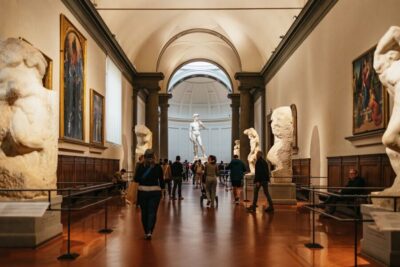

Accademia Gallery Guided Tour with Entry Ticket
Read our review →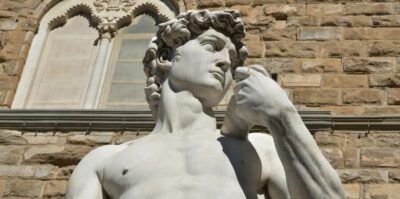
Uffizi Gallery and Accademia Gallery Guided Tour
Read our review →Browse the lists this tour appears in