
Reviewed · MEDICI TOURS
The Best Tour in Florence: Renaissance and Medici Tales
Florence’s Renaissance story makes the most sense when you follow the Medici trail on foot. This two-hour walk links San Lorenzo, the Medici palace, the Duomo, Dante’s old neighborhood, and the political heart of the city, showing how money, power, art, and family ambition changed Florence.
I like the donation-based price, which lets you try a highly praised introduction without a large upfront cost. I also like the guides’ storytelling style. Aurora, Alberto, Camilla, Deborah, Manuel, Simona, Elizabeth, and others are praised for making art and politics easy to follow, even if you are not a history fan.
The main drawback is pace. Ten stops in two hours means you see each place from outside or at a quick glance, and most admission fees are not included. Treat this as an orientation walk, not a substitute for visiting the cathedral complex, Palazzo Vecchio, or the Uffizi.
In This Review
- Key points to know before booking
- Why the Medici story gives Florence a clear shape
- San Lorenzo and the Medici family tombs
- Palazzo Medici Riccardi and the address of power
- The Baptistery, Duomo, and Giotto’s Campanile
- Brunelleschi’s dome and the problem it solved
- Dante’s Florence and the city beyond monuments
- Piazza della Signoria and Palazzo Vecchio
- Finishing near the Uffizi Gallery
- The donation price and what the value really means
- Timing, group size, and walking conditions
- Who will get the most from this walk
- Should you book The Best Tour in Florence?
- FAQ
- How long does the Florence walking tour last?
- Where does the tour start?
- Where does the tour end?
- Is the tour offered in English?
- Are entrance fees included?
- How does the donation-based payment work?
- Can I cancel the tour?
Key points to know before booking
- The Medici family provides the main thread, connecting churches, palaces, bankers, artists, and Florence’s rise during the Renaissance.
- You see a remarkable number of major sights in two hours, including the Duomo, Baptistery, Palazzo Vecchio, and Uffizi area.
- The tour is donation-based, with the guide’s only compensation coming from what you choose to give at the end.
- English-speaking guides focus on stories, humor, local advice, art, food, and clear explanations rather than a dry list of dates.
- The walk ends near the Uffizi Gallery, a useful place to continue sightseeing on your own.
- A group can include up to 30 people, so arrive early and expect a public walking-tour format rather than a private experience.
Why the Medici story gives Florence a clear shape
Florence can feel like a museum without walls. Marble facades, statues, churches, and grand squares appear one after another, but the connections are not always obvious on your first visit.
The Medici provide the thread. They began as bankers, gained influence in Florence, supported artists and architects, and helped turn the city into a center of Renaissance culture. Their story also includes family rivalry, political power, church influence, and plenty of personal drama.
That makes this walk more useful than a simple checklist of monuments. When you look at San Lorenzo, Palazzo Medici Riccardi, the Duomo, and Palazzo Vecchio in sequence, you get a sense of how the city’s religious, commercial, and political centers fit together.
The guides are the key part of the experience. Alberto is praised for covering Florence’s history, the Medici, architecture, food, and practical restaurant advice in a short time. Camilla is described as an animated storyteller who handles questions well. Aurora brings an art historian’s view, while Deborah is praised for mixing humor with details about art and Medici power.
Guide assignments can change, so you should not book expecting one specific person. Still, the range of feedback points to a consistent strength: the experience depends on a lively local guide who can turn buildings into stories.
More Medici trails:
- The Best tour in Florence: Renaissance & Medici Tales – guided by a STORYTELLER
★ 5.0 · 12,316 reviews - Florence: Renaissance and Medici Tales Guided Walking Tour
★ 4.8 · 1,549 reviews - Florence: Mysteries of the Medici Guided Walking Tour
★ 4.4 · 940 reviews
San Lorenzo and the Medici family tombs
Meet at Piazza di San Lorenzo, beside the statue of Giovanni de’ Medici seated on a throne. This is a practical starting point in the center of Florence, close to the main market district and public transportation.
The first stop is the Basilica di San Lorenzo, one of Florence’s largest churches. It is also the burial place of the principal Medici family members from Cosimo il Vecchio through Cosimo III. That fact gives the church immediate weight. You are not just looking at another old facade. You are beginning at a place tied directly to the family that shaped the city.
The scheduled stop lasts about ten minutes, and admission is not included. The walk is therefore about setting the scene and explaining why San Lorenzo matters, rather than exploring every chapel or artwork inside.
I would pay close attention here to the link between family wealth and public buildings. The Medici did not shape Florence only through government offices. They used churches, palaces, art, and architecture to show status and influence.
Palazzo Medici Riccardi and the address of power
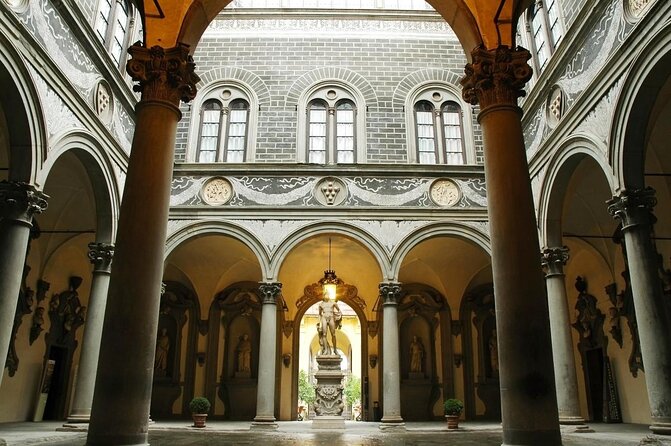
From San Lorenzo, the route continues to Palazzo Medici Riccardi. Cosimo de’ Medici commissioned this palace, which was built between 1444 and 1484.
This is a useful stop because it shows how a banking family presented itself. A palace is more than a home. It communicates wealth, control, taste, and permanence. Your guide can explain how the Medici moved from financial power into public authority, even when Florence remained officially a republic.
The visit here is brief, about ten minutes, and admission is not included. That is fine for a first look, especially if you plan to return later. If you want to see the interior, you will need a separate ticket and additional time.
The Medici theme becomes especially clear at this point. San Lorenzo shows the family’s religious and dynastic ties. Palazzo Medici Riccardi shows its private power and public image. The walk is strongest when your guide makes those links explicit.
The Baptistery, Duomo, and Giotto’s Campanile
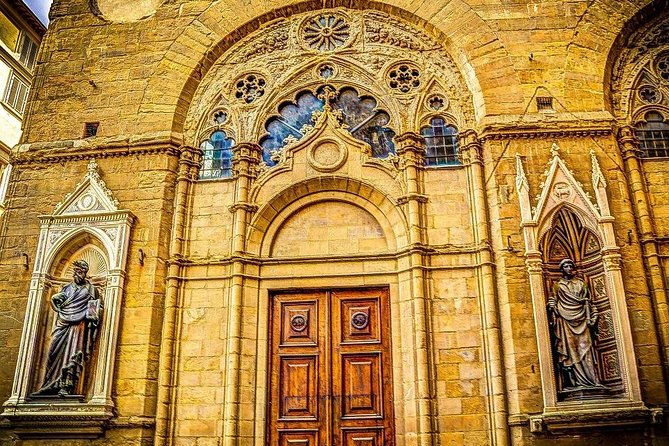
The route then reaches the Piazza del Duomo, where several of Florence’s most recognizable buildings crowd into one extraordinary space.
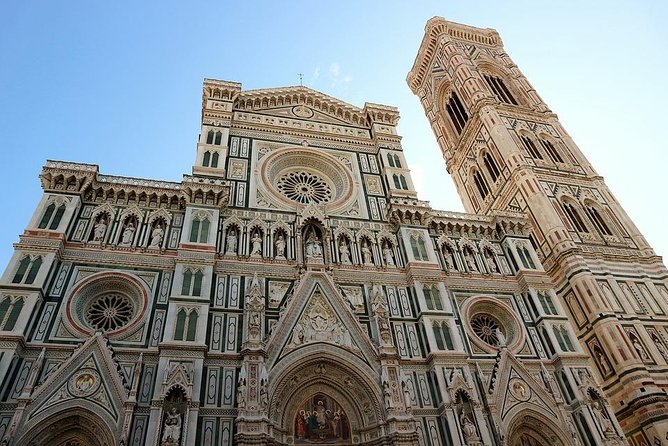
The Baptistery of St. John is one of the oldest buildings in Florence, constructed between 1059 and 1128 in the Florentine Romanesque style. It sits across from the cathedral and Giotto’s Campanile, so you can compare the different shapes, colors, and periods at close range.
The stop lasts about ten minutes, with admission not included. Even from outside, the Baptistery helps you see that Florence’s cathedral complex was planned as a group rather than as one isolated church.
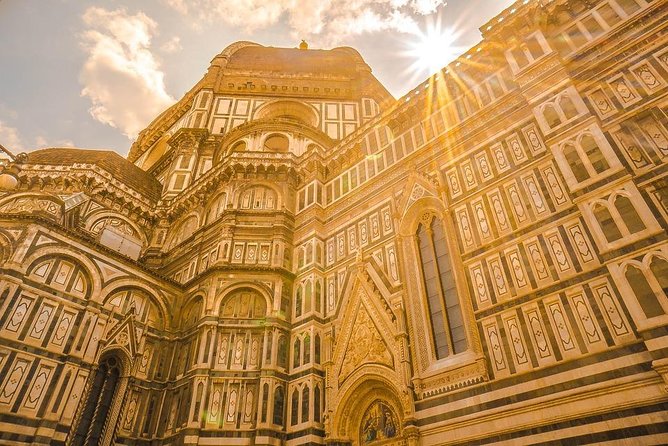
Next comes the Duomo, formally the Cattedrale di Santa Maria del Fiore. Construction began in 1296 in the Gothic style under the design of Arnolfo di Cambio. The cathedral, Baptistery, and Campanile are all part of Florence’s UNESCO-listed historic center.
The cathedral itself is free to enter, but that does not mean every part of the complex is free. The tour does not include tickets for the Campanile or Brunelleschi’s dome, and the guide does not take you through a reserved interior visit. This matters if your main goal is climbing the dome or bell tower. You will need separate planning.
Giotto’s Campanile receives another short stop. The tower is known for its Florentine Gothic design, sculpture, and colored marble. It is adjacent to the cathedral and Baptistery, making this one of the best places to hear a guide explain how the buildings work together visually.
More Renaissance art days:
- Florence: Timed Entrance Ticket to Michelangelo’s David
★ 4.6 · 16,983 reviews - Florence: Michelangelo’s David Skip-the-Line Entry Ticket
★ 4.5 · 12,764 reviews - Florence: Timed Entry Ticket to Michelangelo’s David & eBook
★ 4.6 · 4,049 reviews - Michelangelo’s David, Accademia & Uffizi Small Group Tour
★ 4.5 · 1,986 reviews
Brunelleschi’s dome and the problem it solved
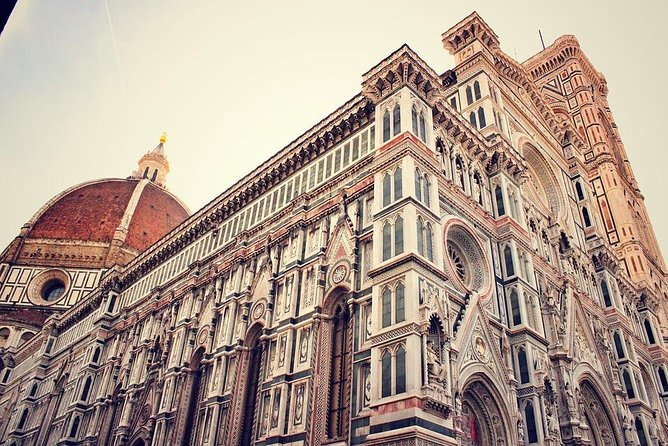
Cupola del Brunelleschi is the architectural high point of the walk. It was once the largest dome in the world and remains the largest brick dome ever built.
You will view it from the outside during this tour. That limitation is worth stating clearly, because many people come to Florence hoping to climb the dome. This experience gives you the story and the sightline, but not the climb.
The dome is important because it captures the daring spirit of the Renaissance. Its scale, brick construction, and engineering challenged the limits of what builders thought possible. A strong guide can explain why the dome was such a technical and civic achievement without burying you in specialist terms.
I find this stop most valuable when you use it as a preview. After the walk, you can decide if the cathedral complex deserves a longer visit. The tour helps you understand what you are looking at before you spend time or money on another ticket.
Dante’s Florence and the city beyond monuments
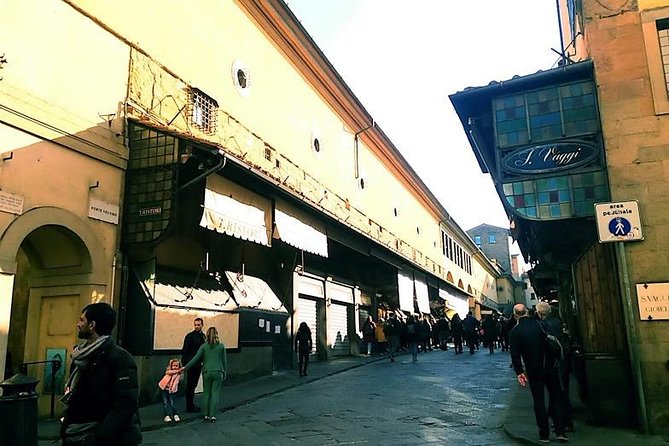
The next stop shifts from architecture to literature. Museo Casa di Dante is connected with Dante Alighieri, author of the Divine Comedy and one of the most important writers in the Italian language.
The stop lasts about five minutes, and admission is listed as free. The tour does not promise a full museum visit, so expect a quick look and an explanation of Dante’s place in Florentine culture.
This is a smart change of subject. Florence is often reduced to Renaissance painting and Medici politics, but Dante gives you another way to understand the city. His work reflects medieval Florence, its rivalries, language, beliefs, and social divisions.
The guide may also help you picture Florence as a lived-in city rather than a collection of famous buildings. That is one reason the short alleys and less famous corners can be as useful as the main sights. You begin to see how writers, merchants, rulers, and religious institutions occupied the same compact center.
Piazza della Signoria and Palazzo Vecchio
Piazza della Signoria is the political heart of the route. This L-shaped square sits in front of Palazzo Vecchio and near the Uffizi Gallery.
It is also a meeting place for Florentines and a major public space for visitors. The square’s statues and open layout make it an ideal place for a guide to explain Florence’s political life, public art, and competition for power.
Palazzo Vecchio is Florence’s town hall, a massive fortress-palace overlooking the square. The building includes cultural sites and museums, but this walking tour does not include admission. You will see the exterior and hear the story, then decide if you want to return inside.
The copy of Michelangelo’s David is one of the route’s most useful visual moments. It helps you understand the original statue’s political message and why David became a symbol of Florence. You will also see the Loggia dei Lanzi, with its open-air display of statues beside the palace.
A guide can make this area much more meaningful than a quick photograph. Deborah is specifically praised for explaining the so-called fake David clearly. That sort of detail matters because the square is full of art, but without context it can blur into one large display.
Finishing near the Uffizi Gallery
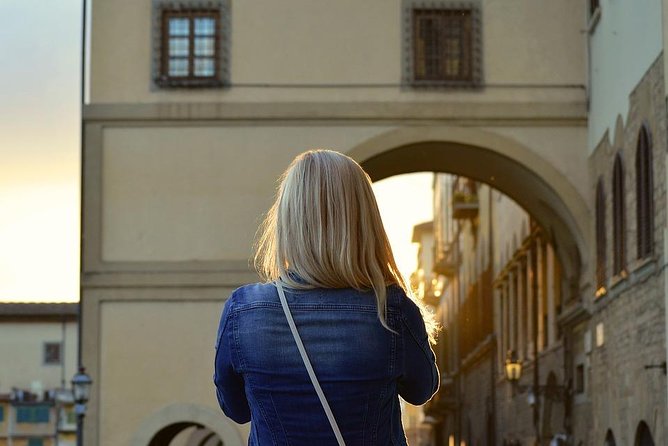
The walk ends in the Piazza della Signoria area, close to the Uffizi Gallery. The exact endpoint can vary slightly within the stated area, but the location is convenient for continuing your day.
The Uffizi began as offices for Florentine magistrates under Cosimo I de’ Medici. The name comes from uffizi, meaning offices. It later became one of Italy’s most important art museums, with a major collection of Renaissance works.
The tour does not include Uffizi admission or a guided museum visit. That is a benefit if you prefer to choose your own museum time, but you should reserve and plan separately if the gallery is a priority.
Ending here gives the walk a practical purpose. You finish with a clearer idea of what you want to see next: the Uffizi, Palazzo Vecchio, the cathedral complex, or perhaps a return to the Medici sites.
The donation price and what the value really means
The listed price is $3.62 per person, but this is not a standard low-cost ticket in the usual sense. The tour is offered through donations, and you decide at the end how much to give. The guide’s only compensation comes from that donation.
That model lowers the risk for you. You can book a two-hour English-language introduction without committing to the price of a private guide or a premium small-group tour. With more than 10,000 reviews and a 4.9 rating, the low entry price is especially appealing.
Still, you should treat the listed amount as a starting point, not the full measure of the tour’s value. If your guide gives you two useful hours, answers questions, tells clear stories, and helps shape the rest of your Florence visit, a fair donation should reflect that.
One guide received a tip suggestion of at least 20 euros per person in a particularly enthusiastic assessment. That is not a required amount, and the correct donation is your decision. Bring cash if you want to tip directly, since one person wished to give a tip but did not have cash available.
Timing, group size, and walking conditions
The tour lasts about two hours and covers the historic center on foot. Walking is the right way to experience this part of Florence because the major sights are close together and the streets themselves carry much of the atmosphere.
The group limit is 30 people. That is not an intimate private walk, and you may need to stay near the guide in crowded squares. Arriving early is sensible, especially since the meeting point is in a busy central area.
The tour is offered in English and includes a licensed guide. Most people can participate, and service animals are allowed. It is near public transportation, but the information does not specify a route or vehicle details, so check your own map before setting out.
Good weather is required. If poor weather cancels the experience, you are offered another date or a full refund. The experience also needs a minimum number of participants, with the same general option if that minimum is not met.
Cancellation is free up to 24 hours before the start time. Inside that window, the payment is not refunded and changes are not accepted. Keep the weather rule and the 24-hour cutoff in mind when planning a tight Florence schedule.
Who will get the most from this walk
I would choose this tour for a first visit to Florence, especially on the first day. It gives you a map in your head, introduces the major buildings, and helps you choose which interiors deserve your limited time.
It also suits repeat visitors who want a new way to connect familiar sights. One experienced Florence visitor found that the Medici focus revealed details that had not been clear on earlier trips.
This is a good match for people who enjoy history, art, architecture, literature, and local stories. It also works for people who normally avoid formal history tours, since the guides are repeatedly praised for humor, interaction, clear English, and storytelling.
You may want something else if you need a slow photographic walk, a private guide, extensive museum time, or guaranteed access to the cathedral dome. The short stops are designed for orientation. They cannot cover every artwork, room, and architectural detail.
Should you book The Best Tour in Florence?
Book it if you want a low-cost, story-led introduction to Florence that covers the city’s major sights without wasting your first morning on guesswork. The Medici theme gives the route structure, while Dante, the Duomo, David, Palazzo Vecchio, and the Uffizi add range.
I would schedule it early in your stay, then use the guide’s advice to plan your museum visits, meals, and return stops. Go in expecting exterior views and concise explanations, not included entry tickets.
The strongest reason to book is the combination of price, location, and guide quality. The main caution is the donation model: budget for a fair tip if the guide earns it, and remember that the small payment shown at booking does not tell the whole value story.
FAQ
How long does the Florence walking tour last?
The tour lasts approximately two hours.
Where does the tour start?
It starts at Piazza di San Lorenzo, 35R, in Florence. Meet next to the statue of Giovanni de’ Medici seated on a throne, in front of San Lorenzo Church.
Where does the tour end?
It ends in Piazza della Signoria, near the Uffizi Gallery. The exact endpoint may vary slightly within the stated area.
Is the tour offered in English?
Yes. The experience is offered in English and includes a licensed guide.
Are entrance fees included?
Most entrance fees are not included. The cathedral entry is listed as free, but tickets for San Lorenzo, Palazzo Medici Riccardi, the Baptistery, Giotto’s Campanile, Brunelleschi’s dome, Palazzo Vecchio, and the Uffizi are not included. The Dante museum stop is listed as free.
How does the donation-based payment work?
The booking price is a low starting amount, and you choose the donation for the guide at the end. The guide’s only compensation is the amount you decide to give.
Can I cancel the tour?
You can cancel up to 24 hours before the start time for a full refund. Cancellations or changes made less than 24 hours before the start time are not accepted for a refund. Poor weather or failure to meet the minimum number of participants may result in another date or a full refund.
Latest additions around Florence
- Palatina Gallery and Pitti Guided Tour in Florence★ 5.0 · 3 reviews
- Florence: Cathedral Tour & Brunelleschi’s Dome Climb Ticket★ 5.0 · 3 reviews
- Florence Uffizi Gallery Skip-the-line Tour w Art Historian Guide★ 5.0 · 3 reviews
- Private Tour: Pisa and Lucca from Florence★ 5.0 · 3 reviews
- San Gimignano Bike Tour (SOFT)★ 4.5 · 3 reviews
- Florence: Tour of Florence by rickshaw★ 5.0 · 3 reviews
- Center of Florence by golf cart★ 5.0 · 3 reviews
- From Firenze | Chianti day tour in a classic car★ 5.0 · 3 reviews
Medici Tours, compared.

The Best tour in Florence: Renaissance & Medici Tales – guided by a STORYTELLER
Read our review →
Renaissance and Medici Tales Guided Walking Tour
Read our review →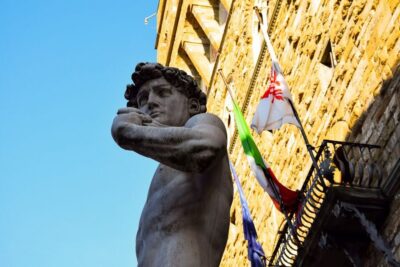
Guided Tour of Medici Family Secrets and Chapels
Read our review →
Pitti Palace, Palatina Gallery and the Medici: Arts and Power in Florence.
Read our review →

Medici Legends & Renaissance Wonders: Florence Small Group Tour
Read our review →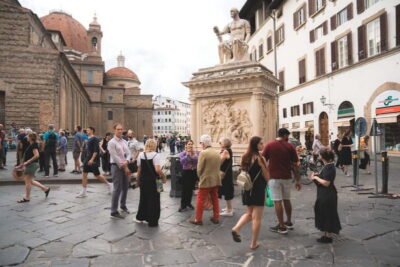
Browse the lists this tour appears in