
Reviewed · MEDICI TOURS
The places of the Medici family: the Palace and the Chapels
The Medici family shaped Florence for nearly 300 years, and this tour puts their power in front of you through two remarkable buildings. You move from the family’s political home at Palazzo Medici Riccardi to their grand burial place, the Medici Chapels, with the Chapel of the Magi providing the first great visual surprise.
I like the clear story line and the private-group format. You are not simply looking at pretty rooms: you are following bankers who became rulers, patrons, and makers of popes and queens. I also like the pairing of Michelangelo’s New Sacristy with the glittering Chapel of the Princes, since the two sites show very different sides of Medici taste.
The main consideration is pace. Three hours is enough for a strong introduction, but not enough to examine every artwork at length. Guide quality also matters greatly here. Guides such as Susanna, Christina, Rossana, Catherina, and Adriana have been praised for their warmth and command of the subject, while one English-language visitor found a heavy accent difficult to follow.
In This Review
- Key points about the Medici Palace and Chapels tour
- Why the Medici story works best through buildings
- Entering Palazzo Medici Riccardi
- The Chapel of the Magi delivers the first big surprise
- A short walk and photo stop in Piazza San Lorenzo
- The Medici Chapels: a powerful change of scale
- Why a private guide makes a difference here
- Timing, access, and what to bring
- Is the tour worth the cost?
- Who should book the Medici Palace and Chapels experience?
- Should you book it?
- FAQ
- How long does the Medici Palace and Chapels tour last?
- Where does the tour begin and end?
- Which sites are included?
- Is this a private tour?
- Which languages are available?
- What identification should I bring?
Key points about the Medici Palace and Chapels tour
- Two major Medici sites in one visit: See the family’s former palace and their burial complex in a single three-hour experience.
- The Chapel of the Magi is the visual high point: This palace chapel is known for its striking decoration and sudden wow effect.
- Michelangelo is part of the second half: The Medici Chapels include the New Sacristy, designed and sculpted by Michelangelo.
- A private group keeps the visit personal: You can ask questions and, as one past participant found, request short pauses for water or photographs.
- The tour begins at Palazzo Medici Riccardi: It ends at the Medici Chapels, near Piazza San Lorenzo.
- Six guiding languages are offered: English, Italian, Spanish, German, French, and Portuguese.
Why the Medici story works best through buildings
I find the Medici easier to understand when I see their power in physical form. At the palace, their influence appears in rooms made for political life and noble display. At the chapels, it becomes a family statement carved in stone, colored with precious materials, and backed by solemn burial spaces.
The family began as bankers and used money, alliances, and cultural patronage to guide Florence. Their support helped artists and thinkers such as Botticelli, Brunelleschi, and Michelangelo produce work that still defines the city. Their reach went beyond art: three Medici became popes, and two Medici women became queens of France.
That context gives the tour more purpose than a simple art walk. You learn why a private chapel mattered, why a burial site could be designed on such a grand scale, and how art helped a family present itself as Florence’s natural ruling house.
I would choose this experience early in a Florence visit if the Medici story interests you. One participant specifically wished they had taken it on their first day, since the tour helped make better sense of the city. That is good advice. Florence is full of Medici buildings, churches, and collections, and this visit gives you a useful thread to follow.
More Medici trails:
- The Best tour in Florence: Renaissance & Medici Tales – guided by a STORYTELLER
★ 5.0 · 12,316 reviews - The Best Tour in Florence: Renaissance and Medici Tales
★ 5.0 · 10,810 reviews - Florence: Renaissance and Medici Tales Guided Walking Tour
★ 4.8 · 1,549 reviews
Entering Palazzo Medici Riccardi
The tour begins at Riccardi Medici Palace, where the first guided visit lasts about an hour. The building represents the Medici family’s political and cultural power, so this is the place to focus on how a banking family turned wealth into public authority.
You can expect large rooms and a setting that recalls elite Renaissance life. The point is not only decoration. The palace helps you picture where status was displayed, decisions were made, and visitors were received under the Medici name.
A guide is especially useful here because the rooms can otherwise feel disconnected from the family story. An art expert can explain how patronage worked and how the Medici used the building to make their position feel established and respectable.
I appreciate that the tour does not begin with Michelangelo alone. Starting with the palace gives you the political background first. By the time you reach the chapels, you have a better idea why the family invested so heavily in art and monumental spaces.
The hour-long visit also sets the rhythm for the rest of the morning or afternoon. You will not have time to study every object in the palace for long, but you should have time to ask focused questions. If you care about architecture, family politics, or daily life among Florence’s ruling elite, use this first section to set your priorities with the guide.
The Chapel of the Magi delivers the first big surprise
Inside Palazzo Medici Riccardi, the Chapel of the Magi is the moment many people anticipate most. The tour description rightly treats it as the first wow effect, and I would plan to give this room your full attention.
Its importance comes from the way art and family image meet. This was not simply a quiet religious room. It formed part of the Medici residence and helped present the family as wealthy, devout, cultured, and connected to the wider Christian world.
Your guide can give the images meaning instead of leaving you to admire the surfaces on your own. Details that might blur together on a quick self-guided visit can become part of a larger account of Medici ambition and Renaissance Florence.
This is also where the tour may feel most intimate. The palace chapel sits within the family setting, while the later Medici Chapels are built as a much larger memorial complex. I like that contrast. One space shows the family at home and at the center of power. The other shows how it wanted to be remembered.
Photography stops are part of the route, but you should listen first and frame later. The chapel is a key reason to take the guided option rather than simply enter the palace and move on.
A short walk and photo stop in Piazza San Lorenzo
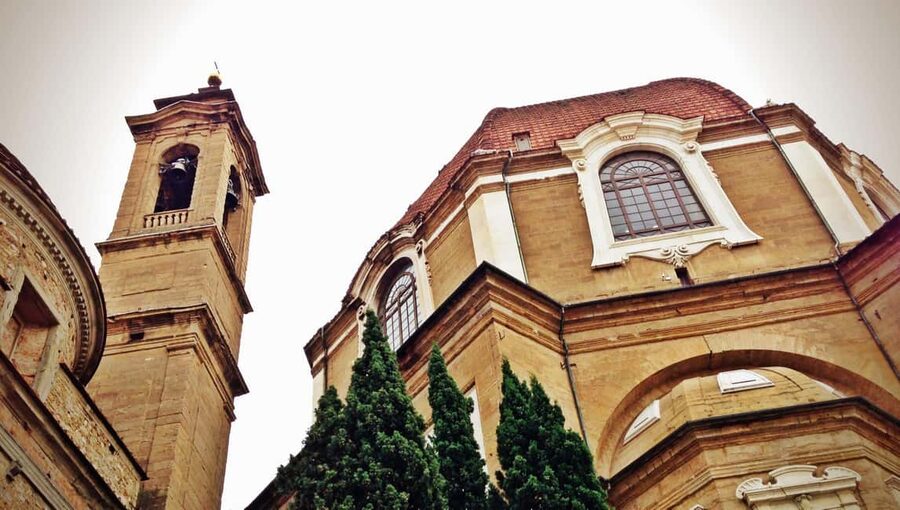
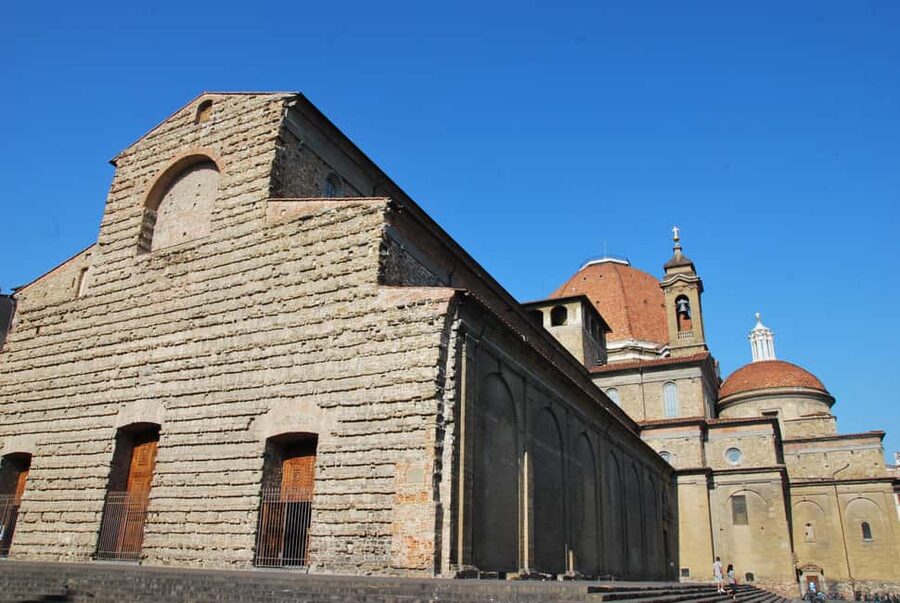
After the palace, the route includes about 15 minutes in Piazza San Lorenzo. This is a brief outdoor transition, not a separate long sightseeing block, but it helps connect the two Medici sites.
The square gives your guide a chance to place the chapels in their urban setting. You will have time for photographs and a short explanation before entering the next monument. Since the tour lasts three hours, this pause also breaks up the indoor visits.
I like this small piece of the itinerary because it keeps the experience from feeling like two unrelated admissions. The palace and chapels are tied together by the family, the neighborhood, and the public image the Medici created in Florence.
Do not expect a long stop here. If you want extensive time in the square, you should return later on your own. On the tour, its value is in orientation and continuity.
A different way to spend the same Florence day:
- Florence: Skip-The-Line Uffizi Gallery Timed Entry Ticket
★ 4.5 · 27,832 reviews - Tuscany Day Trip from Florence: Siena, San Gimignano, Pisa and Lunch at a Winery
★ 5.0 · 21,634 reviews - Florence: Timed Entrance Ticket to Michelangelo’s David
★ 4.6 · 16,983 reviews - Florence: Michelangelo’s David Skip-the-Line Entry Ticket
★ 4.5 · 12,764 reviews
The Medici Chapels: a powerful change of scale
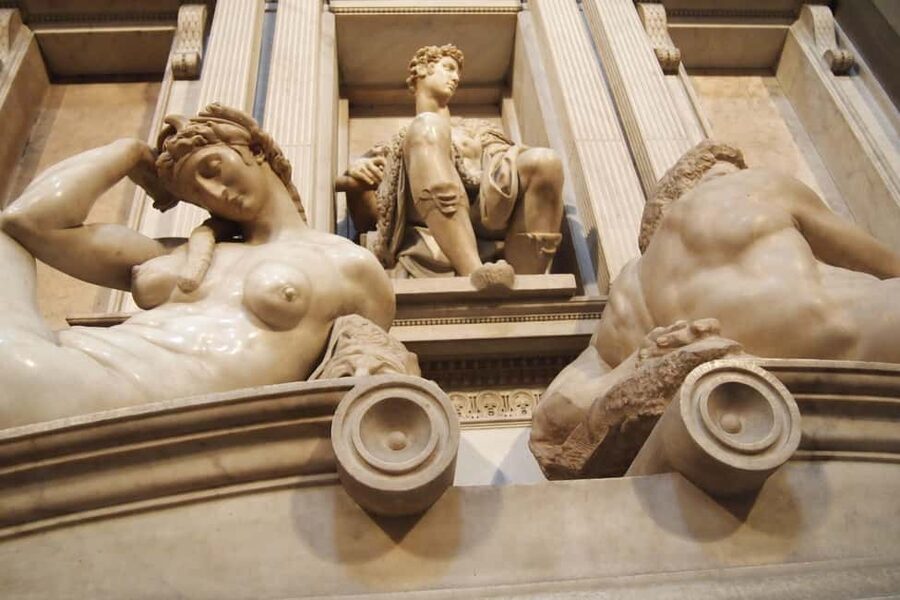
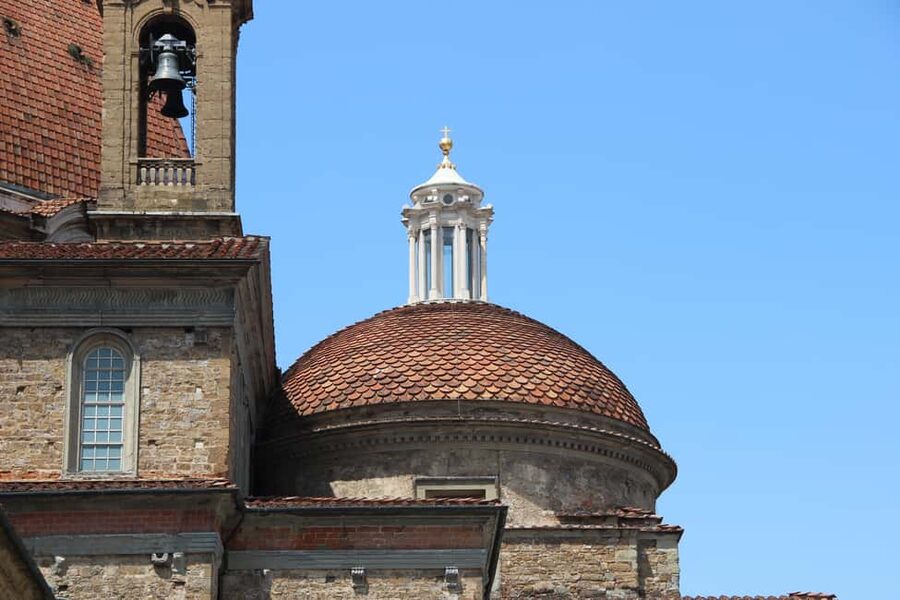
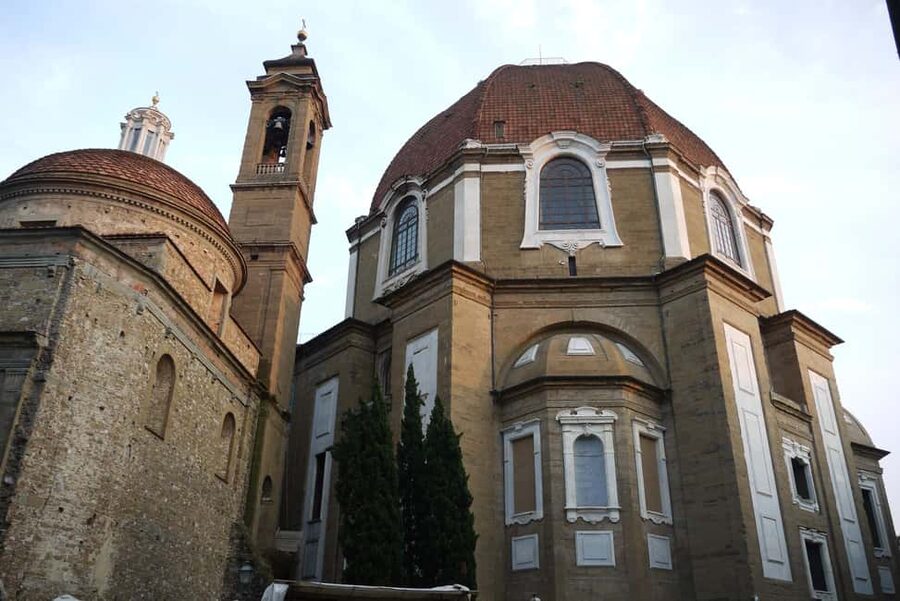
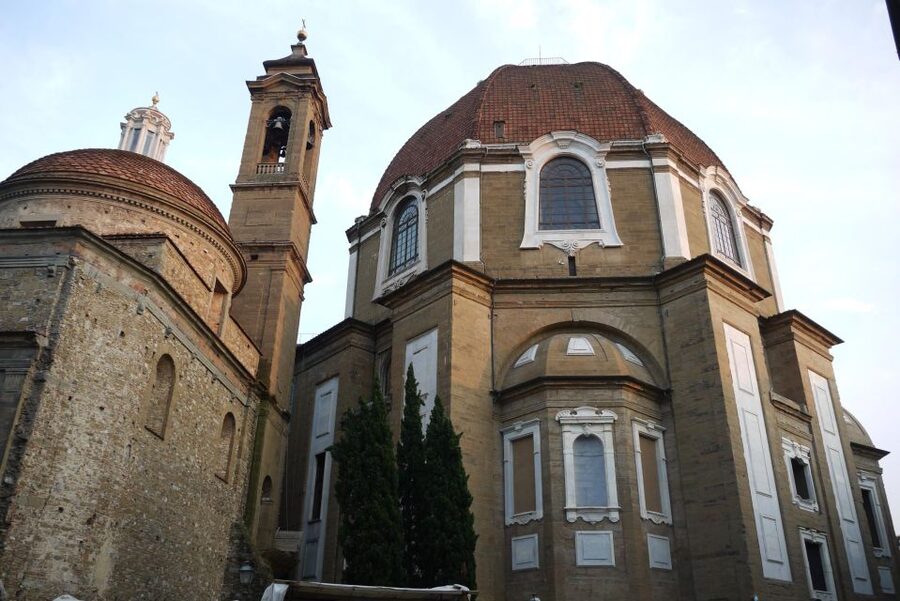
The second main visit lasts about an hour at the Medici Chapels, the family’s burial place. Here, the mood shifts from palace life to dynastic memory.
The complex includes the New Sacristy, the Chapel of the Princes, and the Crypt. Each section presents a different artistic and emotional side of the Medici project, so the guide’s explanations are important.
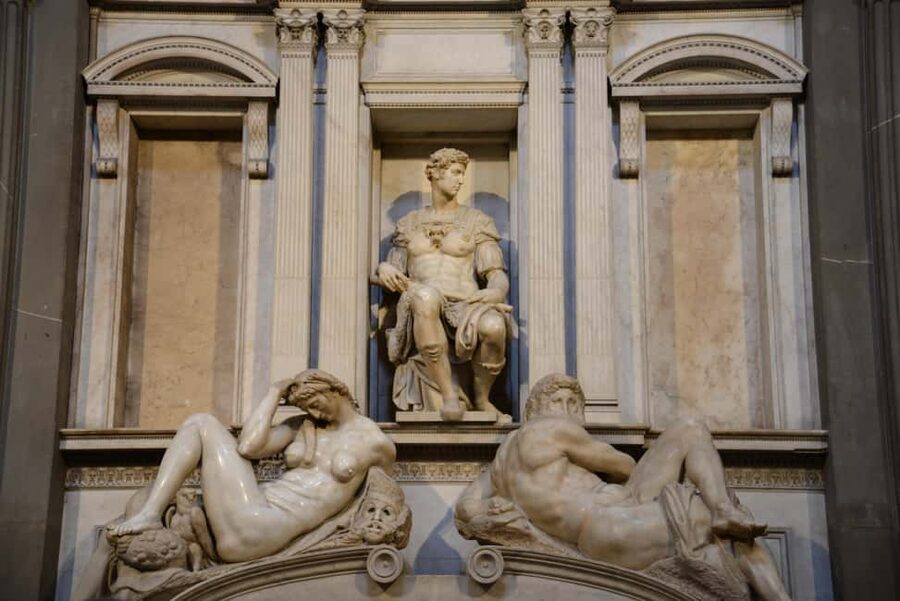
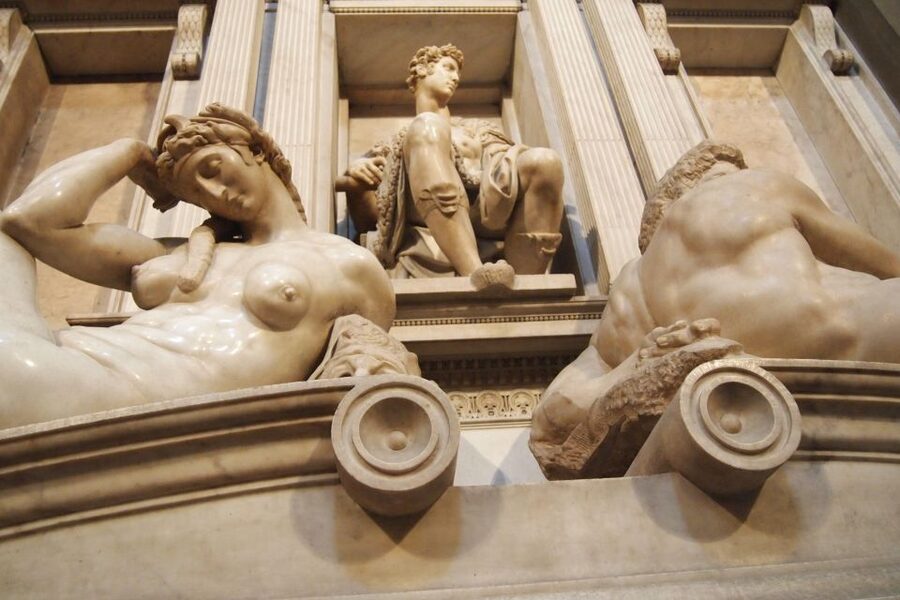
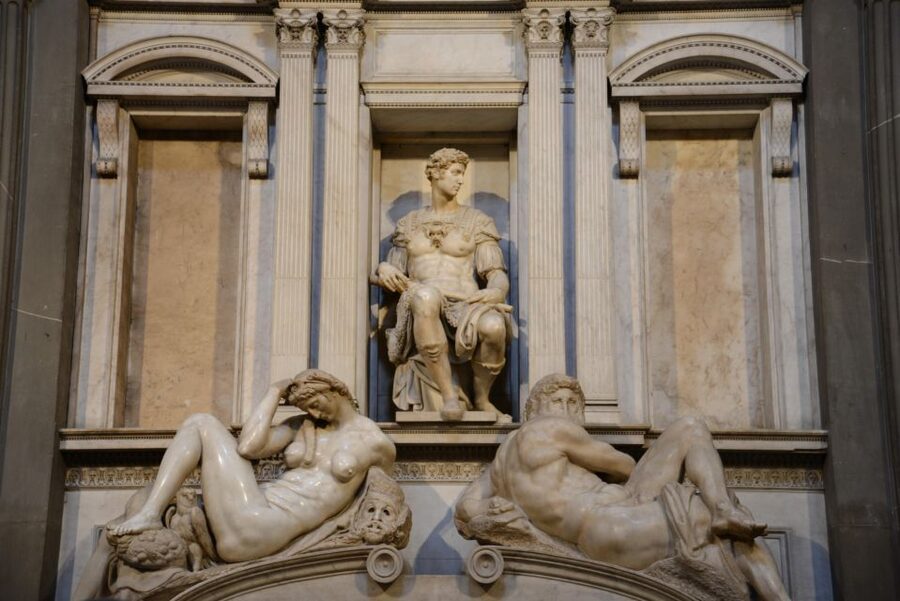
The New Sacristy brings Michelangelo into the story. The chapel is one of the clearest places on this route to see the link between Medici patronage and major Renaissance art. You will be looking at a space shaped by one of Florence’s most famous artists, but the tour also asks why the Medici wanted such a work connected to their family tombs.
This part should appeal to you if you like sculpture, artistic symbolism, or the personal side of political power. The New Sacristy is not just a name on a museum plan. It is part of a family memorial, and that setting changes how you read Michelangelo’s work.
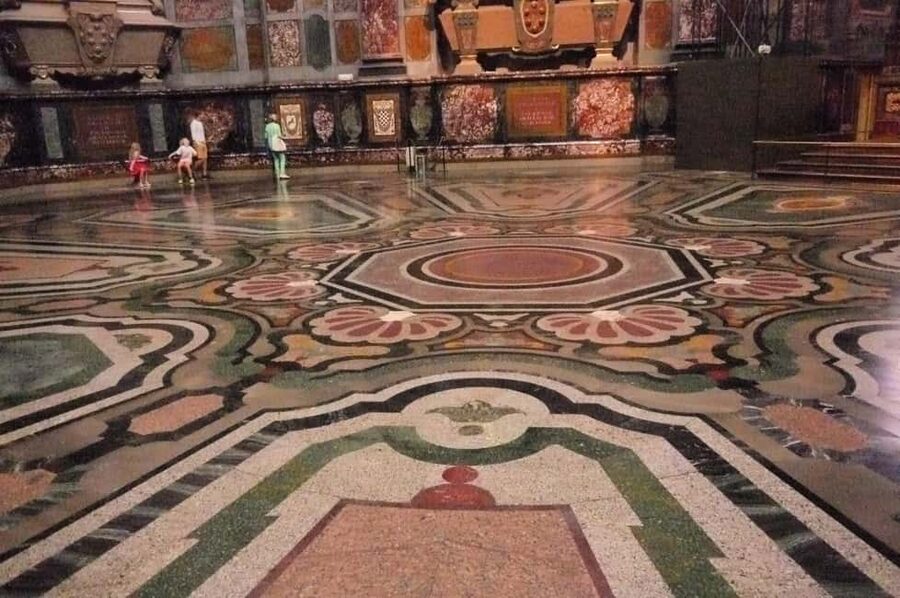
The Chapel of the Princes offers a strong contrast. It is covered with Florentine mosaic made from semi-precious stones, giving the room a highly decorated, almost jewel-like character. The effect is deliberately grand. Where the New Sacristy feels tied to Michelangelo’s sculptural language, the Princes’ Chapel makes Medici wealth visible through materials and surface.
I would not rush between these two spaces. They express different ideas about prestige. One draws power from the artist and the drama of sculpture. The other makes family wealth impossible to miss.
The Crypt completes the visit with a more solemn tone. Members of the Medici family are buried there, and the crypt brings the story back to mortality. After the palace rooms and lavish chapels, this final stop reminds you that the family’s public image was also built around burial, memory, and succession.
Why a private guide makes a difference here
This is a private-group tour, which changes the experience in practical ways. You can ask questions without waiting for a large group to move on, and the guide can adjust the explanation to your interests.
That matters in Florence, where a short visit can easily become a blur of famous names. If you ask about Medici politics, Michelangelo, religious life, or the family’s artistic collections, you have a better chance of getting an answer shaped to your curiosity.
The strongest guide comments from past bookings describe Susanna as enthusiastic and accommodating, Christina as especially strong at explaining the Medici rise and Florence’s changing life, and Rossana as a major reason for an enjoyable visit. Catherina is praised for maintaining attention through all three hours, while Adriana is remembered warmly for making the occasion special.
Those names are not a guarantee of your assigned guide. The company offers live guiding in English, Italian, Spanish, German, French, and Portuguese. Still, they show the kind of experience this tour aims for: a person who can connect art, politics, and local life rather than recite labels.
There is one useful caution. One English-language participant found a guide’s heavy accent hard to understand for much of the visit. That does not cancel the tour’s strengths, but if clear spoken English is essential for you, confirm the language and guide arrangements when booking.
Timing, access, and what to bring
The full experience takes about three hours. The scheduled structure gives roughly one hour to Palazzo Medici Riccardi, 15 minutes in Piazza San Lorenzo, and one hour at the Medici Chapels, with the remaining time allowing for movement, entry, and guiding.
The route starts at the palace and finishes at the Medici Chapels. That is useful if you plan to continue sightseeing around San Lorenzo afterward. It is less useful if you need to return to your starting point immediately, since no return transfer is included in the information provided.
Skip-the-ticket-line entry is included, which can be valuable in Florence. The benefit is not just saving a few minutes. It keeps a three-hour art visit from being weakened by a long wait before the first room.
The activity is listed as wheelchair accessible. You should still share any mobility needs at booking, since the route includes two historic monuments and a move between them.
Bring a passport or identity card. A copy is accepted. This is an easy item to forget, so keep it with your day bag rather than leaving it at your accommodation.
The booking terms also offer free cancellation up to 24 hours before the start for a full refund, plus a reserve-now-and-pay-later option. These policies help if your Florence plans are still shifting, but they do not replace checking the exact starting time and current availability before you commit.
Is the tour worth the cost?
No price is provided here, so I cannot judge the exact amount against other tours. I can judge what you receive for the fee: three hours, two important Medici sites, skip-the-line entry, and a private live guide in a language you select.
That can be good value if you want context and personal attention. Buying separate entry and reading labels on your own may cost less, but you would need to build the Medici story yourself. A standard large-group visit may also be cheaper, while giving you less freedom to ask questions or pause for photographs.
I would especially consider this tour if you are interested in Renaissance art, Florence’s political history, Michelangelo, or the way wealthy families used buildings to shape public memory. It is also a smart choice if you prefer a focused visit over trying to cover the Uffizi, the Duomo, Palazzo Vecchio, and every Medici site in one exhausting day.
You may find it less suitable if you want a slow museum study session. The three-hour schedule covers a lot, and both monuments contain more detail than a guide can explain in one visit. Art specialists may prefer a longer single-site tour, while first-time visitors will likely appreciate the broader story.
Who should book the Medici Palace and Chapels experience?
I would book it for couples, families, and small private groups who want Florence to make sense rather than simply collect famous sights. The route has enough variety to hold attention: palace rooms, a decorated chapel, an outdoor square, Michelangelo, mosaic, and a crypt.
It also works well for you if you have already seen the city’s main religious buildings and want a more focused look at the people who financed and shaped Renaissance Florence. The Medici family’s collections included paintings, sculpture, jewelry, books, manuscripts, and unusual objects, many of which can still be found in Florence.
I would be cautious only if you dislike guided interpretation or need a guaranteed particular guide. The strongest part of the experience is the person explaining the sites, so clear language and a good match with your interests matter.
Should you book it?
Book this tour if you want a compact, well-connected account of Medici Florence. The Chapel of the Magi, Michelangelo’s New Sacristy, the semi-precious stone decoration of the Princes’ Chapel, and the family crypt give you four strong reasons to go, while the private format lets you shape the conversation.
Skip it if your main goal is to spend long, quiet stretches with individual artworks or if you have already studied these two monuments in detail. For most first-time visitors with an interest in Florence’s art and power, though, this is a sensible three-hour choice. Take it early in your stay, listen closely, and use the rest of your time in Florence to spot the Medici influence elsewhere.
FAQ
How long does the Medici Palace and Chapels tour last?
The tour lasts three hours. About one hour is scheduled for Palazzo Medici Riccardi, 15 minutes for Piazza San Lorenzo, and one hour for the Medici Chapels, with additional time for movement and guiding.
Where does the tour begin and end?
It begins at Riccardi Medici Palace and finishes at the Medici Chapels, also known as Cappelle Medicee.
Which sites are included?
The experience includes Palazzo Medici Riccardi, the Chapel of the Magi inside the palace, Piazza San Lorenzo, and the Medici Chapels with the New Sacristy, the Chapel of the Princes, and the Crypt.
Is this a private tour?
Yes. The group type is private, so the experience is arranged for a private group rather than a general shared group.
Which languages are available?
Live guiding is available in English, Italian, Spanish, German, French, and Portuguese.
What identification should I bring?
Bring a passport or identity card. A copy of the document is accepted.
Latest additions around Florence
- Florence: Cathedral Tour & Brunelleschi’s Dome Climb Ticket★ 5.0 · 3 reviews
- Palatina Gallery and Pitti Guided Tour in Florence★ 5.0 · 3 reviews
- Florence Uffizi Gallery Skip-the-line Tour w Art Historian Guide★ 5.0 · 3 reviews
- Private Tour: Pisa and Lucca from Florence★ 5.0 · 3 reviews
- San Gimignano Bike Tour (SOFT)★ 4.5 · 3 reviews
- Florence: Tour of Florence by rickshaw★ 5.0 · 3 reviews
- Center of Florence by golf cart★ 5.0 · 3 reviews
- From Florence: Tour to Siena and San Gimignano by Minivan★ 4.5 · 3 reviews
Medici Tours, compared.

The Best tour in Florence: Renaissance & Medici Tales – guided by a STORYTELLER
Read our review →
The Best Tour in Florence: Renaissance and Medici Tales
Read our review →
Renaissance and Medici Tales Guided Walking Tour
Read our review →
Guided Tour of Medici Family Secrets and Chapels
Read our review →
Pitti Palace, Palatina Gallery and the Medici: Arts and Power in Florence.
Read our review →

Medici Legends & Renaissance Wonders: Florence Small Group Tour
Read our review →Browse the lists this tour appears in