
Reviewed · MEDICI TOURS
The Medici family and the Renaissance with a local art historian
Florence’s Renaissance story begins with a family that rose from modest roots to control money, politics, and culture across Europe. This walking tour follows that rise through San Lorenzo, the Medici quarter, the Duomo, Palazzo Vecchio, and the riverfront, using people and personal drama to make the city’s art easier to understand.
I like the focus on storytelling rather than a lecture, and I like the compact route, which links major sights without asking you to spend the day indoors. The main consideration is that two hours goes quickly, and entrance tickets to places such as San Lorenzo and Palazzo Vecchio are not included.
In This Review
- Key points
- Florence’s Renaissance story begins with the Medici
- Starting at Basilica di San Lorenzo
- Meeting Lorenzo at Palazzo Medici Riccardi
- Understanding the Duomo in 20 minutes
- Reading the Medici message in Piazza della Signoria
- Inside the political heart at Palazzo Vecchio
- Ending by the Arno at Ponte Vecchio
- What the storytelling adds
- Is $100 a fair price?
- Practical details for a smoother walk
- Who should book this Florence walk?
- Should you book The Medici Family and the Renaissance?
- FAQ
- How long does the tour last?
- Where does the tour begin?
- Where does the tour finish?
- What time does the tour start?
- Are admission tickets included?
- What happens if I need to cancel?
Key points
- Medici family focus: Follow the family from its early Florence connections to Lorenzo the Magnificent and later Medici figures.
- Six central locations: Walk from Basilica di San Lorenzo to Palazzo Medici Riccardi, the Duomo, Piazza della Signoria, Palazzo Vecchio, and Ponte Vecchio.
- Local art historian: The tour is led by a local guide, with Deborah and Manuel Messina named among the guides associated with the experience.
- Small group size: The group is limited to 15 people, which should make it easier to hear the guide and ask questions.
- Art and architecture clues: Look for historical details on buildings, hidden passages, towers, symbols, and the reasons Florence’s landmarks were built as they were.
- Practical afternoon route: The tour begins at 2 p.m., lasts about two hours, and ends near the Uffizi Gallery and Ponte Vecchio.
Florence’s Renaissance story begins with the Medici
The Medici family did not inherit a ready-made royal throne. They built influence through banking, alliances, political skill, and careful support of artists and architects. That makes the family an unusually useful guide to Florence: its story connects finance, religion, public power, family ambition, and art.
This experience takes that broad story and places it on the streets. You are not simply shown a church, a palace, or a statue. You are asked to see how these places worked together, and how the Medici family used buildings and art to shape the city’s identity.
The guide’s method is personal and lively. Deborah and Manuel Messina are named as guides connected with the experience, and the strongest descriptions of their approach point to engaging storytelling, historical details, and a knack for showing features that are easy to walk past. That matters in Florence, where a plain-looking wall may hide a political message or a building may reveal its purpose through a tiny detail.
The tour is capped at 15 people. That is a sensible size for a city walk. You still have the energy of a small group, but you are less likely to lose the guide in a narrow street or crowded square.
More Medici trails:
- The Best tour in Florence: Renaissance & Medici Tales – guided by a STORYTELLER
★ 5.0 · 12,316 reviews - The Best Tour in Florence: Renaissance and Medici Tales
★ 5.0 · 10,810 reviews - Florence: Renaissance and Medici Tales Guided Walking Tour
★ 4.8 · 1,549 reviews
Starting at Basilica di San Lorenzo
Meet at Piazza di San Lorenzo at 2 p.m. The first stop is the Basilica di San Lorenzo, one of the best places to begin a Medici-centered walk. The opening section gives you an introduction to Florence and its main symbols before moving into the family story.
The stop is listed at about 15 minutes, so expect an orientation rather than a long church visit. Admission is not included, and the supplied details do not promise interior entry. If you want to see the church inside, check the admission arrangements before booking or plan a separate visit.
San Lorenzo matters because it helps explain the Medici connection to Florence in a physical way. Here, the family story is not an abstract tale about wealthy patrons. It begins in a real part of the city, surrounded by buildings and public spaces that show how religion, family prestige, and civic life overlapped.
I like this opening because it gives you bearings early. Florence can feel like a dense cluster of famous façades when you first arrive. A guide who begins with the city’s symbols and the Medici family gives the rest of the walk a clear thread.
Meeting Lorenzo at Palazzo Medici Riccardi
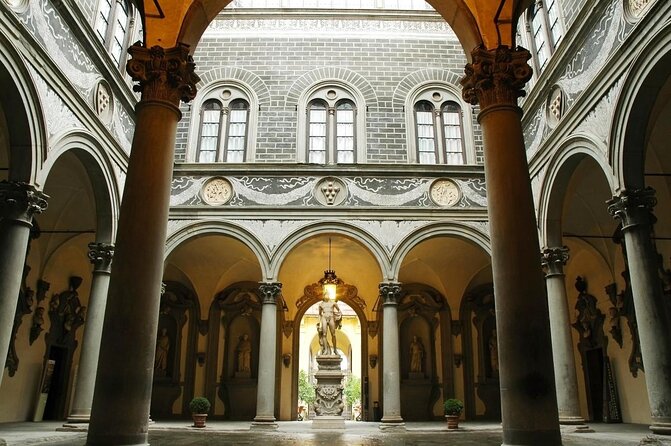
The route continues to Palazzo Medici Riccardi, with about 15 minutes devoted to Lorenzo the Magnificent and other important figures of the Renaissance. The palace is a natural setting for this part of the story because it connects domestic power, wealth, taste, and political influence.
The name Lorenzo the Magnificent can make the period sound like a parade of heroic geniuses. A good guide brings it back to human scale. You hear about the people behind the reputation, their choices, their family interests, and the way cultural support could strengthen political authority.
This is also where the tour’s people-first approach should work best. The aim is not to recite a list of dates. It is to show how a family from Florence became one of Europe’s strongest dynasties in little more than a century.
Palazzo Medici Riccardi requires an admission ticket if you want to enter, and that ticket is not included. The walking portion can still be useful from outside, but you should not assume the tour price covers the palace. If the interior is important to you, ask the provider how the stop is handled on your chosen date.
Understanding the Duomo in 20 minutes
The Duomo is the longest listed stop, at about 20 minutes, and admission is free for this portion of the route. The guide explains why Florence’s cathedral is so important and what makes the huge complex special.
You will have time to look at the cathedral’s scale, its place in the city, and the visual signals that helped Florence present itself as a major power. The stop is not a dome climb or a full cathedral visit. It is an outdoor explanation of one of Florence’s defining sights.
That distinction is useful. Many people arrive at the Duomo and take photographs without knowing what to look for. A short guided stop can give you a framework for reading the building, even if you later return on your own for a longer visit.
Do not expect the guide to cover every detail in 20 minutes. The Duomo area can be crowded, and the tour has several more stops ahead. I would treat this section as a sharp introduction, not a replacement for dedicated cathedral tickets or a museum visit.
More Renaissance art days:
- Florence: Timed Entrance Ticket to Michelangelo’s David
★ 4.6 · 16,983 reviews - Florence: Michelangelo’s David Skip-the-Line Entry Ticket
★ 4.5 · 12,764 reviews - Florence: Timed Entry Ticket to Michelangelo’s David & eBook
★ 4.6 · 4,049 reviews - Michelangelo’s David, Accademia & Uffizi Small Group Tour
★ 4.5 · 1,986 reviews
Reading the Medici message in Piazza della Signoria
At Piazza della Signoria, the tour turns toward another group of Medici figures and the public face of Florence. The stop lasts about 15 minutes and is free because the square itself is open to the public.
This is an important change of setting. San Lorenzo and Palazzo Medici Riccardi help you think about family, religion, and private power. Piazza della Signoria shifts the focus to public image, civic authority, sculpture, and political theater.
The square is also a good place for a guide to point out visual details that you might otherwise miss. One of the strongest details associated with this tour is the explanation of historical items on buildings, hidden passages, and the reasons Florence has so many towers. Those clues help turn the city into something you can read rather than merely photograph.
The stop is short, so stay close and listen carefully. There is plenty to look at in every direction, and the square can pull your attention away from the explanation.
Inside the political heart at Palazzo Vecchio
Palazzo Vecchio follows Piazza della Signoria, with another 15-minute stop. The palace is described as the political heart of Florence, and the guide uses it to explain the city’s political world and its colorful visual language.
Admission is not included. The published information does not make clear whether the group enters the palace or discusses it from the outside, so confirm that point if an interior visit is a priority. Either way, the building gives the guide a strong place to explain how Florence’s ruling families operated in public.
This is where the Medici story becomes less about art alone. Florence’s great works were tied to power. Buildings could announce authority, sculptures could carry political meaning, and public spaces could help a family present itself as the guardian of the city.
I value this stop because it keeps the tour from becoming a simple parade of masterpieces. You get a look at the connection between art and government, which is one of the central ideas behind Renaissance Florence.
Ending by the Arno at Ponte Vecchio
If time permits, the walk finishes at Ponte Vecchio. The listed time is about 10 minutes, and the tour ends on Lungarno Anna Maria Luisa de’ Medici, beside the river, near the Uffizi Gallery and in front of Ponte Vecchio.
The ending is well chosen. After churches, palaces, and civic squares, the river gives you a broad view and a natural pause. You can look back toward the historic center, connect the route’s landmarks, and continue exploring from one of Florence’s most useful locations.
Ponte Vecchio is free to view, but the bridge itself can be busy. The tour may finish here rather than provide a long final talk, especially if earlier stops run over. If the bridge is a major priority, plan extra time after the tour instead of expecting the final 10 minutes to cover everything.
Ending near the Uffizi is also practical. You can continue to the gallery, remain by the river, or walk toward another part of the center. The tour does not include Uffizi admission, so any museum visit requires separate planning.
What the storytelling adds
The central promise here is not access to restricted rooms or a long list of included tickets. It is interpretation. The guide brings together the Medici family, major artists, buildings, towers, hidden routes, and public symbols in a way that gives Florence a human plot.
That approach suits you if dates and names tend to blur together. It is easier to remember a palace when you connect it with the ambitions of the people who commissioned it. It is easier to notice a tower when you understand why towers mattered in Florence.
The guide also appears to adapt the story through personal delivery. Descriptions of Deborah’s engaging manner and Manuel Messina’s use of hidden passages and building details suggest a walk that keeps moving between broad context and small observations. You should still expect the experience to depend partly on the individual guide and the conditions in the city that day.
This is not a formal art course. It is a guided introduction, delivered outdoors across a busy historic center. You will get the most from it if you ask questions and keep an eye on the details the guide points out.
Is $100 a fair price?
At $100, the tour is not a cheap orientation walk. It costs more than many basic city tours, so value depends on what you want from the two hours.
The price makes more sense if you want a specialist guide to connect the Medici family with Florence’s art and architecture. You are paying for a focused route, local interpretation, and a small group of no more than 15 people. For a first afternoon in Florence, that can save you from wandering among famous sights without knowing how they fit together.
The value is less clear if you want long interior visits. Admission to San Lorenzo and Palazzo Vecchio is not included, and the route only allows short stops. You may need separate tickets and additional time if you want to study the churches, palaces, or museums properly.
I would see the tour as a narrative introduction rather than an all-inclusive sightseeing package. It can help you choose which places deserve a return visit, which is useful in a city where every block competes for your attention.
Practical details for a smoother walk
The meeting point is Piazza di San Lorenzo, 13, in Florence. The end point is on the river near the Uffizi Gallery and Ponte Vecchio. The route uses central city streets and is near public transportation.
Bring water and wear comfortable shoes. The tour lasts about two hours, but you will be on your feet and moving between several stops. Good walking shoes matter more than dressing for a formal palace visit.
A mobile ticket is provided, and confirmation arrives when you book. Service animals are allowed, and most people can participate. The experience requires good weather and a minimum number of participants. If poor weather or low enrollment cancels the tour, you are offered another date or experience, or a full refund.
You can cancel for a full refund up to 24 hours before the 2 p.m. start time. Cancellations or changes made within 24 hours are not refunded or accepted, so keep the local cut-off time in mind.
Who should book this Florence walk?
I would recommend it to a first-time visitor who wants a clear story before tackling Florence’s museums. It also suits anyone who enjoys architecture, political history, and the personal side of famous families.
The tour should work well for couples, families with older children, and solo visitors who prefer a small guided group. The short stops keep the pace manageable, while the storytelling gives the walk more shape than a simple route between landmarks.
You may want something else if your main goal is extended time inside museums or churches. Art students and repeat visitors might prefer a longer specialist visit devoted to one collection, one palace, or one artist.
Should you book The Medici Family and the Renaissance?
Book this tour if you want Florence explained through the people who built, funded, and used its most important spaces. The route covers a lot in two hours, and the best reason to choose it is the guide’s story-led approach, with attention to small details, hidden passages, towers, and political meaning.
Skip it if you expect entrance tickets, lengthy interior visits, or a slow study of individual artworks. At $100, you should be comfortable paying for interpretation and organization rather than bundled admissions.
For many visitors, the strongest plan is to take this walk early in a Florence stay, then return to the Duomo, Palazzo Vecchio, or the Uffizi with a better sense of what you are seeing. That is where the experience earns its keep: it gives the city a human story you can carry into the rest of your visit.
FAQ
How long does the tour last?
The tour lasts approximately two hours.
Where does the tour begin?
It begins at Piazza di San Lorenzo, 13, in Florence.
Where does the tour finish?
It finishes on Lungarno Anna Maria Luisa de’ Medici, near the Uffizi Gallery and in front of Ponte Vecchio.
What time does the tour start?
The stated start time is 2 p.m.
Are admission tickets included?
Admission is not included for Basilica di San Lorenzo, Palazzo Medici Riccardi, or Palazzo Vecchio. The Duomo and Piazza della Signoria portions are listed as free, and Ponte Vecchio is also free.
What happens if I need to cancel?
You receive a full refund if you cancel at least 24 hours before the local start time. Cancellations or changes made less than 24 hours before the start are not refunded or accepted.
Latest additions around Florence
- Florence: Cathedral Tour & Brunelleschi’s Dome Climb Ticket★ 5.0 · 3 reviews
- Palatina Gallery and Pitti Guided Tour in Florence★ 5.0 · 3 reviews
- Florence Uffizi Gallery Skip-the-line Tour w Art Historian Guide★ 5.0 · 3 reviews
- Private Tour: Pisa and Lucca from Florence★ 5.0 · 3 reviews
- San Gimignano Bike Tour (SOFT)★ 4.5 · 3 reviews
- Florence: Tour of Florence by rickshaw★ 5.0 · 3 reviews
- Center of Florence by golf cart★ 5.0 · 3 reviews
- From Firenze | Chianti day tour in a classic car★ 5.0 · 3 reviews
Medici Tours, compared.

The Best tour in Florence: Renaissance & Medici Tales – guided by a STORYTELLER
Read our review →
The Best Tour in Florence: Renaissance and Medici Tales
Read our review →
Renaissance and Medici Tales Guided Walking Tour
Read our review →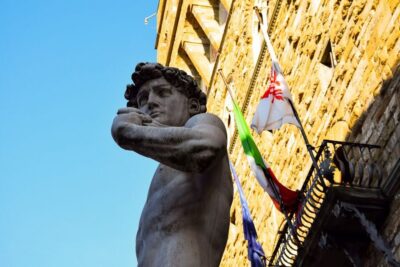
Guided Tour of Medici Family Secrets and Chapels
Read our review →
Pitti Palace, Palatina Gallery and the Medici: Arts and Power in Florence.
Read our review →

Medici Legends & Renaissance Wonders: Florence Small Group Tour
Read our review →Browse the lists this tour appears in