
Reviewed · MEDICI TOURS
The Best tour in Florence: Renaissance and Medici Tales
Florence’s Medici story is best told on foot, where a church façade, palace wall, and public square become clues in a family drama. This two-hour walk links San Lorenzo, the Duomo, Palazzo Vecchio, the Uffizi, and Ponte Vecchio while keeping the focus on people, power, and Renaissance ambition.
I like the route’s strong sense of place and its friendly storytelling style. I also like that guides such as Elizabetta, Elizabeth, and Camilla have made the tour lively for families and first-time visitors. The main consideration is that the tour moves quickly, and admission to museums or monuments is not listed as included, so expect guided views and outdoor commentary rather than a full indoor sightseeing visit.
In This Review
- Key points to know before you book
- Why the Medici theme gives this walk a clear purpose
- Starting at San Lorenzo, where the story gets personal
- Palazzo Medici Riccardi and the family behind the money
- The Duomo complex in one concentrated stop
- Giotto’s Bell Tower and Brunelleschi’s Dome
- Dante’s Florence, a quieter change of mood
- Palazzo Vecchio and Piazza della Signoria
- The Uffizi from the outside, then across the Arno
- What two hours really gives you
- Is the $1.13 price really the full cost?
- Who should book this Florence walk?
- My call: a smart first walk, with realistic expectations
- FAQ
- How long does the tour last?
- Where does the tour begin?
- Where does the tour finish?
- Which languages are available?
- Is the tour wheelchair accessible?
- Are admission tickets included?
- How are the guides paid?
- Can I cancel or pay later?
Key points to know before you book
- Medici stories lead the way: You get three centuries of family power, rivalry, art, and political influence rather than a string of disconnected dates.
- The route covers Florence’s essential sights: San Lorenzo, the Duomo complex, Palazzo Vecchio, the Uffizi, Piazza della Signoria, and Ponte Vecchio all appear in two hours.
- The meeting point is precise: Go to Piazza San Lorenzo, in front of the church façade, not the Medici Chapels, and look for red flags.
- The price needs a second look: The advertised rate is $1.13 per person, but the guide is paid through an optional donation at the end.
- The pace is compact and useful: You finish at Piazza della Signoria with a better map of central Florence and easy access to nearby sights.
- Three languages are offered: You can choose an English, Italian, or Spanish tour when checking availability.
Why the Medici theme gives this walk a clear purpose
Florence can feel like a museum without walls. Every few steps brings another famous building, statue, or square, but it is not always easy to understand how they connect. This tour gives the city a central thread: the Medici family and the Renaissance culture they helped shape.
That focus matters. Instead of hearing only that a palace is old or a church is important, you hear how Florence’s ruling family used religion, architecture, art, and public space to project authority. The stories bring a human scale to places that can otherwise seem grand but distant.
You should expect a storytelling walk, not a long academic lecture. The description promises thrilling Medici tales and secrets that many tourists miss, while the two-hour length keeps the experience approachable. I would choose it early in a Florence stay, when you want context for the city before returning to individual museums and churches.
The walk is also a sensible choice for families. The supplied comments specifically praise Elizabetta’s engaging, fun approach, and one family said their daughters enjoyed the experience too. That suggests the guide’s personality is an important part of the value. Your experience will depend on the person leading your departure, but named guides include Elizabetta, Elizabeth, and Camilla.
More Medici trails:
- The Best tour in Florence: Renaissance & Medici Tales – guided by a STORYTELLER
★ 5.0 · 12,316 reviews - The Best Tour in Florence: Renaissance and Medici Tales
★ 5.0 · 10,810 reviews - Florence: Renaissance and Medici Tales Guided Walking Tour
★ 4.8 · 1,549 reviews
Starting at San Lorenzo, where the story gets personal
Meet in Piazza San Lorenzo, directly in front of the church façade. This detail matters because the square also serves the Medici Chapels, and heading to the wrong entrance could cost you the few minutes you need to find the group.
Look for guides carrying red flags, and arrive 15 minutes early. The walk starts on time, and the guides cannot answer calls or messages once the tour is under way. They remain at the meeting point for another five to ten minutes for a brief introduction, but that is not a reason to cut it close.
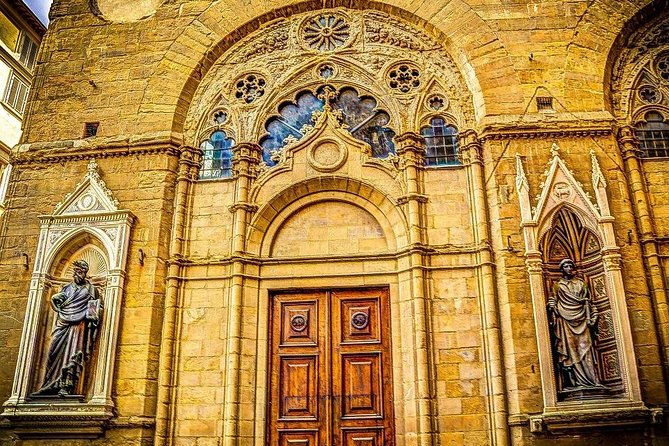
San Lorenzo is a fitting starting point. The basilica is closely tied to the Medici family, and its place at the beginning of the route sets up the connection between family power, religious patronage, and Florence’s artistic growth.
The stop includes a guided visit to the Basilica of San Lorenzo. Since no entrance tickets are listed among the inclusions, check the exact booking details if entering the church is important to you. At minimum, you can expect the guide to use the basilica as the first major setting for the Medici story.
Palazzo Medici Riccardi and the family behind the money
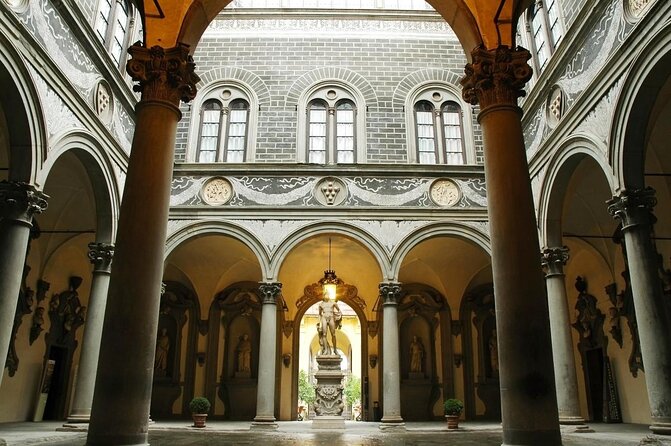
From San Lorenzo, the route continues to Palazzo Medici Riccardi. This palace helps explain how the Medici moved from wealthy merchants and bankers into the center of Florentine political life.
A guided explanation here gives you a useful way to read Florence’s grand buildings. The Medici did not simply collect art for private pleasure. Their commissions and buildings helped shape public opinion, signal taste, and support their position in the city.
The tour’s value is in making that connection plain. You do not need to arrive with a family tree or a working knowledge of Renaissance politics. The guide’s job is to turn a palace stop into a story about influence and ambition.
The route lists a guided tour at the palace, but it does not say that admission is included. If you want to see the interior, confirm that before booking or plan a separate visit. This walk is better understood as an introduction to the setting and its role in the wider story.
The Duomo complex in one concentrated stop
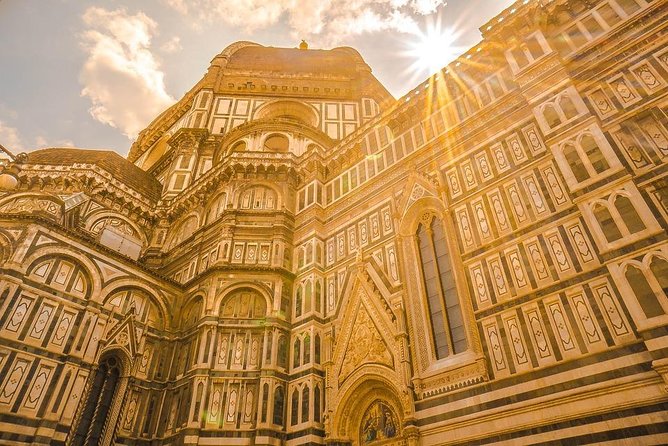
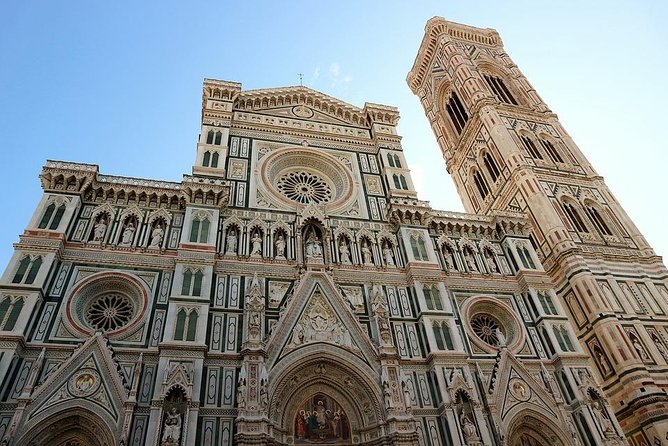
The Florence Duomo complex is the route’s biggest visual landmark. The cathedral, Giotto’s Bell Tower, and Brunelleschi’s Dome are listed as separate stops, which gives the guide room to explain how each part contributes to the whole.
You will see the complex without having to organize the city’s major landmarks yourself. That is helpful on a first day, when the cathedral area can feel crowded and confusing. A guide can point out the difference between the cathedral, the campanile, and the dome while keeping the Medici and Renaissance story moving.
Do not confuse a guided stop with a reserved climb. The information does not include tickets, timed entry, or access to the dome or bell tower. If climbing Brunelleschi’s Dome is a priority, you will need to arrange that separately. This tour gives you orientation and explanation, not a guaranteed ascent.
More Renaissance art days:
- Florence: Timed Entrance Ticket to Michelangelo’s David
★ 4.6 · 16,983 reviews - Florence: Michelangelo’s David Skip-the-Line Entry Ticket
★ 4.5 · 12,764 reviews - Florence: Timed Entry Ticket to Michelangelo’s David & eBook
★ 4.6 · 4,049 reviews - Michelangelo’s David, Accademia & Uffizi Small Group Tour
★ 4.5 · 1,986 reviews
Giotto’s Bell Tower and Brunelleschi’s Dome
Giotto’s Bell Tower deserves its own attention because it forms such a strong part of the Duomo skyline. The stop lets you look at the tower as an artwork and as part of Florence’s effort to display civic and religious importance.
Brunelleschi’s Dome adds another layer. Its scale and engineering made it a defining achievement of the Renaissance, and it gives the guide a natural point for discussing the period’s mix of art, technical skill, competition, and civic pride.
For you, the benefit is comparison. Seeing the tower and dome together helps you understand the Duomo complex as a planned statement rather than a group of unrelated buildings. The route does not promise interior access, so bring your curiosity and camera, but not the expectation of a full monument tour.
Dante’s Florence, a quieter change of mood
The House of Dante provides a change of pace from Florence’s most visited sights. It connects the walking route with Dante Alighieri and the medieval city that came before the full Renaissance flowering.
That stop is valuable because Florence’s story did not begin with the Medici. The city’s literature, rivalries, neighborhoods, and older traditions form part of the background that made later cultural achievements possible.
The wording identifies a guided stop at the House of Dante, but it does not specify museum entry. Treat it as a place-based history stop unless your booking details say otherwise. It should appeal to you if you like literary history as much as architecture.
Palazzo Vecchio and Piazza della Signoria
The walk then reaches Palazzo Vecchio and Piazza della Signoria, two places where Florence’s political story becomes public and easy to see.
Palazzo Vecchio is not just another palace. Its position beside the square connects government, ceremony, and the city’s public identity. A guide can help you understand why this area became such a powerful stage for Florence’s leaders and artists.
Piazza della Signoria adds statues, open space, and a strong sense of civic theater. This is one of the points where the tour’s storytelling format should work especially well. You are not looking at a façade in isolation. You are hearing how power was displayed in the very heart of the city.
Again, no entrance tickets are included in the stated package. If you want to tour Palazzo Vecchio’s interior, plan that as a separate activity unless availability information confirms otherwise.
The Uffizi from the outside, then across the Arno
The Uffizi Gallery is one of Florence’s essential names, and the route includes a guided stop there. You should not assume that this means entry to the collection. No museum admission appears among the inclusions, and a two-hour walk covering this many landmarks is designed more as a city overview than a gallery visit.
Even from outside, the Uffizi gives the guide a strong setting for discussing Medici patronage and Florence’s role in the Renaissance. The museum’s name is closely tied to the family’s support of art and their transformation of private collections and civic buildings into part of Florence’s cultural identity.
This is one reason I would not use the tour as your only art experience. It can give you the background you need, but you will still want separate time for the Uffizi if its paintings and sculpture are high on your list. The tour helps you decide what deserves that extra time.
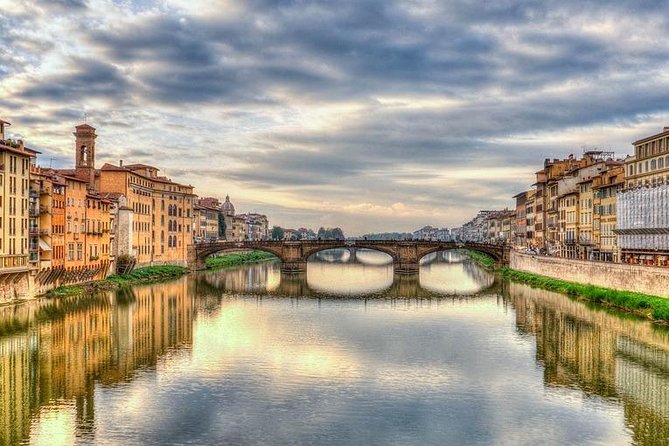
The route continues to Ponte Vecchio, Florence’s famous bridge over the Arno. It is a satisfying final landmark because the walk shifts from political squares and monumental buildings to one of the city’s most recognizable crossings.
The bridge stop also gives you a chance to absorb the route as a whole. You have moved from San Lorenzo through the religious center, the seat of government, the Uffizi, and finally toward the river. That sequence makes Florence feel compact and connected.
What two hours really gives you
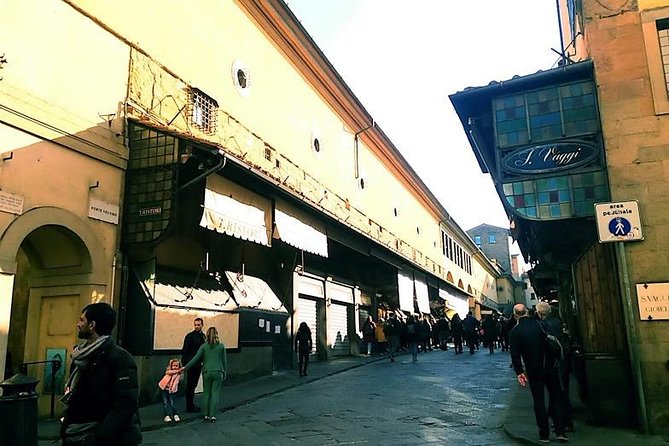
Two hours is long enough for a useful first look, but short enough to fit around a museum reservation or an afternoon train. You cover a lot of ground, so comfortable shoes are a must. The route remains in central Florence, and it ends at Piazza della Signoria, not at Ponte Vecchio, despite the bridge being the final listed sightseeing stop.
The compact timing is both a strength and a limit. You get a broad map of the city and a focused narrative, but you should not expect long pauses at every landmark. If you prefer detailed architectural analysis or extended time inside churches and museums, book separate visits.
The tour is listed as wheelchair accessible, which makes it a practical option for many visitors who want a guided central-city route. You should still confirm any personal access needs when booking, since the available information does not describe every surface, entrance, or stop in detail.
Live guiding is offered in English, Italian, and Spanish. Check the available departure times and language before you reserve, since the start time is not fixed in the information provided.
Is the $1.13 price really the full cost?
The advertised price is $1.13 per person, an unusually low figure for a two-hour guided walk. On paper, that makes the tour a remarkable value for anyone who wants orientation without committing much money.
There is an important catch. The guide is not paid through a standard tour fee. At the end, you may offer a donation, and those donations are described as the guides’ only compensation. The donation is optional, but it is the practical way to reward the person who leads the experience.
I would treat the listed price as a starting price, not the complete measure of value. If the guide gives you an engaging two hours, plan to contribute an amount that feels fair to you. The exact amount is not specified, so I will not invent a suggested figure. Just understand that the low booking price does not mean the guide’s work is cost-free.
The booking terms are flexible. You can cancel up to 24 hours ahead for a full refund, and you can reserve now and pay later. Those policies are useful if your Florence schedule is still changing.
Who should book this Florence walk?
I would recommend it most strongly to first-time visitors who want a quick map of central Florence and a story to connect the major sights. It also fits families, especially if your children respond better to people and drama than to long blocks of dates.
It suits you if you enjoy walking, want a local guide, and like seeing famous places alongside less obvious details. The Medici theme gives the tour more shape than a standard list of landmarks.
You may want something else if you are looking for museum entry, a dome climb, or a slow architectural study. Those features are not included in the stated tour, and the number of stops means the pace is likely purposeful rather than leisurely.
Guide quality is central here. Elizabetta and Elizabeth are praised for making the experience engaging and enjoyable, while Camilla is specifically described as fantastic. You cannot necessarily request one of them, so book this for the format and subject, not on the assumption that a particular guide will lead your group.
My call: a smart first walk, with realistic expectations
Book this tour if you want Florence’s famous center explained through Medici power and Renaissance stories. The route is broad, the price is low, the languages are useful, and the guide-led format can make the city easier to understand from the start.
Go in knowing what you are buying: a two-hour outdoor-focused orientation with storytelling, not a pass to Florence’s museums and monuments. Arrive early at the church façade in Piazza San Lorenzo, find the red flag, wear comfortable shoes, and remember that the guide depends on donations.
For a first morning or early afternoon in Florence, this is a sensible choice. It gives you the city’s main landmarks, a stronger sense of how they fit together, and a clear list of places you may want to revisit on your own.
FAQ
How long does the tour last?
The walking tour lasts two hours. Check availability for the starting times offered on your chosen date.
Where does the tour begin?
The meeting point is Piazza San Lorenzo, in front of the Basilica of San Lorenzo church façade, not in front of the Medici Chapels. Look for guides with red flags.
Where does the tour finish?
The activity ends at Piazza della Signoria. This is also near the Palazzo Vecchio, the Uffizi, and other central Florence sights.
Which languages are available?
Live guiding is available in English, Italian, and Spanish. Check availability to select the language and departure time.
Is the tour wheelchair accessible?
Yes. The activity is listed as wheelchair accessible.
Are admission tickets included?
The listed inclusion is professional tour guide service. Admission tickets for the basilica, Palazzo Medici Riccardi, the Duomo complex, the House of Dante, Palazzo Vecchio, or the Uffizi are not listed as included, so confirm access details before booking.
How are the guides paid?
The tour asks for an optional donation at the end. These donations are described as the only compensation for the guides, although there is no obligation to contribute.
Can I cancel or pay later?
You can cancel up to 24 hours in advance for a full refund. The reserve-now, pay-later option lets you book without paying immediately.
Latest additions around Florence
- Florence: Cathedral Tour & Brunelleschi’s Dome Climb Ticket★ 5.0 · 3 reviews
- Palatina Gallery and Pitti Guided Tour in Florence★ 5.0 · 3 reviews
- Florence Uffizi Gallery Skip-the-line Tour w Art Historian Guide★ 5.0 · 3 reviews
- Private Tour: Pisa and Lucca from Florence★ 5.0 · 3 reviews
- San Gimignano Bike Tour (SOFT)★ 4.5 · 3 reviews
- Florence: Tour of Florence by rickshaw★ 5.0 · 3 reviews
- Center of Florence by golf cart★ 5.0 · 3 reviews
- From Florence: Tour to Siena and San Gimignano by Minivan★ 4.5 · 3 reviews
Medici Tours, compared.

The Best tour in Florence: Renaissance & Medici Tales – guided by a STORYTELLER
Read our review →
The Best Tour in Florence: Renaissance and Medici Tales
Read our review →
Renaissance and Medici Tales Guided Walking Tour
Read our review →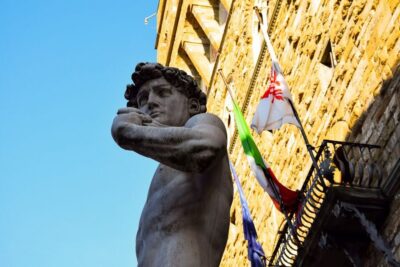

Guided Tour of Medici Family Secrets and Chapels
Read our review →
Pitti Palace, Palatina Gallery and the Medici: Arts and Power in Florence.
Read our review →

Medici Legends & Renaissance Wonders: Florence Small Group Tour
Read our review →Browse the lists this tour appears in