
Reviewed · RENAISSANCE ART TOURS
LGBTQ + friendly Renaissance Gay life in Florence tour
Florence’s Renaissance was not only a story of artists, bankers, and grand churches. This two-hour LGBTQ+ walking tour looks at the men and women whose private lives were shaped by power, religion, law, prostitution, and public shame. Guide Mila Lavorini leads you through familiar squares and lesser-known lanes, linking famous buildings to stories often left out of standard city tours.
I like two things right away. First, the route gives you a fresh way to see major sights such as Ponte Vecchio and Piazza della Signoria. Second, the small group, capped at 10 people, leaves room for questions and a more personal exchange with Mila. The subject can be frank, though, so this is not the right choice if you want a light sightseeing stroll with no discussion of punishment, prostitution, or same-sex relationships.
In This Review
- Key points to know before booking
- Why this Florence tour feels different
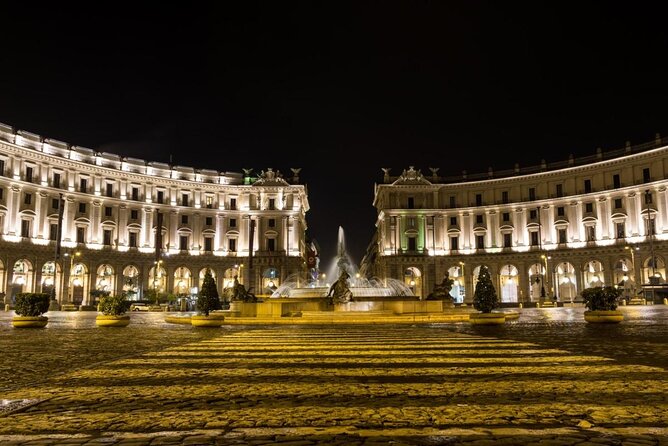
- Starting at Piazza della Repubblica
- Palazzo Strozzi and the price of breaking rules
- Piazza Santa Trinita and the Spini family palace
- Gian Gastone de’ Medici and forbidden court life
- Ponte Vecchio and Lorenzo’s court of pleasure
- Chiasso del Buco and a medieval gay district
- Piazza della Signoria and an early Pride connection
- Orsanmichele, Leonardo, and women’s work
- How the two-hour format works
- Is $30.07 a fair price?
- Who should book this walk?
- Should you book the Renaissance gay life tour?
- FAQ
- Where does the tour begin?
- Where does the tour end?
- How long does the tour last?
- What language is the tour offered in?
- How many people can join the group?
- Are headsets included?
- Are entrance tickets included?
- Can I cancel for a full refund?
Key points to know before booking
- LGBTQ+ history with a Florence focus: Learn how same-sex relationships, gender, prostitution, and public morality were treated in the city.
- Mila Lavorini as your guide: Expect a warm, lively approach, clear explanations, humor, and plenty of room for questions.
- Major sights with a different lens: The route includes Piazza della Repubblica, Palazzo Strozzi, Ponte Vecchio, Piazza della Signoria, and Orsanmichele.
- A small group of no more than 10: Headsets help you follow the guide while walking through central Florence.
- A 2-hour evening option: The tour fits neatly into a Florence itinerary and works well as an early introduction to the city.
- Good value at $30.07: You are paying for a focused history lesson, a local route, and a point of view that ordinary city tours rarely cover.
Why this Florence tour feels different
Most first visits to Florence follow a familiar line: the Duomo, the Uffizi, Michelangelo’s David, the Medici, and the Renaissance masters. This walk keeps those names and places, but asks different questions. Who could love whom? Which acts were punished? How did powerful families protect their own interests? What happened when an artist or ruler became the subject of public suspicion?
That change in focus is the main reason to book. You are not simply looking at old stones. You are learning how people in Florence understood sexuality, reputation, masculinity, and social rank.
The tour also avoids treating LGBTQ+ history as a modern addition pasted onto an old city. The subject is tied to political power, church teaching, family alliances, court life, and law. That makes the experience useful even if you already know Florence’s headline stories.
Mila’s approach is one of the strongest parts of the experience. She is described as warm, thoughtful, entertaining, and eager to answer questions. Her humor keeps the walk moving, while her attention to difficult subjects helps the tour remain respectful rather than sensational.
More Renaissance art days:
- Florence: Timed Entrance Ticket to Michelangelo’s David
★ 4.6 · 16,983 reviews - Florence: Michelangelo’s David Skip-the-Line Entry Ticket
★ 4.5 · 12,764 reviews - The Best tour in Florence: Renaissance & Medici Tales – guided by a STORYTELLER
★ 5.0 · 12,316 reviews
Starting at Piazza della Repubblica
The meeting point is at the Hard Rock Cafe on Via dei Brunelleschi, close to Piazza della Repubblica. This is a convenient central location, near public transportation and within easy reach of Florence’s main historic sights.
The opening stop takes about 10 minutes. Here, Mila sets up the basic idea of gay life in Renaissance Florence and gives you the context needed for the rest of the route. This introduction matters because modern terms do not always fit neatly onto medieval and Renaissance society.
You can expect discussion of how people understood same-sex behavior, how public reputation shaped daily life, and how the city’s powerful institutions responded. The guide’s job is not to pretend that Renaissance Florence had a modern LGBTQ+ identity. Instead, she helps you see the limits of the evidence and the force of the laws and social rules that governed private behavior.
This is also where the small-group format begins to pay off. With no more than 10 people, you can ask for clarification without trying to speak over a crowd. Headsets are included, which is useful on a city walk where traffic, voices, and street noise can make a soft-spoken guide hard to hear.
Palazzo Strozzi and the price of breaking rules
The stop at Palazzo Strozzi lasts about five minutes, but the subject is weighty. Mila explains laws and penalties connected with sexual behavior. The palace itself gives the talk an appropriate setting, since Florence’s great families were closely tied to the city’s political and legal life.
This part of the walk helps you understand an important imbalance. Rules about sexuality were not applied in a simple or equal way. Class, influence, age, reputation, and connections could all shape how a person was treated. A discussion of punishment becomes more useful when you see it as part of Florence’s wider system of power.
You should be ready for direct material here. The tour is educational, but it does not soften every historical detail. That is a benefit if you want an honest account. It may feel uncomfortable if you prefer only the artistic and architectural side of Florence.
Piazza Santa Trinita and the Spini family palace
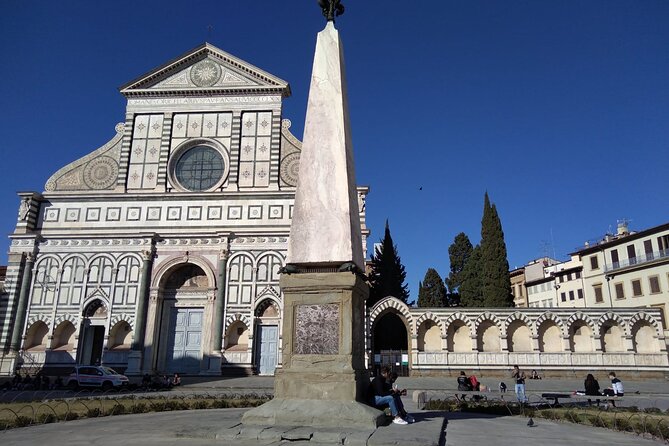
At Piazza Santa Trinita, the group pauses to look at the Spini family palace. The stop is short, about five minutes, but it adds a clear link between architecture and social rank.
Florence’s palaces were not just elegant homes. They represented family standing, money, access, and influence. In a tour about private life, that setting helps explain why sexuality could become a public concern. A person’s conduct could affect a family’s name, political future, and place in the city.
The square also keeps the walk grounded in visible Florence. You are not spending two hours in an abstract lecture room. You are hearing stories while looking at the buildings and streets connected with the city’s ruling families.
More Florence options worth a look before you decide
- Florence: LGBTQ Renaissance Walking Tour with Mila
★ 4.9 · 85 reviews
Gian Gastone de’ Medici and forbidden court life
One of the tour’s more unusual subjects is Gian Gastone de’ Medici, the last Grand Duke of Tuscany. Mila discusses his secret and forbidden life, bringing the Medici story into the LGBTQ+ history of Florence.
This is a useful counterweight to the usual Medici narrative. Standard tours often focus on patronage, banking, politics, and art. Here, the final Medici ruler appears as a person whose private life was entangled with court expectations and public authority.
You might find this section especially interesting if you already know the basic Medici story. The tour does not present power as a shield that erased every problem. Instead, it examines how rank could create privacy, protection, and pressure at the same time.
Ponte Vecchio and Lorenzo’s court of pleasure
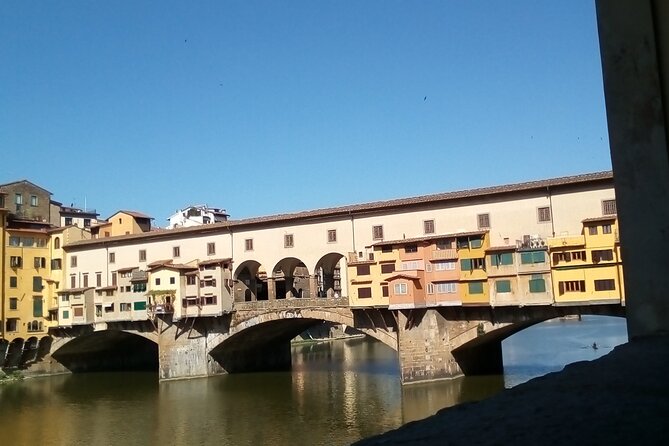
The walk reaches Ponte Vecchio, one of Florence’s most famous views. This stop takes about 15 minutes and turns toward Lorenzo de’ Medici, his philosophy, and the atmosphere of his court.
Lorenzo the Magnificent is usually presented as a patron of art and poetry. This tour adds the pleasures, social codes, and personal relationships of court life to that picture. You get a closer look at how a powerful cultural circle could make room for ideas and behavior that were not accepted equally across society.
That contrast is central to the tour. Florence could be intellectually open and artistically ambitious while also imposing severe controls on private conduct. A ruler’s court was not the same world as an ordinary citizen’s neighborhood.
Ponte Vecchio is also a good point to take stock of the route. You are moving through some of the city’s most photographed spaces, but the guide keeps asking you to look past the postcard view. The bridge is not just a scenic crossing. It becomes part of a story about power, desire, status, and who was allowed to live freely.
Chiasso del Buco and a medieval gay district
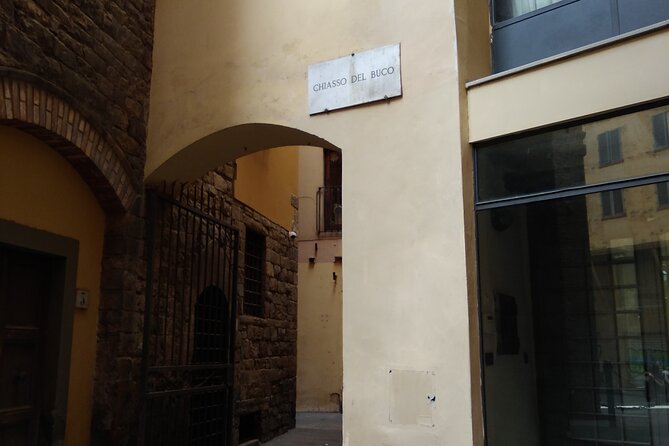
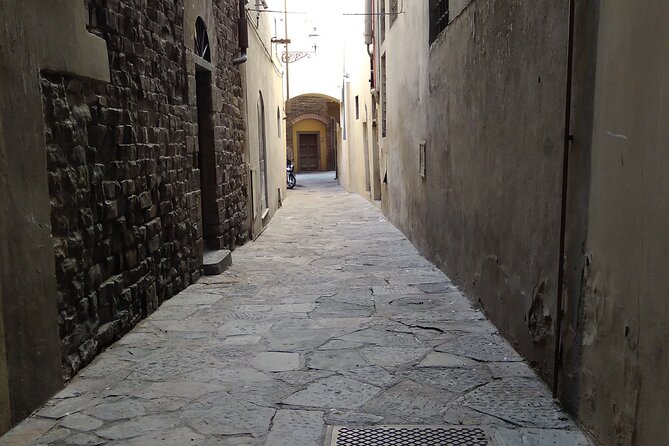
Chiasso del Buco provides one of the route’s less familiar settings. The group spends about 10 minutes walking through this medieval area associated with gay life.
A narrow lane like this makes the subject feel more immediate. Rather than hearing only about rulers and famous artists, you are brought into the ordinary street fabric of medieval Florence. The area offers a chance to think about where people met, how reputations spread, and how private behavior could become known in a tightly packed city.
The wording around a medieval gay area should be understood with care. People in the Middle Ages and Renaissance did not use today’s identity categories in the same way. The value of this stop is not to force a modern label onto the past. It is to examine patterns of same-sex behavior and social response while keeping the period’s own rules and language in view.
Piazza della Signoria and an early Pride connection
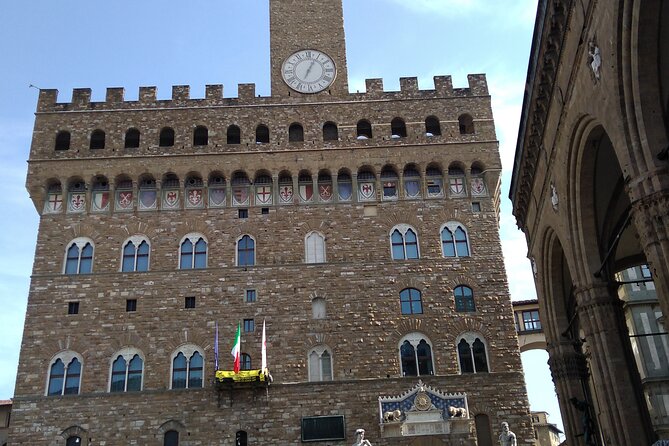
The longest pause comes at Piazza della Signoria, where the guide discusses the place associated with the first Pride in the 16th century. You also get a view of the copy of Michelangelo’s David.
This is a powerful location for the tour’s themes. Piazza della Signoria is a public political space, filled with reminders of authority, judgment, art, and civic identity. The discussion here connects public protest and sexual history to the same square where Florence displayed its power.
The David copy is familiar, but the surrounding story is less so. That is the point of the stop. You may have photographed the statue before, yet now you are considering how public bodies, male beauty, moral judgment, and civic symbolism could overlap.
Allow about 20 minutes here. The extra time gives Mila room to explain the historical setting and answer questions. If you want a tour that moves quickly from one monument to another, this pause may feel long. If you enjoy discussion and context, it is one of the most rewarding parts.
Orsanmichele, Leonardo, and women’s work
The final listed stop is the Church and Museum of Orsanmichele. Here, Mila discusses Leonardo da Vinci, who was denounced twice for sodomy, along with the importance of female prostitution.
The Leonardo story is a good reminder that famous artists were not separate from the legal and social systems of their day. His reputation today is immense, but he still lived under the same rules, accusations, and public pressures as others in Florence.
The discussion of prostitution widens the tour beyond a narrow focus on men. It looks at the role women played in the city’s sexual economy and how their work was understood, regulated, or used by local society. This gives you a fuller picture of how gender and sexuality operated together.
Orsanmichele is also a fitting final stop because it brings together religion, art, commerce, and public life. The church and museum setting reinforces the fact that sexual behavior was not treated as a private matter alone. Religious teaching, civic law, artistic culture, and economic life all touched it.
How the two-hour format works
The route lasts about two hours, with stops ranging from five to 20 minutes. That is enough time to develop a real theme without taking over your whole day.
You should wear comfortable shoes, since the experience is a walking tour through central Florence. No museum admission is listed for the stops, so the price covers the guided experience rather than entry to paid attractions. Headsets are included, which helps keep the group together and the commentary audible.
The tour is offered in English and uses a mobile ticket. Confirmation arrives at booking, and the activity ends back at the meeting point. The route is near public transportation, and service animals are allowed. Most people can participate, but the supplied information does not describe the exact walking distance or step-free route, so you should ask the operator if you need detailed mobility advice.
Some departures take place in the evening. That timing can work well because you can spend the day at museums and churches, then use the walk to read Florence through a different set of stories.
Is $30.07 a fair price?
At $30.07 per person, this is a reasonable price for a two-hour small-group tour in central Florence. You are not paying for attraction admissions, but you are paying for a specialist subject, a carefully chosen route, headsets, and a group size limited to 10.
The value depends on what you want from a city tour. If you only need directions between famous monuments, a free walk or guidebook may do the job. If you want a focused account of LGBTQ+ life that links major sights to overlooked stories, the price is easier to justify.
The strongest value comes from the guide’s interpretation. The buildings are free to see on your own. The connections between the Spini family, Medici power, laws, Leonardo, prostitution, and public spaces are what you are really buying.
The tour is often booked well ahead, with an average booking time of about 36 days before the experience. That suggests you should reserve early if the date matters, especially because the group is small.
Who should book this walk?
I would recommend it to anyone who wants Florence beyond the standard art-history route. It suits LGBTQ+ visitors, allies, students of history, couples, and curious first-time visitors who want a more personal way into the city.
It is also a strong choice for repeat visitors. You may already know Piazza della Signoria, Ponte Vecchio, and the Medici names. Mila’s route gives those familiar places a new purpose.
You should think twice if you want a purely architectural tour, dislike frank discussions of sex and punishment, or need a clearly documented accessible route before booking. The subject is respectful, but it is not sanitized.
Should you book the Renaissance gay life tour?
Book it if you want a focused, human account of Florence’s past and are willing to look beyond the usual Renaissance heroes. Mila Lavorini brings warmth, humor, and clear explanations to difficult material, while the small group gives you a real chance to ask questions.
The tour is especially good near the start of a Florence stay. It can change how you read the city for the rest of your visit, from Medici palaces to public squares. At $30.07, it offers a distinctive perspective for less than many larger sightseeing tours.
Skip it only if your interests stop at art and architecture, or if discussions of historical sexuality and punishment are not for you. For everyone else, this is a thoughtful and unusual way to meet Florence.
FAQ
Where does the tour begin?
The tour begins at the Hard Rock Cafe, Via dei Brunelleschi 1, 50123 Florence, Italy.
Where does the tour end?
The activity ends back at the meeting point.
How long does the tour last?
The tour lasts approximately two hours.
What language is the tour offered in?
The tour is offered in English.
How many people can join the group?
The group has a maximum of 10 people.
Are headsets included?
Yes. Headsets are included in the experience.
Are entrance tickets included?
The listed stops have free admission, and no other entrance items are included. Any items not listed as included are excluded.
Can I cancel for a full refund?
Yes. You can cancel up to 24 hours before the experience start time for a full refund. Cancellations or changes made less than 24 hours before the start time are not accepted for a refund.
Latest additions around Florence
- Florence: Cathedral Tour & Brunelleschi’s Dome Climb Ticket★ 5.0 · 3 reviews
- Palatina Gallery and Pitti Guided Tour in Florence★ 5.0 · 3 reviews
- Florence Uffizi Gallery Skip-the-line Tour w Art Historian Guide★ 5.0 · 3 reviews
- Private Tour: Pisa and Lucca from Florence★ 5.0 · 3 reviews
- San Gimignano Bike Tour (SOFT)★ 4.5 · 3 reviews
- Florence: Tour of Florence by rickshaw★ 5.0 · 3 reviews
- Center of Florence by golf cart★ 5.0 · 3 reviews
- From Firenze | Chianti day tour in a classic car★ 5.0 · 3 reviews
Renaissance Art Tours, compared.

Timed Entrance Ticket to Michelangelo’s David
Read our review →
Michelangelo’s David Skip-the-Line Entry Ticket
Read our review →
The Best tour in Florence: Renaissance & Medici Tales – guided by a STORYTELLER
Read our review →
The Best Tour in Florence: Renaissance and Medici Tales
Read our review →
Timed Entry Ticket to Michelangelo’s David & eBook
Read our review →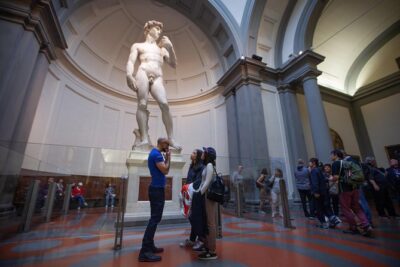
Michelangelo’s David, Accademia & Uffizi Small Group Tour
Read our review →
Michelangelo’s David Entrance Ticket and Audio App
Read our review →
Renaissance and Medici Tales Guided Walking Tour
Read our review →Browse the lists this tour appears in