
Reviewed · RENAISSANCE ART TOURS
Leonardo Da Vinci Museum Entrance Ticket
Leonardo da Vinci’s drawings can look like wild ideas on paper. Here, many become full-size working models, from flying machines to military devices. The Florence museum focuses on Leonardo the inventor, engineer, and anatomist, not Leonardo the painter.
I like the hands-on displays, which give children and curious adults something to do beyond reading labels. I also like the easy central location and modest $12.55 price, especially when you need a one-hour stop between Florence’s bigger sights.
The main thing to understand is that this is a museum of replicas and reconstructions, not a gallery of original Leonardo paintings or manuscripts. If you want the Mona Lisa or a quiet look at Renaissance art, this is the wrong stop. If you want to see his ideas turned into machines, it makes much more sense.
In This Review
- Key points to know before you go
- Leonardo’s machines, not his paintings
- Four rooms with four different sides of Leonardo
- What actually works and what you can touch
- A short film and a broader picture of Leonardo
- The Galleria Michelangelo setting
- How long the visit takes
- Is $12.55 a fair price?
- A self-guided visit with no formal guide
- Who will enjoy this museum most?
- Common mistakes to avoid
- Cancellation and practical booking details
- Should you book the Leonardo da Vinci Museum?
- FAQ
- Where is the Leonardo da Vinci Museum located?
- How much does admission cost?
- How long should I plan for the museum?
- What are the museum’s opening hours?
- Is this a guided tour?
- Is the ticket offered in English?
- What does the admission ticket include?
- Are food and drinks included?
- Does the ticket include hotel transportation?
- Can I cancel for a refund?
- How many models are displayed?
- Are the machines original Leonardo artifacts?
Key points to know before you go
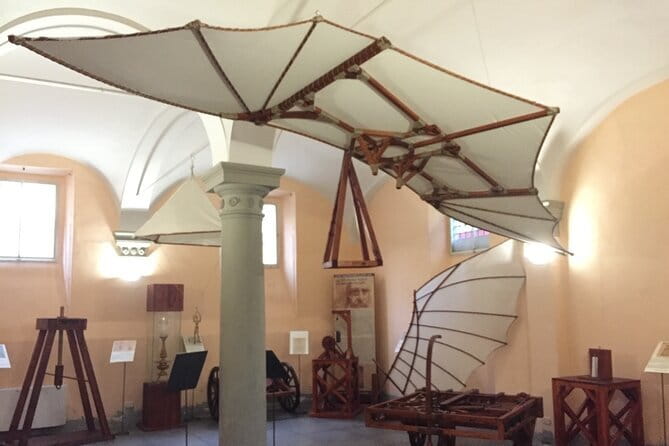
- More than 50 machine models: The four rooms cover civil engineering, flight, warfare, and anatomy.
- Working designs: Many models can be operated or examined in motion, though not every display is hands-on.
- A self-guided visit: You set your own pace and usually need about one to one and a half hours.
- Best for families and curious minds: Children have building and activity areas, while adults can follow Leonardo’s work across science, art, music, architecture, and anatomy.
- A central Florence address: The museum is at the Galleria Michelangelo, on one of the city center’s well-known streets and near public transportation.
- Good low-cost planning: Admission is $12.55 per person, with free cancellation available up to 24 hours before the start time.
Leonardo’s machines, not his paintings
The museum’s central idea is simple: take Leonardo’s sketches and show how they might work. You enter a collection devoted to mechanisms, tools, and anatomical studies rather than original works of art.
That focus matters. Many people arrive expecting a general Leonardo museum and are surprised that his paintings are not part of the visit. I would treat this as a companion to Florence’s art museums, not a substitute for them.
Leonardo’s range is the real attraction. His notebooks covered subjects that seem far apart today. He studied water movement, construction, flight, weapons, the human body, music, and architecture. The displays help you see how these interests connected through observation and mechanical problem-solving.
The models are based on his drawings and ideas. They are not original objects made by Leonardo, and some displays are more basic than you might expect from the subject’s fame. Still, seeing a wooden mechanism move can explain an idea faster than staring at a page of notes.
More Renaissance art days:
- Florence: Timed Entrance Ticket to Michelangelo’s David
★ 4.6 · 16,983 reviews - Florence: Michelangelo’s David Skip-the-Line Entry Ticket
★ 4.5 · 12,764 reviews - The Best tour in Florence: Renaissance & Medici Tales – guided by a STORYTELLER
★ 5.0 · 12,316 reviews
Four rooms with four different sides of Leonardo
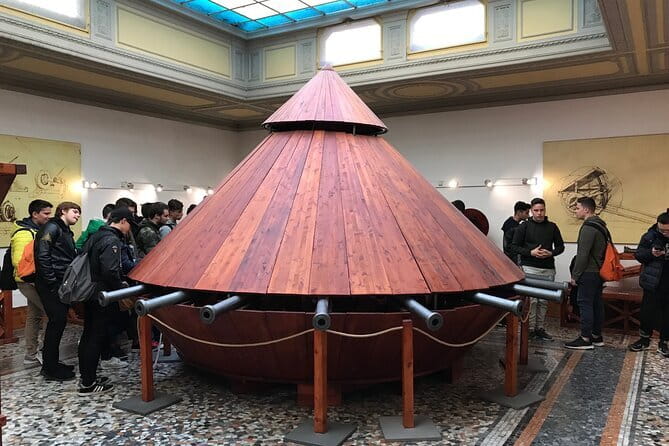
The collection is arranged in four main rooms. This keeps the visit manageable and gives you a clear path through Leonardo’s work.
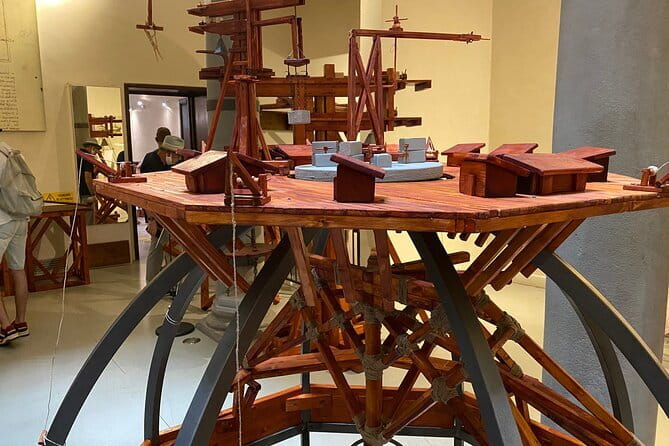
The largest room is dedicated to civil machines. Here, the emphasis is on practical engineering and construction. You might see designs connected to lifting, building, water, or movement. This room shows Leonardo trying to solve ordinary problems with extraordinary imagination.
The second room covers flying machines. Leonardo never achieved powered flight, but his sketches show close study of birds, air, balance, and wings. The models make these experiments easier to grasp, especially when you can see the proportions and moving parts rather than only a small drawing.
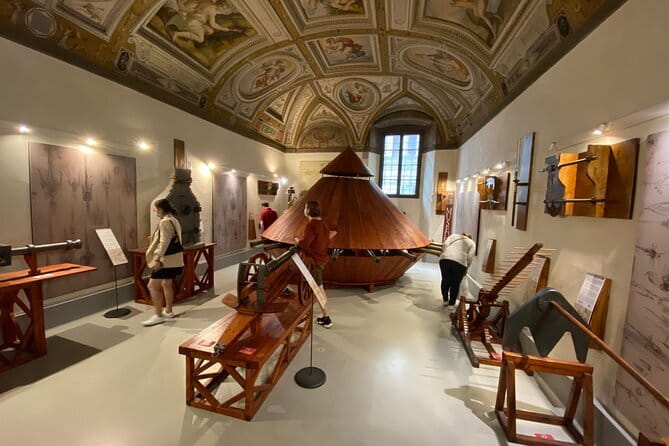
The third room is given to war machines. This section can surprise visitors who know Leonardo mainly for portraits and religious paintings. His work included ideas for military defenses, weapons, and battlefield machines. Some displays feel ingenious, while others are reminders that Leonardo’s curiosity extended into warfare as well as beauty and science.
The fourth room contains the newer collection of anatomical models. This section connects his study of the body with his drawing skill and scientific questions. It adds useful balance to the machine rooms, showing that Leonardo was not only an inventor of devices.
You can move through the rooms in about an hour if you read selectively. Give yourself closer to 90 minutes if you want to examine the labels, watch the film, and try the interactive elements.
What actually works and what you can touch
The best part of the museum is the chance to see several designs in working form. That does not mean every model is meant to be handled. Some are display pieces, while others invite you to turn, pull, or test a mechanism.
This distinction is important if you are bringing children. The museum has hands-on activities and a building area, including a children’s room in the basement. The interactive sections can keep younger visitors interested, but the entire museum is not one large play space.
Adults who enjoy science and design may find the working models more rewarding than the child-focused activities. I like the way the displays turn abstract ideas into physical problems: how do you lift something, make a machine fly, move water, or create mechanical force?
A few interactive devices may not always be operating perfectly. That is common in a hands-on collection, so do not judge the whole visit by one inactive gadget. There are still plenty of visual models and written explanations to fill out the experience.
A short film and a broader picture of Leonardo
Large-screen monitors show a documentary about Leonardo’s life and work. Use it as a quick orientation, especially if you know him only as the painter of the Mona Lisa.
The film helps place the machines in context. Leonardo’s inventions were part of a larger habit of observation. He drew what he saw, tested how things moved, and carried ideas from one subject into another.
The museum also presents his contributions to music, art, architecture, anatomy, and military defense. That wider range keeps the visit from becoming a simple parade of wooden machines.
Still, the amount of explanation can vary by display. If you want a detailed scholarly account of Leonardo’s notebooks, this compact museum may feel light. It works best as a clear visual introduction rather than a full academic study.
More skip-the-line entries:
- Florence: Skip-The-Line Uffizi Gallery Timed Entry Ticket
★ 4.5 · 27,832 reviews - Florence: Leonardo Interactive Museum Entry Ticket
★ 4.5 · 11,763 reviews - Florence: Uffizi Priority Ticket & Masterpieces Audio App
★ 4.2 · 6,402 reviews - Florence: Hop-on Hop-off Bus Tour: 24, 48 or 72-Hour Ticket
★ 4.0 · 6,283 reviews
The Galleria Michelangelo setting
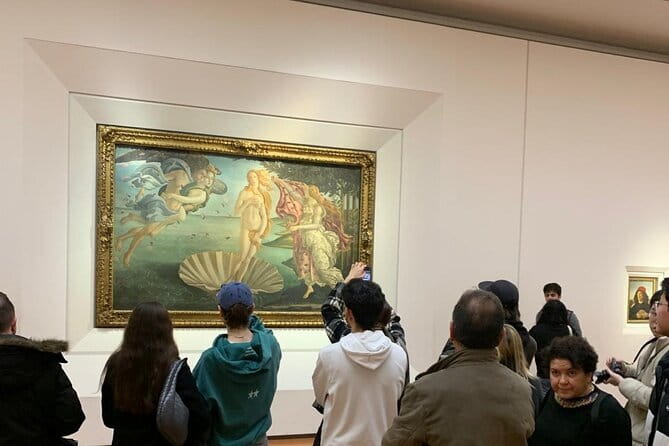
The machines are displayed at the Galleria Michelangelo, a central Florence venue associated with the Macchiaioli, the nineteenth-century Italian painters who met at the former Caffè Michelangiolo.
The setting gives the visit more character than a plain modern room. The building has painted ceilings, and the historic interior offers a small sense of the Florence in which artists and intellectuals gathered.
A restaurant called Caffè Michelangiolo has an agreement with the exhibition area, and the museum includes a bookshop with publications and souvenirs. Food and drinks are not part of the ticket, so plan to pay separately if you stop for something to eat.
The location is near major Florence attractions and public transportation. That makes this an easy addition to a day centered on the city’s cathedral, galleries, or historic streets, though the ticket itself does not include hotel pickup or drop-off.
How long the visit takes
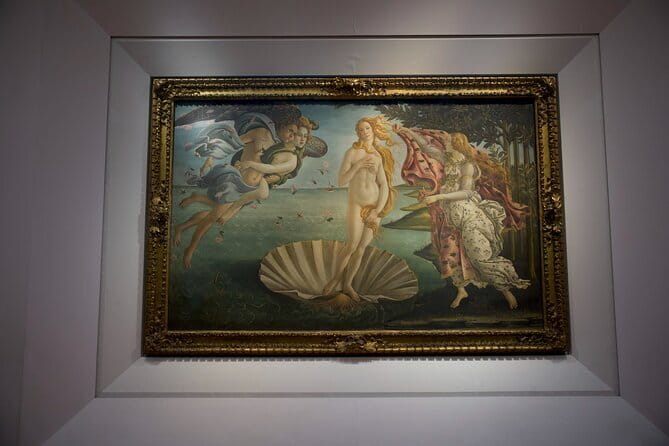
The stated visit length is about one hour to one and a half hours. That estimate feels useful for planning because the museum is compact enough to fit into a busy Florence day.
A fast visit can cover the four rooms and documentary in roughly an hour. If you have children, allow extra time for the activity areas. If you like machines, read every label, or stop to test several models, 90 minutes is more realistic.
This is not the kind of attraction that occupies half a day. That can be a strength. You can visit in the morning, pause for lunch, and continue to another museum without losing your entire schedule.
The museum is open daily from 10 a.m. to 6 p.m. for the stated period ending February 16, 2027. The ticket information describes flexible time slots, while the self-guided format allows entry during opening hours according to the booking arrangement. Check the time shown on your confirmation before setting out.
Is $12.55 a fair price?
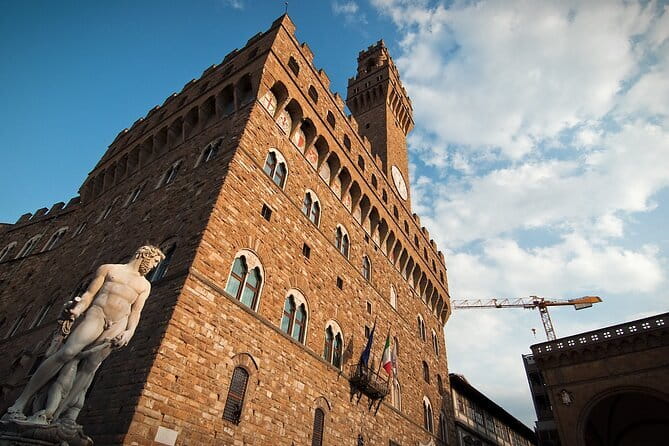
At $12.55 per person, the ticket is reasonably priced for a central Florence attraction, particularly if you spend a full hour with the exhibits. The value comes from the number of models and the chance to see selected mechanisms in action, not from rare original objects.
I would call it a good deal for a family looking for an affordable, educational stop. It can also be worthwhile for adults who already know they enjoy engineering, invention, or Leonardo’s notebooks.
The value is less clear if you are mainly interested in fine art. You will not see Leonardo’s famous paintings here, and some displays are simple replicas. A visitor seeking original artifacts or a highly detailed historical presentation may find the admission less satisfying.
Compared with major Florence museums, the price is low. But low cost does not automatically make every stop essential. Your decision should depend on whether Leonardo the inventor interests you as much as Leonardo the artist.
A self-guided visit with no formal guide

This is a self-guided museum visit. No guide is named or included, and you move through the displays at your own speed.
That arrangement suits you if you dislike being tied to a group schedule. You can linger over a flying machine, skip a war model that does not interest you, or let children spend time at the activity stations.
It also means you are responsible for creating your own story. The labels and documentary provide help, but there is no live guide to explain why a machine matters or answer follow-up questions.
The booking information lists English as the available language. Staff have been described as helpful and able to speak fluent English, but the ticket is admission rather than a guided tour.
The maximum group size is listed as 20 people. Since the visit is self-guided, this matters mainly for crowd levels and entry organization rather than for a scheduled group experience.
Who will enjoy this museum most?
I would put families near the top of the list. Children can see moving mechanisms, try selected interactive displays, and use building areas. The subject is educational without requiring them to stand silently in front of paintings for an hour.
Adults with a science or engineering interest should also consider it. The machines show Leonardo’s habit of asking how the world works, and the anatomy room adds another layer beyond the usual flying and war designs.
It is also a useful stop for anyone who wants to understand Leonardo beyond the Mona Lisa. You leave with a clearer sense of his work in architecture, defense, anatomy, music, and mechanical design.
I would be more cautious if you want original Renaissance objects, major paintings, or a large museum with a dramatic audio-visual presentation. The exhibits are mainly replicas, and some sections may feel basic or better suited to children.
The museum is wheelchair friendly according to the available visitor information. It is also near public transportation, which helps if you are planning several stops across central Florence.
Common mistakes to avoid
The biggest mistake is booking the wrong city. There are Leonardo da Vinci museums in Florence, Rome, Milan, and Venice, and the ticket here is specifically for Florence. Check the city and exact museum name carefully before paying.
The museum is also easy to confuse with other Leonardo attractions. Some focus more heavily on interactive play, while this one presents a broader set of machine replicas and educational displays. Read the description closely if you are comparing several options.
Do not assume that pre-booking guarantees a fully guided experience. You are buying admission, then exploring on your own.
Finally, do not schedule only 30 minutes unless you are making a very quick pass. One hour is a better minimum, especially if you want to watch the documentary or use the hands-on displays.
Cancellation and practical booking details
Confirmation is provided at the time of booking. Free cancellation is available if you cancel at least 24 hours before the experience’s start time, based on local time.
Cancellations made within 24 hours are not refunded, and changes inside that period are not accepted. That rule is worth noting if your Florence plans are still shifting.
Food, drinks, and hotel transfers are not included. You can use public transportation nearby, and the central address makes it practical to reach on foot from other major sights.
Should you book the Leonardo da Vinci Museum?
Book it if you want a short, affordable, self-guided stop centered on Leonardo’s inventions rather than his paintings. The working models, four-room layout, documentary, and children’s activities give the visit a clear purpose.
I would especially recommend it for families, science-minded adults, and anyone curious about how Renaissance ideas could become machines. At $12.55, it is a sensible one-hour addition to a full Florence day.
Skip it if your priority is original art, rare artifacts, or a large museum with extensive historical interpretation. The replicas can feel underwhelming if you expect authentic Leonardo objects.
For the right visitor, this museum makes Leonardo’s sketches easier to understand. Just arrive knowing what you are buying: a compact, educational collection of reconstructed machines, not a gallery of the master’s paintings.
FAQ
Where is the Leonardo da Vinci Museum located?
It is located at the Galleria Michelangelo on a well-known street in Florence city center. The museum is near public transportation.
How much does admission cost?
The listed admission price is $12.55 per person.
How long should I plan for the museum?
Plan on about one hour to one and a half hours, depending on how closely you read the displays and use the interactive exhibits.
What are the museum’s opening hours?
The stated opening hours are Monday through Sunday, from 10 a.m. to 6 p.m., for the period ending February 16, 2027.
Is this a guided tour?
No. This is a self-guided museum visit, so you explore the rooms at your own pace.
Is the ticket offered in English?
The experience is offered in English. Staff have also been described as able to speak fluent English.
What does the admission ticket include?
It includes admission to the Leonardo da Vinci Museum.
Are food and drinks included?
No. Food and drinks are not included in the admission ticket. A restaurant connected with the exhibition area is available separately.
Does the ticket include hotel transportation?
No. Hotel pickup and drop-off are not included.
Can I cancel for a refund?
Yes. You can cancel for a full refund up to 24 hours before the experience’s start time. Cancellations or changes made less than 24 hours before the start time are not accepted for a refund.
How many models are displayed?
More than 50 models are displayed in four rooms. The collection covers civil machines, flying machines, war machines, and anatomical models.
Are the machines original Leonardo artifacts?
No. The museum displays replicas and reconstructions based on Leonardo’s designs. Many models are working machines, but they are not original objects made by Leonardo.
More Museums Worth an Hour
- Florence Accademia Gallery Tour with Entrance Ticket Included
★ 4.5 · 6,148 reviews - Uffizi Gallery Small Group Tour with Guide
★ 4.5 · 4,923 reviews - Florence: Accademia Gallery Guided Tour
★ 4.6 · 4,156 reviews - Florence: Accademia Gallery Guided Tour with Entry Ticket
★ 4.6 · 2,253 reviews
Latest additions around Florence
- Florence: Cathedral Tour & Brunelleschi’s Dome Climb Ticket★ 5.0 · 3 reviews
- Palatina Gallery and Pitti Guided Tour in Florence★ 5.0 · 3 reviews
- Florence Uffizi Gallery Skip-the-line Tour w Art Historian Guide★ 5.0 · 3 reviews
- Private Tour: Pisa and Lucca from Florence★ 5.0 · 3 reviews
- San Gimignano Bike Tour (SOFT)★ 4.5 · 3 reviews
- Florence: Tour of Florence by rickshaw★ 5.0 · 3 reviews
- Center of Florence by golf cart★ 5.0 · 3 reviews
- From Firenze | Chianti day tour in a classic car★ 5.0 · 3 reviews
Renaissance Art Tours, compared.

Timed Entrance Ticket to Michelangelo’s David
Read our review →
Michelangelo’s David Skip-the-Line Entry Ticket
Read our review →
The Best tour in Florence: Renaissance & Medici Tales – guided by a STORYTELLER
Read our review →
The Best Tour in Florence: Renaissance and Medici Tales
Read our review →
Timed Entry Ticket to Michelangelo’s David & eBook
Read our review →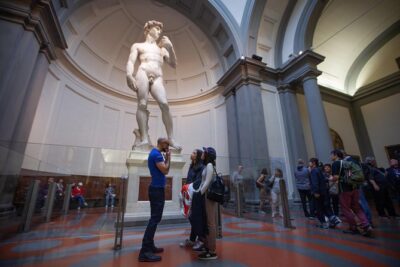
Michelangelo’s David, Accademia & Uffizi Small Group Tour
Read our review →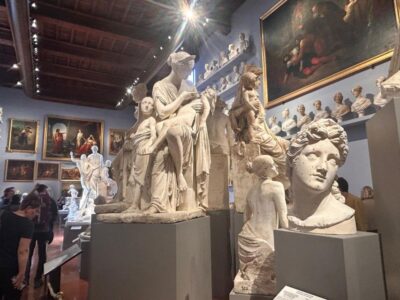
Michelangelo’s David Entrance Ticket and Audio App
Read our review →
Renaissance and Medici Tales Guided Walking Tour
Read our review →Browse the lists this tour appears in