

Reviewed · FLORENCE CHURCHES & PALAZZOS
Florence: Timed Entrance Ticket to San Marco Museum
Fra Angelico’s frescoes give San Marco Museum its special pull. His paintings are not gathered in one grand gallery alone. They appear throughout the former Dominican convent, including the monks’ old cells, where simple religious scenes were made for quiet prayer rather than public display.
I like the peaceful, intimate setting, which feels very different from Florence’s larger museums. I also like the way the ticket brings you into a working Dominican complex with a church, cloisters, old kitchens, and a refectory, not just a room full of paintings. The main consideration is that this is an untutored visit. There is no guided tour included, and some visitors have found that certain labels are in Italian only.
In This Review
- Key points to know before you go
- Why San Marco feels different from Florence’s major museums
- Arriving at Piazza San Marco, 3
- The cloister of Saint Anthony
- Fra Angelico’s frescoes and the convent cells
- Savonarola’s cell and Florence’s religious conflicts
- The Great Refectory, kitchen, and service rooms
- How much time should you allow?
- Is the $15 ticket good value?
- Accessibility and practical limits
- Who should book San Marco Museum?
- Should you book this timed ticket?
- FAQ
- Where does the San Marco Museum visit begin?
- Is a guided tour included?
- Is the entry time flexible?
- How long is the ticket valid?
- Is the museum wheelchair accessible?
- Can I cancel the booking?
- Does every person in a group need a ticket?
Key points to know before you go

- Fra Angelico’s Annunciation is the main artistic prize, but the surrounding frescoed cells help you understand how the paintings were meant to be seen.
- The convent still has Dominican monks, giving the visit a quiet, lived-in feeling rather than the atmosphere of a standard art museum.
- Savonarola’s cell adds a strong historical connection, linking the building to one of Florence’s most controversial religious figures.
- Michelozzo’s 15th-century renovation shapes the visit, especially in the cloister and orderly convent spaces.
- The ticket is timed and binding, so arrive for the exact slot you book or entry may be refused.
- At $15 per person, the ticket is fairly priced for a focused museum visit, especially if you care about Renaissance art and religious architecture.
Why San Marco feels different from Florence’s major museums

Florence gives you famous museums at every turn. The Uffizi and Accademia naturally get most of the attention, but San Marco offers a quieter kind of art experience. It asks you to slow down and look closely at paintings made for a convent, not a palace.
The museum occupies a church and a 15th-century Dominican convent. The convent was commissioned by Cosimo de’ Medici, Grand Duke of Tuscany, and renovated by Michelozzo, one of the leading architects of the Renaissance. The result is elegant but restrained. You will not find the grand theatrical rooms of a princely residence here. Instead, you move through spaces built around work, worship, and private devotion.
That difference matters. The building helps explain the art. A fresco in a small cell has a different purpose from a large altarpiece in a public gallery. At San Marco, the paintings remain tied to the daily life of the friars who once occupied these rooms.
The convent still houses Dominican monks, so you should expect a quiet, respectful atmosphere. Some areas feel almost austere. That is part of the appeal. The simplicity makes the color and tenderness of Fra Angelico’s work feel even more striking.
More churches and palazzos worth an hour:
- Florence: Palazzo Vecchio Entrance Ticket & Audioguide
★ 4.4 · 4,822 reviews - Florence: Palazzo Vecchio Guided Tour
★ 4.8 · 1,260 reviews - Florence: Palazzo Vecchio Skip-the-Line Entry Ticket
★ 4.2 · 349 reviews
Arriving at Piazza San Marco, 3
Your visit begins at the museum ticket office inside San Marco Museum, at Piazza San Marco, 3, in Florence. The timed ticket is designed to let you skip the regular ticket line, though you still need to go to the museum office and present your booking information.
The location is straightforward to find in the San Marco area. One practical advantage of the timed system is that you can fit this visit neatly between other Florence sights. The ticket is valid for one day, but the date and time slot you choose are binding. You cannot treat this as a flexible drop-in ticket.
Plan to arrive early enough to locate the entrance and collect or validate your admission. If you miss the allotted time, entry can be refused. Anyone accompanying you also needs an admission ticket, so do not assume that one booking covers a whole party.
The timed entry is most useful if you want certainty in your day. At quieter times, you might find the museum is not especially crowded, and some people may question the need to reserve ahead. Still, the $15 price is modest compared with the cost of losing time in Florence or being turned away during a busy period.
The cloister of Saint Anthony
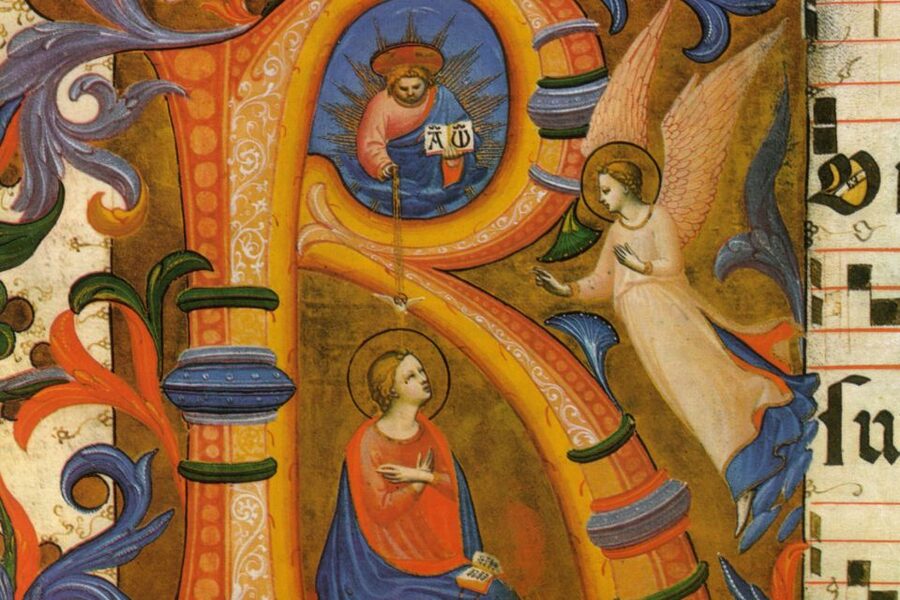
Before entering the main museum rooms, take a moment to appreciate the exterior. San Marco has a dignified, almost severe appearance that prepares you for the convent within.
The Cloister of Saint Anthony is one of the first spaces that gives the visit its character. Cloisters were practical places, used for movement and reflection, but their design also gave religious communities a calm center. Here, old doors and frescoed surfaces bring decoration into an otherwise measured architectural setting.
You will see how the convent’s design relies on proportion and order. This is Michelozzo’s contribution at its clearest. The architecture does not compete with every painting. It creates a frame for the religious life that once filled the building.
The cloister can be especially rewarding if you have just come from a crowded Florence street. Give yourself a few minutes here instead of rushing directly toward the best-known paintings. The sense of age is one of San Marco’s strongest qualities.
Fra Angelico’s frescoes and the convent cells
The heart of San Marco is its collection of work by Beato Angelico, better known as Fra Angelico. He was a Dominican friar and one of the major painters of the Florentine Renaissance.
The museum’s importance comes not only from the quality of his art but from the way it is placed. Fra Angelico’s religious paintings were made for a convent setting, and many were intended for personal prayer. Their scale and placement encourage close attention.
The frescoes in the cells are often simple in subject. You may see a saint, a biblical scene, or a devotional image set against an uncluttered background. Their quiet mood can be more affecting than the grand drama of a large public painting.
The Annunciation is a major reason to visit. It is one of the best-known works associated with San Marco, and its gentle composition rewards time. Look at the figures, the architectural setting, and the empty space around them. The scene is calm rather than showy, which suits the former monastic rooms.
I find the setting particularly useful for understanding Fra Angelico’s art. In a busy gallery, you can admire technique and color. At San Marco, you can also sense the intended use of the paintings. The works were part of a disciplined religious routine.
Keep your expectations balanced. This is not a museum filled with a huge number of monumental masterpieces. Its strength is concentration. You come for Fra Angelico, then let the building and the smaller works fill out the experience.
More skip-the-line entries:
- Florence: Skip-The-Line Uffizi Gallery Timed Entry Ticket
★ 4.5 · 27,832 reviews - Florence: Timed Entrance Ticket to Michelangelo’s David
★ 4.6 · 16,983 reviews - Florence: Michelangelo’s David Skip-the-Line Entry Ticket
★ 4.5 · 12,764 reviews - Florence: Leonardo Interactive Museum Entry Ticket
★ 4.5 · 11,763 reviews
Savonarola’s cell and Florence’s religious conflicts

Another important stop is the cell associated with Girolamo Savonarola. The Dominican friar lived at San Marco and became one of Florence’s most forceful preachers.
Savonarola spoke against what he saw as corruption and declining morals among the clergy. His preaching made him a powerful figure in Florence, but his career ended brutally. He was hanged and burned at the stake in Piazza della Signoria.
Seeing his cell gives you a physical link to that story. It is not a grand memorial chamber. Its value lies in its simplicity and in the contrast between the small room and the scale of Savonarola’s influence.
This part of the museum works best if you already know a little about Florence’s political and religious struggles. Even without much preparation, the room helps turn a familiar historical name into a person connected to a real place.
Do not expect a theatrical presentation. San Marco does not recreate Savonarola’s life with elaborate displays. The museum lets the room, the convent, and the surrounding art carry the story.
The Great Refectory, kitchen, and service rooms
The visit continues beyond the famous frescoes. The Great Refectory, old kitchen, and service areas reveal the practical side of convent life.
The refectory was where the community ate, so it offers a different view of the complex. Paintings associated with Fra Bartolomeo are displayed here. He was another important painter and Dominican monk who lived at San Marco in the early 16th century.
These rooms help prevent the museum from becoming a single-artist stop. You see how art, food, work, prayer, and community life occupied the same institution. The old kitchen and service spaces are not as polished as the principal art rooms, but they add useful context.
I would not rush through these areas. The paintings are important, but the plain working spaces may be what makes San Marco memorable. They show the convent as a real place with daily needs, not just a container for Renaissance art.
Some rooms may be closed during your visit. That can limit the experience, particularly if you hoped to see every area of the museum. Conditions can also affect how much information is available in English. Several displays provide useful material for English speakers, but not every label has both English and Italian text.
How much time should you allow?
The ticket is valid for one day, but the booking is for a specific entry time. The supplied details do not set a fixed visit length, so your pace will decide how long you stay.
If you are mainly coming for the Annunciation, the Fra Angelico frescoes, and Savonarola’s cell, you can make a focused visit. If you like religious art, Renaissance architecture, and historic interiors, allow more time for the cloister, refectory, kitchen, and service areas.
This is not the place to hurry from one famous object to the next. The small cells and plain rooms need a slower pace. You will get more from the museum if you pause to compare the intimate frescoes with the larger works in the refectory.
Because no guided tour is included, bring some patience for reading and looking. An audio guide or tour is not offered with this ticket, and that is the main weakness for anyone who wants detailed explanations of the art. If you prefer independent museum visits, the lack of a guide may not bother you.
Is the $15 ticket good value?
At $15 per person, this is a reasonable Florence museum ticket. You are paying for timed access to an important Renaissance site with Fra Angelico’s work, Michelozzo’s convent architecture, Savonarola’s cell, and additional works by Fra Bartolomeo.
The value is strongest for people who care about religious art or want something quieter than the Uffizi and Accademia. It is less compelling if you want a long list of famous secular paintings or a large, highly interactive museum.
The booking fee is included in the listed price. The ticket also comes with a 10 percent discount at the Hard Rock Shop and a 10 percent discount on the à la carte menu at the Hard Rock Cafe on Via dei Brunelleschi, 1, near Piazza della Repubblica. Those discounts are extra rather than a reason to choose the museum, and they exclude limited-edition, charity, and alcoholic items where specified.
The free cancellation policy adds useful flexibility. You can cancel up to 24 hours before the visit for a full refund, and you can reserve now while paying later. Just remember that once you keep the booking, the selected date and time remain fixed.
Accessibility and practical limits
The museum is wheelchair accessible, which makes it a practical choice for many visitors. The experience ends back at the museum, so no transport or separate return arrangement is involved.
The biggest practical issue is the strict entry time. You will be refused entry if you arrive outside the allotted slot, so leave room for delays while getting across Florence.
The museum can also feel emotionally serious. Its religious subject matter, austere spaces, and connection to Savonarola will appeal to some people more than others. If your ideal museum is bright, crowded, and full of secular Renaissance drama, San Marco may feel subdued.
That subdued character is precisely why I recommend it to visitors who want to see another side of Florence. The building has an old sacred feeling, and the art is closely tied to the rooms where Dominican friars lived.
Who should book San Marco Museum?
I would choose this ticket for:
- Anyone who wants to see Fra Angelico’s Annunciation and frescoes in their original convent setting.
- Visitors interested in Renaissance religious art and architecture.
- People who prefer a quiet, intimate museum to Florence’s largest institutions.
- Anyone curious about Savonarola and the religious life of Renaissance Florence.
- Independent visitors who are comfortable exploring without a guide.
- Wheelchair users looking for an accessible museum experience.
I would think twice if you want a guided interpretation, extensive English labeling, or a full day of major artworks. This ticket gives you entry, not a lecture. You need to supply your own curiosity.
Should you book this timed ticket?
Yes, if Fra Angelico, Dominican convent life, or Renaissance architecture interests you. San Marco is one of Florence’s most focused museum visits, and its best moments come from the combination of frescoes, small cells, quiet cloisters, and working monastic spaces.
Book it when you want a calmer break from the city’s headline sights. The $15 cost is fair, the timed entry simplifies planning, and the site offers a kind of personal contact with Florence that a large gallery cannot provide.
Choose another experience if you need a guide to explain every painting or if your schedule cannot handle a binding entry time. For everyone else, San Marco is a strong addition to a Florence itinerary, especially when you give the convent enough time to reveal itself.
FAQ
Where does the San Marco Museum visit begin?
The visit begins at the ticket office inside San Marco Museum, at Piazza San Marco, 3, 50121 Firenze.
Is a guided tour included?
No. The ticket includes timed admission, but not a guided tour.
Is the entry time flexible?
No. The date and time slot selected during booking are binding. You may be refused entry if you do not arrive for the allotted time.
How long is the ticket valid?
The ticket is valid for one day, with the available starting times shown during booking.
Is the museum wheelchair accessible?
Yes. The activity is listed as wheelchair accessible.
Can I cancel the booking?
Yes. You can cancel up to 24 hours in advance for a full refund.
Does every person in a group need a ticket?
Yes. Accompanying persons must also purchase an admission ticket.
More Museums Worth an Hour
- Florence Accademia Gallery Tour with Entrance Ticket Included
★ 4.5 · 6,148 reviews - Uffizi Gallery Small Group Tour with Guide
★ 4.5 · 4,923 reviews - Florence: Accademia Gallery Guided Tour
★ 4.6 · 4,156 reviews - Florence: Accademia Gallery Guided Tour with Entry Ticket
★ 4.6 · 2,253 reviews
Latest additions around Florence
- Florence: Cathedral Tour & Brunelleschi’s Dome Climb Ticket★ 5.0 · 3 reviews
- Palatina Gallery and Pitti Guided Tour in Florence★ 5.0 · 3 reviews
- Florence Uffizi Gallery Skip-the-line Tour w Art Historian Guide★ 5.0 · 3 reviews
- Private Tour: Pisa and Lucca from Florence★ 5.0 · 3 reviews
- San Gimignano Bike Tour (SOFT)★ 4.5 · 3 reviews
- Florence: Tour of Florence by rickshaw★ 5.0 · 3 reviews
- Center of Florence by golf cart★ 5.0 · 3 reviews
- From Firenze | Chianti day tour in a classic car★ 5.0 · 3 reviews
Florence Churches & Palazzos, compared.
Palazzo Vecchio guided experience with entrance ticket
Read our review →
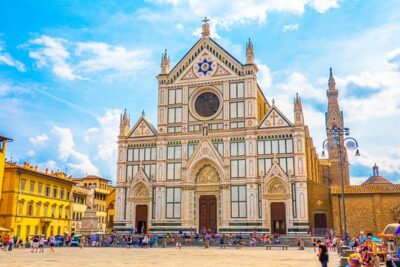
Basilica Santa Croce: Walking Among the Masters of Florence
Read our review →Browse the lists this tour appears in