
Reviewed · FLORENCE CHURCHES & PALAZZOS
Basilica Santa Croce: Walking Among the Masters of Florence
Santa Croce is Florence’s great church of memory. Inside, you’ll find the tombs of Michelangelo, Galileo, Machiavelli, and Rossini, along with Giotto frescoes, Donatello’s crucifix, Brunelleschi’s chapel, a crypt, and a monumental cemetery. The church is much larger than its plain exterior suggests.
I like this tour for two clear reasons. First, a guide helps you read the art instead of simply walking past it. Second, the one-hour format gives you a focused introduction without swallowing half your day. The main drawback is the price, $58.05 per person, which can feel high for a short church visit, especially if your guide’s English is not clear.
- Famous tombs in one place: See the grand memorials of Michelangelo, Galileo, Machiavelli, and Rossini.
- Major Renaissance art: Study Giotto’s chapel frescoes, Gaddi’s scenes, and Donatello’s celebrated crucifix.
- More than the main church: The route includes Santa Croce Square, the interior, crypt, cemetery, bell tower area, and 16 chapels.
- Small-group feel: The maximum group size is 20, and some departures have been much smaller.
- Practical timed entry: Reserved admission and a radio system help the tour run smoothly.
- Dress carefully: Knees and shoulders must be covered, and late arrivals cannot join or receive a refund.
In This Review
- Why Santa Croce Deserves an Hour
- Meeting at Dante’s Monument in Santa Croce Square
- Giotto, Gaddi, and the Chapel Frescoes
- Donatello’s Crucifix and Brunelleschi’s Chapel
- Walking Among Michelangelo, Galileo, Machiavelli, and Rossini
- The Flood of 1966 and Santa Croce’s Damaged Art
- Crypt, Cemetery, Bell Tower, and Sixteen Chapels
- How the Guide Changes the Experience
- Is $58.05 Good Value?
- Dress Rules and Other Practical Details
- Who Should Book This Santa Croce Tour?
- Should You Book Walking Among the Masters?
- FAQ
- How long does the Santa Croce tour last?
- What is the price?
- What language is the tour offered in?
- Where does the tour begin?
- Where does the tour end?
- What is included?
- Does the tour include transportation or hotel pickup?
- Which famous figures are commemorated in Santa Croce?
- What should I wear?
- Can I cancel for a full refund?
Why Santa Croce Deserves an Hour
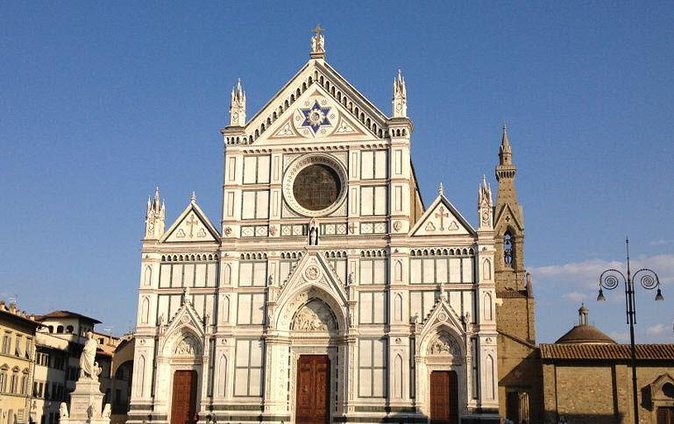
Florence has no shortage of famous churches. Santa Croce earns its place because it combines art, architecture, religion, and national memory in one compact visit.
The church is often called a kind of pantheon of Italian achievement. That does not mean every famous person buried here is in an actual tomb, but the building does contain major monuments to figures who shaped science, literature, politics, music, and art. Seeing Michelangelo’s tomb beside Galileo’s makes the church feel like a walk through several centuries of Italy.
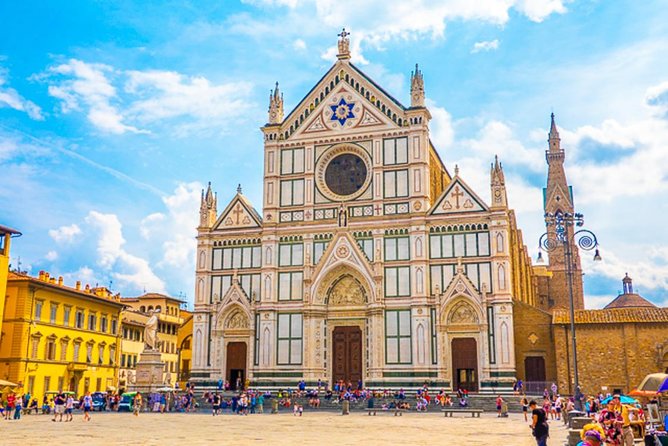
The scale can surprise you. From Piazza di Santa Croce, the basilica may not prepare you for the long interior, side chapels, cloister areas, and collection of monuments within. I like beginning outside because the square gives you a sense of how important this building remains to Florence’s public life.
The tour is designed for people who want the main story in about an hour. You will not have time to inspect every artwork at length, but you should leave with a useful map of the church and a better idea of what deserves another look.
Meeting at Dante’s Monument in Santa Croce Square
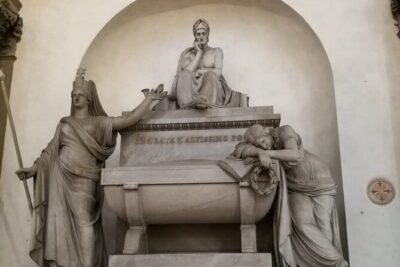
The meeting point is the Monument to Dante Alighieri in Piazza di Santa Croce. This is a sensible place to begin, since the square itself is part of the experience rather than just a spot to gather.
Your guide explains the annual Calcio Storico Fiorentino, the rough and theatrical football game played in medieval dress each June. The square’s role in that event gives you a quick link between present-day Florence and its older civic traditions.
Finding the correct guide matters. One practical complaint is that guides may not always carry the flags or pennants you might expect, so look carefully for the tour representative at the Dante monument. Arrive early. The operator states clearly that late arrivals cannot join the group, and missed departures are not refunded or moved to another time.
This is also a useful place to get your bearings before entering. Santa Croce has several artistic layers, and a short orientation in the square helps you understand that you are entering both a church and a major Florentine monument.
More churches and palazzos worth an hour:
- Florence: Palazzo Vecchio Entrance Ticket & Audioguide
★ 4.4 · 4,822 reviews - Florence: Palazzo Vecchio Guided Tour
★ 4.8 · 1,260 reviews - Florence: Timed Entrance Ticket to San Marco Museum
★ 4.6 · 396 reviews
Giotto, Gaddi, and the Chapel Frescoes
Once inside, the art comes quickly. The Cappella Maggiore contains frescoes by Agnolo Gaddi, dating from around 1380, presenting scenes connected with the story of the True Cross. A guide can point out how the sequence works and explain why these wall paintings mattered to worshippers who encountered biblical stories through images.
The Bardi and Peruzzi Chapels are especially important for Giotto. Their frescoes show episodes from the lives of St. Francis and St. John the Evangelist. The paintings are not just decoration. They represent a major shift toward more direct human expression in religious art, and they help explain why Giotto is treated as such a key figure in the development of Italian painting.
You will probably notice only fragments at first. Santa Croce has a lot competing for your attention: chapels, tombs, sculpture, painted walls, and the height of the interior. This is where the guide earns the admission price. A good explanation gives you a viewing order and tells you what to look for before your eyes move on.
Several guides have been praised for presenting the material with humor and energy. Matteo, Chiara Conti, Elena, Jenny, Sarah, Raphael, Marcello, Guido, and Hillary are among the guides specifically singled out by name. That does not mean you can request any particular person or that every departure will have the same style, but it suggests that the experience depends heavily on who leads your group.
Donatello’s Crucifix and Brunelleschi’s Chapel
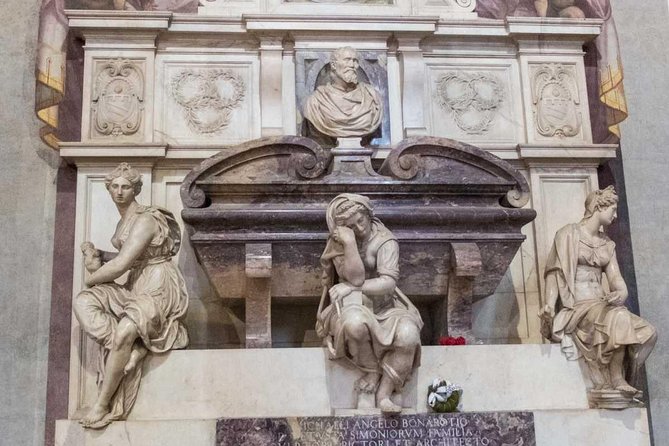
Santa Croce is also a strong stop for sculpture. Donatello’s crucifix is one of the church’s prized works, and the guide places it within the wider story of Renaissance art. It is easy to rush past a crucifix as part of the church furnishings. A thoughtful explanation helps you see the work as a serious artistic statement, not just a religious object.
Brunelleschi’s Chapel, also known as the Chapel of Fools, offers a different lesson. Here the appeal is architectural order and proportion. The chapel lets you see how Renaissance designers used balance and structure to create a calm, controlled space within a much larger church.
I like this contrast between painting, sculpture, and architecture. You are not being shown a single type of masterpiece. Instead, the tour moves between surfaces, figures, buildings, and human stories. That variety is one reason Santa Croce can feel more rewarding with a guide than on a quick self-guided walk.
The drawback is time. One hour is enough to introduce these highlights, but it is not enough for a slow study of every chapel. If you already have a strong interest in Renaissance art, plan to remain afterward and revisit the works that caught your eye.
Walking Among Michelangelo, Galileo, Machiavelli, and Rossini
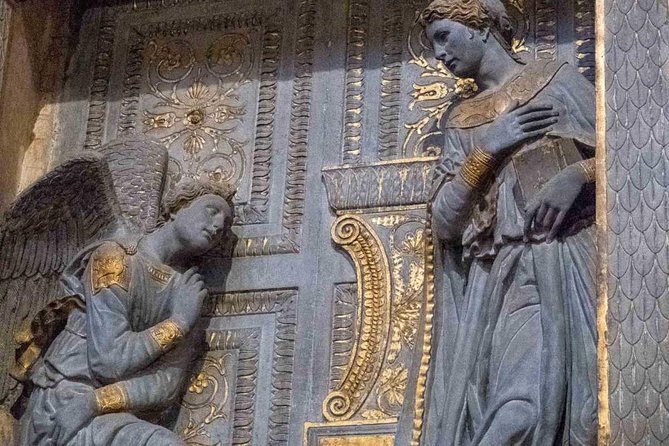
The tombs are one of Santa Croce’s biggest draws. Michelangelo’s monument is among the most famous, but Galileo, Machiavelli, and Rossini give the church an even wider reach. You are moving from art to astronomy, political thought, and music without leaving the same building.
The guide explains who these people were and why their memorials are here. That context matters because the tombs can otherwise become a parade of names. The real interest lies in seeing how Florence and Italy chose to remember influential figures.
Not every monument functions as a simple burial site in the same way, and a guide can clarify the difference between a tomb, a memorial, and a commemorative monument. This is particularly useful when several grand structures appear side by side and the church begins to feel like a hall of fame.
The tombs also give the visit emotional weight. You can admire a fresco in one moment and then stand before the memorial of a person whose work still shapes modern life. I find that combination more memorable than a church visit focused only on visual beauty.
More walking routes in Florence:
- Florence: Guided Walking Tour
★ 4.5 · 3,334 reviews - Skip the line: Uffizi and Accademia Small Group Walking Tour
★ 4.5 · 3,135 reviews - Florence: Guided Walking Tour
★ 4.6 · 1,602 reviews - Florence: Renaissance and Medici Tales Guided Walking Tour
★ 4.8 · 1,549 reviews
The Flood of 1966 and Santa Croce’s Damaged Art
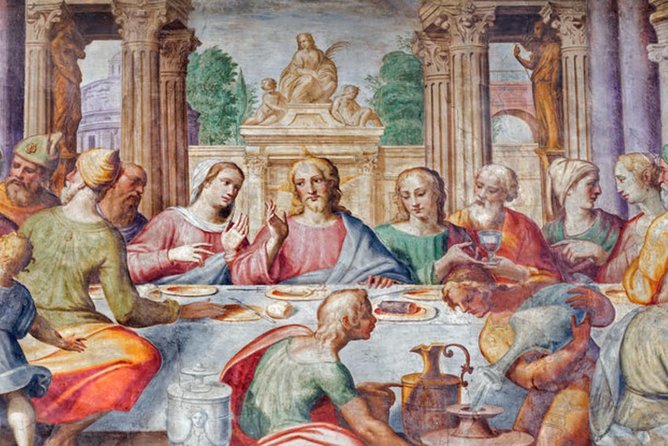
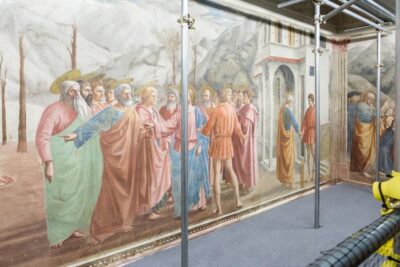
Santa Croce carries visible evidence of Florence’s 1966 flood. Water and mud damaged paintings and other works, and later restoration has been an important part of the basilica’s modern story.
This subject adds a practical layer to the tour. You are not only looking at old art in a finished setting. You are also learning how fragile that art can be and how much skill and effort are needed to preserve it. A guide can draw your attention to damaged or restored areas that you might otherwise mistake for ordinary aging.
The flood story also connects Santa Croce to the wider life of Florence. The church is not sealed off from the city’s disasters and changes. Its walls record both medieval devotion and twentieth-century recovery.
If restoration interests you, listen closely here. The tour may not offer a long technical lecture, but this part helps explain why some surfaces look uneven, faded, or incomplete.
Crypt, Cemetery, Bell Tower, and Sixteen Chapels
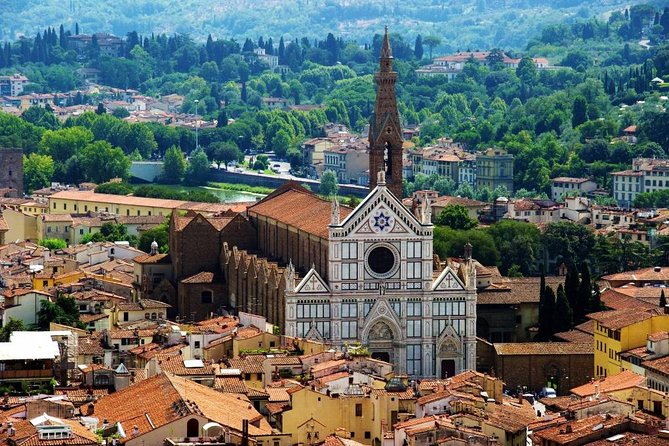
The visit extends beyond the central nave. You will tour the crypt, see the monumental cemetery, and walk around the bell tower area and the 16 chapels included in the route.
These spaces change the mood of the visit. The main church is formal and grand, while the crypt and cemetery bring you closer to the building’s role as a place of burial and remembrance. The cemetery also gives another view of how Santa Croce developed over time.
The phrase 16 chapels should not lead you to expect a long stop at each one. In a one-hour tour, the guide has to make choices. You will receive an overview and selected highlights rather than a detailed examination of every room.
One useful feature is that you can return to anything you want to see again after the guided portion. This makes the tour work well as an introduction. Let the guide establish the main points, then use any remaining time to look again at a tomb, fresco, or chapel that interested you.
How the Guide Changes the Experience
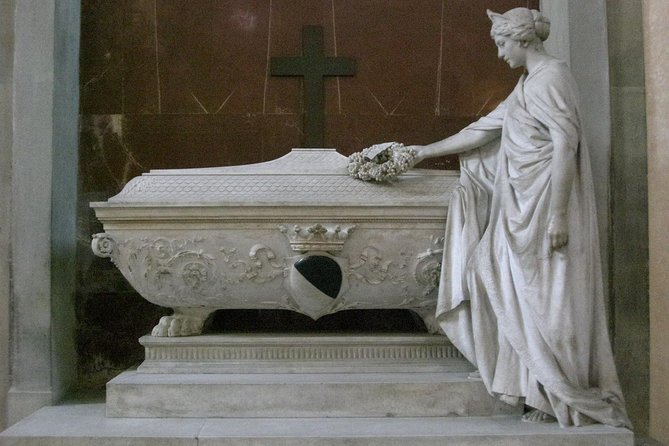
The strongest part of this tour is the human explanation. Several guests have found that they would have missed much of the church’s meaning without a guide. That feels accurate here because Santa Croce places so many important works and memorials in close quarters.
The best guides combine facts with a sense of place. Jenny, for example, has been praised for growing up in the Santa Croce neighborhood and knowing the surrounding area. Matteo has been praised for linking events to the realities of Florence in earlier centuries, while Chiara Conti was noted for patiently answering questions.
The radio system is useful in a busy church. You can hear the guide without standing directly beside the speaker, though the sound system cannot fix unclear English. One English-language departure received a poor assessment because the guide was difficult to understand. That appears to be an exception among the supplied feedback, but it is a fair risk to keep in mind when paying a premium for a guided visit.
The maximum group size is 20. That is not a private tour, but it is manageable. Some departures have been as small as two couples or even just two people, which allows more questions and a slower exchange with the guide. Group size can vary, so do not book solely on the hope of a private experience.
Is $58.05 Good Value?
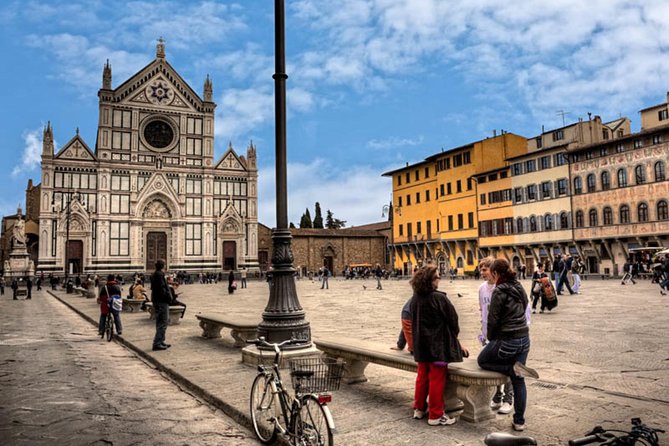
At $58.05 per person, this is not a bargain-priced church entry. You are paying for reserved admission, an official certified guide, and the radio system, not simply access to Santa Croce.
I think the price makes the most sense if you care about art, church history, or the famous people commemorated here. It also makes sense if your Florence schedule is tight and you want an organized one-hour introduction. A clear guide can save you from wandering through a large building without knowing which details matter.
The value is weaker if you prefer to move slowly on your own or if you already have a good guidebook and plenty of time. The tour does not include food, drinks, hotel pickup, transportation, or a longer scholarly lecture. You must make your own way to Piazza di Santa Croce.
Guide quality is the key variable. The large number of strong assessments and the 4.9 rating from 107 published ratings suggest that most departures work well, but the one poor experience about English clarity should not be ignored. I would book this for the access and explanation, not just for the ticket.
Dress Rules and Other Practical Details
Santa Croce is a place of worship, so dress is not optional. Men and women must cover their knees and shoulders. Shorts and sleeveless tops can lead to refused entry, with no rescheduling or refund if you are turned away.
The tour operates in all weather. Wear suitable clothing for the conditions, but keep the church dress rules in mind. Since transportation is not included, allow enough time to reach the square on foot or by your chosen local transport.
Confirmation is provided at booking. The tour requires at least two participants to operate, and it can be canceled after confirmation if that minimum is not met. In that case, you are offered an alternative or a full refund.
Free cancellation is available up to 24 hours before the start time. Inside that window, changes and refunds are not accepted. The strictest rule is the start time itself, so I would rather arrive early and wait in the square than risk losing the entire booking.
Who Should Book This Santa Croce Tour?
I would choose this tour if you want the tombs of Michelangelo and Galileo explained, not merely photographed. It is also a good fit if Giotto, Donatello, Brunelleschi, restoration, and religious art all sound worthwhile to you.
Families and first-time visitors can benefit from the pace and structure. The material is educational, but guides such as Matteo and Helena have been praised for warmth, humor, and storytelling rather than a dry recitation of dates.
Art specialists may want more time. The one-hour format gives you a clear introduction, but you will need to stay afterward if you want to study the chapels and frescoes carefully.
Should You Book Walking Among the Masters?
Yes, if you want a focused, guided look at one of Florence’s most important churches and you are willing to pay for interpretation. Santa Croce is easy to underestimate from outside, and its art, tombs, crypt, cemetery, and flood history make it much more than a quick church stop.
Book it if you can arrive early, follow the clothing rules, and accept that the guide assigned to your departure will shape the experience. Skip it if you dislike fixed times, prefer total independence, or want a long and leisurely art study.
For most first visits, I would use the tour as your introduction, then remain inside afterward for another look. That combination gives you the useful stories first and the quiet time second.
FAQ
How long does the Santa Croce tour last?
The tour takes approximately one hour.
What is the price?
The listed price is $58.05 per person.
What language is the tour offered in?
The tour is offered in English.
Where does the tour begin?
It begins at the Monument to Dante Alighieri in Piazza di Santa Croce, Florence.
Where does the tour end?
The activity ends back at the meeting point.
What is included?
The tour includes an official certified guide, a radio system to hear the guide, and entrance tickets with reservations.
Does the tour include transportation or hotel pickup?
No. Hotel pickup, hotel drop-off, food, drinks, and transportation to and from the attraction are not included.
Which famous figures are commemorated in Santa Croce?
The basilica contains tombs or memorials connected with Michelangelo, Galileo, Machiavelli, and Rossini.
What should I wear?
You must cover your knees and shoulders. Shorts and sleeveless tops are not allowed for entry.
Can I cancel for a full refund?
Yes. You can cancel at least 24 hours before the experience start time for a full refund. Cancellations or changes made less than 24 hours before the start are not refunded or accepted.
Latest additions around Florence
- Florence: Cathedral Tour & Brunelleschi’s Dome Climb Ticket★ 5.0 · 3 reviews
- Palatina Gallery and Pitti Guided Tour in Florence★ 5.0 · 3 reviews
- Florence Uffizi Gallery Skip-the-line Tour w Art Historian Guide★ 5.0 · 3 reviews
- Private Tour: Pisa and Lucca from Florence★ 5.0 · 3 reviews
- San Gimignano Bike Tour (SOFT)★ 4.5 · 3 reviews
- Florence: Tour of Florence by rickshaw★ 5.0 · 3 reviews
- Center of Florence by golf cart★ 5.0 · 3 reviews
- From Firenze | Chianti day tour in a classic car★ 5.0 · 3 reviews
Florence Churches & Palazzos, compared.
Palazzo Vecchio guided experience with entrance ticket
Read our review →
Browse the lists this tour appears in