
Reviewed · FLORENCE CHURCHES & PALAZZOS
Florence: Santa Croce Church Tour with Entry Ticket
Santa Croce is Florence’s great church of Italian masters, where Michelangelo, Galileo, Machiavelli, and other major names are buried beneath the same roof. The art is just as important: Giotto’s frescoes, Donatello’s crucifix, Brunelleschi’s chapel, and a façade that looks almost too colorful for a medieval church.
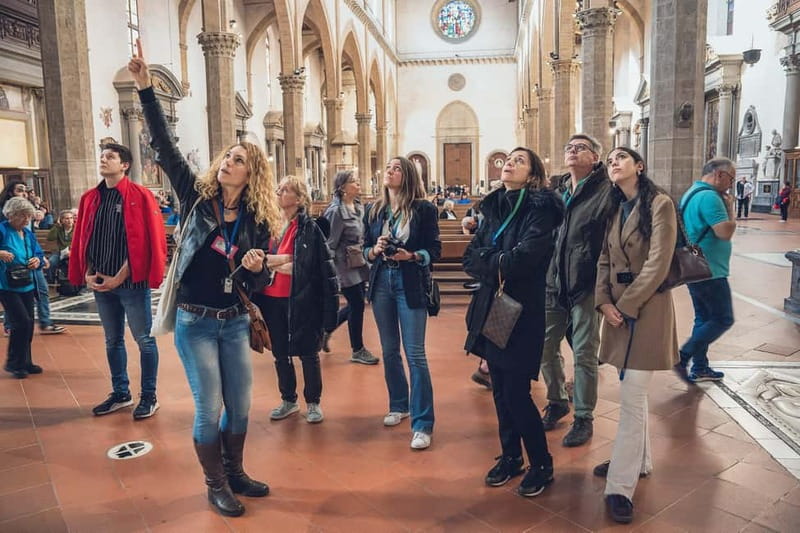
I like the way the guide connects each artwork to the person, period, and event behind it. I also like the reserved entry and radio system, which help you hear a guide such as Lara, Ilaria, Marcello, or Guido without fighting the room’s echo. The main consideration is clothing: your knees and shoulders must be covered, and the tour moves through a large church where there is much to absorb in a fairly short time.
In This Review
- Key points to know before you book
- Starting in Florence’s Piazza Santa Croce
- Entering the Basilica of Santa Croce
- Giotto in the Bardi and Peruzzi Chapels
- Gaddi’s Cappella Maggiore and the church’s wider art
- Donatello, Brunelleschi, and Renaissance precision
- The tombs of Michelangelo, Galileo, Machiavelli, and Dante
- The flood of 1966 and the church’s damaged art
- Crypt, bell tower, and the 16 chapels
- Is the $54.66 price worthwhile?
- Timing, clothing, and practical concerns
- Who will enjoy this Santa Croce tour?
- Should you book it?
- FAQ
- Where does the Santa Croce tour start?
- Where does the tour end?
- How long does the activity last?
- What languages are available?
- Is admission to Santa Croce included?
- Which famous people are buried at Santa Croce?
- Is wine tasting included?
- What clothing is required?
- Can I cancel the tour?
Key points to know before you book
- Famous tombs under one roof: See the burial places of Michelangelo, Galileo Galilei, Machiavelli, and other Italian figures.
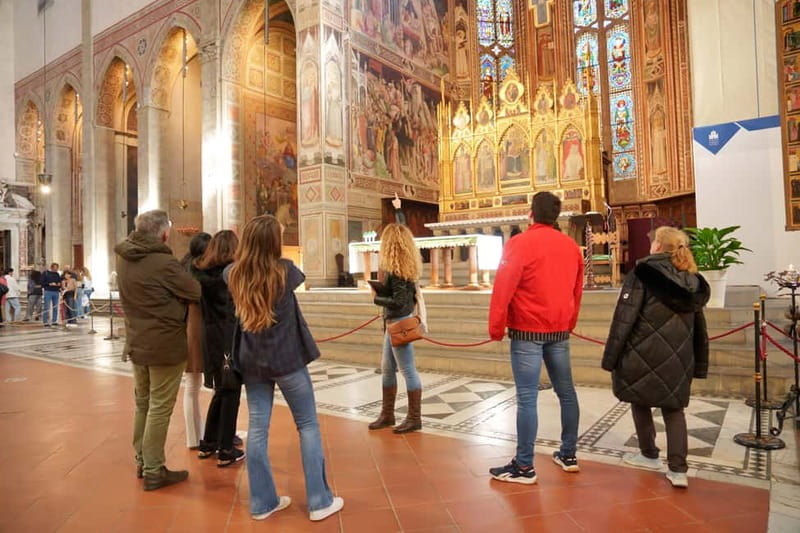
- Giotto’s major fresco cycles: Study scenes from the lives of Saint Francis and Saint John the Evangelist in the Bardi and Peruzzi Chapels.
- Renaissance works in context: The guide explains Donatello’s crucifix and Brunelleschi’s chapel instead of simply pointing them out.
- A church with scars: Restored paintings and flood damage from 1966 add a difficult but important chapter to the visit.
- Optional Tuscan tasting: Upgrade for regional wines and a platter of Tuscan appetizers after the church visit.
- Short, focused format: The guided visit lasts about one hour, while the full activity can run from one to two and a half hours depending on the option and timing.
Starting in Florence’s Piazza Santa Croce
Your visit begins in the square outside Santa Croce, one of Florence’s most recognizable open spaces. Each June, the piazza hosts Calcio Storico Fiorentino, a rough-and-ready football match played in medieval costume. That setting gives your guide a useful opening: Santa Croce is not only a church, but also part of Florence’s civic life.
The listed meeting point is Largo Piero Bargellini, near the Monument to Dante Alighieri, though the exact starting point can vary with the option you book. Check the meeting instructions closely, and arrive with comfortable shoes. You will be walking and standing on hard surfaces for much of the visit.
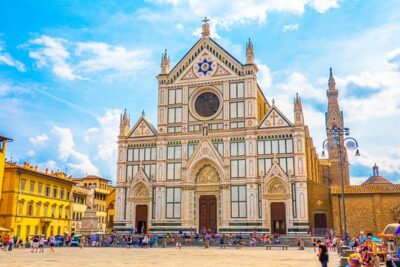
This opening stop also helps you see the church from the outside before the art begins. The polychrome marble façade is much later than the original medieval church and gives Santa Croce a bold, patterned appearance. I find it useful to pause here, because the interior is quieter and more restrained in places, while the exterior announces the church from across the square.
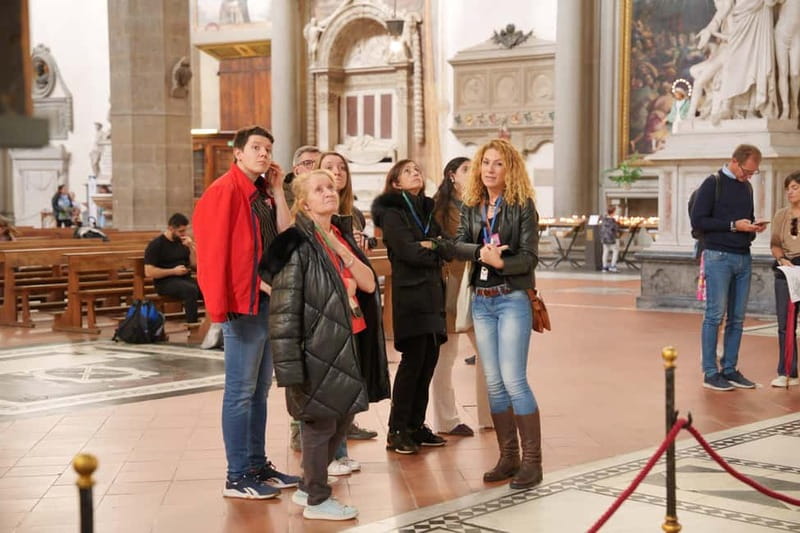
A certified guide leads the tour, and a radio system is included so you can hear the commentary clearly. That small piece of equipment matters in a church with high ceilings and other groups moving through nearby spaces.
More churches and palazzos worth an hour:
- Florence: Palazzo Vecchio Entrance Ticket & Audioguide
★ 4.4 · 4,822 reviews - Florence: Palazzo Vecchio Guided Tour
★ 4.8 · 1,260 reviews - Florence: Timed Entrance Ticket to San Marco Museum
★ 4.6 · 396 reviews
Entering the Basilica of Santa Croce
Reserved entrance tickets are included, so you do not need to arrange a separate admission for the guided visit. Once inside, the tour turns Santa Croce into a series of connected stories rather than a long list of names and dates.
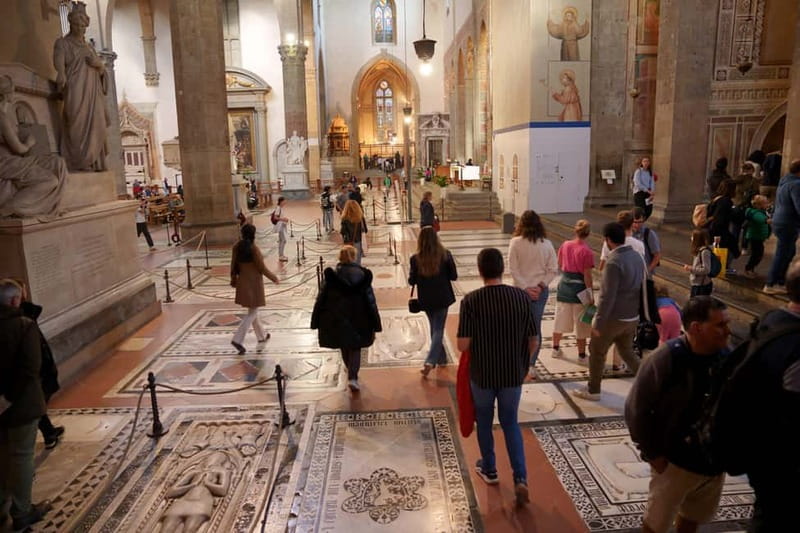
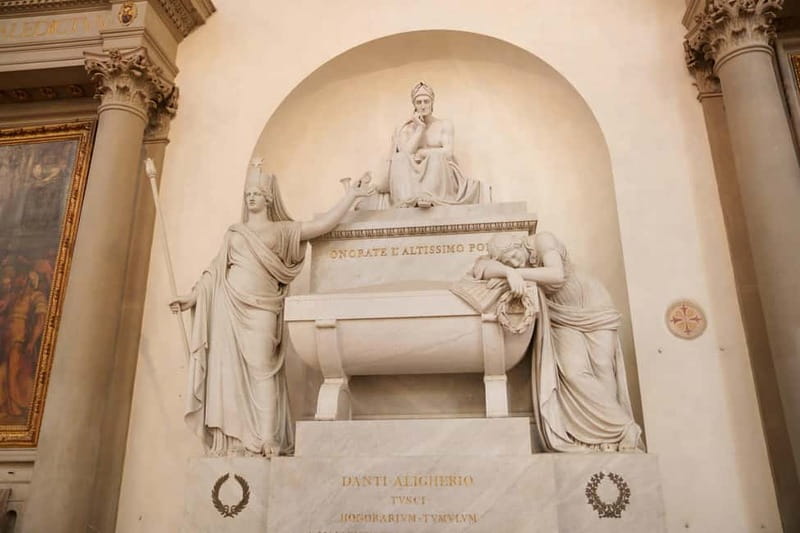
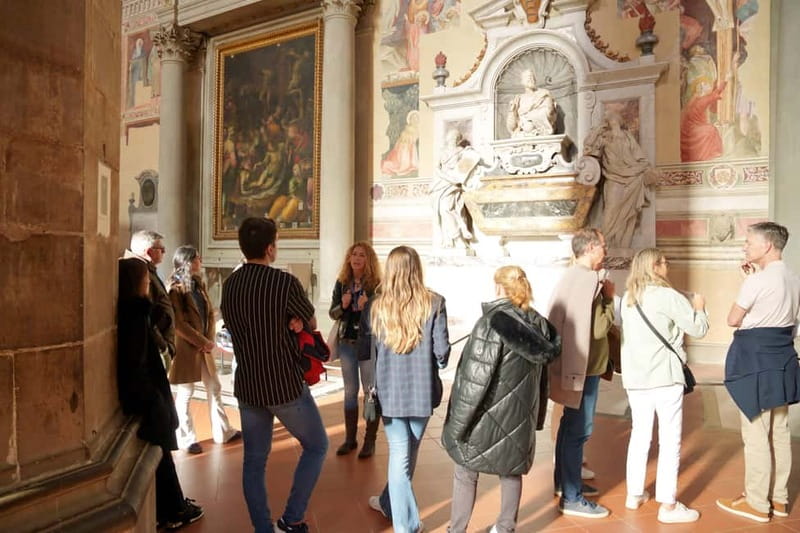
The church is often called the Temple of the Italian Glories because of the people buried here. That label can sound grand, but the tombs make the point. You will see monuments connected with Michelangelo, Galileo Galilei, and Niccolò Machiavelli, along with a monument dedicated to Dante.
The tombs are not all alike. Some are solemn and restrained, while others are large sculptural statements. I like this part of the tour because it shows how Florence has remembered its artists, scientists, writers, and political thinkers over time. You are not simply looking at graves. You are looking at the way a city builds a public memory of itself.
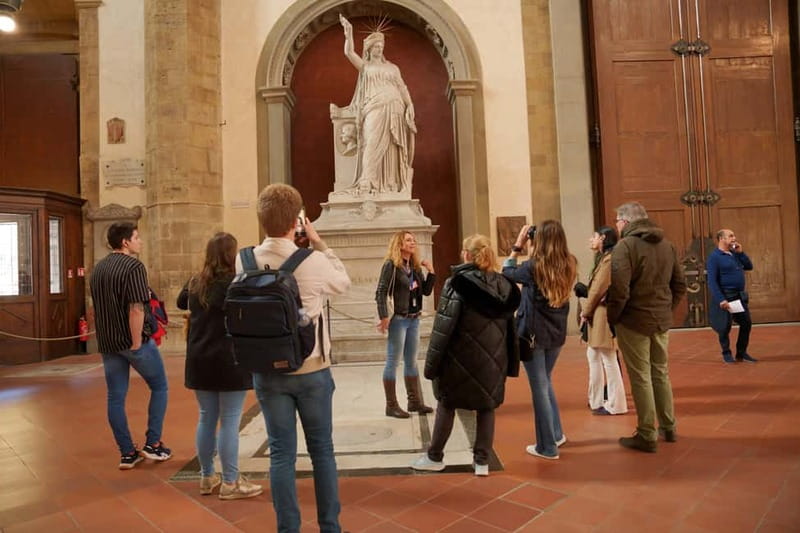
The guide also points out the memorial to Giovanni Battista Niccolini, a nineteenth-century playwright. Its design later helped inspire the Statue of Liberty. It is an easy detail to miss on your own, especially when your attention is pulled toward the better-known tombs.
Giotto in the Bardi and Peruzzi Chapels
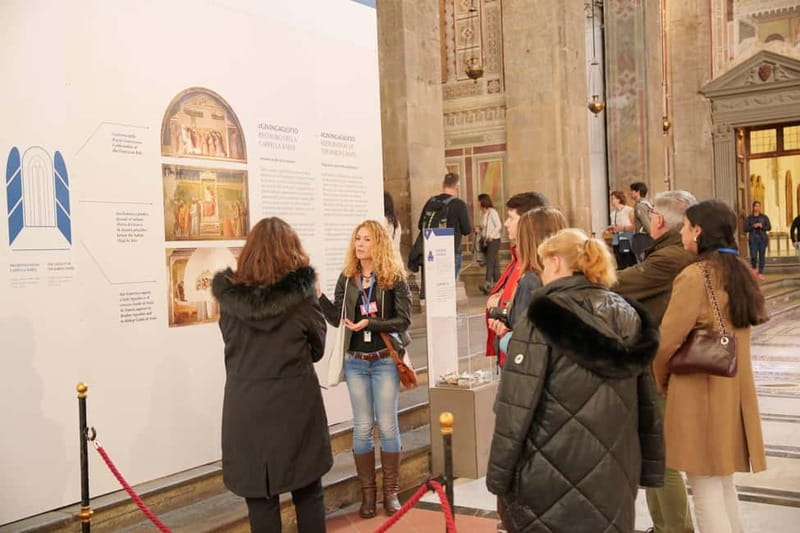
The Bardi and Peruzzi Chapels hold some of the most important art on the route. Their frescoes by Giotto show scenes from the lives of Saint Francis and Saint John the Evangelist.
A guide is especially useful here. Fresco painting can be hard to read when you are standing several feet below it, and centuries of wear can make gestures and faces less obvious than they first appear. Your guide can point out the action, explain the religious story, and connect the scenes to Giotto’s place in the development of Italian painting.
The Bardi Chapel focuses on Saint Francis, an important figure for a Franciscan church. The Peruzzi Chapel presents scenes from the life of Saint John the Evangelist. The two spaces give you a chance to compare how the painter handles different stories and settings.
I would not rush these chapels. Even if you are not an art specialist, look for the human gestures and the way the figures are arranged. The tour’s strongest feature is its explanation of specific pieces alongside their wider historical setting. That makes the pictures easier to remember after you leave Florence.
Gaddi’s Cappella Maggiore and the church’s wider art
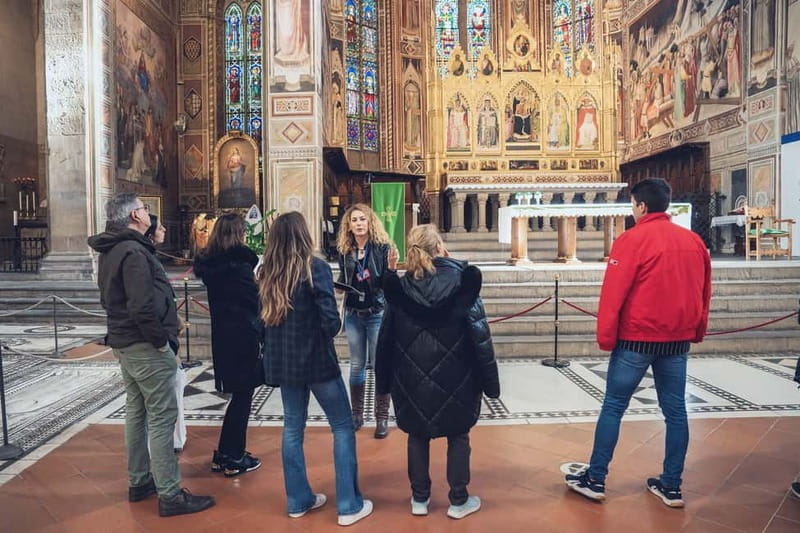
The Cappella Maggiore contains frescoes from 1380 by Agnolo Gaddi, telling the story of Santa Croce. This is one of the larger visual chapters in the basilica, and it helps you understand how the church used images to teach religious stories to people who could not read.
The guide describes the scenes and the artistic wealth of the church as a whole. That broader approach is useful because Santa Croce can feel visually crowded. You have chapels, monuments, paintings, sculpture, and architectural details competing for attention.
A good guide gives you a route through that crowd. Guides named in the tour feedback, including Lara, Marcello, Viviana, Marie, Guido, and Ilaria, were repeatedly praised for clear explanations, warmth, humor, and the ability to answer questions. One guide, Lara, was especially appreciated for explaining the history, graves, and lives of famous people in polished English. The exact guide is not guaranteed, but the experience is clearly built around live interpretation rather than a silent entry ticket.
More skip-the-line entries:
- Florence: Skip-The-Line Uffizi Gallery Timed Entry Ticket
★ 4.5 · 27,832 reviews - Florence: Timed Entrance Ticket to Michelangelo’s David
★ 4.6 · 16,983 reviews - Florence: Michelangelo’s David Skip-the-Line Entry Ticket
★ 4.5 · 12,764 reviews - Florence: Leonardo Interactive Museum Entry Ticket
★ 4.5 · 11,763 reviews
Donatello, Brunelleschi, and Renaissance precision
The tour includes Donatello’s crucifix, described as one of the jewels of the Renaissance. The guide places the work within the church’s larger artistic program, which helps you see more than the material and shape of the sculpture.
Donatello’s work can reward close attention. Look at the treatment of the body and the emotional force of the image. The point is not simply that it is old or famous. It shows how Renaissance artists pushed religious art toward greater physical presence and human feeling.
You will also see a chapel designed by Brunelleschi, described here as the Chapel of Fools. Its appeal is architectural harmony. Brunelleschi is often associated with grand engineering and the dome of Florence Cathedral, but this smaller setting shows how carefully proportion, structure, and decoration can work together.
For me, this is where the tour moves beyond a celebrity checklist. Michelangelo and Galileo draw you in immediately, but the chapel and sculpture reward attention to form. The guide helps you shift between biography, art, and architecture without losing the thread.
The tombs of Michelangelo, Galileo, Machiavelli, and Dante
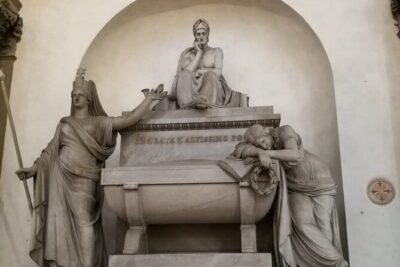
Santa Croce’s monuments are a major reason to choose this tour. Michelangelo’s tomb connects the basilica with Florence’s greatest artistic traditions. Galileo’s monument recalls the scientist whose work challenged accepted ideas about the heavens. Machiavelli’s tomb points to Florence’s political and literary world.
The monument dedicated to Dante adds another layer. Dante was born in Florence, and his presence here reflects the city’s long effort to honor its most important poet. The church therefore works almost like a civic hall of fame, though its setting remains religious and solemn.
I appreciate having a guide explain why each person matters instead of leaving you with only a name. The best moments come when the guide links the tomb to Florence’s politics, science, literature, or art. That context is what makes the monuments more than decorative stone.
You should also expect the mood to change from chapel to chapel. Some areas feel ceremonial, while others show the passage of time more plainly. Santa Croce is not a museum display frozen in perfect condition, and that is part of its character.
The flood of 1966 and the church’s damaged art
The tour includes the monumental cemetery and paintings damaged by Florence’s disastrous 1966 flood. The works were later restored, but the damage remains part of the story.
This is an important stop because it adds modern history to a church usually presented through medieval and Renaissance names. Floodwater harmed art, buildings, and objects across Florence. Seeing the traces and restoration work at Santa Croce reminds you that preservation is an ongoing task, not a finished achievement.
I find this section especially valuable for setting realistic expectations. Some paintings may not look untouched. Restoration can preserve an artwork while still leaving evidence of what happened to it. Rather than treating those marks as flaws, use them to understand the church’s survival.
The guide explains the damaged paintings and the restoration, giving you a more complete view of Santa Croce. You see both the famous past and the difficult work required to keep that past available.
Crypt, bell tower, and the 16 chapels
After the main interior, the guide takes you around the bell tower, crypt, and 16 chapels. The precise flow can vary, but the route is designed to cover more than the central nave and the best-known tombs.
The crypt gives the basilica another level, both physically and historically. The chapels show how different families and patrons shaped the church over time. Each space can have its own decoration, dedication, and visual mood, so the guide’s route keeps the visit from becoming a random walk.
The bell tower adds another feature to the church complex, though this is not a tower climb with a city panorama. The value here is seeing how the church functions as a whole, from façade to interior spaces and supporting structures.
The guided portion takes about an hour. Once it ends, you have the chance to return to anything you want to inspect again. That is a useful arrangement. I would use the first pass to follow the guide’s story, then revisit one or two works rather than trying to memorize every name.
Is the $54.66 price worthwhile?
At $54.66 per person, this is not the cheapest way to enter Santa Croce. The price makes more sense if you value a live guide, reserved admission, and a focused explanation of art and burial monuments.
A simple entry ticket gives you freedom to move at your own pace, but it leaves you to identify Giotto’s scenes, locate the important tombs, and understand why the chapel by Brunelleschi matters. This tour packages those details into a short visit, which can be a good use of limited time in Florence.
The radio system is another part of the value. In a large church, a guide speaking without amplification can be difficult to follow. With the radio, you can keep your eyes on the artwork instead of staying shoulder to shoulder with the guide.
The optional wine-tasting upgrade changes the value calculation. You add Tuscan wines and a platter of local appetizers with a wine expert, turning the activity into a church visit plus a food-and-drink experience. Choose it if you want a social finish and enjoy regional wine. Skip it if your priority is simply Santa Croce or if your schedule is tight.
Timing, clothing, and practical concerns
The activity lasts between one and two and a half hours, depending on the starting time and option selected. The guided church visit itself is about one hour, with extra time possible for the rest of the experience or wine tasting.
Wear comfortable shoes. You will walk and stand inside the basilica, and the tour does not include transportation to or from the attraction. Hotel pickup and drop-off are not included, so plan your route to the meeting point near Santa Croce.
Dress for a religious site. Shorts and sleeveless tops are strictly forbidden for both men and women. Knees and shoulders must be fully covered, and entry can be refused for unsuitable clothing without a rescheduled tour or refund.
Bring a passport or ID card. Pets, smoking, luggage, and large bags are not allowed. The tour operates in all weather, and the activity is wheelchair and stroller accessible.
You can choose among English, Spanish, French, German, and Italian. Free cancellation is available up to 24 hours before the activity, and the reserve-now, pay-later option lets you hold a place without paying at once.
Who will enjoy this Santa Croce tour?
I would recommend it to you if you want the famous names explained rather than merely photographed. It suits first-time Florence visitors, art lovers, history fans, and anyone interested in Michelangelo, Galileo, Dante, or Machiavelli.
It is also a good choice if you prefer a compact cultural visit. The guide covers a great deal in about an hour, and the option to look around again afterward gives you some breathing room.
You might prefer independent entry if you already know Santa Croce well or want to spend a long, unstructured period with individual artworks. The guided route has a clear pace, and there is a lot of information packed into a relatively short time.
Families and mixed-interest groups can benefit from the storytelling. A child or non-specialist may not care about every artist’s name, but stories about famous people, dramatic art, architecture, and the 1966 flood give the church several ways to hold attention.
Should you book it?
Book this tour if you want Santa Croce to make sense, not just look impressive. The strongest part is the guide’s ability to explain individual works while connecting them to Florence’s art, religion, science, and politics.
The $54.66 price is fair for reserved entry, a certified multilingual guide, the radio system, and a structured route through the church’s major sights. Add the Tuscan wine tasting if you want a longer, more relaxed finish with appetizers. Skip that upgrade if you only need the basilica.
Dress correctly, arrive in comfortable shoes, and keep an hour or two and a half available depending on your chosen option. For a focused introduction to one of Florence’s most important churches, this is a strong pick.
FAQ
Where does the Santa Croce tour start?
The meeting point may vary depending on the option booked. One listed starting point is Largo Piero Bargellini, near the Monument to Dante Alighieri.
Where does the tour end?
The activity ends back at the meeting point.
How long does the activity last?
The full activity lasts between one and two and a half hours. The guided visit to the basilica takes about one hour.
What languages are available?
The live guide is available in English, Spanish, French, German, and Italian.
Is admission to Santa Croce included?
Yes. Entrance tickets with reservations are included.
Which famous people are buried at Santa Croce?
The church contains the burial places of Michelangelo, Galileo Galilei, and Machiavelli. It also has a monument dedicated to Dante.
Is wine tasting included?
Wine tasting and Tuscan appetizers are included only if you select the wine-tasting option.
What clothing is required?
Your knees and shoulders must be completely covered. Shorts and sleeveless tops are not allowed for men or women.
Can I cancel the tour?
You can cancel up to 24 hours in advance for a full refund.
Latest additions around Florence
- Florence: Cathedral Tour & Brunelleschi’s Dome Climb Ticket★ 5.0 · 3 reviews
- Palatina Gallery and Pitti Guided Tour in Florence★ 5.0 · 3 reviews
- San Gimignano Bike Tour (SOFT)★ 4.5 · 3 reviews
- Florence Uffizi Gallery Skip-the-line Tour w Art Historian Guide★ 5.0 · 3 reviews
- Private Tour: Pisa and Lucca from Florence★ 5.0 · 3 reviews
- Florence: Tour of Florence by rickshaw★ 5.0 · 3 reviews
- Center of Florence by golf cart★ 5.0 · 3 reviews
- From Firenze | Chianti day tour in a classic car★ 5.0 · 3 reviews
Florence Churches & Palazzos, compared.
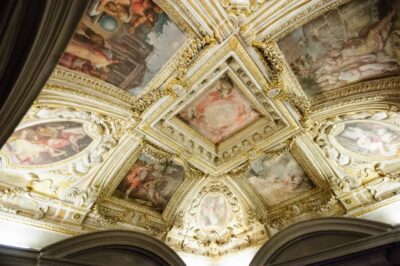
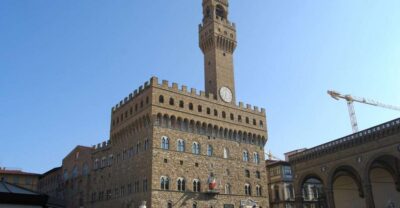
Palazzo Vecchio guided experience with entrance ticket
Read our review →
Basilica Santa Croce: Walking Among the Masters of Florence
Read our review →Browse the lists this tour appears in