
Reviewed · MEDICI TOURS
Florence – The Medici’s Private Walking Tour
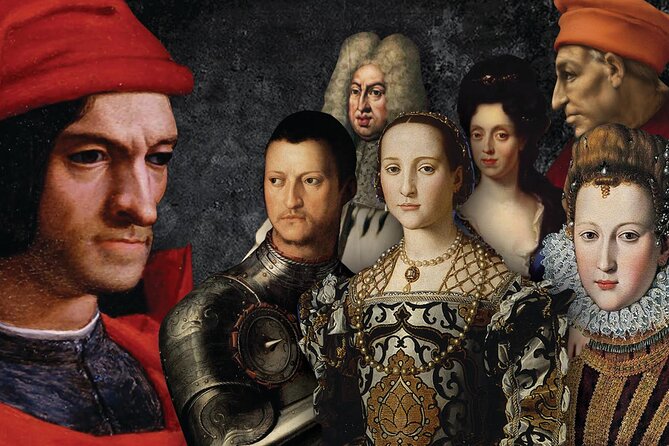
The Medici family shaped Florence with money, political skill, artistic patronage, and more than a few family scandals. This private walk links their story to the city itself, taking you from Piazza San Marco to Palazzo Pitti in about two hours.
I like the personal pace, with room for questions, and I like the way the route connects famous sights instead of treating them as isolated monuments. Guides including Isabella, Marcello, Irene, Lisa, and Giacomo have been praised for clear storytelling, humor, and real enthusiasm for Florence. The main drawback is important: admission to buildings is not included, so much of the tour is an outdoor explanation rather than an interior visit.
In This Review
- Key points to know before booking
- Why the Medici story works best on foot
- Palazzo Medici Riccardi: the family’s first great address
- Piazza del Duomo: Florence’s grand public stage
- Basilica di San Lorenzo and the Medici tombs
- Piazza della Signoria: Medici power in public
- Ponte Vecchio and the Vasari Corridor
- Palazzo Pitti: the grand finish across the Arno
- The guide makes or breaks the experience
- Price, admissions, and what you really receive
- Practical details for a smooth walk
- Who should book this Medici walk?
- Should you book it?
- FAQ
- How long does the Medici private walking tour last?
- Where does the tour begin?
- Where does the tour end?
- Is hotel pickup available?
- Is this a private tour?
- Are admission tickets included?
- What language is the tour offered in?
- Can I cancel for a full refund?
Key points to know before booking
- Medici story in one walk: Follow the family from its early palace to its grand home across the Arno.
- Private group format: Only your party takes part, allowing you to ask questions and set the pace.
- Outdoor-focused experience: You see the exteriors of major landmarks, while entry tickets cost extra.
- Strong guide element: Isabella, Marcello, Irene, Lisa, Giacomo, and Marco have all led praised tours.
- Useful first-day choice: The route can help you understand Florence before visiting its galleries and chapels.
- Central pickup may be possible: Pickup is offered on foot from centrally located accommodations.
Why the Medici story works best on foot
Florence is small enough to cross on foot, but its monuments can blur together during a first visit. A palace becomes just another grand façade, a church another marble front, and a bridge another photo stop. This tour gives those places a common thread: the rise, power, ambition, and eventual decline of the Medici family.
The route begins at Piazza San Marco and ends at Palazzo Pitti. That direction makes sense historically and physically. You move from the Medici family’s early base near the northern center of Florence toward the later palace on the Oltrarno side of the Arno.
I especially like this format for anyone who wants context before visiting the Uffizi Gallery, Medici Chapels, or Palazzo Vecchio. One person who took the tour late in a Florence stay wished it had been scheduled on the first day, since the guide pointed out many places worth returning to. That is sound advice. Book it early in your visit if you can.
This is a private activity, not a large group walk. That matters in Florence, where narrow streets and crowded squares can make a fixed lecture tiring. You can ask why Cosimo de’ Medici preferred a restrained palace façade, how the Vasari Corridor worked, or which family member commissioned a particular work.
The tour lasts about two hours. That is long enough to cross the city and build a clear story, but not long enough for a detailed interior tour of every monument. You should think of it as a guided introduction to Medici Florence, not a substitute for museum admission.
More Medici trails:
- The Best tour in Florence: Renaissance & Medici Tales – guided by a STORYTELLER
★ 5.0 · 12,316 reviews - The Best Tour in Florence: Renaissance and Medici Tales
★ 5.0 · 10,810 reviews - Florence: Renaissance and Medici Tales Guided Walking Tour
★ 4.8 · 1,549 reviews
Palazzo Medici Riccardi: the family’s first great address
The first stop is Palazzo Medici Riccardi, a key place for understanding how the family presented itself. Cosimo de’ Medici commissioned the palace in the mid-15th century, and architect Michelozzo gave it a serious, controlled exterior. The heavy rusticated stone suggested strength without shouting for attention.
That restraint was political. Florence was a republic in name, and Cosimo needed to show influence without looking like a king. The palace helped create the image of a wealthy, cultured family that belonged at the center of public life.
The building later passed to the Riccardi family, which expanded it. Inside, the Magi Chapel is the star attraction, with frescoes by Benozzo Gozzoli showing the procession of the Magi. The decoration reflects Medici wealth and status, but also the family’s careful use of art as public messaging.
The scheduled stop is about 15 minutes. Since admission is listed as free for this stop, confirm with your guide exactly what access is available on the day. The experience description does not promise a full interior visit, and the major caution with this tour is that monument entry is generally not part of the price.
If you do enter, the chapel gives the Medici story a visual center. If you remain outside, the guide can still explain why the building matters, but you will not receive the same experience as a dedicated palace visit.
Piazza del Duomo: Florence’s grand public stage
The walk continues to Piazza del Duomo, where the Cathedral of Santa Maria del Fiore, Brunelleschi’s dome, Giotto’s bell tower, and the Baptistery gather in one extraordinary view. Even if you have seen photographs, the scale of the group is startling from street level.
This is an especially useful stop for first-time visitors. The guide can help you separate the roles of the cathedral, bell tower, and Baptistery, and connect their marble surfaces and soaring forms to Florence’s competition with other Italian cities.
Brunelleschi’s dome is the visual landmark, but the Baptistery deserves attention too. Its golden doors, often called the Gates of Paradise, helped make the building one of Florence’s most celebrated monuments. The square also shows how religious buildings, civic pride, engineering, and artistic ambition worked together.
The stop lasts about 15 minutes, and admission is not included. That timing is enough for orientation and questions, not enough to climb the dome, visit the cathedral interior, or study the Baptistery doors at length. If those are priorities, plan separate tickets and time.
Crowds can make this the noisiest part of the walk. Keep your guide in sight, listen for the earphones if they are needed, and use the short stop to learn what deserves a return visit.
Basilica di San Lorenzo and the Medici tombs
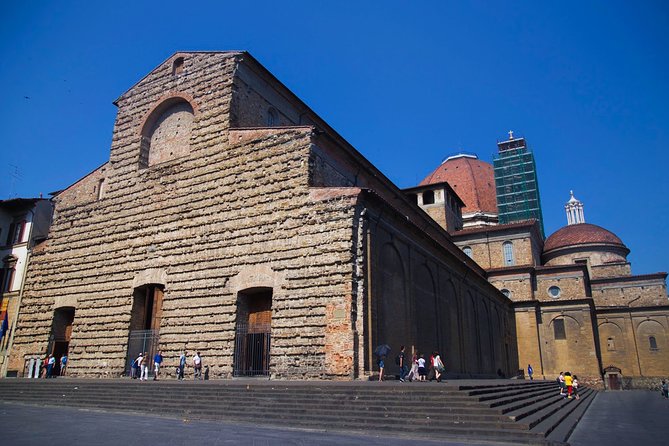
San Lorenzo brings the Medici story closer to home. The basilica was one of Florence’s oldest churches and was rebuilt in the 15th century with designs linked to Brunelleschi. Its plain exterior can seem almost unfinished, especially when compared with the cathedral nearby.
That contrast is part of its appeal. Inside, the church presents a more measured Renaissance design, with a calm sense of proportion. Works connected with Donatello and the Medici Chapels add artistic and political weight.
The Medici Chapels contain monumental tombs associated with Michelangelo. They are not simply burial places. They reveal how the family wanted power, family continuity, and artistic greatness to be remembered.
The scheduled stop is around 15 minutes, and admission is not included. This is one of the places where the difference between an orientation walk and an interior sightseeing tour matters most. The guide can explain the church and the chapels from outside, but you need a separate ticket if you want to see the tombs and decoration.
I would not treat that as a flaw if you already plan a chapel visit. In that case, the guide gives you useful background before you enter. If you expect the tour price to cover the chapels, though, you may feel disappointed. Check the admission details carefully before paying.
More walking routes in Florence:
- Florence: Guided Walking Tour
★ 4.5 · 3,334 reviews - Skip the line: Uffizi and Accademia Small Group Walking Tour
★ 4.5 · 3,135 reviews - Florence: Guided Walking Tour
★ 4.6 · 1,602 reviews - Florence: Uffizi & Accademia Small Group Walking Tour
★ 4.7 · 1,380 reviews
Piazza della Signoria: Medici power in public
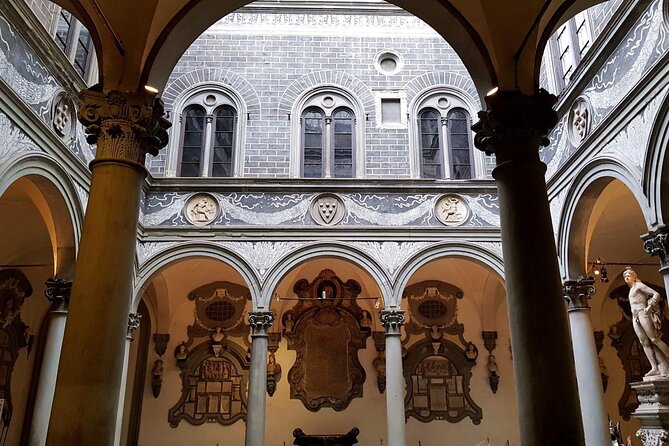
At Piazza della Signoria, the family story moves from private residence to civic authority. Palazzo Vecchio dominates the square, and the surrounding sculptures create a kind of open-air museum.
The square includes a replica of Michelangelo’s David, the Fountain of Neptune, and statues under the Loggia dei Lanzi. These works help explain how Florence used public art to display military strength, civic pride, religious ideas, and political control.
The nearby Uffizi Gallery makes the setting even more important. The square connects government, art collecting, and public ceremony in a compact space. A good guide can turn a quick look at a statue into a story about who paid for it, where it was placed, and what message it sent.
This is the longest central stop, at about 25 minutes. Admission is listed as free, but that does not mean you enter Palazzo Vecchio or the Uffizi. You see the public space and hear the interpretation. If you have museum plans, this stop can make those visits more rewarding.
I like the open-air quality here. You can look, listen, and keep moving without spending the whole tour in a dark room. You also get a practical sense of Florence’s civic center, which is useful when navigating later on your own.
Ponte Vecchio and the Vasari Corridor
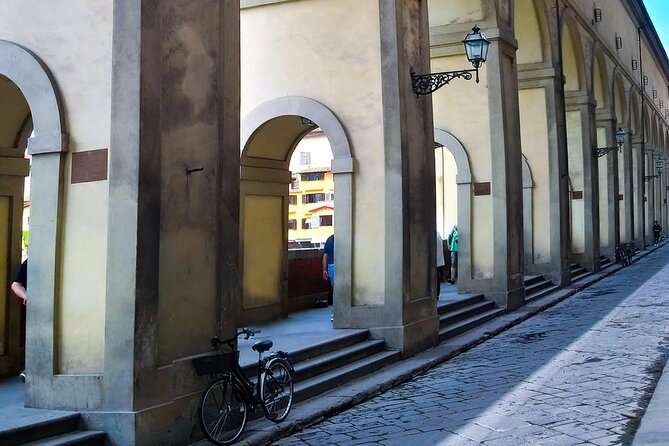
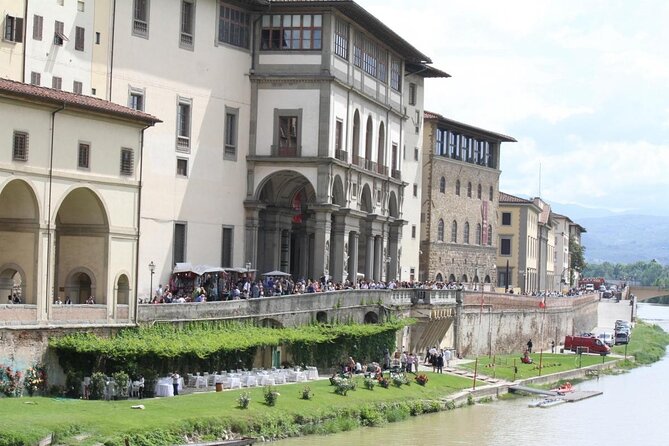
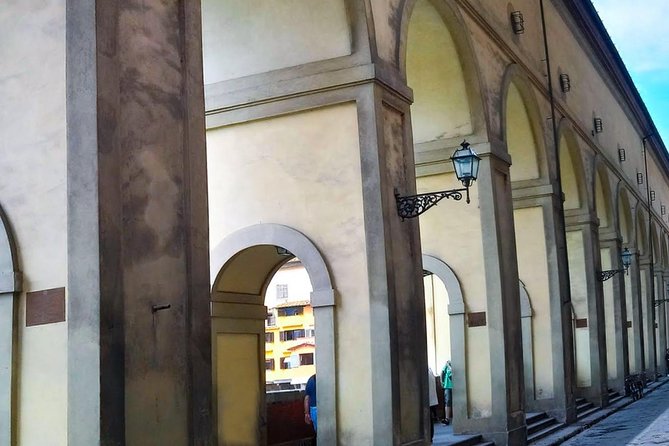
Ponte Vecchio is Florence’s best-known bridge, with jewelry shops lining both sides. It is picturesque, but its real Medici connection is above you. The Vasari Corridor was built in 1565 to link Palazzo Vecchio with Palazzo Pitti.
The elevated passage allowed the Medici family to move across the city without mixing with street crowds. That detail gives the bridge more meaning than its postcard appearance. It shows how architecture could serve privacy, security, status, and convenience all at once.
The stop lasts about 20 minutes. You should expect an explanation of the bridge and corridor, not access to the private passageway. The corridor has its own access rules and is not included in this walking tour.
This is a good place to ask questions. Why did the Medici need a private route? How did the corridor change the family’s relationship with the city? What did it mean to control the route between government offices and a private palace? The private format gives you time to pursue those details.
Ponte Vecchio can be crowded, and the bridge is narrow. Stay close to your guide and use the crossing as part of the story rather than trying to stop in the middle for long photographs. You can return later at a quieter time if you want pictures.
Palazzo Pitti: the grand finish across the Arno
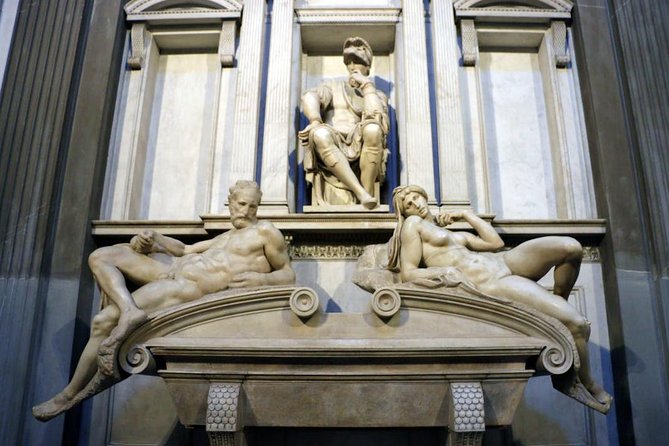
The walk ends at Palazzo Pitti, the Medici residence on the Oltrarno side of Florence. Its enormous stone façade feels heavier and more openly grand than Palazzo Medici Riccardi. By this point in the route, that change tells its own story.
The palace contains decorated rooms and museums, including the Palatine Gallery, with works by artists such as Raphael and Titian. Behind it, the Boboli Gardens offer sculpture, fountains, and broad views over Florence.
The stop is about 25 minutes. Admission is not included, so you will need separate tickets for the palace, galleries, and gardens. This is worth planning around because the palace complex can fill a large part of a separate afternoon.
Ending here is practical. You are already in the Oltrarno district, and the guide can point you toward the palace entrance and help you understand what you are seeing before you decide how much more time to spend. The official end point is Palazzo Pitti, at Piazza de’ Pitti 1.
I like the finish because it gives the Medici story a clear final image: the family no longer simply lives near the center of Florentine politics. It has a grand residence across the river, connected by a private passage to the old seat of government.
The guide makes or breaks the experience
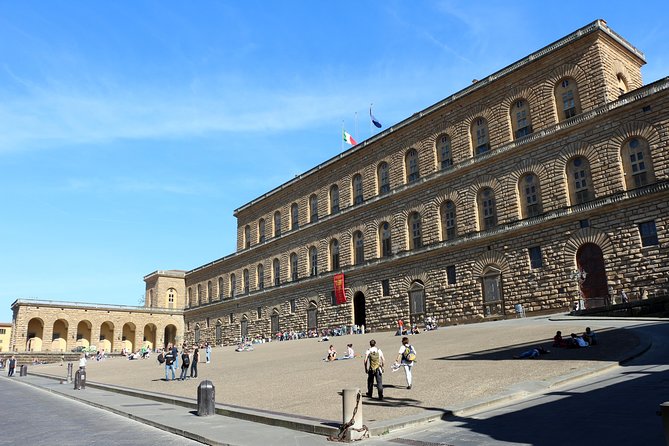
The strongest part of this tour is the human element. Several guides have earned especially warm praise for their command of Medici history, clear English, humor, and personal energy.
Isabella has been described as an educator who combines art, family history, and local culture with a lively sense of humor. Marcello, also spelled Marchello in the tour information, is praised for being funny, engaging, and generous with explanations. Irene is known for making the two-hour walk feel like a lesson in Florence’s open-air museum.
Lisa has led a particularly personal version of the route. On one occasion, she guided only one booking party, creating an even more private experience. She adjusted for sun and shade, answered questions carefully, and kept the story organized from Piazza San Marco to Pitti Palace.
Giacomo and Marco have also led the experience. You cannot choose a specific guide from the information provided, so expectations should focus on the tour format rather than one individual personality.
The guide’s role matters because this is not an audio tour. You are paying for interpretation, conversation, and the ability to connect the buildings. The overall rating is 4.8 from 16 ratings, with 94 percent recommending it, which points to a strong general record. Still, the small number of ratings means I would not treat that figure as a guarantee of the exact guide or style you will receive.
Price, admissions, and what you really receive
The listed price is $126.16 per person. For a private two-hour experience in central Florence, that can be reasonable if your group values personal attention and historical explanation.
The value drops if you are mainly looking for entry to the Medici Chapels, Palazzo Medici Riccardi, Palazzo Vecchio, the Vasari Corridor, or Palazzo Pitti. Monument admissions are not included, and one serious complaint centered on the feeling of paying a premium to walk past major buildings.
That concern is fair. The promotional language can create the impression of an inside tour, while the stated inclusions make clear that admission fees are separate. Read the booking details closely and contact the provider if you need certainty about interior access.
I would book this for the guide and the connected story, not for included sightseeing tickets. If you want to enter several museums and churches, compare the total cost after adding admission. If you already have those visits planned, the walk can provide useful preparation and may improve the value of the tickets you buy separately.
Practical details for a smooth walk
The meeting point is Piazza San Marco. Arrive 15 minutes before departure, since the group will be moving through central streets and late arrivals may be hard to reunite with.
Pickup is offered on foot from centrally located accommodations. It is not hotel transportation, and drop-off is not included. If your lodging is outside the central area, plan to reach Piazza San Marco yourself.
The tour is offered in English. Earphones are provided if necessary. Most people can take part, and service animals are allowed. Wear smart casual clothing and comfortable shoes, since the experience covers a long central route on foot.
The activity is near public transportation, but the actual tour proceeds on foot. Florence’s paving can be uneven, and the walk includes busy public squares and a bridge, so sensible footwear matters more than stylish footwear.
Free cancellation is available until 24 hours before the start time. Changes or cancellations made less than 24 hours ahead are not accepted, and the local time in Florence controls the deadline.
Who should book this Medici walk?
I recommend it most for history buffs, Renaissance fans, and first-time Florence visitors who want the city to make sense before tackling its museums. It also suits families or friends who prefer a private conversation to a large scheduled group.
The route is useful for people who have already seen Florence but missed the political connections between its monuments. The walk can also suit art lovers who want background before visiting the Uffizi, the Medici Chapels, or the Palatine Gallery.
I would be cautious if your main goal is entering buildings. You may be happier booking separate museum visits with admission included, or choosing a tour that clearly promises interior access. This experience gives you a citywide story and exterior interpretation, with the option to return to the sights afterward.
Should you book it?
Book this tour if you want the Medici family explained through Florence’s streets, squares, palaces, churches, and bridge. The private format, flexible questions, and guides such as Isabella, Marcello, Irene, Lisa, Giacomo, and Marco are the main reasons to choose it.
Book it early in your stay if possible. You will gain a useful map of the city and a list of places to revisit. Just keep your expectations exact: this is a two-hour walking history lesson with exterior stops, not an all-inclusive museum tour.
If you accept that distinction, the route offers a focused and engaging way to understand how one family helped shape Florence. If you expect admission to the major buildings, the $126.16 price may feel hard to justify.
FAQ
How long does the Medici private walking tour last?
The tour lasts approximately two hours.
Where does the tour begin?
It begins at Piazza San Marco in Florence.
Where does the tour end?
It ends at Palazzo Pitti, Piazza de’ Pitti 1, in Florence.
Is hotel pickup available?
Pickup is offered on foot from centrally located accommodations. Hotel drop-off is not included.
Is this a private tour?
Yes. Only your group participates in the private activity.
Are admission tickets included?
No. Admission to monuments and attractions is not included. The tour information lists admission as not included for Piazza del Duomo, Basilica di San Lorenzo, and Palazzo Pitti.
What language is the tour offered in?
The tour is offered in English.
Can I cancel for a full refund?
Yes, if you cancel at least 24 hours before the experience start time. Cancellations or changes made less than 24 hours before the start time are not accepted for a refund.
Latest additions around Florence
- Florence: Cathedral Tour & Brunelleschi’s Dome Climb Ticket★ 5.0 · 3 reviews
- Palatina Gallery and Pitti Guided Tour in Florence★ 5.0 · 3 reviews
- Private Tour: Pisa and Lucca from Florence★ 5.0 · 3 reviews
- San Gimignano Bike Tour (SOFT)★ 4.5 · 3 reviews
- Florence Uffizi Gallery Skip-the-line Tour w Art Historian Guide★ 5.0 · 3 reviews
- Florence: Tour of Florence by rickshaw★ 5.0 · 3 reviews
- Center of Florence by golf cart★ 5.0 · 3 reviews
- From Firenze | Chianti day tour in a classic car★ 5.0 · 3 reviews
Medici Tours, compared.

The Best tour in Florence: Renaissance & Medici Tales – guided by a STORYTELLER
Read our review →
The Best Tour in Florence: Renaissance and Medici Tales
Read our review →
Renaissance and Medici Tales Guided Walking Tour
Read our review →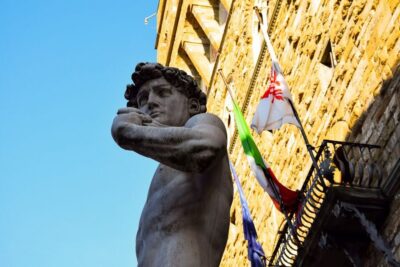
Guided Tour of Medici Family Secrets and Chapels
Read our review →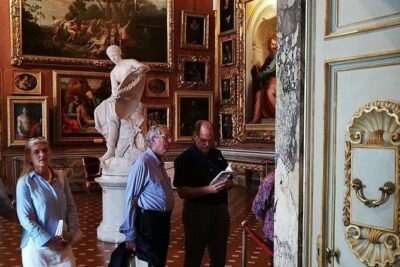
Pitti Palace, Palatina Gallery and the Medici: Arts and Power in Florence.
Read our review →

Medici Legends & Renaissance Wonders: Florence Small Group Tour
Read our review →Browse the lists this tour appears in