
Reviewed · RENAISSANCE ART TOURS
Sex, Drugs & the Renaissance in Florence
Florence’s grand Renaissance story has a less polished side, and this walking tour puts it front and center. In narrow streets around the Duomo, Bargello, Medici palace, and Piazza della Repubblica, you hear about courtesans, drugs, scandal, strange remedies, death, and the social rules that shaped daily life.
I like the unusual subject matter, which gives you a break from the standard parade of artists, churches, and noble families. I also like the small-group design, with no more than 14 people stated in the booking details, although other information gives a maximum of 18. One important warning: this is not merely a mildly cheeky history walk. The central subject is Renaissance sex and sexual exploits, so the content may not suit everyone.
- Expect frank adult content: The tour is for ages 18 and over, with sexual stories at its core.
- See major sights from a different angle: The Duomo, Baptistery, Bargello, Medici palace, and central squares become settings for scandal and power.
- Look for Florence’s wine doors: These small openings and other street details help connect the present city to its working past.
- Allow 2 hours 15 minutes: The route covers several central stops, with walking through side streets between them.
- Group size is small: The stated maximum is 14 people, though another description says 18, so confirm the current limit when booking.
- Guide quality matters: Past guides named in feedback include Klas, Angelo, Antonia, and Corinna, all praised for strong storytelling and enthusiasm.
In This Review
- Florence’s polished image gets a scandalous correction
- What the route tells you about Florence
- Piazza della Repubblica and the city’s changing center
- The Bargello, from jail to sculpture museum
- The Duomo and Baptistery beyond the postcard view
- Palazzo Medici Riccardi and the family behind the power
- Palazzo Davanzati and the start of the story
- Via Cavour and Florence’s street-level secrets
- Drugs, remedies, and the city’s darker corners
- How the guides shape the experience
- Group size, walking comfort, and timing
- Is $484.01 a fair price?
- Who should book this adult history walk?
- Should you book Sex, Drugs & the Renaissance in Florence?
- FAQ
- How long does the Florence walking tour last?
- What is the minimum age?
- Which Florence sights are included on the route?
- Are admission tickets to the monuments included?
- What is included in the tour price?
- How large is the group?
Florence’s polished image gets a scandalous correction
Most first-time visitors meet Florence through Michelangelo, Botticelli, Brunelleschi, and the Medici. Those names still appear here, but this tour asks a different question: what did ordinary people, artists, rulers, prostitutes, doctors, prisoners, and wealthy patrons actually do behind the grand facades?
That shift is the main reason to book. You are not simply looking at another church while someone recites dates. You are walking through streets where addresses once helped identify the social rank of courtesans, where odd street names preserve clues to old trades, and where public respectability sat close to private behavior.
The title is direct, but the description has not always been equally clear about the adult focus. If you expect a broad tour of Renaissance oddities with a few naughty stories, you may be surprised. The experience is better understood as a frank, adult history walk with art, politics, religion, medicine, and city geography woven around sexual life.
That makes it a poor choice for younger teenagers, even if they are used to museum visits and historical fiction. The minimum age is 18, and you should take that rule seriously.
What the route tells you about Florence
The walk starts in the historic center near Piazza Davanzati and Via Roma. From there, the guide leads you through central Florence rather than taking you inside the major monuments. Admission tickets are not needed at the listed stops, so the value comes from the guide’s storytelling and the way the streets are interpreted.
The route is compact but busy. Each named stop is listed at about 15 minutes, giving you roughly 105 minutes at seven points, with the remaining time used for movement and connecting stories. You should expect a steady walking pace through central streets, not a long museum visit or a relaxed café tour.
A welcome drink is included, as are headsets. The headsets matter in Florence, where stone walls, traffic, and crowds can swallow a guide’s voice. They also let you keep some distance from the group while still following the story.
More Renaissance art days:
- Florence: Timed Entrance Ticket to Michelangelo’s David
★ 4.6 · 16,983 reviews - Florence: Michelangelo’s David Skip-the-Line Entry Ticket
★ 4.5 · 12,764 reviews - The Best tour in Florence: Renaissance & Medici Tales – guided by a STORYTELLER
★ 5.0 · 12,316 reviews
Piazza della Repubblica and the city’s changing center
Piazza della Repubblica is the first major stop. Today it is one of Florence’s broad central squares, but the tour uses it as a place to think about how the city changed over time.
Its open shape feels different from the tight lanes nearby. That contrast helps you understand Florence as a city with layers rather than as a collection of isolated monuments. The guide’s material here concerns the people and trades that operated in the center, including the role of prostitution in the city’s economy.
You do not come here for an entrance visit. The square is free to access, and the stop is about orientation and interpretation. If you have only seen Florence through its famous facade views, this is a useful first step toward the city’s less respectable side.
The Bargello, from jail to sculpture museum
The Bargello is now one of Florence’s major art museums, known for sculpture and housed in an impressive medieval building. On this walk, you focus instead on its earlier life as a jail.
That change in identity gives the building extra weight. A palace can look noble from the outside, but the guide’s stories remind you that power in Renaissance Florence also meant punishment, confinement, and public control. The same city that produced celebrated art had prisons, executions, illicit trades, and harsh social divisions.
The stop is especially useful if you plan to visit the Bargello museum later. You will see the building with another layer of meaning, even though this tour does not include museum entry. Allow time on another day if you want to explore the collections inside.
The Duomo and Baptistery beyond the postcard view

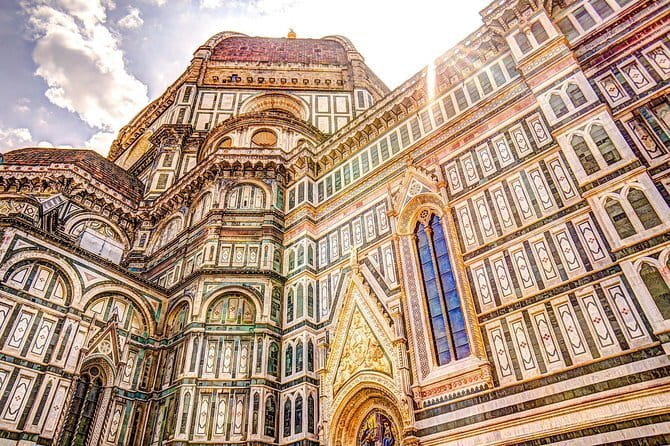
The Duomo is Florence’s great visual anchor. The cathedral, dome, and bell tower dominate the center, and the Baptistery sits nearby with its famous doors and strong geometric design.
This tour does not promise entry into the cathedral, bell tower, or Baptistery. Instead, the guide uses the buildings as settings for stories about public life, reputation, religion, and private behavior. That contrast is the point. Florence’s holiest and most admired spaces existed alongside taverns, brothels, dubious medicines, and discreet transactions.
The Baptistery stop is listed separately from the Duomo, with about 15 minutes at each. That gives the guide room to treat them as more than one photo stop. You can expect short explanations tied to the tour’s adult themes, rather than a full architectural lecture.
You should also keep your eyes open for details that are easy to miss when you are focused on the dome. The route is designed around side streets and overlooked features, so the most memorable point may be a modest doorway or street marker rather than the huge cathedral itself.
A different way to spend the same Florence day:
- Florence: Skip-The-Line Uffizi Gallery Timed Entry Ticket
★ 4.5 · 27,832 reviews - Tuscany Day Trip from Florence: Siena, San Gimignano, Pisa and Lunch at a Winery
★ 5.0 · 21,634 reviews - Florence: Leonardo Interactive Museum Entry Ticket
★ 4.5 · 11,763 reviews - The Best Tour in Florence: Renaissance and Medici Tales
★ 5.0 · 10,810 reviews
Palazzo Medici Riccardi and the family behind the power
The Medici palace provides the tour’s clearest link between private behavior and public authority. The Medici family helped shape Florence’s politics, banking, art, and cultural life, but this experience is interested in the people behind the official portraits.
The guide places powerful citizens, artists, and noble families into stories involving desire, status, rivalry, and scandal. That can make familiar names feel less like marble figures and more like complicated people. One of the strongest aspects of the walk, based on the guide feedback supplied, is the ability to make Renaissance figures and ordinary residents feel alive through small, personal details.
Past guide names include Klas, Angelo, Antonia, and Corinna. The comments attached to those guides describe different strengths: Klas was praised for energy and storytelling, Angelo for enthusiasm, Antonia for intimate details about powerful families, and Corinna for historically grounded anecdotes. Guide assignments can change, so you should not book on the assumption that one specific person will lead your walk.
The palace is viewed from the route rather than offered as a private interior visit. If you want to tour the rooms, you will need a separate ticket and more time.
Palazzo Davanzati and the start of the story
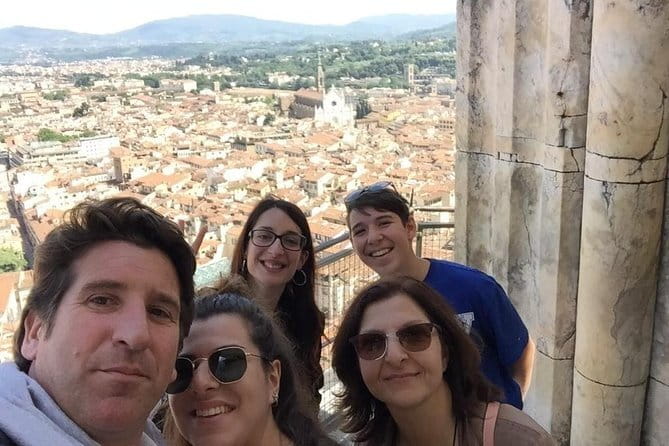
The meeting point is listed as Via Roma, 1r, while the tour information also places the start near Piazza Davanzati. Check the exact confirmation carefully, since central Florence has several nearby streets and numbered entrances.
The Museo di Palazzo Davanzati is one of the named points on the walk. The building helps set the mood because it is connected to domestic life and the homes of wealthy Florentines. The guide uses this part of the route to move away from famous public monuments and toward the private spaces where social rules, family arrangements, servants, and sexual behavior played out.
You do not receive museum admission as part of the tour. The stop is an exterior point in the walking route, and the listed admission is free.
Via Cavour and Florence’s street-level secrets
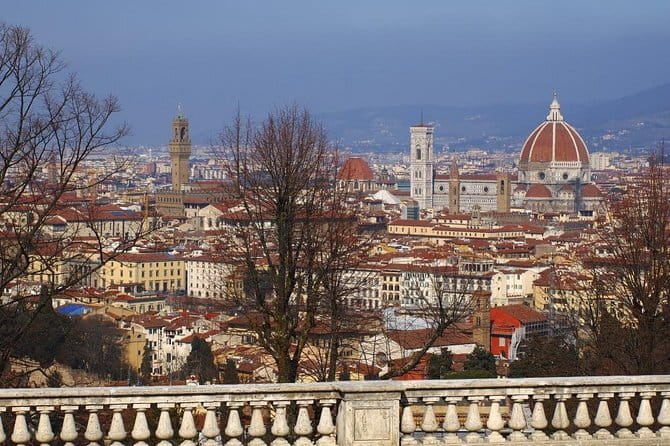
Via Cavour is another reminder that this is a walking route, not a monument checklist. The guide points out how street names, addresses, and small features can preserve clues to old social systems.
One of the more unusual details concerns addresses associated with courtesans. The route explains how certain locations could signal a lower-class or upper-class position, showing that even sex work was shaped by rank and money. That is a useful correction to the idea that Renaissance Florence had one single culture. Wealthy patrons and poor workers occupied the same city but lived under very different rules.
You may also hear about wine doors, small openings that have become one of the walk’s recurring topics. These details are easy to pass without noticing, yet they help explain how food, drink, trade, and discreet service once operated at street level.
Drugs, remedies, and the city’s darker corners
The word drugs in the title refers to Renaissance ideas about substances and healing, not necessarily a modern discussion of narcotics. The guide explains strange concoctions that people believed could cure illness or improve health.
This is one of the more interesting parts for visitors who enjoy the history of medicine. Before modern testing and pharmaceutical standards, people relied on mixtures that could be bizarre, risky, or based on tradition rather than proof. Their beliefs reveal how fear, hope, religion, commerce, and medical practice mixed together.
The walk also includes a well where deceased people were once dumped, a place that local people still prefer to avoid. That detail makes the tour darker than its playful title might suggest. Sex and scandal get the headline, but disease, death, punishment, and superstition are part of the experience too.
How the guides shape the experience
This tour depends heavily on the person holding the headset. The route itself is short and central, so the guide’s timing, humor, historical care, and comfort with adult material make the difference.
The strongest guide comments describe clear storytelling and a talent for making obscure details memorable. That is important here because the tour asks you to connect places that look ordinary with events from centuries ago. A good guide can make a street name, doorway, or palace facade feel meaningful without turning the walk into a lecture.
The weaker feedback points to a real concern: some people found the tour too narrowly focused on sexual exploits and felt there was little they could share afterward beyond wine-door information. I would not ignore that criticism. If you want equal attention to painting, architecture, politics, and daily life, this may not be the right choice.
On the other hand, if you are comfortable with the subject, the focused format can be a strength. You get a clear theme instead of a general Florence overview. Some past participants even found the route so useful that they wished they had booked it on their first day, when it could have helped them read the city differently from the start.
Group size, walking comfort, and timing
The tour lasts about 2 hours 15 minutes and uses a small group. One set of details gives a maximum of 18 people, while the additional information says the maximum is 14. That discrepancy is worth checking before you pay, but either figure is smaller than a large coach-style group.
A small group should make it easier to hear the guide, ask questions, and keep moving through narrow lanes. The included headsets add another layer of comfort. Past bookings have sometimes resulted in a private tour when only one person booked, and the walk has gone ahead in at least one such case, but you should not assume that outcome.
Wear comfortable shoes. The route stays in central Florence, near public transport, but it is still a walking tour through city streets. The tour is described as suitable for most people, though no detailed accessibility information is provided.
The meeting point is in the historic center, and the end point is given only as Florence, Metropolitan City of Florence. Plan to remain in central Florence after the walk rather than expecting a transfer to your hotel.
Is $484.01 a fair price?
At $484.01 per person, this is an expensive two-hour walking tour. The price may look different if a group discount applies, but no discount amount is provided, so I would not count on it until you see the final booking terms.
You are paying for a themed experience, a local guide, headsets, a welcome drink, and a small group. You are not paying for admission to the Duomo, Baptistery, Bargello, or Medici palace. Those buildings are viewed from the route, and the listed stop admissions are free.
For a solo visitor or a couple who strongly wants this exact subject, the price may be acceptable if the group stays very small and the guide is excellent. For a family, a larger party, or anyone mainly interested in Florence’s art and architecture, the cost is harder to defend. You could spend less on a standard city walk and use the savings for museum entry.
The non-refundable policy also raises the stakes. Once booked, the experience cannot be changed or refunded for a cancellation or amendment. If the operator cancels because the minimum number is not met, you are offered another date or experience, or a full refund. Be sure your schedule is firm before booking.
Who should book this adult history walk?
I would choose this tour if you:
- Are at least 18 and want frank historical material
- Enjoy social history, scandal, medicine, and the private lives of famous people
- Have already seen the major Florence highlights and want a different angle
- Like walking tours built around stories rather than interior visits
- Prefer a small group and an active guide
- Can handle dark subjects involving sex, death, punishment, and questionable remedies
I would skip it if you want a broad introduction to Florence, a family-friendly outing, or a tour centered on Renaissance art. I would also skip it if sexual content makes you uncomfortable, since that is not a minor part of the experience.
Should you book Sex, Drugs & the Renaissance in Florence?
Book it for a specific adult history experience, not as your main Florence sightseeing tour. The walk offers an unusual way to read the city, and the best guides can turn courtesans, wine doors, medical mixtures, prisons, and Medici scandals into memorable urban history.
The main caution is value. At $484.01 per person, the price is steep for 2 hours 15 minutes, especially since no monument entries are included. Confirm the current group limit, read the adult-content description carefully, and book only if the subject genuinely appeals to you.
If it does, this can be a smart addition after you have seen the Duomo and major museums. If you want the classic Florence story first, choose a broader city tour and save this one for a second visit.
FAQ
How long does the Florence walking tour last?
The tour lasts approximately 2 hours and 15 minutes.
What is the minimum age?
The minimum age is 18. The tour includes frank adult material about sex and sexual exploits in Renaissance Florence.
Which Florence sights are included on the route?
The route includes Piazza della Repubblica, the Bargello, the Duomo and bell tower, the Baptistery, Palazzo Medici Riccardi, Palazzo Davanzati, and Via Cavour.
Are admission tickets to the monuments included?
No entrance tickets are listed. The named stops are visited as part of the walking route, and admission is shown as free for each stop.
What is included in the tour price?
A local guide, headsets to hear the guide clearly, and a welcome drink are included.
How large is the group?
The additional tour information states a maximum of 14 participants. Another description gives a maximum of 18, so confirm the current group limit when booking.
Latest additions around Florence
- Florence: Cathedral Tour & Brunelleschi’s Dome Climb Ticket★ 5.0 · 3 reviews
- Palatina Gallery and Pitti Guided Tour in Florence★ 5.0 · 3 reviews
- Florence Uffizi Gallery Skip-the-line Tour w Art Historian Guide★ 5.0 · 3 reviews
- Private Tour: Pisa and Lucca from Florence★ 5.0 · 3 reviews
- San Gimignano Bike Tour (SOFT)★ 4.5 · 3 reviews
- Florence: Tour of Florence by rickshaw★ 5.0 · 3 reviews
- Center of Florence by golf cart★ 5.0 · 3 reviews
- From Firenze | Chianti day tour in a classic car★ 5.0 · 3 reviews
Renaissance Art Tours, compared.

Timed Entrance Ticket to Michelangelo’s David
Read our review →
Michelangelo’s David Skip-the-Line Entry Ticket
Read our review →
The Best tour in Florence: Renaissance & Medici Tales – guided by a STORYTELLER
Read our review →
The Best Tour in Florence: Renaissance and Medici Tales
Read our review →
Timed Entry Ticket to Michelangelo’s David & eBook
Read our review →
Michelangelo’s David, Accademia & Uffizi Small Group Tour
Read our review →
Michelangelo’s David Entrance Ticket and Audio App
Read our review →
Renaissance and Medici Tales Guided Walking Tour
Read our review →Browse the lists this tour appears in