
Reviewed · FLORENCE CHURCHES & PALAZZOS
Museo di San Marco in Florence: Beato Angelico, Savonarola and the Medicis
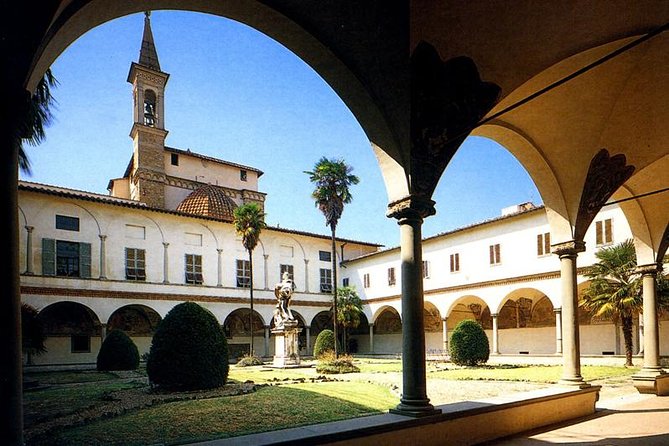
San Marco is where Florence’s art, politics, and religious life meet in unusually personal surroundings. Instead of crossing a grand gallery, you move through a former convent, past Fra Angelico’s frescoes and the small cells where Dominican friars once lived.
I like the private format because your guide can set the pace and explain why each room matters. I also like the included ticket, since it removes the worry of queuing at the entrance. The main caution is scheduling: one booking went wrong when the museum was closed on a Monday, and the tour company had not warned the family.
- Fra Angelico’s quiet frescoes appear in the friars’ own living spaces, not only in a grand gallery.
- The private group format gives you more room for questions and a calmer visit.
- Five parts of the complex are covered: the church, convent, facade, first cloister, and second cloister.
- Medici and Savonarola connections give the building a strong political and religious story.
- Pre-booked admission is included, with no hotel pickup or drop-off.
- A two-hour visit works well for an art-focused morning or afternoon in central Florence.
In This Review
- Why San Marco Feels Different From Florence’s Big Museums
- Meeting Your Guide in Piazza San Marco
- The Church and Michelozzo’s Medici Convent
- Fra Angelico’s Frescoes in the Friars’ Cells
- The First and Second Cloisters
- Savonarola’s Cells and Florence’s Religious Politics
- The Library Connected With Pope Leo X
- What the Two-Hour Private Format Gives You
- Is the $189.18 Price Worth It?
- The Monday Closure Problem
- Who Should Book This San Marco Tour?
- Final Verdict: Book It for Context, Not Just Entry
- FAQ
- Where does the San Marco Museum tour begin?
- Where does the experience end?
- How long does the tour last?
- Is this a private tour?
- Is admission to Museo di San Marco included?
- Is a professional guide included?
- Is hotel pickup included?
- What parts of the San Marco complex does the tour cover?
- Is the tour offered in English?
- Can I cancel for a full refund?
Why San Marco Feels Different From Florence’s Big Museums
Florence has no shortage of famous art. The Uffizi, Accademia, and Palazzo Vecchio usually take the first places on a sightseeing plan. San Marco offers a different kind of visit. Here, the art is tied closely to the rooms and routines of a religious community.
The complex was commissioned by Cosimo de’ Medici and designed in part by Michelozzo. That pairing matters. You are not seeing an isolated set of paintings assembled later. You are seeing a Medici-backed convent designed for Dominican life, worship, study, and political influence.
The setting also changes how you look at Fra Angelico. His work is not presented only as a series of museum objects. Frescoes appear in corridors and friars’ cells, where their simple religious scenes were meant to support prayer and reflection.
I find that setting especially valuable if you already know Florence’s major Renaissance names but want a quieter place to connect art with daily life. San Marco is less overwhelming than the city’s largest museums, though that also means the visit depends heavily on the guide’s ability to explain what you are seeing.
Meeting Your Guide in Piazza San Marco
You make your own way to Piazza San Marco in Florence. The tour ends back at the same meeting point, so you should plan your next stop from there rather than expect a ride across town.
There is no hotel pickup or drop-off. That is a small but important detail when you are arranging a busy day. The meeting point is near public transportation, and most people can take part, but you should allow time to find the square and locate your guide before the scheduled start.
The booking is for a private activity, meaning only your own group participates. That can be a couple, a family, or a small party of friends. You are not being added to a large group with a fixed script, so you can ask about Fra Angelico, the Medici family, Savonarola, or the building itself as questions come up.
The guide is a major part of the experience. Katherine received particular praise for making Fra Angelico’s paintings come alive. Susanna was described as pleasant and informative, and a French-speaking guest found her explanations very useful. The record is not perfect, though. One guide knew the subject well but was difficult to understand in English. If clear spoken English is important to you, it is sensible to raise that concern when booking.
More churches and palazzos worth an hour:
- Florence: Palazzo Vecchio Entrance Ticket & Audioguide
★ 4.4 · 4,822 reviews - Florence: Palazzo Vecchio Guided Tour
★ 4.8 · 1,260 reviews - Florence: Timed Entrance Ticket to San Marco Museum
★ 4.6 · 396 reviews
The Church and Michelozzo’s Medici Convent
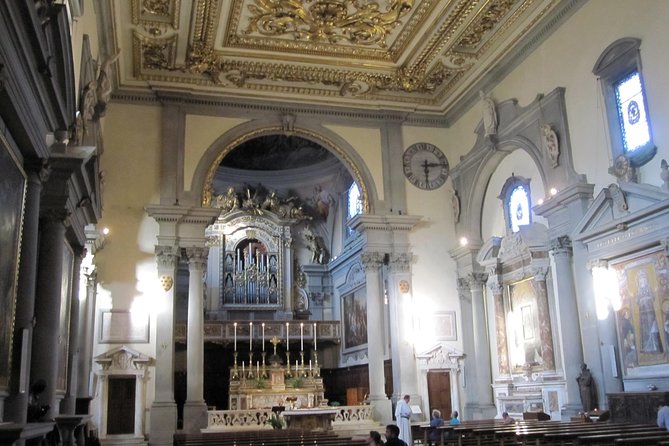
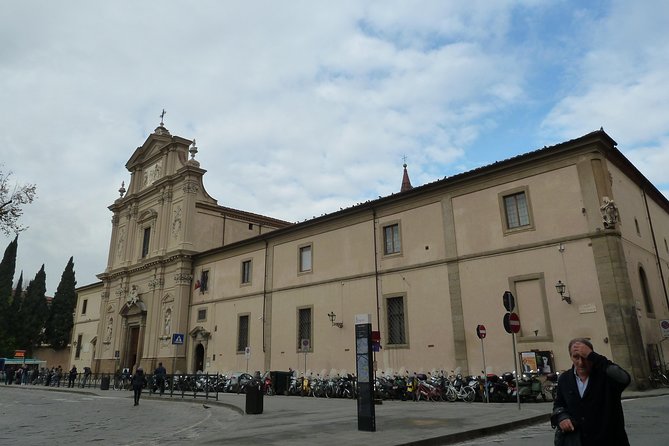
The visit begins with the San Marco complex, including the church and the convent. The building’s connection to Cosimo de’ Medici gives you an immediate way into Florence’s 15th-century power structure.
Cosimo was not simply funding decoration for decoration’s sake. A major religious complex could show wealth, devotion, taste, and influence all at once. Michelozzo’s architectural role helps explain why the building feels ordered and purposeful rather than simply ornate.
Your guide explains the parts of the complex as you move through them. That is useful because the church, facade, cloisters, and living quarters are easy to treat as separate sights if you visit without context. The guided route ties them together as one institution.
I would not expect the church portion alone to carry the entire two hours. Its value comes from the way it introduces the convent and sets up the links among the Medici, the Dominican order, and the artists who worked here.
Fra Angelico’s Frescoes in the Friars’ Cells
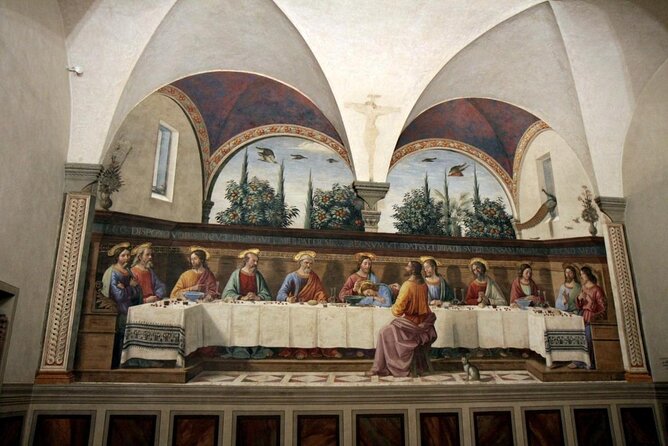
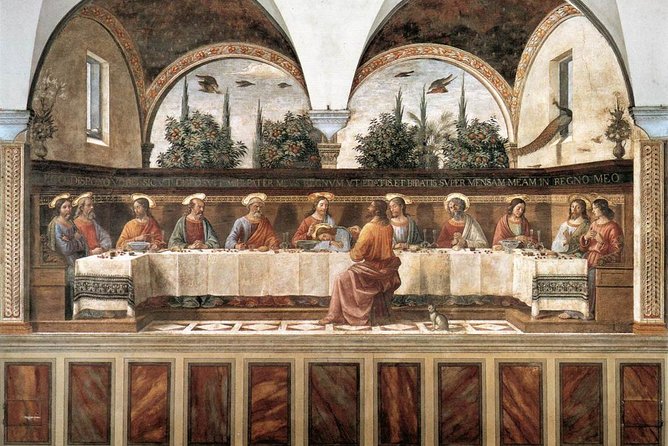
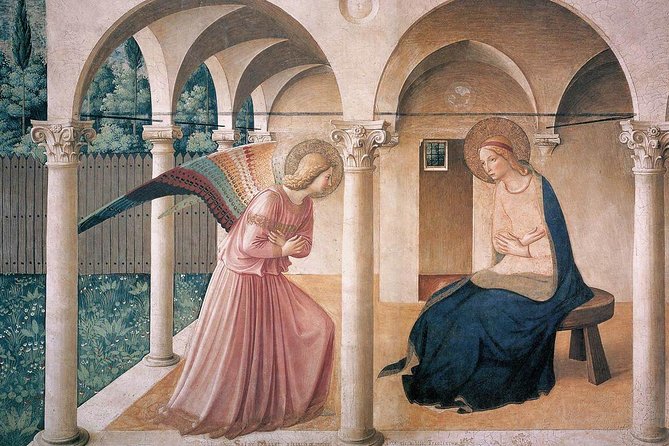
Fra Angelico is the central artistic reason to come. His paintings are often called Beato Angelico, so you may see both names used during the visit. The tour focuses on his frescoes and explains how they fit into the convent.
The friars’ cells are one of the most memorable parts of the route. These are not grand reception rooms. They are small spaces connected to religious life, and the paintings were placed where friars could see them during private devotion.
That scale gives the art a different force. You are close to the walls and aware that these images were made for a particular community, not for a modern museum audience. A good guide can point out how the placement, subject, and plain surroundings work together.
Katherine’s strength, according to the information available, was helping the paintings come alive through explanation. That is exactly the sort of help you need here. Fra Angelico’s frescoes can look simple at first glance, but the setting and religious purpose add layers that a quick walk through a corridor will not reveal.
You should also keep your expectations realistic. This is not a large collection where you will see every major work by the artist. It is a focused experience built around the convent and its surviving decoration. If your main interest is Renaissance painting in its original setting, that focus is a benefit. If you want a broad survey of Florentine art, choose a larger museum as well.
The First and Second Cloisters
The tour covers both the first and second cloister. Cloisters can seem similar when you are moving quickly through several churches and convents, so the guide’s role is important here.
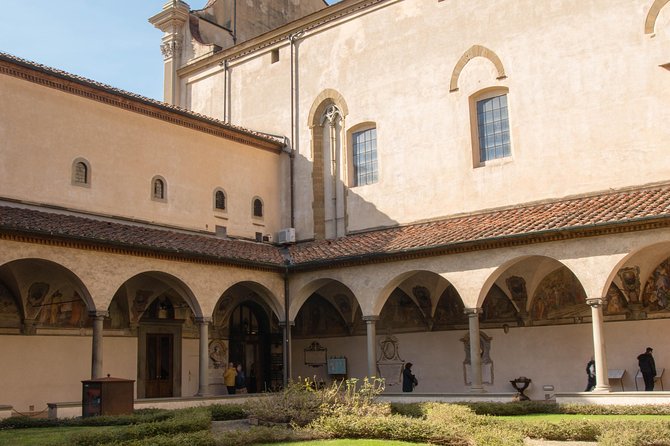
These open spaces help you understand the structure of San Marco. They connect the religious and practical sides of convent life, giving you a sense of how the complex was organized. They also provide a pause between the more concentrated rooms and frescoes.
The first cloister is part of the standard route through the complex, while the second cloister adds another layer to the visit. Together, they help you see San Marco as a working community rather than a single church with attached rooms.
Do not treat these areas as filler. The architecture commissioned under Cosimo de’ Medici is part of the story, and Michelozzo’s contribution is easier to appreciate when you see how the spaces relate to one another.
A different way to spend the same Florence day:
- Florence: Skip-The-Line Uffizi Gallery Timed Entry Ticket
★ 4.5 · 27,832 reviews - Tuscany Day Trip from Florence: Siena, San Gimignano, Pisa and Lunch at a Winery
★ 5.0 · 21,634 reviews - Florence: Timed Entrance Ticket to Michelangelo’s David
★ 4.6 · 16,983 reviews - Florence: Michelangelo’s David Skip-the-Line Entry Ticket
★ 4.5 · 12,764 reviews
Savonarola’s Cells and Florence’s Religious Politics
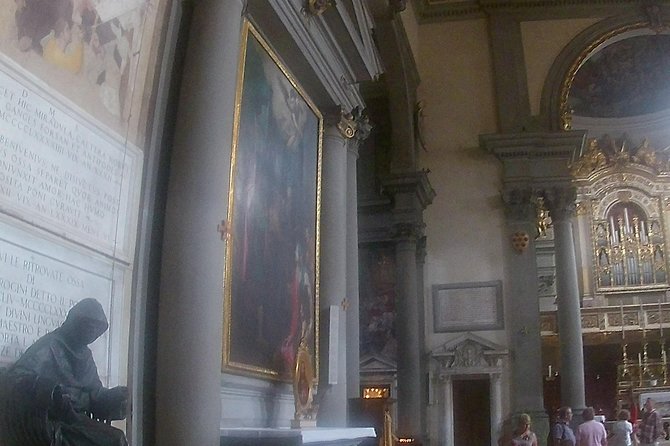
San Marco is also tied to Fra Girolamo Savonarola, the Dominican preacher who became one of the most forceful figures in late 15th-century Florence. The tour includes Savonarola’s cells, giving the political story a very concrete setting.
Savonarola’s presence changes the mood of the visit. Fra Angelico’s work draws you toward quiet devotion, while Savonarola’s story points toward public preaching, reform, and conflict. Both belong to San Marco, and the contrast makes the convent more than an art stop.
Your guide connects Savonarola with the wider group of important 15th-century figures associated with the complex. Cosimo de’ Medici represents patronage and civic power. Fra Angelico represents religious art. Savonarola represents a more confrontational religious voice. Seeing their connections within one place gives the tour a clear narrative shape.
The cells are also a useful reminder that major historical figures worked and lived in ordinary rooms. You are not simply hearing names from a textbook. You are being shown the spaces linked to them.
The Library Connected With Pope Leo X
The route includes the Renaissance Library associated with Pope Leo X. This adds a scholarly side to San Marco’s story.
The library helps broaden the visit beyond painting and preaching. Religious houses were also places of study, copying, collecting, and intellectual work. The connection to Pope Leo X brings the Medici story back into view, since the Medici family shaped both Florence and the wider Church.
This part will appeal to you if you like the background systems behind Renaissance art. Paintings did not appear in isolation. They were supported by institutions, patrons, religious communities, and libraries.
The available details do not specify how long you spend in the library or exactly what is displayed there, so the guide’s presentation may shape your impression. Still, it is an important part of the complex and helps explain why San Marco mattered beyond its walls.
What the Two-Hour Private Format Gives You
Two hours is a sensible length for San Marco. It is long enough to cover the church, convent, facade, both cloisters, the friars’ cells, Savonarola’s rooms, and the library without turning the visit into an all-day commitment.
A private guide can also adjust the balance. If your group cares most about Fra Angelico, you can spend more time with the frescoes. If you are more interested in Cosimo de’ Medici, Michelozzo, or Savonarola, you can direct your questions that way.
That flexibility is the main advantage over a guidebook. You are not left guessing which rooms deserve your attention or how the complex fits into Florence’s story.
The limitation is that a private tour is only as strong as the guide assigned to you. One English-language booking found the guide hard to understand despite solid subject knowledge. The overall rating is 4.6 from 18 reviews, which suggests a strong experience overall, but the smaller number of ratings means you should not treat that score as a guarantee.
Is the $189.18 Price Worth It?
At $189.18 per person, this is a serious purchase, particularly for a private two-hour visit. The price makes the most sense for a small group that values personal attention and wants help with art and history rather than simply entry to the museum.
Your admission ticket is included, as is a professional guide. The private format can improve the value when several people are sharing the experience, especially if everyone in your group has similar interests.
The ticket itself is not the only thing you are paying for. You are paying for preparation, interpretation, and a smoother arrival. Pre-booked admission also helps avoid a long entrance line, though that advantage depends on the museum being open and the booking details being correct.
For one person or a couple on a tight budget, the cost may be hard to justify. You can see San Marco independently, and the complex is not one of Florence’s largest attractions. For a family or group that wants a focused explanation of Fra Angelico and Savonarola, the private arrangement is easier to defend.
Group discounts are listed as a feature, so check the final price for your party before deciding. The tour is often booked about 55 days ahead, which suggests that advance planning is common, especially during busy periods.
The Monday Closure Problem
The most important practical warning concerns opening hours. One family arrived at Piazza San Marco for its private tour and learned that the museum was closed on Monday. The company had not caught the schedule change or contacted them in advance.
The guide offered Palazzo Medici as an alternative, and the family accepted because the other members had not seen it. That saved part of the morning, but it did not replace the San Marco visit for the person who had planned it carefully.
I would verify the museum’s hours directly before finalizing a Monday booking, then check your confirmation again close to the date. If the attraction changes its schedule, you want enough time to move the tour or plan another activity.
The cancellation policy gives you a full refund if you cancel at least 24 hours before the start time. Changes or cancellations inside that 24-hour window are not accepted, and the cut-off follows local Florence time.
Who Should Book This San Marco Tour?
I would choose this experience if you fit one or more of these descriptions:
- You want to see Fra Angelico in the setting for which his work was made.
- You enjoy religious art and want help reading its purpose and placement.
- You are interested in the Medici family and Florence’s 15th-century power struggles.
- You prefer a private guide to a large group.
- You want a two-hour cultural stop that fits between other Florence plans.
- You are visiting with family or friends who will benefit from explanations in English.
I would be more cautious if you mainly want famous, large-scale masterpieces or prefer exploring at your own pace. You should also think twice if your schedule cannot tolerate a possible closure problem or if you need guaranteed clarity from an English-speaking guide.
San Marco rewards attention. The building is not a quick checklist stop, and the best parts are tied to context: the cells, the cloisters, the Medici connection, and the link between quiet religious art and Savonarola’s turbulent career.
Final Verdict: Book It for Context, Not Just Entry
I would book this private tour if Fra Angelico, Renaissance convent life, or the Medici and Savonarola story is high on your Florence list. The two-hour route covers the church, convent, facade, both cloisters, friars’ cells, Savonarola’s rooms, and the library, while the included ticket and private format keep the visit organized.
Before paying, confirm the museum’s opening day and ask any needed questions about your guide’s language. If those details check out, this is a focused way to see a quieter side of Florence and understand why the art at San Marco belongs to its rooms, not just to a wall label.
FAQ
Where does the San Marco Museum tour begin?
The tour begins at Piazza San Marco in Florence, Italy.
Where does the experience end?
The activity ends back at the meeting point in Piazza San Marco.
How long does the tour last?
The tour lasts approximately two hours.
Is this a private tour?
Yes. Only your group participates in the activity.
Is admission to Museo di San Marco included?
Yes. The entrance ticket to Museo San Marco is included.
Is a professional guide included?
Yes. A professional guide is included with the private tour.
Is hotel pickup included?
No. You make your own way to Piazza San Marco, and hotel pickup and drop-off are not included.
What parts of the San Marco complex does the tour cover?
The tour covers the church, convent, facade, first cloister, and second cloister. It also includes Fra Angelico’s paintings, friars’ cells, Savonarola’s cells, and the Renaissance Library associated with Pope Leo X.
Is the tour offered in English?
Yes. The experience is offered in English.
Can I cancel for a full refund?
Yes, if you cancel at least 24 hours before the experience starts. Cancellations or changes made less than 24 hours before the start time are not refunded or accepted.
Latest additions around Florence
- Florence: Cathedral Tour & Brunelleschi’s Dome Climb Ticket★ 5.0 · 3 reviews
- Palatina Gallery and Pitti Guided Tour in Florence★ 5.0 · 3 reviews
- Florence Uffizi Gallery Skip-the-line Tour w Art Historian Guide★ 5.0 · 3 reviews
- Private Tour: Pisa and Lucca from Florence★ 5.0 · 3 reviews
- San Gimignano Bike Tour (SOFT)★ 4.5 · 3 reviews
- Florence: Tour of Florence by rickshaw★ 5.0 · 3 reviews
- Center of Florence by golf cart★ 5.0 · 3 reviews
- From Florence: Tour to Siena and San Gimignano by Minivan★ 4.5 · 3 reviews
Florence Churches & Palazzos, compared.

Palazzo Vecchio guided experience with entrance ticket
Read our review →
Browse the lists this tour appears in