
Reviewed · FLORENCE CHURCHES & PALAZZOS
Michelangelo and Santa Croce Private Tour
Michelangelo’s story comes into sharper focus when you visit both his burial place and the family house that preserves his early work. This three-hour private tour links the grand Basilica of Santa Croce with Casa Buonarroti, giving you Florence’s public tribute to the artist and a more personal look at his beginnings.
I like the pairing of Santa Croce’s major art with quieter objects such as the young Michelangelo’s Madonna of the Stairs and Battle of the Centaurs. I also like the private format: guides including Giovanni and Cristina have earned especially warm praise for their clear explanations and patient pace.
The main drawback is the price, $232.23 per person. That is a serious spend for three hours, and the value depends on how much you want guided interpretation rather than simply entering the church and museum on your own.
In This Review
- Key points to know before booking
- Why this tour gives Michelangelo a fuller story
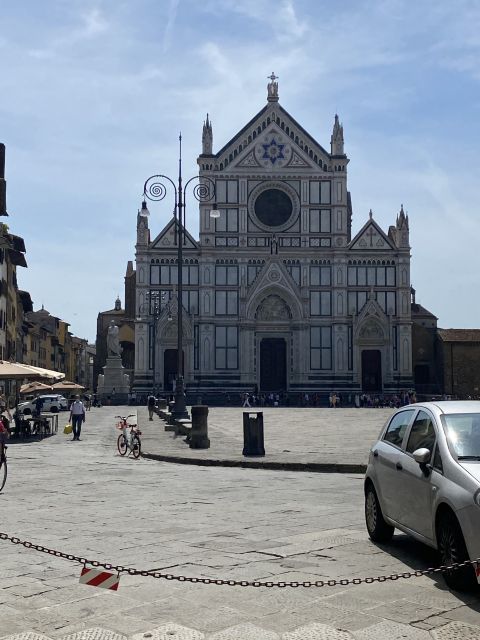
- Meeting at Dante’s statue in Piazza Santa Croce
- Entering the Basilica of Santa Croce
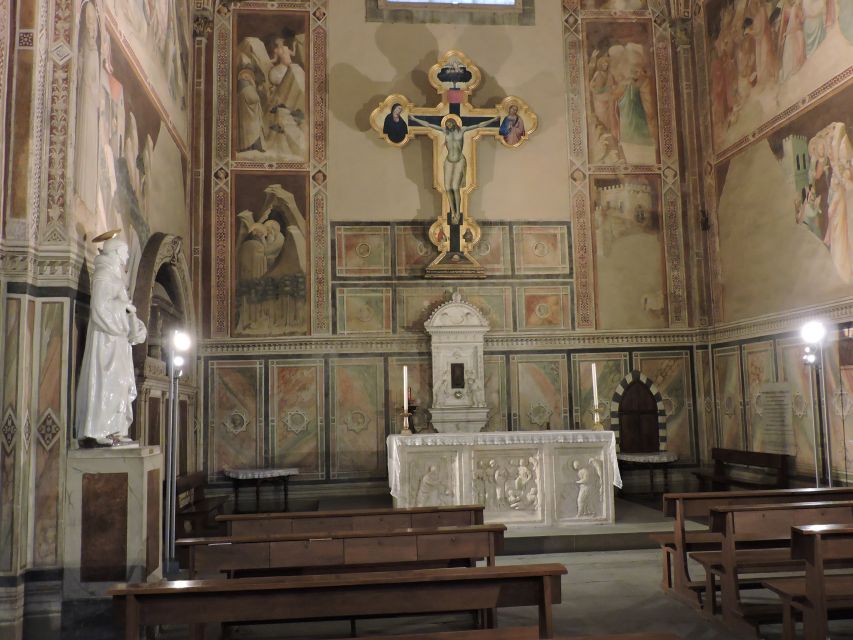
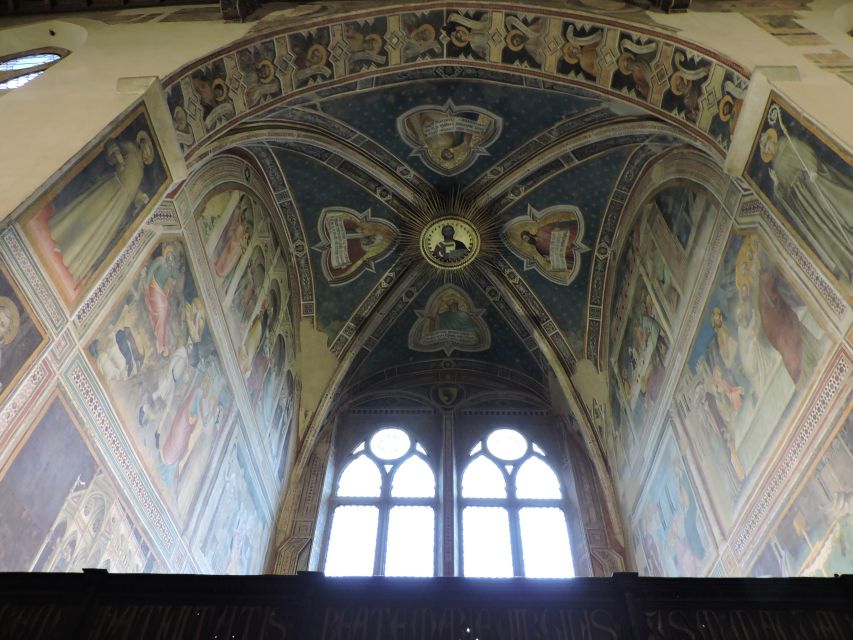
- Giotto’s Bardi and Peruzzi Chapels
- Brunelleschi’s Pazzi Chapel
- Michelangelo’s tomb and the church’s wider importance
- Casa Buonarroti and the young Michelangelo
- The wooden models
- Artemisia’s painting restoration
- What the private format changes
- Is $232.23 per person a fair price?
- Practical details that can affect your visit
- Who will get the most from this experience?
- Should you book the Michelangelo and Santa Croce Private Tour?
- FAQ
- Where does the tour begin?
- Where does the tour end?
- How long does the tour last?
- Which places are visited?
- How much time is spent inside Santa Croce?
- How much time is spent at Casa Buonarroti?
- Is the tour private?
- Which languages are available?
- What should you bring?
- Are sleeveless shirts allowed?
- How much does the tour cost?
- Can you cancel for a full refund?
Key points to know before booking
- Two very different Michelangelo settings: See the artist’s tomb in Santa Croce, then visit the Buonarroti family house and his early sculptures.
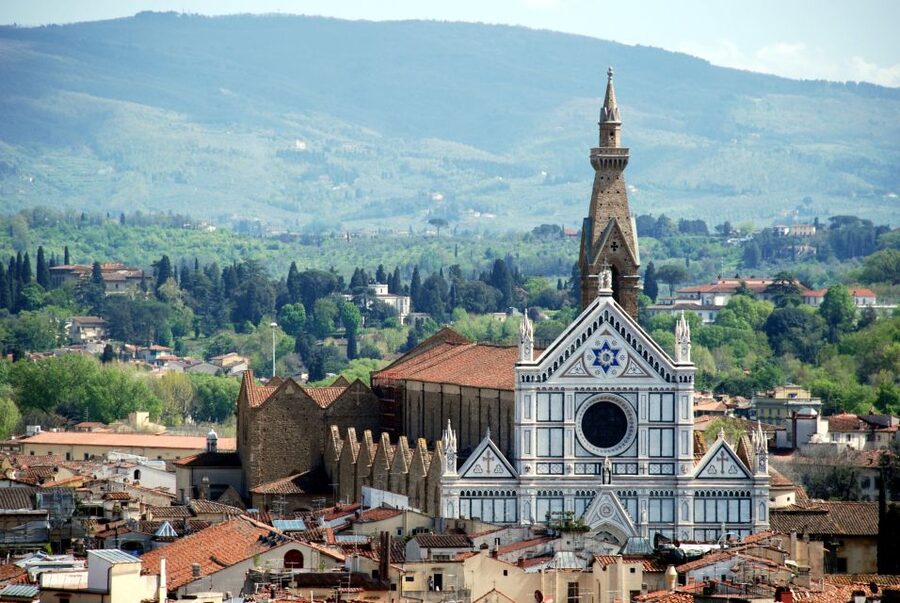
- Santa Croce is packed with art: Giotto’s Bardi and Peruzzi Chapels, Brunelleschi’s Pazzi Chapel, and the sacristy are all part of the visit.
- A genuinely private experience: You have a professional local guide rather than a large shared group.
- Guide quality matters here: Giovanni, also called John in one account, and Cristina received especially strong praise for their personal approach.
- The tour lasts three hours: Expect 15 minutes in Piazza Santa Croce, 75 minutes in the basilica, and about an hour at Casa Buonarroti.
- Dress rules are strict: Bring identification and avoid sleeveless shirts.
Why this tour gives Michelangelo a fuller story
Many Florence visits treat Michelangelo as a name attached to one famous statue. This experience gives you a broader frame. You learn about his work as a sculptor, painter, architect, poet, and engineer, then see places and objects connected to his family and final resting place.
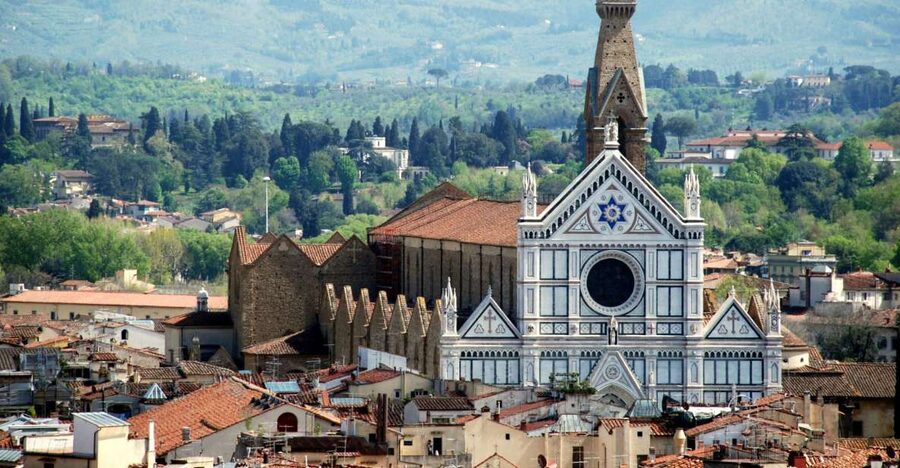
That connection matters because Michelangelo’s career stretched across several forms of art. In Santa Croce, his tomb places him among Florence’s most honored figures. At Casa Buonarroti, his early sculptures show a young artist looking closely at Greek and Roman art and already testing the ideas that would shape his career.
I like this structure because it moves from public grandeur to family memory. Santa Croce can feel immense and formal. Casa Buonarroti is more focused, with objects that help you think about process, training, and artistic ambition.
The private guide is the key part of the experience. A guide can explain why a chapel matters, point out details you might walk past, and connect one work to the next. You can also ask questions as you go, which is useful when the subject is as broad as Michelangelo’s life and influence on Western art.
More Renaissance art days:
- Florence: Timed Entrance Ticket to Michelangelo’s David
★ 4.6 · 16,983 reviews - Florence: Michelangelo’s David Skip-the-Line Entry Ticket
★ 4.5 · 12,764 reviews - The Best tour in Florence: Renaissance & Medici Tales – guided by a STORYTELLER
★ 5.0 · 12,316 reviews
Meeting at Dante’s statue in Piazza Santa Croce
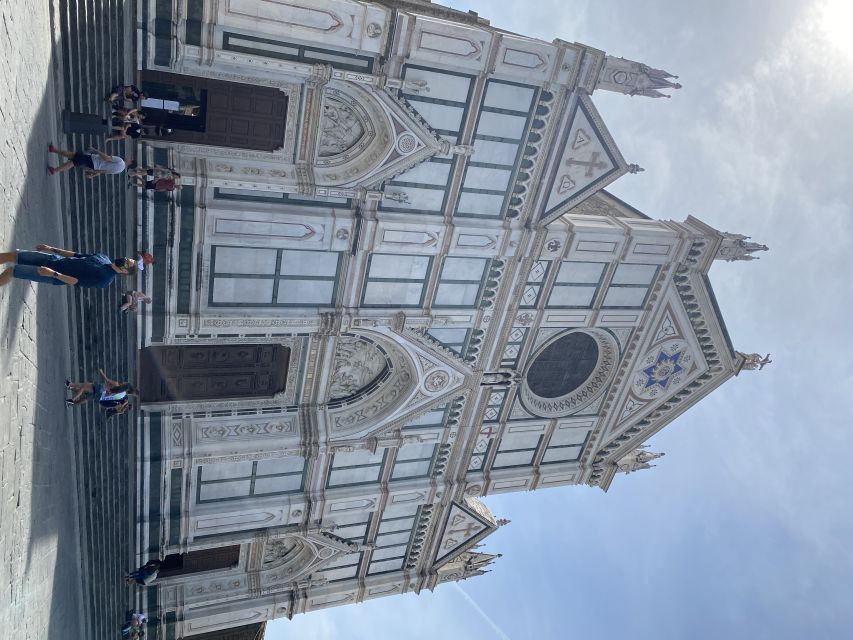
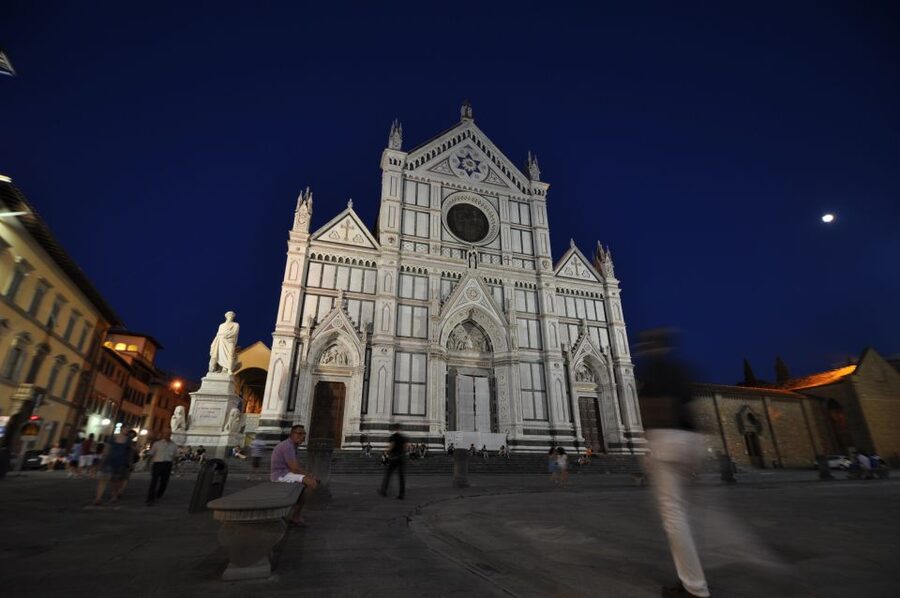
The tour begins in front of the statue of Dante Alighieri in Piazza Santa Croce. This is a practical meeting point because the square sits directly outside the basilica and gives you a clear setting for the opening explanation.
Your first stop is listed as a 15-minute guided visit in Piazza di Santa Croce. Use this time to get your bearings and hear why the square and church matter to Florence. The guide can set up Michelangelo’s connection to the city before you enter the church itself.
Starting outdoors also gives the tour a natural rhythm. You are not rushed straight into a dim interior before understanding what you are about to see. The opening is short, so do not expect a full sightseeing tour of the square, but it should give the three-hour visit a useful beginning.
The experience ends back at the meeting point. Since no transport is included or needed between the listed stops, you remain in central Florence on foot.
Entering the Basilica of Santa Croce
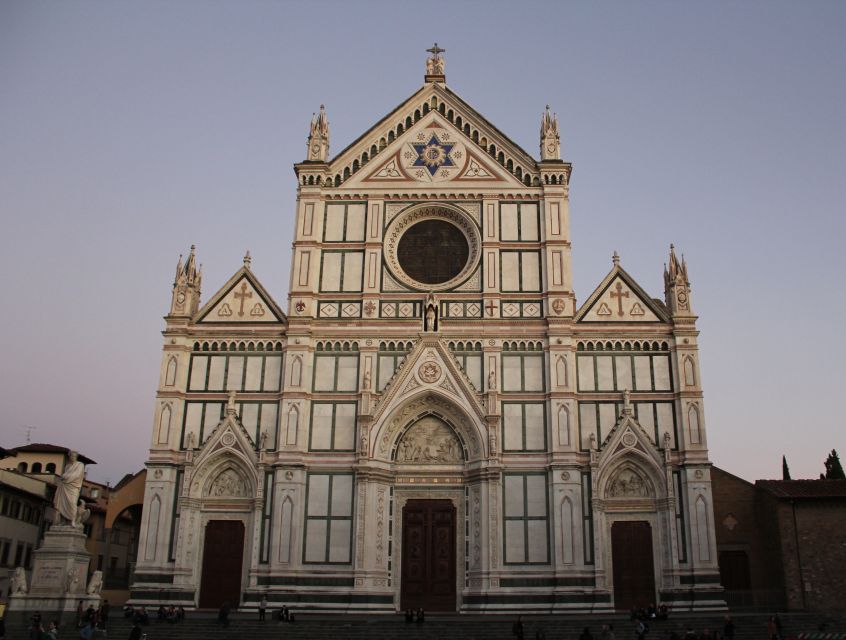
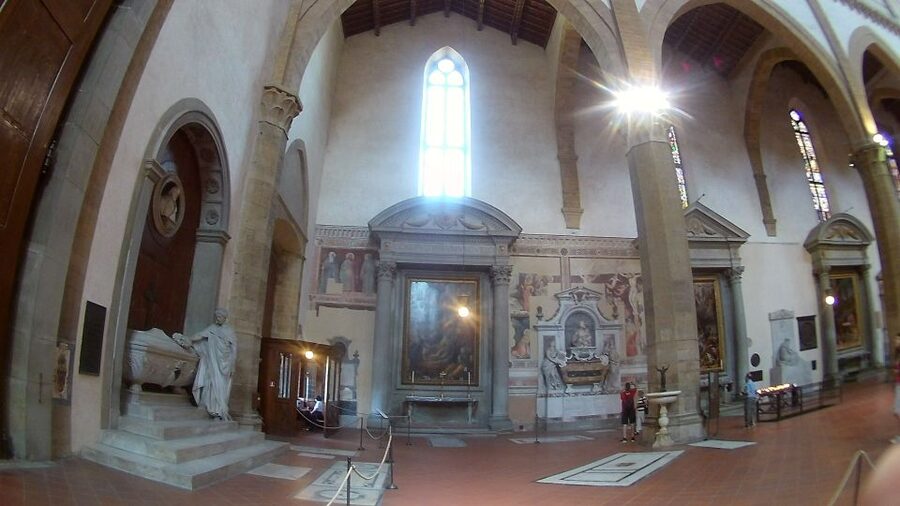
Santa Croce is the largest Franciscan church in the world, and its scale is part of the first impression. The basilica was built by Arnolfo di Cambio over an earlier church, placing you inside a building tied to the long development of Florentine religious and civic life.
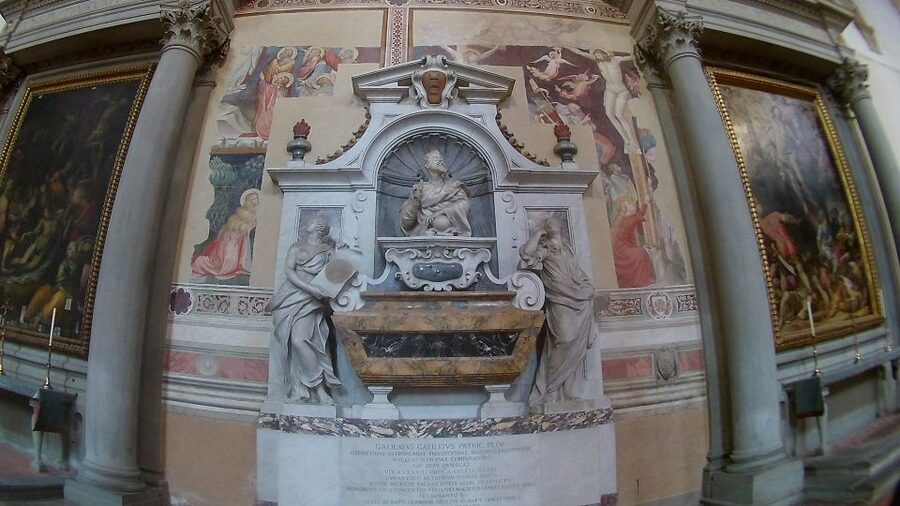
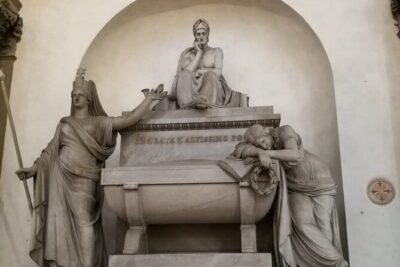
The church is also Michelangelo’s burial place. That makes this more than an art stop. You are visiting the location where Florence honors one of its most famous sons, and your guide can explain the meaning of that memorial within the wider church.
The scheduled visit inside lasts about 75 minutes. That is enough time for a guided look at major sections, though not enough for every corner of a building this large. If you enjoy lingering over small details, you may need to choose carefully between listening closely and examining every artwork at length.
Giotto’s Bardi and Peruzzi Chapels
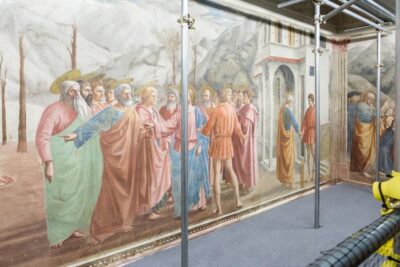
The Bardi and Peruzzi Chapels contain frescoes by Giotto, one of the most important artists in the development of Italian painting. These chapels give you a chance to see the earlier Florentine tradition that shaped the artistic world Michelangelo inherited.
A guide is particularly useful here because frescoes can be difficult to read without context. You might notice figures, gestures, and scenes, but an explanation can help you understand how Giotto’s work changed the way artists approached human expression and storytelling.
These chapels also prevent the tour from becoming only a Michelangelo biography. You see the artistic setting around him, not just the man himself.
More churches and palazzos worth an hour:
- Florence: Palazzo Vecchio Entrance Ticket & Audioguide
★ 4.4 · 4,822 reviews - Florence: Palazzo Vecchio Guided Tour
★ 4.8 · 1,260 reviews - Florence: Timed Entrance Ticket to San Marco Museum
★ 4.6 · 396 reviews - Florence: Palazzo Vecchio Skip-the-Line Entry Ticket
★ 4.2 · 349 reviews
Brunelleschi’s Pazzi Chapel
The Pazzi Chapel is associated with Filippo Brunelleschi and offers a very different visual experience from the frescoed chapels. Its importance lies in its architecture, proportion, and disciplined design.
This is one of the places where a private guide can make a real difference. A quick look may leave you with an impression of clean lines and calm space. A good explanation can draw your attention to the design choices that make the chapel such a major Renaissance work.
The visit also includes the sacristy. The supplied details do not specify how long you spend in each area, so your guide may adjust the pace according to your interests and the flow of the tour.
Michelangelo’s tomb and the church’s wider importance
Seeing Michelangelo’s tomb gives the basilica a personal focus. His reputation can seem almost too large to grasp, but the tomb brings the story back to a single place connected with his death and remembrance.
I like that the tour does not isolate the tomb from the rest of Santa Croce. The building contains the work of several important artists, and that wider setting helps you see Michelangelo as part of Florence’s artistic culture rather than as a figure floating apart from it.
Casa Buonarroti and the young Michelangelo
The final major stop is Casa Buonarroti, the museum associated with Michelangelo Buonarroti’s family. You spend about an hour here, making it nearly as important to the tour as the basilica.
This is where the experience shifts from church and monument to personal collection and artistic development. The museum preserves famous early works by Michelangelo, including Madonna of the Stairs and Battle of the Centaurs.
These works are valuable because they show his interest in Greek and Roman art at an early stage. You are not simply looking at finished masterpieces by an established genius. You are seeing evidence of a young artist studying, adapting, and building a visual language of his own.
The guide’s role again matters. Early works can be easy to dismiss because they do not carry the same fame as the Sistine Chapel or David. With context, you can look for signs of the skill and ambition that were already present.
The wooden models
Casa Buonarroti also contains a wooden model for the marble facade of the Church of San Lorenzo. A model like this helps you understand architecture as planning, not only as a finished building.
You will also see the model for the chariot used to transport David from Piazza della Signoria to the Accademia Gallery in 1873. This is a practical and unusual detail in the tour. It connects Michelangelo’s sculpture with the later problem of preserving and moving a monumental work through Florence.
I find these models especially useful for anyone who thinks of Michelangelo only as a sculptor. They show his involvement in design, engineering, and the practical demands surrounding major public works.
Artemisia’s painting restoration
One particularly distinctive detail is the restoration project involving a painting by Artemisia. The experience can include an opportunity connected with Elizabeth Wicks, who was mentioned in a particularly enthusiastic account.
The supplied information does not define the exact format or guarantee that you will meet her, so treat this as a possible added detail rather than the central promise of the tour. Still, Casa Buonarroti’s preservation work gives the visit a living museum element, not just a display of old objects.
What the private format changes
A private group is a major reason to consider this tour. You are not tied to the questions or pace of a large crowd, and the guide can spend more time on the parts that interest you most.
That flexibility proved useful for one party traveling with an 85-year-old mother. Cristina was praised for keeping the pace slower when needed, which is a practical advantage for families who want a cultural visit without being pushed from room to room.
You should still be realistic. The tour is three hours, and the basilica and museum both contain more than anyone can absorb in one visit. Private does not mean unlimited time, so tell the guide early if Michelangelo’s sculpture, Renaissance architecture, or church history is your main priority.
The guide languages are English, Spanish, French, German, and Italian. Giovanni, also referred to as John, was praised for helping someone who had visited Santa Croce many times see it in a new way. That is a useful sign for repeat visitors who worry that a guided tour will cover only the basics.
Is $232.23 per person a fair price?
At $232.23 per person, this tour is not a budget introduction to Florence. You are paying for a private professional guide, admission tickets, and a focused route through two important cultural sites.
The price makes more sense for a small private party than for a solo visitor watching every euro. If two or more people in your group are deeply interested in Michelangelo, the ability to ask questions and keep a shared pace can justify the added cost.
I would be more cautious if you mainly want to see Santa Croce quickly. The basilica and Casa Buonarroti may be less expensive to visit independently, but you would give up the connected story and on-the-spot explanations.
The strongest evidence of value comes from the consistently high score, 5 out of 5 from 14 ratings, and the specific praise for Giovanni and Cristina. One person who had visited Santa Croce dozens of times still felt the private tour was worth the money. That does not make the price right for everyone, but it suggests that the guiding, not just the entrance, is the product you are buying.
Practical details that can affect your visit
The tour lasts three hours, with starting times available according to the date you choose. The planned breakdown is 15 minutes in Piazza Santa Croce, 75 minutes in the basilica, and one hour at Casa Buonarroti.
The starting and ending point is in front of Dante’s statue in Piazza Santa Croce. The experience does not list transport, so plan on the tour being a central Florence walking visit between nearby locations.
Bring a passport or other identification. Sleeveless shirts are not allowed, so dress in a way that meets the basilica’s rules. This is a small point, but a clothing problem can disrupt an otherwise carefully planned morning or afternoon.
Free cancellation is available up to 24 hours before the start for a full refund. You can also reserve now and pay later, which helps if your Florence schedule is still changing.
Who will get the most from this experience?
I would choose this tour if you want Michelangelo explained rather than simply pointed out. It suits first-time Florence visitors who want a strong art and history introduction, as well as repeat visitors who already know Santa Croce and want a closer reading of its chapels and memorials.
It is also a good fit for families or mixed-age groups. Cristina’s patient handling of an older visitor shows why a private guide can be useful when everyone in your party does not walk or listen at the same speed.
Art students, museum fans, and anyone interested in Renaissance sculpture will find Casa Buonarroti especially worthwhile. The early works and wooden models give you material that is different from the usual Florence checklist.
I would skip it if your main goal is a low-cost church visit, a fast overview, or independent browsing with no fixed schedule. The tour’s value depends on your interest in explanation, context, and Michelangelo’s wider career.
Should you book the Michelangelo and Santa Croce Private Tour?
Book it if you want a concentrated, personal look at Michelangelo and the artistic world around him. The strongest parts are the pairing of Santa Croce with Casa Buonarroti, the access to early works such as Madonna of the Stairs, and the chance to work with a guide such as Giovanni or Cristina.
Think twice if $232.23 per person feels high for three hours. For a committed art lover, a repeat visitor, or a group that values its own pace, the cost can be reasonable. For everyone else, compare it with independent admission and decide how much guided interpretation is worth to you.
FAQ
Where does the tour begin?
It begins in front of the statue of Dante Alighieri in Piazza Santa Croce.
Where does the tour end?
The activity ends back at the meeting point in Piazza Santa Croce.
How long does the tour last?
The tour lasts three hours.
Which places are visited?
You visit Piazza Santa Croce, the Basilica of Santa Croce, and Casa Buonarroti.
How much time is spent inside Santa Croce?
The scheduled guided visit inside the basilica lasts 75 minutes.
How much time is spent at Casa Buonarroti?
The scheduled guided visit at Casa Buonarroti lasts one hour.
Is the tour private?
Yes. It is a private group experience with a professional local guide.
Which languages are available?
Guiding is available in English, Spanish, French, German, and Italian.
What should you bring?
Bring a passport or identification card.
Are sleeveless shirts allowed?
No. Sleeveless shirts are not allowed.
How much does the tour cost?
The listed price is $232.23 per person.
Can you cancel for a full refund?
Yes. You can cancel up to 24 hours in advance for a full refund.
Latest additions around Florence
- Florence: Cathedral Tour & Brunelleschi’s Dome Climb Ticket★ 5.0 · 3 reviews
- Palatina Gallery and Pitti Guided Tour in Florence★ 5.0 · 3 reviews
- Private Tour: Pisa and Lucca from Florence★ 5.0 · 3 reviews
- San Gimignano Bike Tour (SOFT)★ 4.5 · 3 reviews
- Florence Uffizi Gallery Skip-the-line Tour w Art Historian Guide★ 5.0 · 3 reviews
- Florence: Tour of Florence by rickshaw★ 5.0 · 3 reviews
- Center of Florence by golf cart★ 5.0 · 3 reviews
- From Firenze | Chianti day tour in a classic car★ 5.0 · 3 reviews
Florence Churches & Palazzos, compared.
Palazzo Vecchio guided experience with entrance ticket
Read our review →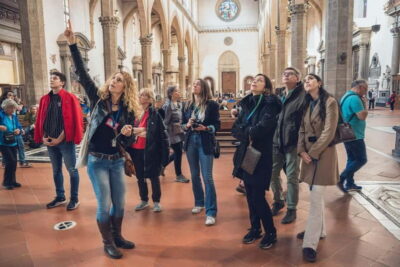
Browse the lists this tour appears in