
Reviewed · FLORENCE CHURCHES & PALAZZOS
Florence SANTA CROCE Basilica Private Tour
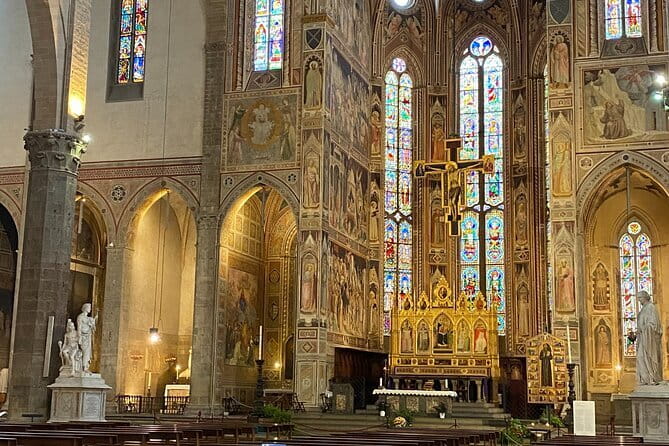
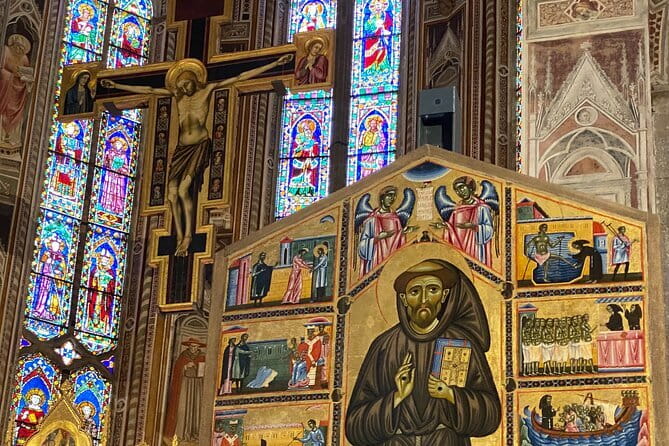
Santa Croce is both a church and a remarkable Florentine roll call. Inside are the tombs of Michelangelo and Galileo, an empty monument to Dante, medieval graves marked with skulls and crossbones, and art by Giotto, Donatello, and Brunelleschi. This private tour brings those stories together in about an hour, so you get more than a quick look at a famous building.
I like the one-to-one attention and the way guides such as Irina and Alda connect the artwork to Florence’s politics, religion, and artists. I also like the headsets, especially when you want to hear every word without standing shoulder to shoulder with a large group.
The main consideration is the short running time. Santa Croce holds far more than an hour can cover, and the $106.59 per-person price is easier to justify for a private group than for a solo visitor. Book early if your schedule is fixed, since this experience is often reserved about 75 days ahead.
In This Review
- Key points at a glance
- Why Santa Croce deserves an hour of your Florence time
- Entering the basilica and reading the floor tombs
- Michelangelo’s tomb and the story of a stolen body
- Galileo’s monument and a secret burial
- Giotto’s frescoes and the damage done over time
- Donatello, Brunelleschi, and the Pazzi Chapel
- Dante’s empty grave and the Statue of Liberty connection
- What the private format changes
- Timing, meeting point, and practical details
- Who should book this Santa Croce tour?
- Should you book it?
- FAQ
- Where does the Santa Croce tour begin?
- Where does the tour finish?
- How long does the tour last?
- What language is the tour offered in?
- Is this a private tour?
- Are admission tickets included?
- Are headsets provided?
- Which famous people are connected with Santa Croce on this tour?
- Are service animals allowed?
- Can I cancel for a full refund?
Key points at a glance
- Michelangelo and Galileo in one church: You’ll see the burial monuments of two major figures in Western culture.
- A private English tour: Your group receives personal attention rather than following a large crowd.
- Medieval tombs underfoot: The floor graves reveal social customs and symbols, including skulls and crossbones.
- Major art in a compact visit: Giotto, Donatello, and Brunelleschi all feature in the hour-long route.
- Headsets are included: You can hear the guide clearly while looking around the basilica.
- A strong choice for art and history fans: The visit gives context, not just names and dates.
Why Santa Croce deserves an hour of your Florence time
Many first-time visits to Florence focus on the Duomo, the Uffizi, and Michelangelo’s David. Santa Croce gives you a different view of the city. It is a Franciscan basilica with a solemn interior, an extraordinary collection of funerary monuments, and artwork tied to the development of Florentine painting and sculpture.
The building is sometimes described as the biggest Franciscan church in the world. That scale matters once you are inside. You are not simply looking at a single chapel or a famous statue. You are moving through a place where worship, public memory, family pride, and artistic skill meet.
I find the church especially useful for understanding how Florence remembers its important citizens. The tombs are not tucked away in a museum storage room. They form part of the building itself, and the guide explains why people were buried here, how their monuments were designed, and what the symbols mean.
The tour is also a good fit for a short afternoon. At roughly one hour, it does not consume half your day, yet it gives you a clear introduction to the basilica’s major works. You can then continue through Santa Croce Square or visit another nearby sight.
More churches and palazzos worth an hour:
- Florence: Palazzo Vecchio Entrance Ticket & Audioguide
★ 4.4 · 4,822 reviews - Florence: Palazzo Vecchio Guided Tour
★ 4.8 · 1,260 reviews - Florence: Timed Entrance Ticket to San Marco Museum
★ 4.6 · 396 reviews
Entering the basilica and reading the floor tombs
The tour begins at Largo Piero Bargellini, 1, the stated meeting point beside Santa Croce. The activity also ends there, which keeps the arrangement simple. Once inside, expect the guide to orient you to the church before leading you toward its most important monuments and artworks.
One of the most striking details is under your feet. Florentine aristocrats were buried in the floor, and the tomb slabs form part of the experience. Some carry skulls and crossbones, symbols that can feel startling in a church filled with art and grand memorials.
These graves are not just decorative curiosities. They help explain the medieval and Renaissance view of death, family status, and religious devotion. I like this part of the visit because it makes the basilica feel like a working place of memory rather than a display hall.
Take care as you walk and look down. The floor tombs are easy to miss if you keep your eyes fixed on the walls and ceiling. A private guide can point out the details and explain why particular symbols appear, saving you from simply passing over them.
Michelangelo’s tomb and the story of a stolen body
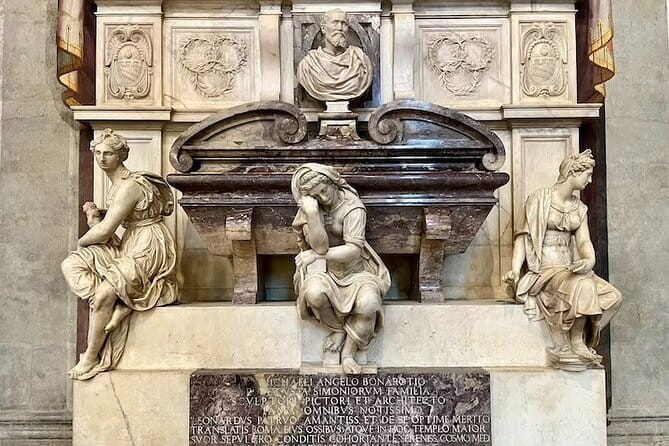
Michelangelo’s resting place is one of the tour’s main emotional moments. The guide explains the design of the tomb and the importance of the artist’s burial in Santa Croce. You also hear the unusual story of how Michelangelo’s body was taken from Rome.
That detail gives the monument a human edge. Michelangelo is often presented as a distant genius, known through his sculptures, paintings, and architecture. The story of his burial reminds you that even the most famous artists were surrounded by family decisions, political feeling, and local pride.
The experience is particularly strong for anyone who has visited Michelangelo’s work elsewhere in Italy. Instead of seeing another isolated masterpiece, you gain a place connected to the artist’s final memory. One guest described standing before his tomb as a powerful moment, and that is easy to understand.
The guide may spend more or less time here depending on your interests. If Michelangelo is your main reason for visiting, say so at the beginning. A private format gives you more room to ask questions than a fixed large-group route usually allows.
Galileo’s monument and a secret burial
Galileo Galilei is also buried in Santa Croce, and his story adds a different kind of drama. The tour covers the details of his monument and explains where he was secretly buried for a hundred years.
This is one of the best examples of why a guide helps. A tomb tells you who is remembered, but the surrounding story explains why that memory was once difficult. Galileo’s relationship with religious authority is well known, yet the basilica adds a physical setting to that conflict.
You can also compare Galileo’s monument with the church’s other memorials. Santa Croce does not present one single idea of greatness. Artists, scientists, aristocrats, and religious figures all occupy space here, each with a different story attached.
If you have a special interest in science, ask the guide to pause over Galileo. If you are more focused on art, the one-hour schedule still lets you give this section the attention it deserves without turning the whole visit into a lecture.
More Florence options worth a look before you decide
- Cinque Terre and Pisa Tower Tour from Florence Semi Private
★ 5.0 · 1,406 reviews - From Florence: Private Chianti Hills Tour with Tasting
★ 4.3 · 809 reviews - Private Self-Guided E-Bike Ride in Tuscany with Vineyard Visit
★ 5.0 · 775 reviews - Florence Private Transportation in Rickshaw
★ 5.0 · 730 reviews
Giotto’s frescoes and the damage done over time
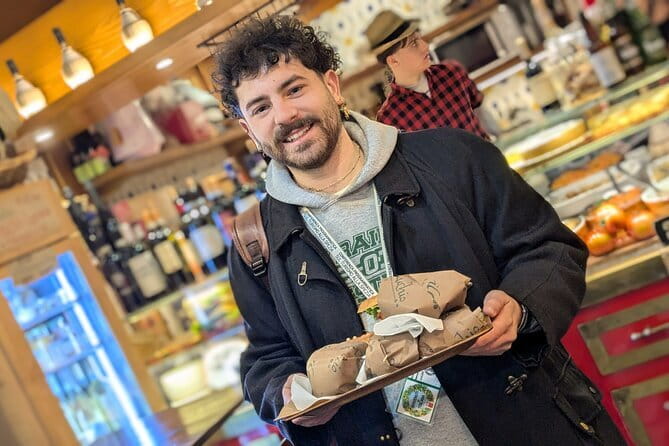
Giotto’s frescoes are among Santa Croce’s major artistic treasures. The guide discusses the scenes, their importance, and why some were destroyed. That last point is worth hearing because the basilica’s art is not a perfectly preserved time capsule.
Damage and loss often shape what you see in historic churches. Paintings can be harmed by changes to the building, accidents, later renovations, or the passage of time. Knowing what disappeared helps you read the surviving frescoes with more care.
This is also where the tour works well for someone who knows little about art history. You do not need to arrive with a list of dates or technical terms. The guide, including Irina according to the supplied tour details, is praised for explaining the church and its art in clear English.
The headsets are useful here. Frescoes are spread across walls and chapels, so you may want to look closely while the guide speaks. Clear audio lets you do both instead of choosing between watching the artwork and trying to catch a quiet explanation.
Donatello, Brunelleschi, and the Pazzi Chapel
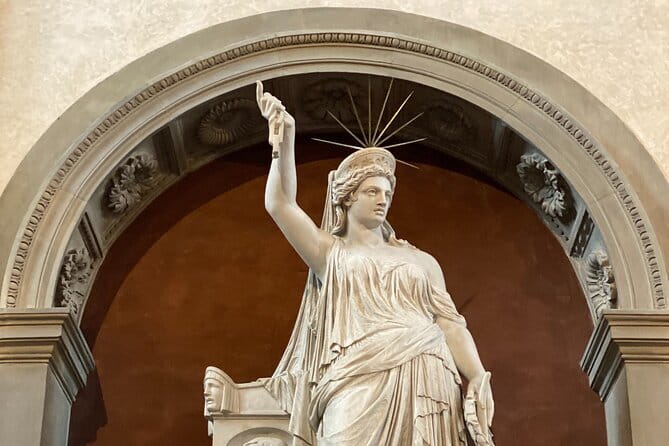
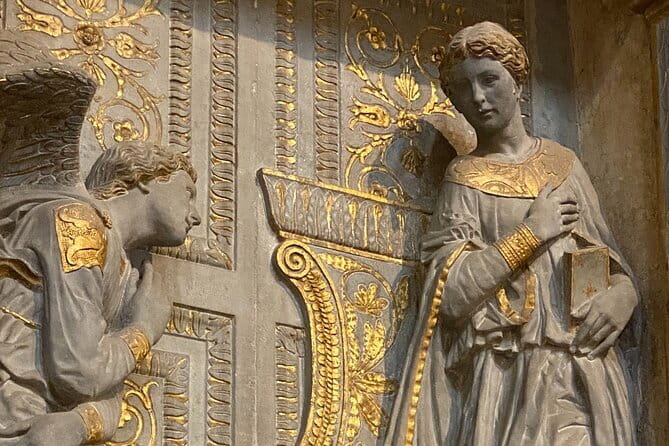
The route includes Donatello’s Annunciation, another important work that can be easy to rush past when the church is filled with larger monuments. A guide points out what to look for and places the work within the wider story of Florentine art.
Brunelleschi’s Pazzi Chapel gives the visit a change of mood. Its design is more controlled and architectural, with proportion and structure doing much of the work. The tour helps you see how the chapel differs from the painted scenes and sculptural tombs elsewhere in Santa Croce.
I like the mix of works. You get painting, sculpture, architecture, and funerary art in a single compact visit. That makes the experience more useful than a tour focused only on famous names.
You should not expect an exhaustive study of every chapel or artwork. One hour requires choices. The guide concentrates on the major pieces and the stories that make the basilica memorable, while a self-guided visit would let you wander more widely but with less explanation.
Dante’s empty grave and the Statue of Liberty connection
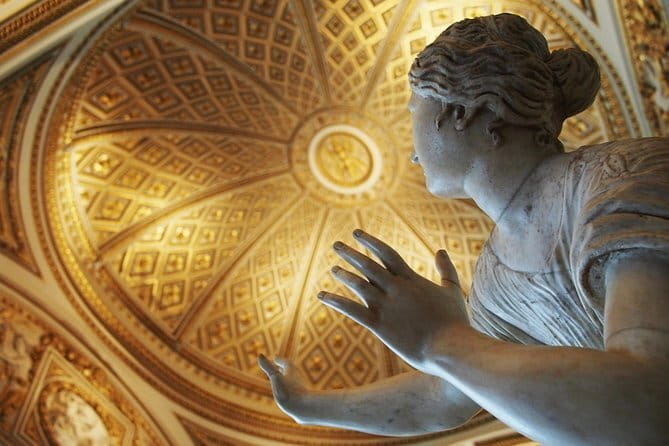
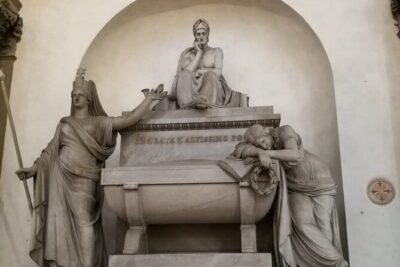
Santa Croce also holds a mystery tied to Dante. You will hear about his empty grave and why the monument does not contain the poet’s remains. It is a small but memorable detail, especially if you have encountered Dante elsewhere in Italy.
The tour also explains where the Statue of Liberty originates from. This may surprise you because the connection is not obvious when you first enter a Florentine basilica. It gives the visit a wider reach, linking Santa Croce’s art and symbols to a famous landmark beyond Italy.
These stories help keep the hour lively. The tour is not only a procession of dates, artists, and burial locations. It includes puzzles, disputed memories, artistic influence, and surprising connections.
The guide also discusses Stendhal’s syndrome, the famous reaction associated with being overwhelmed by art in Florence. That topic fits Santa Croce particularly well. The building places so many important works and historical figures close together that the sheer concentration can feel almost excessive.
What the private format changes
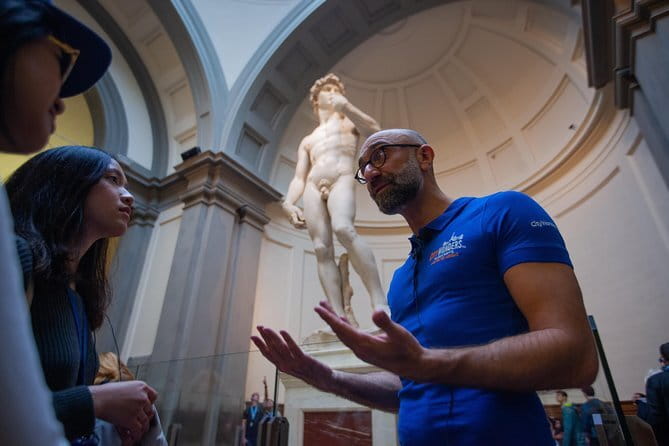
The private setup is the heart of this experience. Only your group takes part, so the guide can adjust the pace and respond to your questions. That matters in a church where some people want art history, others want biography, and others are most interested in religion or architecture.
Irina is repeatedly praised in the supplied material for clear English, friendly communication, and the ability to explain details throughout the basilica. Alda is also identified as a guide, with particular skill in explaining the building’s political and religious meaning.
The names matter because guiding style can shape a short visit. You want someone who can turn a room full of famous names into a connected story. This experience appears strongest when the guide explains not only what you are seeing, but why it mattered to Florence.
A private tour also works well for families or mixed-interest groups. One person can ask about Michelangelo, another about Galileo, and another about the floor tombs without forcing the whole group to follow a single narrow subject.
There is one tradeoff. A private tour costs $106.59 per person, and that can be a lot for a one-hour visit. Group discounts may improve the value, especially when several people share the experience. The price makes the most sense if you care about personal attention and want an expert-led introduction rather than a quick entrance on your own.
Timing, meeting point, and practical details
The advertised duration is about one hour. That is enough for the selected highlights, but not enough for every corner of Santa Croce. If you want a long, slow art study, plan to return on your own only if your admission arrangements allow it. The supplied details confirm admission is included for this activity.
The meeting point is Largo Piero Bargellini, 1, in Florence’s 50122 postal area. The tour ends back at the meeting point, so you are not left at a different part of the city.
The tour is offered in English, and headsets are included. That is useful because clear sound lets you keep your attention on the artwork and architecture. Service animals are allowed, the meeting area is near public transportation, and most people can participate.
Confirmation arrives when you book. Free cancellation is available up to 24 hours before the start time for a full refund. Changes or cancellations made inside that 24-hour window are not accepted for a refund, with cut-off times based on local time.
Because the experience is often reserved well ahead, about 75 days on average, I would not leave it until the final day if Santa Croce is important to your plan. The private format limits the number of people who can join each time slot.
Who should book this Santa Croce tour?
I would choose this tour if you enjoy art, history, biography, or the stories behind famous monuments. It is particularly suitable if Michelangelo and Galileo are high on your Florence list, or if you want more context than a placard can offer.
It also suits you if you have only a short window. An hour gives you a focused introduction without the commitment of a half-day museum visit. The clear route and fixed meeting point make it simple to fit around other plans.
Families and small groups can benefit from the private format, especially when people have different interests. The guide can explain the tombs in one moment and shift to architecture or fresco painting in the next.
I would think twice if you want the cheapest possible way to enter Santa Croce. You can save money by visiting independently, but you will give up the stories about the stolen body of Michelangelo, Galileo’s secret burial, Dante’s empty grave, the damaged frescoes, and the symbols on the floor tombs.
Should you book it?
Book this private Santa Croce tour if you want a compact, personal explanation of one of Florence’s most important churches. The strongest reasons are the excellent guide feedback, the range of artists and historical figures, and the chance to ask questions in a small setting.
The price is high for one hour, so it offers better value for a couple, family, or group that can share the attention and qualify for a group discount. For art history fans, first-time visitors, and anyone drawn to Michelangelo or Galileo, the added context is likely worth it.
Skip it if you prefer to wander silently, already know Santa Croce well, or are trying to keep every sight as inexpensive as possible. For most people who want the basilica’s stories brought into focus, this is a smart use of a short Florence afternoon.
FAQ
Where does the Santa Croce tour begin?
The tour begins at Largo Piero Bargellini, 1, 50122 Firenze FI, Italy.
Where does the tour finish?
The activity ends back at the meeting point.
How long does the tour last?
The tour lasts approximately one hour.
What language is the tour offered in?
The tour is offered in English.
Is this a private tour?
Yes. Only your group participates in the private activity.
Are admission tickets included?
Yes. Admission to the Basilica of Santa Croce is included.
Are headsets provided?
Yes. Headsets are included so you can hear the guide clearly.
Which famous people are connected with Santa Croce on this tour?
The tour covers Michelangelo, Galileo Galilei, and Dante. It also discusses major artists including Giotto, Donatello, and Brunelleschi.
Are service animals allowed?
Yes. Service animals are allowed.
Can I cancel for a full refund?
Yes. You can cancel at least 24 hours before the experience start time for a full refund. Cancellations or changes made less than 24 hours before the start time are not accepted for a refund.
Latest additions around Florence
- Florence: Cathedral Tour & Brunelleschi’s Dome Climb Ticket★ 5.0 · 3 reviews
- Palatina Gallery and Pitti Guided Tour in Florence★ 5.0 · 3 reviews
- Florence Uffizi Gallery Skip-the-line Tour w Art Historian Guide★ 5.0 · 3 reviews
- Private Tour: Pisa and Lucca from Florence★ 5.0 · 3 reviews
- San Gimignano Bike Tour (SOFT)★ 4.5 · 3 reviews
- Florence: Tour of Florence by rickshaw★ 5.0 · 3 reviews
- Center of Florence by golf cart★ 5.0 · 3 reviews
- From Firenze | Chianti day tour in a classic car★ 5.0 · 3 reviews
Florence Churches & Palazzos, compared.
Palazzo Vecchio guided experience with entrance ticket
Read our review →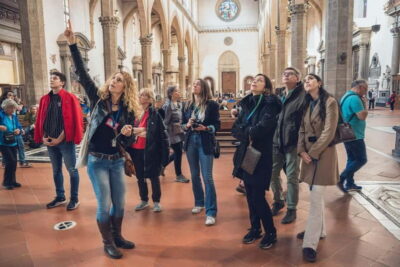
Browse the lists this tour appears in