
Reviewed · RENAISSANCE ART TOURS
Florence Renaissance walking tour
Florence’s great trick is that its best museum is often the street itself. This two-hour walk links the Arno, Medici palaces, Piazza della Signoria, artisan workshops, and the Duomo, with a professional art historian explaining how Gothic structure and Renaissance design shaped the city.
I like the route’s variety, especially the turn into Oltrarno, where the focus shifts from famous monuments to Tuscan crafts. I also like the small-group format and supplied earphones, which should make it easier to follow the guide in busy squares. The main caution is the cathedral admission wording: the tour promises a Duomo visit, but the itinerary also marks Duomo admission as not included, so confirm exactly what your booking covers.
In This Review
- Key points to know before booking
- From the Arno to Florence’s grandest square
- The Uffizi and the Medici story
- Piazza della Signoria and Michelangelo’s David
- Across the renewed passage toward Pitti Palace
- Oltrarno and Tuscan artisan workshops
- The Michelangelo bridge view and Florence’s fashion street
- Piazza della Repubblica and the old city center
- Reaching Piazza del Duomo
- What the art historian adds
- Is $40.33 a fair price?
- Who should book this Florence walk?
- Final verdict: a useful first look, with one ticket question
- FAQ
- How long does the Florence Renaissance walking tour last?
- What time does the tour start?
- Where does the tour begin?
- Where does the tour end?
- Is the Duomo included?
- Is the Uffizi Gallery entrance included?
- Is Palazzo Pitti admission included?
- What is included in the tour?
- Are refreshments included?
- How large is the group?
- Can children join the tour?
- Can I cancel for a full refund?
Key points to know before booking
- A two-hour route from the Arno to the Duomo: You finish in Florence’s grandest square, not where you began.
- An art historian leads the walk: Commentary covers Renaissance design, Gothic architecture, Medici power, and Florence’s art.
- Oltrarno adds a more local angle: You stop at Tuscan artisan workshops instead of seeing only headline sights.
- Small-group guiding: The listed maximum is 15 people, while the tour description refers to a maximum of 12 adults.
- Duomo admission needs checking: The overview describes entry, but the itinerary lists the cathedral ticket as not included.
- Good cancellation flexibility: You can cancel up to 24 hours before the 11:00 a.m. start for a full refund.
From the Arno to Florence’s grandest square
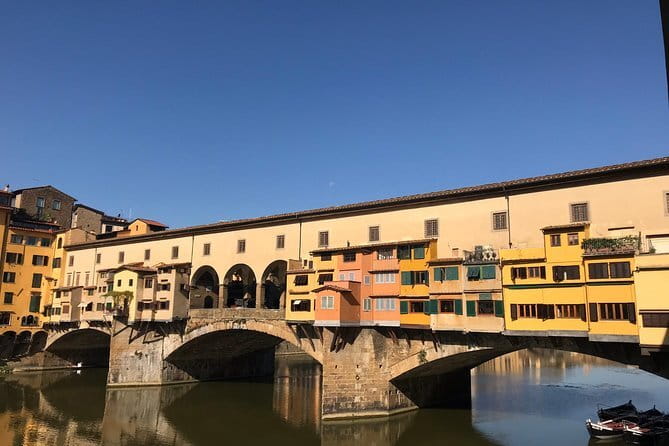
The meeting point is at Lungarno degli Acciaiuoli, 10, near the river and the Ponte Vecchio area. That is a useful starting place because the tour begins in the middle of Florence rather than asking you to make your way out to a distant neighborhood.
You start by admiring Florence’s oldest bridge. The route then moves past the Uffizi Galleries, across Piazza della Signoria, through the Oltrarno district, and back toward the city center. You finish at Piazza del Duomo, with its cathedral, Brunelleschi’s dome, Giotto’s Campanile, and the Baptistery.
This is not a museum-heavy tour. The Uffizi is seen from outside, and its admission is not included. Palazzo Pitti is also an exterior stop. That makes the experience a good introduction to Florence’s public spaces, but not a substitute for a full Uffizi or Pitti Palace visit.
The walk begins at 11:00 a.m. and lasts about two hours. You should expect a steady city walk with frequent stops rather than a long sit-down lecture. Wear comfortable shoes, and keep your attention on the guide, since the main value comes from connecting the buildings and squares as you move between them.
More Renaissance art days:
- Florence: Timed Entrance Ticket to Michelangelo’s David
★ 4.6 · 16,983 reviews - Florence: Michelangelo’s David Skip-the-Line Entry Ticket
★ 4.5 · 12,764 reviews - The Best tour in Florence: Renaissance & Medici Tales – guided by a STORYTELLER
★ 5.0 · 12,316 reviews
The Uffizi and the Medici story
The first named stop is the Gallerie degli Uffizi, where you spend about 10 minutes learning about the Medici family and its art collections. The gallery itself is not included, so you will not enter the museum as part of this experience.
That limitation is also part of the route’s appeal. The Uffizi is one of Florence’s major cultural institutions, but a brief exterior explanation helps you understand its place in the city before you decide if you want to return for a separate visit. If you already have Uffizi tickets, this walking tour can give the museum context before or after your longer gallery time.
The Medici connection is central to Florence. Their political influence, money, and support for artists helped shape the city you see today. A trained art historian can make that connection clearer than a quick photograph and a paragraph in a guidebook.
Ten minutes is enough for orientation, not a serious examination of the building or its collections. You will need another visit if your main goal is Botticelli, Michelangelo, or a full afternoon with Renaissance paintings.
Piazza della Signoria and Michelangelo’s David
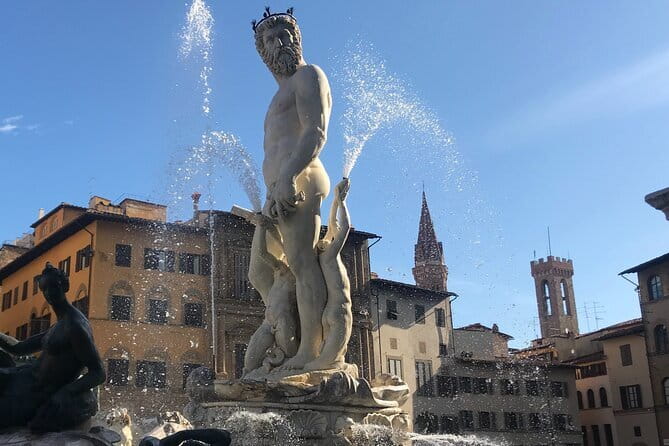
The walk continues to Piazza della Signoria, one of Florence’s most impressive public squares. You spend roughly 10 minutes here, admiring the sculpture displays and the replica of Michelangelo’s David.
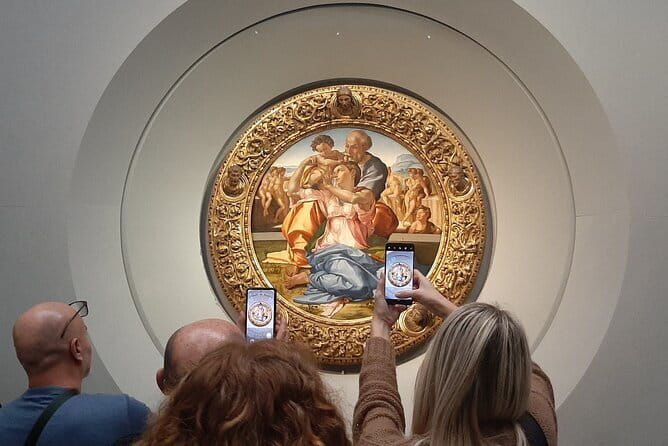
The replica matters because the original David is in the Galleria dell’Accademia, not outdoors in this square. For a first look at Florence’s civic art, though, the outdoor setting works well. You can see how sculpture was used in a public, political space rather than only inside a museum.
The square also helps explain Florence as an open-air collection of architecture and sculpture. Your guide can point out how the palaces, statues, and public buildings work together. Since the visit is short, you should think of this as a focused explanation rather than time to inspect every work.
Admission is listed as included for this stop, but the route does not require a separate museum entrance. That makes the stop simple and efficient. You get an art lesson without adding another ticket or queue.
Across the renewed passage toward Pitti Palace
From the central squares, the route heads toward the Pitti Palace along a renewed passage. You stop at Palazzo Pitti for about 10 minutes.
Pitti Palace was home to the Medici family and later to the King of Italy. That gives the building a useful role in the tour: it shows the scale and reach of Florence’s ruling families, and it connects political power with the grand residences they occupied.
The palace interior is not included. You will see the exterior and hear about its role, but you will not tour the rooms or collections during this walk. If you want an indoor palace visit, plan that separately and allow much more time than this brief stop.
I like this part of the route because it moves beyond the usual Duomo and Uffizi circuit. You see Florence from both sides of the Arno, and the change in setting gives the walk some rhythm. Still, the itinerary is compact, so the palace stop is best for orientation rather than detailed architecture.
More walking routes in Florence:
- Florence: Guided Walking Tour
★ 4.5 · 3,334 reviews - Skip the line: Uffizi and Accademia Small Group Walking Tour
★ 4.5 · 3,135 reviews - Florence: Guided Walking Tour
★ 4.6 · 1,602 reviews - Florence: Renaissance and Medici Tales Guided Walking Tour
★ 4.8 · 1,549 reviews
Oltrarno and Tuscan artisan workshops
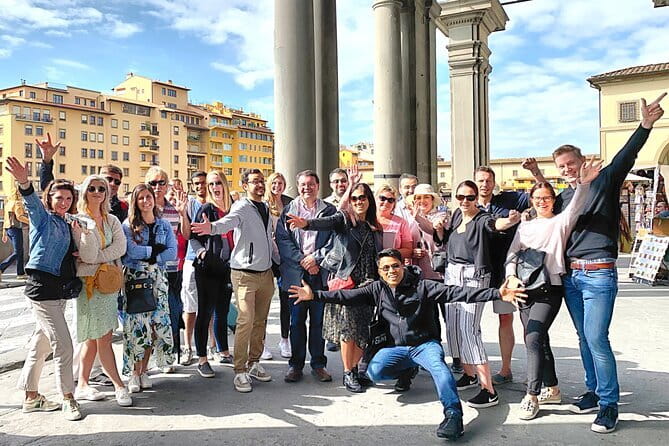
The Oltrarno stop lasts about 15 minutes and includes visits to a few artcrafts labs. The purpose is to introduce you to typical Tuscan artisans and the craft traditions associated with this side of Florence.
This is one of the tour’s most distinctive features. Famous sights tell you about Florence’s grand commissions, but workshops can show how the city’s creative identity continues in smaller working spaces. You will not simply move from one major monument to the next. You get a short look at the people and crafts behind the city’s handmade character.
The wording does not specify which workshops you will visit or whether you will see a full demonstration. Keep your expectations modest. This is a 15-minute introduction, not a dedicated craft tour or a shopping excursion.
For me, this stop adds welcome balance. The tour does not treat Florence as a line of famous facades only. It gives you a glimpse of the working side of the city before returning to the monumental center.
The Michelangelo bridge view and Florence’s fashion street
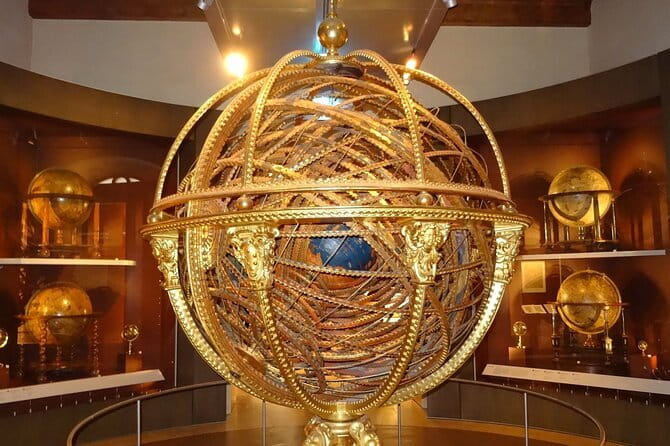
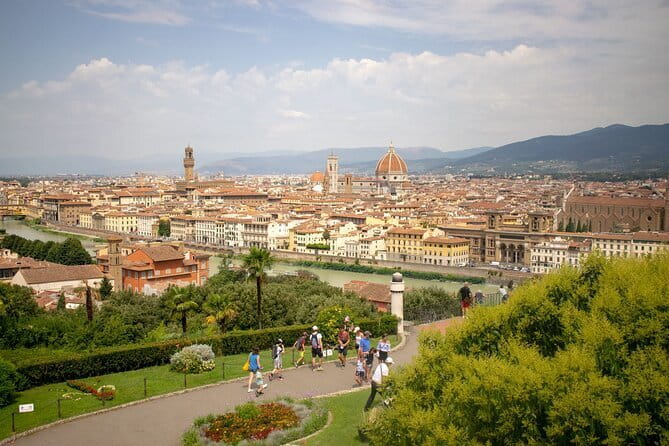
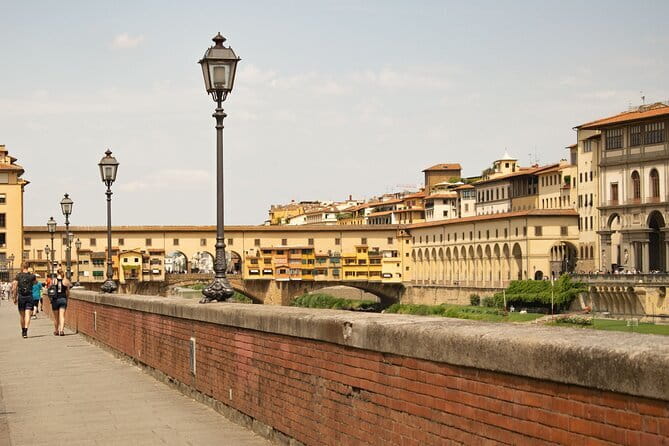
The itinerary includes a walk on a bridge designed by Michelangelo, with a view toward the Ponte Vecchio. The supplied details do not name the bridge, so you should rely on the guide to explain its design and exact place in the route.
The view is an attractive visual pause. From the river, you can see the famous Ponte Vecchio as part of Florence’s wider urban setting rather than as an isolated landmark. The route also passes along the road of fashion, adding a modern commercial note to the older monuments.
These short transitions matter. Florence is compact, and walking between sights lets you see how the city changes from museum district to civic square, riverfront, palace quarter, workshop area, and shopping street. You spend less time waiting for transport and more time noticing the relationship between places.
The tradeoff is that this is a brisk overview. You may want to stop for photographs, but the group must keep moving to reach the Duomo by the end. If a certain view catches your eye, note where it is and return later at your own pace.
Piazza della Repubblica and the old city center

Piazza della Repubblica is another 10-minute stop. The guide presents it as the ancient Roman city center and discusses the former Jewish community that lived in the area.
This square offers a different layer of Florence. Its broad urban form feels more open than the tight medieval streets nearby, and its Roman origins help you see that the city was shaped long before the Renaissance. The explanation about the Jewish community also broadens the story beyond artists, rulers, and cathedral builders.
As with the other piazzas, the stop is about setting the scene. You are not entering a dedicated museum or spending an hour on one subject. The guide’s ability to answer questions becomes especially useful here, since a short stop can leave you with several threads to follow later.
One guide was described as very strong on historical questions, but also soft spoken at times. The supplied earphones should help, yet you should still stay close enough to hear clearly, especially in an open square or along a busy street.
Reaching Piazza del Duomo
The walk ends at Piazza del Duomo, where you see the Cathedral of Santa Maria del Fiore, Giotto’s Campanile, the Baptistery, and Brunelleschi’s famous cupola. The listed time here is about 15 minutes, while the tour overview describes a one-hour Duomo visit with the guide.
This difference is important. The experience is presented as a two-hour tour that includes a guided visit to the UNESCO-listed cathedral, but the detailed stop information gives Piazza del Duomo only 15 minutes and marks admission as not included. Ask the provider to confirm whether the cathedral ticket is part of your specific booking, and how much time you will actually spend inside.
The cathedral is the tour’s main payoff. Your guide explains its Gothic structure and Renaissance design, including the relationship between the building and Brunelleschi’s dome. Giotto’s Campanile and the Baptistery complete the view, giving you three major pieces of Florence’s religious center in one square.
You should not assume this tour includes climbing the dome, entering the Baptistery, visiting the bell tower, or touring the cathedral museum. Those activities are not stated in the supplied details. The confirmed focus is the cathedral and the surrounding piazza, with commentary on its architecture and art.
What the art historian adds
The guide is the heart of this experience. You are not just following a route between postcard views. You are given the political, artistic, and architectural links that make the route meaningful.
The tour is conducted in one language by a certified guide, described as a professional art historian. That background should suit you if you want more than dates and names. The strongest use of the guide is likely in places such as Piazza della Signoria, where a sculpture, a palace, and a political message can be read together.
One piece of feedback praised the guide’s command of Florence’s history and ability to answer questions, while noting that the voice was sometimes difficult to hear. The earphones are therefore more than a small extra. Use them, remain within the group, and ask the guide to repeat anything you miss.
The group size is described two ways: a maximum of 12 adults in the highlights and a maximum of 15 travelers in the additional information. Either way, this is intended to be a small group rather than a large city procession. The exact number may affect how easy it is to ask questions and stay close to the guide.
Is $40.33 a fair price?
At $40.33 per person, the tour is priced as a guided orientation rather than a full-day cultural program. You are paying for about two hours, a professional art historian, a single-language walk, earphones, and the convenience of a planned route through several major areas.
The value is strongest if you are new to Florence, have limited time, or want the city’s landmarks explained in a connected story. The price also makes sense if you prefer a guide who can answer questions instead of relying on a printed map.
The value is weaker if you want long interior visits. Uffizi and Pitti Palace admissions are not included, and the Duomo ticket needs clarification because the supplied details conflict. You may spend extra money later on the museums that this tour only introduces.
The tour is booked an average of 73 days ahead, which suggests that you should not leave it until the last minute if your dates are fixed. Confirmation arrives at booking, and free cancellation is available until 24 hours before the start time. If the minimum number is not met and the tour is canceled, you are offered another date or experience, or a full refund.
Who should book this Florence walk?
I would choose this tour for a first visit, a short stay, or a morning when you want to learn the city’s layout before exploring on your own. It suits adults and families with children, although children must be accompanied by an adult.
It also fits anyone who likes art explained in plain terms. You will see major names and buildings, but the route does not force you to spend hours inside a museum. That balance can be useful when you want culture without giving up your entire day.
You may want another option if your priority is the Uffizi, the Pitti Palace interiors, the dome climb, or a slow photography walk. Those interests require more time and separate admission arrangements.
The walk is near public transportation, and most people can participate. No refreshments are included, so plan to handle drinks or snacks yourself before or after the tour.
Final verdict: a useful first look, with one ticket question
Book this tour if you want a compact, guided introduction to Florence that combines famous monuments with a short look at Oltrarno’s crafts. The art historian, small-group setup, earphones, and varied route give it more substance than a basic city stroll.
Before paying, get a clear answer about Duomo admission and the length of the interior visit. If that ticket is included as the overview promises, $40.33 is a reasonable price for a focused introduction. If it is not, treat the experience as a guided exterior walk with cathedral commentary, then budget separately for the interiors you most want to see.
FAQ
How long does the Florence Renaissance walking tour last?
The tour lasts approximately two hours.
What time does the tour start?
The listed start time is 11:00 a.m.
Where does the tour begin?
It begins at Lungarno degli Acciaiuoli, 10, 50123 Firenze FI, Italy.
Where does the tour end?
The tour ends at Piazza del Duomo, 50122 Firenze FI, Italy.
Is the Duomo included?
The overview describes entry to the UNESCO-listed Duomo, but the detailed Piazza del Duomo stop marks admission as not included. Confirm the exact ticket arrangement before booking.
Is the Uffizi Gallery entrance included?
No. Admission to the Gallerie degli Uffizi is not included.
Is Palazzo Pitti admission included?
No. The tour stops at Palazzo Pitti, but its admission is not included.
What is included in the tour?
A professional art historian guide, the guided walk, a single-language tour with a certified guide, and earphones are included.
Are refreshments included?
No. Refreshments are not included.
How large is the group?
The tour information gives a maximum of 15 people, while the highlights describe a maximum of 12 adults in the private party.
Can children join the tour?
Yes. Children may participate, but they must be accompanied by an adult.
Can I cancel for a full refund?
Yes. You can cancel at least 24 hours before the local start time for a full refund. Cancellations or changes made less than 24 hours before the start are not refunded.
Latest additions around Florence
- Florence: Cathedral Tour & Brunelleschi’s Dome Climb Ticket★ 5.0 · 3 reviews
- Palatina Gallery and Pitti Guided Tour in Florence★ 5.0 · 3 reviews
- Florence Uffizi Gallery Skip-the-line Tour w Art Historian Guide★ 5.0 · 3 reviews
- Private Tour: Pisa and Lucca from Florence★ 5.0 · 3 reviews
- San Gimignano Bike Tour (SOFT)★ 4.5 · 3 reviews
- Florence: Tour of Florence by rickshaw★ 5.0 · 3 reviews
- Center of Florence by golf cart★ 5.0 · 3 reviews
- From Firenze | Chianti day tour in a classic car★ 5.0 · 3 reviews
Renaissance Art Tours, compared.

Timed Entrance Ticket to Michelangelo’s David
Read our review →
Michelangelo’s David Skip-the-Line Entry Ticket
Read our review →
The Best tour in Florence: Renaissance & Medici Tales – guided by a STORYTELLER
Read our review →
The Best Tour in Florence: Renaissance and Medici Tales
Read our review →
Timed Entry Ticket to Michelangelo’s David & eBook
Read our review →
Michelangelo’s David, Accademia & Uffizi Small Group Tour
Read our review →
Michelangelo’s David Entrance Ticket and Audio App
Read our review →
Renaissance and Medici Tales Guided Walking Tour
Read our review →Browse the lists this tour appears in