
Reviewed · WINE TOURS
Florence: Pasta Class with Wine, Limoncello and Dessert
Fresh pasta is the star here, and you make it from the first egg-and-flour mix to the final forkful. In a palace just steps from Ponte Vecchio, you’ll prepare ravioli, tortelli, and fettuccine, then sit down with the group to eat the meal you helped create.
I like the hands-on format and the warm, social table at the end. I also like that instructors such as Camilla, Giacomo, Francesca, Sarno, and Caterina are praised for keeping beginners involved, including children and non-cooks. The main consideration is dietary: the information about special diets is not fully consistent, so check directly before booking if you have allergies or need vegan, gluten-free, or lactose-free food.
In This Review
- Key things to know before you book
- A pasta class inside a Florence palace
- From eggs and flour to workable dough
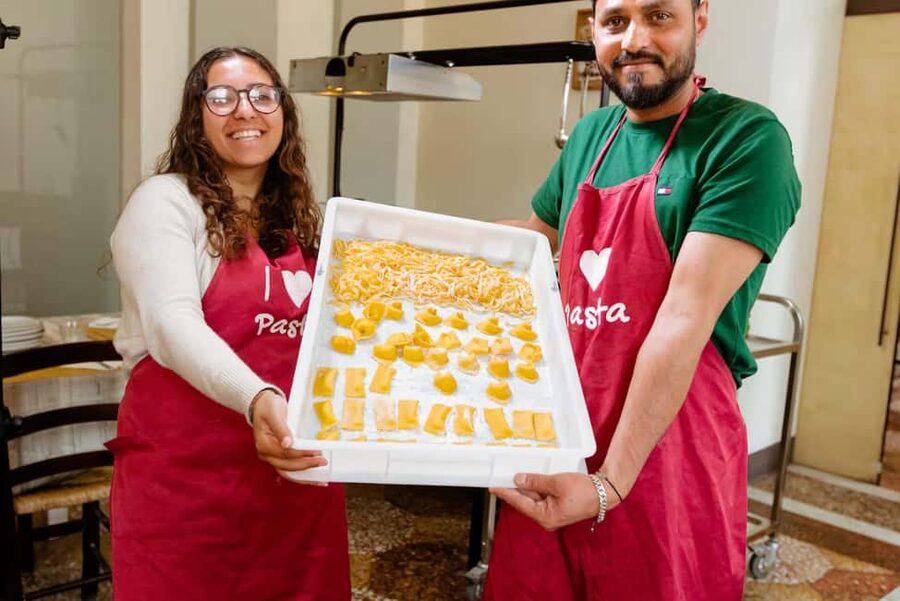
- Ravioli, tortelli, and fettuccine on one worktable
- The meal you make, served around a shared table
- Why the instructors make or break the class
- What you can take home besides a full stomach
- Dietary restrictions need careful checking
- Who will enjoy this three-hour experience
- Booking flexibility and small practical details
- Should you book the Florence pasta class?
- FAQ
- Where does the pasta class take place?
- How long does the experience last?
- Which types of pasta will I make?
- Is food and wine included?
- Is the class taught in English?
- Can I join if I have a dietary restriction?
Key things to know before you book
- Three pasta shapes in three hours: You make ravioli, tortelli, and fettuccine by hand rather than watching a chef do all the work.
- A central Florence setting: The cooking school is at Lungarno Guicciardini 17r, near Ponte Vecchio and within the historic center.
- A shared Italian-style meal: Everyone’s pasta is cooked together, then served around a large table with sauces, wine, dessert, and limoncello.
- Friendly instruction for beginners: The class is designed for people with little or no kitchen experience, though more practiced cooks can work on technique.
- Small-group feel: One class had 10 participants, while family groups of eight and larger parties have also taken part.
- Special-diet limits matter: Vegetarian options are supported, but vegan, gluten-sensitive, lactose-intolerant, and nut-allergic diners should confirm what can be prepared.
A pasta class inside a Florence palace
The location does some of the work before the cooking begins. The school sits on Lungarno Guicciardini, on the south side of the Arno, a short walk from Ponte Vecchio. You arrive in one of Florence’s most central areas, but the activity itself shifts your attention away from crowded streets and toward a long-standing part of everyday Italian life: making food by hand and eating it together.
The setting is a historic palace, not a detached cooking studio on the edge of town. That gives the experience a sense of place without requiring a separate excursion outside Florence. If you are building a busy sightseeing day around the Uffizi, Ponte Vecchio, or the Oltrarno, the location is easy to fit into your plans.
You should arrive five minutes early for check-in. Wear comfortable clothes that are suitable for cooking. Smoking is not allowed, and the activity lasts about three hours, so do not schedule a museum reservation immediately afterward unless you leave plenty of room.
The class is conducted in English. The exact instructor can vary, but the teaching style is a major part of the experience. Camilla has been praised for her humor and easy way with beginners. Giacomo is known for drawing people into conversation and offering suggestions for sightseeing and local restaurants. Sarno brings plenty of energy, while Francesca, Caterina, Alexandra, Nicola, Ezgi, and others have also led well-received sessions.
That list matters because a pasta class is only as good as the person moving the group along. Here, the instructors are not simply there to read instructions. They circulate, correct technique, keep the pace moving, and make sure the quieter people at the table get a turn.
More cooking classes in Florence:
- Florence: Pasta Cooking Class with Unlimited Wine
★ 4.9 · 10,285 reviews - Florence Pizza or Pasta Class with Gelato Making at a Tuscan Farm
★ 5.0 · 6,801 reviews - Florence: Pasta & Tiramisu Cooking Class with Unlimited Wine
★ 4.9 · 6,708 reviews
From eggs and flour to workable dough
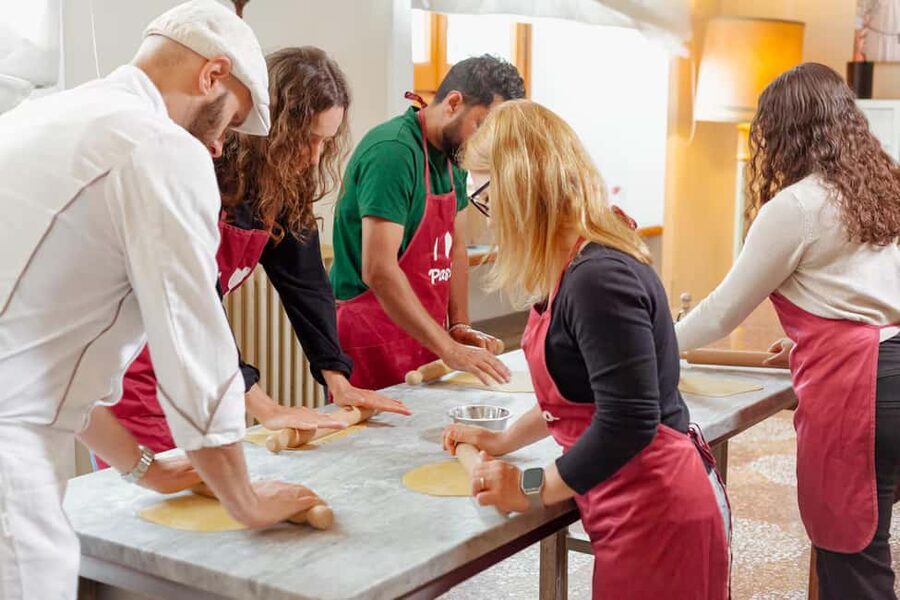
The cooking starts with the basic ingredients: eggs and flour. You put on an apron, take your rolling pin, and begin working the dough with your hands. This is the useful part of the class. Pasta-making can look simple when it arrives on a plate, but the dough needs the right texture, pressure, and thickness.
You are not expected to arrive with professional kitchen skills. One participant who described not cooking at all still found the process easy to follow, and families with children and teenagers have taken part successfully. The instructors show the movements and then help you adjust them. That makes this a practical class rather than a demonstration where you sit back and take notes.
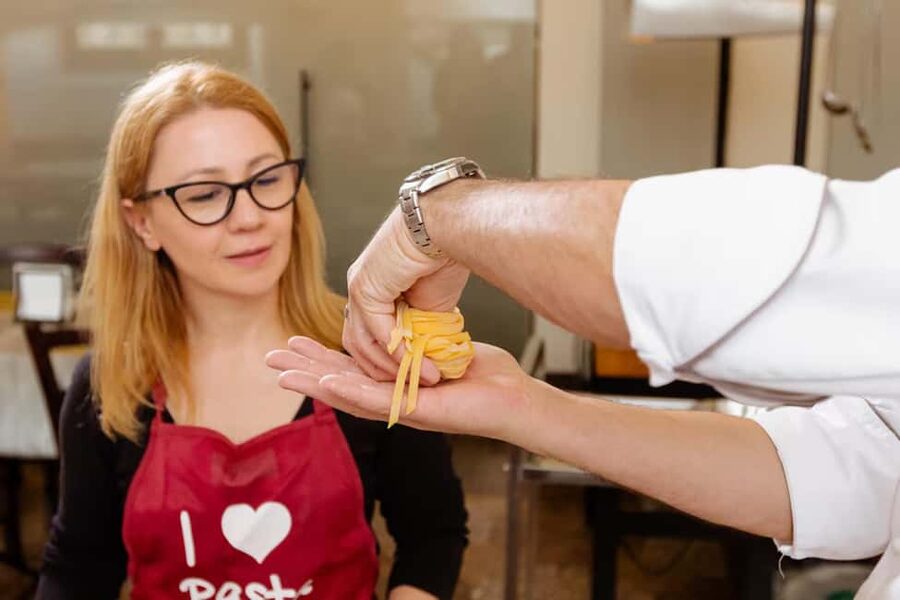
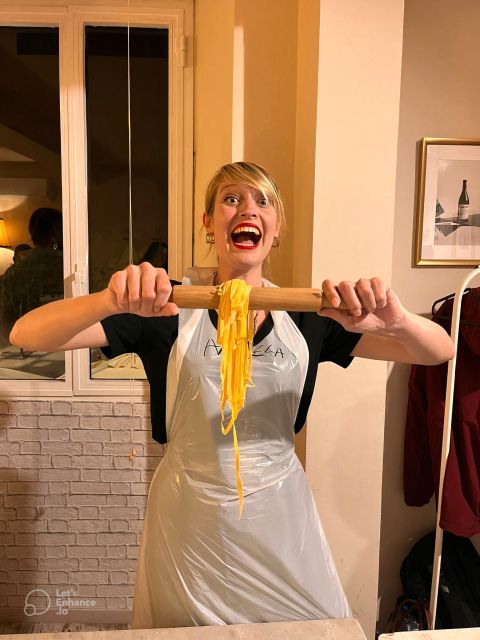
The work is also pleasantly physical. You knead, roll, cut, and shape instead of pressing a button on a machine. An unusual detail from the sessions is the pasta guitar, a traditional-looking tool used to cut pasta into strands. It adds a playful moment, and you may find yourself wanting one for your own kitchen afterward.
The class begins with a short introductory presentation, including a film-style video about the experience and pasta traditions. One attendee enjoyed the presentation but felt that the time might have been better spent in the kitchen or tasting more wine. That is a fair point if you are booking mainly to maximize hands-on cooking time. The introduction gives context, but it is not the central reason to choose this activity.
Ravioli, tortelli, and fettuccine on one worktable
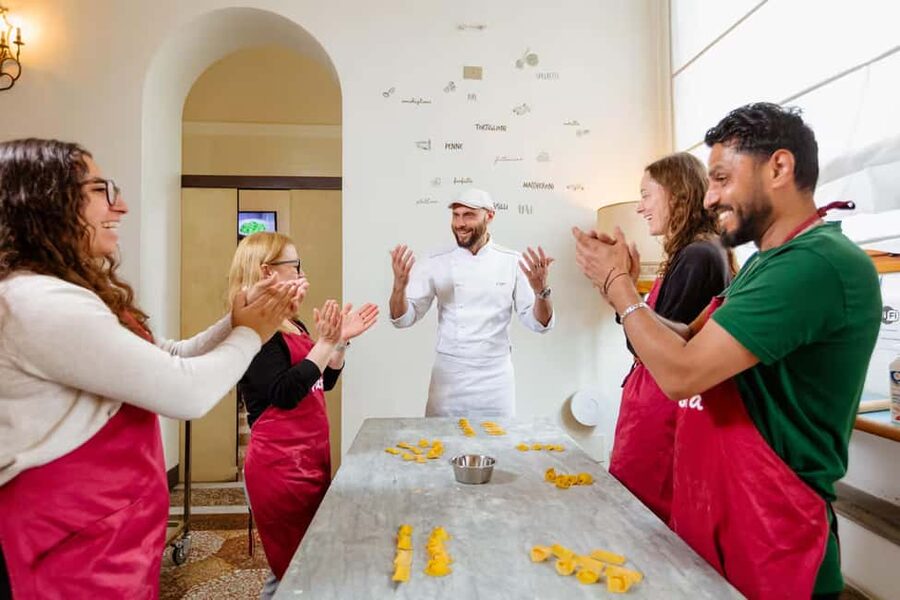
Making three pasta shapes gives you a useful range of techniques. Fettuccine teaches you to roll and cut long strands. Ravioli and tortelli require more care because you must work with filling, seal the edges, and avoid trapping air inside.
The filling and some sauce preparation may be handled in advance for practical reasons. That is worth knowing. You are involved in the dough, shaping, and cooking, but you should not expect to prepare every single component from raw ingredients.
The tomato sauce simmers for hours before the class, so it has time to develop flavor. For the ravioli and tortelli, the instructor prepares a butter and sage sauce shortly before serving. Watching that sauce come together gives you a simple idea to repeat at home: delicate filled pasta often benefits from a light sauce that does not cover up the filling.
This balance works well for a three-hour class. If every sauce and filling were made from the beginning, you would spend much of the session waiting. Instead, the focus stays on the pasta skills you are least likely to pick up from a standard restaurant meal.
Each person prepares their own pasta, but the cooking is communal. The separate portions are put into the same pot, as they might be in an Italian home. That arrangement gives you ownership of the work without turning dinner into a complicated sorting exercise.
The meal you make, served around a shared table
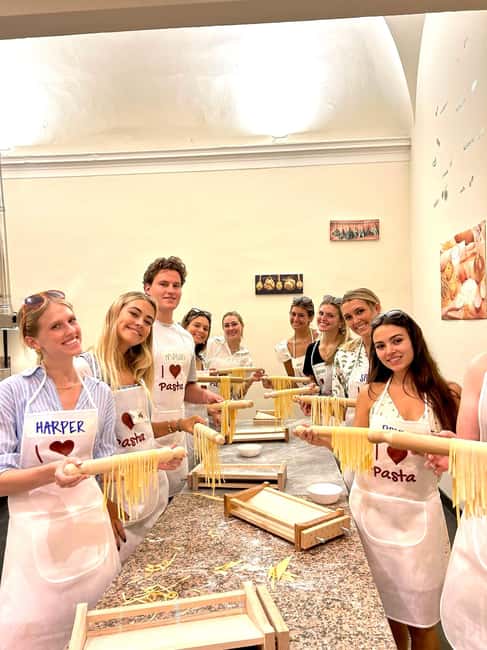
The final meal is not an afterthought. Once the pasta has been cooked, everyone sits down at a large convivial table and eats together. The format encourages conversation with people from different countries, and several sessions have included families, couples, friends, students, and mixed groups of solo participants.
I like this part because it connects the cooking to the way food is often enjoyed in Italy. You are not just carrying a plate away after a lesson. You sit with the people who kneaded dough beside you, compare shapes, and share the result.
The food includes the fresh ravioli, tortelli, and fettuccine you helped prepare. The tomato sauce accompanies the pasta, while butter and sage are used for the filled shapes. Dessert follows, along with limoncello. Organic Tuscan wine from Dalle Nostre Mani is included, and the class may include more than one wine sample.
The wine is a pleasant addition, but it also changes who this class suits. Alcohol is served, and wine is available only to participants of legal drinking age. If you do not drink, the core cooking activity still gives you plenty to do, but the tasting element will be less important to you.
The included meal adds real value. You are not paying for instruction and then needing to find dinner afterward. Depending on the booking price, that can make the experience a sensible alternative to a standard restaurant meal, especially when you count the three-hour lesson, ingredients, equipment, multiple pasta dishes, wine, dessert, and limoncello.
No exact price is provided here, so I would compare the current rate with other Florence cooking classes based on what is included. A cheaper class may offer only one pasta shape or exclude drinks and dessert. A more expensive one may provide a smaller, more specialized lesson. The strongest value here comes from the combination of food, instruction, and social atmosphere.
More Florence wine afternoons:
- Tuscany Day Trip from Florence: Siena, San Gimignano, Pisa and Lunch at a Winery
★ 5.0 · 21,634 reviews - Florence: Chianti Wineries Tour with Wine Tasting
★ 4.5 · 8,301 reviews - Small-Group Wine Tasting Experience in the Tuscan Countryside
★ 5.0 · 7,392 reviews - Florence: Pasta Cooking Class with Unlimited Wine
★ 5.0 · 6,413 reviews
Why the instructors make or break the class
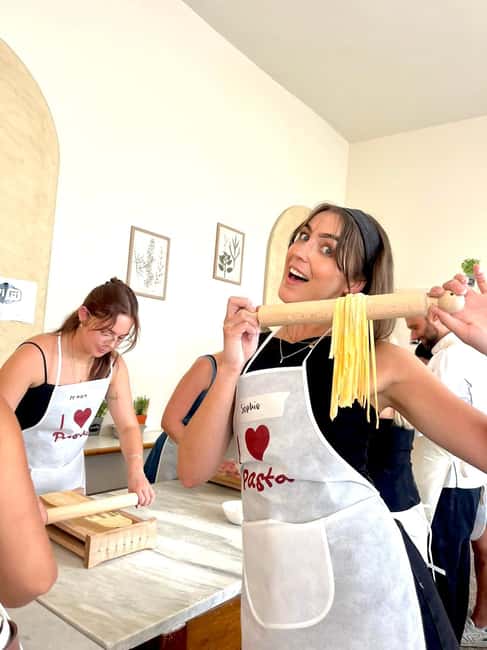
The most praised feature is the teaching. The tone is relaxed and often funny, but the instructors still demonstrate the details you need to succeed. That is especially helpful when the dough feels too dry, the pasta sheet is uneven, or a ravioli edge will not seal.
Camilla has been singled out for making the process approachable for people who do not cook. Giacomo is good at keeping conversation flowing while still offering local advice. Sarno is described as both entertaining and passionate about hand-made pasta. Caterina has been praised for sharing family traditions and making participants feel at home.
Other instructors, including Francesca, Nicola, Ezgi, Lucrezia, Beatrice, Jessica, Jasmine, Erica, Alexandra, and Robin, have also led sessions. The repeated pattern is clear: the class depends on an instructor who pays attention to the whole table rather than focusing only on the fastest cooks.
This makes the activity a good choice for a group with mixed ages and abilities. A family celebration, a honeymoon activity, or a gathering with friends can all work. Children may enjoy the rolling and shaping, while adults get the satisfaction of learning a skill they can try again at home.
You should still keep expectations realistic. This is an introductory group class, not private culinary training. You will get help and recipes, but not a long one-to-one lesson on regional pasta theory or advanced restaurant technique.
What you can take home besides a full stomach
The practical payoff is the recipe information. A recipe book or recipes for the pasta, sauces, and other food served have been provided in some sessions, giving you a chance to repeat the meal at home.
That matters more than a souvenir photo. Fresh pasta is one of those skills that becomes less mysterious once you have handled the dough yourself. You learn how the mixture feels, how thin to roll it, and how much filling a sealed pasta shape can hold.
You may also be able to buy products from an organic store at the facility. One participant purchased olive oil there. This is not the main purpose of the class, and extra purchases are not included, but it can be useful if you want a food-related item to take home.
Do not expect to leave with uncooked pasta packed for your suitcase. The experience is built around preparing and eating the food during the session. The recipes are the lasting part.
Dietary restrictions need careful checking
The dietary information deserves a clear warning. The activity notes say that vegetarian, vegan, lactose-free, gluten-free, and other dietary needs can be discussed when booking, but the important information also says that vegan, gluten sensitivity, and lactose intolerance cannot be accommodated. The activity is also listed as unsuitable for people with nut allergies.
Because of that conflict, you should contact the provider before paying if you have any serious allergy or food restriction. Do not rely on a general vegetarian option to cover a medical need. Ask what ingredients are used in the dough, fillings, sauces, dessert, and wine service, and ask about cross-contact if that is important for your health.
Vegetarians appear to be the easiest special-diet case, but confirmation is still sensible. Vegans, people with gluten intolerance, people who cannot eat lactose, and people with nut allergies should treat this as unsuitable unless the provider gives a clear, specific answer for the date you want.
Who will enjoy this three-hour experience
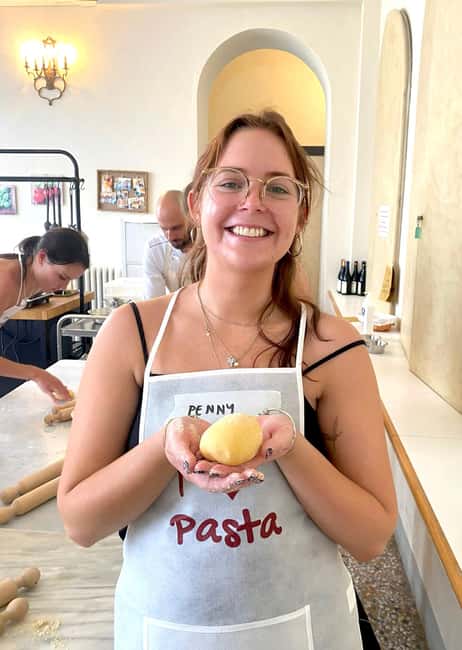
I would choose this class if you want a hands-on food activity in central Florence and you like meeting people over a shared meal. It suits first-time pasta makers particularly well, since the teaching is built around simple movements and direct help.
It also works nicely for families. Children and teenagers have taken part in family groups, and the instructors make an effort to include everyone. For a birthday, anniversary, honeymoon, or family reunion, the communal table gives the activity a celebratory feel without requiring a formal special-event package.
Couples should know that this is not a private date-night experience. You will share the room and table with other participants, which is part of its appeal but not ideal if you want privacy.
Food lovers who want a quiet, technical class may find the social side a little lively. The class includes jokes, conversation, wine, and group interaction. That atmosphere is a strength for most people, but it is less suitable if you want to work alone or focus on advanced technique.
The activity is not suitable for people with mobility impairments according to the supplied information. No hotel pickup or drop-off is provided, so you make your own way to Lungarno Guicciardini 17r.
Booking flexibility and small practical details
You can cancel up to 24 hours before the activity for a full refund, and you can reserve now and pay later. Those policies help if your Florence plans are still shifting, though you should still confirm the exact session time when booking.
The provider requires a minimum number of participants. If that number is not reached, you may be offered another date or time, or a full refund. This is common with scheduled classes, but it is worth keeping in mind if the activity is central to a tightly planned itinerary.
The class is listed with a 4.9 rating from 674 reviews, and 90 percent of ratings give it a perfect score. More useful than the number itself is what the experience repeatedly delivers: active cooking, friendly instruction, a complete meal, and a good setting near major Florence sights.
Arrive five minutes early, wear clothes you can work in, and leave enough time afterward. The class can run as a relaxed social meal rather than a quick lesson, especially when the group is enjoying the wine and conversation.
Should you book the Florence pasta class?
I would book it if you want to do more than eat pasta in Florence. The location is central, the three-hour schedule is manageable, and you get a real task to work on from start to finish. The chance to make three shapes, eat them immediately, and receive recipes gives the activity more substance than a short food demonstration.
Book with particular confidence if you are a beginner, traveling with family, or looking for an easy way to meet other people. The instructors have a strong record of making non-cooks and children feel involved.
I would pause if you need a tightly controlled allergy-friendly menu, dislike group activities, or want advanced culinary training. For everyone else, this is a warm, practical way to connect Florence sightseeing with the food Italians actually gather around.
FAQ
Where does the pasta class take place?
The cooking school is at Lungarno Guicciardini 17r, 50125 Florence, Italy, just steps from Ponte Vecchio.
How long does the experience last?
The class lasts three hours. Starting times vary, so you should check availability for your chosen date.
Which types of pasta will I make?
You will prepare ravioli, tortelli, and fettuccine by hand using eggs and flour.
Is food and wine included?
Yes. The experience includes the pasta dishes you prepare, organic Tuscan wine, dessert, and limoncello. Additional food and drinks are not included.
Is the class taught in English?
Yes. The listed instruction language is English.
Can I join if I have a dietary restriction?
You should tell the provider about dietary needs when booking. Vegetarian options are listed, but the supplied information also says that vegan, gluten-sensitive, and lactose-intolerant diets cannot be accommodated, and the activity is not suitable for people with nut allergies. Contact the provider directly for a clear answer before booking.
More Pasta in Florence
- Pastamania – Florence Pasta Making Class
★ 5.0 · 3,050 reviews - Florence: Cooking Class Pasta & Tiramisu Making Unlimited Wine
★ 5.0 · 2,234 reviews - Florence: Pasta & Tiramisu Cooking Class with Unlimited Wine
★ 4.8 · 828 reviews - Florence: Premium Cooking Class for Pasta and Gelato
★ 4.9 · 695 reviews
More Dessert Tours in Florence
- Florence: Handmade Pasta & Dessert Class with Unlimited Wine
★ 4.8 · 788 reviews - Private Coffee and Sweets Tour Caffé, Chocolate, Gelato & More
★ 5.0 · 20 reviews - Discover Lucca and Pisa and Enjoy Buccellato Cake: Full Day Tour
★ 4.5 · 7 reviews - Venchi Duomo: Chocolate Tasting Experience in Florence
★ 4.3 · 4 reviews
Latest additions around Florence
- Florence: Cathedral Tour & Brunelleschi’s Dome Climb Ticket★ 5.0 · 3 reviews
- Palatina Gallery and Pitti Guided Tour in Florence★ 5.0 · 3 reviews
- Florence Uffizi Gallery Skip-the-line Tour w Art Historian Guide★ 5.0 · 3 reviews
- Private Tour: Pisa and Lucca from Florence★ 5.0 · 3 reviews
- San Gimignano Bike Tour (SOFT)★ 4.5 · 3 reviews
- Florence: Tour of Florence by rickshaw★ 5.0 · 3 reviews
- Center of Florence by golf cart★ 5.0 · 3 reviews
- From Firenze | Chianti day tour in a classic car★ 5.0 · 3 reviews
Wine Tours, compared.
Tuscany Day Trip from Florence: Siena, San Gimignano, Pisa and Lunch at a Winery
Read our review →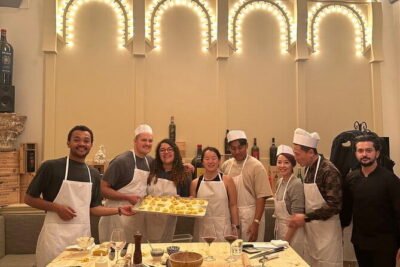
Small-Group Wine Tasting Experience in the Tuscan Countryside
Read our review →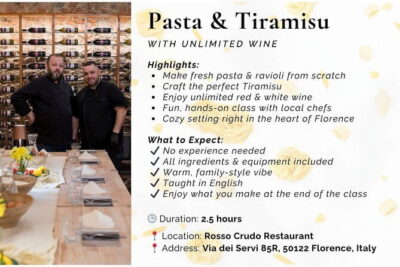
Pasta & Tiramisu Cooking Class with Unlimited Wine
Read our review →
Pisa, Siena and San Gimignano Day Trip with Lunch & Wine Pairing
Read our review →
SMALL-GROUP Wine Safaris: Tuscan Wine Tasting Tours from Florence
Read our review →Browse the lists this tour appears in