
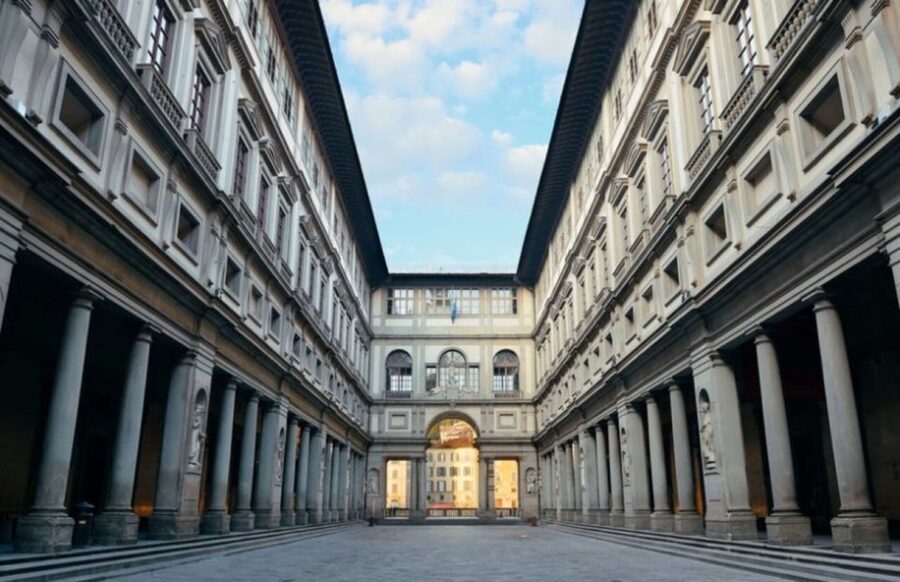
Reviewed · FLORENCE WALKING TOURS
Florence: Walking Tour of Dante’s Florence with a Guide
Florence becomes more intriguing when you look below the Renaissance surface. This two-hour walking tour follows Dante Alighieri through the medieval city he knew, before Brunelleschi’s dome, Giotto’s Bell Tower, and Palazzo Vecchio shaped the skyline.
I like the clear focus on Dante’s life and Divine Comedy, and I like that the route connects poetry to real streets, towers, churches, tombstones, and political divisions. The main consideration is pace: two hours covers several important areas, so the experience works best as an introduction rather than a full study of Dante.
Oksana has earned especially warm praise for making the tour feel personal and passionate. The walk is priced at $34 per person, a fair rate if you want context for Florence’s oldest quarter without committing to a long museum visit.
In This Review
- Key points about Dante’s medieval Florence
- Beginning at Duomo Square and the old city entrance
- Following Dante from childhood to exile
- Reading the Divine Comedy through Florence
- The Dante Studies Center and Ponte Vecchio
- Piazza della Signoria and Dante’s civic Florence
- Ending with Dante at Santa Croce
- What $34 buys you in two hours
- Who will get the most from this Florence walk
- Practical details before you book
- Should you book Dante’s Florence?
- FAQ
- How long is the Dante’s Florence walking tour?
- What is the price of the tour?
- Where does the tour begin?
- Where does the tour finish?
- Which languages are available for the live guide?
- Is an audio guide included?
- Are earphones provided?
- Is the tour wheelchair accessible?
- Can I cancel the tour for a full refund?
- Can I reserve the tour and pay later?
Key points about Dante’s medieval Florence
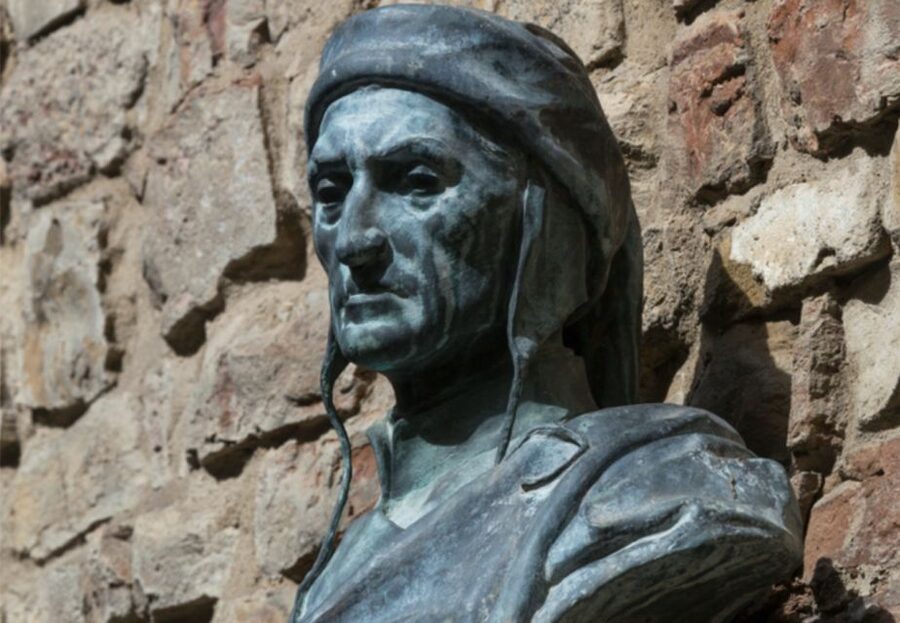
- Dante’s District begins at Duomo Square, once an entrance to the medieval city and the area tied to his early life.
- The route follows the poet from birth in 1265 to exile in 1302, using streets, buildings, and local landmarks as evidence.
- Beatrice’s story becomes part of the walk, including the place where Dante is thought to have first seen her.
- Ponte Vecchio connects poetry with politics, including the legendary conflict between Guelphs and Ghibellines.
- Palazzo Vecchio brings Dante’s public life into view, with his funerary mask kept inside.
- Santa Croce provides a memorable finish, with a marble statue showing Dante holding the Divine Comedy.
Beginning at Duomo Square and the old city entrance
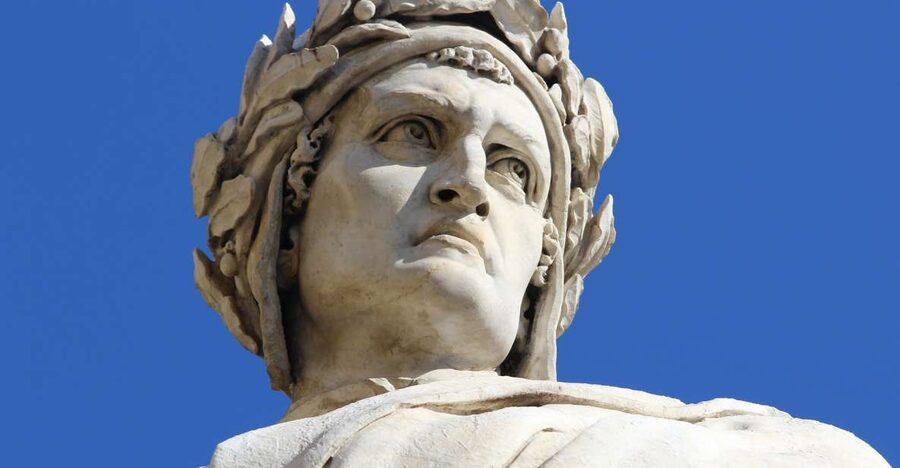
Meet your guide in front of the Loggia Bigallo Museum, beside Duomo Square. This is a handy central starting point, although the square can feel crowded and finding the exact meeting place may take a moment. Arrive early enough to locate the guide without rushing.
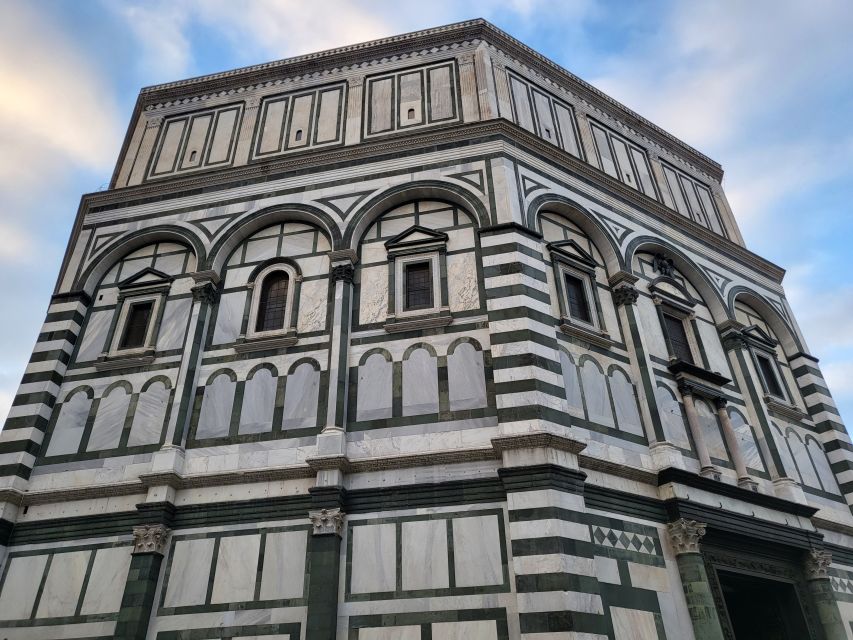
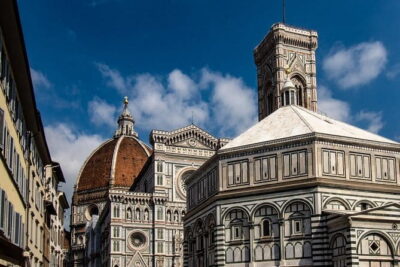
The tour begins near the Baptistery of San Giovanni, described as the city’s oldest building and an important medieval gateway. The setting helps you picture Florence before the familiar Renaissance skyline appeared. In Dante’s lifetime, this area was shaped by narrow streets, stone and wooden houses, small churches, workshops, and defensive towers.
That contrast is the real value of the opening. You are not simply looking at famous buildings. You are asked to imagine the city as Dante knew it, a compact and often tense network of neighborhoods where family loyalties and political ties mattered.
Look upward as you walk. The tour points out words carved into the walls of ancient Florentine towers, linking the physical city to Dante’s writing. Details like these can be easy to miss when you are hurrying toward the cathedral, so the guide gives you a reason to slow down and read the streets.
The Baptistery also sets up a useful idea: Dante’s Florence was both a religious center and a political city. The route uses that mix to explain the world behind his poems, rather than treating the Divine Comedy as a work detached from daily life.
More walking routes in Florence:
- Florence: Guided Walking Tour
★ 4.5 · 3,334 reviews - Skip the line: Uffizi and Accademia Small Group Walking Tour
★ 4.5 · 3,135 reviews - Florence: Guided Walking Tour
★ 4.6 · 1,602 reviews
Following Dante from childhood to exile
The central thread is Dante’s life in Florence from his birth in 1265 until his exile in 1302. That gives the walk a clear shape. Instead of hearing disconnected facts, you move from early places tied to the poet toward the civic spaces where Florence’s political struggles affected him.
You will visit the place thought to be Dante’s birthplace. The wording matters. This is presented as a traditional identification, not an unquestionable fact, and that is useful when exploring a medieval city where evidence and local memory often overlap.
The route also includes the place where Dante is believed to have first seen Beatrice. For readers drawn to the romantic side of Dante’s story, this is one of the most appealing moments. It gives a physical setting to a relationship that became central to his poetry and to the symbolic world of the Divine Comedy.
I would keep your expectations in check here. This is not a theatrical retelling, and the tour does not promise entry into every building connected with Dante. Its strength is the way the guide links known locations, local tradition, and the poet’s imagination while you walk through the same district.
That approach suits anyone who wants literature explained through place. If you have already studied Dante, the route can help you connect names and ideas to Florence. If the Divine Comedy is new to you, the guide provides an accessible starting point without requiring a long academic background.
Reading the Divine Comedy through Florence
The tour describes itself as a walk through the steps of the Divine Comedy. That does not mean you will visit the literal settings of every part of the poem. Instead, the guide uses Dante’s Florence, his characters, his beliefs, and his conflicts to help you understand the work.
This is an important distinction. The experience is not a museum lecture about manuscripts or a detailed literary seminar. It is a city walk where streets and monuments provide the setting for a discussion of Dante’s ideas.
You may find the Divine Comedy easier to approach once you see the world that shaped it. Medieval Florence was divided by rival groups, religious loyalties, family interests, and civic disputes. Dante’s poetry grew from that setting, and the route shows how public conflict and private experience could meet in his writing.
The live guide is available in English or Italian. Audio support is listed in English, Italian, and Spanish, which may help if you prefer listening through a device or need extra clarity during the walk. Earphones are provided only when the group has more than 15 participants, so the sound setup may depend on the size of your departure.
The strongest guides will matter here. Oksana is praised for combining personal warmth with a serious interest in Dante, and that is the quality to hope for on this particular route. The subject can become dry if it turns into a list of dates and names. A guide who explains why each place matters makes the two hours much more rewarding.
The Dante Studies Center and Ponte Vecchio
The walk continues to the Dante Studies Center, adding a more direct connection to the poet’s work and legacy. The supplied details do not promise an extended indoor visit, so think of this as a stop within the walking route rather than a separate museum program.
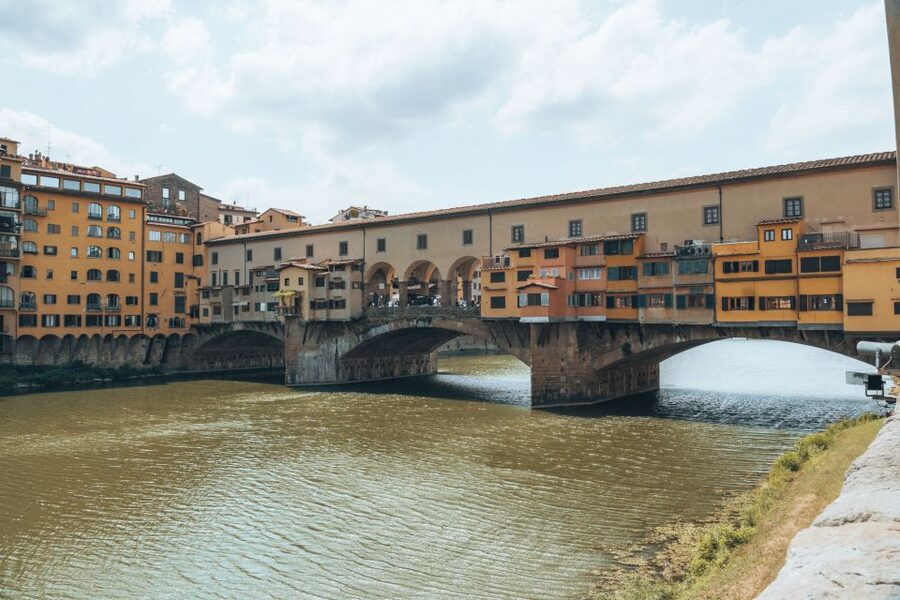
Ponte Vecchio brings the city’s political story into sharper focus. According to local legend, the struggle between Guelphs and Ghibellines began here, helping divide Florence into opposing sides. The exact details of medieval political history can be complicated, but the bridge gives the guide a memorable place to explain how rivalry shaped the city.
You will also see how a famous landmark can carry several stories at once. Ponte Vecchio is often treated as a scenic crossing, yet on this tour it becomes part of Dante’s civic world. That makes the stop more useful than a quick photo break.
The bridge may be one of the busier points on the route. Stay close to the guide and keep your attention on the explanation, especially if the walkway is crowded. Since the activity is only two hours, there is likely little time to pause for shopping or extended photographs.
This is a walking experience, not a sightseeing bus tour. You should be comfortable moving between several central locations and listening while standing. The route is listed as wheelchair accessible, but the practical ease of any historic city walk can depend on the exact streets and crowd conditions at the time.
More Florence options worth a look before you decide
- The Best tour in Florence: Renaissance & Medici Tales – guided by a STORYTELLER
★ 5.0 · 12,316 reviews - Florence: Duomo Cathedral Guided Tour
★ 3.9 · 5,970 reviews - Uffizi Gallery Small Group Tour with Guide
★ 4.5 · 4,923 reviews - Florence: Accademia Gallery Guided Tour
★ 4.6 · 4,156 reviews
Piazza della Signoria and Dante’s civic Florence
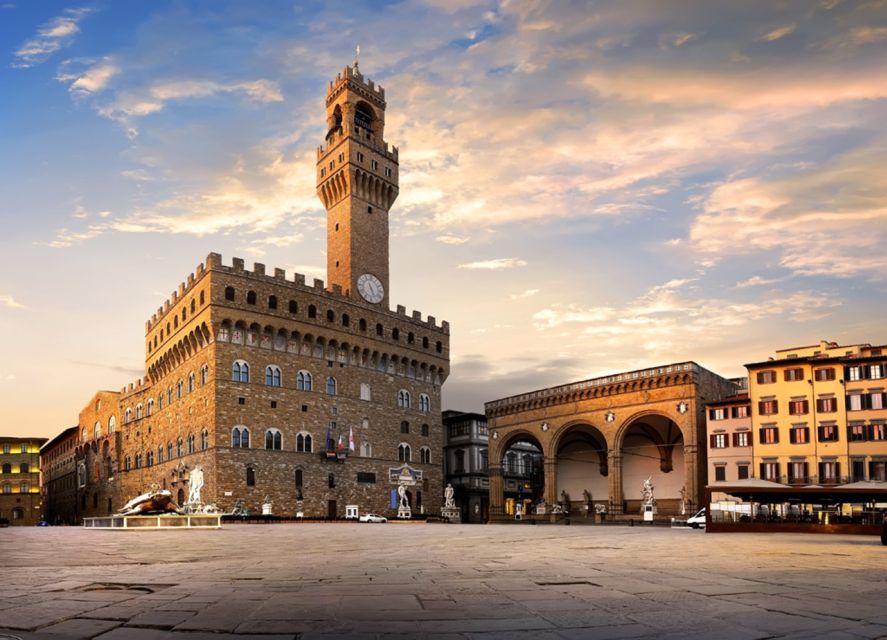
Piazza della Signoria takes the tour into the political heart of Florence during the medieval period. Today, visitors often focus on sculpture and Palazzo Vecchio. Here, the square becomes a place to consider Dante’s relationship with the city and the forces that led to his exile.
Palazzo Vecchio is especially important because Dante’s funerary mask is kept inside. The tour does not state that you will enter the building or view the mask as part of a museum visit, so do not book this walk expecting guaranteed interior access. The guide can still explain the mask and its connection to Dante as you reach this part of the route.
The political context gives the stop weight. Dante was not only a poet looking backward at an idealized Florence. He was involved in the city’s public life, and exile in 1302 changed the direction of his life and work.
I like this part of the route because it keeps Dante grounded. You get the personal story of Beatrice and the literary world of the Divine Comedy, but you also see the civic pressures surrounding him. That balance prevents the tour from becoming only a romantic stroll through old streets.
Ending with Dante at Santa Croce
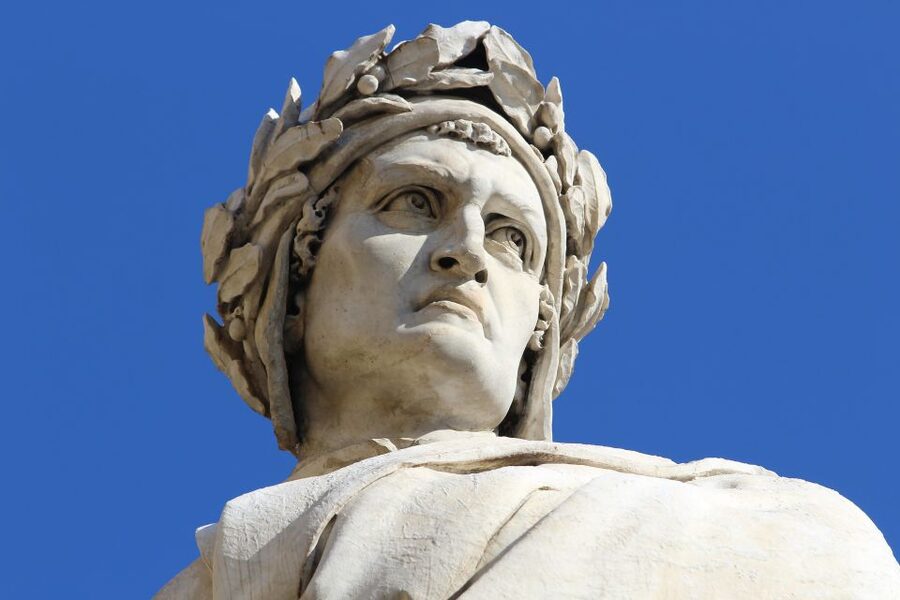
The tour ends back at the meeting point after reaching Piazza Santa Croce and its marble statue of Dante. The statue shows him holding the Divine Comedy in his right hand, giving the walk a clear visual finish.
Santa Croce is a fitting final stop because the statue presents Dante as Florence’s great poet, while the earlier parts of the route have shown him as a child, citizen, political figure, and exile. The image brings those threads together without needing a long final lecture.
Do not confuse this statue with Dante’s tomb. The provided details identify it as a statue in Piazza Santa Croce, not a burial site. That distinction is useful when planning your Florence visits, since Dante’s actual burial place is not part of the information provided for this activity.
The ending also gives you a good chance to continue exploring Florence on your own. Since the activity finishes at the original meeting point, you are not left at an unfamiliar edge of the city. You can use the walk as a first orientation, then return to the places that caught your interest.
What $34 buys you in two hours
At $34 per person, this is priced as a focused guided introduction rather than a full-day cultural program. The value comes from interpretation. You are paying for a route that connects Dante’s biography, medieval Florence, local political history, and the Divine Comedy in a short period.
That makes the price reasonable for several kinds of visitors:
- You are interested in literature and want Florence explained through Dante.
- You have limited time and want a compact walk through the medieval center.
- You prefer a guide to help you notice details that are easy to overlook.
- You want historical context before visiting Florence’s larger museums and monuments.
The value is weaker if you want extensive interior visits, free time at each landmark, or a highly specialized academic lecture. The route includes important locations, but the experience is primarily outdoors and focused on explanation.
The two-hour length is a practical advantage. It can fit into a morning or afternoon without taking over your day. It also means the tour should be manageable for many visitors who want substance without spending half a day on one subject.
The operator allows cancellation up to 24 hours before the start for a full refund, and you can reserve now and pay later. Those policies help if your Florence schedule is still shifting.
Who will get the most from this Florence walk
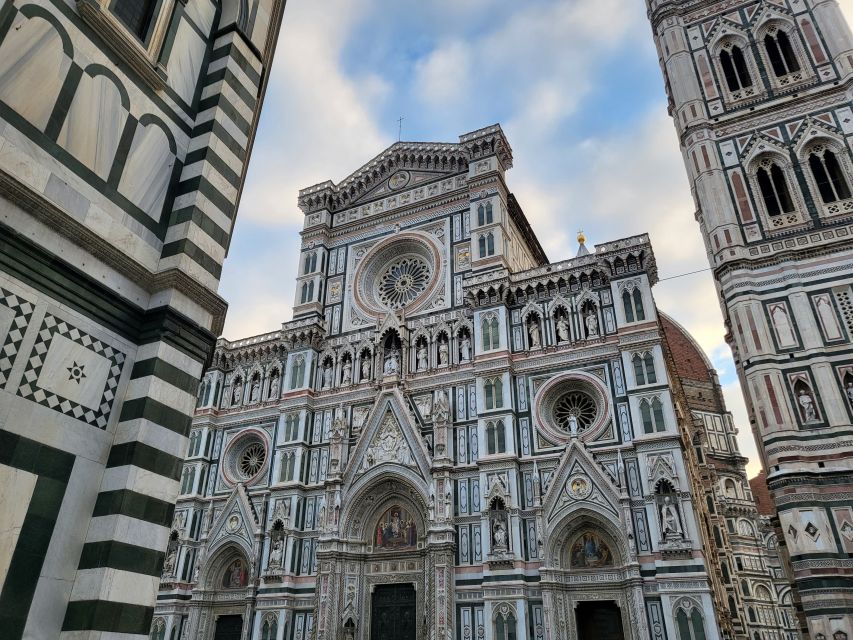
I would recommend this tour most strongly to readers who want a story attached to the city. Dante gives the route a firm purpose, and the medieval setting makes Florence feel different from the usual Renaissance-focused sightseeing plan.
It is also a good choice for someone visiting Florence for the first time. Duomo Square, Ponte Vecchio, Piazza della Signoria, and Santa Croce are major landmarks, but the guide changes how you read them. You begin to notice the older city beneath the famous facades.
Literature students and fans of the Divine Comedy will find the strongest reason to book. The stop connected with Beatrice, the references to Dante’s exile, and the final statue all add physical detail to a work that can otherwise feel distant.
Families may appreciate the short duration, though the subject is more discussion-based than hands-on. Children who enjoy stories, old buildings, and dramatic political rivalries may follow along well. Very young children who need frequent activity could find the lecture portions slow.
If you prefer to explore independently, you can still use the meeting area and route as a guide to the center. But you will get less value if you already know Dante’s Florence well and do not want interpretation.
Practical details before you book
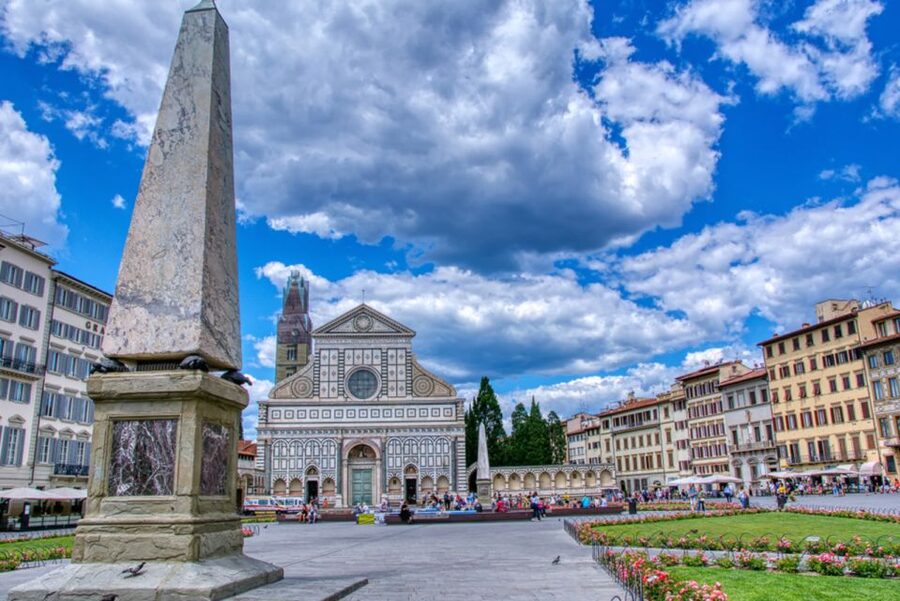
The tour lasts two hours, with starting times shown according to availability. The guide languages are Italian and English. Audio support is listed in English, Italian, and Spanish.
The meeting point is in front of the Loggia Bigallo Museum. The tour returns to that meeting point at the end, which makes planning the rest of your day easier.
The activity is wheelchair accessible. Because the route passes through historic central Florence, you may still want to confirm any specific mobility needs before booking, especially if you require detailed information about the walking surface or access to particular sites.
The overall published score is 4.5 from 36 ratings. The clearest strength is the guide. Oksana is praised for making the experience feel personal and for presenting medieval Florence alongside Dante’s life, rather than treating the poet as an isolated subject.
Should you book Dante’s Florence?
Book it if you want a short, thoughtful introduction to Florence through one of its most important poets. The route covers a lot in two hours, from the Baptistery and Dante’s neighborhood to Ponte Vecchio, Piazza della Signoria, and Santa Croce.
Skip it if your priority is entering museums, spending long periods at monuments, or seeing Florence without a literary focus. For $34, the tour offers good value through its storytelling and route, but its success depends heavily on the guide and your interest in Dante.
If the Divine Comedy is one of your reasons for coming to Florence, this is a particularly fitting way to begin. You will leave with more than a list of sights. You will have a clearer sense of the medieval city that shaped Dante’s life, work, and exile.
FAQ
How long is the Dante’s Florence walking tour?
The tour lasts two hours.
What is the price of the tour?
The price is $34 per person.
Where does the tour begin?
It begins in front of the Loggia Bigallo Museum.
Where does the tour finish?
The activity ends back at the meeting point.
Which languages are available for the live guide?
The live guide is available in Italian and English.
Is an audio guide included?
Audio support is included in English, Italian, and Spanish.
Are earphones provided?
Earphones are provided only for groups with more than 15 participants.
Is the tour wheelchair accessible?
Yes, the activity is listed as wheelchair accessible.
Can I cancel the tour for a full refund?
Yes. You can cancel up to 24 hours in advance for a full refund.
Can I reserve the tour and pay later?
Yes. You can reserve your place and pay later, allowing you to keep your plans flexible.
Latest additions around Florence
- Florence: Cathedral Tour & Brunelleschi’s Dome Climb Ticket★ 5.0 · 3 reviews
- Palatina Gallery and Pitti Guided Tour in Florence★ 5.0 · 3 reviews
- Florence Uffizi Gallery Skip-the-line Tour w Art Historian Guide★ 5.0 · 3 reviews
- Private Tour: Pisa and Lucca from Florence★ 5.0 · 3 reviews
- San Gimignano Bike Tour (SOFT)★ 4.5 · 3 reviews
- Florence: Tour of Florence by rickshaw★ 5.0 · 3 reviews
- Center of Florence by golf cart★ 5.0 · 3 reviews
- From Firenze | Chianti day tour in a classic car★ 5.0 · 3 reviews
Florence Walking Tours, compared.

Skip the line: Uffizi and Accademia Small Group Walking Tour
Read our review →
Renaissance and Medici Tales Guided Walking Tour
Read our review →
Skip-the-Line Florence Highlights and David Walking Tour
Read our review →
Dark Mysteries and Legends Guided Walking Tour
Read our review →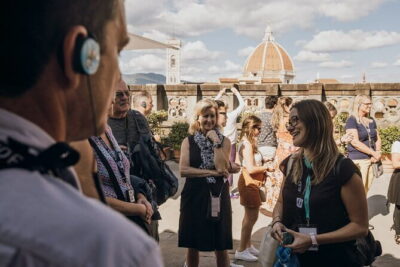
Florence in a Day: Michelangelo’s David, Uffizi and Guided City Walking Tour
Read our review →Browse the lists this tour appears in