
Reviewed · FLORENCE WALKING TOURS
Florence: Heart of Florence Guided Walking Tour
Florence’s historic center is compact, but its streets are packed with stories. This walk links the Medici family district, the Duomo, the city’s old political center, and Ponte Vecchio in one useful route. I like the nose-rubbing tradition at the Porcellino and the clear progression from Medici power to religious grandeur and civic spectacle.
I also like that the tour gives you Florence’s main landmarks before you tackle museums on your own. The main caution is guide quality: some guides have been praised for generous explanations, while one was criticized for speaking too quickly and another guest found the meeting-point service poorly handled.
In This Review
- Key points to know before you book
- Why this walk is useful on a first day in Florence
- Starting among the Medici at San Lorenzo
- Piazza del Duomo and Florence’s great religious symbols
- Via Calzaioli and the small details between landmarks
- Piazza Signoria, an open-air collection of sculpture
- Ponte Vecchio and the final walk to the Arno
- How much the guide affects your experience
- Timing, language, and the practical value of $27
- Who should book this Florence walk?
- Should you book the Heart of Florence walk?
- FAQ
- How long does the Florence walking tour last?
- What sights are included on the route?
- Does the tour include entry inside the Duomo?
- What languages are available?
- Are headphones provided?
- What should I wear?
- Can I cancel or pay later?
Key points to know before you book
- The route covers Florence’s essential core: San Lorenzo, the Duomo, Via Calzaioli, Piazza Signoria, and Ponte Vecchio.
- Brunelleschi’s dome is viewed from outside: This is a city walking tour, not a climb or interior Duomo visit.
- The Medici connection gives the walk a strong storyline: You begin around their former homes, chapels, and church.
- The Porcellino adds a bit of local ritual: Rub the bronze boar’s nose for luck at the Mercato della Paglia.
- Guide performance can shape the experience: Strong guides have earned praise for clear, generous commentary, but communication has not been consistent for everyone.
- Comfortable shoes matter: Expect roughly 1.5 to 2.5 hours on foot, with the meeting point dependent on the option you choose.
Why this walk is useful on a first day in Florence
Florence rewards wandering, but a first walk can also feel like a puzzle. The Duomo is easy to find, yet the reasons behind the Medici palaces, churches, courtyards, statues, and bridges are less obvious when you pass them alone.
This tour gives you a basic map of the old center. You move from the Medici quarter to the religious heart, then along the main shopping street to the political center and the Arno. I like that shape because it lets you understand Florence as a city of competing forces: banking and family power, religion, government, art, and trade.
At $27 per person, the price is modest for a guided introduction lasting between 1.5 and 2.5 hours. The value depends mainly on the guide. A good one can turn a quick look at a building into a story you remember for the rest of your stay. A rushed or hard-to-follow guide makes the same route feel like a list of stops.
The tour has a 4 out of 5 average rating from 81 ratings. That is a solid but not perfect result, and the written feedback explains the gap. Guests have praised guides who offered plenty of information, a comfortable walking pace, and suggestions for other sights. But there have also been complaints about unclear speech, limited commentary between stops, late staff at the meeting point, and one missed departure.
More walking routes in Florence:
- Florence: Guided Walking Tour
★ 4.5 · 3,334 reviews - Skip the line: Uffizi and Accademia Small Group Walking Tour
★ 4.5 · 3,135 reviews - Florence: Guided Walking Tour
★ 4.6 · 1,602 reviews
Starting among the Medici at San Lorenzo
The walk begins in Florence’s old Medici district, around San Lorenzo. This is a smart starting point because the Medici story helps explain much of what you will see later. The family was not simply wealthy. Its influence reached into finance, politics, religion, and the arts, and its presence remains stamped across this part of town.
You pass the Palazzo Medici Riccardi, the family residence associated with the early Medici power base. The streets here are narrow and close-set, a useful contrast with the broad piazzas that come later. The guide may point out the stones and buildings as physical evidence of how the family shaped the city.
The Medici Chapels and the Church of San Lorenzo are also part of this opening section. The itinerary presents these places from the outside as part of the walk’s larger route, so you should not book this experience expecting a detailed interior visit to every church or chapel.
I like beginning here rather than rushing straight to the Duomo. It gives the cathedral a better setting. You first see how a powerful family lived and worshipped, then move toward the grand religious center that dominates Florence’s skyline.
Piazza del Duomo and Florence’s great religious symbols
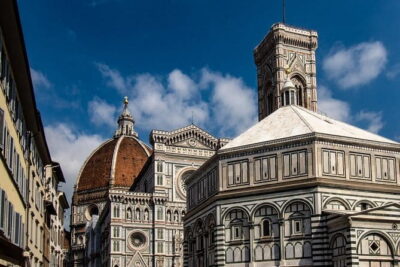
From San Lorenzo, the route continues to Piazza del Duomo. This is the visual high point of the first half of the walk. The cathedral, Brunelleschi’s dome, Giotto’s bell tower, and the Baptistery of San Giovanni form one of Europe’s most recognizable city views.
The guide explains the main buildings and their place in Florence’s story. You will see Brunelleschi’s famous dome from ground level, but this tour does not include a climb. You also see the Baptistery and the Gates of Paradise, the celebrated doors facing the cathedral.
That distinction matters when you book. If you want to enter the cathedral, climb the dome, or spend time studying the doors up close, you need a separate ticket or a different Duomo experience. This walk is about orientation and context. It shows you how the buildings relate to one another and gives you a starting point for a later visit.
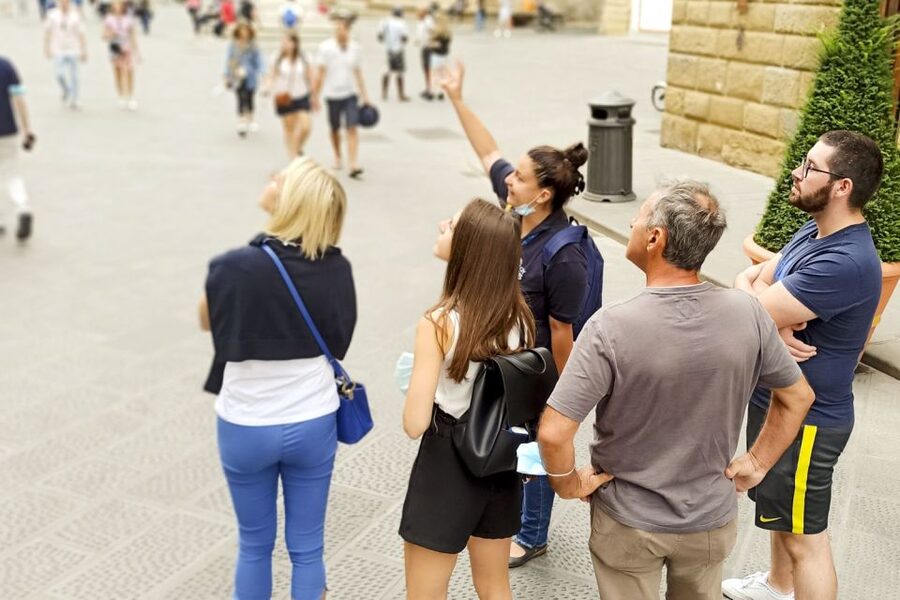
The piazza can be crowded and noisy, especially at busy times. That makes a guide’s voice and pace important. Headphones are supplied for groups of more than 10 participants, which should make the explanations easier to follow in a packed square. Smaller groups may not receive that equipment.
The tour can sometimes be conducted in two languages at once. From April through October, the listed format is monolingual, which should help keep the presentation more focused. English and Spanish are the available tour languages.
Via Calzaioli and the small details between landmarks
After the cathedral area, you walk along Via Calzaioli. This busy central street connects the Duomo with Piazza della Signoria, and it is one of the most useful links in the old city.
The walk is not only about major monuments. Along the way, the guide points out Orsanmichele Church, a building with an unusual civic and religious role. The stop helps show how Florence’s commercial streets and religious life overlapped.
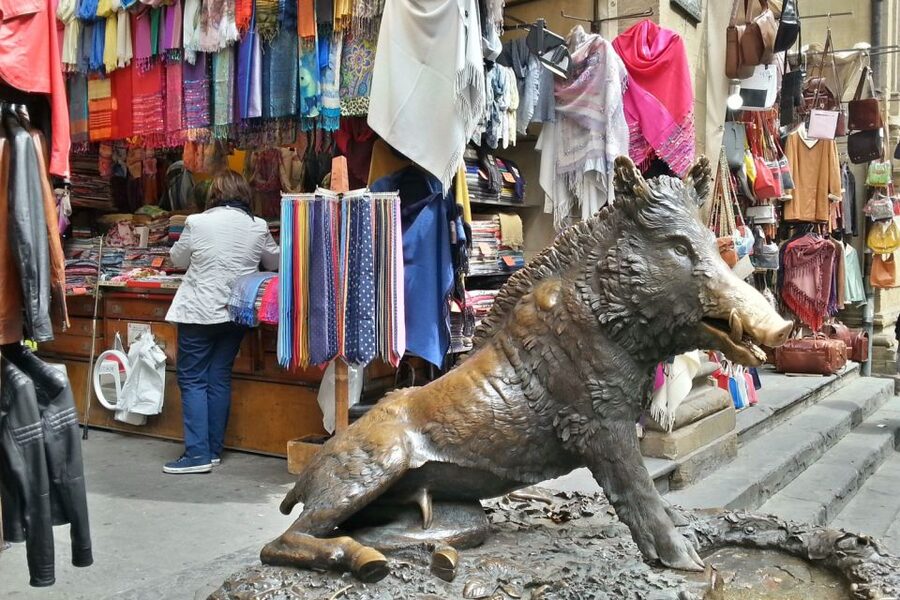
You also reach the Mercato della Paglia, or Straw Market, where the bronze Porcellino waits near the market area. The familiar custom is simple: rub the boar’s nose for good luck. It is a small moment, but it gives the walk a bit of local character amid all the grand architecture.
I like this middle section because it breaks up the monumental sights. Florence is not just domes and palaces. It is also narrow lanes, market corners, shopfronts, and small public traditions. You get a better feel for the city by walking between the headline attractions instead of teleporting from one ticketed entrance to another.
The drawback is that Via Calzaioli is a busy public street rather than a quiet museum setting. You may need to stay close to the guide, and you should expect a moving city around you. Comfortable shoes are essential, since the tour keeps you on foot for much of the time.
More Florence options worth a look before you decide
- The Best tour in Florence: Renaissance & Medici Tales – guided by a STORYTELLER
★ 5.0 · 12,316 reviews - Florence: Duomo Cathedral Guided Tour
★ 3.9 · 5,970 reviews - Uffizi Gallery Small Group Tour with Guide
★ 4.5 · 4,923 reviews - Florence: Accademia Gallery Guided Tour
★ 4.6 · 4,156 reviews
Piazza Signoria, an open-air collection of sculpture
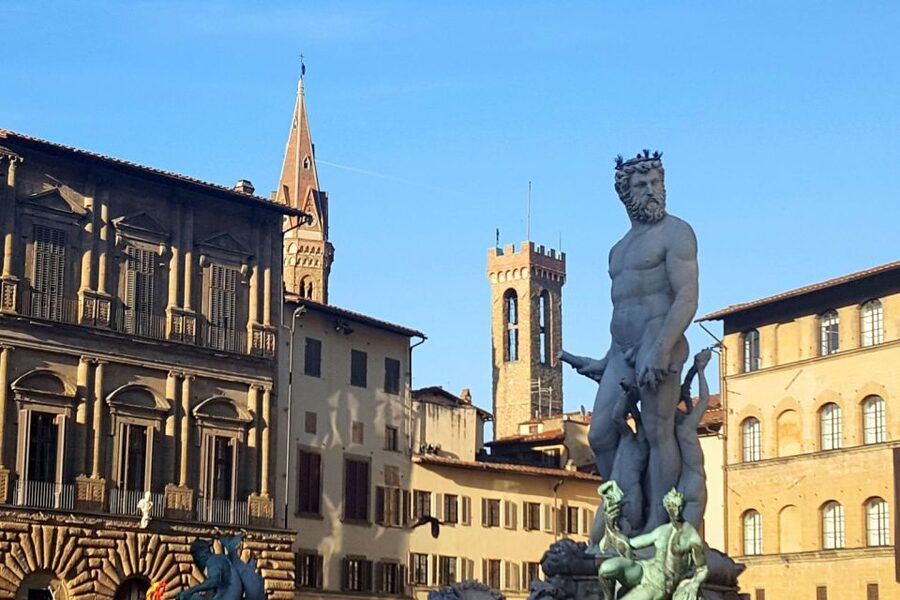
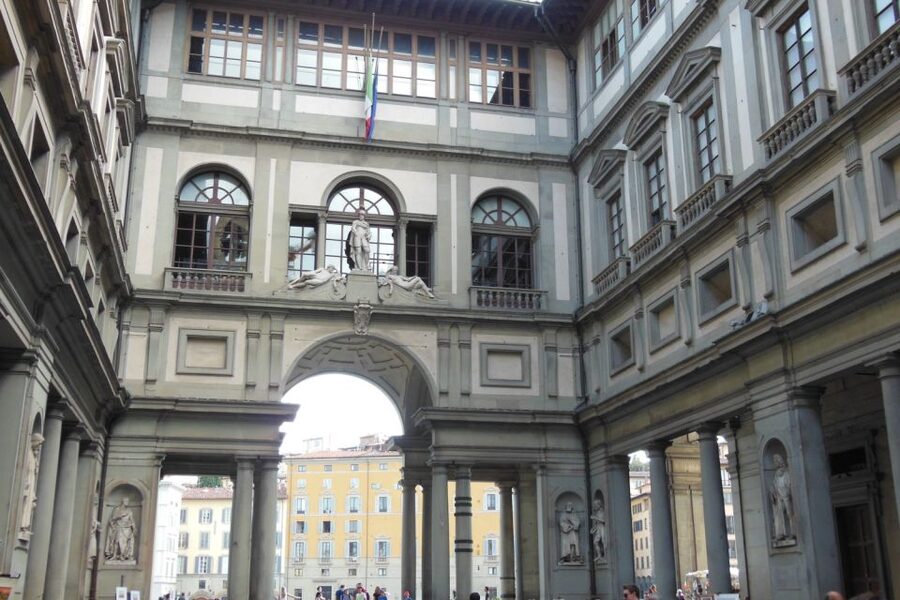
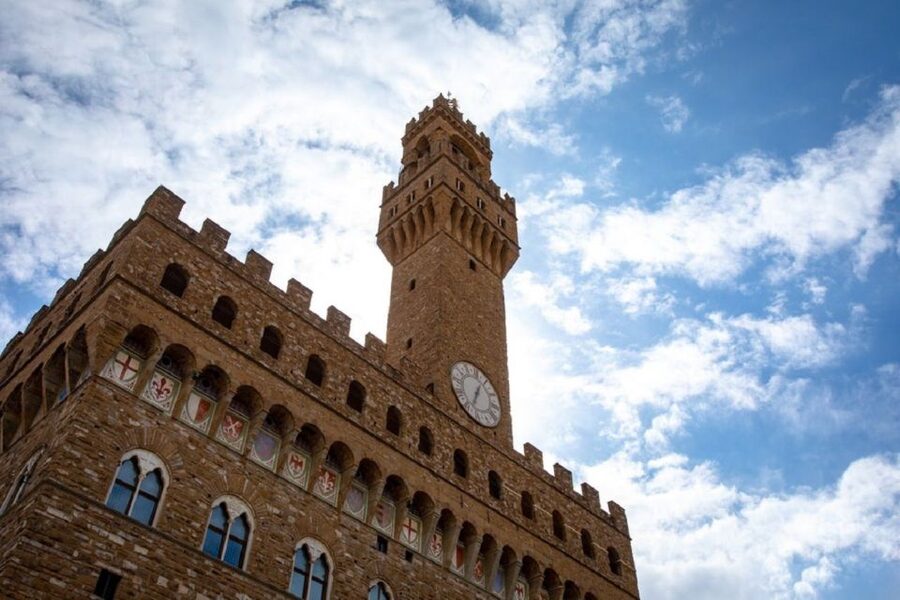
The route reaches Piazza della Signoria, Florence’s historic political center. This square is effectively an outdoor display of sculpture, with the Fountain of Neptune, the Loggia dei Lanzi, and Palazzo Vecchio gathered around the same public space.
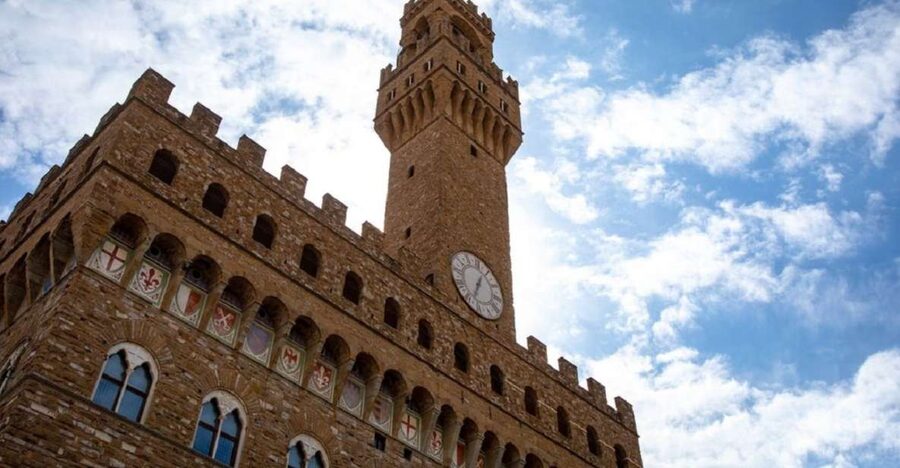
Here the tour shifts from religion and family influence to government and civic power. Palazzo Vecchio, with Arnolfo’s tower, gives the piazza its commanding presence. The guide explains what you are seeing and how the square functioned as a stage for public life.
The Loggia dei Lanzi is especially useful on a walking tour because you can see its sculpture collection without entering a museum. The Fountain of Neptune adds another major landmark, although the square can be crowded and the surrounding activity may compete with the guide’s voice.
You also explore the Michelozzo courtyard at Palazzo Vecchio. The exact order of the stops can change, so this part may not appear in precisely the sequence described here. Still, the core idea remains the same: you move through Florence’s political center and see how architecture, sculpture, and public space worked together.
The tour does not present a full interior visit to Palazzo Vecchio. Think of it as an informed look at the building and its setting, with enough background to help you decide if you want to return for a longer visit.
Ponte Vecchio and the final walk to the Arno
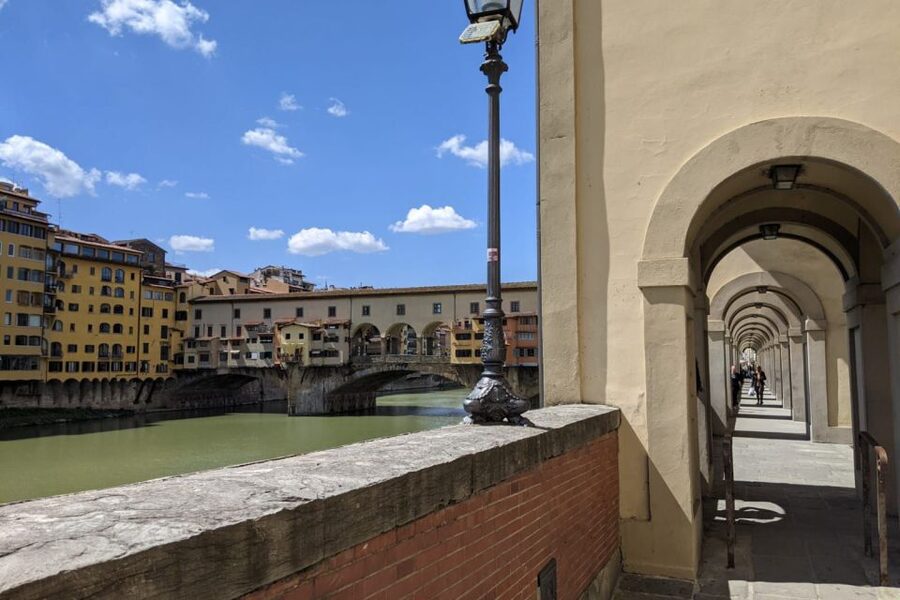
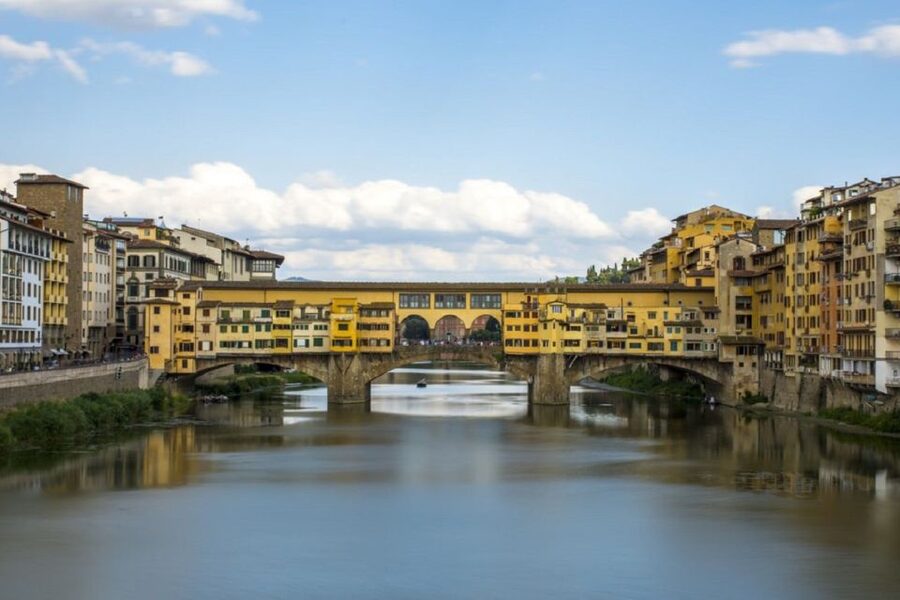
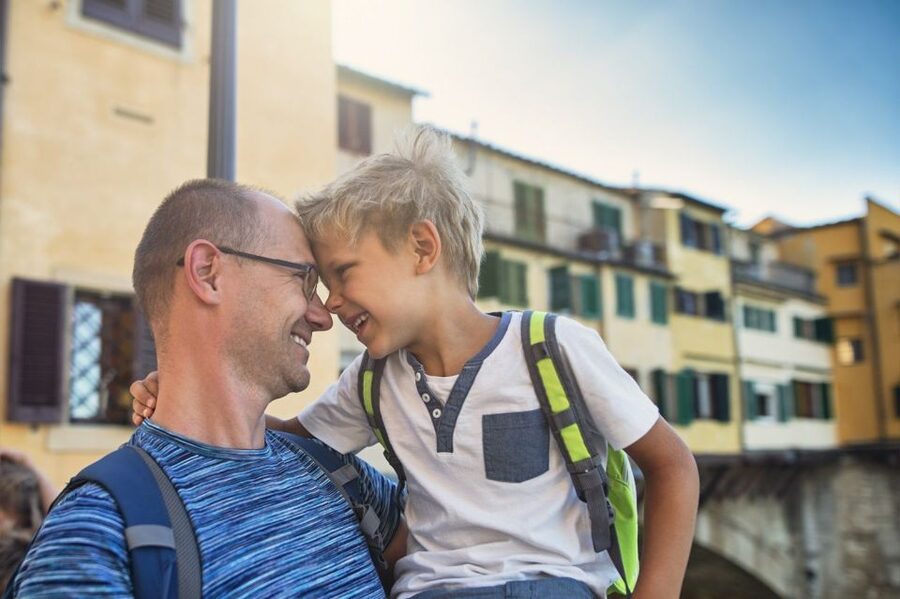
The tour continues toward Ponte Vecchio, Florence’s oldest bridge. Its jewelry shops are the feature most people notice first, but the bridge also works as a final link between the city’s historic center and the neighborhoods across the Arno.
After the dense streets and formal piazzas, the bridge gives the walk a natural finish. You see the shop-lined span and the river setting, then leave with a practical sense of how the main center fits together.
Ponte Vecchio is usually crowded, so keep your belongings close and stay aware of the group. The experience is a walking overview rather than a shopping tour, and the jewelry shops are part of the bridge’s character, not a scheduled retail stop.
I find the route’s ending effective because it finishes with a landmark that feels different from the Duomo and Palazzo Vecchio. You have moved through Florence’s religious and political centers and ended at one of its oldest commercial crossings.
How much the guide affects your experience
This is the most important variable. One guide, praised as exceptional, gave a large amount of information during the walk. Another highly rated guide provided a good pace and useful suggestions for other places to visit. Those are exactly the qualities I want from a first-day city walk: clear facts, steady movement, and advice that helps shape the rest of my time.
The feedback is not uniformly positive. One guest found the guide’s speech slow and difficult to follow. Another felt the guide spoke quickly, did not explain much while moving between venues, and showed less engagement than other guides. A separate complaint concerned a representative arriving late at the meeting point and handling the disagreement poorly.
There was also one serious logistical failure involving a guest who reached the meeting point but found no guide and waited without receiving contact. This appears to be an exception, but it is worth taking seriously because the meeting point can vary by booking option.
You can improve your odds by checking the exact meeting instructions carefully and arriving early. At the start, stay alert for multilingual assistance and identify the guide before the group moves. If the tour is held in two languages, expect the commentary to take longer and possibly feel less smooth than a monolingual walk.
Greta is one guide named in the feedback. Her tour was described as acceptable but too fast and not especially engaging between sights. Other unnamed guides received much stronger praise, so the experience appears to depend on the individual assigned that day.
Timing, language, and the practical value of $27
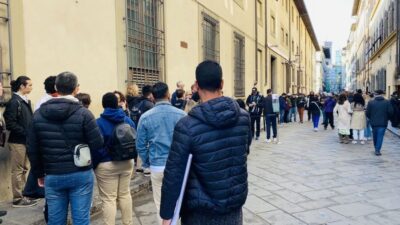
The advertised duration ranges from 1.5 to 2.5 hours. That is a meaningful difference when planning your day. A shorter version works well before lunch or before a museum reservation. A longer version gives the guide more room for explanations and pauses.
The tour is offered in English and Spanish. From April through October, it is listed as monolingual. At other times, the tour may sometimes use two languages at once. If you care strongly about hearing every detail in one language, confirm the option when booking.
At $27, you are paying for a guided introduction rather than admission to Florence’s major museums. There is no promise here of entry to the Uffizi, an interior Duomo visit, or a climb up Brunelleschi’s dome. The price is fair if you use the walk to plan those visits and understand the city before going inside.
Headphones are included for groups larger than 10. The meeting point changes according to the option selected, so do not assume every departure begins at the same location. Free cancellation is available up to 24 hours before the start, and you can reserve now and pay later, which helps if your Florence schedule is still shifting.
There is also an optional self-guided mobile city guide. If selected, it gives you something to use after the live walk, though the central value of this booking remains the in-person route and guide.
Who should book this Florence walk?
I would choose this tour for a first visit, especially if you want the city’s main landmarks explained in one sitting. It suits you if you prefer a moderate walking introduction before deciding which churches, museums, or palaces deserve more of your time.
It is also a good fit for visitors who like stories about power and place. The route makes sense as a sequence: Medici residences and chapels, the religious center, the commercial street, the civic square, and the bridge.
Families and mixed-age groups may appreciate the manageable length, although everyone should wear comfortable shoes. The Porcellino gives younger walkers a simple tradition to remember, while the sculpture-filled Piazza Signoria provides plenty to see without another admission fee.
I would be more cautious if your main goal is detailed art history or interior access. This is not a substitute for the Uffizi, a full Palazzo Vecchio visit, or a guided Duomo climb. It is the framework that helps those experiences make more sense.
You can also pair it with the optional combo arrangement, which adds a guided Uffizi visit in the morning and a guided Duomo visit in the early afternoon. That makes for a packed day, so consider your energy and museum interests before choosing the combination.
Should you book the Heart of Florence walk?
Book it if you want an affordable, well-planned introduction to Florence’s central sights and you value having the city’s major districts explained in order. The Medici quarter, Duomo, Via Calzaioli, Piazza Signoria, and Ponte Vecchio make a strong route, and the 1.5 to 2.5-hour length fits neatly into most itineraries.
Go in with realistic expectations. You are paying for outside views and guided orientation, not full access to Florence’s major interiors. The guide can make the difference between a memorable city lesson and a rushed march, so check the language and option details carefully, arrive early at the correct meeting point, and keep the next part of your day flexible.
FAQ
How long does the Florence walking tour last?
The tour lasts between 1.5 and 2.5 hours. Starting times vary, so check availability for the date you want.
What sights are included on the route?
The route includes the San Lorenzo and Medici district, Palazzo Medici Riccardi, the Medici Chapels and Church, Piazza del Duomo, Brunelleschi’s dome, the Baptistery of San Giovanni, the Gates of Paradise, Via Calzaioli, Orsanmichele Church, the Mercato della Paglia, the Porcellino, Piazza Signoria, the Fountain of Neptune, the Loggia dei Lanzi, Palazzo Vecchio’s Arnolfo tower, the Michelozzo courtyard, and Ponte Vecchio.
Does the tour include entry inside the Duomo?
The information provided describes a guided walking tour and does not include a guided interior visit or dome climb. The optional combo tour includes a separate guided Duomo visit.
What languages are available?
Live tours are available in English and Spanish. From April through October, the tour is monolingual. At times, the tour may be provided in two languages together.
Are headphones provided?
Headphones are included for groups with more than 10 participants.
What should I wear?
Wear comfortable shoes for the walking route. During visits to places of worship, you must follow the required dress code.
Can I cancel or pay later?
You can cancel up to 24 hours before the tour for a full refund. The reserve-now, pay-later option lets you hold a place without paying immediately.
Latest additions around Florence
- Florence: Cathedral Tour & Brunelleschi’s Dome Climb Ticket★ 5.0 · 3 reviews
- Palatina Gallery and Pitti Guided Tour in Florence★ 5.0 · 3 reviews
- San Gimignano Bike Tour (SOFT)★ 4.5 · 3 reviews
- Florence Uffizi Gallery Skip-the-line Tour w Art Historian Guide★ 5.0 · 3 reviews
- Private Tour: Pisa and Lucca from Florence★ 5.0 · 3 reviews
- Florence: Tour of Florence by rickshaw★ 5.0 · 3 reviews
- Center of Florence by golf cart★ 5.0 · 3 reviews
- From Firenze | Chianti day tour in a classic car★ 5.0 · 3 reviews
Florence Walking Tours, compared.

Skip the line: Uffizi and Accademia Small Group Walking Tour
Read our review →
Renaissance and Medici Tales Guided Walking Tour
Read our review →
Skip-the-Line Florence Highlights and David Walking Tour
Read our review →
Dark Mysteries and Legends Guided Walking Tour
Read our review →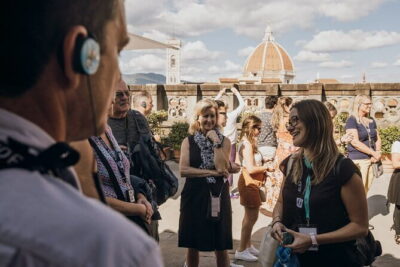
Florence in a Day: Michelangelo’s David, Uffizi and Guided City Walking Tour
Read our review →Browse the lists this tour appears in