
Reviewed · UFFIZI GALLERY TOURS
Uffizi Gallery Skip The Line Ticket or Guided Tour Options
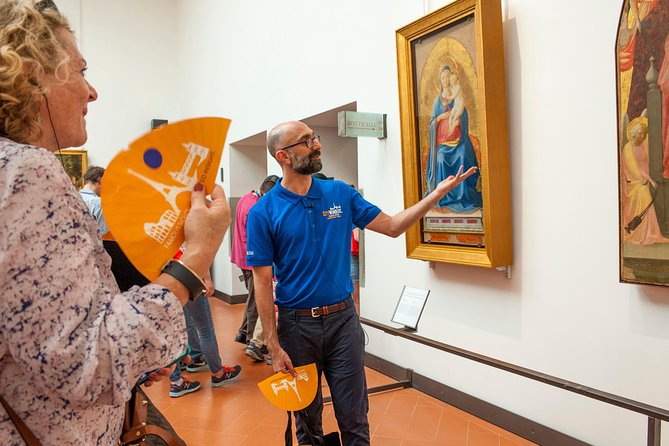
The Uffizi is packed with masterpieces, but its size can work against you. This 90-minute small-group tour takes you straight to the Renaissance rooms, where Botticelli’s Birth of Venus and Primavera, Michelangelo’s Doni Tondo, and Leonardo’s Annunciation receive the attention they deserve. You finish with views of the Ponte Vecchio and Arno River from the rooftop terrace.
I like the priority entrance, especially in Florence’s busiest months, and the small group of no more than nine people. I also like the focus: you get a clear introduction instead of wandering through 1,500 works without knowing what matters most. The main drawback is finding the meeting point, since construction and crowds around the statues can make the start confusing.
In This Review
- Key points to know before booking
- Why the Uffizi needs a plan
- Meeting at Piazzale degli Uffizi
- Priority entry and the ticket-only choice
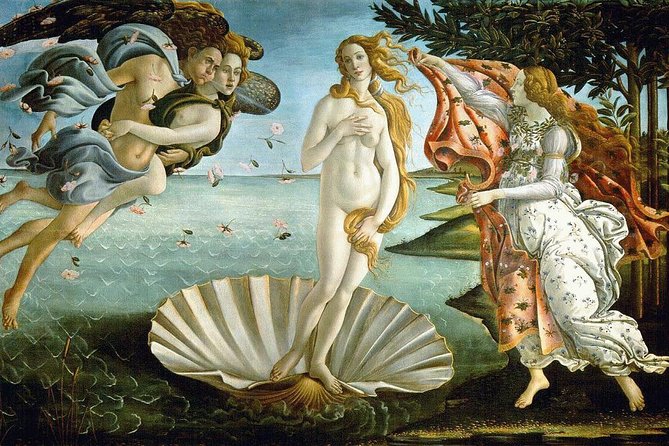
- Botticelli’s Birth of Venus and Primavera
- Leonardo, Michelangelo, and Raphael
- The Medici story behind the art
- Seven flights of stairs and the rooftop terrace
- Staying after the 90-minute tour
- Who will get the most from this visit
- What can go wrong, and how to avoid it
- Should you book the Uffizi priority tour?
- FAQ
- Where does the Uffizi Gallery experience begin?
- How long does the experience last?
- What is included with the guided option?
- Is a guide included with the ticket-only option?
- Can I stay inside the Uffizi after the guided visit?
- What works of art are featured?
- Is the rooftop terrace included?
- What is the cancellation policy?
Key points to know before booking
- The guided option focuses on Renaissance highlights: Botticelli, Leonardo da Vinci, Michelangelo, Raphael, and the Medici story behind the collection.
- Groups are limited to nine people: This is small enough for questions and easier listening than a large museum herd.
- The rooftop terrace is part of the route: You get views across the Arno and toward the Ponte Vecchio.
- You can stay inside after the tour: The visit ends in the Uffizi, so you may continue looking at the collection on your own.
- The ticket-only option is different: It includes priority entry but not a guide, headsets, or commentary.
- Arrive early and follow the meeting instructions closely: The exact gathering spot can be hard to spot near the Galileo statues.
Why the Uffizi needs a plan
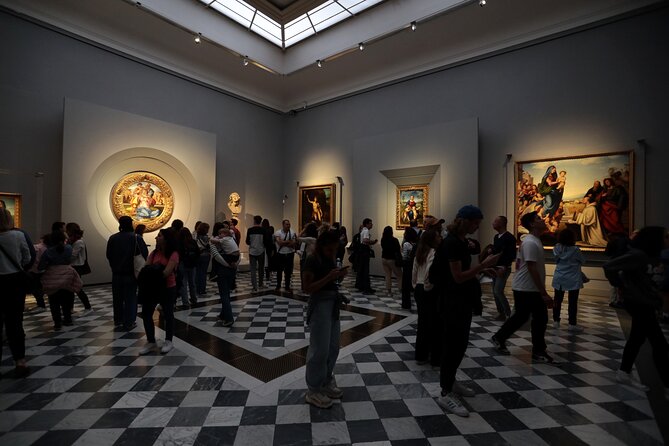
The Uffizi is not a small, tidy gallery that you can understand in one quick circuit. It contains more than 1,500 works dating from ancient Greece through the 18th century, with the Renaissance collection as its main attraction.
The building itself began life in the 16th century. Giorgio Vasari designed it as offices for Florence’s government, which explains the long, orderly structure beside the Arno. The Medici family later used the building to display its art collection, and the Uffizi became a public museum in 1769.
That background matters because the museum is not simply a room full of famous paintings. It reflects the power of Florence’s ruling family, the ambitions of wealthy patrons, and the changing way artists depicted religion, myth, people, and space.
You can certainly visit alone. But if you do not already know the layout, it is easy to spend too long on minor works and reach the major rooms tired or rushed. The guided option gives you a route through the essential Renaissance material, then leaves you inside the museum for further exploring.
More ways into the Uffizi:
- Florence: Skip-The-Line Uffizi Gallery Timed Entry Ticket
★ 4.5 · 27,832 reviews - Florence: Uffizi Priority Ticket & Masterpieces Audio App
★ 4.2 · 6,402 reviews - Florence: Skip-the-Line Uffizi Small Group Tour
★ 4.6 · 5,926 reviews
Meeting at Piazzale degli Uffizi
The tour begins outside the Uffizi at Piazzale degli Uffizi in central Florence. The area is close to public transportation and easy to reach from the historic center, but the meeting point deserves more care than the simple address suggests.
The guide may gather near the Galileo statues. This courtyard contains many statues, and restoration work or temporary barriers can block your view. A street artist, other groups, and general museum traffic can make the guide difficult to identify.
I would arrive at least 20 to 30 minutes early, then look carefully around the statue area rather than relying only on a map pin. One of the most useful practical lessons here is simple: know the exact meeting instructions before leaving your hotel, keep your phone charged, and do not wait until the final minute to search.
Punctuality matters. The group enters together with priority access, and a late arrival can create stress for everyone. The start has caused frustration for some people, but once the guide and group are together, the museum portion is much stronger.
Priority entry and the ticket-only choice
The experience is sold in two forms. The guided option includes priority entry, an English-speaking guide, a group of no more than nine people, and headsets so you can hear the commentary in crowded rooms.
The ticket-only option includes the skip-the-line entrance but no guided commentary. That can suit you if you already understand Renaissance art, prefer a quiet visit, or want to move at your own speed from the start.
For most first-time visitors, I think the guide offers better value. The Uffizi is filled with names that appear in every Florence art book, but recognition is not the same as understanding. A guide can point out composition, color, gesture, symbolism, and the artistic changes taking place from one room to the next.
The price is listed at $48.77 per person. That is more than a bare admission ticket, so the value depends on how much you want from the visit. If your goal is simply to enter and look around alone, choose the ticket-only option. If you want to use a short Florence stay well, the guide and priority access can justify the extra cost.
The group discount feature may also help if you are booking for several people, though the exact savings depend on the booking details. Mobile ticketing makes the process easier, but make sure you can open your ticket on your phone. A failed e-ticket caused one person to miss entry, which is a sharp reminder to download or check the ticket before reaching the museum.
Botticelli’s Birth of Venus and Primavera
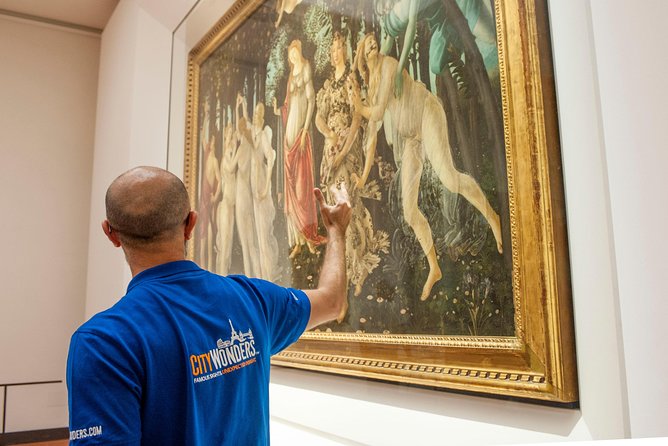
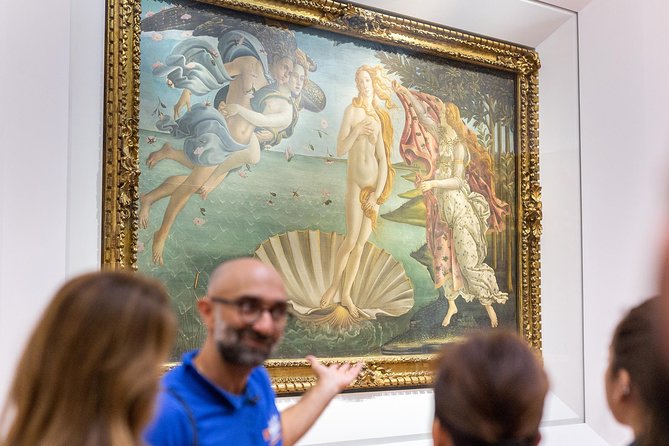
The Botticelli Room is the emotional center of this visit. Here you see The Birth of Venus and Primavera, two works that make the Uffizi a required stop for many people coming to Florence.
The guide’s job is not just to point at the paintings. You should expect an explanation of the arrangement of figures, the use of bright color, and the different ways these pictures have been read over time. That helps you see why the paintings feel so carefully designed, even when their mythological subjects seem light and graceful.
The Birth of Venus is instantly recognizable, which can make it easy to glance at it and move on. A good explanation slows you down for the details. You can look at Venus’s pose, the figures around her, and the way the scene balances movement with stillness.
Primavera asks for a different kind of attention. Its crowded group of figures and layered meaning can seem confusing without context. The guide helps turn it from a pretty, busy painting into a work shaped by myth, patronage, and Renaissance ideas.
This is also where the small group helps. Nine people or fewer is still a group, but it is far easier to stay near the guide and hear the explanation than it would be with several dozen people.
More skip-the-line entries:
- Florence: Timed Entrance Ticket to Michelangelo’s David
★ 4.6 · 16,983 reviews - Florence: Michelangelo’s David Skip-the-Line Entry Ticket
★ 4.5 · 12,764 reviews - Florence: Leonardo Interactive Museum Entry Ticket
★ 4.5 · 11,763 reviews - Florence: Hop-on Hop-off Bus Tour: 24, 48 or 72-Hour Ticket
★ 4.0 · 6,283 reviews
Leonardo, Michelangelo, and Raphael
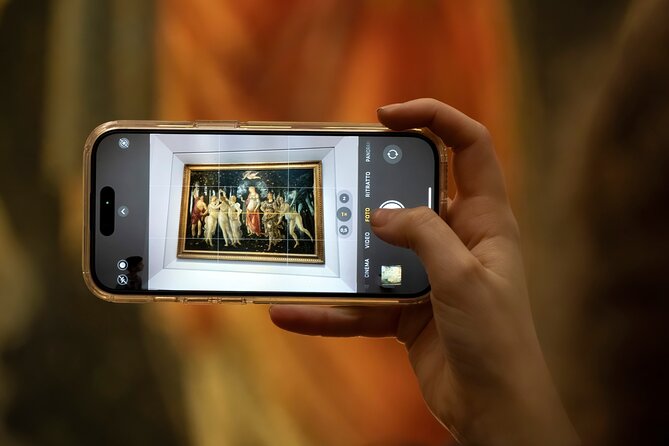
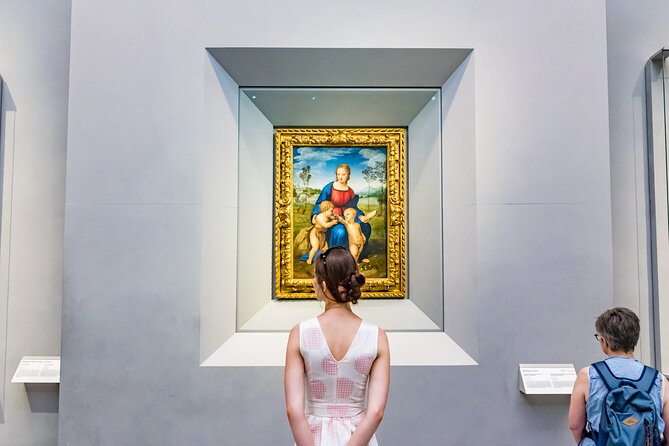
The route continues to other major Renaissance works, including Leonardo da Vinci’s Annunciation and Michelangelo’s Doni Tondo. You also see works by Raphael, giving you a useful comparison between artists with different approaches to space, figures, and religious subjects.
Leonardo’s Annunciation rewards close looking. The guide can direct your eye toward the arrangement of the figures, the setting, and the features that reveal Leonardo’s early artistic concerns. Without a guide, you might recognize the title but miss the details that make the picture worth several minutes of attention.
Michelangelo’s Doni Tondo offers another change in mood and technique. It is a rare example of a panel painting by the artist, and its powerful figures look very different from Botticelli’s elegant line. Even a short explanation can help you notice how the bodies, colors, and circular format shape the work.
The value of the route is the sequence. You do not see isolated famous objects with no connection. You move through a story about the development of Renaissance art, from earlier traditions toward greater attention to anatomy, perspective, natural movement, and individual expression.
The guides praised most warmly include Polina, Annette, Valentina, Angela, Sarah, and Stephan. Their strengths vary in style, but the consistent qualities to look for are clear English, an engaging pace, and the ability to explain without turning the visit into a lecture. Polina is especially well suited to beginners because her approach combines information with humor and keeps the museum from feeling dry.
The Medici story behind the art
The Uffizi makes more sense when you connect the paintings to the people who paid for them. The Medici family collected art, supported artists, and helped shape Florence’s cultural life. Their influence is part of the reason so many important works ended up in one institution.
A guide brings that patronage into the visit. You hear not only about artists and techniques, but also about the people who commissioned the works and the purposes the paintings served.
This is one of the strongest reasons to choose the guided option. You are not expected to arrive with a degree in art history. The guide supplies enough context to make the rooms easier to read, while keeping the focus on the pictures in front of you.
The best commentary also knows when to move on. The Uffizi can take days to study properly, but a short tour cannot cover everything. The guides generally concentrate on the most important works, giving you a useful first pass rather than pretending to explain every object in the building.
Seven flights of stairs and the rooftop terrace
The visit includes a stop at the rooftop terrace, where you can look toward the Ponte Vecchio and the Arno River. After the concentrated museum route, this outdoor pause gives your eyes a break and adds a fine sense of place.
The views are not a separate sightseeing tour, but they are a worthwhile part of the experience. From above, you can connect the gallery to the city around it and see the riverfront from a different angle.
Be prepared for stairs. One person described climbing seven flights and wished they had chosen the elevator. The tour information says most people can participate, but this is still something to consider if stairs are difficult for you. You may find the museum tiring even without the climb, since the visit involves standing and walking through a large building.
The guide may also move at a steady pace because the rooms are busy. Stay close, especially in crowded areas. It is possible to lose sight of the guide if you stop behind a group or pause too long at a painting.
Staying after the 90-minute tour
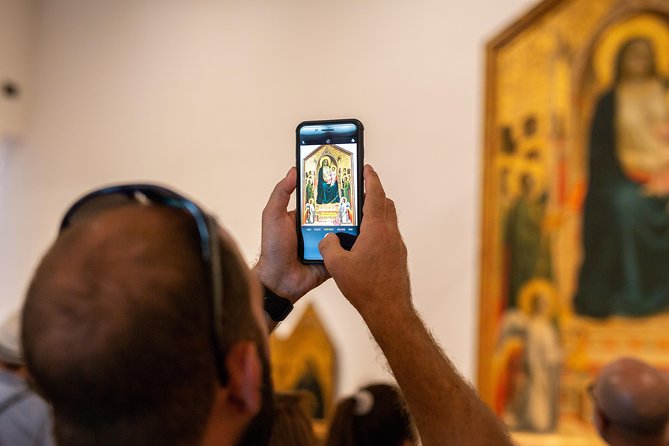
The official duration is about 1 hour and 30 minutes, though some guided visits have run closer to two hours. The route ends inside the Uffizi, not outside the museum, so you can continue on your own after the formal tour.
That is a major advantage. The guided visit gives you a framework, but you are not forced to leave just as you begin to get oriented. You can return to a favorite painting, visit rooms not covered by the guide, or simply wander until your attention gives out.
I would avoid scheduling a tight lunch reservation immediately after the tour. Museum timing can shift slightly, and you may want extra time for the rooms beyond the main Renaissance route.
The 90-minute format suits people who want a focused introduction. It may feel too short if you hope to study a large part of the collection in detail. Think of it as a guided starting point, not a complete Uffizi day.
Who will get the most from this visit
I recommend the guided option to first-time Uffizi visitors, people with limited time in Florence, and anyone who finds large museums hard to navigate. It is also a good fit for art beginners. The explanations can give you enough footing to enjoy the paintings without requiring prior study.
Families and mixed-interest groups may appreciate the short route and clear focus. A full museum visit can test the patience of people who are not passionate about art, while a guided selection of famous works gives everyone a manageable goal.
The ticket-only option suits repeat visitors or independent museumgoers who already know which rooms they want to see. It also gives you freedom to set your own pace, though you lose the stories, comparisons, and explanations that make the guided visit more useful for many people.
The experience is conducted in English. Headsets are included with the guided option, which matters when other groups are speaking nearby or the room is crowded.
What can go wrong, and how to avoid it
The main weakness is not the art. It is the meeting process. The gathering area can be unclear, especially while construction affects the piazzale. Do not assume the map pin will place you directly beside the guide.
The ticket-only option also needs careful attention. If you book that version, there may be no guide waiting to lead you through the museum. Confirm which option you selected before the day of your visit.
Use the mobile ticket, but open it in advance. If your phone cannot display the ticket, entry may become difficult. Also remember that free cancellation applies only when you cancel at least 24 hours before the start time. Changes or cancellations within 24 hours are not refunded.
The experience has an average rating of 4.5 from 966 reviews, which fits the overall picture: excellent art access and strong guide performances, with occasional trouble at the meeting point or with digital tickets.
Should you book the Uffizi priority tour?
Book the guided option if you want the famous Renaissance works explained in a logical order and you value your time in Florence. The small group, headsets, priority entrance, rooftop views, and time to continue alone afterward make this a practical introduction to one of Italy’s great museums.
Choose ticket-only entry if you prefer independence or already know the Uffizi well. Either way, arrive early, check your mobile ticket, and treat the rooftop terrace as a pleasant extra rather than the main reason to go.
For a first visit, I would pay for the guide. Botticelli, Leonardo, Michelangelo, and Raphael deserve more than a quick photograph, and a well-paced explanation can turn a crowded museum stop into one of your clearest memories of Florence.
FAQ
Where does the Uffizi Gallery experience begin?
It begins at Piazzale degli Uffizi, 50122 Florence, Italy. The meeting area is near the Uffizi Gallery, with the Galileo statues used as a reference point.
How long does the experience last?
The stated duration is approximately 1 hour and 30 minutes. Some guided visits may last closer to two hours.
What is included with the guided option?
The guided option includes skip-the-line entrance, an English-speaking guide, a group of no more than nine people, and headsets.
Is a guide included with the ticket-only option?
No. The ticket-only option includes priority admission but does not include a guided tour.
Can I stay inside the Uffizi after the guided visit?
Yes. The tour ends inside the museum, so you can continue exploring at your own pace.
What works of art are featured?
The route focuses on Renaissance highlights, including Botticelli’s The Birth of Venus and Primavera, Leonardo da Vinci’s Annunciation, Michelangelo’s Doni Tondo, and works by Raphael.
Is the rooftop terrace included?
Yes. The experience includes a stop at the Uffizi rooftop terrace, with views of the Ponte Vecchio and Arno River.
What is the cancellation policy?
You can cancel for a full refund up to 24 hours before the experience begins. Cancellations or changes made less than 24 hours before the start time are not refunded.
More Museums Worth an Hour
- Florence Accademia Gallery Tour with Entrance Ticket Included
★ 4.5 · 6,148 reviews - Uffizi Gallery Small Group Tour with Guide
★ 4.5 · 4,923 reviews - Florence: Accademia Gallery Guided Tour
★ 4.6 · 4,156 reviews - Florence: Accademia Gallery Guided Tour with Entry Ticket
★ 4.6 · 2,253 reviews
Latest additions around Florence
- Florence: Cathedral Tour & Brunelleschi’s Dome Climb Ticket★ 5.0 · 3 reviews
- Palatina Gallery and Pitti Guided Tour in Florence★ 5.0 · 3 reviews
- Florence Uffizi Gallery Skip-the-line Tour w Art Historian Guide★ 5.0 · 3 reviews
- Private Tour: Pisa and Lucca from Florence★ 5.0 · 3 reviews
- San Gimignano Bike Tour (SOFT)★ 4.5 · 3 reviews
- Florence: Tour of Florence by rickshaw★ 5.0 · 3 reviews
- Center of Florence by golf cart★ 5.0 · 3 reviews
- From Firenze | Chianti day tour in a classic car★ 5.0 · 3 reviews
Uffizi Gallery Tours, compared.
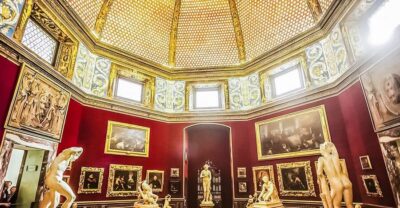
Skip-The-Line Uffizi Gallery Timed Entry Ticket
Read our review →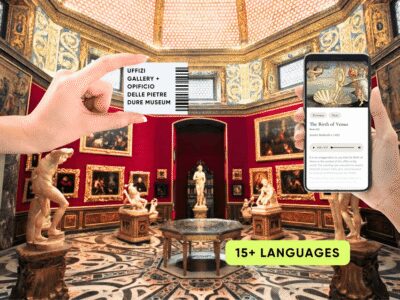
Uffizi Priority Ticket & Masterpieces Audio App
Read our review →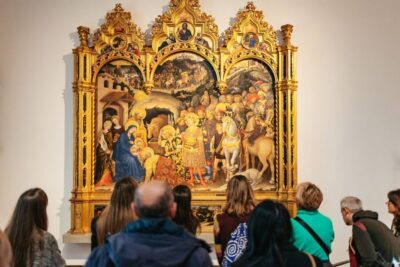
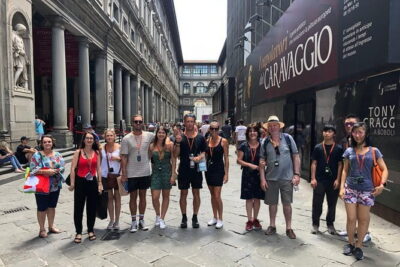

Skip the line: Uffizi and Accademia Small Group Walking Tour
Read our review →
Uffizi Gallery and Accademia Gallery Guided Tour
Read our review →
Uffizi Gallery Small-Group Guided Tour with Ticket
Read our review →
Michelangelo’s David, Accademia & Uffizi Small Group Tour
Read our review →Browse the lists this tour appears in