
Reviewed · FLORENCE WALKING TOURS
The Best of Florence Walking Tour in a Small Group
Florence’s story is easier to grasp when you walk through it in order, from the Medici family’s church and palace to the Duomo, Palazzo Vecchio, the Uffizi, and Ponte Vecchio. This 1-hour-45-minute small-group tour gives you that useful big picture without sending you inside every museum.
I like the 15-person cap, which keeps the walk fairly personal, and I like the local advice woven into the route: where to eat, what to notice on side streets, and which sights deserve more of your time. Guides such as Manuel, Camilla, and Simona have been praised for turning dates and dynasties into a story, not a lecture.
The main limitation is simple: this is primarily an outdoor orientation walk. Most stops last only five minutes, and admission tickets are not included for the Medici Chapels, Laurentian Library, Palazzo Vecchio, Uffizi, or the Duomo complex. You see the city’s great doors and façades, but you will need separate tickets for the interiors.
In This Review
- Key points at a glance
- Why this Florence walk works as a first introduction
- San Lorenzo and the Medici family’s public face
- Palazzo Medici Riccardi and the power of a private family
- The Duomo: a five-minute lesson in Florence’s ambition
- Piazza della Signoria and Florence’s political center
- Ponte Vecchio and the final view toward Palazzo Pitti
- What the 15-person group and local guide add
- Is $59.26 a fair price?
- Practical advice before you go
- Should you book this Florence walking tour?
- FAQ
- How long does the Best of Florence Walking Tour last?
- What time does the tour start?
- Where does the tour begin?
- Where does the tour end?
- How large is the tour group?
- Are entrance tickets included?
- Is cancellation free?
Key points at a glance
- The Medici story gives the walk its backbone: San Lorenzo, the Medici Chapels, Palazzo Medici Riccardi, and the Laurentian Library show how one family shaped Florence.
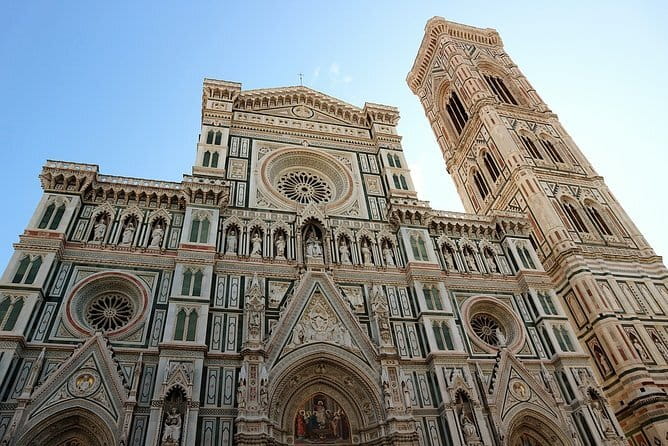
- The route covers Florence’s greatest outdoor sights: the Duomo, Baptistery, Giotto’s Campanile, Piazza della Signoria, Ponte Vecchio, and Palazzo Pitti.
- Small groups make a difference: The maximum is 15 people, and a whisper system helps you hear the guide near busy streets.
- Local advice is part of the value: Your guide can suggest places to eat, shop, and continue sightseeing after the walk.
- It works best early in your stay: The route helps you understand Florence before you tackle the Uffizi, Duomo interiors, or Medici museums.
- Plan for walking and sun: This is a city walk with several outdoor stops, beginning at 12:15 pm.
Why this Florence walk works as a first introduction
Florence can feel like a museum without walls. Around one corner you find a cathedral, around the next a medieval lane, and across the river a palace filled with paintings. The challenge is not finding famous sights. It is understanding how they fit together.
This walk gives you a useful framework. The route connects the Medici family, the Renaissance, Florence’s religious center, the city government, the Uffizi, and the Arno River. You are not simply checking off monuments. You are following the political and artistic heart of the city.
I would take this tour near the beginning of a Florence stay. It gives you enough context to make later visits more rewarding. After hearing why the Medici Chapels mattered, you can enter them with a better sense of purpose. After seeing the Uffizi from the outside and learning its connection to Cosimo I de’ Medici, the museum’s collections make more sense.
The tour is offered in English and includes a licensed guide, a small group, and a whisper system. That last item matters in Florence, where traffic, crowds, and hard stone walls can swallow a guide’s voice. You can keep your eyes on the buildings rather than standing shoulder to shoulder around a speaker.
More walking routes in Florence:
- Florence: Guided Walking Tour
★ 4.5 · 3,334 reviews - Skip the line: Uffizi and Accademia Small Group Walking Tour
★ 4.5 · 3,135 reviews - Florence: Guided Walking Tour
★ 4.6 · 1,602 reviews
San Lorenzo and the Medici family’s public face
The walk begins at Caffè Scudieri Firenze, at Piazza di San Giovanni 19R, with a 12:15 pm start. From there, the first part of the route centers on San Lorenzo and the Medici family.
The Basilica di San Lorenzo is one of Florence’s major churches and the burial place of principal Medici family members from Cosimo il Vecchio through Cosimo III. That makes it an excellent opening stop. The church is not just a religious building. It is a statement of family power, patronage, and public memory.
The listed stop is about five minutes, and admission is not included. Treat this as an exterior orientation unless your guide says otherwise. If the church and its chapels matter to you, set aside separate time and entrance fees for a proper visit.
Next comes the Biblioteca Medicea Laurenziana, the Laurentian Library. Michelangelo designed its famous architecture, and the library holds manuscripts and books from the Medici family’s private collection. The building also reflects the family’s changing image. The Medici wanted to be seen not only as wealthy merchants, but as patrons connected with learning and the Church.
Again, the stop is brief and admission is not included. That is not a flaw if you want a city overview. It is a limitation if Michelangelo’s architectural work is high on your list. The tour points you toward the place, but it does not replace a dedicated visit.
The Medici Chapels continue the same story. Built in the 16th and 17th centuries as extensions to Brunelleschi’s earlier church, they were designed to celebrate the Medici grand dukes of Tuscany. Michelangelo created the Sagrestia Nuova, or New Sacristy.
This is one of the stops where I would pay attention to your guide’s explanation and then decide if you want to return. The chapels combine family pride, sculpture, architecture, and political theater. Five minutes is enough to understand why the site matters. It is not enough to inspect the art properly.
Palazzo Medici Riccardi and the power of a private family
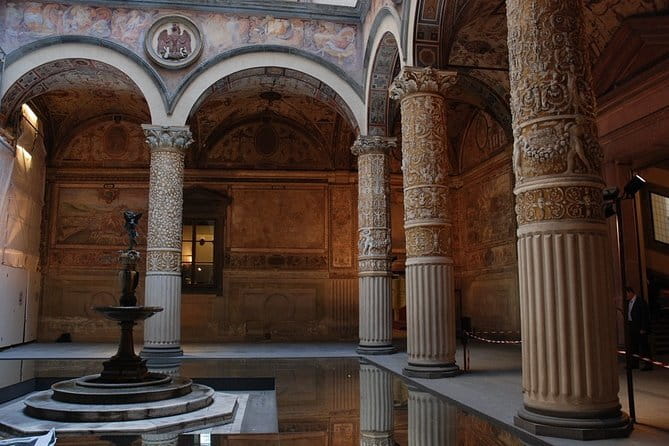
At Palazzo Medici Riccardi, you see where the family’s rise took physical form. Cosimo de’ Medici commissioned the palace, built between 1444 and 1484. Its location and scale helped announce that the Medici were no longer merely successful bankers operating behind the scenes.
The stop is another short exterior visit, with no admission included. I like this part of the route because it links the family’s religious patronage with its everyday political presence. A church can memorialize a dynasty. A palace can make that dynasty impossible to ignore.
The guide’s local perspective is useful here. The best explanations do more than give construction dates. They help you notice how Florence’s streets, squares, and buildings reveal who held influence. Manuel, Simona, Camilla, Sarah, and Julio are among the guides associated with this experience, depending on the date and assignment. Their styles may differ, but the tour is designed around history, art, architecture, and practical city advice.
Past visitors have especially valued guides who add personal stories, humor, and details that are easy to miss on your own. That is the real reason to choose a guided walk instead of simply downloading a map. You get interpretation while the building is in front of you.
The Duomo: a five-minute lesson in Florence’s ambition
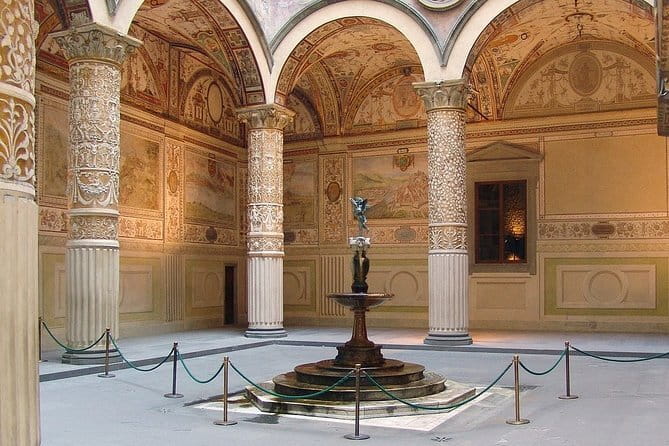
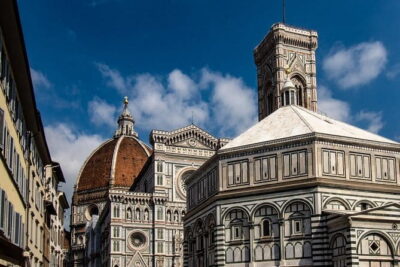
The route then reaches Piazza del Duomo, Florence’s religious center. You see the Cathedral of Santa Maria del Fiore, the Baptistery of Saint John, Brunelleschi’s dome, and Giotto’s Campanile.
The cathedral began in 1296 in the Gothic style, based on a design by Arnolfo di Cambio. Its façade uses white, green, and pink marble, and the whole cathedral complex forms part of Florence’s UNESCO-listed historic center. The exterior alone can fill a morning, but this tour keeps the visit moving.
You will see the cathedral twice in the listed route, which may reflect two viewing points or two explanations along the walk. Do not expect a full interior visit based on the information provided. The cathedral stop is listed as free, while other parts of the complex require tickets.
The Baptistery sits across from the cathedral and Campanile. It is one of Florence’s oldest buildings, built between 1059 and 1128 in the Florentine Romanesque style. Its age helps explain why the Duomo area feels like a layered history lesson rather than a single monument.
The Cupola del Brunelleschi receives about ten minutes, longer than most other stops. That makes sense. Brunelleschi’s dome was once the largest in the world and remains the largest brick dome ever constructed. It is one of the central engineering achievements of Renaissance Florence.
But seeing the dome from street level is not the same as climbing it. The itinerary lists admission as not included, so you should arrange a separate ticket if you want access. Dome visits can require advance planning, and this walking tour should not be treated as a dome reservation.
The Campanile di Giotto is another quick stop. The tower is known for its Florentine Gothic design, sculptural decoration, and bands of colored marble. You can understand its place in the cathedral group from the square, but climbing it would be a separate activity and ticket.
This section is where the whisper system earns its keep. Piazza del Duomo is one of Florence’s busiest areas, and it can be difficult to hear without audio support. Keep your belongings secure, stay close to the guide, and expect pauses rather than a slow museum-style presentation.
A different way to spend the same Florence day:
- Florence: Skip-The-Line Uffizi Gallery Timed Entry Ticket
★ 4.5 · 27,832 reviews - Tuscany Day Trip from Florence: Siena, San Gimignano, Pisa and Lunch at a Winery
★ 5.0 · 21,634 reviews - Florence: Timed Entrance Ticket to Michelangelo’s David
★ 4.6 · 16,983 reviews - Florence: Michelangelo’s David Skip-the-Line Entry Ticket
★ 4.5 · 12,764 reviews
Piazza della Signoria and Florence’s political center
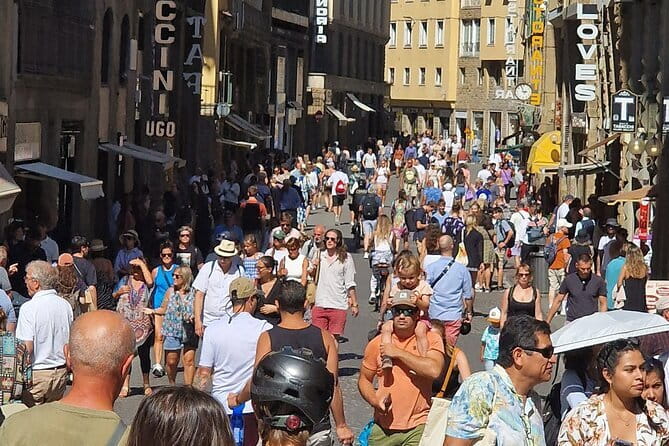
From the Duomo, the walk continues toward Piazza della Signoria, the L-shaped square in front of Palazzo Vecchio. This is where Florence’s civic life comes into view.
The square is a meeting place for locals and a major passage point for visitors heading toward Palazzo Vecchio and the Uffizi Gallery. It is also a good place to see how Florence used public art and architecture to express power.
The Palazzo Vecchio was Florence’s town hall and remains one of Tuscany’s most imposing civic buildings. Its fortress-like appearance tells you that government here was not an abstract idea. It was protected, public, and built to project authority.
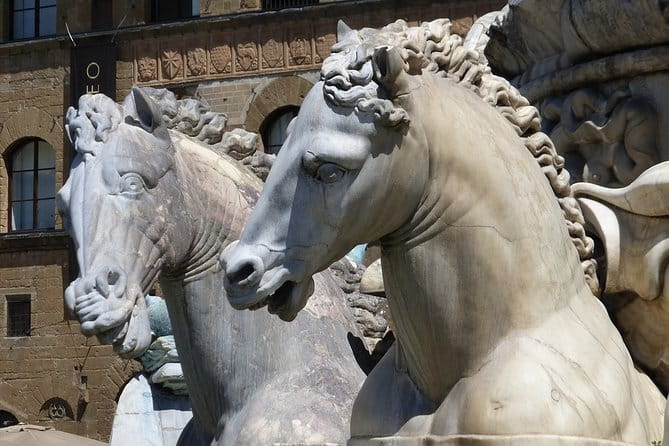
Outside, you can see the copy of Michelangelo’s David and the statues in the adjacent Loggia dei Lanzi. These outdoor works make the square rewarding even without a museum ticket. Admission to Palazzo Vecchio itself is not included, so plan another visit if you want its rooms and collections.
The Uffizi Gallery is next. Giorgio Vasari began the Uffizi complex in 1560 for Cosimo I de’ Medici, who intended it to house the offices of Florentine magistrates. The name comes from uffizi, meaning offices. Over time, the building became one of Italy’s major art museums, with a famous collection focused especially on Italian Renaissance works.
The walk does not include Uffizi admission. That is important. A five-minute exterior explanation cannot substitute for time inside the galleries, which usually deserve several hours and advance planning. Still, the guide can help you understand why the museum is located here and how it connects to the Medici story.
I find this transition from civic square to art museum especially useful. It shows that Florence’s art was not separate from politics. Churches, palaces, public squares, and collections all helped powerful families shape the city’s identity.
Ponte Vecchio and the final view toward Palazzo Pitti
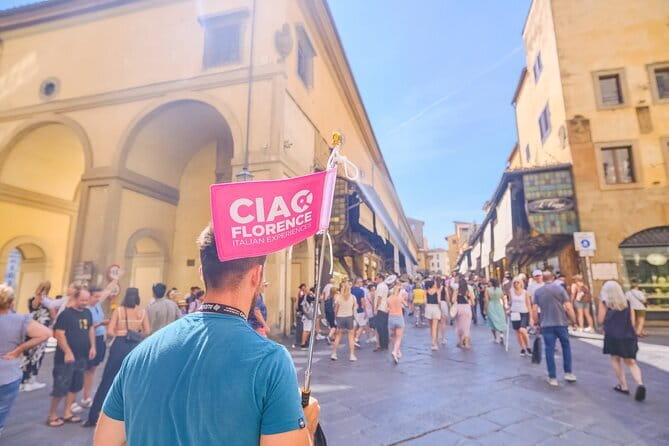
The route ends near Ponte Vecchio, Florence’s oldest bridge across the Arno River. Shops line the bridge, as they have for centuries. Butchers, tanners, and farmers once occupied the spaces. Today, jewelers and art dealers fill them.
The bridge is free to cross, and it is one of the most memorable places to finish a Florence walk. You get a change of scenery after the tight medieval streets and grand squares. The Arno opens the view, and the bridge gives you an easy sense of Florence’s river geography.
The final listed sight is Palazzo Pitti, across the river. The Medici family bought the palace in 1549, and it became the main residence of the ruling families of the Grand Duchy of Tuscany. Later generations filled it with paintings, tableware, jewelry, and other luxury possessions.
The endpoint is given as Ponte Vecchio, though it may vary slightly within the surrounding area. That is worth noting if you have a timed reservation immediately afterward. Leave a little space before your next appointment rather than assuming the guide will finish at one exact doorway.
Palazzo Pitti itself requires a separate ticket. The walk gives you a useful introduction, but you will not have time to explore its rooms or collections during this short route.
What the 15-person group and local guide add
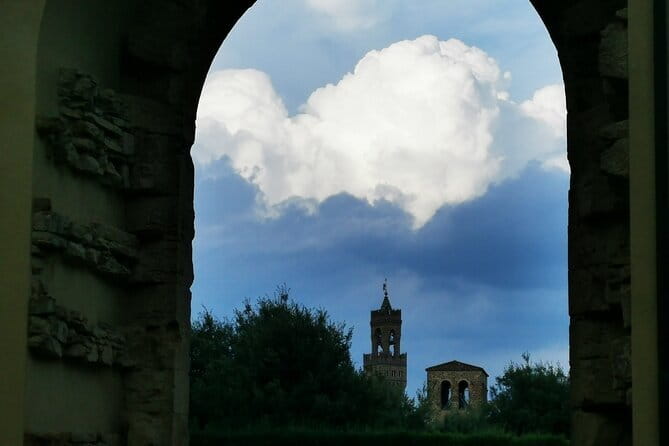
A group maximum of 15 is a strong middle ground. You get the efficiency of a shared tour without the feel of a large procession. The group can still move through narrow lanes, and you have a reasonable chance to ask a question.
The experience has also been adapted well for different kinds of visitors. Guides have adjusted explanations for families, answered questions, and followed requests for less touristy streets and local food. Do not assume a fully private tour, though. The cap is 15, not one household.
The most praised feature is the guide’s storytelling. Manuel has been singled out for humor, local insight, and a knack for making the route work for children. Camilla has been praised for pointing out architecture, small churches, shops, and places to eat. Simona has been described as warm, engaging, and careful about moving the group into shade during stops. Sarah and Julio have also led walks praised for clear explanations and good handling of busy areas.
Those details matter because Florence is full of information. A guide who simply recites names and dates can make the city blur together. A guide who explains what to look for, then gives you practical suggestions for the rest of your visit, adds real value.
The walk covers a lot in less than two hours. Several stops last five minutes, so you should expect a brisk overview rather than long periods inside monuments. The pace has been described as comfortable, but your experience will depend on the group and the guide.
Is $59.26 a fair price?
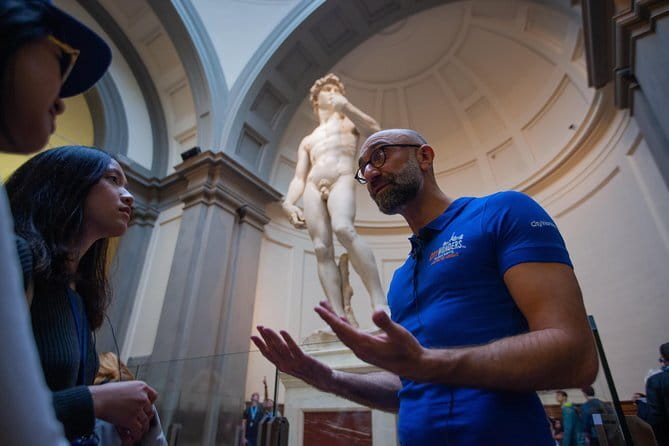
At $59.26 per person, this is not the cheapest way to walk around Florence. You can see many of these exteriors for free with a map. The price makes more sense if you value an English-speaking licensed guide, a small group, audio support, and useful advice for the rest of your stay.
You are paying for orientation and interpretation, not admission. Tickets and gratuities are extra, and the tour does not include extended time inside the Duomo, Medici Chapels, Laurentian Library, Palazzo Vecchio, Uffizi, or Palazzo Pitti.
I see the best value for a first visit, a short stay, or anyone who wants the city explained before choosing which museums to enter. It is also useful if you have only a day in Florence and need a compact route through the major sights.
For a repeat visitor who already knows the Medici story and has a firm museum plan, the value is less obvious. You may prefer a focused museum guide or a private walk. The small group and local recommendations still help, but the route itself is built around Florence’s classic center.
The tour is often booked well ahead, with an average booking lead time of about 59 days. That does not mean you must plan two months in advance, but it does suggest booking early during popular travel periods.
Practical advice before you go
Wear shoes suited to city walking. The route moves through paved streets, squares, and crowded areas, with repeated stops outside. A midday start at 12:15 pm can also mean strong sun, so bring water and protection from heat.
Meet at Caffè Scudieri Firenze in Piazza di San Giovanni. Confirmation is provided at booking, and the tour runs near public transportation. Service animals are allowed, and most people can take part, though anyone with specific mobility needs should consider the amount of walking and standing.
Keep your schedule flexible after the walk. The endpoint is indicative and can shift slightly around Ponte Vecchio. That is no problem if you are heading to lunch, shopping, or a later museum visit. It matters more if you have a fixed timed entry.
Free cancellation is available until 24 hours before the start time. Cancellations or changes made within 24 hours are not refunded or accepted. The experience needs good weather and a minimum number of participants. If the operator cancels for either reason, you are offered another date or experience, or a full refund.
Should you book this Florence walking tour?
Book it if you want a smart first look at Florence rather than a series of disconnected photo stops. The route covers the city’s essential landmarks, and a good guide can turn the Medici family, Brunelleschi, Michelangelo, the Uffizi, and the Arno into one understandable story.
It is especially well suited to first-time visitors, families, short-stay visitors, and anyone who wants restaurant and sightseeing ideas from a local guide. The 15-person limit and whisper system are practical advantages.
Skip it if your main goal is interior access. This is not a ticketed Duomo climb, Uffizi visit, or Medici Chapels tour. You will need to budget extra time and money for those places.
My advice is to schedule this walk early in your stay, then use the guide’s suggestions to choose your museums and meals. At $59.26, it earns its keep when you use it as a city orientation, not as a substitute for Florence’s major interiors.
FAQ
How long does the Best of Florence Walking Tour last?
The tour lasts approximately 1 hour and 45 minutes.
What time does the tour start?
The scheduled start time is 12:15 pm.
Where does the tour begin?
It begins at Caffè Scudieri Firenze, Piazza di San Giovanni, 19R, 50123 Florence, Italy.
Where does the tour end?
The indicated endpoint is Ponte Vecchio. The exact ending place may vary slightly within the area.
How large is the tour group?
The group is capped at a maximum of 15 travelers.
Are entrance tickets included?
Admission tickets are not included for most listed attractions, including the Basilica di San Lorenzo, Laurentian Library, Medici Chapels, Palazzo Medici Riccardi, Baptistery, Brunelleschi’s dome, Giotto’s Campanile, Palazzo Vecchio, Uffizi Gallery, and Palazzo Pitti. The cathedral and public squares are listed as free stops.
Is cancellation free?
You can cancel up to 24 hours before the experience start time for a full refund. Cancellations made less than 24 hours in advance are not refunded. If bad weather or insufficient bookings cause the operator to cancel, you are offered another date or experience, or a full refund.
Latest additions around Florence
- Florence: Cathedral Tour & Brunelleschi’s Dome Climb Ticket★ 5.0 · 3 reviews
- Palatina Gallery and Pitti Guided Tour in Florence★ 5.0 · 3 reviews
- Florence Uffizi Gallery Skip-the-line Tour w Art Historian Guide★ 5.0 · 3 reviews
- Private Tour: Pisa and Lucca from Florence★ 5.0 · 3 reviews
- San Gimignano Bike Tour (SOFT)★ 4.5 · 3 reviews
- Florence: Tour of Florence by rickshaw★ 5.0 · 3 reviews
- Center of Florence by golf cart★ 5.0 · 3 reviews
- From Firenze | Chianti day tour in a classic car★ 5.0 · 3 reviews
Florence Walking Tours, compared.

Skip the line: Uffizi and Accademia Small Group Walking Tour
Read our review →
Renaissance and Medici Tales Guided Walking Tour
Read our review →
Skip-the-Line Florence Highlights and David Walking Tour
Read our review →
Dark Mysteries and Legends Guided Walking Tour
Read our review →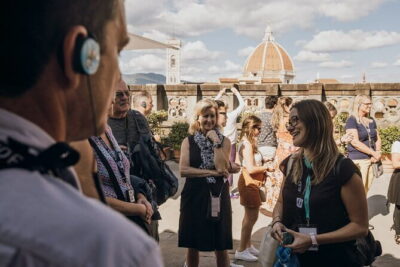
Florence in a Day: Michelangelo’s David, Uffizi and Guided City Walking Tour
Read our review →Browse the lists this tour appears in