
Reviewed · MUSEUMS
Small-group Guided tour of Galileo’s Museum
Florence’s Galileo Museum turns old science into something you can see and almost feel. Astrolabes, globes, batteries, medical tools, sundials, and other working instruments show how people measured the sky, sea, body, and world before modern technology. The museum’s famous finger adds a wonderfully odd human touch.
I like the small group of no more than nine, which gives your guide room to answer questions and adapt the pace. I also like the way guides such as Leonardo, Fabio, Ivano, Cortina, and Cristiano connect the displays to Galileo, the Medici family, Renaissance Florence, and the wider story of scientific discovery. The main drawback is the firm 90-minute schedule. If the museum is closing, you may not get extra time to wander alone after the guided portion.
In This Review
- Key points at a glance
- Why Galileo’s museum deserves a place in Florence
- Entering the Museo Galileo on Piazza dei Giudici
- What you see during the 90-minute visit
- Why a guide changes the experience
- A strong choice for science-loving teenagers
- The Renaissance connection makes the objects matter
- Price, group size, and what you get
- The main limitation: a focused visit, not free museum time
- Who should book the Galileo Museum tour
- Should you book it?
- FAQ
- Where does the Galileo Museum tour begin?
- Where does the tour end?
- How long does the tour last?
- How many people can join the tour?
- Is skip-the-line admission included?
- Is the tour offered in English?
- Can I cancel for a full refund?
Key points at a glance
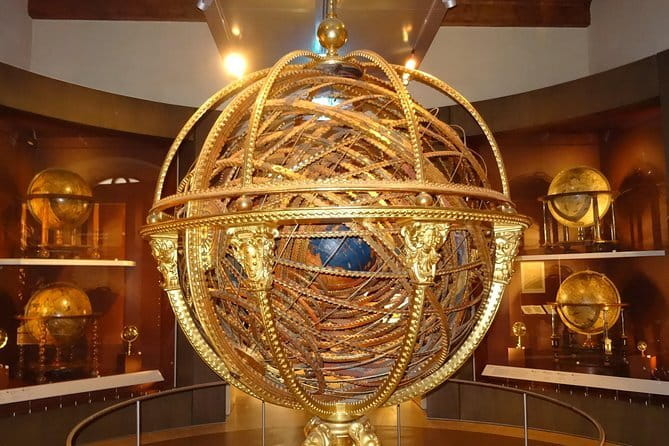
- See science as real objects: Astrolabes, sundials, globes, batteries, imaging tools, medical devices, and navigation instruments make old discoveries easier to understand.
- A guide adds the missing context: The best part is learning who used each instrument, when it appeared, and why it mattered.
- Small groups keep the visit personal: With a maximum of nine people, questions are easier to ask and hear.
- Good for curious teenagers: The museum can turn school topics into something tangible, especially for children already interested in science.
- Skip-the-line entry is included: This removes one common Florence sightseeing nuisance.
- Allow 90 minutes, not an open-ended visit: The schedule works well as a focused introduction, but may feel short if you want to inspect every case.
Why Galileo’s museum deserves a place in Florence
Florence is famous for paintings, chapels, and grand palaces. Those are essential, but the city also helped shape the way Europeans studied nature. The Galileo Museum gives you another view of Florence, one built around measurement, testing, observation, and practical problem-solving.
The focus is not only Galileo. You can expect the guide to bring in other scientists and explorers, including Copernicus, Columbus, Amerigo Vespucci, and figures connected with the Medici court. That wider frame matters. Galileo did not work in isolation, and the instruments here make that clear.
I especially like this museum for anyone who has already spent several days looking at Renaissance art. The tour can connect science with the same political and cultural world behind Florence’s churches and palaces. The Medici family supported art, but their interests also reached into astronomy, geography, engineering, medicine, and technology.
That connection gives the visit more weight than a simple display of old gadgets. You begin to see how maps, telescopes, clocks, globes, and measuring tools helped reshape ideas about the world.
More museums worth an hour:
- Florence: Skip-The-Line Uffizi Gallery Timed Entry Ticket
★ 4.5 · 27,832 reviews - Florence: Leonardo Interactive Museum Entry Ticket
★ 4.5 · 11,763 reviews - Florence Accademia Gallery Tour with Entrance Ticket Included
★ 4.5 · 6,148 reviews
Entering the Museo Galileo on Piazza dei Giudici
The tour begins at Museo Galileo, Piazza dei Giudici, 1, in central Florence. The activity ends at the same point, so you do not need to arrange a separate ride back to your hotel or another part of the city.
The museum is near public transportation, and most people can take part. Hotel pickup and drop-off are not included, so plan to reach the Piazza dei Giudici meeting point on your own. Since the meeting place is the museum itself, the arrangement is refreshingly simple: arrive at the stated starting point, meet the guide, and begin inside the collection.
Skip-the-line admission is included in the price. That matters most during a busy day in Florence, when every avoidable queue helps. It does not mean the visit is private, but the group size is capped at nine, which is small enough for a real conversation rather than a guide speaking to a crowd.
What you see during the 90-minute visit
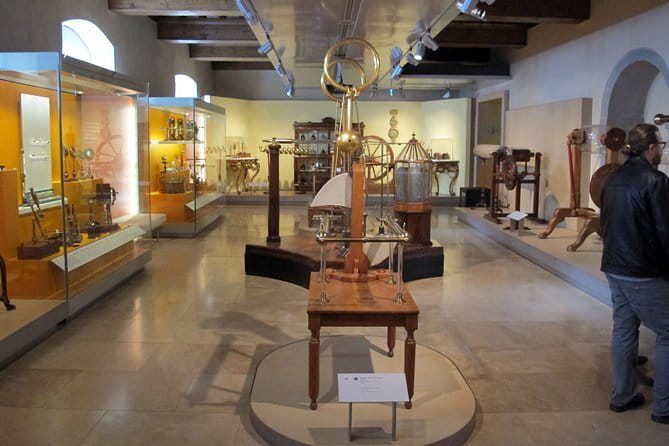
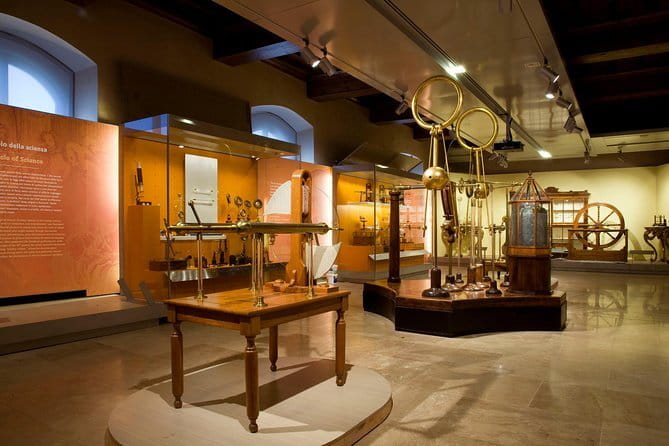
The full itinerary is one stop, the Museo Galileo, but there is plenty packed into that stop. Your guide begins the museum visit with a broad introduction and then leads you through instruments connected with astronomy, navigation, geography, physics, medicine, weather, communication, and image-making.
A useful guide does more than name each object. You want to know what problem an instrument solved, who needed it, and how it changed later work. The strongest guide accounts describe this kind of explanation, linking each device to its proper time, place, and use.
You might begin with the sundial outside, where the guide can explain how people used the movement of the sun to mark time. From there, the collection opens into more complex attempts to measure the heavens and the earth.
Astrolabes show how people read the sky and worked out position. Globes and maps reveal changing ideas about geography and exploration. Displays connected with navigation help explain how sailors and mapmakers handled distance, direction, and uncertainty.
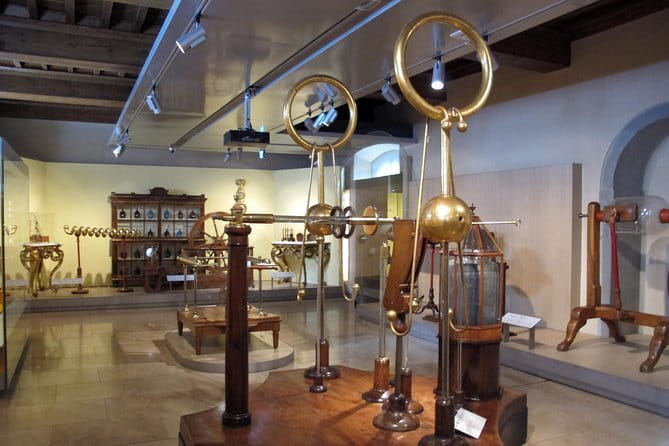
The museum also includes batteries and instruments tied to physics. These objects help you see that many scientific advances began as physical experiments with metal, glass, wheels, lenses, fluid, or carefully marked surfaces. The tools can look strange at first, which is exactly why a guide helps.
Other displays relate to medical devices, weather, communication, and imaging. These subjects widen the visit beyond the usual Galileo story. You are not looking only at astronomy. You are seeing a collection of attempts to measure the world and make invisible forces easier to study.
The museum’s famous finger is an unusual detail to watch for. It is the sort of small, unexpected feature that can make a museum visit stick in your memory long after the dates and technical terms have blurred.
Why a guide changes the experience
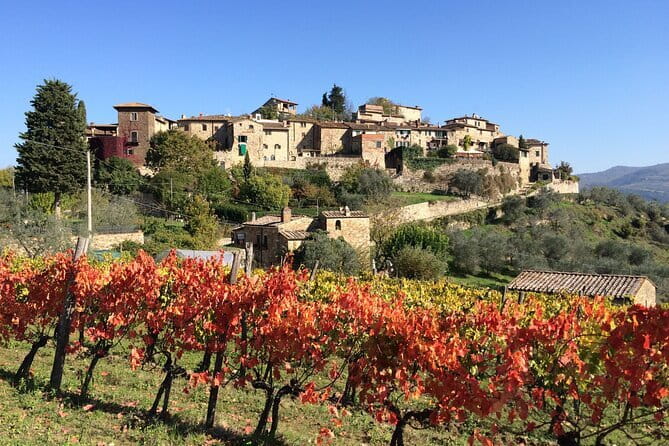
You can walk through a museum and read labels on your own. Here, that approach would give you the objects but not always the connections.
A guide can explain why an instrument belongs in a museum about Galileo, how it was used, and what it says about the period. Fabio, for example, is praised for covering Galileo and the other scientists represented in the collection, not just reciting facts about one famous figure.
Leonardo is described as especially good at showing how Tuscany and Florence’s economic, scientific, and political conditions shaped discoveries. That kind of explanation can help you connect the museum to sights you have already visited in the city.
Another guide, Ivano, focused on the development of chronometers, imaging, navigation, weather, and communication over time. This is a useful approach because it shows progress in a sequence. You see not only a single clever invention, but the long chain of experiments that led to tools you now take for granted.
Cortina’s strength is patient explanation and answering questions. Cristiano is praised for a clear, lively presentation. Those details point to the main value of booking a guided visit: the guide’s ability to make technical material manageable for people with different levels of interest.
Still, guide quality can vary by individual. One experience received a lower rating because the guide had an art history background and was less comfortable explaining the tools and their practical use. That is a fair caution for science enthusiasts. If you want highly technical answers about every instrument, you may need to ask direct questions and make sure the guide spends time on the parts that matter most to you.
More Florence options worth a look before you decide
- The Best tour in Florence: Renaissance & Medici Tales – guided by a STORYTELLER
★ 5.0 · 12,316 reviews - Florence: Duomo Cathedral Guided Tour
★ 3.9 · 5,970 reviews - Uffizi Gallery Small Group Tour with Guide
★ 4.5 · 4,923 reviews - Florence: Accademia Gallery Guided Tour
★ 4.6 · 4,156 reviews
A strong choice for science-loving teenagers
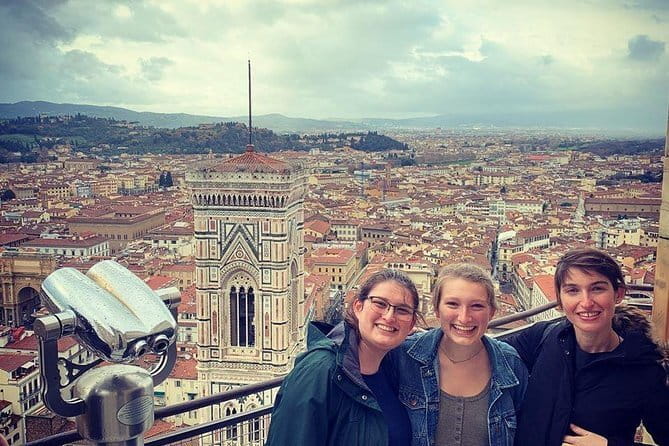
This tour is especially well suited to families with older children and teenagers. The collection gives school subjects a physical form. Instead of hearing only about astronomy, geography, physics, or the history of medicine, your child can see the instruments people used to investigate those subjects.
The small format helps here. A group limited to nine people gives a guide more room to respond to questions, and teenagers are often more engaged when they can interrupt with a genuine question instead of waiting through a long speech.
The museum is not designed as a children’s play center, so very young children may not get as much from a 90-minute tour. Older children who enjoy science, machines, maps, or the story of how people discovered things are a better match.
The unusual displays help too. The finger, the old measuring devices, and the strange shapes of the instruments give the tour enough surprise to break up the more serious history.
The Renaissance connection makes the objects matter
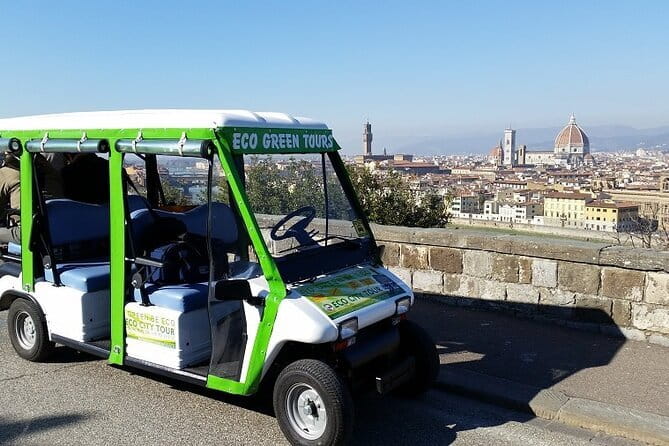
One of the best reasons to choose this tour is the link between science and the Florence you see outside the museum.
The same city known for painting and sculpture was also a place where rulers funded research, collected instruments, watched the skies, improved maps, and supported practical studies. A guide can show how the Medici family’s influence reached beyond art.
That perspective changes the way you look at Florence. Renaissance culture was not divided neatly into art on one side and science on the other. Artists needed geometry and perspective. Mapmakers needed astronomy. Engineers needed mathematics and mechanics. Rulers needed better ways to measure land, time, distance, and movement.
You do not need a science degree to enjoy this. A good explanation can make the connections clear without turning the tour into a classroom lecture. One guide is praised for being informative without droning on, with enough humor to speak to different levels of understanding.
I would place this visit after a major Florence art sight if you want to broaden your view of the city. It also works early in your stay, since the guide may give you a useful way to understand later visits to Medici-related sites and Renaissance churches.
Price, group size, and what you get

The price is $137.57 per person. That is a serious amount for an experience lasting about an hour and a half, especially since food, drinks, and hotel transportation are not included.
The value depends on what you want from the museum. If you are happy reading labels and moving at your own speed, the price may feel high. The museum admission and skip-the-line access are useful, but the main purchase is the guide’s interpretation.
For a first-time visitor who wants the collection explained, the cost becomes easier to justify. The maximum of nine people is a meaningful benefit, particularly when the guide is good at answering questions and adjusting the visit to the group.
The average booking lead time is 57 days, which suggests that you should not leave this until the last minute if it is important to your Florence plans. Confirmation arrives at booking, and free cancellation is available up to 24 hours before the start time. Changes or cancellations inside that 24-hour window are not refunded.
The tour is offered in English. Since the activity starts and ends at the museum, you can pair it with nearby sightseeing before or after, but you will need to make your own arrangements for getting there.
The main limitation: a focused visit, not free museum time
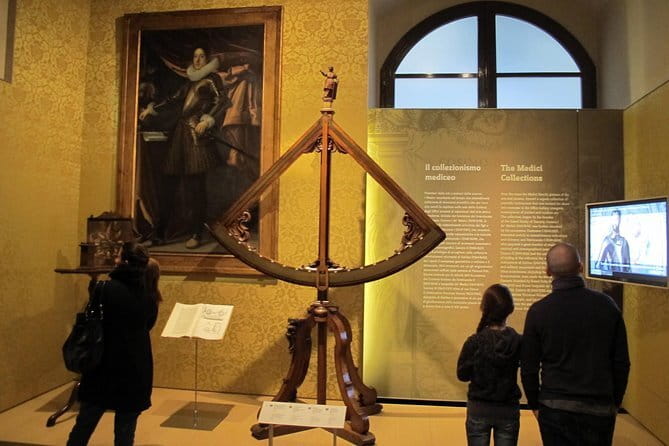
Ninety minutes is enough for a well-shaped introduction. It is not enough for every visitor to study every object at length.
One practical issue is the museum’s closing schedule. If the building closes around the end of the tour, you may have to leave immediately rather than retrace your steps on your own. That can feel abrupt, especially if the guide has moved quickly through an area you wanted to examine.
I suggest deciding before you arrive what interests you most. Tell the guide if you care especially about Galileo, astronomy, maps, navigation, medical instruments, physics, or the history of technology. In a small group, that request is more likely to shape the visit.
The tour’s structure is best for people who prefer a clear route and explanation. It is less ideal for someone who wants two or three hours of quiet study, photography, and close reading.
Who should book the Galileo Museum tour
I would choose this experience for:
- Adults curious about how scientific discoveries changed everyday life
- Older children and teenagers with an interest in science or machines
- Visitors who want Florence beyond paintings and sculpture
- People who prefer a guide to explain unfamiliar instruments
- Anyone who values a group small enough for questions
- First-time visitors who want context about Galileo and Medici Florence
I would think twice if you are watching every euro, dislike guided pacing, or already have strong technical knowledge and want to inspect the collection alone. You may get more from a self-guided visit if you need lots of time with individual displays.
The experience is also not a full-day activity. At 90 minutes, it fits neatly between larger Florence sights, but you should not book it expecting a long museum afternoon.
Should you book it?
Book this tour if you want the Galileo Museum to make sense rather than simply display old instruments. The strongest reasons are the small group, the English-speaking guide, and the links between science, exploration, medicine, technology, and Medici Florence.
The $137.57 price is high for 90 minutes, so the decision turns on the guide. For families with science-loving teenagers and adults who enjoy history with a practical edge, the visit can be a memorable change from Florence’s famous art rooms.
If you do book, arrive ready to ask questions and keep an eye out for the finger. If you want extensive time alone with the collection, choose a different plan or allow for the possibility that the museum’s closing time will end the visit without extra wandering.
FAQ
Where does the Galileo Museum tour begin?
The tour begins at Museo Galileo, Piazza dei Giudici, 1, 50122 Firenze FI, Italy.
Where does the tour end?
The activity ends back at the meeting point at Museo Galileo.
How long does the tour last?
The guided visit lasts approximately 1 hour and 30 minutes.
How many people can join the tour?
The group has a maximum of nine travelers.
Is skip-the-line admission included?
Yes. Skip-the-line access and admission to the museum are included in the tour cost.
Is the tour offered in English?
Yes. The experience is offered in English.
Can I cancel for a full refund?
Yes. You can cancel at least 24 hours before the experience start time for a full refund. Cancellations or changes made less than 24 hours before the start time are not accepted for a refund.
Latest additions around Florence
- Palatina Gallery and Pitti Guided Tour in Florence★ 5.0 · 3 reviews
- Florence: Cathedral Tour & Brunelleschi’s Dome Climb Ticket★ 5.0 · 3 reviews
- Florence Uffizi Gallery Skip-the-line Tour w Art Historian Guide★ 5.0 · 3 reviews
- Private Tour: Pisa and Lucca from Florence★ 5.0 · 3 reviews
- San Gimignano Bike Tour (SOFT)★ 4.5 · 3 reviews
- Florence: Tour of Florence by rickshaw★ 5.0 · 3 reviews
- Center of Florence by golf cart★ 5.0 · 3 reviews
- From Firenze | Chianti day tour in a classic car★ 5.0 · 3 reviews
Museums, compared.
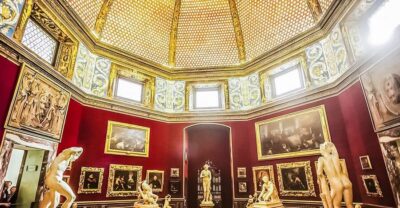
Skip-The-Line Uffizi Gallery Timed Entry Ticket
Read our review →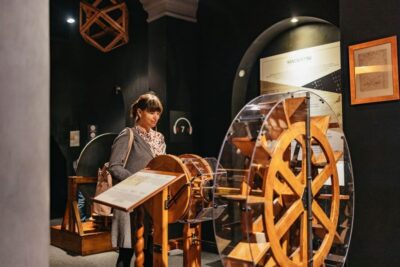

Florence Accademia Gallery Tour with Entrance Ticket Included
Read our review →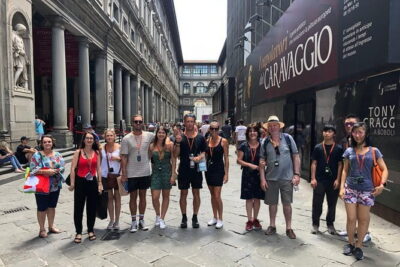


Accademia Gallery Guided Tour with Entry Ticket
Read our review →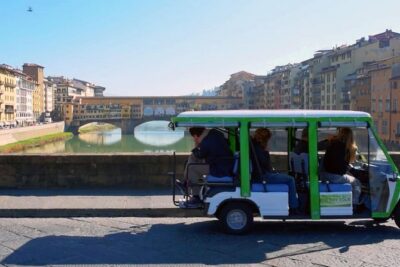
Golf Cart Tour to Fiesole Roman Theatre and Museum
Read our review →
Uffizi Gallery and Accademia Gallery Guided Tour
Read our review →Browse the lists this tour appears in