
Reviewed · MUSEUMS
Skip the Line: Stibbert Museum Ticket in Florence
The Stibbert Museum is one of Florence’s most unusual stops: a former family residence packed with medieval armor, samurai gear, costumes, paintings, and objects from daily and ceremonial life. The collection began with Frederick Stibbert, who started gathering arms and armor after returning from his studies in England, then kept expanding into art and applied crafts.
I like the museum for two clear reasons. First, the collection is enormous, with about 50,000 objects and more than 60 rooms to explore. Second, it is usually quiet, so you can examine the displays at a calm pace instead of being pushed along by a crowd. The main consideration is that the reserved entry time is assigned by the museum and may not match the time you request.
In This Review
- Key Points to Know Before You Go
- Why This Florence Museum Feels Different
- Inside Frederick Stibbert’s Collection
- The Arms and Armor Rooms
- Beyond Armor: Costumes, Paintings, and Household Objects
- How the Timed Entry Works
- Is $17.42 a Fair Price?
- How Long to Allow and Who Will Enjoy It
- Practical Tips for a Better Visit
- Should You Book the Stibbert Museum Ticket?
- FAQ
- Where is the Stibbert Museum ticket experience located?
- How long does a visit take?
- What does the museum collection include?
- What dates do the arms and armor cover?
- Is the ticket for a specific entrance time?
- Will the confirmed time always match the time requested?
- Are transportation, food, or drinks included?
Key Points to Know Before You Go
- Frederick Stibbert’s former home: The museum occupies the residence where the collection was built and displayed.
- Arms from Europe and Asia: You will see weapons and armor dating from the 15th through the 19th centuries, including especially striking samurai pieces.
- More than military objects: Costumes, paintings, furniture, wall hangings, musical instruments, religious objects, and archaeological pieces fill out the visit.
- A timed admission: Your voucher gives you an exact entrance time, and the museum assigns the closest available time if your first choice is sold out.
- A quiet Florence experience: The museum is less crowded than Florence’s famous central sights, which helps you take in the displays without rushing.
- A short but substantial stop: Plan on roughly one to two hours, depending on how closely you study the rooms.
Why This Florence Museum Feels Different
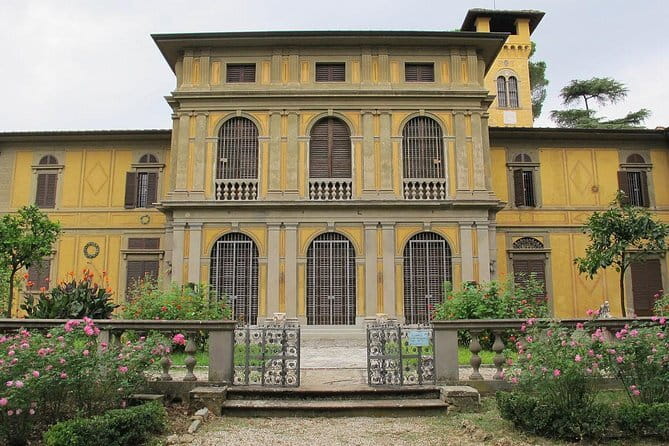
Florence is famous for Renaissance painting, sculpture, and grand churches. The Stibbert Museum offers a very different kind of visit. Instead of moving through a purpose-built gallery, you walk through the home of one collector and see how his interests grew over time.
That setting changes the mood. The collection is not limited to one period or one region. European armor shares space with Japanese weapons and costumes, while paintings, furniture, and ceremonial objects fill rooms around them. You get a sense of a collector who kept finding new subjects to pursue.
The museum’s scale is hard to grasp from the outside. About 50,000 objects belong to the collection, and more than 60 rooms are used for display. Not every object will hold your attention equally, but the sheer variety keeps the visit from becoming a simple parade of similar suits of armor.
I especially like this kind of museum for the surprises between the major displays. You may come for the weapons and find yourself spending just as much time with clothing, old furnishings, or an object connected to noble life. The collection also includes items associated with figures such as Napoleon Bonaparte, adding a personal and political angle to some of the rooms.
More skip-the-line entries:
- Florence: Skip-The-Line Uffizi Gallery Timed Entry Ticket
★ 4.5 · 27,832 reviews - Florence: Timed Entrance Ticket to Michelangelo’s David
★ 4.6 · 16,983 reviews - Florence: Michelangelo’s David Skip-the-Line Entry Ticket
★ 4.5 · 12,764 reviews
Inside Frederick Stibbert’s Collection
Frederick Stibbert began collecting arms and armor when he came of age and returned to England, where he had studied. His first interest eventually grew into a much broader project that included costumes, paintings, furniture, wall hangings, and other decorative objects.
The result is less like a single-topic military museum and more like a record of changing taste. The arms and armor remain the main attraction, but the surrounding objects help explain how people dressed, decorated rooms, worshipped, traveled, and presented social status across different periods.
The date range runs from the 1400s to the 1800s. That gives you several centuries of material to compare. You can look at how protective equipment changed, how weapons were decorated, and how European and Asian traditions differ in shape and style.
The museum also includes archaeological objects, musical instruments, and liturgical items. These additions matter because they prevent the visit from feeling repetitive. If your interest is limited to armor, you can focus on the strongest rooms. If you enjoy historic interiors and unusual objects, you will find plenty to slow you down.
The collection has also continued as a foundation after Stibbert’s death. His last will set out a purpose of preserving and promoting history for future generations. That helps explain why this is not simply a private house left untouched. It is a public museum built around one person’s lifelong collecting habit.
The Arms and Armor Rooms

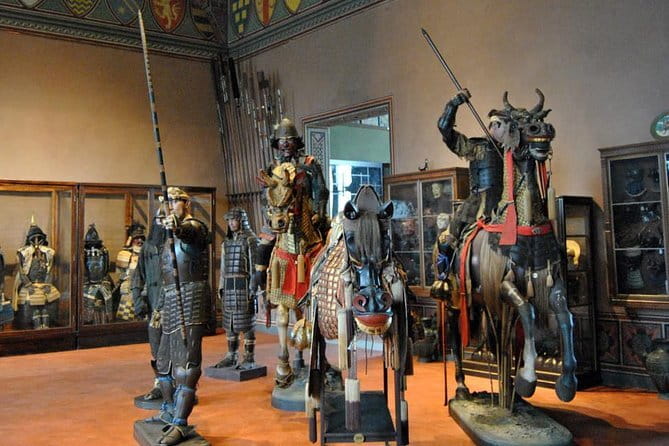
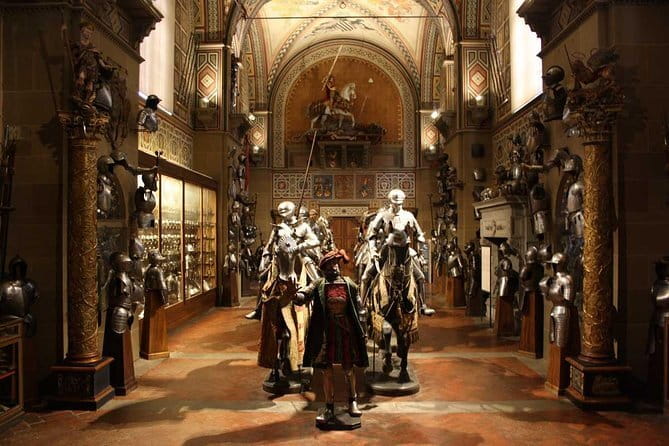
The armor is the reason most people put the Stibbert Museum on their Florence plans. You will find pieces from Western and Eastern civilizations, covering the 15th through 19th centuries.
The displays are especially appealing if you like seeing historic objects at close range rather than only reading about them. A full suit of armor gives you a strong visual sense of how protection and status worked together. Weapons add another layer, showing both practical design and decoration.
The Japanese material is a particular highlight. The collection includes a large amount of samurai equipment, and this section can be the most memorable part of the visit for many people. The contrast between Japanese armor and European armor makes the museum more interesting than a collection focused on one tradition.
You should not expect a guided explanation at every display. This is a ticketed museum visit, not a private tour with a named guide. I recommend giving yourself time to look at shapes, materials, and details before moving on. The quiet setting helps, since you are less likely to feel that you need to hurry for the next group.
Some rooms may feel crowded with objects. That is part of the character of the museum, but it can also make the collection harder to take in at a glance. The experience rewards curiosity more than speed.
Beyond Armor: Costumes, Paintings, and Household Objects

The museum would be worth visiting for the arms alone, but the other collections give you a fuller picture of Stibbert’s interests. Historic costumes add color and human scale. Paintings and furnishings show the sort of rooms and tastes connected with wealthy households.
The furniture is important to notice because you are not looking at objects stripped from their setting. Much of the appeal comes from seeing historic pieces inside a former residence, where displays feel connected to rooms rather than arranged only by a modern museum system.
Wall hangings and applied arts help fill out the interiors. Musical instruments and religious objects take the collection beyond warfare and courtly clothing. Archaeological pieces add still another time scale.
This variety makes the museum suitable for mixed groups. A teenager who might not choose a standard art museum could be drawn in by the armor and weapons. Someone interested in historic interiors, costumes, or decorative arts can find a separate reason to enjoy the same rooms.
At the same time, the wide subject range can feel less focused. If you want a tightly organized lesson on military technology, the Stibbert Museum may seem scattered. If you enjoy making connections between objects, the loose, personal quality is part of its appeal.
More museums worth an hour:
- Florence: Leonardo Interactive Museum Entry Ticket
★ 4.5 · 11,763 reviews - Florence Accademia Gallery Tour with Entrance Ticket Included
★ 4.5 · 6,148 reviews - Uffizi Gallery Small Group Tour with Guide
★ 4.5 · 4,923 reviews - Florence: Accademia Gallery Guided Tour
★ 4.6 · 4,156 reviews
How the Timed Entry Works

The ticket includes a reserved admission time intended to help you avoid long lines. You do not simply arrive whenever you wish during the opening period. The museum assigns an exact entrance time, and that is the time you need to respect.
The available entrance time can fall anywhere during the stated opening window of 8:15 a.m. to 4:45 p.m. The confirmed time is not always the time you originally request. If your preferred time has sold out, the museum automatically assigns the closest available time on the same date.
This is the most important practical detail. If you are building a tightly timed day around the Uffizi, Accademia, and other appointments, wait for the voucher before finalizing your schedule. Confirmation is sent within 48 hours of booking, subject to availability, and the provider indicates that the assigned time appears on the voucher within one business day.
The advance ticket may be useful during a busy period, but its value depends on the day. The museum can be quiet, and there may be little or no line when you arrive. In that case, the main benefit is certainty of admission rather than a dramatic time saving.
The group size is capped at 15 people. That is small enough to keep the entry process manageable, though this product is still an admission ticket rather than a small-group guided tour.
Is $17.42 a Fair Price?

At about $17.42 per person, this is not the cheapest museum ticket in Florence. The value depends on how much you care about seeing the Stibbert collection and how useful a reserved entry is for your schedule.
The price makes more sense if you are visiting during a crowded season, have limited time, or want to secure a particular date before leaving Florence. It also saves you from arriving without a confirmed place if admission capacity is limited.
If you are visiting in a quiet period and can easily buy admission at the museum, the skip-the-line feature may not deliver much practical savings. The museum is known for its calm atmosphere, and one visit may have little or no queue. In that situation, you are paying mainly for advance planning.
I would judge the price by the collection, not just the line. The Stibbert Museum offers a large and unusual group of objects in a setting you will not get at Florence’s major Renaissance museums. For anyone interested in armor, costumes, historic houses, or collecting, $17.42 can be a sensible use of part of your museum budget.
How Long to Allow and Who Will Enjoy It

The estimated visit takes one to two hours. I would use the shorter end if you want a quick look at the main armor rooms. Allow closer to two hours if you plan to read, compare European and Asian objects, and pay attention to paintings, costumes, furniture, and religious pieces.
This is a good choice for:
- People who have already seen Florence’s major Renaissance museums
- Anyone interested in medieval or early modern arms and armor
- Families with teenagers who may prefer weapons and costumes to formal painting galleries
- Visitors who enjoy unusual private collections
- Repeat visitors looking for a quieter stop away from the busiest central sights
It is less suitable if you want a famous masterpiece checklist or a standard chronological museum layout. The Stibbert Museum is personal and varied. You will get more from it if you accept that the collection reflects one collector’s wide-ranging interests.
The museum is near public transportation, but transportation to and from the attraction is not included. You will need to make your own way there, and hotel pickup and drop-off are not part of the ticket. Food and drinks are also not included.
Practical Tips for a Better Visit

Read the confirmed entrance time carefully before setting out. Since the museum may assign a different time from the one you requested, you should plan around the voucher rather than your original booking preference.
Arrive with enough time to find the entrance and settle in. The exact entry rule is the part you cannot treat casually. A skip-the-line ticket does not mean a flexible open ticket.
Try not to rush straight through the first rooms. The collection is large, and the most rewarding moments often come from comparing objects that belong to different cultures or uses. Give special attention to the samurai displays, then look for the costumes and household objects that show how broad Stibbert’s interests became.
If you are visiting with children or teenagers, use the arms and armor as your starting point. Then point out the clothing, musical instruments, and furnishings as evidence that the museum is about more than war.
Finally, keep your Florence schedule flexible after the museum. The visit itself may take only one to two hours, but the assigned entry time can land anywhere from 8:15 a.m. to 4:45 p.m. A loose plan will serve you better than a chain of back-to-back bookings.
Should You Book the Stibbert Museum Ticket?
Book it if you want a quiet, unusual Florence museum with an enormous collection of Western and Eastern arms, armor, costumes, and decorative objects. It is especially worthwhile for teenagers, history fans, and anyone who has already visited Florence’s best-known art museums.
I would be more cautious if you are buying solely for the skip-the-line promise. The museum may have no meaningful queue, so the advance ticket is not always a money-saving move. Its stronger benefit is securing admission for your chosen date, though the exact time may be changed to the closest available slot.
For the right visitor, this is one of Florence’s most memorable museum choices. Just arrive at the assigned time, give yourself at least an hour, and let the odd mix of samurai armor, European weapons, costumes, paintings, and household objects guide your visit.
FAQ
Where is the Stibbert Museum ticket experience located?
It is located in Florence, Italy, at the Museo Stibbert.
How long does a visit take?
The expected duration is approximately one to two hours.
What does the museum collection include?
The collection includes arms and armor from Western and Eastern civilizations, along with paintings, costumes, furniture, wall hangings, archaeological objects, musical instruments, and liturgical items.
What dates do the arms and armor cover?
The arms and armor date from the 15th through the 19th centuries.
Is the ticket for a specific entrance time?
Yes. You will receive an exact entrance time, and you must respect that time to visit the museum.
Will the confirmed time always match the time requested?
No. If the requested time is sold out, the museum assigns the closest available time on the same date. The confirmed time appears on the voucher.
Are transportation, food, or drinks included?
No. Transportation to and from the museum, hotel pickup and drop-off, food, and drinks are not included.
Latest additions around Florence
- Florence: Cathedral Tour & Brunelleschi’s Dome Climb Ticket★ 5.0 · 3 reviews
- Palatina Gallery and Pitti Guided Tour in Florence★ 5.0 · 3 reviews
- Florence Uffizi Gallery Skip-the-line Tour w Art Historian Guide★ 5.0 · 3 reviews
- Private Tour: Pisa and Lucca from Florence★ 5.0 · 3 reviews
- San Gimignano Bike Tour (SOFT)★ 4.5 · 3 reviews
- Florence: Tour of Florence by rickshaw★ 5.0 · 3 reviews
- Center of Florence by golf cart★ 5.0 · 3 reviews
- From Florence: Tour to Siena and San Gimignano by Minivan★ 4.5 · 3 reviews
Museums, compared.

Skip-The-Line Uffizi Gallery Timed Entry Ticket
Read our review →

Florence Accademia Gallery Tour with Entrance Ticket Included
Read our review →


Accademia Gallery Guided Tour with Entry Ticket
Read our review →
Golf Cart Tour to Fiesole Roman Theatre and Museum
Read our review →
Uffizi Gallery and Accademia Gallery Guided Tour
Read our review →Browse the lists this tour appears in