
Reviewed · MUSEUMS
Skip the Line: Galileo Museum Ticket in Florence
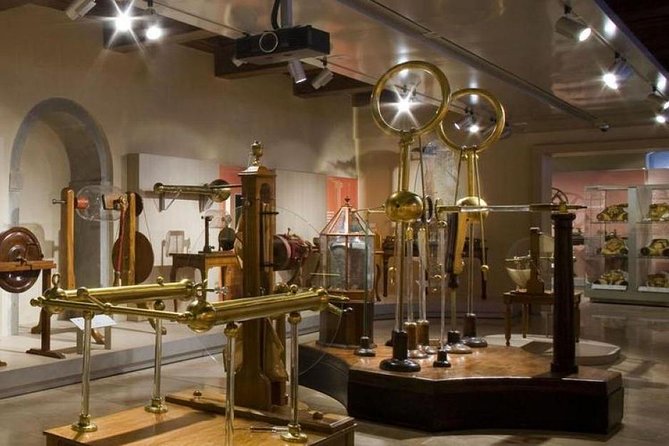
The Museo Galileo holds an extraordinary collection of scientific instruments, from the 1400s onward, gathered by Florence’s Medici and Lorraine rulers. You’ll see the tools that helped people measure time, temperature, pressure, distance, and the heavens, with Galileo’s work providing the museum’s central thread.
I like the serious historical collection and the fact that you can choose a date and request an entry time before arriving in Florence. I also like the compact visit, usually 1 to 2 hours, which fits neatly between the Uffizi, Palazzo Vecchio, and a long Florentine lunch.
The catch is important: skip-the-line service is not dependable here. Several buyers received only a voucher that the museum would not accept, while others found one shared line and no separate fast entrance. At $25.83, this ticket can be poor value if you could have bought admission directly.
In This Review
- Key points before you pay
- What you actually see at Museo Galileo
- Galileo’s place in the collection
- Five centuries of collecting in Florence
- Is the museum really about Galileo?
- How long you need inside
- The skip-the-line issue
- Timed entry and the booking trap
- Is $25.83 a fair price?
- Accessibility and practical details
- Who will enjoy this museum most?
- Should you book this ticket?
- FAQ
- Where is the Museo Galileo?
- How long does the visit take?
- What does the museum focus on?
- Is the museum only about Galileo?
- Does the ticket include admission?
- Does the ticket guarantee a skip-the-line entrance?
- Can I choose my exact entrance time?
- Can I change the date or cancel the ticket?
- Is transportation included?
- Is the museum accessible for visitors with reduced mobility?
Key points before you pay
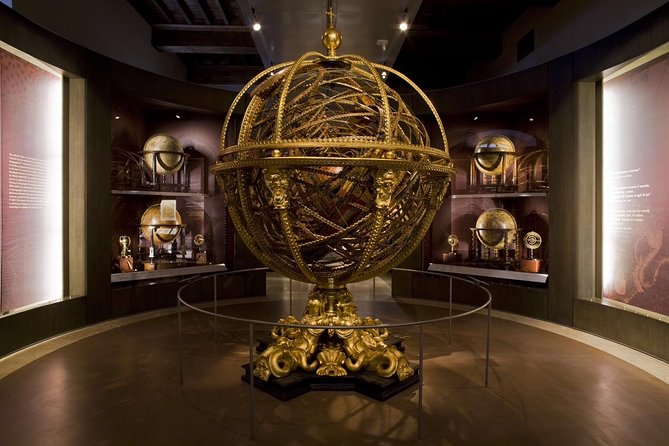
- Scientific instruments from the 1400s onward: The museum traces five centuries of collecting, with major Medici and Lorraine holdings.
- Galileo is part of a larger story: Expect a museum about the history of science, not only a gallery devoted to one astronomer.
- A short, flexible museum visit: Plan on about 1 to 2 hours, depending on how closely you study the displays.
- Your confirmed time may change: The provider can assign the closest available time on your selected date, not necessarily the time you request.
- The skip-the-line promise needs caution: Some people waited in the same line as visitors buying tickets at the door.
- The museum itself earns strong praise: Its spacious, educational rooms appeal especially to people interested in science and history.
What you actually see at Museo Galileo

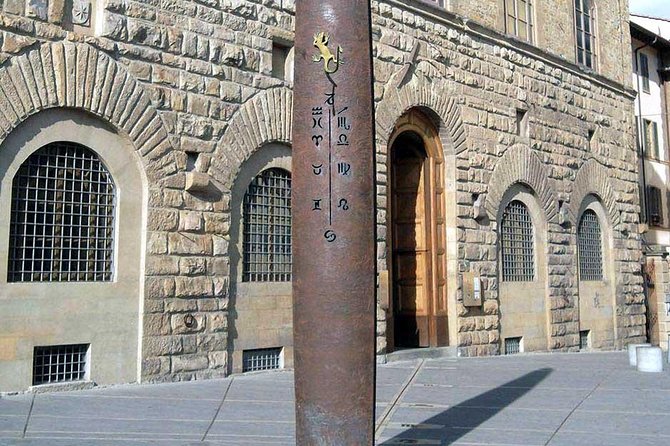
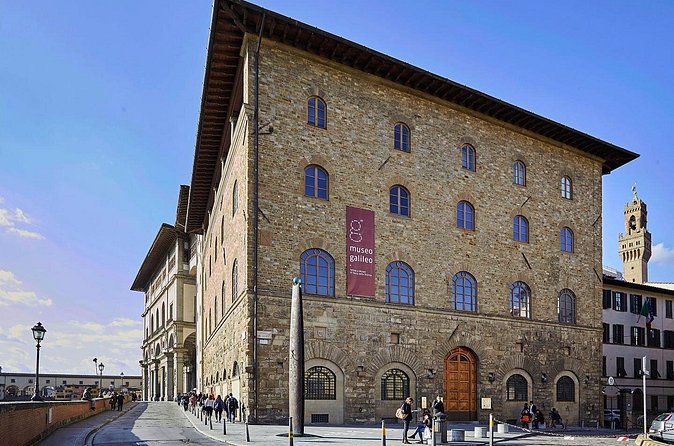
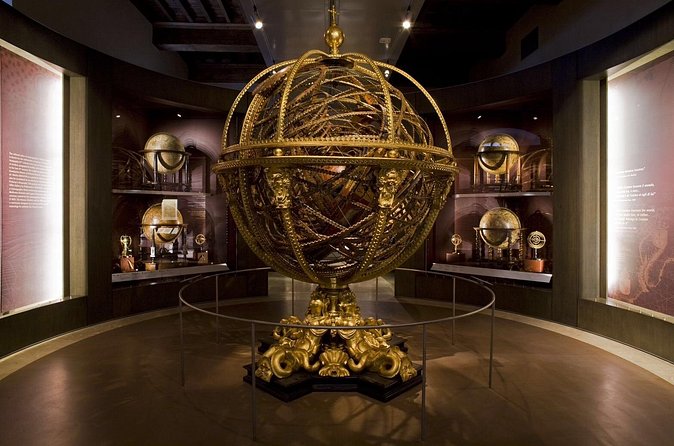
The Museo Galileo, also called the Institute and Museum for the History of Science, occupies Palazzo Castellani near Florence’s historic center. Its collection began with the Medici, who treated scientific instruments as objects worth collecting, studying, and displaying.
That idea gives the museum a different feel from a standard art museum. You are not moving from one famous painting to another. Instead, you are following the development of scientific thought through instruments built to test, measure, calculate, and observe.
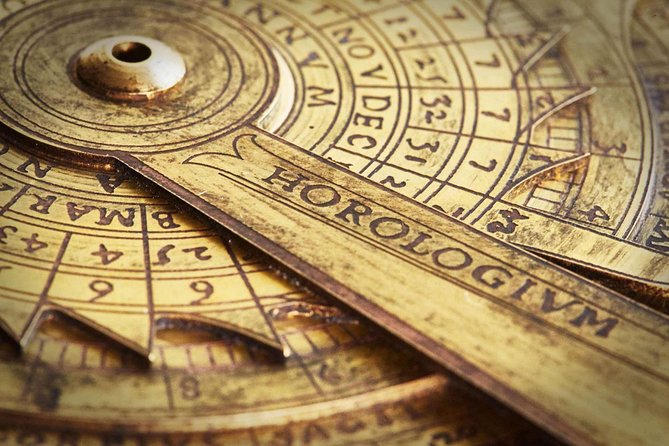
The displays cover tools connected with astronomy, physics, mathematics, navigation, thermometry, barometry, and pneumatic research. Some objects are beautiful in a decorative sense, but their real interest lies in what they allowed people to do. A finely made instrument could help measure the movement of the stars, chart a route, or test an idea about the natural world.
You should allow at least an hour if you want a quick look. Give yourself closer to two hours if you enjoy reading labels and considering how early scientists worked without modern equipment.
More skip-the-line entries:
- Florence: Skip-The-Line Uffizi Gallery Timed Entry Ticket
★ 4.5 · 27,832 reviews - Florence: Timed Entrance Ticket to Michelangelo’s David
★ 4.6 · 16,983 reviews - Florence: Michelangelo’s David Skip-the-Line Entry Ticket
★ 4.5 · 12,764 reviews
Galileo’s place in the collection
Galileo is the name most people recognize, but the museum is not simply a biography museum. Its wider purpose is to show how scientific ideas developed through instruments, experiments, and debate.
You’ll learn about Galileo’s contribution to the study of the universe and see the setting in which his work makes sense. The emphasis is on the practical side of science: how people observed the sky, measured physical forces, and tried to turn difficult questions into things they could test.
That makes this a good stop for anyone who wants more than a quick Galileo portrait. You might arrive expecting only telescopes and astronomy, then find yourself spending time with instruments connected to temperature, air pressure, motion, and calculation.
The strongest part of the experience is this broader view. Galileo becomes one important figure in a long chain of scientific work rather than an isolated genius. If your interest is only in Galileo’s personal life, the museum may feel wider than expected. If you enjoy science, it gives you much more to see.
Five centuries of collecting in Florence
The collection began under Cosimo I de’ Medici, who housed scientific instruments in the Wardrobe of the Palazzo Vecchio. This room is now known as the Map Room, a fitting home for instruments tied to geography, astronomy, and measurement.
Later, Ferdinand II and Leopold de’ Medici founded the Accademia del Cimento in 1657. Its purpose was experimental investigation of nature. The collection grew with instruments used for thermometric, barometric, and pneumatic research, then moved to the Pitti Palace.
The museum’s story also includes long periods of danger and neglect. The collections suffered during the Napoleonic occupation, and later they were scattered among university departments after Italian unification.
In the 1920s, a group devoted to protecting Italy’s scientific heritage helped rescue the instruments. The Institute of the History of Science was founded in 1927 to collect, catalog, and restore them. A national exhibition followed in Florence in 1929, and the University of Florence opened a permanent display at Palazzo Castellani in 1930.
The collection then faced damage from the destruction of the Lungarno bridges during the Second World War and the devastating Florence flood of 1966. Instruments stored in the basement and ground floor were badly harmed. Recovery work allowed the museum to reopen, while its library and research work continued.
This background matters because you are seeing more than old objects in glass cases. You are seeing a collection that survived dispersal, war damage, and flooding. That long survival adds weight to even the less famous instruments.
Is the museum really about Galileo?
Yes, but with a qualification. Galileo gives the museum its public identity, yet the collection covers the wider history of scientific study.
One visitor described it as more of a science museum than a Galileo-only museum, and that is a useful way to set your expectations. You will find material connected with the heavens and Galileo’s ideas, but also room after room of instruments linked to many other scientists and fields.
I would recommend it most strongly if you like the history of science, astronomy, mathematics, or old technology. Children and school groups may also find plenty to discuss, though the experience is not described as a guided, hands-on tour for families.
The museum has received strong praise for being educational, spacious, and interesting. One particularly positive assessment focused on the way the objects encourage questions about ingenuity and the effort to understand the stars. That is the right spirit for a visit: come ready to look closely and think about what each device was designed to solve.
More museums worth an hour:
- Florence: Leonardo Interactive Museum Entry Ticket
★ 4.5 · 11,763 reviews - Florence Accademia Gallery Tour with Entrance Ticket Included
★ 4.5 · 6,148 reviews - Uffizi Gallery Small Group Tour with Guide
★ 4.5 · 4,923 reviews - Florence: Accademia Gallery Guided Tour
★ 4.6 · 4,156 reviews
How long you need inside
The advertised duration is about 1 to 2 hours. That is enough time for a solid visit, though science fans may want the full two hours.
A quick visit works if you are fitting the museum around other sights. You can see the main displays, get a sense of Galileo’s place in the collection, and continue through Florence without giving up half a day.
If you read every explanation, stop at each instrument, or visit with students, plan toward the longer end. The museum’s size and spacious presentation make it easier to take your time than in a crowded, tightly packed gallery.
The visit does not include food, drinks, transportation, hotel pickup, or hotel drop-off. You make your own way to the museum, and the location is near public transportation.
The skip-the-line issue
This is the part I would examine most carefully before booking. The ticket is sold as a way to avoid long lines, but the actual experience has not been consistent.
Some people were told there was only one line for everyone, including people buying at the counter and people holding online vouchers. In that case, the ticket did not provide a separate entrance advantage. One buyer said the direct admission price was much lower, while the prepaid ticket cost considerably more.
Several other problems involved the ticket itself. Some buyers received a voucher but not the actual admission ticket. The museum then refused the voucher, forcing them to buy new tickets at the door. Others found the ticket later in a direct message, without noticing a separate notification before reaching the museum.
This creates two risks. First, you may pay extra without saving time. Second, you may face a serious problem if the museum does not accept the document you received.
If you still choose this option, check every message and attachment carefully before leaving your hotel. Do not wait until you are standing at the entrance. Confirm that you have the document the museum requires, not simply a booking confirmation or voucher.
The operator has stated that tickets are sent through the booking platform and that notification timing is outside its control. That may explain some missed messages, but it does not remove the practical risk for you.
Timed entry and the booking trap
You can request an admission time, but the exact time is not guaranteed. The provider assigns an entrance time within the museum’s opening hours, and it appears on the voucher issued after booking.
The confirmed time may be different from the one you selected. If your requested time is sold out, the museum automatically confirms the closest available time on the same date. The replacement could be any time during opening hours.
That matters in Florence, where you may plan museum visits tightly around reservations at the Uffizi, Accademia, or Palazzo Vecchio. Do not book this ticket until you can accept flexibility on the day.
One especially serious timing problem involved a confirmation showing 10:30 p.m., even though the museum was not open then. An error like that can ruin the visit, so inspect the assigned time as soon as you receive it. If it looks strange, contact the provider before your museum day.
The experience is limited to a maximum of 15 people, but this does not mean you receive a personal guide or a guided tour. The information describes admission, not a named guide or live commentary.
Is $25.83 a fair price?
The listed price is $25.83 per person. That may be reasonable if the ticket genuinely gives you secure timed admission during a crowded period, but it is hard to defend if you simply join the same line as everyone else.
The museum itself has earned high marks for its content, so the question is not mainly Is Museo Galileo worth seeing? It is Are these booking benefits worth the extra cost?
Several people felt they had paid much more than the door price. One cited a direct museum price of about 10 euros, though admission prices can change. The safe conclusion is that you should compare the provider’s price with the museum’s own official ticket option before paying.
A third-party ticket can still make sense if direct reservations are unavailable and you value having a date arranged in advance. But the advertised skip-the-line benefit must be real for the price to work. Based on the problems with vouchers, shared lines, cancellations, and refunds, I would not buy this blindly.
Accessibility and practical details
The museum is entirely barrier-free. Visitors with reduced mobility can use the entrance on Lungarno Anna Maria de’ Medici and call for assistance if needed.
Most people can take part. The site is near public transportation, but transportation to and from the attraction is not included. You will need to plan your own route and arrive in time for the assigned entrance slot.
School or class bookings must be arranged directly with the museum. This ticket is intended for individual visitors and small parties, with a maximum group size of 15 people.
The experience is non-refundable and cannot be changed for any reason. That includes illness, booking the wrong date, or needing to move the visit to another day. One buyer missed the museum after becoming sick, and another booked the date by mistake, only to lose the payment.
That rigid policy makes timing even more important. Check your Florence schedule, travel dates, and assigned entry time before completing the purchase.
Who will enjoy this museum most?
I would point science fans here first. The collection rewards curiosity about astronomy, instruments, mathematics, and the physical world.
It also suits history-minded visitors who want to see how powerful Florentine families supported scientific collecting. The Medici and Lorraine connection gives the museum a strong local link, rather than making it feel like a generic science exhibit placed in Florence.
Families can find material to discuss, and school groups have used the displays to start questions among students and teachers. Still, you should not expect an entertainment park or a fully interactive children’s attraction based on the available description.
Art-focused visitors may find the museum less immediately gripping than Florence’s major painting collections. If your time is very short and you have never seen the Uffizi or Accademia, those famous sights may deserve priority. But if you have an interest in how people measured the world, Museo Galileo adds a useful change of pace.
Should you book this ticket?
I recommend the Museo Galileo, but I am cautious about this particular ticket.
The museum offers a worthwhile 1 to 2 hour visit, with an unusually broad collection and a clear connection to Galileo’s study of the universe. Its story of preservation, from Medici collecting to recovery after the 1966 flood, adds meaning to the instruments.
I would book only after comparing the price and ticket conditions with the museum’s direct option. If you do use this service, verify the final entrance time and make sure the actual admission ticket is in your hands before you arrive.
Choose it if a prepaid reservation is valuable to you and you can accept a non-refundable purchase. Skip it if your main reason is to avoid a line, since the separate fast entrance may not exist and the voucher process has caused costly confusion.
FAQ
Where is the Museo Galileo?
The museum is in Florence, Italy, at Palazzo Castellani. Visitors with reduced mobility can use the entrance on Lungarno Anna Maria de’ Medici.
How long does the visit take?
The expected visit lasts about 1 to 2 hours.
What does the museum focus on?
It presents five centuries of scientific collecting, including instruments connected with astronomy, thermometry, barometry, pneumatic research, mathematics, and other areas of science.
Is the museum only about Galileo?
No. Galileo is an important focus, but the museum also covers many other scientists, instruments, and developments in the history of science.
Does the ticket include admission?
Admission is included, but you must check that you have received the proper admission ticket and not only a voucher.
Does the ticket guarantee a skip-the-line entrance?
The ticket is marketed as skipping long lines, but the museum may have one shared line for all visitors. A separate fast entrance is not guaranteed by the supplied information.
Can I choose my exact entrance time?
You can request a time, but the provider assigns the exact time. If your requested time is unavailable, the closest available time on the same date may be confirmed instead.
Can I change the date or cancel the ticket?
No. The experience is non-refundable and cannot be changed for any reason.
Is transportation included?
No. Transportation to and from the museum, as well as hotel pickup and drop-off, is not included.
Is the museum accessible for visitors with reduced mobility?
Yes. The museum is entirely barrier-free, and assistance can be requested at the Lungarno Anna Maria de’ Medici entrance.
Latest additions around Florence
- Florence: Cathedral Tour & Brunelleschi’s Dome Climb Ticket★ 5.0 · 3 reviews
- Palatina Gallery and Pitti Guided Tour in Florence★ 5.0 · 3 reviews
- Florence Uffizi Gallery Skip-the-line Tour w Art Historian Guide★ 5.0 · 3 reviews
- Private Tour: Pisa and Lucca from Florence★ 5.0 · 3 reviews
- San Gimignano Bike Tour (SOFT)★ 4.5 · 3 reviews
- Florence: Tour of Florence by rickshaw★ 5.0 · 3 reviews
- Center of Florence by golf cart★ 5.0 · 3 reviews
- From Firenze | Chianti day tour in a classic car★ 5.0 · 3 reviews
Museums, compared.
Skip-The-Line Uffizi Gallery Timed Entry Ticket
Read our review →

Florence Accademia Gallery Tour with Entrance Ticket Included
Read our review →


Accademia Gallery Guided Tour with Entry Ticket
Read our review →
Golf Cart Tour to Fiesole Roman Theatre and Museum
Read our review →
Uffizi Gallery and Accademia Gallery Guided Tour
Read our review →Browse the lists this tour appears in