
Reviewed · WORKSHOPS
Sculpture in Florence : Traditional Clay modelling class
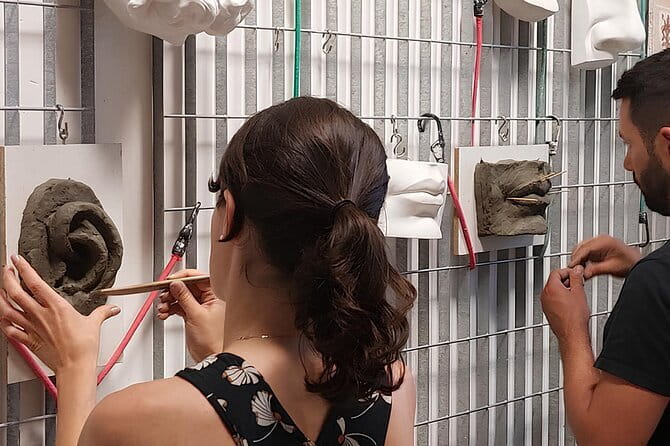
The most engaging part of this Florence class is the chance to work with the same basic material that shaped the old masters’ ideas: soft, water-based clay. For three hours, you use your hands and wooden tools to model a figure, often an anatomical detail inspired by Michelangelo’s David, inside a working local sculpture atelier.
I like the patient, hands-on teaching and the private format, where only your group takes part. I also like that this is not a quick craft stop. You get a real introduction to classical sculpture, with time to feel how clay responds to pressure, water, and touch. The main consideration is the price, $198.68 per person, which is a serious spend for a three-hour lesson, especially if you are not sure sculpture is for you.
In This Review
- Key points at a glance
- Why this Florence sculpture lesson is different
- Arriving at Via Coluccio Salutati
- Inside a working sculpture atelier
- Your three hours with clay
- Starting with the material
- Building an anatomical study
- Refining your own piece
- A good choice for families and beginners
- The teaching style and personal attention
- Is $198.68 per person good value?
- What you should bring and what you take away
- Who should book this lesson?
- Should you book the Florence clay modeling class?
- FAQ
- Where does the sculpture class begin?
- Where does the activity end?
- How long does the class last?
- What days and hours are listed?
- Is the class offered in English?
- Is this a private activity?
- Do I need previous sculpture experience?
- What materials are included?
- Are shipping and terracotta costs included?
- Can I cancel for a full refund?
Key points at a glance
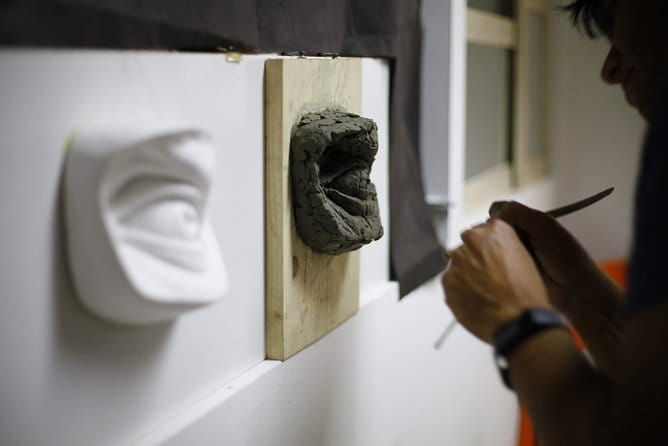
- Traditional clay modeling: Use water-based clay and wooden modeling tools to form your own artwork.
- Classical subject matter: Your exercise usually follows an anatomical detail from Michelangelo’s David.
- Private instruction: Only your group participates, making it easier to ask questions and receive direct help.
- Real sculpture atelier: The class takes place in a local working studio rather than a standard sightseeing venue.
- Beginner-friendly teaching: No prior clay experience is required, and guidance is given throughout the process.
- Family flexibility: A five-year-old child was given a small table and allowed to make a separate model during a family booking.
Why this Florence sculpture lesson is different
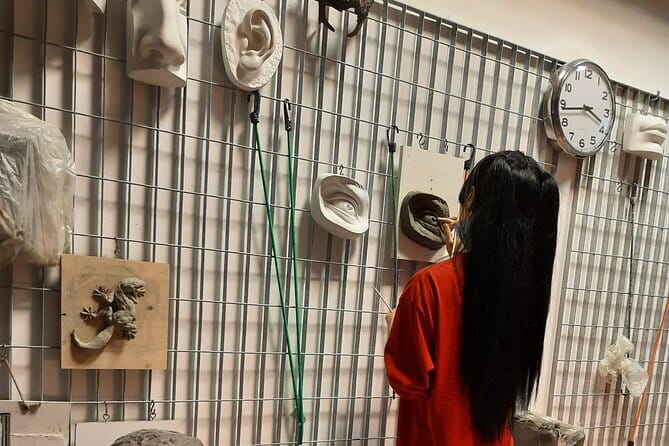
Florence offers plenty of ways to look at art. This one asks you to make it.
That change matters. In a museum, you stand in front of a finished sculpture and try to understand the artist’s choices. Here, you start with an unformed piece of clay. You press, pinch, smooth, add, and adjust. The material gives immediate feedback. Too much pressure changes a shape. A little moisture makes the surface easier to work. A small shift in proportion can alter the whole figure.
The lesson focuses on classical sculpture through clay modeling, the starting point for many larger works. You are not carving marble or casting bronze, and you should not expect to leave with a finished Michelangelo. The aim is to understand the first stage of shaping form.
The subject is usually an anatomical detail from Michelangelo’s David. That may mean working on part of the body rather than making a complete standing figure. This is a useful choice for a short class. A full sculpture would demand more time and advanced control. A smaller study lets you focus on proportion, structure, and surface.
The experience is provided by Octavio Palomino Sculptor. The available information does not name the individual instructor, so you should think of the class as a lesson led by the atelier’s sculptor rather than a named museum lecture.
More Florence options worth a look before you decide
- Florence: Pasta Cooking Class with Unlimited Wine
★ 4.9 · 10,285 reviews - Florence Pizza or Pasta Class with Gelato Making at a Tuscan Farm
★ 5.0 · 6,801 reviews - Florence: Pasta & Tiramisu Cooking Class with Unlimited Wine
★ 4.9 · 6,708 reviews
Arriving at Via Coluccio Salutati
The meeting point is Via Coluccio Salutati, 3r, 50126 Firenze FI, Italy. The class ends at the same address, so you do not need to arrange a second pickup point or find your way back across Florence afterward.
The location is near public transportation. That helps, but the details provided do not specify which bus or tram route is best, so check your route before setting out. Give yourself enough time to find the street number and enter the studio calmly. A three-hour creative lesson is best started without a rushed arrival.
The opening information lists Monday availability from 9:00 a.m. to 4:00 p.m., for the period January 15, 2020, through March 7, 2027. Since the listing gives a Monday schedule rather than a broad daily timetable, confirm the exact start time when booking. The stated duration is about three hours.
You receive confirmation at the time of booking, and the ticket is mobile. That means you can keep the booking on your phone rather than print paperwork.
Inside a working sculpture atelier
The setting is important. You are not simply seated at a tourist workshop in a hotel room. You work inside a local sculpture atelier, where the tools and materials connect to the tradition being taught.
That setting can make the lesson feel more serious and focused. You see clay as an artist’s working material, not just as something for a children’s craft table. The room gives context to the method, while the instructor shows you how to handle the material.
The class is private. Only your own group participates, which is one of the strongest practical features. You can ask for help without waiting behind a large group, and the instructor can look closely at your model. If you are nervous about having no experience, that personal attention should make the first steps easier.
A private class also suits mixed groups. One person may want technical advice, another may simply want to play with the clay, and children may need a simpler project. The instructor has shown flexibility with family groups, setting up a small table for a five-year-old who wanted to make a separate model.
Your three hours with clay
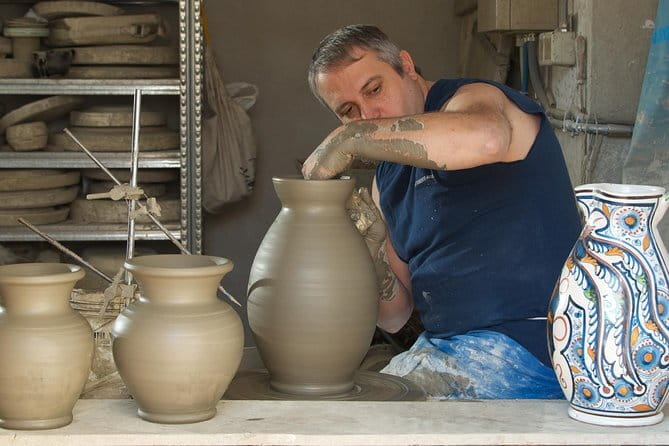
The exact minute-by-minute schedule is not provided, but the lesson follows a clear artistic process.
A different way to spend the same Florence day:
- Florence: Skip-The-Line Uffizi Gallery Timed Entry Ticket
★ 4.5 · 27,832 reviews - Tuscany Day Trip from Florence: Siena, San Gimignano, Pisa and Lunch at a Winery
★ 5.0 · 21,634 reviews - Florence: Timed Entrance Ticket to Michelangelo’s David
★ 4.6 · 16,983 reviews - Florence: Michelangelo’s David Skip-the-Line Entry Ticket
★ 4.5 · 12,764 reviews
Starting with the material
You begin with traditional water-based clay, along with wooden tools supplied for the modeling. The clay is moist and soft, with a texture that responds directly to your fingers. This is part of the appeal. You learn by touch rather than by watching a demonstration from a distance.
The instructor guides you through the basic handling of the material. You begin to see how a form grows from a simple mass. The work is physical but not demanding in the way marble carving can be. You can reshape clay, correct a mistake, and try again.
That forgiving quality makes the lesson suitable for first-timers. You do not need a background in drawing, sculpture, or art history. You need patience and a willingness to follow instructions.
Building an anatomical study
The central exercise usually takes inspiration from an anatomical detail of David. This gives the class a strong connection to Florence without turning it into a museum tour.
Working on a detail lets you concentrate on the structure beneath the surface. You may be thinking about the curve of a muscle, the angle of a joint, or the transition from one plane to another. The instructor’s guidance helps you notice these changes instead of treating the form as a flat outline.
For a beginner, this is where the lesson becomes more than a souvenir activity. You start to understand that classical sculpture depends on close observation. The goal is not simply to make clay look attractive. It is to give the shape weight, balance, and believable form.
The class may also help you look at Florence’s famous sculptures differently afterward. Once you have tried to form an anatomical detail yourself, you may pay more attention to the difficult transitions and subtle surfaces in the original works.
Refining your own piece
As the clay takes shape, you refine it with your hands and the wooden tools. The instructor offers corrections and encouragement along the way. The emphasis is on learning the process, not producing a perfect museum-quality object in a single sitting.
That is worth keeping in mind. The class is designed for a three-hour introduction. Your finished work will be your own study, not a professional replica. The value comes from making it and understanding the decisions involved.
The supplied materials include clay and wooden modeling instruments. Costs for shipping, reproduction in a mold, and firing the piece in terracotta are not included. If you want your work reproduced or turned into terracotta, ask about those extra expenses before committing. The information provided does not say whether every piece can be fired, how much that costs, or how it would be sent to you.
A good choice for families and beginners

You do not need previous clay experience. The instructor works alongside participants and provides support as they model their pieces. That makes the class a sensible choice for an adult who loves art but feels unsure about taking a formal sculpture lesson.
It can also work well for a family. A booking for four people included two young participants, and a five-year-old was accommodated with a small table and a separate model. This does not mean every child will follow the same project or that a very young child can complete the main anatomical exercise. It does show that the teaching can adapt when a younger family member wants to take part.
For families, remember that the standard price is per person, including children who are booked into the activity. Ask ahead about very young children if they are not part of the original reservation. The five-year-old arrangement was handled politely, but the supplied details do not establish a formal age policy.
The private format helps here. Your group can work at its own pace, and a parent can focus on a child without worrying about holding up a larger class.
The teaching style and personal attention
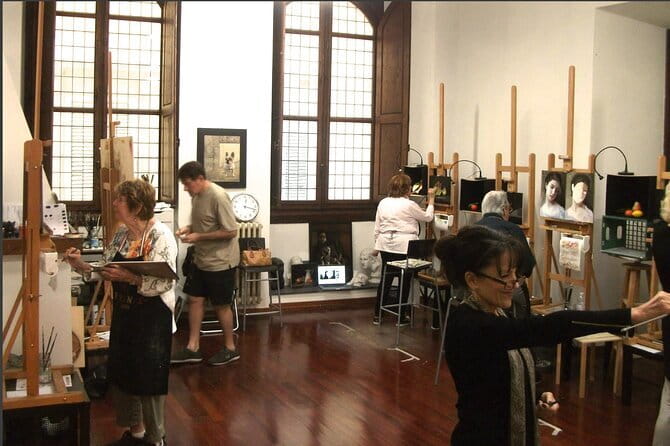
The strongest part of the experience is the instructor’s patient approach. Beginners need practical help at the exact moment a form starts to collapse or a proportion feels wrong. A calm teacher can make the difference between frustration and a satisfying result.
The class is conducted in English. That is useful for visitors who want direct explanations while they work. The available information does not list the instructor’s name, but the activity is operated by Octavio Palomino Sculptor.
You should expect guidance rather than a lecture. Your hands stay busy, and the instruction relates to what you are making. If you want to know why a shape needs changing, this is the time to ask. The private format gives you room for those questions.
The personal side of the atelier also comes through in the family arrangement. The instructor is described as a new father, and a baby was present during one lesson. That is a small detail, but it suggests a working studio with a personal, local character rather than a polished tourist production. Some visitors will find that warmth appealing. Others may prefer a more formal, uninterrupted classroom setting.
Is $198.68 per person good value?
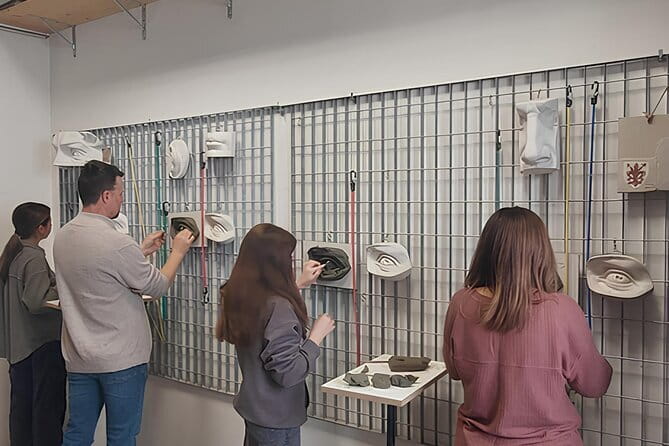
At $198.68 per person, this is not a low-cost Florence activity. You are paying nearly $200 for about three hours, before any possible fee for shipping, mold reproduction, or terracotta firing.
The price makes more sense if you value private instruction in a real atelier. You are not paying only for clay. You are paying for the sculptor’s time, direct correction, supplied materials, a small-group setting, and an art lesson tied to Florence’s classical tradition.
It is less convincing if you mainly want a small handmade souvenir. A cheaper craft workshop may suit you better. This class is aimed at people who want to understand how sculpture begins and who appreciate personal instruction.
The private arrangement improves the value for families or small groups with different skill levels. If four people book together, everyone can receive attention without sharing the room with strangers. Solo participants should think carefully about the cost, since the per-person rate remains high even though the lesson is private.
The rating information supplied for this experience is very strong: 100 percent of participants recommend it, based on 12 reviews, with a five-star rating. That is a small sample, so I would treat it as encouraging rather than conclusive. Still, the praise centers on the things that matter most here: patient teaching, help for beginners, and flexibility with families.
What you should bring and what you take away
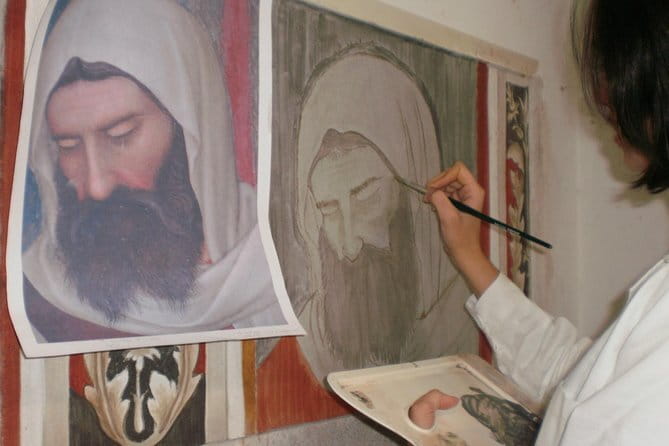
Clay and wooden tools are included. The supplied details do not state whether aprons, lockers, towels, or protective clothing are provided, so wear something practical that you do not mind getting dirty.
Your main result is your own modeled artwork. Shipping is not included, and neither are a mold reproduction or terracotta version. Do not assume that your piece will automatically be fired or delivered. Ask about those options if preserving the sculpture matters to you.
The deeper souvenir is the skill of looking. After working through the form yourself, you may notice how much planning lies behind a classical statue. You begin to see sculpture as a process of building, correcting, and refining, not as a single flash of inspiration.
Who should book this lesson?
I would choose this for an art lover who has already seen Florence’s major sculpture collections and wants a more active experience. It also fits a couple, family, or small private group that prefers making something together over joining another guided walk.
Beginners are welcome, and the teaching is designed to support people who have never handled clay before. Children can take part, though you should confirm arrangements for very young participants.
I would hesitate if you have only a short time in Florence and want to spend every hour in the historic center. The atelier is at Via Coluccio Salutati, and the experience itself takes about three hours, not counting transport. I would also hesitate if you expect to bring home a finished terracotta sculpture without paying extra.
Should you book the Florence clay modeling class?
Book it if you want a private, hands-on lesson that connects your own work with Florence’s classical sculpture tradition. The patient instruction, beginner-friendly format, and flexible approach for families give the class real appeal.
Skip it if $198.68 feels too high for a three-hour activity or if you want a fully finished sculpture included in the price. Before paying, confirm the Monday start time, ask about any costs for firing or shipping, and check how your group’s youngest participants will be accommodated. For the right person, this is a thoughtful way to spend part of a Florence visit, with a clay-covered artwork and a better eye for the city’s masterpieces afterward.
FAQ
Where does the sculpture class begin?
The class begins at Via Coluccio Salutati, 3r, 50126 Firenze FI, Italy.
Where does the activity end?
The activity ends back at the meeting point on Via Coluccio Salutati.
How long does the class last?
The lesson lasts approximately three hours.
What days and hours are listed?
The listed opening time is Monday from 9:00 a.m. to 4:00 p.m. The exact start time should be confirmed when booking.
Is the class offered in English?
Yes. The experience is offered in English.
Is this a private activity?
Yes. Only your group participates in the activity.
Do I need previous sculpture experience?
No. The class is suitable for beginners, and the sculptor provides guidance during the modeling process.
What materials are included?
Clay and wooden modeling instruments are included.
Are shipping and terracotta costs included?
No. Shipping, mold reproduction, and reproduction in terracotta are not included.
Can I cancel for a full refund?
Yes, if you cancel at least 24 hours before the local start time. Cancellations or changes made less than 24 hours before the start time are not accepted for a refund.
Latest additions around Florence
- Florence: Cathedral Tour & Brunelleschi’s Dome Climb Ticket★ 5.0 · 3 reviews
- Palatina Gallery and Pitti Guided Tour in Florence★ 5.0 · 3 reviews
- Florence Uffizi Gallery Skip-the-line Tour w Art Historian Guide★ 5.0 · 3 reviews
- Private Tour: Pisa and Lucca from Florence★ 5.0 · 3 reviews
- San Gimignano Bike Tour (SOFT)★ 4.5 · 3 reviews
- Florence: Tour of Florence by rickshaw★ 5.0 · 3 reviews
- Center of Florence by golf cart★ 5.0 · 3 reviews
- From Firenze | Chianti day tour in a classic car★ 5.0 · 3 reviews
Workshops, compared.

Florence Pizza or Pasta Class with Gelato Making at a Tuscan Farm
Read our review →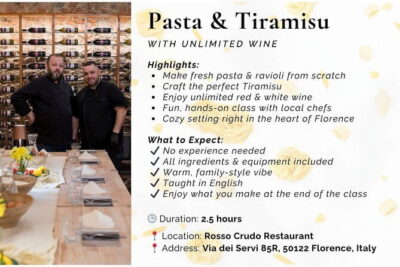
Pasta & Tiramisu Cooking Class with Unlimited Wine
Read our review →
Cooking Class and Lunch at a Tuscan Farmhouse with Local Market Tour from Florence
Read our review →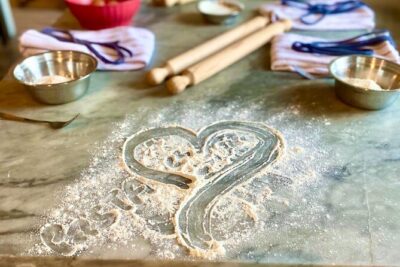
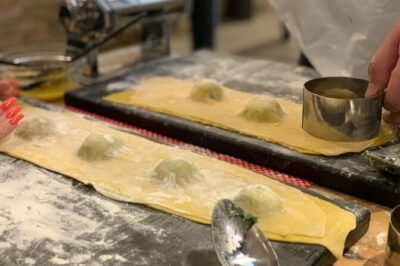
Cooking Class Pasta & Tiramisu Making Unlimited Wine
Read our review →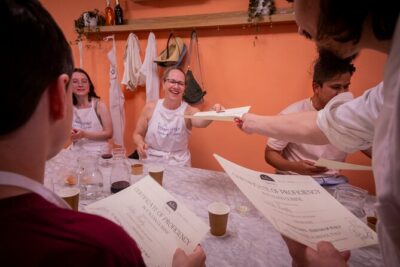
Florence Cooking Class The Art of Making Gelato & Authentic Pizza
Read our review →Browse the lists this tour appears in