Reviewed · GUIDED
Private guided tour of Hidden Symbols in Santa Maria Novella
Santa Maria Novella is not just a pretty church beside Florence’s main railway station. Its facade, chapels, paintings, and cloisters form a kind of visual code. This private tour with Sonia Sánchez focuses on the symbols, myths, religious ideas, and stories that can be easy to miss when you look at the art on your own.
I like two things right away. The private format means your group of up to 10 can ask questions without competing with a crowd, and the 90-minute visit keeps the subject focused. I also like the guide’s reported style: clear explanations, patience when a point needs repeating, and strong knowledge of mythology and art. The main consideration is simple: the €7.50 adult admission, or €5 for ages 11 to 17, is not included in the tour price.
In This Review
- Key points to know before booking
- Why Santa Maria Novella rewards a closer look
- Starting with Alberti’s carefully ordered facade
- Masaccio’s Trinity and the power of painted space
- Giotto’s Crucifix and the language of devotion
- The Strozzi and Tornabuoni chapels
- The Strozzi Chapel in Mantua
- Green Cloister and Spanish Chapel
- Paolo Uccello’s frescoes in the museum
- Sonia Sánchez’s guiding approach
- Is $201.67 good value for up to 10 people?
- Timing, access, and cancellation details
- Who should book this Santa Maria Novella tour?
- Should you book it?
- FAQ
- Where does the tour begin?
- What time does the tour start?
- How long does the experience last?
- Where does the tour end?
- How many people can join the private tour?
- Is admission to Santa Maria Novella included?
- Who guides the experience?
- What places are visited inside Santa Maria Novella?
- Is the tour available with a mobile ticket?
- Can I cancel for a full refund?
Key points to know before booking
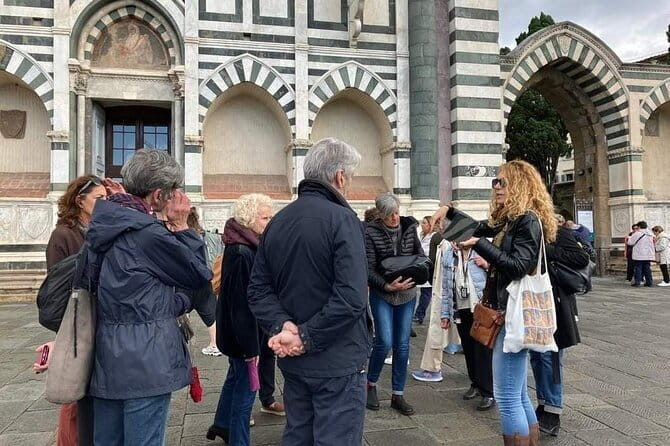
- Alberti’s facade comes first: You begin outside, reading the proportions and symbols of one of Florence’s most famous church fronts.
- Masaccio’s Trinity is a major focus: The tour helps you look at this celebrated work as both painting and coded religious statement.
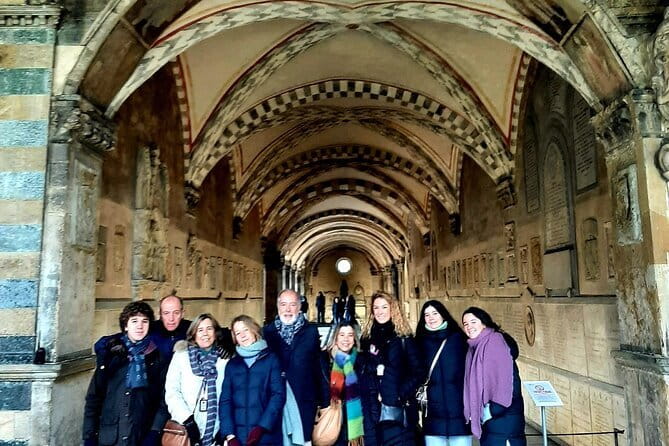
- The route covers more than the main nave: Expect the chapels, Green Cloister, Spanish Chapel, and museum areas with Paolo Uccello frescoes.
- Sonia Sánchez leads the visit: She is an official art historian guide with a special focus on symbols in art.
- The tour is private for your group: Up to 10 people can take part, with the experience ending where it begins.
- It starts at 3:30 p.m.: Allow time to arrive at Piazza di Santa Maria Novella, 18/A, near public transportation.
Why Santa Maria Novella rewards a closer look
Santa Maria Novella is an ideal place for a tour about symbols because it brings together architecture, painting, sculpture, theology, and family power in one compact complex. You are not simply moving from one famous artwork to another. You are learning how images worked for the people who commissioned, painted, and prayed before them.
The church’s Dominican setting matters. The art was made to teach, inspire devotion, and shape how people understood biblical stories and religious ideas. A guide focused on symbolism can point out links that are not obvious from a quick visit.
I would choose this tour if you already know the basic sights of Florence and want a more focused look at how Renaissance art communicates. It also suits you if terms such as mythology, religious iconography, numerology, geometry, and hidden meaning make you curious rather than tired.
The subject can be demanding, though. This is not a general Florence sightseeing walk with a little church history added. Much of the time is spent looking closely at artworks and interpreting their details. If you prefer a fast tour centered on photographs and broad historical facts, the emphasis may feel narrow.
More Florence options worth a look before you decide
- Cinque Terre and Pisa Tower Tour from Florence Semi Private
★ 5.0 · 1,406 reviews - From Florence: Private Chianti Hills Tour with Tasting
★ 4.3 · 809 reviews - Private Self-Guided E-Bike Ride in Tuscany with Vineyard Visit
★ 5.0 · 775 reviews
Starting with Alberti’s carefully ordered facade
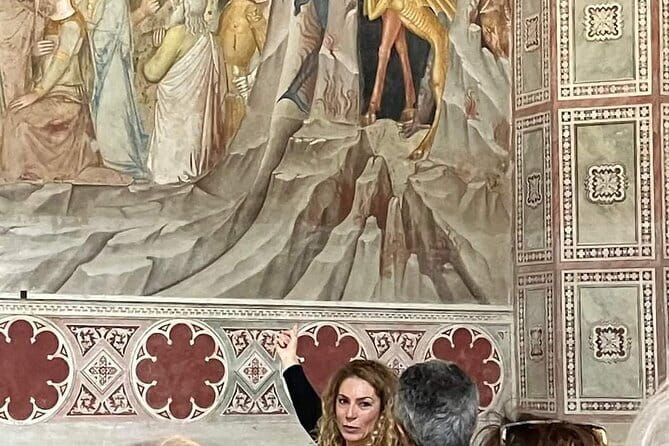
The visit begins with the facade designed by Leon Battista Alberti. It is one of Florence’s most recognizable architectural fronts, with a lower section connected to the older church and a more ordered upper section framed by classical forms.
Here, the point is not only to admire the marble. You will be encouraged to consider why the facade looks so balanced and how its shapes, circles, lines, and proportions carry meaning. Alberti was deeply interested in mathematics, harmony, and classical architecture, so the facade offers a useful introduction to the tour’s central idea: art can say something through structure as well as through images.
This opening stop is valuable because it gives you a method for the rest of the visit. Instead of asking only who painted a work or when it was made, you begin asking why a particular shape, gesture, object, or placement appears where it does.
Since the starting point is outside at Piazza di Santa Maria Novella, 18/A, you should arrive a little early. The meeting point is central and close to public transportation, but Florence’s streets and piazzas can be busy with people, luggage, and buses near the station.
Masaccio’s Trinity and the power of painted space
Inside, Masaccio’s Trinity is one of the essential stops. The fresco is famous for its convincing illusion of a chapel opening in the wall. Its painted architecture creates a sense of depth that changed how viewers understood space in art.
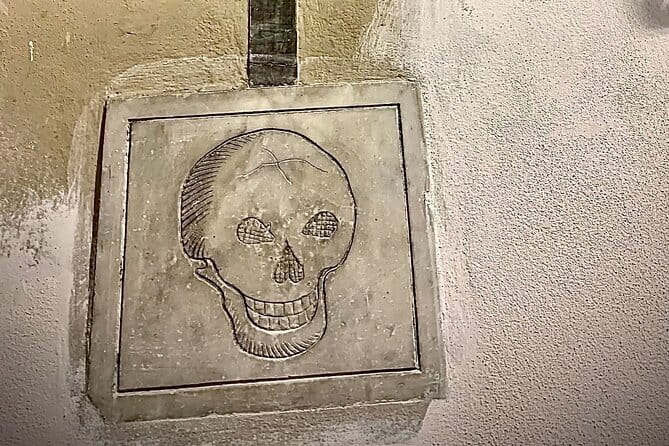
A symbols-focused explanation can add another layer. The arrangement of God the Father, Christ, and the Holy Spirit is not simply a scene to admire. The figures, the cross, the donors, and the skeleton below carry connected religious messages about faith, death, and salvation.
You will likely spend time looking up and down, not just straight ahead. The work asks you to read its entire structure. That is one reason a guide can help: the meaning is spread across the composition, and a quick glance can reduce it to a clever illusion of depth.
The drawback is that this stop may feel technical if you are not used to formal art analysis. The benefit is that once you understand how the visual pieces connect, you can use the same way of looking in other churches and museums across Florence.
Giotto’s Crucifix and the language of devotion
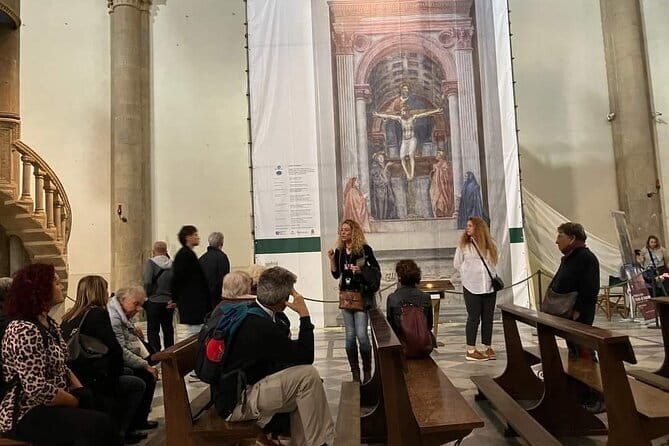
Giotto’s Crucifix is another important stop. Giotto helped move Italian painting toward more human, emotionally direct figures, and a crucifix invites close attention to the way suffering is shown.
Here, the discussion is likely to move between artistic choices and religious purpose. The body of Christ, the shape of the cross, and the overall placement affect how you respond to the image. A guide can explain how an artwork functioned in worship, not just how it fits into a timeline of famous painters.
I appreciate this kind of context because it keeps the visit from becoming a parade of names. You are not asked to admire Giotto simply because he is important. You are given reasons to notice what his work is doing.
A different way to spend the same Florence day:
- Florence: Skip-The-Line Uffizi Gallery Timed Entry Ticket
★ 4.5 · 27,832 reviews - Tuscany Day Trip from Florence: Siena, San Gimignano, Pisa and Lunch at a Winery
★ 5.0 · 21,634 reviews - Florence: Timed Entrance Ticket to Michelangelo’s David
★ 4.6 · 16,983 reviews - Florence: Michelangelo’s David Skip-the-Line Entry Ticket
★ 4.5 · 12,764 reviews
The Strozzi and Tornabuoni chapels
The Strozzi Chapel and Tornabuoni Chapel bring private wealth and family identity into the story. Renaissance chapels were places of devotion, but they also reflected the influence and ambitions of the families who paid for them.
In the Strozzi Chapel, look for the relationship between the setting, the decoration, and the family that commissioned it. The tour’s focus on symbols should help you consider how religious scenes could also express status, memory, and family presence.
The Tornabuoni Chapel is especially important for its painted narrative cycle. Its scenes are religious, but they also reflect the world of Renaissance Florence through clothing, architecture, gestures, and the presence of contemporary figures. You may find that the chapel works on two levels: it tells sacred stories while also showing how Florentine patrons wanted to be seen.
These chapels are a strong reason to choose a private visit. If a scene catches your attention, you can ask Sonia to explain it again or connect it to another work. The private setting does not guarantee that every personal interest will fit into 90 minutes, but it gives you more room to shape the conversation than a large group tour usually allows.
The Strozzi Chapel in Mantua
The itinerary also includes the Strozzi Chapel in Mantua. The wording can be confusing, since the main experience takes place at Santa Maria Novella in Florence. If this stop matters to you, confirm the exact location and scope with the provider before booking.
That small check is worthwhile because a 90-minute visit has a firm limit. You want to know precisely which spaces are included inside the complex and how the guide uses the chapel’s name. The available information identifies it as part of the route, but does not provide a separate description of its artwork or location.
Green Cloister and Spanish Chapel
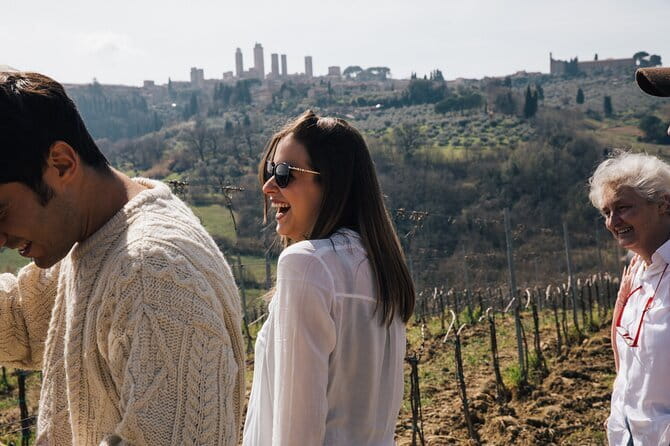
The Green Cloister gives the tour a change of pace. After the grand facade and major paintings, a cloister lets you read art in a quieter architectural setting. Its frescoes are known for their green-toned appearance, and the setting encourages you to notice how walls, walkways, and painted scenes work together.
The Spanish Chapel adds another major group of frescoes. Its imagery is tied to Dominican teaching and religious thought, so it is a particularly good match for a tour centered on meaning rather than quick visual appeal.
You may find the Spanish Chapel more demanding than the headline works. Large painted programs can contain many figures, symbols, and scenes, and it is easy to lose track of the main idea. Sonia’s stated specialty is useful here because the guide can help sort the important details from the decorative ones.
One practical point: cloisters and chapels may feel different from the main church in light, space, and atmosphere. Wear comfortable shoes, even though this is a short tour, and be ready to stand while looking upward or across broad walls.
Paolo Uccello’s frescoes in the museum
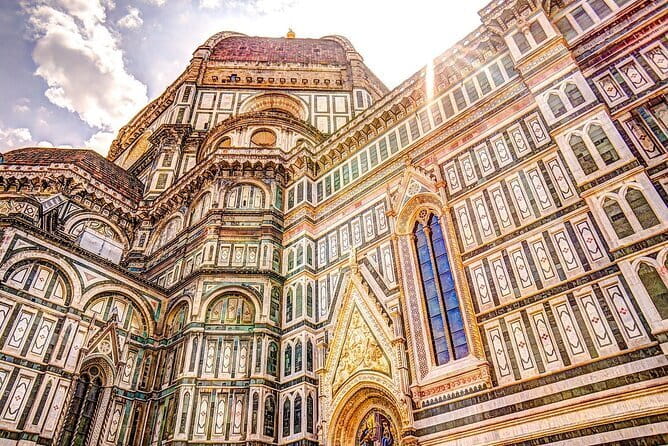
The final part includes the museum and frescoes by Paolo Uccello. This adds another layer to the visit because you are no longer seeing only the church’s best-known public spaces. The museum gives the tour room to connect works that may be separated in a standard self-guided visit.
Uccello is especially interesting for the way his art handles movement, perspective, and dramatic scenes. A guide focused on hidden symbols can help you look beyond the surface action and consider the objects, figures, and arrangement within each fresco.
The museum stop may become the most substantial part of the experience, depending on the pace. One piece of practical feedback is worth noting: the museum was described as the main focus of one visit, while the rest of the complex was also praised. That suggests you should be prepared for the balance between church, chapels, cloisters, and museum to depend on the day and the group’s questions.
If there is a particular fresco you care about, tell Sonia at the start. The tour is private, so your interests can have more influence than they would on a fixed large-group route.
Sonia Sánchez’s guiding approach
The strongest feature of this experience is the guide. Sonia Sánchez is identified as an official art historian guide specializing in hidden symbols in art. The available feedback repeatedly praises her professionalism, pleasant manner, clarity, and patience.
That patience matters on a symbolism tour. These subjects can involve unfamiliar religious references or mythology, and a good explanation needs to meet you at your level. Sonia is also praised for answering questions and giving people space when needed, which suggests a warm style rather than a nonstop lecture.
Her work extends beyond this church to other major Florence sights, including the Uffizi, Accademia, and Palazzo Vecchio. That broader knowledge can help if you want to place Santa Maria Novella within a larger Florence visit.
The language point is less clear. Several comments describe Sonia as a Spanish guide, but the tour information does not state a complete language list. If you need the tour in a specific language, ask before paying.
Is $201.67 good value for up to 10 people?
The listed cost is $201.67 per group, not per person, for as many as 10 participants. For a full group, that works out to about $20 per person before admission. A couple or solo visitor will pay more per head, but you are buying time with a dedicated guide rather than joining a general group.
Admission is extra: €7.50 for adults and €5 for children ages 11 through 17. The tour price therefore does not tell you the full cost, and you should budget for the entrance ticket separately.
I see the value most clearly for families, friends, or a small group with a shared interest in art. Ten people can make the price attractive, especially if you want to ask questions and keep the visit at a comfortable pace.
For one person, the cost is harder to justify unless a private guide is a priority. You might get more value by pairing this experience with another private Florence visit, since Sonia also guides other major sights, but the information provided does not state that a combined booking or discount is available.
Timing, access, and cancellation details
The tour begins at 3:30 p.m. and lasts about one hour and 30 minutes. That makes it easy to place after lunch or before an evening meal, and the end point is the same as the meeting point.
The activity is near public transportation, service animals are allowed, and most people can participate. No special mobility details are provided, so if you have specific access needs, contact the provider before booking rather than assuming every chapel or museum area will suit you.
You receive confirmation when booking, and the ticket is mobile. The experience offers free cancellation if you cancel at least 24 hours before the start time. Cancellations or changes inside that window are not refunded or accepted, and all cutoffs use local Florence time.
Who should book this Santa Maria Novella tour?
I would recommend it to you if you:
- Want to understand symbols instead of simply checking off famous artworks.
- Prefer a private guide and the chance to ask questions.
- Are interested in mythology, religious imagery, and Renaissance art.
- Have a family or small group that can share the €201.67 group price.
- Want a focused visit lasting 90 minutes rather than a long museum marathon.
- Value a guide who can explain ideas in simple, patient language.
I would be more cautious if you want a broad introduction to Florence, if you dislike discussions of symbolism, or if you are traveling alone on a tight budget. The tour is focused on Santa Maria Novella, not a general walk through the city.
Should you book it?
Book this tour if you want Santa Maria Novella to become more than a beautiful church near the station. The combination of Alberti’s facade, Masaccio’s Trinity, Giotto’s Crucifix, the family chapels, cloisters, Spanish Chapel, and Uccello’s frescoes gives you a serious art visit in a manageable 90 minutes.
The best reason to choose it is Sonia Sánchez’s personal guiding style: clear, friendly, patient, and centered on art’s coded details. Just confirm the tour language, clarify the reference to the Strozzi Chapel in Mantua, and remember that admission is extra. For a small group that wants a thoughtful look at Florence’s art, this is a strong choice.
FAQ
Where does the tour begin?
It begins at P.za di Santa Maria Novella, 18/A, 50123 Firenze FI, Italy.
What time does the tour start?
The scheduled start time is 3:30 p.m.
How long does the experience last?
The tour lasts approximately one hour and 30 minutes.
Where does the tour end?
The activity ends back at the meeting point.
How many people can join the private tour?
The private activity is available for your group only, with up to 10 people.
Is admission to Santa Maria Novella included?
No. Admission is listed separately at €7.50 for adults and €5 for children ages 11 to 17.
Who guides the experience?
The guide is Sonia Sánchez, an official art historian guide specializing in hidden symbols in art.
What places are visited inside Santa Maria Novella?
The route includes Masaccio’s Trinity, Giotto’s Crucifix, the Strozzi Chapel, the Tornabuoni Chapel, the Strozzi Chapel in Mantua, the Green Cloister, the Spanish Chapel, and the museum with Paolo Uccello’s frescoes.
Is the tour available with a mobile ticket?
Yes. The experience provides a mobile ticket.
Can I cancel for a full refund?
Yes, if you cancel at least 24 hours before the experience start time. Cancellations or changes made less than 24 hours before the start are not refunded or accepted.
Latest additions around Florence
- Palatina Gallery and Pitti Guided Tour in Florence★ 5.0 · 3 reviews
- Florence: Cathedral Tour & Brunelleschi’s Dome Climb Ticket★ 5.0 · 3 reviews
- Florence Uffizi Gallery Skip-the-line Tour w Art Historian Guide★ 5.0 · 3 reviews
- Private Tour: Pisa and Lucca from Florence★ 5.0 · 3 reviews
- San Gimignano Bike Tour (SOFT)★ 4.5 · 3 reviews
- Florence: Tour of Florence by rickshaw★ 5.0 · 3 reviews
- Center of Florence by golf cart★ 5.0 · 3 reviews
- From Firenze | Chianti day tour in a classic car★ 5.0 · 3 reviews
Guided, compared.

The Best tour in Florence: Renaissance & Medici Tales – guided by a STORYTELLER
Read our review →

Duomo Guided Tour with Optional Dome Climb Upgrade
Read our review →