
Reviewed · WORKSHOPS
Palette Knife Painting Class Florence
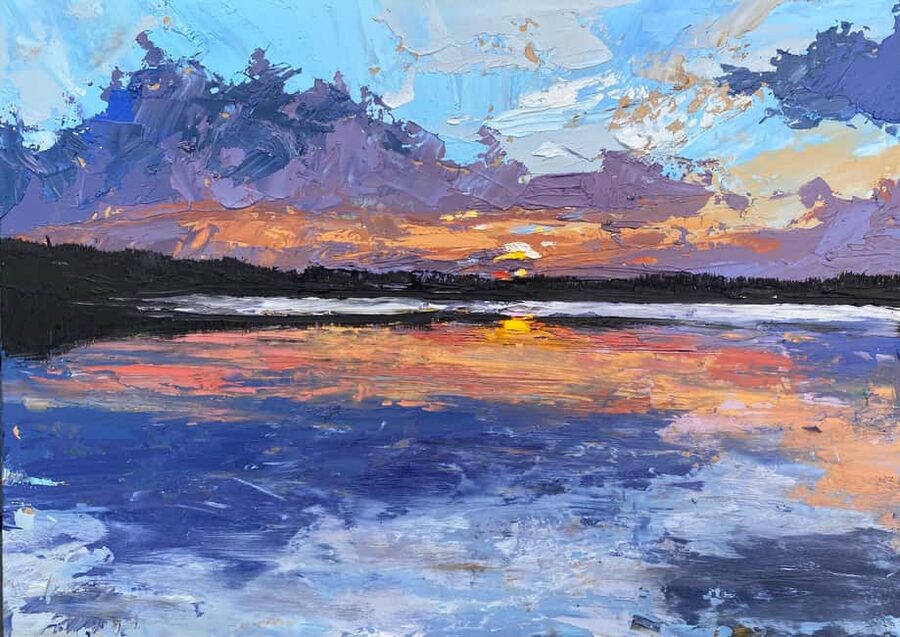
Palette knife painting turns oil paint into something bold, thick, and tactile. Instead of smoothing color with a brush, you spread, scrape, layer, and shape it with a small metal knife. At Geko Art Studio, you work in a local atelier with a patient instructor, often receiving close, one-on-one help even within the small group of eight.
I like the calm studio setting and the fact that every major supply is provided, from oil colors to canvas. I also like the warm personal touch of Rosanna, the studio host, and the included break with coffee, juice, water, and a sweet treat from the bakery next door. The main drawback is practical: oil paint dries slowly, so taking your picture home on the day may require paid shipping.
In This Review
- Key points to know before booking
- Why palette knife painting makes a good Florence activity
- Inside Geko Art Studio across the Arno
- The first stage: choosing a subject and preparing to paint
- Learning the palette knife, one mark at a time
- Building depth, texture, and your own style
- A break with coffee and something sweet
- What the final hour is like
- Getting your artwork home
- Price, timing, and language choices
- Who will enjoy this class most
- Booking flexibility and small practical details
- Should you book the Palette Knife Painting Class Florence?
- FAQ
- Where does the palette knife painting class take place?
- How long does the class last?
- How much does the class cost?
- What painting supplies are included?
- Are refreshments included?
- Do I need painting experience?
- How many people can join the class?
- What languages are available?
- Can I choose the class time?
- Can I take my painting home after class?
Key points to know before booking
- A hands-on three-hour studio class: You make your own oil painting rather than watching a demonstration.
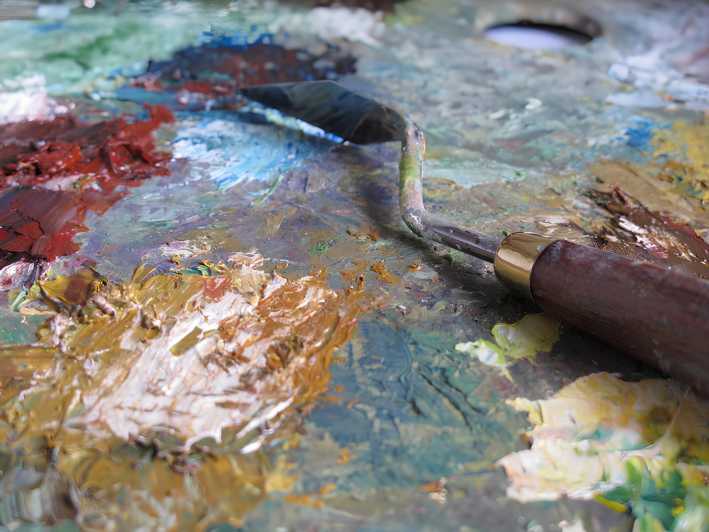
- Palette knife technique: Learn how to mix and apply oil paint, build texture, and create depth without relying on brushes.
- Small class size: The group is limited to eight, with close instruction and time for questions.
- A welcoming Florence atelier: Geko Art Studio is across the Arno, in a quiet, well-lit setting that is easy to find by bus.
- Everything important is included: Oil colors, a palette knife, a 20 by 20 centimeter canvas panel, and a snack break are supplied.
- Plan for wet paint: Extra canvas panels and shipping cost money, and your painting may need several days to dry.
Why palette knife painting makes a good Florence activity
Florence is famous for its museums, churches, and Renaissance art. That can make a hands-on class feel like a welcome change of pace. Here, you are not simply looking at paintings on a wall. You are making decisions about color, texture, shape, and light with your own hands.
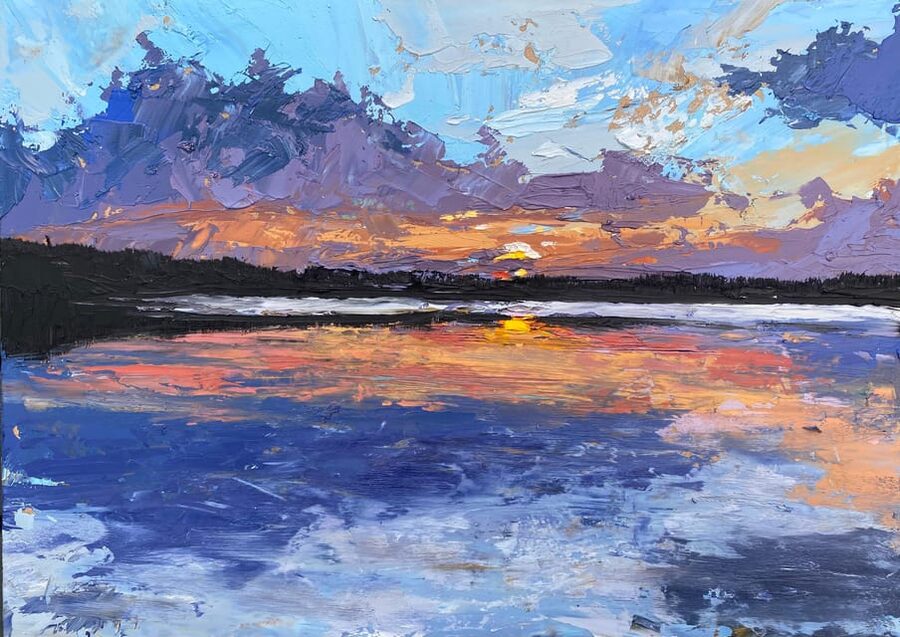
The palette knife gives the class a clear focus. It is not a general painting lesson where you might spend much of the time learning basic brush handling. You work with a distinct tool that produces sharp edges, thick marks, scraped areas, and layers of paint. The result often feels more expressive than a carefully smoothed picture.
You do not need prior painting experience. The instructor takes you through the process step by step, including color mixing and ways to create depth. If you already paint, the class still has something to offer. One experienced participant found that the technique raised new questions about personal style and led to fresh skills.
I would think of this as a creative workshop, not a formal art-school course. You get a finished project and useful instruction in three hours, but the class is not designed to cover every possible palette knife method.
More Florence options worth a look before you decide
- Florence: Pasta Cooking Class with Unlimited Wine
★ 4.9 · 10,285 reviews - Florence Pizza or Pasta Class with Gelato Making at a Tuscan Farm
★ 5.0 · 6,801 reviews - Florence: Pasta & Tiramisu Cooking Class with Unlimited Wine
★ 4.9 · 6,708 reviews
Inside Geko Art Studio across the Arno
The studio is operated by Geko Art Studio, with Rosanna handling the welcome and studio side of the experience. The teaching may be led by Katerina or another instructor, depending on the scheduled class and language. Katerina is described as clear, calm, and encouraging, with a practical plan for completing a painting during the session.
The studio setting matters. It is described as quiet, well lit, and easy to find. One participant reached it by bus number 23 after crossing the Arno. Since the exact meeting details are arranged with the studio, check your confirmation carefully rather than assuming the class begins in central Florence at a famous landmark.
The teaching room is a small space on the second floor. That can be a plus for a class like this. A compact room keeps the focus on the work and makes it easier to ask a question while you are holding the knife or mixing paint. It is not a large public demonstration with an instructor speaking from across the room.
The group limit is eight people, though the amount of individual attention can be quite high. Several participants describe receiving one-on-one guidance, which is especially useful when you are unsure how much paint to place on the knife or how strongly to press it against the canvas.
The first stage: choosing a subject and preparing to paint
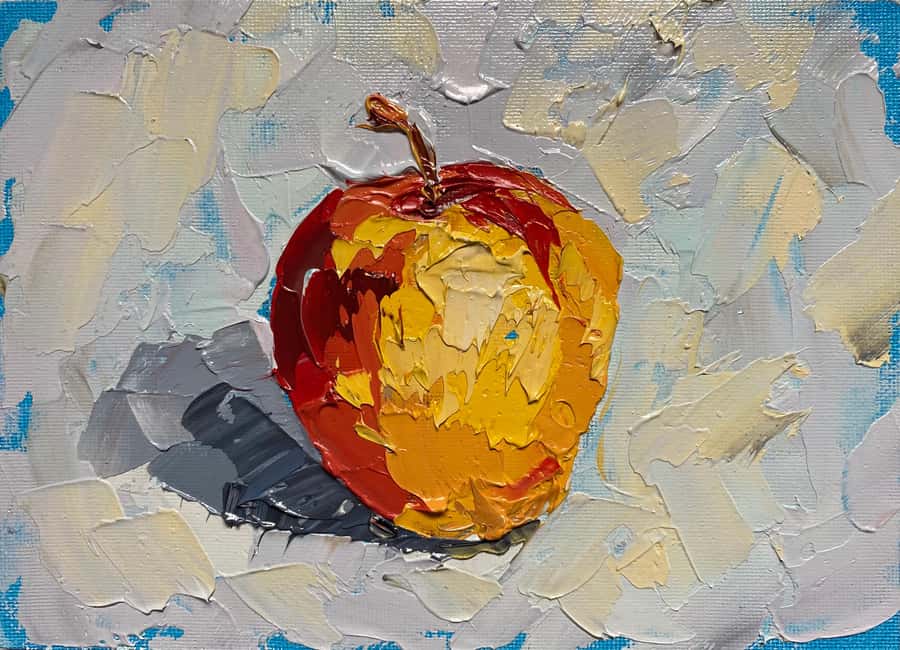
The class normally begins with an arranged still life or another simple subject for reference. You may first sketch the basic forms on the small canvas panel. This early step helps you decide where the main shapes belong before the oil paint covers the surface.
That matters because palette knife work is less forgiving than a pencil sketch. Thick marks can be adjusted, scraped away, or covered, but it helps to have a rough plan. The instructor can guide you through proportion, placement, and the first layers before you start adding heavier texture.
Paint colors are set out for you, and the instructor helps with mixing. This is one of the useful parts of the class for a beginner. You learn that the color straight from the tube is only a starting point. By combining oil colors, you can create warmer, cooler, lighter, or darker versions that give the picture more form.
You should expect a guided process rather than a blank canvas with no direction. At the same time, the instructor allows room for personal choices. One participant with previous training appreciated that the teacher had a clear plan but remained open to an individual style. That balance is important: you get enough structure to finish, but you are not forced to make an identical copy.
Learning the palette knife, one mark at a time
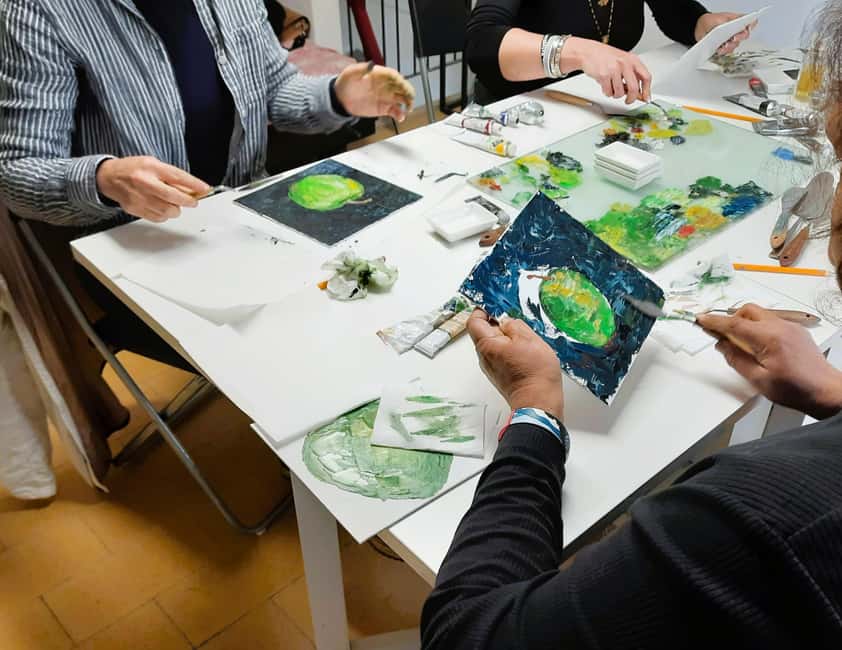
A palette knife looks simple, but using one well takes control. The angle of the blade, the amount of paint, and the pressure of your hand all change the mark. A light touch can leave a thin, broken layer. More paint and pressure can create a thick ridge or a broad block of color.
The instructor shows you how to apply and manipulate the paint on the canvas. You work with layers, texture, and color changes rather than relying on smooth brushwork. The method is dynamic, and it can suit anyone who enjoys a little happy uncertainty in the process.
There is one useful point to keep in mind. The class may not begin with a long practice session on paper. One participant would have liked more time to try different grips and application strokes before touching the first painting. If you are completely new to palette knives, ask early for a few practice marks and clear guidance on how to hold the tool.
That is not a reason to avoid the class. It is a reason to speak up. The instructors are there to answer specific questions, and the small group format gives you a good chance to ask how to load the knife, scrape paint, soften an edge, or add a new layer.
A different way to spend the same Florence day:
- Florence: Skip-The-Line Uffizi Gallery Timed Entry Ticket
★ 4.5 · 27,832 reviews - Tuscany Day Trip from Florence: Siena, San Gimignano, Pisa and Lunch at a Winery
★ 5.0 · 21,634 reviews - Florence: Timed Entrance Ticket to Michelangelo’s David
★ 4.6 · 16,983 reviews - Florence: Michelangelo’s David Skip-the-Line Entry Ticket
★ 4.5 · 12,764 reviews
Building depth, texture, and your own style
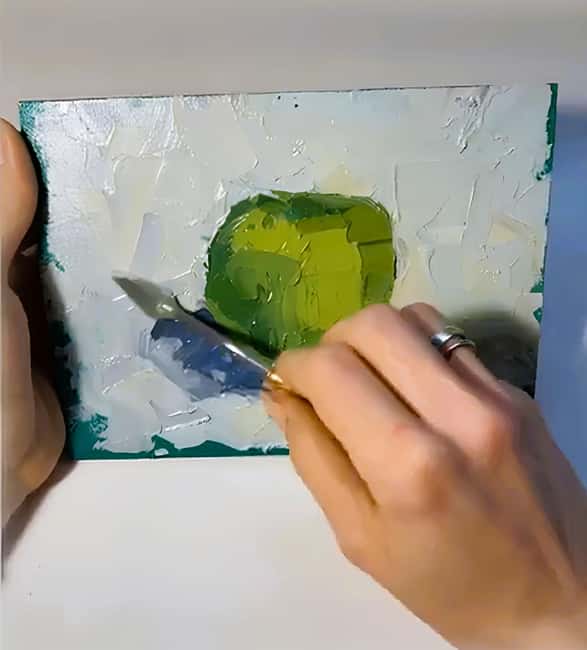
The heart of the class is learning how a few layers can create a sense of depth. You may begin with broad areas of color, then add more focused marks as the forms develop. The knife lets you leave some lower layers visible, which can give the surface energy and variation.
This is where the class works for different ability levels. A beginner can follow the instructor through a manageable sequence. An experienced artist can use the same structure to test a new tool and make different decisions about edges and texture.
I like that the process does not demand perfect realism. One artist began moving toward abstraction during the session, and the teacher allowed that change rather than pulling the work back to a fixed model. If your picture takes a different direction, that flexibility can turn a mistake into part of the finished design.
Still, you should not expect a large gallery painting. The included canvas panel measures 20 by 20 centimeters, or roughly 8 by 8 inches. It is a sensible size for a three-hour class and easier to pack than a large canvas, but it limits how much detail you can add.
Some sessions may include a second canvas or a second still life. That depends on the pace and arrangement of the class, so treat it as a possible extra opportunity rather than a guaranteed part of the booking. The basic included project is one 20 by 20 centimeter panel.
A break with coffee and something sweet
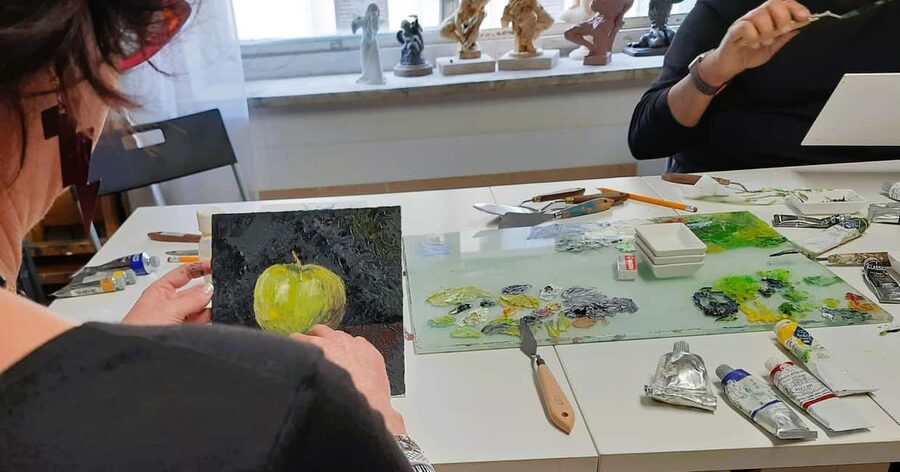
The included snack break adds a pleasant local touch. You receive water, juice, or coffee, and the break can include a sweet treat from the bakery next door. This is more than a minor perk during an oil painting class.
Three hours of close work can be tiring, especially when you are concentrating on a new tool. A short pause gives you time to step away from the canvas, look at it with fresh eyes, and let the instructor prepare the next stage. The bakery stop also makes the class feel connected to the neighborhood rather than sealed off from Florence.
The break is not a food tour, and you should not book the class for a full meal. Think of it as a simple refreshment included in the session. For many people, that is exactly the right amount of pause.
What the final hour is like
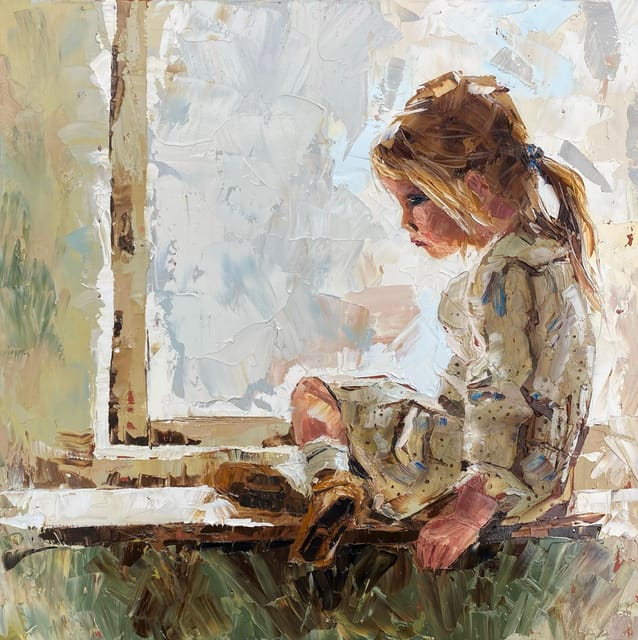
The last part of the class focuses on refining the painting. You may add highlights, strengthen shadows, adjust edges, or place thicker marks where the surface needs more character. The instructor can suggest small changes, but the painting remains yours.
This is also when individual questions become most useful. You can ask about a color that looks dull, a form that seems flat, or a section that has become too heavy. One participant especially valued being able to ask detailed questions about personal style and specific problems in the painting.
The class has a realistic three-hour goal. You are not promised a museum-ready oil painting, and you should not judge yourself by that standard. The achievement is learning a new method and finishing a coherent small work under guidance.
At the end, the studio can pack the painting so you can transport it. That does not mean it will be dry. Oil paint may remain wet for several days, which is normal for the medium.
Getting your artwork home
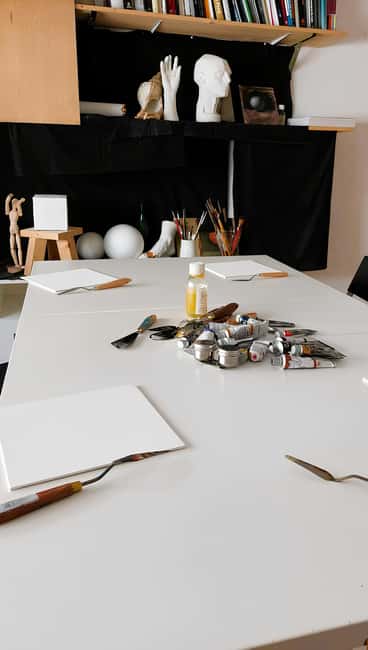
The wet paint is the biggest practical issue. If you are continuing your holiday by train or plane, carrying a fresh oil painting requires care. The studio may pack it for you, but shipping is not included in the $182 price.
You can ask about shipping if you do not want to carry the canvas. The cost is an extra, and the class information does not give a fixed shipping rate. If taking the artwork home matters to you, allow room in your budget and schedule.
Extra canvas panels are also not included. If you want to make more than the supplied project, ask the studio about the current price before the class. This is worth doing if you already paint or if you are booking for someone who may want additional practice.
Price, timing, and language choices
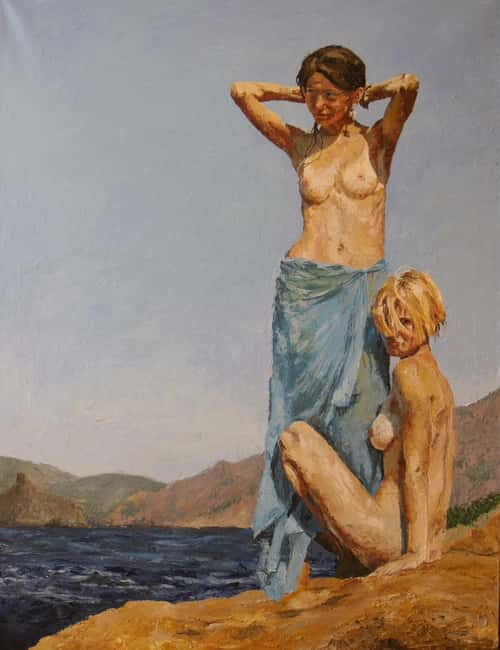
The price is $182 per person for three hours. That is not a low-cost art activity, but the fee covers instruction, oil colors, the palette knife, the 20 by 20 centimeter canvas panel, and refreshments. You are paying for direct teaching in a small group, not simply access to a room and supplies.
The value is strongest if you want a personal, creative memory from Florence. If you already have art supplies and only want to experiment briefly, the price may feel high. If you would otherwise pay for a museum class, studio lesson, or private instruction, the included materials and close guidance make the cost easier to understand.
The time is arranged personally with the studio after booking. The usual choices are 10 a.m. to 1 p.m. and 2 p.m. to 5 p.m. A 5:30 p.m. to 8:30 p.m. session may sometimes be available. Contact Geko Art Studio at [email protected] if you need to settle the most suitable time quickly.
Instruction is available in English and Italian, with Spanish, Greek, and Chinese offered when a suitable teacher is available. If you need one of those language options, book at least three days ahead. Do not assume that selecting a language guarantees that instructor on every date.
Who will enjoy this class most
I would recommend this class to adults and older children who like making things with their hands and want a quieter Florence activity. Children under 12 cannot take part, so this is not a family option for younger children.
It is also a good fit for couples, friends, and solo visitors. The work is personal, but the room is small enough to feel social without turning into a party. Solo painters should find it easy to receive direct feedback, while pairs can work alongside each other without needing matching skill levels.
Beginners should feel comfortable booking. You will be guided through the process, and no previous experience is required. Experienced painters should also find value in the chance to work with a different tool, especially if they normally use brushes.
I would think twice if you need to leave Florence with a dry painting the same day. I would also reconsider if you want a broad survey of art history or a long technical course. This is a focused workshop in oil and palette knife technique.
Booking flexibility and small practical details
You can cancel up to 24 hours before the class for a full refund. The reserve now and pay later option lets you hold a place without paying today, which is useful when your Florence schedule is still changing.
Bring your passport or ID card. Transport to and from the atelier is not included, so you handle the trip there yourself. Since the studio has been reached by bus number 23 and is described as easy to find, public transport may be useful, but confirm the exact address and meeting instructions after booking.
The class has a maximum of eight participants. The small size is one of its strongest features, but instructor language and the level of one-on-one help can vary with the group. Arrange special language needs early rather than hoping the right instructor is available on the day.
Should you book the Palette Knife Painting Class Florence?
Book it if you want to make something personal in Florence, enjoy patient instruction, and like the idea of taking home a small oil painting that carries the marks of your own hand. The quiet atelier, friendly welcome from Rosanna, careful teaching from instructors such as Katerina, and included bakery break give the three-hour session a warm, human feel.
The $182 price makes sense for a small-group class with materials and close help, but it is not a bargain activity. Add possible shipping if your artwork is still wet, and remember that extra panels cost more.
For a first oil painting, a new palette knife technique, or a creative pause between museum visits, this is a strong choice. Just arrange your time, language preference, and transport in advance, and ask for a few practice strokes if the tool feels unfamiliar.
FAQ
Where does the palette knife painting class take place?
The class takes place at Geko Art Studio, a local art atelier in Florence, Tuscany. The studio is across the Arno and has been described as quiet, well lit, and easy to find.
How long does the class last?
The class lasts three hours.
How much does the class cost?
The price is $182 per person.
What painting supplies are included?
The class includes oil paint colors, a palette knife, and one 20 by 20 centimeter canvas panel.
Are refreshments included?
Yes. The class includes water, juice, or coffee, along with a snack. The break may include a sweet treat from the bakery next door.
Do I need painting experience?
No. Prior painting experience is not required. The instructor guides you through the process step by step, and the class is also suitable for experienced artists who want to try palette knife painting.
How many people can join the class?
The group is limited to eight participants.
What languages are available?
Instruction is available in English and Italian. Spanish, Greek, and Chinese may be available depending on teacher availability. To help secure one of those language options, book at least three days ahead.
Can I choose the class time?
The time is arranged personally with the studio after booking. Usual options are 10 a.m. to 1 p.m. and 2 p.m. to 5 p.m. A 5:30 p.m. to 8:30 p.m. session may sometimes be available.
Can I take my painting home after class?
You can have the painting packed for transport, but oil paint may take several days to dry. Shipping is not included, and you may need to pay for delivery if you do not want to carry the wet artwork.
Latest additions around Florence
- Florence: Cathedral Tour & Brunelleschi’s Dome Climb Ticket★ 5.0 · 3 reviews
- Palatina Gallery and Pitti Guided Tour in Florence★ 5.0 · 3 reviews
- Florence Uffizi Gallery Skip-the-line Tour w Art Historian Guide★ 5.0 · 3 reviews
- Private Tour: Pisa and Lucca from Florence★ 5.0 · 3 reviews
- San Gimignano Bike Tour (SOFT)★ 4.5 · 3 reviews
- Florence: Tour of Florence by rickshaw★ 5.0 · 3 reviews
- Center of Florence by golf cart★ 5.0 · 3 reviews
- From Firenze | Chianti day tour in a classic car★ 5.0 · 3 reviews
Workshops, compared.
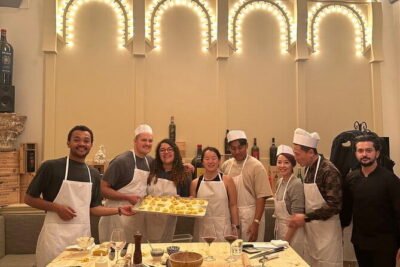

Florence Pizza or Pasta Class with Gelato Making at a Tuscan Farm
Read our review →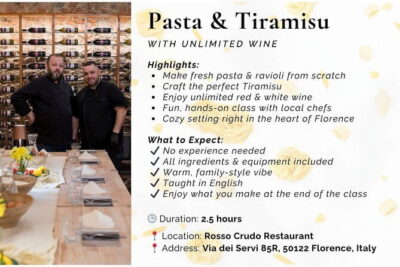
Pasta & Tiramisu Cooking Class with Unlimited Wine
Read our review →
Cooking Class and Lunch at a Tuscan Farmhouse with Local Market Tour from Florence
Read our review →
Cooking Class Pasta & Tiramisu Making Unlimited Wine
Read our review →
Florence Cooking Class The Art of Making Gelato & Authentic Pizza
Read our review →Browse the lists this tour appears in