
Reviewed · MONTALCINO WINE TOURS
Olive Oil Tours and Tasting at Frantoio di Montalcino
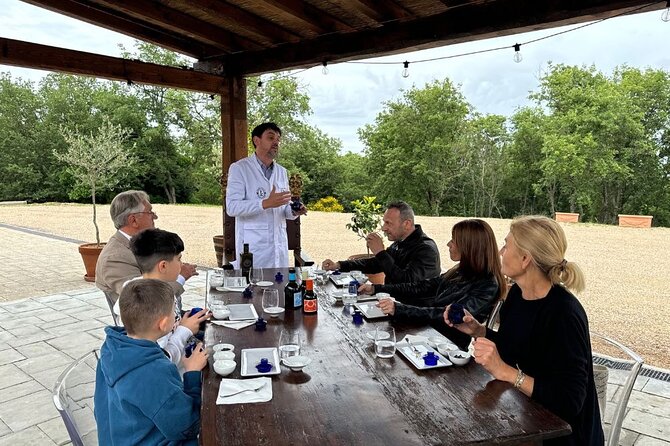
The best part of this 90-minute visit is the tasting, but it makes far more sense after you see how the oil is made. At Frantoio di Montalcino, you follow the path from olive grove to bottle, then taste several extra virgin oils with warm Italian bread and snacks. Guides Daniel and Alisha explain the process in clear, practical terms.
I like the small group limit of 12, which gives the presentation a personal feel. I also like that the tasting is more than a quick drizzle of oil: you compare different oils and condiments and learn how their flavors work with food.
The main point to consider is the price, about $60.34 per person. That is a serious charge for 90 minutes, though it includes the tour, substantial tasting, and the chance to buy bottles directly from the mill. You must also make your own way to the address, so this is not a door-to-door outing.
In This Review
- Key points at a glance
- Why an olive oil mill visit is worth your time
- Starting at Frantoio di Montalcino
- From olive trees to bottled oil
- How the tasting works
- What makes the oil taste different
- Buying a bottle as your Italian souvenir
- Is $60.34 a fair price?
- Who should book this experience
- Practical planning for the 90-minute visit
- The strongest parts of the experience
- Should you book Frantoio di Montalcino?
- FAQ
- Where does the olive oil tour begin and end?
- How long does the activity last?
- Is transportation included?
- What does the tasting include?
- How large is the group?
- Is the tour offered in English?
- Can I cancel for a full refund?
Key points at a glance
- A full olive oil story: See how olives move from trees through processing and into bottles.
- Tasting with food: Sample extra virgin oils and EVOO condiments with warm Italian bread and snacks.
- Small, personal setting: The group is capped at 12 people.
- Strong teaching element: Learn how oils differ in taste and how to use them with food.
- Named guides: Daniel and Alisha lead the presentation.
- Easy souvenir option: Bottles are available for purchase, including a high-polyphenol oil priced at €50 according to the supplied information.
Why an olive oil mill visit is worth your time
Olive oil is one of those foods most people use every day but rarely understand. A bottle can say extra virgin, cold pressed, or Italian, yet those words do not tell you much about flavor, freshness, or production unless you know what to look for.
This visit gives you that missing context. You see the production process and then taste the result while the information is still fresh. That order matters. Instead of hearing a lecture about oil and then being handed bread, you connect the equipment, the olives, the methods, and the final flavor.
I especially like experiences that turn an ordinary grocery item into part of the local culture. This one does that without asking you to spend a full day at a farm or sign up for a cooking class. In about an hour and a half, you get a focused look at a product closely tied to Italian food.
The setting is Frantoio di Montalcino, an olive oil mill with tours, tasting, and shopping at Località San Lazzaro, 242/a, 53024 Montalcino SI, Italy. The supplied location information also labels the broader area as Chianti, so check your route carefully before setting out. The exact address is the detail you should use for navigation.
More Brunello tastings:
- Winery tour & wine tasting in Montalcino
★ 4.5 · 41 reviews - Winery Tour & Gourmet Tasting in Montalcino
★ 5.0 · 14 reviews - Brunello Vineyards Bus Tour
★ 5.0 · 11 reviews
Starting at Frantoio di Montalcino
You meet at the mill and return there when the activity ends. Private transportation is not included, so you need to arrange your own way to the property.
That arrangement works well for people already driving through the area or building a self-guided day around Montalcino. It is less convenient if you are staying somewhere without a car or hoping for a hotel pickup. The booking includes a mobile ticket, and confirmation is sent at the time of booking.
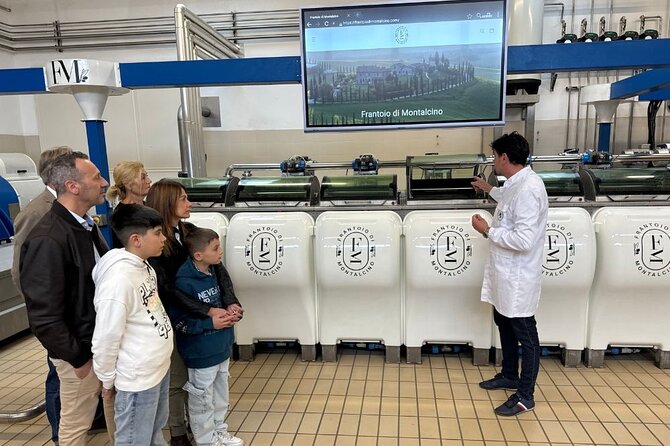
The mill itself is described as small, clean, and well organized. That is useful information for setting expectations. This is not a huge industrial attraction with a long series of rooms and displays. It is a compact working site where the presentation can stay focused on how olive oil is produced.
The group limit of 12 is one of the strongest practical features. You are not being moved through a crowded room while trying to hear a guide. A small group also makes it easier to ask about the oils, the machinery, or the differences you notice during tasting.
From olive trees to bottled oil
The tour explains the process from the beginning, starting with the growth of olives in the groves. You then follow the steps that take the fruit from the trees to the mill, through processing, and finally into bottles.
The useful lesson here is that good oil is not simply a matter of crushing olives. Timing, handling, processing, and storage all affect what reaches your table. The presentation looks at both traditional pressing methods and modern technology, showing how the two can work together.
That balance is a good reason to choose this visit over a basic shop tasting. You are not only told that the oil is special. You get a framework for understanding why production choices matter and how they can change the taste.
You will also hear about bottling and the final product. This is a small detail, but it helps connect the mill visit to the bottle you may buy later. When you see the full chain, a premium price becomes easier to assess.
The facility’s compact scale may suit you if you prefer direct explanations over a large museum-style presentation. If you want a grand agricultural estate, sweeping farm tour, or long walk through olive groves, this may feel more limited. The supplied information promises an olive oil production visit, not an extended countryside excursion.
How the tasting works
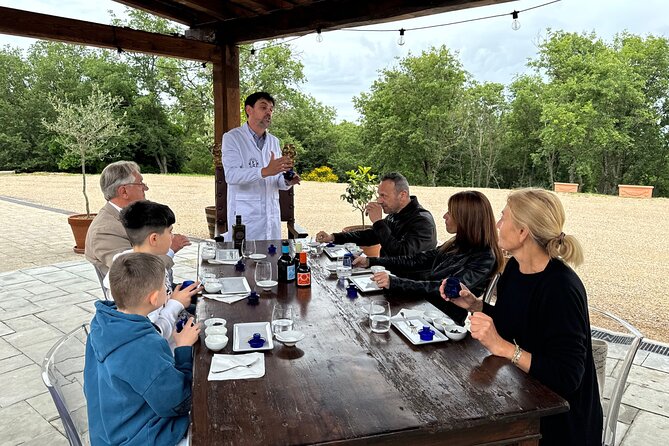
The tasting is the payoff, and it is also the part that gives the tour its practical value. You sample extra virgin olive oils and condiments made with EVOO alongside warm Italian bread and snacks.
The food matters. Tasting oil by itself can be useful, but bread gives you a familiar reference point. You can notice how an oil behaves with something simple, then think about where you would use that flavor at home.
The tasting includes several oils, with attention to differences between them. Some may taste more intense, while others may seem softer or more balanced. The point is not to find one universal winner. It is to understand that extra virgin olive oil can have a range of aromas and flavors.
The experience also explains how to taste the oils with different foods. That makes the session more useful than a simple sales counter sample. You leave with a better idea of which oil might suit bread, salads, cooking, or finishing a dish, based on what is presented during the visit.
The tasting is reported as substantial, with many oils and snacks rather than a token sip. Still, I would treat it as a food tasting, not a full meal. If you are booking around lunch or dinner, plan accordingly unless the provider tells you otherwise.
One particularly striking detail is the intensity of the flavors. If you normally buy mild supermarket oil, the first taste of a strong extra virgin oil may surprise you. Peppery, grassy, bitter, or fruity notes can be part of the experience, and those sensations are not automatically signs that something is wrong.
A different way to spend the same Chianti day:
- Cooking Class on a Family Farm in Chianti with Lunch
★ 5.0 · 165 reviews - Tour and Tasting at an Organic Winery in the Heart of Chianti Classico Area
★ 5.0 · 132 reviews - Greve in Chianti Wine Tasting and Winery Tour
★ 4.5 · 119 reviews - Montefioralle Winery – Tour and Wine Tasting in Chianti
★ 4.5 · 92 reviews
What makes the oil taste different
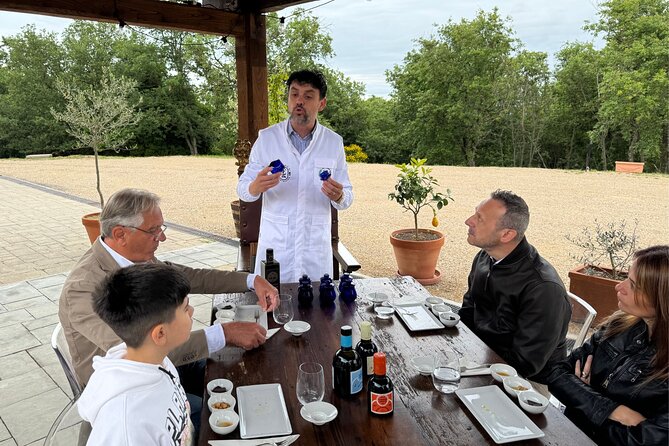
A good guide can help you separate personal preference from quality. Strong flavor is not always better, and mild flavor is not always worse. The value of the tasting is learning to notice differences instead of treating all olive oil as the same.
The presentation covers differences between oils and explains the production choices behind them. That can help you read labels with more care once you return home. You may also become more cautious about treating a low price as the only measure of value.
The supplied information points to a high-polyphenol oil priced at €50 that was purchased as both a personal bottle and a gift. You should not feel obliged to buy it, though. The mill is described as having no pressure to purchase, which is important at a paid tasting where shopping is part of the experience.
I like that balance. You can treat the visit as an educational food stop, buy something if a particular oil wins you over, or do both. The shopping option is practical for anyone who wants an edible souvenir rather than another small object in a suitcase.
Buying a bottle as your Italian souvenir
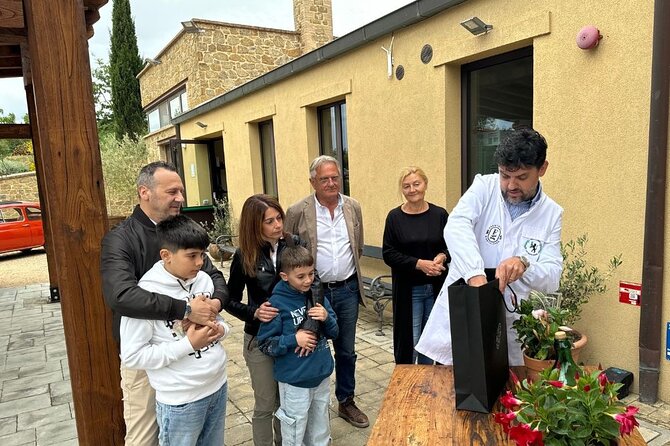
Bottles of Frantoio di Montalcino oil are available at the mill. Buying directly gives you a clear link between the place you visited and the product you take home.
Olive oil is also a useful souvenir because it is tied to meals. It does not sit on a shelf gathering dust, and a bottle can make a thoughtful gift. The downside is obvious: glass and liquid require careful packing, and you should consider luggage space before buying several bottles.
The highest-priced oil mentioned in the supplied information was €50, so shopping can add a sizeable amount to the cost of your day. I would taste first, ask about the differences, and buy only the bottle you genuinely prefer.
You may also want to ask how the oil should be stored once you get home. The supplied details do not specify storage advice, harvest dates, bottle sizes, or shipping options, so those are sensible questions to ask at the mill if they matter to your purchase.
Is $60.34 a fair price?
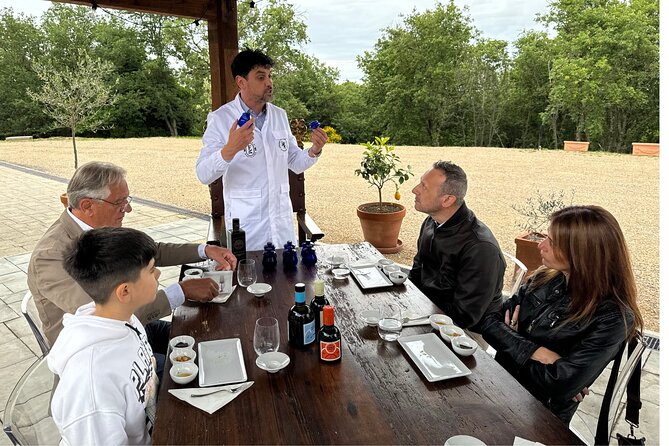
At about $60.34 per person, this is not a bargain stop for a quick sample. The price makes more sense when you count the full package: a 90-minute guided visit, production explanation, small group setting, multiple oil samples, EVOO condiments, warm bread, snacks, and access to direct shopping.
The strongest value is educational. If you already care about food, enjoy tastings, or want to understand Italian ingredients beyond the plate, you are getting more than a snack. The session may also help you make smarter oil purchases later, which adds some lasting value.
The cost is harder to justify if you mainly want a free sample or a brief photo stop. You could spend less on a bottle elsewhere, and the tour does not include private transport. I would book it because you want the explanation and tasting together, not simply because you need olive oil.
The small group helps the price feel more reasonable. A capped group of 12 allows the guides to keep the presentation human and gives you a better chance to focus on the tasting. This is especially helpful if you have questions about flavor, production, or using the oils at home.
The tour has a perfect 5 rating from 85 submitted ratings, with 100 percent recommending it. Those figures indicate very strong satisfaction, but you should still match the experience to your interests. A person who dislikes tastings or has little interest in food production may not get the same value.
Who should book this experience
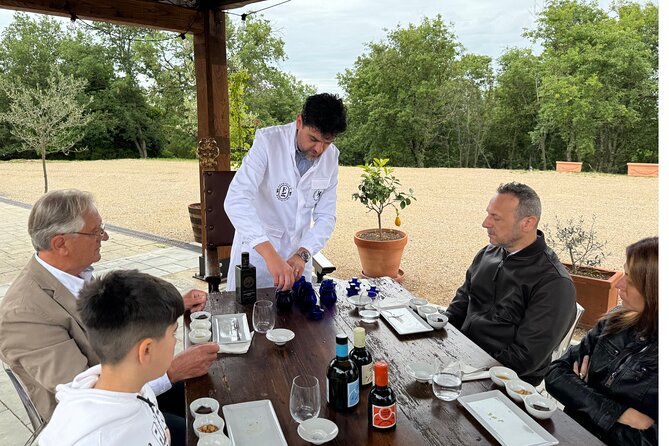
I would recommend this tour to food-focused visitors, couples, families with an interest in Italian cooking, and anyone who wants a short cultural stop between larger sightseeing days. It also suits people who appreciate small groups and direct instruction.
It is a good choice if you want to learn how a familiar ingredient is made. You will get the most from it if you pay attention during the production section, then use the tasting to compare what you have just learned.
The experience can also work well for gift shoppers. You can taste before buying, and the mill offers bottles to take home. A high-quality food souvenir often feels more connected to a trip than a generic shop purchase.
You may want to skip it if your schedule is already packed with wineries, cooking lessons, and food tastings. The subject is narrow, even though the presentation covers several stages of production. It is also not the best fit if you need pickup service or want a broad tour of the surrounding area.
People with service animals can participate, and most people can take part. The activity has a maximum of 12 participants, but the supplied information does not provide details about specific accessibility features at the mill. If you have mobility or access needs, contact the provider before booking.
Practical planning for the 90-minute visit
Allow about an hour and a half for the activity itself. Since it begins and ends at the same address, you can plan another stop afterward without arranging a separate return transfer.
Use the exact meeting address, Località San Lazzaro, 242/a, 53024 Montalcino SI, Italy, when planning your route. The listing information identifies the location as Chianti while giving a Montalcino address, so I would double-check the map and driving time before you commit to a tight schedule.
The tour is offered in English. That makes it a practical option for English-speaking visitors who want technical information without relying on translation.
Bring room in your bag if you might shop. Bottles are available for purchase, and the oil can be a useful gift, but you should plan for the weight and safe packing of glass. Because the tasting includes bread and snacks, you may not need to schedule an immediate meal, though I would not count on it as a full lunch.
Free cancellation is available if you cancel at least 24 hours before the start time. Changes or cancellations made within 24 hours are not accepted for a refund, and the cut-off follows local time.
The strongest parts of the experience
The best feature is the link between explanation and tasting. You learn about olives, processing, traditional methods, modern equipment, and bottling, then put that information to work with several oils.
The guides are another important part. Daniel and Alisha are named as the presenters, and the available information describes the explanations as thorough and clear. Their role matters because olive oil can become a dry technical subject unless someone helps you connect production terms to actual flavor.
The food served with the oil also earns attention. Warm Italian bread and snacks turn the tasting into a proper sit-down food experience rather than a tiny counter sample.
Finally, the lack of buying pressure makes the shopping portion more comfortable. You can taste the products, ask questions, and decide for yourself if a bottle is worth adding to your luggage.
Should you book Frantoio di Montalcino?
Book this experience if you want a focused, English-language introduction to extra virgin olive oil with a real tasting afterward. The small group, named guides, warm bread, several oils, and clear production story give the visit more substance than a standard shop stop.
I would be more cautious if $60.34 feels high for a short activity or if transport to the meeting point is awkward. Confirm the address, allow enough travel time, and decide in advance how much you are willing to spend on bottles.
For food-minded visitors, this is a strong choice. You come away with a better sense of how olive oil is made, how different oils taste, and what you might want to bring home. That is a useful lesson, and one you can keep applying every time you pour oil over bread or a salad.
FAQ
Where does the olive oil tour begin and end?
The tour begins at Frantoio di Montalcino, Località San Lazzaro, 242/a, 53024 Montalcino SI, Italy. It ends back at the same meeting point.
How long does the activity last?
The experience lasts approximately 1 hour and 30 minutes.
Is transportation included?
No. Private transportation is not included, and you must make your own way to the meeting point.
What does the tasting include?
The tasting includes extra virgin olive oils and condiments made with EVOO, served with warm Italian bread and snacks.
How large is the group?
The activity has a maximum of 12 participants.
Is the tour offered in English?
Yes. The experience is offered in English.
Can I cancel for a full refund?
Yes, if you cancel at least 24 hours before the experience start time. Cancellations made less than 24 hours before the start time are not refunded, and changes within that period are not accepted.
Latest additions around Chianti
- Chianti – Pizza and Tiramisu Course for Only Small Groups★ 5.0 · 5 reviews
- Chianti Truffle Hunting with Lunch or Dinner★ 4.0 · 5 reviews
- MONTALCINO Private E-Bike & Brunello Winery Experience★ 5.0 · 5 reviews
- Winery Tour & picnic in the vineyard with a bottle of wine★ 4.5 · 5 reviews
- Montalcino wine tour★ 4.0 · 6 reviews
- 1-Hour Experience with Brunello. Visit to the Vineyard and Cellar★ 4.5 · 6 reviews
- Montalcino Cooking Class and lunch with the local lady★ 4.5 · 8 reviews
- Brunello E-Bike Tour★ 5.0 · 8 reviews
Montalcino Wine Tours, compared.
Val d’Orcia Brunello Wine Tour with Montalcino and Montepulciano
Read our review →
Brunello Wine Tasting & Lunch in a Tuscan Castle
Read our review →
Valdorcia Wine, Brunello Montalcino, Montepulciano
Read our review →
Orcia Valley, Montalcino, Pienza with Lunch & Wine
Read our review →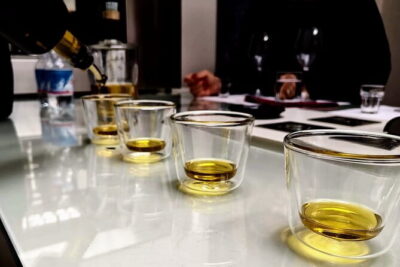
Brunello and Nobile, Wine Lover Tour Montalcino and Montepulciano
Read our review →
Browse the lists this tour appears in