
Reviewed · UFFIZI GALLERY TOURS
Florence: Uffizi Gallery Private Tour w/ Skip-the-Line Entry
The Uffizi is where Florence’s artistic story comes into focus: medieval panels give way to Renaissance masterpieces, then to the drama of Caravaggio. This private 90-minute tour helps you cover the major rooms without wasting time in the public ticket queue.
I like the reserved entry and the guide’s ability to adjust the visit to your questions. I also like the radio system, which makes it easier to hear commentary in crowded galleries. The main drawback is the short duration: one and a half hours is enough for a focused introduction, but not enough for every room.
In This Review
- Key points to know before booking
- Why the Uffizi works well with a private guide
- Meeting at the Leonardo da Vinci statue
- Reserved entry and the first look at the museum
- Giotto and the shift toward human feeling
- Uccello, Piero della Francesca, and the art of perspective
- Botticelli’s Florence in the Uffizi
- Leonardo, Michelangelo, Raphael, and changing ideals
- Fra Angelico and Caravaggio: two strong final contrasts
- What the 90-minute schedule really means
- Price, languages, and practical limits
- Who should book this Uffizi tour?
- Should you book it?
- FAQ
- How long does the Uffizi private tour last?
- Where does the tour begin?
- Is the Uffizi entrance ticket included?
- Which languages are available?
- Can I cancel the tour for a refund?
- Is the tour wheelchair accessible?
Key points to know before booking
- Meet at the Leonardo da Vinci statue: Arrive 15 minutes early, since late arrivals cannot join or receive a refund.
- See major Renaissance works: The route includes Giotto, Paolo Uccello, Piero della Francesca, Botticelli, Leonardo, Michelangelo, Raphael, Fra Angelico, and Caravaggio.
- Private group format: You can ask questions and request a different pace more easily than on a large group tour.
- Reserved Uffizi entry: The ticket includes a reservation designed to avoid the standard ticket line, even during busy periods except for museum delays or strikes.
- Five guide languages: Tours are offered in English, Italian, German, French, and Spanish.
- Best for a first visit: The tour gives you a clear route through the highlights, though serious art lovers may want extra time afterward.
Why the Uffizi works well with a private guide
The Uffizi is not simply a long hallway filled with famous paintings. It is a record of changing ideas about art, power, religion, and the human figure. Without some direction, you can spend too much time on the first few rooms and reach the later works tired and rushed.
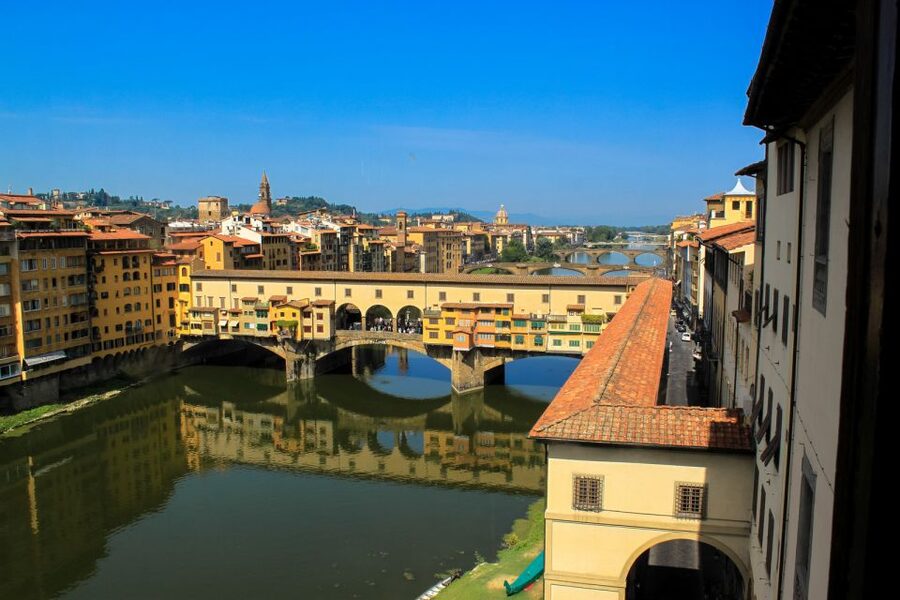
A private guide gives the collection a shape. You start with the building itself, which once held Florence’s administrative and legal offices. Its name comes from the old function of the structure, and its later life as a gallery reflects the Medici family’s role in collecting and protecting art. That short introduction helps explain why this museum became such an important part of Florence.
I like this approach because it connects the rooms instead of treating each painting as an isolated prize. You can ask why Giotto matters, how Botticelli differs from Leonardo, or why Caravaggio’s paintings feel so forceful. The guide can respond to your interests rather than following a fixed speech for a large crowd.
The private format also matters if your group includes people with different levels of interest. One person may want dates and technique. Another may care more about legends, religious stories, or the strange details hidden in a painting. The supplied tour information specifically highlights the guide’s flexibility and strong command of the material, which is exactly what makes a private visit useful.
More ways into the Uffizi:
- Florence: Skip-The-Line Uffizi Gallery Timed Entry Ticket
★ 4.5 · 27,832 reviews - Florence: Uffizi Priority Ticket & Masterpieces Audio App
★ 4.2 · 6,402 reviews - Florence: Skip-the-Line Uffizi Small Group Tour
★ 4.6 · 5,926 reviews
Meeting at the Leonardo da Vinci statue
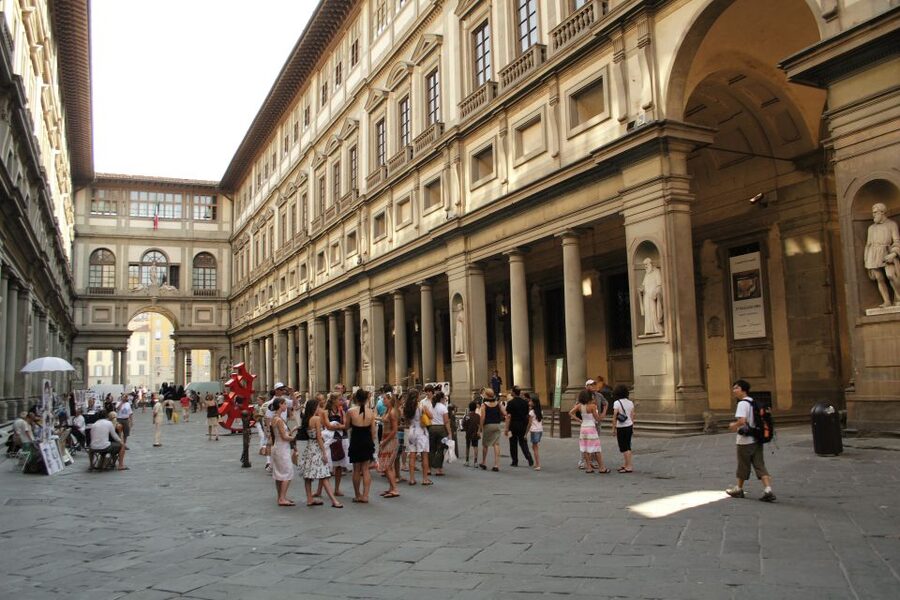
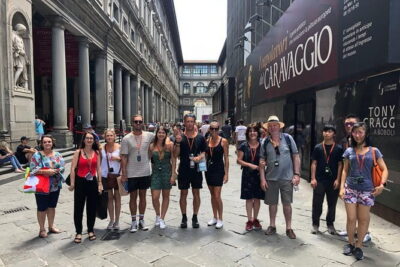
The tour begins outside the Uffizi at the Leonardo da Vinci statue. You should be there 15 minutes before your scheduled departure. This is not a tour where arriving a few minutes late is harmless. If you miss the start, you cannot join later, reschedule, or receive a refund.
Bring a passport or identity card and wear comfortable shoes. The tour does not include transport to the museum, so you must make your own way to the meeting point. Hotel pickup and drop-off are not included either.
The meeting point is practical, but Florence can be confusing around the historic center. Give yourself enough time to find the statue, confirm your group, and settle in before the visit starts. The tour ends back at the Uffizi meeting point.
Reserved entry and the first look at the museum
Your ticket includes a reservation for the Uffizi. That means you avoid the regular ticket line in normal conditions, a useful benefit in Florence when the museum is busy. The operator guarantees this priority access during peak periods, except when delays or strikes are caused by museum management.
Skip-the-line entry does not mean you can ignore security or walk through every entrance without a check. It means the main public ticket queue is not part of your visit. You still need to arrive on time and follow the museum’s entry rules.
Once inside, the guide gives a short account of how the offices became a gallery. This orientation is brief but worthwhile. It prepares you for a museum that was not built as a modern art space and helps you understand why the building has such a strong connection to Florence’s civic and ruling families.
The radio system is included. In a crowded museum, that small piece of equipment can make a real difference. You can look at a painting instead of leaning close to the guide, and you are less likely to miss a sentence when other groups pass nearby.
Giotto and the shift toward human feeling
One of the early highlights is Giotto’s Madonna di Ognissanti. Giotto is often presented as a turning point in Western painting, and this work gives you a chance to see why. The figures retain a formal, sacred presence, but they feel more substantial and human than many earlier medieval images.
A guide can point out how the arrangement, scale, and physical presence of the figures affect your view. You do not need a technical art background to notice the change. The painting helps set up the broader movement from flat symbolic images toward bodies, space, and emotion that feel more immediate.
The benefit of seeing Giotto early in the tour is that later paintings become easier to place. The Uffizi is full of works from the 13th through the 18th century, so this first stage gives you a visual starting point.
More skip-the-line entries:
- Florence: Timed Entrance Ticket to Michelangelo’s David
★ 4.6 · 16,983 reviews - Florence: Michelangelo’s David Skip-the-Line Entry Ticket
★ 4.5 · 12,764 reviews - Florence: Leonardo Interactive Museum Entry Ticket
★ 4.5 · 11,763 reviews - Florence: Hop-on Hop-off Bus Tour: 24, 48 or 72-Hour Ticket
★ 4.0 · 6,283 reviews
Uccello, Piero della Francesca, and the art of perspective
Paolo Uccello’s Battle of San Romano brings a different kind of excitement. The painting is known for its carefully organized space and unusual treatment of a battle scene. Spears, horses, armor, and movement create a picture that is both dramatic and highly controlled.
This is a good place to listen closely to the guide. A quick glance may reveal a medieval battle, but the deeper interest lies in how the painter arranges the action. The work shows how artists were testing ways to create convincing space while still building a carefully designed image.
The tour also includes Piero della Francesca’s double portrait of Federico da Montefeltro and Battista Sforza. The profile format gives the pair a formal, almost medal-like appearance. Their clothing, posture, and expressions carry social information, while the background opens into a broad setting that adds another layer to the portraits.
You might find this stop especially rewarding if you enjoy paintings that combine people and politics. The guide can help you read the portraits as more than likenesses. They reflect status, marriage, power, and the public image their patrons wanted to project.
Botticelli’s Florence in the Uffizi
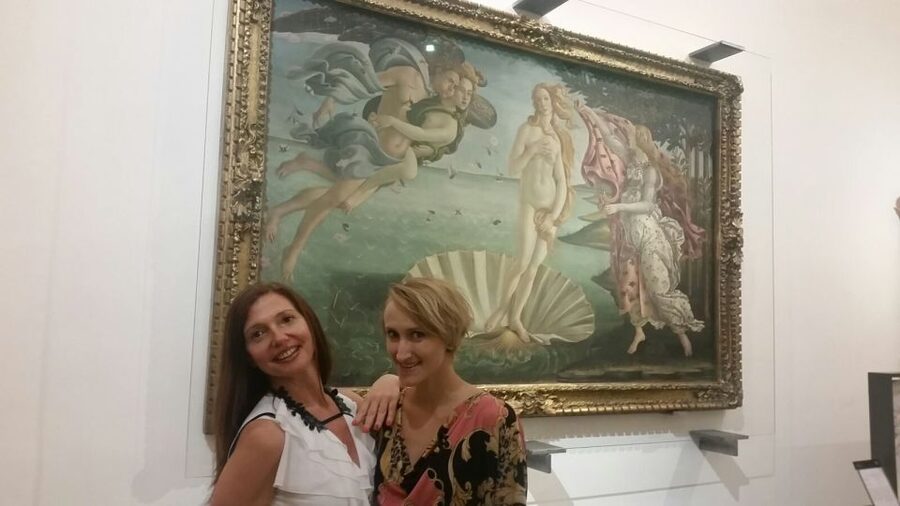
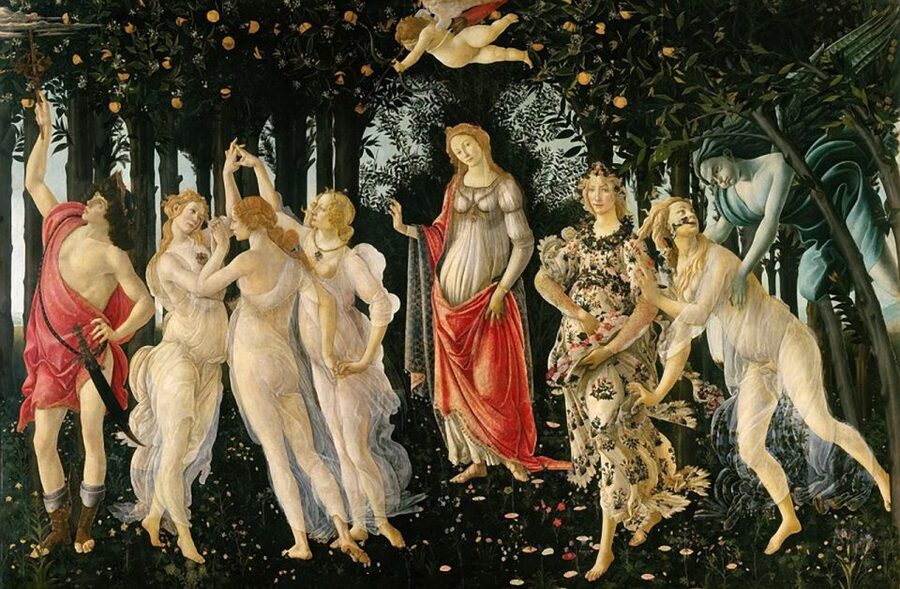
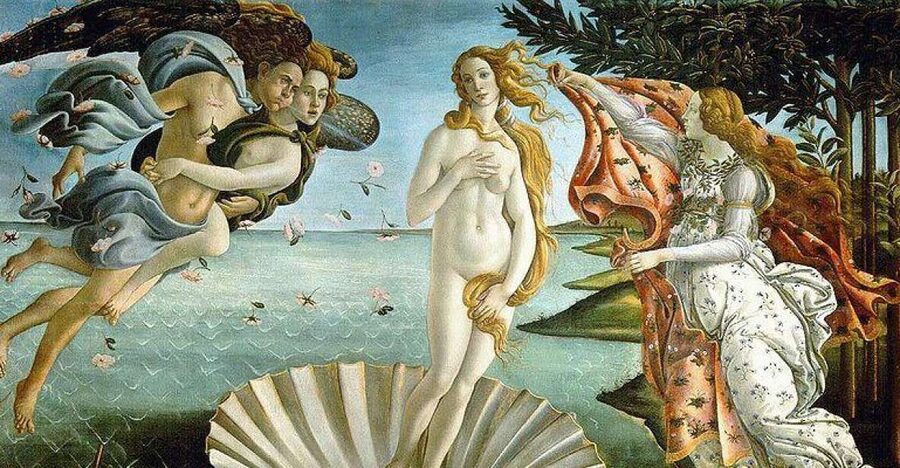
Botticelli’s paintings are among the works many people most want to see at the Uffizi. The gallery’s famous works connected with Venus and the Birth of Venus offer a very different mood from Giotto’s solemn religious panels or Uccello’s carefully planned battle.
Here, mythological subjects allow Botticelli to explore beauty, movement, symbolism, and the ideal human figure. The paintings are instantly recognizable, but a guide can help you look beyond the familiar outline. Details of gesture, hair, fabric, and the surrounding setting all contribute to the mood.
This is one of the moments when a private tour can prevent a rushed photo stop. You can ask about the story behind the subject, the way the figures are posed, or the reason these works became such powerful symbols of Florence. The guide also points out legends and lesser-known details, giving you something more useful than a list of titles and dates.
The drawback is that the Botticelli rooms can be a high-pressure part of the visit. You may have to share viewing space with other museum groups, and 90 minutes does not allow unlimited time in front of a favorite painting. If Botticelli is your main reason for visiting, tell the guide at the start.
Leonardo, Michelangelo, Raphael, and changing ideals
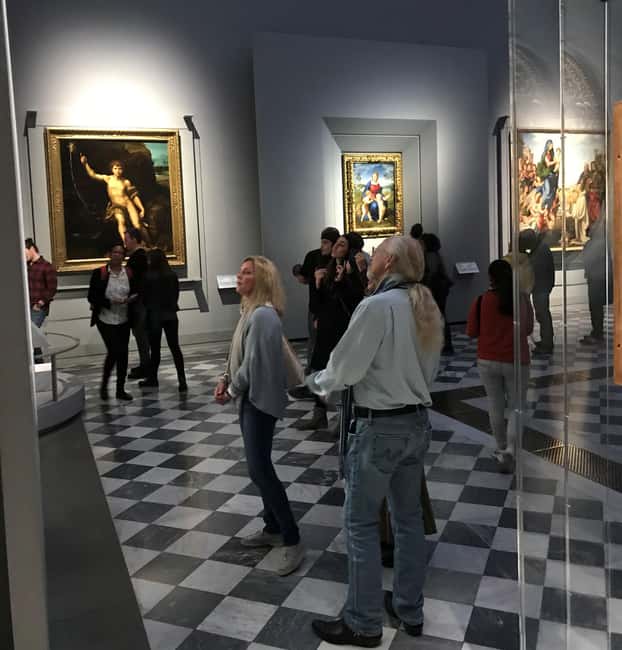
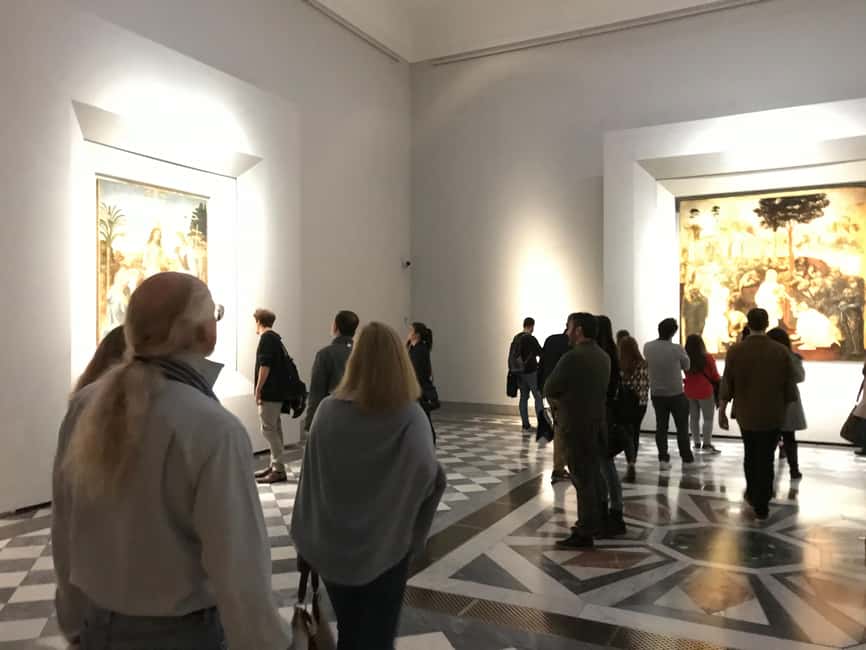
Leonardo da Vinci’s Annunciation adds another important step. Leonardo’s work rewards careful looking because the painting brings together religious subject matter, observation of nature, and a close study of gesture and space.
Your guide can point out the way the scene is arranged and explain why Leonardo’s treatment differs from earlier artists. This is also a useful point to ask questions, since the painting may look calm at first but contains plenty to examine in the figures, setting, and details.
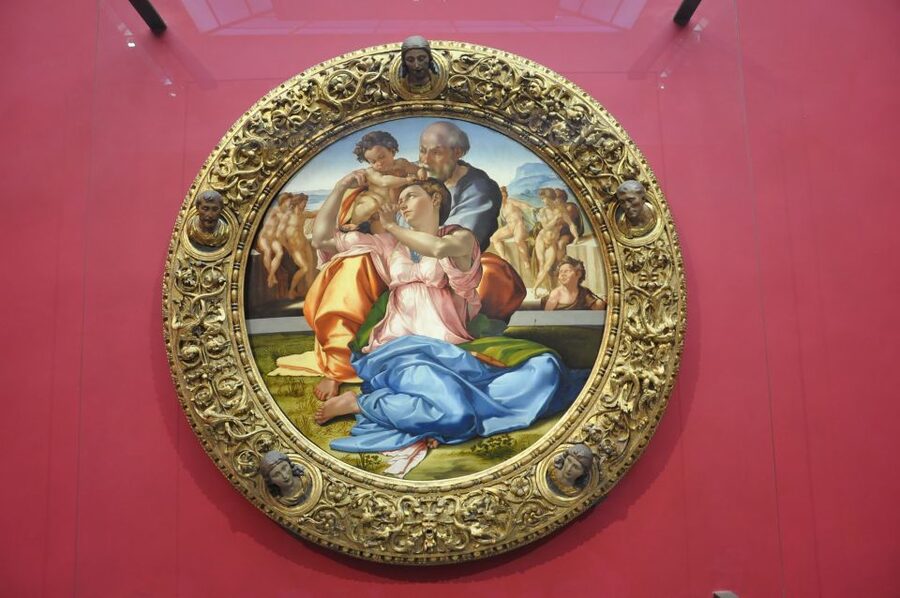
The tour also includes the only panel painting in the world by Michelangelo, according to the supplied description. That makes this a particularly important stop for anyone interested in the artist beyond his better-known sculpture and ceiling frescoes. The guide can place the work within the wider story of Florentine art and explain how Michelangelo’s handling of the human figure affects the image.
Raphael brings another change in tone. His paintings are often associated with balance, clarity, and graceful figures. Seeing Raphael after Leonardo and Michelangelo lets you compare several major approaches to composition and ideal beauty in one short visit.
Because these artists are famous, it is easy to treat the rooms like a checklist. I prefer to use them as comparison points. Look at how each painter handles faces, bodies, movement, and the relationship between figures. That kind of comparison is one of the best reasons to have a guide beside you.
Fra Angelico and Caravaggio: two strong final contrasts
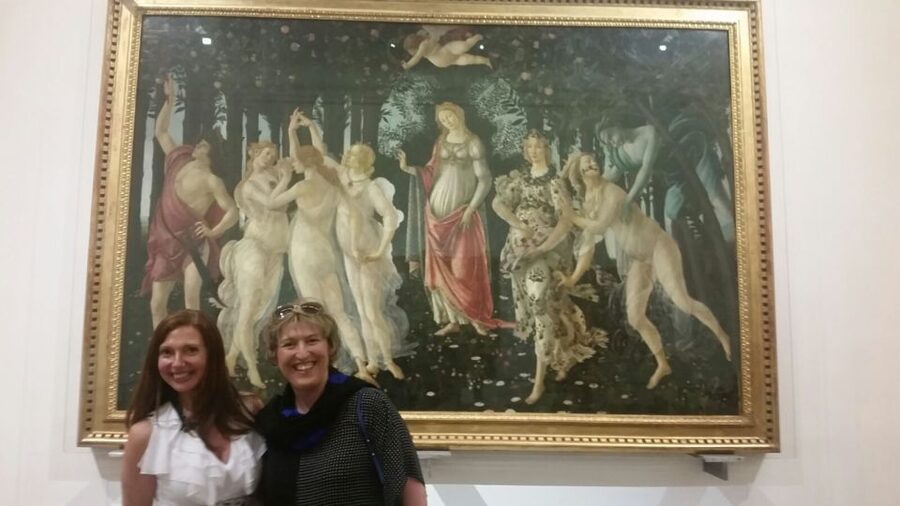
Fra Angelico’s Coronation of the Virgin offers a more devotional and luminous experience. The subject is solemn, but the painting also invites attention to color, order, and the many figures gathered around the central event.
This work is a useful reminder that the Uffizi is not only about the most famous Renaissance names. The collection includes religious paintings that show how artists served churches and patrons while also experimenting with design, expression, and detail.
Caravaggio brings a sharp shift. His work is known for strong contrasts of light and shadow, and his figures often feel direct and physical. After the elegance of Botticelli or Raphael, Caravaggio can seem startlingly immediate.
The tour’s span from the 13th to the 18th century is valuable because you see this change within one institution. You begin with early religious panels and finish with art that pushes drama and realism in a new direction. The route is not just a list of masterpieces. It is a short lesson in how European painting changed over time.
What the 90-minute schedule really means
Ninety minutes is a useful length for a first visit, especially if you have other plans in Florence. You get a focused introduction without giving up half a day. The reserved entry also protects your limited sightseeing time from a long wait outside.
Still, you should set realistic expectations. The Uffizi holds far more than this tour can cover. You will see selected highlights, hear context for major works, and move through a planned route. You will not study every room or spend long periods sitting with each painting.
I would treat the tour as a strong first pass. If the guide points out a room or artist you want to explore further, you can return on your own if your schedule and ticket arrangements allow. The tour itself ends back at the Uffizi meeting point, so it is easy to continue your day in central Florence.
The private format helps use the time well, but it does not make the museum small. If you want a slow, scholarly visit, look for a longer museum program. If you want the main works explained clearly and in a sensible order, 90 minutes can be enough.
Price, languages, and practical limits
At $176.72 per person, this is a premium museum visit. The price includes the official certified private guide, the reserved Uffizi entrance ticket, and the radio system. It does not include meals, drinks, transport, or hotel service.
The value depends on how much you want personal attention. For a pair or a small private group, the cost may make sense if you care about asking questions, avoiding the main ticket line, and having someone select the essential works. If you are mainly looking for entry to the museum at the lowest possible price, this is not the economical choice.
Tours are available in English, Italian, German, French, and Spanish. The group must have at least two guests for the tour to run. There is also a possibility of cancellation after confirmation if the minimum passenger requirement is not met. In that case, an alternative or a full refund is offered.
The museum is wheelchair accessible, which is useful to know when planning. Pets and large luggage are not allowed, and smoking is prohibited. These rules are simple, but you should handle bags before arriving rather than discovering the problem at the entrance.
Free cancellation is available up to 24 hours before the tour for a full refund. You can also reserve now and pay later, which gives you some flexibility while arranging a Florence schedule.
Who should book this Uffizi tour?
I would choose this tour for a first-time Uffizi visit, especially if you want the major names explained rather than simply seen. It also suits couples, families, and small groups who prefer to ask questions without keeping up with a large party.
It is a good match if you are short on time, dislike standing in ticket queues, or feel unsure about how to approach a large art museum. The guide’s flexibility is particularly useful when your group has mixed interests.
I would think twice if you already know the Uffizi well or want to spend hours with a small number of paintings. The 90-minute route is focused, not leisurely. The price also needs to fit your budget, since the private service costs much more than basic museum admission.
Should you book it?
Book this Uffizi tour if you want a clear, guided route through Giotto, Uccello, Piero della Francesca, Botticelli, Leonardo, Michelangelo, Raphael, Fra Angelico, and Caravaggio, with reserved entry and the freedom to ask questions. Arrive early, bring identification, and tell the guide which artists matter most to you.
Skip it if your main goal is the cheapest admission or a long independent visit. For everyone else, this is a practical way to make a short Uffizi stay count, with the private format and flexible guide attention providing the strongest value.
FAQ
How long does the Uffizi private tour last?
The guided visit lasts 1.5 hours. Starting times vary, so you need to check availability when booking.
Where does the tour begin?
Meet in front of the Leonardo da Vinci statue at the Uffizi Gallery. You should arrive 15 minutes before departure.
Is the Uffizi entrance ticket included?
Yes. The price includes an entrance ticket with a reservation for the Uffizi Gallery.
Which languages are available?
The live guide service is available in English, Italian, German, French, and Spanish.
Can I cancel the tour for a refund?
You can cancel up to 24 hours in advance for a full refund. Late arrivals cannot join the tour and cannot receive a refund or reschedule.
Is the tour wheelchair accessible?
Yes, the activity is wheelchair accessible. Pets and large luggage are not allowed.
More Museums Worth an Hour
- Florence Accademia Gallery Tour with Entrance Ticket Included
★ 4.5 · 6,148 reviews - Uffizi Gallery Small Group Tour with Guide
★ 4.5 · 4,923 reviews - Florence: Accademia Gallery Guided Tour
★ 4.6 · 4,156 reviews - Florence: Accademia Gallery Guided Tour with Entry Ticket
★ 4.6 · 2,253 reviews
Latest additions around Florence
- Florence: Cathedral Tour & Brunelleschi’s Dome Climb Ticket★ 5.0 · 3 reviews
- Palatina Gallery and Pitti Guided Tour in Florence★ 5.0 · 3 reviews
- San Gimignano Bike Tour (SOFT)★ 4.5 · 3 reviews
- Florence Uffizi Gallery Skip-the-line Tour w Art Historian Guide★ 5.0 · 3 reviews
- Private Tour: Pisa and Lucca from Florence★ 5.0 · 3 reviews
- Florence: Tour of Florence by rickshaw★ 5.0 · 3 reviews
- Center of Florence by golf cart★ 5.0 · 3 reviews
- From Firenze | Chianti day tour in a classic car★ 5.0 · 3 reviews
Uffizi Gallery Tours, compared.
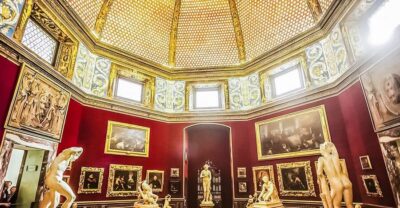
Skip-The-Line Uffizi Gallery Timed Entry Ticket
Read our review →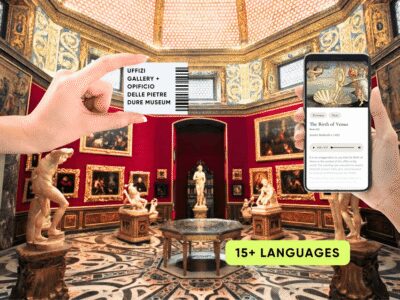
Uffizi Priority Ticket & Masterpieces Audio App
Read our review →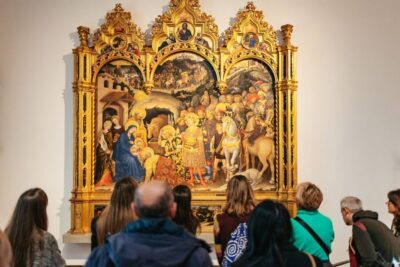

Skip the line: Uffizi and Accademia Small Group Walking Tour
Read our review →
Uffizi Gallery and Accademia Gallery Guided Tour
Read our review →
Uffizi Gallery Small-Group Guided Tour with Ticket
Read our review →
Michelangelo’s David, Accademia & Uffizi Small Group Tour
Read our review →Browse the lists this tour appears in