Reviewed · TOURS
Florence: Street Art Tour
Florence’s art does not stop at the museum door. This three-hour private walk leads you from the Duomo through side streets, famous squares, painted walls, cheeky tags, and the work of artists such as Blub and Clet. I like the way it pairs contemporary street art with Renaissance landmarks, giving you a fresh way to read a city you may think you already know.
I also like the personal touch. Guide Alex is singled out for his love of Florence and his ability to connect cathedrals, bridges, churches, and street artists in one walk. The chance to visit local artist spaces and CLET Studio adds more than a quick look at walls. The main drawback is simple: Florence has less street art than London, Paris, Barcelona, or New York, so experienced street art fans may find the art selection modest. You will also walk for most of the three hours.
In This Review
- Key points to know
- Reading Florence from the Duomo outward
- Santa Maria Novella and Via Palazzuolo
- Ponte Vecchio with a different point of view
- Piazza Pitti and the quieter side of the Oltrarno
- CLET Studio and the work of local artists
- Piazza della Signoria and the return to the Duomo
- What the guide adds to Italian graffiti
- How much walking and how much street art?
- The $198.25 price and private-tour value
- Comfort, timing, and practical planning
- Who should book this Florence street art tour?
- Should you book it?
- FAQ
- Where does the Florence Street Art Tour start?
- Where does the tour end?
- How long does the tour last?
- Which languages are available?
- Is the tour private and wheelchair accessible?
- What is included in the price?
Key points to know
- A modern route through historic Florence: See Santa Maria Novella, Ponte Vecchio, Piazza Pitti, and Piazza della Signoria while looking at today’s wall art.
- CLET and Blub take center stage: Learn about local artists whose work gives familiar Florentine scenes a playful, modern edge.
- Private guiding makes the difference: The guide can explain Italian graffiti, local politics, and the link between street art and Renaissance traditions.
- The walk is mostly on foot: Plan for three hours of walking through central Florence, with stops for explanation and viewing.
- Artist workshops are included: The route includes entry to street art workshops, with local artist spaces part of the experience.
- A niche tour at a premium price: At $198.25 per person, this makes the most sense if you want an unusual, private art experience rather than a standard sightseeing walk.
Reading Florence from the Duomo outward
The meeting point is easy to find: in front of the central door of Florence Cathedral at Piazza del Duomo, 107. That puts you in the middle of Florence’s most famous postcard view, but the purpose of the tour is to pull your attention away from the marble facade and toward the city’s newer art.
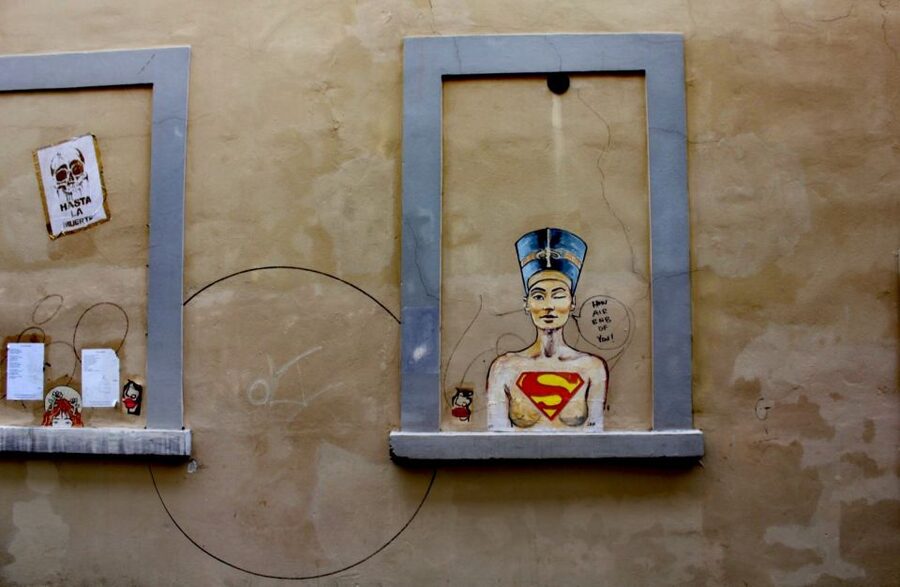
Your guide introduces you to the idea that Florence still has working artists who use walls, shutters, signs, and small urban spaces as canvases. You will look at graffiti and murals while learning how to read Italian tags and visual jokes that can be hard to understand on your own.
That opening contrast is the tour’s main appeal. Florence is often presented as a finished Renaissance masterpiece, but its streets are still being marked, altered, and argued over. The guide links the artists of today with the creative energy associated with Leonardo, Botticelli, and Michelangelo. The comparison is not that a wall tag equals a chapel fresco. It is that both forms of art respond to the city around them.
Other Florence outings people weigh against this one:
- Florence: Skip-The-Line Uffizi Gallery Timed Entry Ticket
★ 4.5 · 27,832 reviews - Tuscany Day Trip from Florence: Siena, San Gimignano, Pisa and Lunch at a Winery
★ 5.0 · 21,634 reviews - Florence: Timed Entrance Ticket to Michelangelo’s David
★ 4.6 · 16,983 reviews
Santa Maria Novella and Via Palazzuolo
The first major stop is Santa Maria Novella, with about 15 minutes for guided sightseeing. The square and church bring you back to Florence’s grand public face, but here you are learning to spot the quieter, less official art nearby.
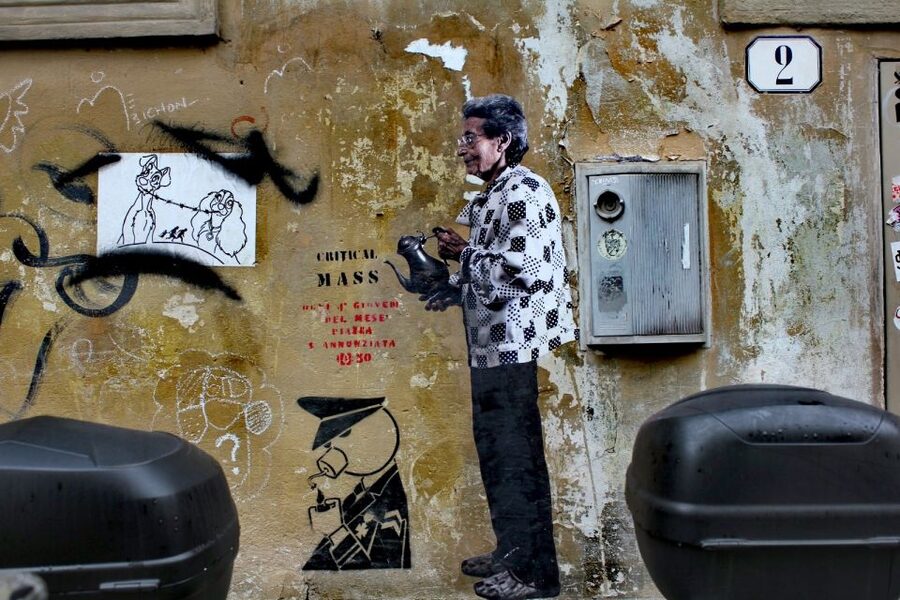
From there, the walk continues along Via Palazzuolo for around 30 minutes. This is one of the more useful parts of the route for anyone who wants to get away from Florence’s standard sightseeing circuit. Instead of moving only between famous monuments, you spend time in an area where walls can reveal local attitudes, political ideas, humor, and social concerns.
This is also where a guide adds real value. Italian graffiti is often brief, stylized, or partly illegible. A good explanation can tell you what is readable, what is slang, and what may simply be a tag. You will not get the same context by taking photographs from a passing bus or wandering with a museum map.
The art here may be small and scattered rather than presented as one huge mural district. That matters. If your idea of a street art tour is a nonstop parade of giant paintings, this route may feel restrained. The appeal is in finding images and tags among ordinary streets, then understanding how they fit the city.
Ponte Vecchio with a different point of view
The route then reaches Ponte Vecchio, one of Florence’s most photographed landmarks, for roughly 15 minutes. You will not be coming here only for the bridge view. The stop lets the guide set official Florence beside unofficial Florence.
Ponte Vecchio represents the city image most people come to see: historic, polished, and instantly recognizable. Street art offers another layer, often more playful or pointed. The contrast makes the bridge stop more interesting than a standard photo break, especially if you have already seen the bridge from the river or walked across it on your own.
You should expect a walking tour, not a collection of long indoor visits. The guide talks as you move, then pauses at selected pieces and public spaces. Comfortable shoes are important, and you should allow yourself enough energy for the full route. Three hours is a substantial stretch on Florence’s stone streets.
Piazza Pitti and the quieter side of the Oltrarno
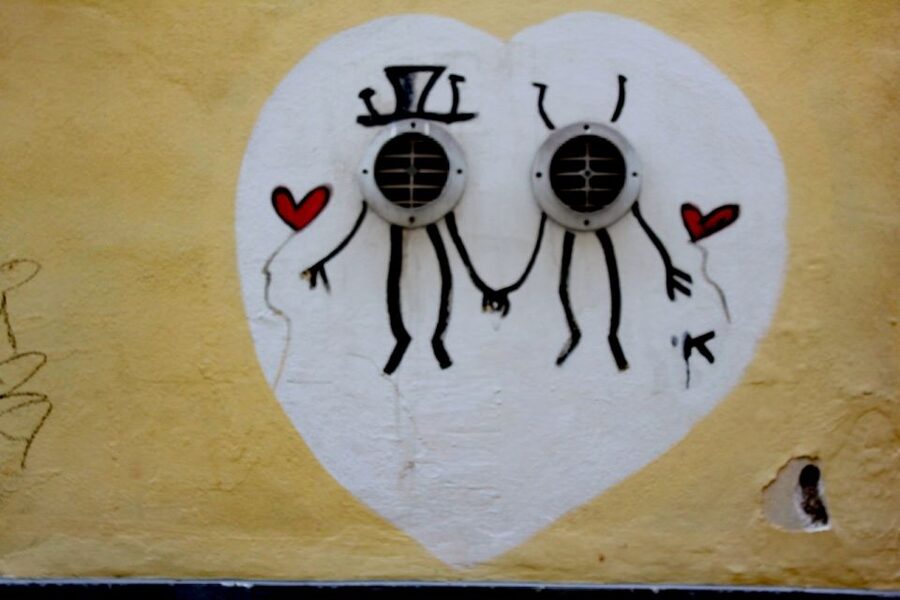
Piazza Pitti is another approximately 15-minute stop. The square is dominated by the Palazzo Pitti, yet the tour uses it as a doorway into a less formal view of the city. This is a good place to see how street art can sit beside major architecture without trying to compete with it.
The route’s movement between famous squares and less obvious streets is one of its strongest features. You get the essential Florence setting, including churches, bridges, and palaces, but you are not simply repeating the usual guided walk. Instead, the guide uses these places to explain how the old city and the current art scene overlap.
The tour can also help you notice how much of Florence’s character is found outside its headline sights. A wall may tell a small story about politics or society. A cheeky figure may comment on a familiar painting. A piece by a local artist may change how you see a street you would otherwise cross without a second look.
A different way to spend the same Florence day:
- Florence: Michelangelo’s David Skip-the-Line Entry Ticket
★ 4.5 · 12,764 reviews - The Best tour in Florence: Renaissance & Medici Tales – guided by a STORYTELLER
★ 5.0 · 12,316 reviews - Florence: Leonardo Interactive Museum Entry Ticket
★ 4.5 · 11,763 reviews - The Best Tour in Florence: Renaissance and Medici Tales
★ 5.0 · 10,810 reviews
CLET Studio and the work of local artists
About 30 minutes are set aside for CLET Studio. Clet is one of the best-known names connected with Florence’s contemporary street art, and the studio gives you a chance to see more than work encountered in passing.
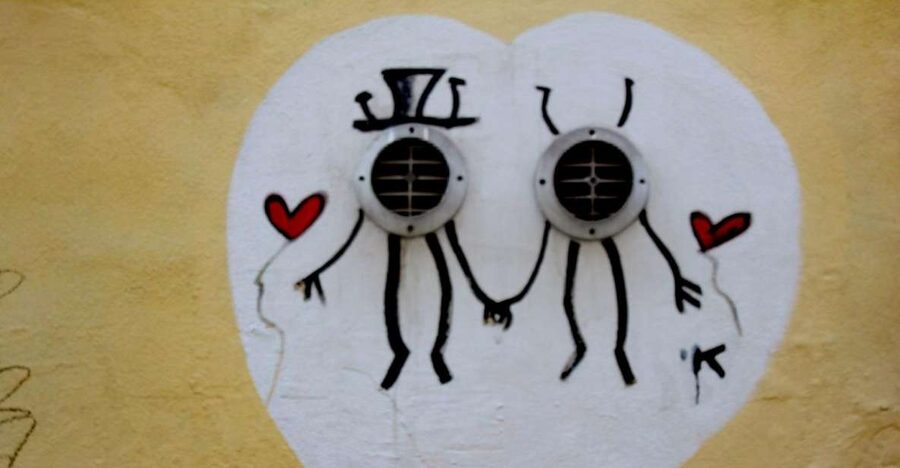
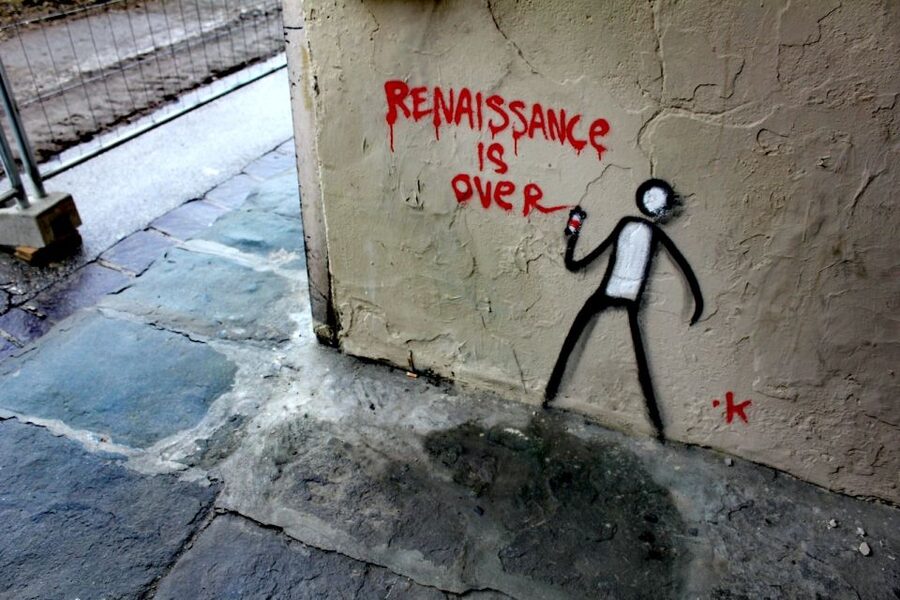
The artist is associated with altering ordinary road signs with removable stickers. The results turn familiar symbols into visual jokes and small acts of public commentary. That kind of work is especially well suited to Florence, where a strict old city can also be playful and irreverent.
The CLET stop is valuable because it provides context. On the street, you might see a clever image but miss its creator or purpose. In a studio setting, you can connect the public work with an artist’s wider approach. The activity includes entrance to street art workshops, and the experience also includes visits to local artist shops or spaces where additional work can be viewed and purchased if you choose.
Do keep expectations in check. This is not described as a long studio class or a hands-on art lesson. You are visiting workshops and learning about the work. If you want to make your own stencil or mural, this is not the right format.
Piazza della Signoria and the return to the Duomo
The final listed sightseeing stop is Piazza della Signoria, with about 15 minutes of guided time. This square is packed with some of Florence’s most important public sculpture and political history, making it a fitting place to discuss the city’s old habit of putting ideas in public view.
Here the contrast between Renaissance sculpture and street art becomes clearest. In one setting, artists worked with official commissions, durable stone, and powerful patrons. In the other, artists use walls, stickers, paint, and quick visual messages. The guide’s job is to show how both forms ask people to stop, look, and think.
The planned route ends back at Piazza del Duomo, 107. That is useful if you have a later museum booking or want to continue sightseeing from the cathedral. However, one account of the experience described finishing about a mile from the original cars, so I would confirm the exact end point with the guide on the day. The published meeting point and route indicate a return to the Duomo, but street art routes can be adjusted.
What the guide adds to Italian graffiti
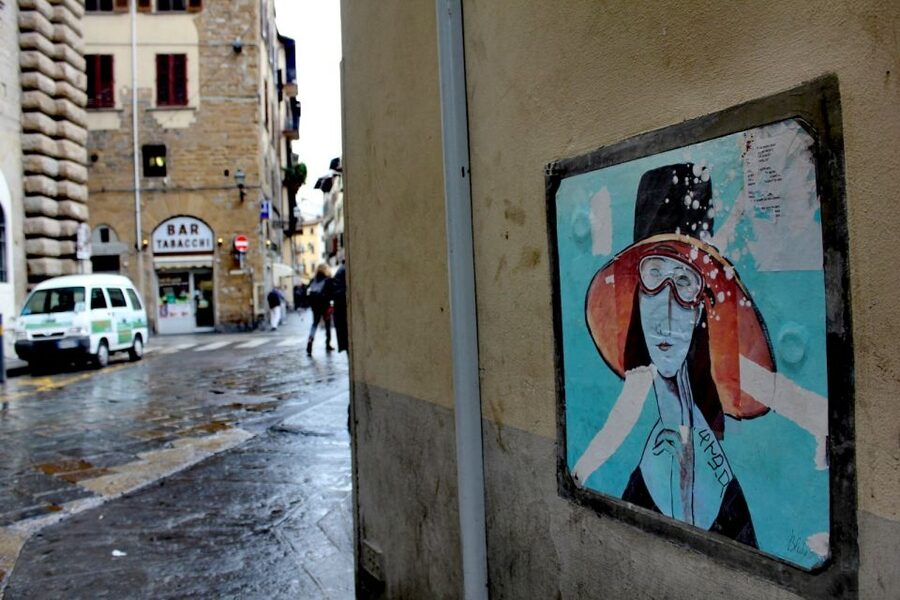
The central service here is interpretation. You can see a painted face or a sticker on your own, but you may not know the artist, the joke, the local reference, or the reason it matters.
The guide explains the writing and imagery in plain terms, including Italian graffiti that may look illegible at first. You will learn about artists such as Blub and Clet, then see how their work differs. That variety keeps the walk from becoming a simple hunt for one style.
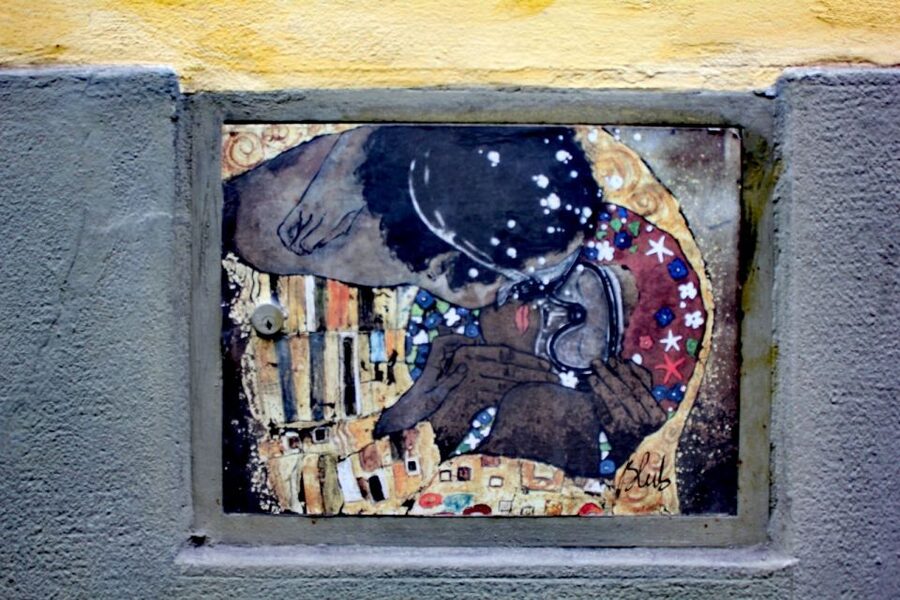
Blub is known for placing famous figures in underwater settings, a visual idea that makes well-known art feel odd and approachable. Clet’s altered signs use public objects for humor and comment. These examples show two different ways modern art can interrupt everyday life: one through recognizable images, the other through a familiar piece of city infrastructure.
Guide Alex is the named guide associated with the most detailed account of the experience. His strength, as described, is connecting the art with Florence itself. You can expect more than a list of artists. The walk also covers churches, cathedrals, bridges, Palazzo Vecchio, and the city’s recent social and political stories.
The guide language options are Italian, English, French, German, and Spanish. Since this is a private group, you can ask for clarification and spend more time on works that interest you, rather than following a large crowd at a fixed pace.
How much walking and how much street art?
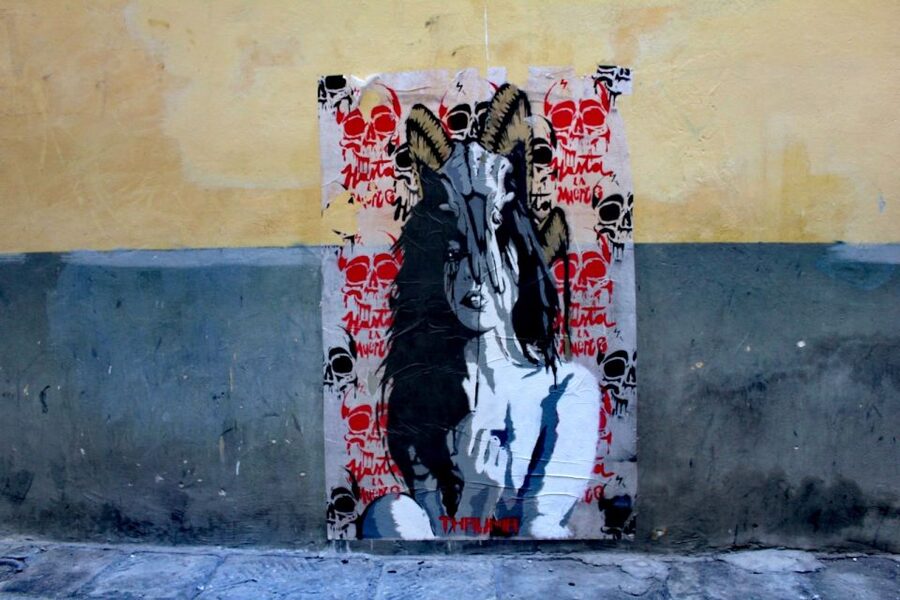
You should book this expecting nearly continuous walking. The route crosses central Florence and includes several squares, side streets, and workshop visits. There are short guided stops, but the tour is not built around sitting down.
The exact amount of street art can vary. Florence is not known for the same scale of outdoor art scene as Barcelona, London, New York, or Paris. One account found the collection less impressive after seeing street art in those cities, and that is a fair warning for serious street art specialists.
I would frame the experience differently. This is a Florence sightseeing walk with a street art focus, not a large-scale mural crawl. You will see contemporary work, but you will also get churches, bridges, public squares, and an alternative look at the city’s recent past.
That makes it a better match for a first or second visit than for someone hunting only for major walls. If you want one enormous mural after another, you may prefer a city with a larger dedicated street art district. If you want to see familiar Florence through a new lens, the mix works better.
The $198.25 price and private-tour value
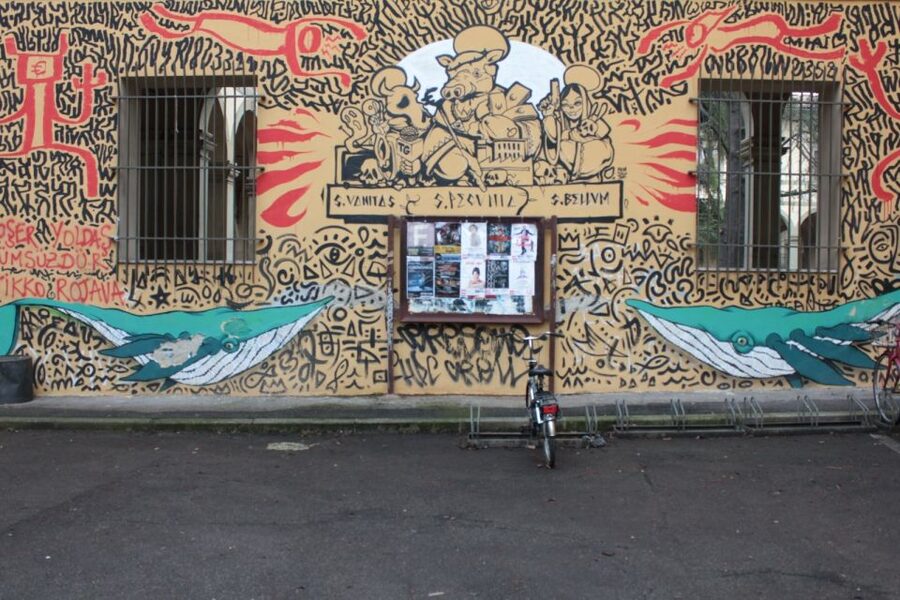
At $198.25 per person, this is an expensive three-hour walk. The price needs to be judged against the private format, expert guide, multilingual service, and included access to street art workshops.
For a solo visitor or couple, the cost may feel hard to justify if your main goal is simply to photograph public art. You can walk many central streets on your own. The value comes from the interpretation, the planned route, the local connections, and the chance to ask questions throughout a private experience.
The price becomes easier to defend for a small group that wants a focused outing. You are paying for a guide who can adjust the conversation to your interests, explain local artists, and connect street work with the city’s better-known art. The visit to CLET Studio and other artist spaces gives the tour more substance than a walk-by photo hunt.
I would compare this with the cost of other private Florence tours before booking. If your group cares about art and wants something outside the standard Uffizi and David circuit, it may be a worthwhile splurge. If you are mainly looking for inexpensive entertainment, the cost is likely too high.
Comfort, timing, and practical planning
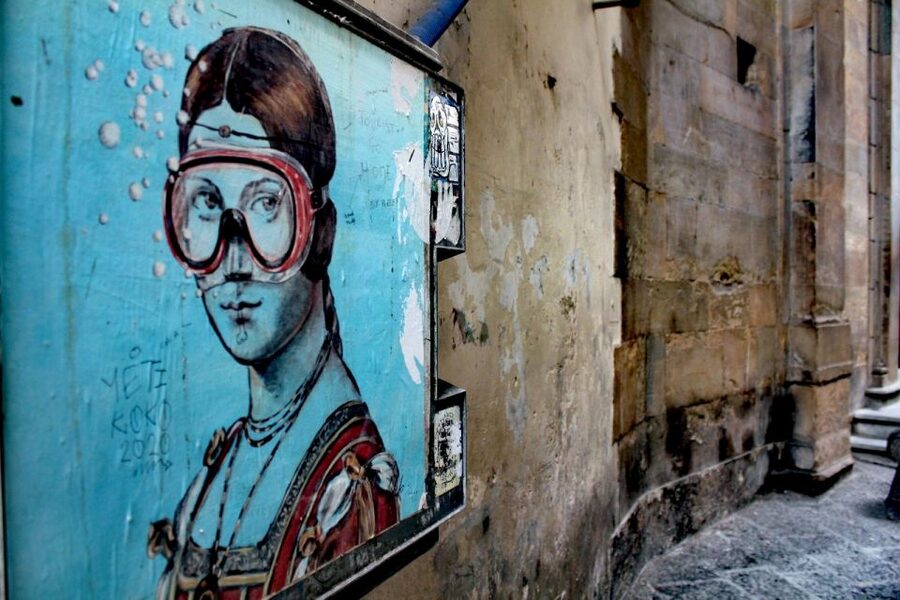
The tour lasts three hours, and starting times depend on availability. Choose a time that leaves room for the walk rather than placing it between two tight museum reservations.
Wear shoes suited to long walks. You will move through busy central areas and quieter streets, and you may spend time standing while the guide explains a work. There is no need for special equipment, but a phone or small camera can help you record artist names and images for later reference.
The tour is wheelchair accessible, which is useful information for planning. Because the route includes public streets, squares, and workshops, you should still confirm any specific mobility needs with the provider before booking.
Cancellation is free up to 24 hours before the activity, and you can reserve now while paying later. Those terms help if your Florence schedule is still changing, though they do not change the tour’s basic price or walking demands.
Who should book this Florence street art tour?
I would recommend it to you if you enjoy art but have already seen enough standard Renaissance commentary for one trip. It works well for visitors who want local stories, modern artists, and a route that includes both major sights and less familiar streets.
It is also a good choice for a private group with mixed interests. Someone who likes history can focus on the squares and political stories. Someone who likes visual art can track Blub, Clet, graffiti, and murals. Someone who simply wants to see another side of Florence gets a guided walk through neighborhoods beyond the usual museum route.
Families and younger visitors may appreciate the cheeky images and informal subject matter, though the three-hour walking time should suit your group’s stamina. Art students, photographers, and repeat visitors may find the local focus especially useful.
I would be cautious if you have limited time, dislike walking, or expect a major street art scene on the scale of London or New York. I would also think twice if the $198.25 cost would prevent you from visiting Florence’s major museums. Street art is an addition here, not a replacement for the city’s central collections.
Should you book it?
Book this tour if you want Florence to feel less like a museum and more like a living city. The best parts are the private guide, the links between present-day artists and Renaissance culture, the visits to CLET Studio and local artist spaces, and the chance to explore Via Palazzuolo and other streets you might skip.
Skip it if you want only large murals or a low-cost walk. Florence’s street art scene is more scattered and modest, and the price is high for three hours.
For the right audience, this is an unusual way to see the Duomo, Ponte Vecchio, Piazza Pitti, and Piazza della Signoria. You will still see the famous Florence, but you will also notice the stickers, tags, paintings, and social messages that keep its streets from feeling frozen in the past.
FAQ
Where does the Florence Street Art Tour start?
The tour starts in front of the central door of Florence Cathedral at Piazza del Duomo, 107.
Where does the tour end?
The stated end point is back at Piazza del Duomo, 107. One account described finishing about a mile from the starting point, so confirm the final location with your guide on the day.
How long does the tour last?
The activity lasts three hours. Starting times depend on availability when you book.
Which languages are available?
The live guide service is available in Italian, English, French, German, and Spanish.
Is the tour private and wheelchair accessible?
Yes. The activity is offered as a private group and is listed as wheelchair accessible.
What is included in the price?
The price includes an expert street art guide and entrance to street art workshops, including the CLET Studio visit described in the route.
Latest additions around Florence
- Florence: Cathedral Tour & Brunelleschi’s Dome Climb Ticket★ 5.0 · 3 reviews
- Palatina Gallery and Pitti Guided Tour in Florence★ 5.0 · 3 reviews
- Florence Uffizi Gallery Skip-the-line Tour w Art Historian Guide★ 5.0 · 3 reviews
- Private Tour: Pisa and Lucca from Florence★ 5.0 · 3 reviews
- San Gimignano Bike Tour (SOFT)★ 4.5 · 3 reviews
- Center of Florence by golf cart★ 5.0 · 3 reviews
- Florence: Tour of Florence by rickshaw★ 5.0 · 3 reviews
- From Firenze | Chianti day tour in a classic car★ 5.0 · 3 reviews
Tours, compared.

The Best tour in Florence: Renaissance & Medici Tales – guided by a STORYTELLER
Read our review →
The Best Tour in Florence: Renaissance and Medici Tales
Read our review →

Florence Accademia Gallery Tour with Entrance Ticket Included
Read our review →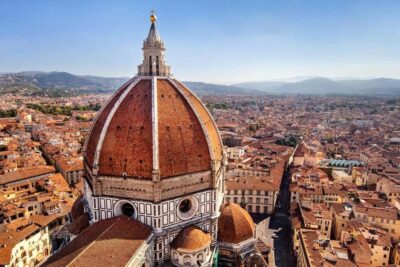
SMALL-GROUP Wine Safaris: Tuscan Wine Tasting Tours from Florence
Read our review →