
Reviewed · FLORENCE WALKING TOURS
Florence: Private Walking Tour of Florence’s Hidden Gems
Florence packs an astonishing amount into a small historic center, and this two-hour private walk gives you a useful first look without burying you in museum corridors. You move from Santa Croce and the Bargello to the Arno, cross Ponte Vecchio, then return through the shopping streets to the Duomo.
I like the route for two reasons: it links Florence’s major political, religious, and Medici landmarks, and a private guide can adjust the talk to your interests. Guides such as Giacomo, Claudia, Marco, and Manuela have been praised for clear stories, family-friendly explanations, and good local advice. The main drawback is pace: there is a lot to cover, and the monuments are viewed from outside only.
- A city-wide introduction in two hours: Cover the main center on foot, from Santa Croce to the Duomo.
- A private guide: Ask questions freely and shape the conversation around art, architecture, Medici power, or daily life.
- Exterior sightseeing only: This is an orientation walk, not an inside visit to the Uffizi, cathedral, Bargello, or palaces.
- Ponte Vecchio and Pitti Palace: Cross Florence’s famous medieval bridge and reach the former Medici residence.
- Fashion and Renaissance architecture: Walk Via Tornabuoni and pause at Palazzo Strozzi.
- Useful first-day choice: Finish with a better sense of where to return for longer museum visits.
In This Review
- What this Florence walk is really designed to do
- Starting near the Bargello and Medici Chapel
- Santa Croce and the city’s great names
- Piazza della Signoria and Neptune’s Fountain
- Crossing Ponte Vecchio to Pitti Palace
- Via Maggio, Santa Trinita, and Florence’s style
- Palazzo Strozzi and Piazza della Repubblica
- Ending at the Florence Duomo
- What the private format adds
- Timing, walking effort, and access
- Is the tour good value?
- Who should book this walk?
- Should you book Florence’s private walking tour?
- FAQ
- How long is the Florence walking tour?
- Is this a private tour?
- What languages are available?
- Does the tour enter the monuments?
- Where does the tour meet?
- Is the tour wheelchair accessible?
- What should I wear or bring?
- Can the itinerary change?
- Can I cancel or pay later?
What this Florence walk is really designed to do
This experience works best as a guided map of Florence rather than a series of full monument visits. In two hours, you hear the story of the city while moving through its most important public spaces, but you do not spend enough time at any one site for a detailed art tour.
That distinction matters. The Uffizi Gallery, Medici Chapel, Palazzo Vecchio, Basilica of Santa Croce, Bargello, Pitti Palace, and the Duomo appear as exterior stops or short guided points. You can learn why they matter, see their façades, and mark them for a later visit. If your main goal is to enter the Uffizi or climb Giotto’s Bell Tower, book a separate ticket and allow much more time.
I would choose this walk early in a Florence stay. It helps you understand how the squares fit together, where the Arno divides the city, and which museums deserve a return visit. Several past guide assignments, including Giacomo, Claudia, Ilaria, Giulio, Silvia, Natalia, and Marco, were praised for making complicated Florentine history easy to follow. Guides vary, of course, but the private format gives you a good chance to ask for the level of detail you want.
Starting near the Bargello and Medici Chapel
The meeting information gives Door 8 at Accord Tours, with coordinates listed as 43.774654388427734, 11.252745628356934. The supplied route also refers to Piazza San Firenze and Piazza di Madonna degli Aldobrandini as possible starting areas, so confirm the exact meeting point and route with the operator before setting out.
The early portion brings you close to the Bargello, one of Florence’s major sculpture museums, and the Medici Chapel. The guide’s role here is to set up the city’s power structure: the Medici family, civic government, religious patronage, and the artists who worked under wealthy patrons.
You should not expect an interior visit to the chapel or Bargello during this tour. Ten-minute guided portions are enough for a clear introduction, not for studying sculpture rooms or funerary monuments. If you have a special interest in Michelangelo or the Medici tombs, note the sites now and return with an admission ticket.
More walking routes in Florence:
- Florence: Guided Walking Tour
★ 4.5 · 3,334 reviews - Skip the line: Uffizi and Accademia Small Group Walking Tour
★ 4.5 · 3,135 reviews - Florence: Guided Walking Tour
★ 4.6 · 1,602 reviews
Santa Croce and the city’s great names
The route then heads toward the Basilica of Santa Croce. Its exterior is one of Florence’s most memorable Gothic façades, and the church is also known for major works of art and the tombs of important Italian figures.
This is a good place to ask your guide about the people connected to Florence. The city can feel like one long procession of famous names, but a local guide can explain how artists, bankers, church leaders, and political families shaped one another’s fortunes.
Again, Santa Croce is viewed from outside. That keeps the walk moving, but it also means you will not see the church’s chapels, paintings, or burial monuments during the two hours. I see this as a useful trade if your priority is broad coverage. It is less suitable if you want a focused church tour.
Families can benefit here. One guide, Claudia, was especially praised for keeping two children aged seven and ten involved, while other guides were described as patient with questions. Ask your guide to explain one or two stories in plain terms rather than trying to memorize every date.
Piazza della Signoria and Neptune’s Fountain
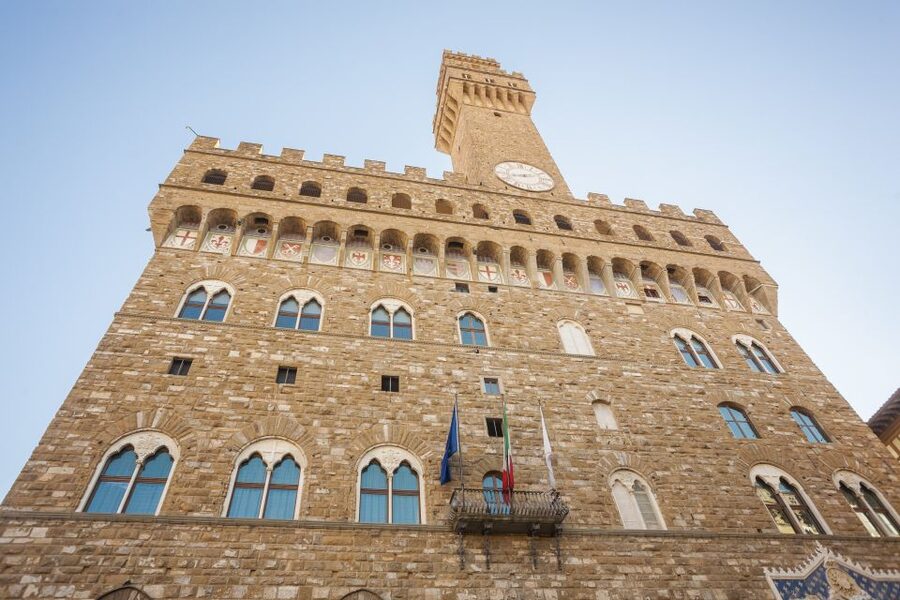
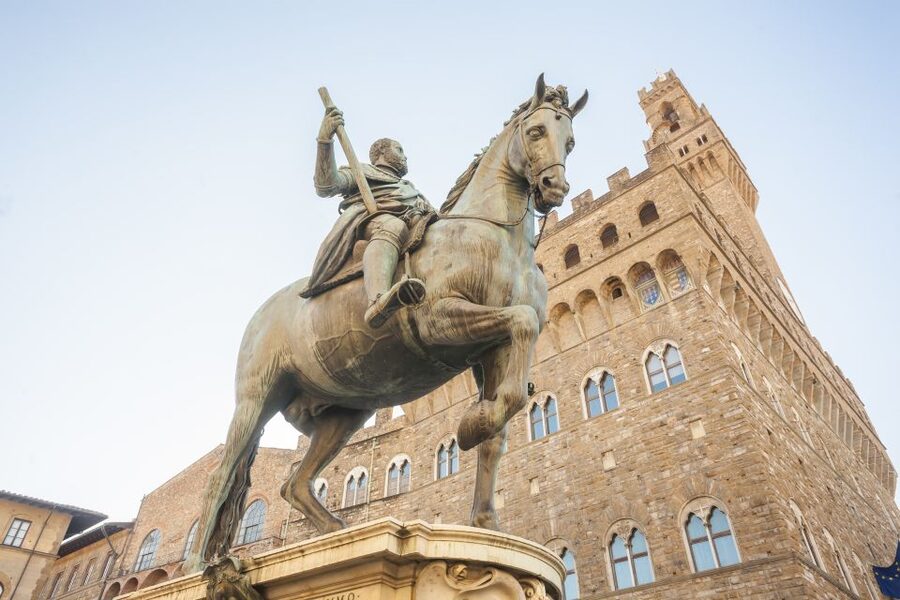
From Santa Croce, the walk continues to Piazza della Signoria, Florence’s open-air civic stage. The square brings together Palazzo Vecchio, statues, the Loggia dei Lanzi, and Neptune’s Fountain, all in a compact space.
This stop helps explain Florence as a republic, a Medici-controlled city, and a place where art served political purposes. The Palazzo Vecchio was not simply a handsome old building. Its position and decoration reflect the city’s government and the Medici grip on public life.
The guide usually spends about ten minutes at several listed stops, with around five minutes for a photo pause at Neptune’s Fountain. That timing gives you a good look and a few sharp facts, but the square may feel rushed if you want to examine every statue. Keep your camera ready and listen for the story behind the sculpture instead of trying to photograph everything at once.
The nearby Uffizi appears in the route as a short guided stop. You see its exterior and learn how it fits into the civic center. An inside visit requires a separate booking, and this walk does not replace an Uffizi ticket.
Crossing Ponte Vecchio to Pitti Palace
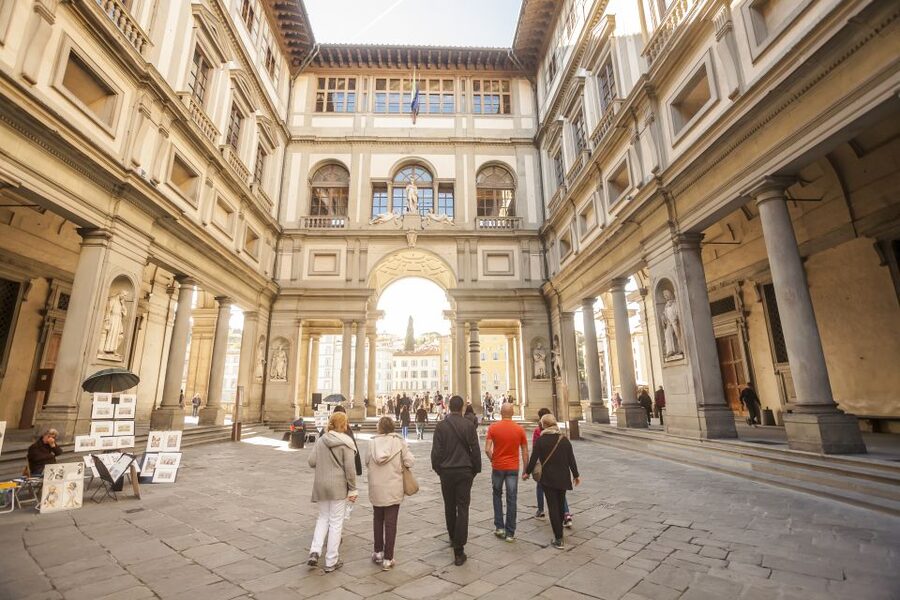
Ponte Vecchio is the route’s natural centerpiece. The medieval stone bridge crosses the Arno and is lined with gold jewelry shops, making it both a working shopping street and one of Florence’s most recognizable views.
The bridge can be crowded, so stay close to your guide and expect a slower crossing. The route is not a quiet riverside stroll. It is a short passage packed with history, shops, photo stops, and people moving in both directions.
Across the river, you reach Pitti Palace and Piazza Pitti. The palace was later associated with the Medici family and offers a clear sense of how Florentine power shifted from public civic spaces to grand private residences.
The guide talks about the palace from outside. That is valuable for orientation, but it will not show you the state rooms, galleries, or gardens. If Pitti is high on your list, treat this as a preview and return on another day. The short stop can help you decide how much time to set aside for the palace complex.
More Florence options worth a look before you decide
- Cinque Terre and Pisa Tower Tour from Florence Semi Private
★ 5.0 · 1,406 reviews - From Florence: Private Chianti Hills Tour with Tasting
★ 4.3 · 809 reviews - Private Self-Guided E-Bike Ride in Tuscany with Vineyard Visit
★ 5.0 · 775 reviews - Florence Private Transportation in Rickshaw
★ 5.0 · 730 reviews
Via Maggio, Santa Trinita, and Florence’s style
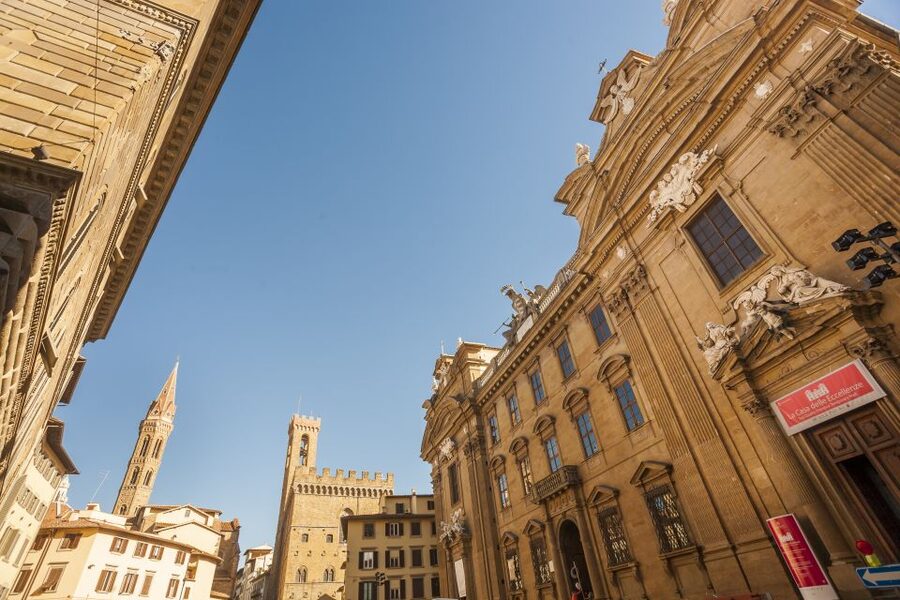
The return route follows Via Maggio and the Ponte Santa Trinita before reaching Via Tornabuoni. This stretch changes the mood of the walk. You move away from the palace district and into streets known for elegant shops and fashion boutiques.
Via Tornabuoni is useful for more than window-shopping. It shows how Florence remains a center of style while preserving a historic street plan. Your guide may also help you separate high-end storefronts from places selling local leather goods, a subject past guides have addressed when asked.
Do not expect a shopping tour or guaranteed discounts. A guide may offer restaurant or leather-buying suggestions, but you should still inspect quality and prices for yourself. One small caution comes from a past gelato voucher that was no longer accepted, so verify any voucher or recommendation before relying on it.
The Ponte Santa Trinita also gives you a different angle on the Arno and Ponte Vecchio. It is a worthwhile place to look back toward the bridge, especially if the group pauses long enough for photographs.
Palazzo Strozzi and Piazza della Repubblica
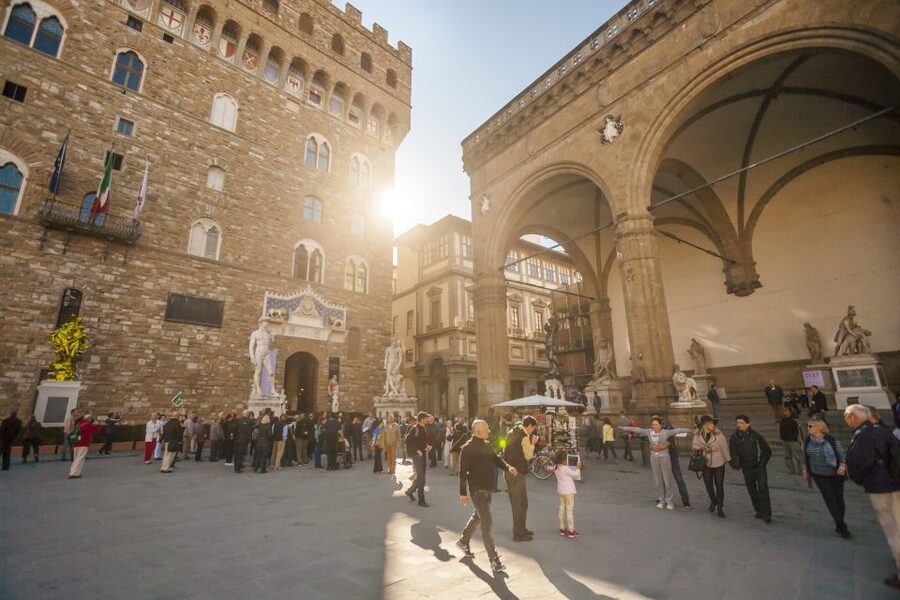
Palazzo Strozzi is a strong architectural stop. The building is often used to illustrate Renaissance design, and its large, orderly form makes a useful contrast with the narrower medieval streets nearby.
The tour then reaches Piazza della Repubblica, a broad central square with cafés, shops, and a more open urban feel. It is a good point for your guide to explain how Florence changed over time and how the modern city sits on top of older layers.
Some past participants found the pace a little slow at moments, while others wished the tour lasted longer. Both reactions make sense. A private walk can pause for questions, but the route also has many stops, and the guide must keep enough time for the Duomo. Tell your guide at the start if you prefer fewer facts and more walking, or detailed explanations with a slower pace.
Ending at the Florence Duomo
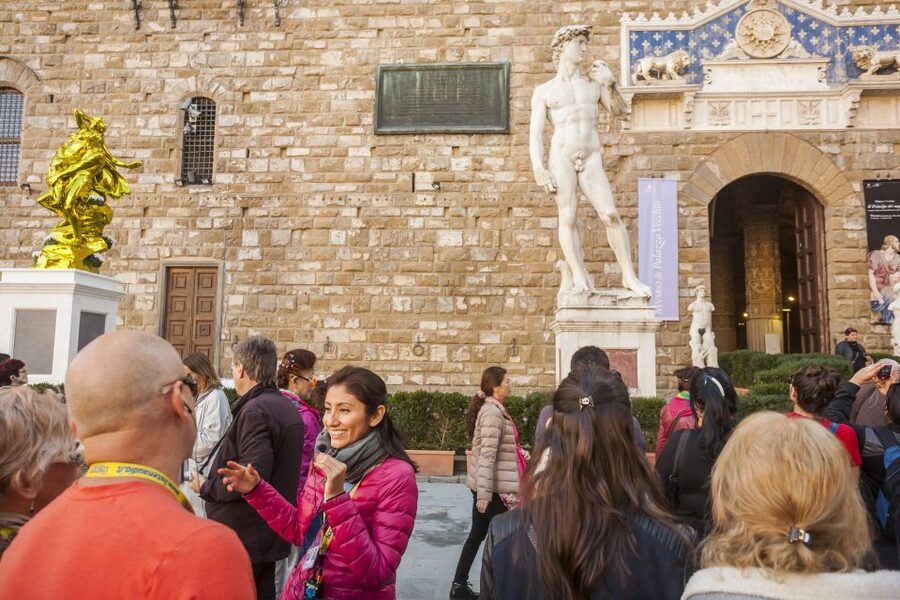
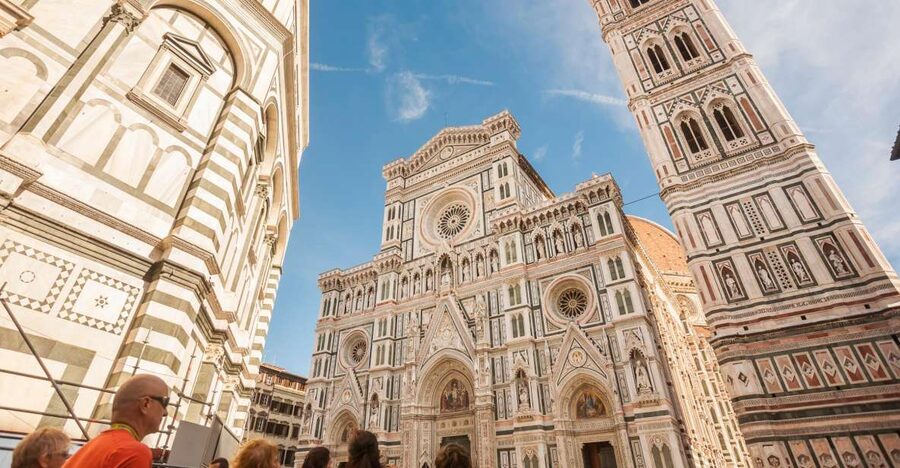
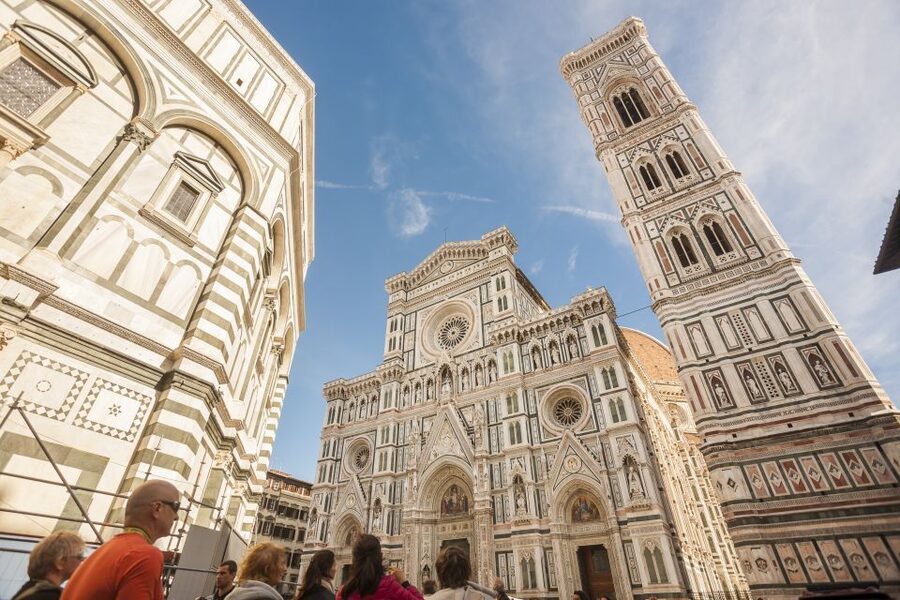
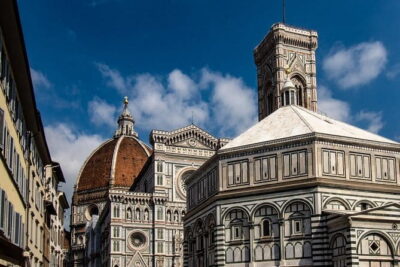
The final major stop is the Duomo complex, including the cathedral exterior. Florence Cathedral is the visual reward of the route, with its enormous dome, patterned marble, and busy square.
The guide can explain the building’s place in Florentine art and engineering, but the visit remains outside only. You will not enter the cathedral, climb the dome, visit the baptistery, or go up Giotto’s Bell Tower as part of this walk.
Dress properly if you plan to enter later. Shorts and sleeveless tops are not permitted inside the cathedral. The rule does not turn this walking tour into an interior visit, but it is worth remembering if you are heading straight to the cathedral afterward.
The Duomo is also a practical ending point. From here, you can return to the museums and churches you marked earlier, or continue exploring on your own. The tour gives you a clear list of priorities without forcing you to spend the rest of the day with a guide.
What the private format adds
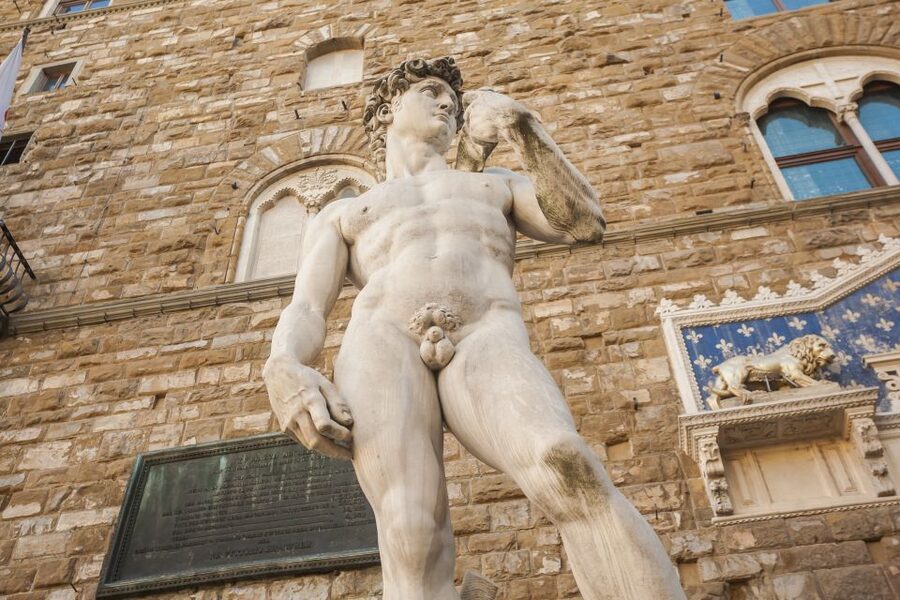
A private group is the main reason to choose this experience over a standard large-group city walk. You can stop for a question about Medici politics, ask for a simpler explanation for children, or request more detail about architecture.
Past guides have been praised for strong English, warmth, humor, and attention to families. Claudia was noted for directing explanations toward children, while Marco and Giacomo were singled out for making art and political history engaging. These names describe guides who have led the tour before, not a promise that you will receive one of them.
The private setup can also make the two-hour length feel more useful. You are not waiting for a large group to gather or listening to questions unrelated to your interests. Still, private does not mean leisurely. The route covers much of central Florence, so wear comfortable shoes and expect steady walking over historic streets and bridges.
Timing, walking effort, and access
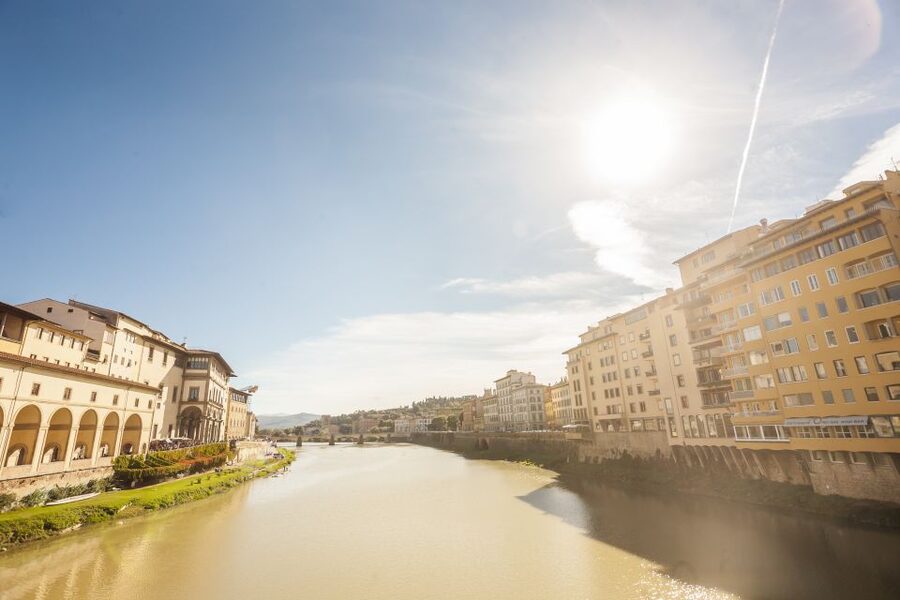
The listed duration is two hours, though one past experience lasted about two and a half hours. Plan around two hours, and do not schedule an important timed museum entry immediately afterward.
The route includes narrow historic streets, public squares, a bridge, and several changes of district. Comfortable shoes are essential. Although the activity information lists it as wheelchair accessible, it also says it is not suitable for people with mobility impairments. Those details do not fully agree, so contact the provider before booking if you use a wheelchair, walker, or need a slower route.
The itinerary may change depending on the meeting point. This is another reason to confirm the starting location and ask how much walking is involved on your chosen date.
Is the tour good value?
No price is provided here, so I cannot judge the exact cost. I would measure the value against what you want from a guide.
For a private group, the price can make sense if you are new to Florence, want a flexible explanation, or are traveling with children. You are paying for a local person who connects scattered sights into one story and helps you decide what deserves more of your time.
The value is lower if you already know Florence well or mainly want museum access. Since the tour does not include interiors or entrance tickets, you will need to pay separately for the Uffizi, the Duomo complex, Santa Croce, the Bargello, or Pitti Palace if you want to go inside.
A possible gelato or café stop may add a pleasant finish. Past guides have ended with gelato, cappuccinos, croissants, or local suggestions, but this should not be treated as a guaranteed inclusion. Think of any food stop as a bonus, not the reason to book.
Who should book this walk?
I recommend it most for first-time visitors who want a fast, human introduction to Florence. It is also a good fit for couples, families, and small private groups that like to ask questions rather than follow a fixed lecture.
History and architecture fans will get the most from the route, especially if they enjoy linking buildings to artists, rulers, and civic events. The walk also suits anyone arriving in Florence who wants to learn the city’s layout before choosing museums for the next day.
I would choose another option if you want extensive time inside the Uffizi, a guided cathedral visit, Michelangelo’s David, or a specialist art lesson. The similar experiences listed for the Duomo, Uffizi, and David are better matches for those goals because they focus on admission and a single major sight.
The overall rating of 4.6 from 297 bookings points to a consistently strong experience, but the lower feedback about noisy audio equipment and a slow pace is worth keeping in mind. Ask for clear speaking and let the guide know your preferred pace at the start.
Should you book Florence’s private walking tour?
Book it if you want orientation, context, and flexibility in one short outing. The route covers an impressive slice of central Florence, and the strongest guide experiences add stories, family-friendly explanations, restaurant advice, and a useful sense of what to see next.
Skip it if you need interior access or a specialist tour. For everyone else, especially on your first day, this is a sensible way to get your bearings fast, understand the city’s main districts, and begin exploring with a better plan.
FAQ
How long is the Florence walking tour?
The stated duration is two hours. One past experience lasted about two and a half hours, so avoid scheduling a tight appointment immediately afterward.
Is this a private tour?
Yes. The activity is described as a private group experience, allowing your group to ask questions and engage directly with the guide.
What languages are available?
Live guiding is available in English and Italian.
Does the tour enter the monuments?
No. The listed monuments are visited from the outside only. The walk does not include interior access to the Uffizi, cathedral, Santa Croce, Bargello, Palazzo Vecchio, Pitti Palace, or Medici Chapel.
Where does the tour meet?
The meeting point is listed as Door 8 at Accord Tours, with coordinates 43.774654388427734, 11.252745628356934. Other starting areas are also listed, including Piazza San Firenze and Piazza di Madonna degli Aldobrandini, so confirm the exact point before arrival.
Is the tour wheelchair accessible?
The activity information lists it as wheelchair accessible but also says it is not suitable for people with mobility impairments. If you have accessibility needs, contact the provider to confirm the route and walking conditions.
What should I wear or bring?
Bring comfortable shoes. If you plan to enter Florence Cathedral after the walk, avoid shorts and sleeveless tops because they are not permitted inside.
Can the itinerary change?
Yes. The route may vary depending on the meeting point.
Can I cancel or pay later?
You can cancel up to 24 hours in advance for a full refund. A reserve-now, pay-later option is also provided.
Latest additions around Florence
- Palatina Gallery and Pitti Guided Tour in Florence★ 5.0 · 3 reviews
- Florence: Cathedral Tour & Brunelleschi’s Dome Climb Ticket★ 5.0 · 3 reviews
- Florence Uffizi Gallery Skip-the-line Tour w Art Historian Guide★ 5.0 · 3 reviews
- Private Tour: Pisa and Lucca from Florence★ 5.0 · 3 reviews
- San Gimignano Bike Tour (SOFT)★ 4.5 · 3 reviews
- Florence: Tour of Florence by rickshaw★ 5.0 · 3 reviews
- Center of Florence by golf cart★ 5.0 · 3 reviews
- From Firenze | Chianti day tour in a classic car★ 5.0 · 3 reviews
Florence Walking Tours, compared.

Skip the line: Uffizi and Accademia Small Group Walking Tour
Read our review →
Renaissance and Medici Tales Guided Walking Tour
Read our review →
Skip-the-Line Florence Highlights and David Walking Tour
Read our review →
Dark Mysteries and Legends Guided Walking Tour
Read our review →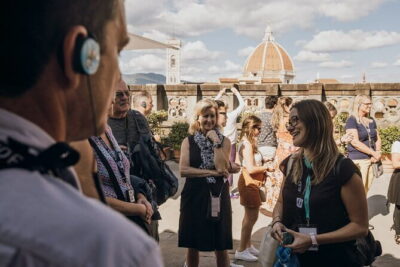
Florence in a Day: Michelangelo’s David, Uffizi and Guided City Walking Tour
Read our review →Browse the lists this tour appears in