
Reviewed · FLORENCE WALKING TOURS
Florence Private Walking Tour
Florence’s greatest sights line up nicely on this three-hour private walk, from Santa Maria Novella to Ponte Vecchio. You get the city’s grandest squares, churches, palaces, and bridge in one well-planned route, with a guide explaining what you are seeing instead of leaving you to decode the statues and façades alone.
I like the one-group format, since you can stop for photos, ask questions, or set a slower pace without waiting for strangers. I also like the practical side: guides such as Anna, Matteo, and Michele have helped visitors plan the rest of their time, including what to do after the walk.
The main catch is price. At $162.03 per person, this costs more than a group stroll, and most major interiors are viewed from outside. You are paying for personal attention and local guidance, not admission to the Duomo, Palazzo Vecchio, or Uffizi.
In This Review
- Key points to know before you book
- Why this route works so well in three hours
- Starting at Santa Maria Novella
- The Duomo complex from the outside
- Piazza della Repubblica and the changing city
- Piazza della Signoria and Palazzo Vecchio
- The Uffizi without an art museum ticket
- Crossing the Arno on Ponte Vecchio
- What the private format is worth
- The guides and the style of the walk
- Who should book this Florence walk?
- Should you book it?
- FAQ
- How long does the Florence Private Walking Tour last?
- What language is the tour offered in?
- Is this a private tour?
- Where does the tour begin?
- Where does the tour end?
- Which major sights are included?
- Are admission tickets included?
- Can I cancel for a full refund?
- Is the tour near public transportation and are service animals allowed?
Key points to know before you book
- A smart first look at Florence: The route connects Santa Maria Novella, the Duomo, Piazza della Signoria, the Uffizi, and Ponte Vecchio.
- Private means flexible: Your group can pause for pictures, ask follow-up questions, and adjust the pace.
- Most sights are exterior visits: Admission is not included at Santa Maria Novella or Palazzo Vecchio, and the Duomo, Baptistery, Campanile, and Uffizi are explained from outside.
- A history-heavy walk: Expect stories about Dominican Florence, the Florentine Republic, the city’s old forum, and the rebuilding of central Florence.
- Useful for the rest of your stay: The guide can offer suggestions after the tour, a helpful bonus for solo visitors and first-time arrivals.
- Simple transport setup: The walk begins by Santa Maria Novella station and ends at Ponte Vecchio, near the Arno.
Why this route works so well in three hours
Florence is compact, but its famous sights can blur together when you rush from one photo stop to the next. This route gives you a clear line through the city center, beginning near the main railway station and ending at the Arno.
The timing is tidy. The scheduled stops add up to about three hours, with the longest pauses at the Duomo, Piazza della Signoria, and Palazzo Vecchio. You are not spending half the tour on transport, since the experience is entirely built around walking.
That makes it a good choice near the start of a Florence visit. You can get your bearings, learn the names of the main buildings, and ask your guide what deserves a later, longer visit. The walk also works well for solo visitors, couples, families, and small groups who want the guide’s attention to themselves.
The pace is intended to be manageable rather than frantic. One person described it as a slow, steady stroll, which is useful if you have just arrived after a busy day of sightseeing in Rome or another Italian city. Still, this is a walking tour, so comfortable shoes remain a sensible choice.
More walking routes in Florence:
- Florence: Guided Walking Tour
★ 4.5 · 3,334 reviews - Skip the line: Uffizi and Accademia Small Group Walking Tour
★ 4.5 · 3,135 reviews - Florence: Guided Walking Tour
★ 4.6 · 1,602 reviews
Starting at Santa Maria Novella
The meeting point is Basilica of Santa Maria Novella, at Piazza di Santa Maria Novella 18. That location is practical because the square sits beside Florence’s central station, also called Santa Maria Novella, and between the station area and Piazza del Duomo.
Your guide spends about 20 minutes explaining the basilica from the outside. Santa Maria Novella was Florence’s first great basilica and the city’s principal Dominican church. Its marble façade was completed by Leon Battista Alberti in 1470, giving your guide an easy opening to discuss both the church and the architectural changes that shaped Florence.
Because admission is not included, you should think of this part as an exterior orientation rather than a church visit. The façade is the focus. If you want to see the interior, you will need to arrange that separately, either before or after the walk.
The next 15 minutes take place in Piazza Santa Maria Novella itself. The square is more than a place to admire the church. Its position beside the station makes it one of the city’s main arrival points, and it also links naturally toward the Duomo.
I find this opening useful because it begins with a real piece of city life rather than an isolated monument. You see where trains arrive, where the central walking route begins, and how Florence’s major sights fit together.
The Duomo complex from the outside
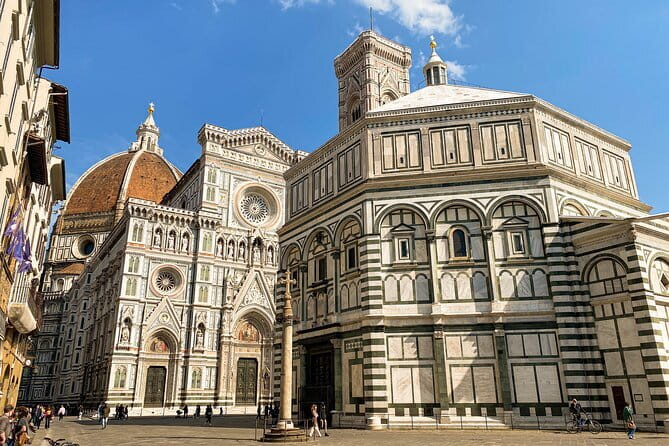
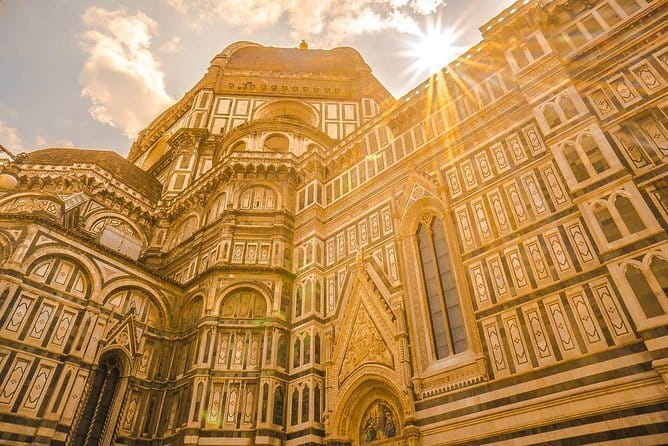
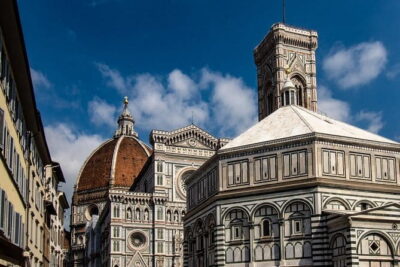
The tour then gives you about 30 minutes around Piazza del Duomo. This is the visual center of the walk, with the Cathedral of Santa Maria del Fiore, the Baptistery, and Giotto’s Campanile gathered in one remarkable space.
The guide explains all three from outside. That matters when you are looking at a crowded group of famous buildings and trying to work out what belongs to which structure. A private guide can answer the small questions that often make a visit click, such as which building is the cathedral, where the Baptistery sits, and how the bell tower relates to the complex.
The stop is free because you are not entering the buildings. That keeps the tour moving, but it also limits what you get here. You will not see the cathedral interior, climb the dome, enter the Baptistery, or go up the Campanile as part of this experience.
For many people, that is a fair trade. The Duomo area can be overwhelming on a first visit, and a clear explanation outdoors may be exactly what you need before deciding which admission ticket is worth your time. If entering the cathedral complex is your main goal, plan a separate visit.
Piazza della Repubblica and the changing city
About 15 minutes are set aside for Piazza della Repubblica. Today it is a broad city square, but the space carries several layers of Florence’s past.
The area was originally the Roman forum. It later became the site of Florence’s old ghetto, which was removed during the Risanamento, the major improvement and rebuilding program carried out when Florence briefly served as the capital of a reunited Italy.
That short stop adds useful context to the walk. Florence is not only a city of Renaissance palaces and church façades. Streets and squares also changed as the city modernized, sometimes at the cost of older neighborhoods.
You will not spend a long time here, and that is probably right. The square works best as a connecting point between the Duomo and the political heart of Florence. The guide’s explanation gives the place meaning without taking time away from the larger stops ahead.
More Florence options worth a look before you decide
- Cinque Terre and Pisa Tower Tour from Florence Semi Private
★ 5.0 · 1,406 reviews - From Florence: Private Chianti Hills Tour with Tasting
★ 4.3 · 809 reviews - Private Self-Guided E-Bike Ride in Tuscany with Vineyard Visit
★ 5.0 · 775 reviews - Florence Private Transportation in Rickshaw
★ 5.0 · 730 reviews
Piazza della Signoria and Palazzo Vecchio
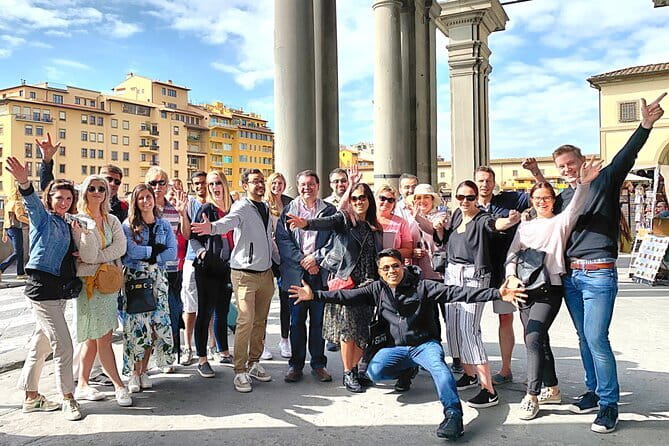
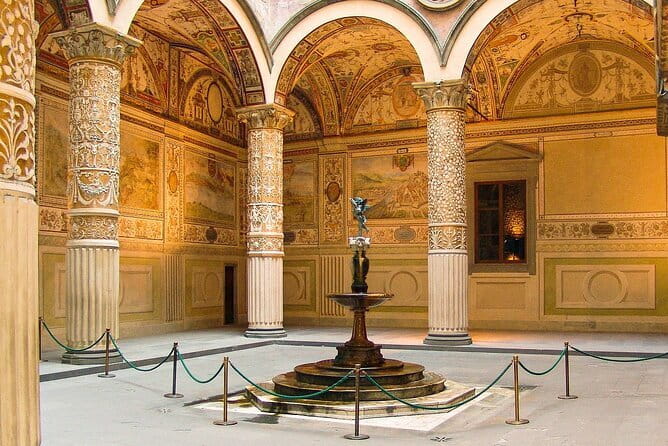
The next major pause is Piazza della Signoria, scheduled for about 30 minutes. This W-shaped square sits in front of Palazzo Vecchio and has long been the political focus of Florence.
The square was the center of the Florentine Republic, and that role still shapes the way it feels today. You are close to Palazzo Vecchio, the Uffizi Gallery, and the route toward the Arno. It is also a natural meeting place, so expect plenty of activity around you, especially at popular times.
The nearby Loggia dei Lanzi adds another open-air display of sculpture, while the square holds a copy of Michelangelo’s David. The copy is important to know about before you arrive. The original David is not here, but the square still gives you a strong sense of how Florence uses public art and government buildings together.
Your guide then gives Palazzo Vecchio its own 30-minute explanation from outside. This is Florence’s town hall, facing directly onto the square. Its position helps explain the relationship between civic power, public ceremony, and art in the city.
Again, admission is not included. You will not tour the interior rooms or climb the tower during this walk. That is a limitation for anyone hoping to see the palace inside, but the exterior stop still gives you a solid introduction and helps you decide if a return visit belongs on your schedule.
This is one of the best places to use the private format. Ask about the square’s sculptures, the David copy, or the role of Palazzo Vecchio, and you can follow the subject as far as your own interest takes you. A group tour often has to keep moving. Here, the pace belongs to you.
The Uffizi without an art museum ticket
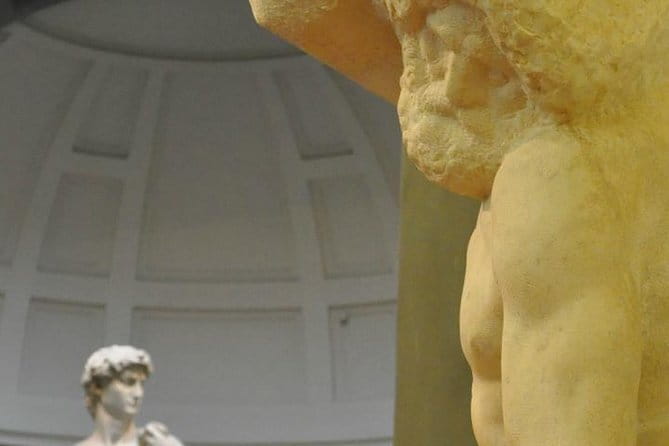
The walk pauses for about 20 minutes outside the Uffizi Gallery. The building is located in the center of Florence, close to Piazza della Signoria and the route to Ponte Vecchio.
Your guide introduces the gallery and points out its place in the city’s art story. The collection includes major Italian artists such as Botticelli, Giotto, Cimabue, Michelangelo, Leonardo da Vinci, and Raphael.
The important practical point is that this is an exterior explanation. Admission is not part of the walk, so you will not see the paintings inside. If the Uffizi is high on your list, treat this stop as preparation for a separate museum visit, not as a substitute for one.
That preparation can still save time. A guide’s quick introduction helps you know why the Uffizi matters and which artists you may want to seek out later. If you have only three hours in Florence and prefer outdoor sightseeing, you can enjoy the building and its setting without committing half a day to a museum.
Crossing the Arno on Ponte Vecchio
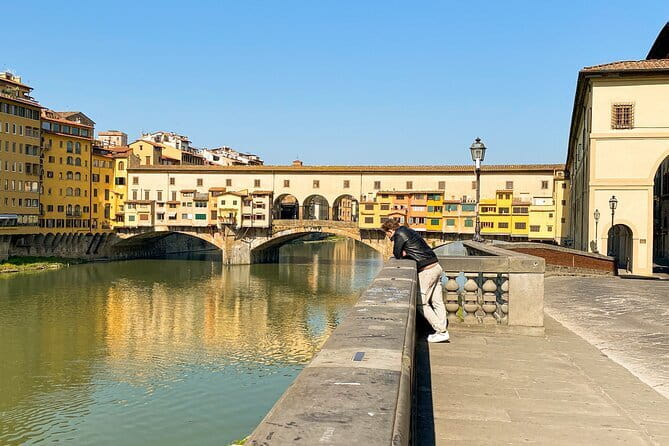
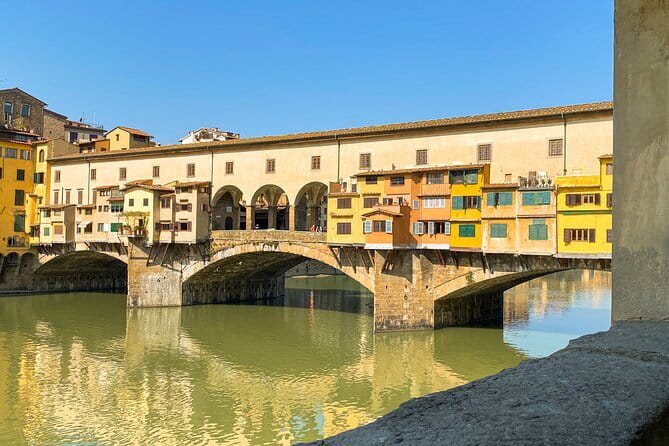
The final stop is Ponte Vecchio, with about 20 minutes to look around. The bridge is a medieval stone arch crossing the Arno and one of Florence’s most recognizable views.
Its shops are part of the bridge’s character. Butchers, tanners, and farmers once occupied them. Today, jewellers, art dealers, and souvenir sellers fill the storefronts. That change gives the guide a chance to explain how the bridge shifted from a working commercial passage to one of the city’s best-known visitor sights.
Ponte Vecchio was the only bridge in Florence spared from destruction during World War II. You can take in the bridge, the river, and the shop-lined passage before the tour ends here.
Ending at Ponte Vecchio is convenient for continued sightseeing. The tour does not return you to Santa Maria Novella, so keep that in mind if you have a train to catch. On the other hand, finishing by the Arno leaves you in a useful part of the city for more walking, shopping, or a later museum visit.
What the private format is worth
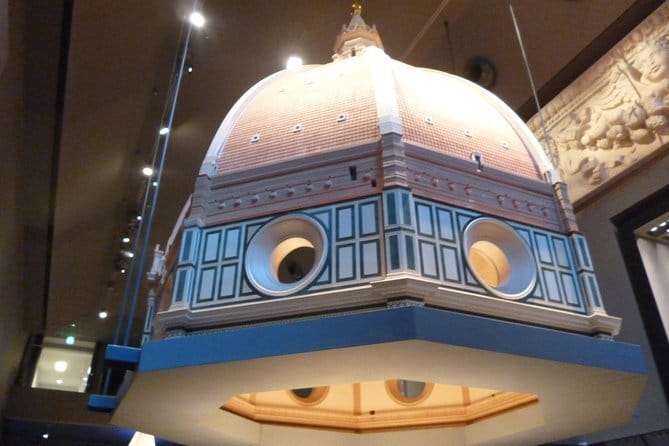
At $162.03 per person, this is not a bargain tour in the usual sense. The value comes from having a guide for only your group, with no need to match the pace or interests of strangers.
That difference matters most if you like questions and conversation. You can stop for a photo, ask for more detail about a building, or request suggestions for the rest of your trip. One solo visitor especially valued the guide’s recommendations, and that is a real advantage when you are deciding how to use your remaining time in Florence.
The private setup also allows some flexibility beyond the advertised route. One guest found that the guide included parts of the city not listed in the plan. You should not assume a completely different tour, but it is reasonable to ask about nearby points of interest if your group has a specific curiosity.
The price is harder to justify if you mainly want a quick introduction and do not care about personal attention. A group walking tour could cost less, though the supplied information does not give a group-tour price for comparison. Here, the clearest reason to pay more is control: your questions, your pace, and your guide’s attention.
The guides and the style of the walk
The named guides include Matteo, Michele, and Anna. Their strengths, based on the information available, are clear explanations, strong preparation, personal attention, and useful suggestions for what to do next.
Anna is described as attentive and well informed, with an ability to show the popular sights while listening to what visitors wanted to do afterward. Matteo is associated with a good pace and practical recommendations, particularly useful for someone exploring alone. Michele is noted for knowing a great deal about Florence and for showing places that might otherwise be missed.
Guide assignment can vary, so you should not book on the assumption that one particular person is guaranteed unless the booking page confirms it. Still, these names give you a sense of the experience: this is designed as a personal, conversational walk rather than a scripted march between photo stops.
The overall score is 4.9 from 19 ratings, and the tour is recommended by 100 percent of participants. That is a small sample, but it supports the main strengths of the experience: pacing, information, and guide attention.
Who should book this Florence walk?
I would choose this tour if you are visiting Florence for the first time and want the major sights explained in a logical order. It also suits a solo visitor who wants local suggestions without joining a large group.
Families and mixed-age groups may like the ability to slow down or pause. Couples and friends who prefer a private conversation can also get more from the tour than from a fixed group schedule.
I would hesitate if your top priority is entering the Duomo, Uffizi, or Palazzo Vecchio. The tour explains those places from outside, and admission is not included. In that case, you may prefer to spend the same money on timed entry and explore the interiors on your own, though you would give up the guide’s help and flexible route.
The tour is offered in English and accepts mobile tickets. Confirmation arrives at booking, service animals are allowed, and the meeting point is near public transportation. Most people can participate, but the experience remains a three-hour walk, so consider your group’s comfort with walking before booking.
Free cancellation is available if you cancel at least 24 hours before the start time. Changes or cancellations made less than 24 hours ahead are not accepted for a refund.
Should you book it?
Book this Florence private walking tour if you want a well-organized introduction, a steady pace, and a guide who can shape the conversation around your interests. It is especially useful on your first day, when you need a clear map of Florence and practical ideas for what to see next.
Skip it if you mainly want museum entry or a close look inside the cathedral complex. The route is strongest as an outdoor city orientation, with personal guidance as its main benefit. At $162.03 per person, that is a serious price, but for a small group that values flexibility and one-on-one help, it can be a sensible way to begin a Florence stay.
FAQ
How long does the Florence Private Walking Tour last?
The tour lasts approximately three hours. The scheduled stops together account for about 180 minutes.
What language is the tour offered in?
The tour is offered in English.
Is this a private tour?
Yes. Only your group participates, so you do not share the experience with other groups.
Where does the tour begin?
The meeting point is Basilica of Santa Maria Novella, Piazza di Santa Maria Novella 18, Florence.
Where does the tour end?
The tour ends at Ponte Vecchio, Florence.
Which major sights are included?
The route includes Santa Maria Novella, Piazza Santa Maria Novella, the Duomo complex, Piazza della Repubblica, Piazza della Signoria, Palazzo Vecchio, the Uffizi, and Ponte Vecchio.
Are admission tickets included?
Most stops are exterior visits. Admission is not included for Santa Maria Novella or Palazzo Vecchio, and the Duomo complex and Uffizi are explained from outside.
Can I cancel for a full refund?
Yes, if you cancel at least 24 hours before the experience start time. Cancellations made less than 24 hours ahead are not refunded.
Is the tour near public transportation and are service animals allowed?
Yes. The tour is near public transportation, and service animals are allowed. Most people can participate.
Latest additions around Florence
- Florence: Cathedral Tour & Brunelleschi’s Dome Climb Ticket★ 5.0 · 3 reviews
- Palatina Gallery and Pitti Guided Tour in Florence★ 5.0 · 3 reviews
- Florence Uffizi Gallery Skip-the-line Tour w Art Historian Guide★ 5.0 · 3 reviews
- Private Tour: Pisa and Lucca from Florence★ 5.0 · 3 reviews
- San Gimignano Bike Tour (SOFT)★ 4.5 · 3 reviews
- Florence: Tour of Florence by rickshaw★ 5.0 · 3 reviews
- Center of Florence by golf cart★ 5.0 · 3 reviews
- From Firenze | Chianti day tour in a classic car★ 5.0 · 3 reviews
Florence Walking Tours, compared.

Skip the line: Uffizi and Accademia Small Group Walking Tour
Read our review →
Renaissance and Medici Tales Guided Walking Tour
Read our review →
Skip-the-Line Florence Highlights and David Walking Tour
Read our review →
Dark Mysteries and Legends Guided Walking Tour
Read our review →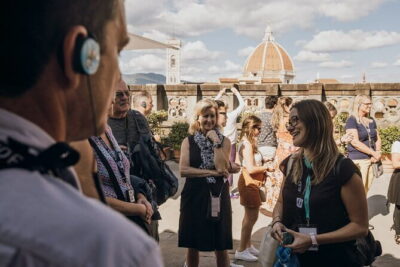
Florence in a Day: Michelangelo’s David, Uffizi and Guided City Walking Tour
Read our review →Browse the lists this tour appears in