
Reviewed · FLORENCE WALKING TOURS
Florence: Private City Walking Tour
Florence packs an astonishing amount into a walkable center, and this private three-hour route gives you the broad picture fast. You begin beneath Brunelleschi’s famous dome, pass Medici and Dante landmarks, then cross Ponte Vecchio toward the Oltrarno. I like the private format and the clear route through Florence’s main squares. I also like that the guide connects art with food, wine, crafts, politics, and daily life.
The main thing to watch is the wording around visits. The route takes you past the Duomo complex, Uffizi Gallery, Palazzo Pitti, and Santo Spirito, but only an expert guide is included. Museum and monument admission is not listed, so treat this as a guided city walk, not a ticketed Uffizi or cathedral tour.
In This Review
- Key points at a glance
- Why this three-hour Florence walk works
- Starting beneath the Duomo
- Medici power and the medieval city
- Piazza della Repubblica, from Roman roots to modern Florence
- Piazza della Signoria and the open-air sculpture lesson
- The Uffizi area without an included museum visit
- Ponte Vecchio and the crossing into Oltrarno
- Piazza Santa Trinita and the return through central Florence
- Who will get the most from this tour
- What to know before paying $192.58
- Should you book this Florence walking tour?
- FAQ
- How long is the Florence private walking tour?
- Where does the tour start?
- Where does the tour end?
- Is the tour private?
- Which languages are available?
- Is the tour wheelchair accessible?
- Are food and drinks included?
- Are Uffizi Gallery tickets included?
- Can I cancel for a refund?
Key points at a glance
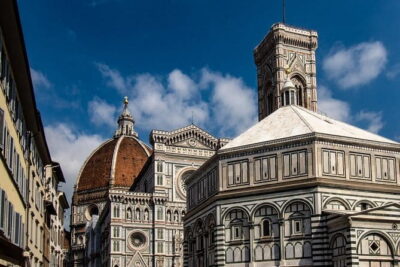
- Brunelleschi’s dome begins the story: Start at Florence’s religious center, with the cathedral, Baptistery, bell tower, and dome in one view.
- A private guide keeps the pace personal: Your group can focus on questions about Medici power, Renaissance art, or Florentine customs.
- The route covers both sides of the Arno: Walk from the historic center over Ponte Vecchio and into the Oltrarno.
- Major art is often seen from outside: La Loggia dei Lanzi and the Uffizi area bring sculpture and painting into the street, while entry tickets are not included.
- The walk returns to the Duomo: You do not need to arrange transport back to the starting point.
- Languages and access are flexible: Tours are offered in English, Italian, French, German, and Spanish, and the activity is marked wheelchair accessible.
Why this three-hour Florence walk works
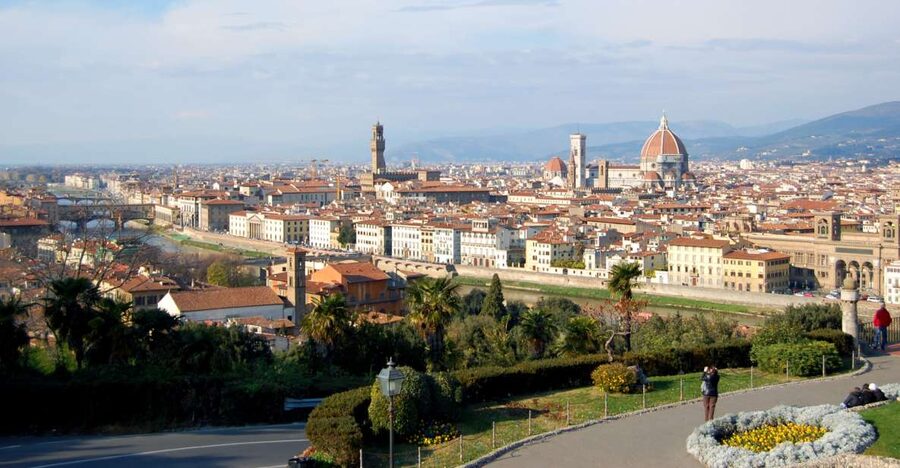
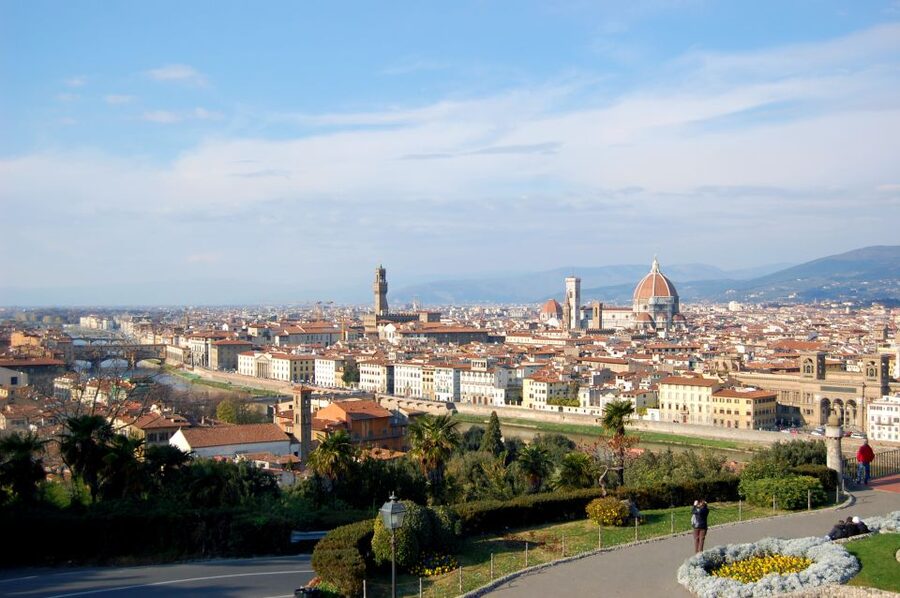
Florence is compact, but it is not simple. A few blocks can carry you from Roman origins to medieval faction fights, Medici rule, Renaissance art, and nineteenth-century urban change. This tour gives those layers a sensible order instead of leaving you to connect the dots alone.
I especially like the private-group setup. Florence’s central streets can feel crowded, and a private guide lets you stop for a question without worrying about a large group waiting behind you. You can ask why the Medici mattered, how Florence’s political center worked, or which sculptures at the Loggia dei Lanzi deserve your attention.
The price is $192.58 per person, which is a serious sum for a three-hour walk. Its value depends heavily on group size. For one or two people, it will cost more than a shared city walk, but you are paying for a private guide, a flexible conversation, and a route that covers many of Florence’s headline sights without adding transport time. If your group is larger, the per-person cost may feel easier to justify.
The tour has a 4.8 rating from 17 reviews. The only written comment provided refers to the weather, so there is no detailed public note about a particular guide or a standout stop. I would not use that short comment to judge the guide’s personality. Instead, focus on the practical strengths: the route, private format, language choice, and central start and finish.
More walking routes in Florence:
- Florence: Guided Walking Tour
★ 4.5 · 3,334 reviews - Skip the line: Uffizi and Accademia Small Group Walking Tour
★ 4.5 · 3,135 reviews - Florence: Guided Walking Tour
★ 4.6 · 1,602 reviews
Starting beneath the Duomo
Meet your guide in front of the central door of the Cathedral of Santa Maria del Fiore. This is a useful meeting point because the cathedral is hard to miss, though the area can be busy. Arrive with enough time to locate the central door without rushing.
The opening section covers Florence’s religious heart, the Duomo complex. You see the Baptistery of San Giovanni, the cathedral, Giotto’s bell tower, and Brunelleschi’s octagonal dome. In a short space, you get a lesson in Florence’s competing forms of beauty: striped marble, elaborate stonework, vertical Gothic lines, and the enormous dome that changed architectural history.
The scheduled Duomo complex visit lasts about 15 minutes. That is enough for an introduction and exterior orientation, not a full study of every building. The supplied details do not say that cathedral, Baptistery, bell tower, or dome admission is included. If entering one of them is important to you, ask about tickets before booking or plan a separate visit.
This is also the point where comfortable shoes matter. Three hours on stone streets is manageable for most people, but Florence’s center rewards steady walking rather than fancy footwear.
Medici power and the medieval city
The written route description adds Palazzo Medici Riccardi to the story. This was the first Medici palace and the home of Cosimo the Elder and Lorenzo the Magnificent. The guide also ties the building to artists such as Donatello, Michelangelo, Benozzo Gozzoli, and Botticelli.
That context gives you a better way to read Florence. The Renaissance did not appear out of thin air. Wealthy families, political influence, religious institutions, workshops, and artists all worked within the same tight city center. Seeing the Medici palace area after the Duomo helps show how religious authority and private power sat close together.
The walk then turns toward Dante Alighieri’s house and church, along with the old Guelph and Ghibelline towers. These names can sound like a history lesson with too many capital letters, but they explain why Florence’s politics could be so bitter. Your guide is expected to cover local customs, traditions, and the city’s medieval conflicts, giving you more than a procession of attractive façades.
The 15-minute stop on Via dei Calzaiuoli adds a practical view of Florence. This route connects central landmarks and lets you see the city as a working place, not only as a collection of monuments. The tour description also promises attention to crafts, food, and wine, so this is a good moment to ask your guide about what still feels distinctively Florentine.
Piazza della Repubblica, from Roman roots to modern Florence
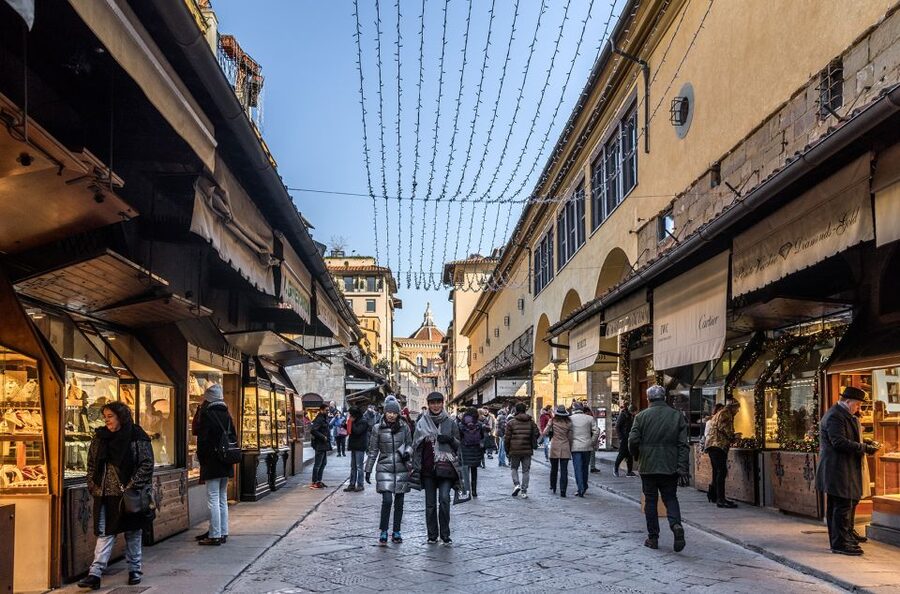
Piazza della Repubblica brings another shift in time. The guide discusses the Roman era and the changes made in the nineteenth century. That is useful because the square can seem more open and formal than the narrow medieval lanes nearby.
A 15-minute guided visit here gives you a quick sense of how Florence changed as the city modernized. It also helps explain why some central spaces feel less medieval than the streets around them. The square is part of the return portion of the route, so you encounter it after seeing several of the city’s older political and artistic centers.
I like this kind of stop on a first Florence walk. You are not only being pointed toward famous statues. You are being shown how the city’s plan changed over time. The drawback is simply time. Fifteen minutes cannot cover every Roman or nineteenth-century detail, so listen for the main idea and save deeper questions for the guide.
More Florence options worth a look before you decide
- Cinque Terre and Pisa Tower Tour from Florence Semi Private
★ 5.0 · 1,406 reviews - From Florence: Private Chianti Hills Tour with Tasting
★ 4.3 · 809 reviews - Private Self-Guided E-Bike Ride in Tuscany with Vineyard Visit
★ 5.0 · 775 reviews - Florence Private Transportation in Rickshaw
★ 5.0 · 730 reviews
Piazza della Signoria and the open-air sculpture lesson
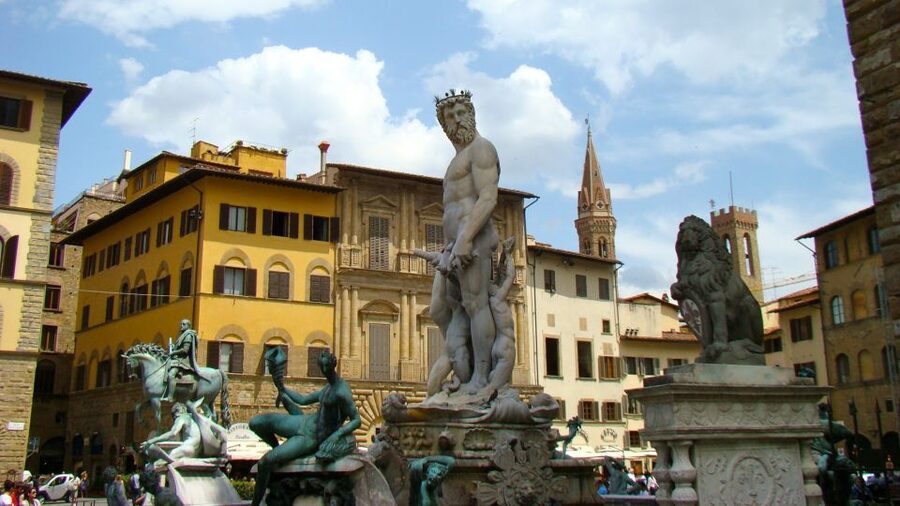
Piazza della Signoria is Florence’s political center, and it may be the most rewarding public square on the walk. Here you see Palazzo Vecchio, the city hall and a symbol of civil power. The square puts government, sculpture, and public ceremony in the same frame.
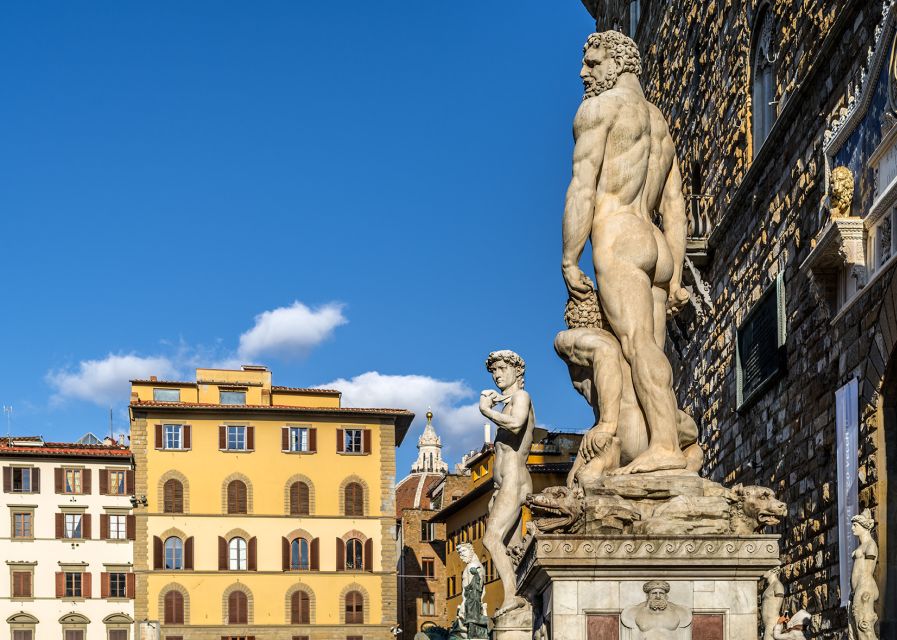
The route also brings you to the Statue of David. The information provided does not say that the tour enters the Accademia Gallery, where Michelangelo’s original David is displayed. In Piazza della Signoria, you can see the well-known copy outside Palazzo Vecchio. That distinction matters, especially if you are booking this walk partly to see the original.
Next comes La Loggia dei Lanzi, an open arcade filled with major sculpture. The listed works include Giambologna’s Rape of the Sabine Women, Hercules and the Centaur, and Benvenuto Cellini’s Perseus. These are not background decoration. A guide can help you notice the twisting bodies, dramatic gestures, and political message in works that are easy to pass in a hurry.
The planned visit here lasts about 15 minutes. That is a compact introduction, but it is one of the tour’s strongest outdoor art sections. You get real sculpture in a public setting without needing a museum ticket. If you want close, extended time with the works, return later on your own.
The Uffizi area without an included museum visit
The walk continues to the Uffizi Gallery, one of the world’s major art museums and a home for Renaissance masterpieces. The scheduled portion is sightseeing and walking for about 15 minutes.
Read that carefully when comparing tours. The Uffizi is part of the route, but admission is not listed among the inclusions. You should expect an exterior explanation and orientation rather than time inside the galleries. That can be a benefit on a short city overview because you keep moving, but it will not satisfy you if your main goal is Botticelli, Leonardo, Michelangelo, or other works inside the museum.
I would use this stop to learn how the Uffizi fits into Florence’s political and artistic story, then decide if you need a separate museum booking. A three-hour walk cannot also provide a proper Uffizi visit without becoming a much longer day.
Ponte Vecchio and the crossing into Oltrarno
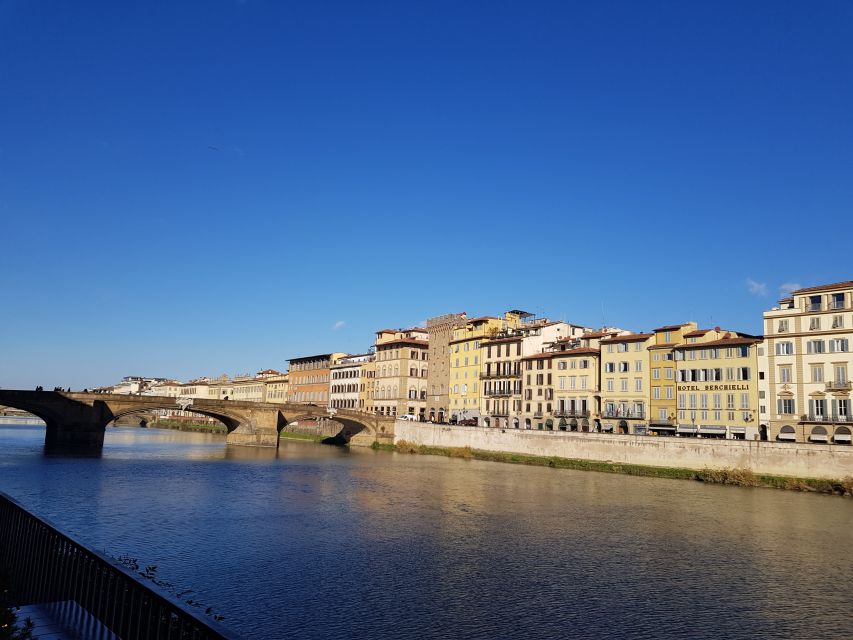
Ponte Vecchio is the route’s natural turning point. The famous bridge connects the historic center with the Oltrarno, and walking across it changes the feel of the tour. You leave the main civic and religious core and move toward the neighborhoods on the other side of the river.
The listed bridge section includes a visit, guided explanation, sightseeing, and walking. It is scheduled for about 15 minutes, which gives you time to take in the crossing and hear its place in Florence’s story. The description also points to Florentine crafts, food, and wine, subjects that fit naturally with a bridge lined with shops.
Do not expect a long shopping stop unless your guide chooses to linger. The route has many stops and must return to the Duomo within three hours. I would enjoy the bridge as a visual link between two parts of Florence, then save shopping or a meal for afterward.
In the Oltrarno, the guide discusses Palazzo Pitti and the Basilica of Santo Spirito. These are important landmarks, but the supplied details do not list an interior visit or admission. You will most likely receive an exterior view and an explanation of why these buildings matter.
Piazza Santa Trinita and the return through central Florence
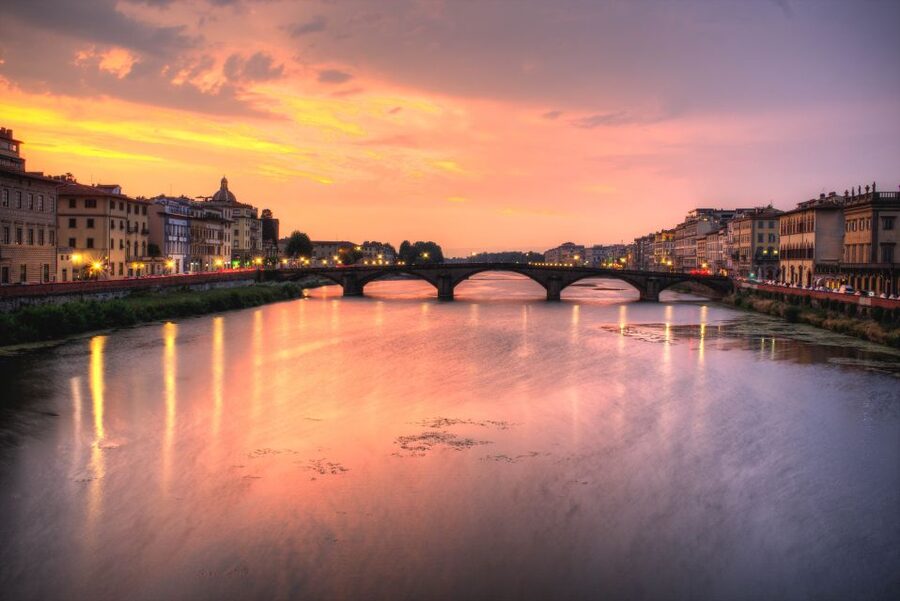
Piazza Santa Trinita is another central pause on the way back. The tour gives this square about 15 minutes for a visit, guided explanation, and walk. It helps connect the river crossing with the major streets and squares closer to the Duomo.
The return route also includes the city’s buildings, artworks, crafts, food, and wine as part of the guide’s broader commentary. This is where a private tour can become more useful than a fixed audio guide. You can ask for practical suggestions based on your interests, though the activity information does not promise a tasting or meal.
Food and drinks are not included. That is worth remembering because the tour description mentions Florentine food and wine as subjects, not as included refreshments. Plan to eat before or after the walk, and ask the guide for recommendations if that is part of your interests.
The tour ends back at the Cathedral of Santa Maria del Fiore. That makes it easy to continue sightseeing in the center, return to a nearby accommodation, or begin a separate cathedral visit. No transport is involved, so the three-hour duration is devoted to walking and guiding.
Who will get the most from this tour
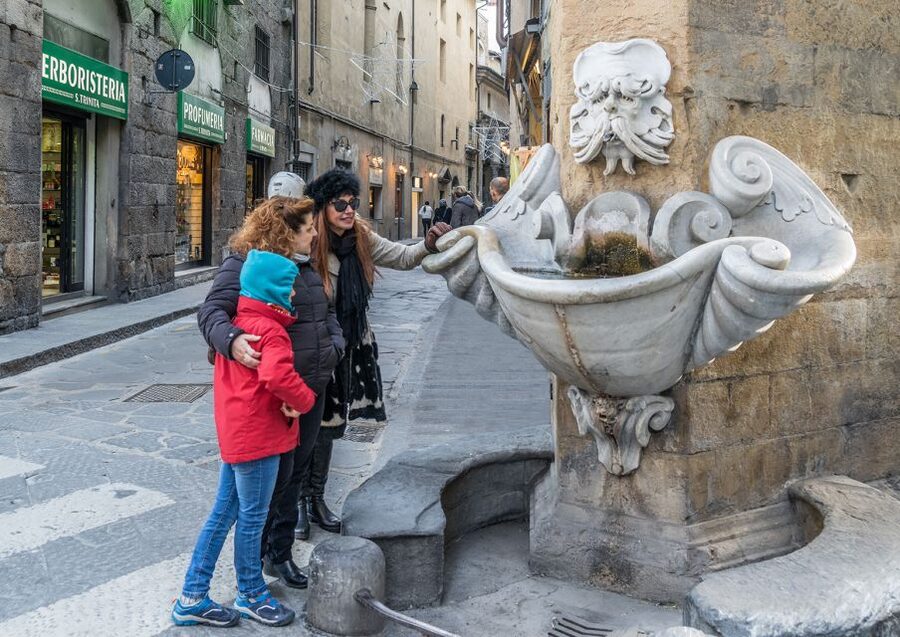
I would choose this tour if you are visiting Florence for the first time and want a strong orientation before choosing which museums and interiors deserve your limited time. The route touches the Duomo, Medici quarter, Dante landmarks, Piazza della Signoria, Uffizi, Ponte Vecchio, Oltrarno, and Piazza della Repubblica.
It also suits families or small groups that want a private pace. The tour is marked wheelchair accessible, but Florence’s historic streets and crowded central areas can still make movement slower. If accessibility is important for your group, confirm the exact route and any surface concerns before booking.
This is less suitable if you want a long museum visit. The Uffizi, Palazzo Pitti, and the cathedral appear as route highlights, but the listed inclusion is only the expert guide. You will need separate admission arrangements for interiors not covered by the booking.
The language choice is a practical plus. You can book a live guide in English, Italian, French, German, or Spanish. No guide name is supplied, so I would not choose this experience based on a particular personality or specialist.
What to know before paying $192.58
At $192.58 per person, this is not the cheapest way to see Florence. Its value comes from privacy and coverage rather than included attractions. You are paying for three hours of live interpretation across a carefully concentrated route, not for food, drinks, museum tickets, or cathedral admission.
For a couple, family, or group that likes asking questions, that can be worthwhile. You avoid the stop-and-start feel of a large group and can keep the focus on art, politics, architecture, or local life. For a solo visitor seeking only basic orientation, a shared walk may offer better value.
The booking terms reduce some risk. You can cancel up to 24 hours ahead for a full refund, and you can reserve now and pay later. Starting times vary, so check availability before planning the rest of your day.
Should you book this Florence walking tour?
Book it if you want a private introduction to Florence that covers both the famous center and the Oltrarno in three hours. The route is especially useful on your first day, when you need to understand how the Duomo, Medici power, civic squares, Uffizi, river, and Pitti side fit together.
Skip it if your priority is entering the Uffizi, climbing the dome, or spending serious time inside the major monuments. This tour can point you toward those experiences, but it does not list their admission as included.
For the best value, use the walk as your city orientation, wear comfortable shoes, and ask your guide to help you plan your independent museum visits afterward. The 4.8 rating is encouraging, but the available written feedback offers little detail beyond a note about the weather. The route and private format are the real reasons to consider it.
FAQ
How long is the Florence private walking tour?
The tour lasts three hours.
Where does the tour start?
It starts in front of the central door of the Cathedral of Santa Maria del Fiore.
Where does the tour end?
The activity ends back at the Cathedral of Santa Maria del Fiore, at the meeting point.
Is the tour private?
Yes. It is offered for a private group.
Which languages are available?
The live guide can provide the tour in French, German, Italian, English, or Spanish.
Is the tour wheelchair accessible?
Yes. The activity is marked wheelchair accessible.
Are food and drinks included?
No. Food and drinks are not included.
Are Uffizi Gallery tickets included?
No museum admission is listed as included. The Uffizi is part of the sightseeing route, so confirm ticket details if you want to enter.
Can I cancel for a refund?
Yes. You can cancel up to 24 hours in advance for a full refund. You can also reserve now and pay later.
Latest additions around Florence
- Florence: Cathedral Tour & Brunelleschi’s Dome Climb Ticket★ 5.0 · 3 reviews
- Palatina Gallery and Pitti Guided Tour in Florence★ 5.0 · 3 reviews
- Florence Uffizi Gallery Skip-the-line Tour w Art Historian Guide★ 5.0 · 3 reviews
- Private Tour: Pisa and Lucca from Florence★ 5.0 · 3 reviews
- San Gimignano Bike Tour (SOFT)★ 4.5 · 3 reviews
- Florence: Tour of Florence by rickshaw★ 5.0 · 3 reviews
- Center of Florence by golf cart★ 5.0 · 3 reviews
- The David from Michelangelo.★ 5.0 · 3 reviews
Florence Walking Tours, compared.

Skip the line: Uffizi and Accademia Small Group Walking Tour
Read our review →
Renaissance and Medici Tales Guided Walking Tour
Read our review →
Skip-the-Line Florence Highlights and David Walking Tour
Read our review →
Dark Mysteries and Legends Guided Walking Tour
Read our review →
Florence in a Day: Michelangelo’s David, Uffizi and Guided City Walking Tour
Read our review →Browse the lists this tour appears in