
Reviewed · FLORENCE WALKING TOURS
Florence: Occult & Esotericism Walking Tour For The Curious
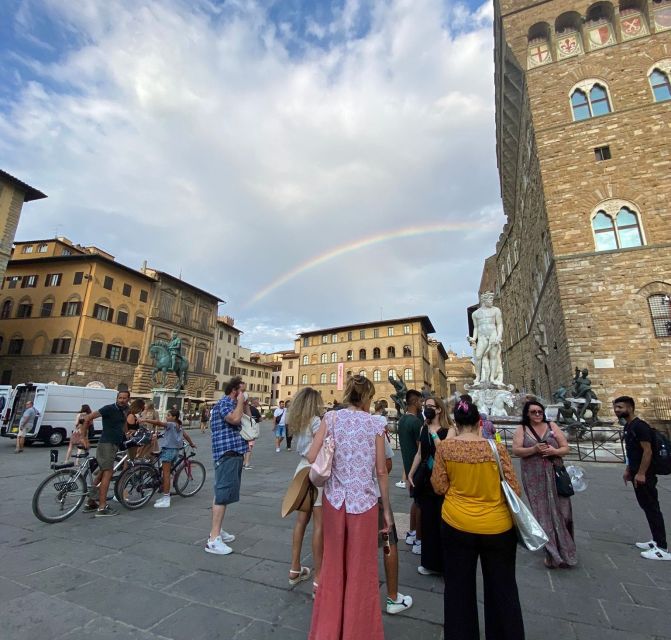
Florence has a shadowy side, and this three-hour walk brings it into view through secret symbols, alchemy, magic, and murder. You’ll follow a route from San Marco through the Duomo area, Piazza della Signoria, Ponte Vecchio, and Oltrarno before ending at a small museum devoted to Masonic ideas.
I like the unusual subject and the way it connects famous sights to less familiar stories, from Savonarola’s grisly end to the suspected arsenic poisoning of Pico della Mirandola and Agnolo Poliziano. I also like that the tour includes the Museum of Masonic Symbols, rather than stopping at street-level legends.
The main caution is expectation. One guest found guide Susanna excellent but wanted more close attention to the codes and details on historic facades. If your top priority is a detailed reading of every carved symbol, ask your guide for that emphasis at the start.
In This Review
- Key points to know
- Florence’s occult past begins at San Marco
- The Annunziata bees and stories of fear
- Reading the Duomo, Baptistery, Santa Croce, and Santa Maria Novella
- Pazzino de’ Pazzi and the Easter fire
- Savonarola’s punishment in Piazza della Signoria
- Ponte Vecchio and the crossing into Oltrarno
- The suspected arsenic poisoning of two Medici-era thinkers
- The Museum of Masonic Symbols
- Price, private format, and practical value
- Who will enjoy this Florence mystery walk
- Should you book this tour?
- FAQ
- How long does the Florence occult and esotericism tour last?
- Where does the tour begin?
- Where does the tour finish?
- Is admission to the Museum of Masonic Symbols included?
- Is this a private tour?
- Which languages are available?
- Is the tour wheelchair accessible?
- Does the tour run in bad weather?
- What should I bring?
- Can I cancel for a full refund?
Key points to know
- The 1498 execution of Savonarola is discussed in Piazza della Signoria, where politics, religion, and punishment meet.
- A Latin palindrome in the Florence Baptistery remains one of the tour’s central mysteries.
- Pico della Mirandola and Agnolo Poliziano are linked to a suspected arsenic poisoning and the intellectual circle of Lorenzo the Magnificent.
- The route covers major sights including Santa Croce, Santa Maria Novella, the Duomo complex, Ponte Vecchio, and Oltrarno.
- The Museum of Masonic Symbols occupies the final hour and includes ritual objects marked with etched, embroidered, printed, and engraved symbols.
- Susanna receives especially warm praise for her friendly, attentive guiding, though you should request extra facade analysis if that matters to you.
Florence’s occult past begins at San Marco
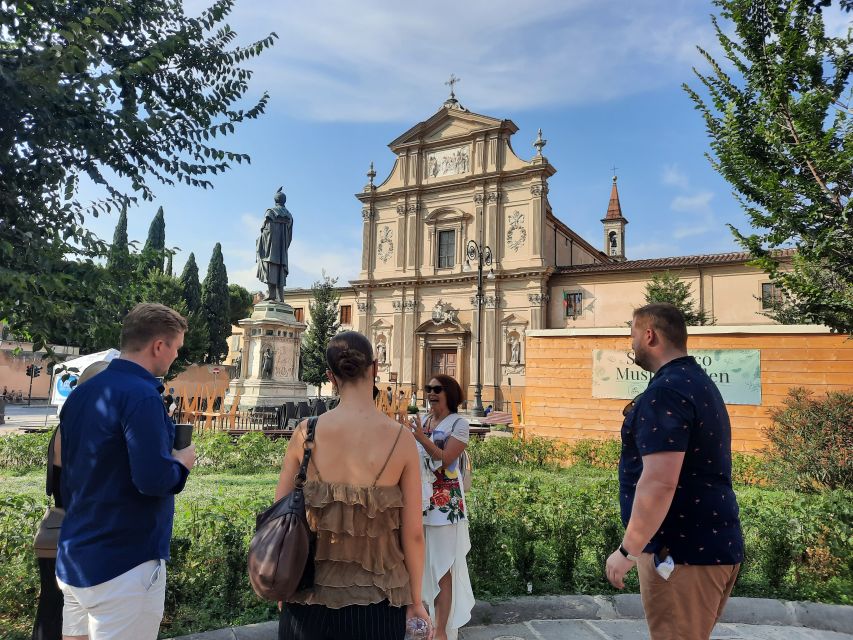
Meet your guide in the middle of Piazza San Marco, by the Monument to General Manfredo Fanti. This is a useful central starting point, but take a moment to identify the monument before you arrive. In a busy city square, a precise landmark saves time.
From here, your guide sets the tone with stories of philosophers, theologians, magicians, and secret societies. This is not a standard Florence walk that simply moves from one famous painting to the next. The focus is on the ideas and fears that shaped the city, including magic, alchemy, hidden meanings, punishment, and the uneasy boundary between faith and forbidden knowledge.
The subject works well in Florence because the city’s churches and public spaces often carry several layers of meaning. A symbol may be religious, political, scientific, or personal, and sometimes the original purpose is still uncertain. You’ll be encouraged to look closely rather than simply admire the buildings from a distance.
The first guided stop at Piazza San Marco lasts about 15 minutes. It also introduces the Florentine Studio, a place once associated with philosophers, theologians, and magicians. You’ll hear about the Neoplatonic Florentine Academy, founded by Cosimo de’ Medici, and its influence on writing and art.
This is one of the tour’s more useful themes. It shows that Florence’s intellectual life was not limited to painting and architecture. Ancient philosophy, Christian thought, astrology, and ideas about hidden forces could all overlap in the same circles.
More walking routes in Florence:
- Florence: Guided Walking Tour
★ 4.5 · 3,334 reviews - Skip the line: Uffizi and Accademia Small Group Walking Tour
★ 4.5 · 3,135 reviews - Florence: Guided Walking Tour
★ 4.6 · 1,602 reviews
The Annunziata bees and stories of fear
The walk continues to Piazza Santissima Annunziata, with another roughly 15-minute guided stop. One small challenge here gives the square a playful break from the darker material: try to count the bees on the statue of Ferdinand I.
The bee motif can make the stop feel like a puzzle rather than a lecture. Your guide may use it to show how symbols can carry political or philosophical meanings in plain sight. If you enjoy looking for details that most people pass without noticing, this part should appeal to you.
The tour also addresses a much harsher chapter in Florentine belief and social practice. You’ll hear about a period when babies born with physical disabilities were rejected by families and secretly killed because people believed they were children of the devil.
This material is disturbing, and it should be. It is not presented as a spooky party trick. It reflects how fear, superstition, and social pressure could lead to cruelty. Parents with young children should consider the serious subject matter before booking.
Reading the Duomo, Baptistery, Santa Croce, and Santa Maria Novella
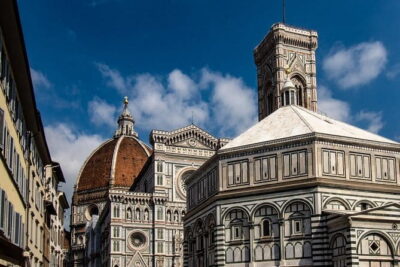
The route then reaches the Florence Duomo complex, where about 30 minutes are set aside for walking, sightseeing, and explanation. The Baptistery is especially important because of a Latin palindrome engraved there. Its meaning remains uncertain, making it a good example of the kind of mystery this tour prefers: a real physical clue with no tidy answer.
You’ll also hear about the facades of Santa Croce and Santa Maria Novella. The tour treats these buildings as more than beautiful church fronts. Your guide points to signs where science, geometry, religion, and esoteric ideas appear to meet.
This is where I would set a clear goal before the walk begins. One person found Susanna smiling and friendly, and praised her guiding, but felt disappointed by the amount of detail given to facade codes and symbols. That is useful advice. If you want to inspect specific carvings, ask your guide to slow down and explain the symbols carefully. A private group makes that request easier than it would be on a large shared tour.
The tour may not provide an exhaustive architectural survey of every basilica. Its purpose is to connect selected symbols to wider stories about Florence. You’ll get more from it if you enjoy interpretation and historical questions, rather than expecting a formal catalog of every mark on every wall.
Pazzino de’ Pazzi and the Easter fire
The story of Pazzino de’ Pazzi adds a dramatic link between medieval warfare, Jerusalem, and a living Florentine Easter tradition. Pazzino was a crusader knight from around 1050, and the tour examines his deeds and the stones associated with the Holy Sepulcher of Jerusalem.
Those stones are still connected with the lighting of the Brindellone during Florence’s famous Explosion of the Chariot on Easter Day. This is a strong example of how the tour works best. A strange custom is placed inside a longer story, linking a medieval knight to a ceremony still known in Florence.
You should not expect the Easter event itself during this walk. Instead, you’ll learn why the objects and traditions matter, and how old stories can remain part of the city’s public life.
A different way to spend the same Florence day:
- Florence: Skip-The-Line Uffizi Gallery Timed Entry Ticket
★ 4.5 · 27,832 reviews - Tuscany Day Trip from Florence: Siena, San Gimignano, Pisa and Lunch at a Winery
★ 5.0 · 21,634 reviews - Florence: Timed Entrance Ticket to Michelangelo’s David
★ 4.6 · 16,983 reviews - Florence: Michelangelo’s David Skip-the-Line Entry Ticket
★ 4.5 · 12,764 reviews
Savonarola’s punishment in Piazza della Signoria
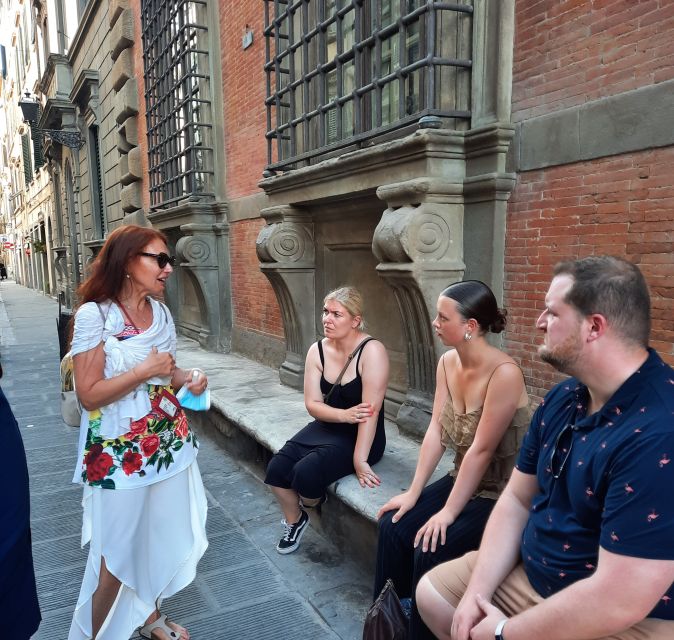
At Piazza della Signoria, the group spends about 15 minutes discussing Girolamo Savonarola. The Dominican preacher was hanged and burned at the stake in 1498, and the square became the setting for a public punishment that still carries a grim force.
Savonarola’s story fits the tour’s wider interest in power and belief. He preached against corruption and luxury, gained strong support, and then lost it. Florence’s political mood shifted, and the same public arena that had witnessed his influence became the place of his execution.
The square is one of Florence’s busiest sightseeing points, so this stop may feel less secluded than the subject matter suggests. Still, that contrast can be useful. You are hearing about a public killing in a place now filled with people taking photographs and crossing between major sights.
The tour also discusses killings, crimes, and punishments beyond Savonarola. Expect a serious tone at this point, not just theatrical ghost stories. The appeal is the way darker episodes are tied to actual streets and civic spaces.
Ponte Vecchio and the crossing into Oltrarno
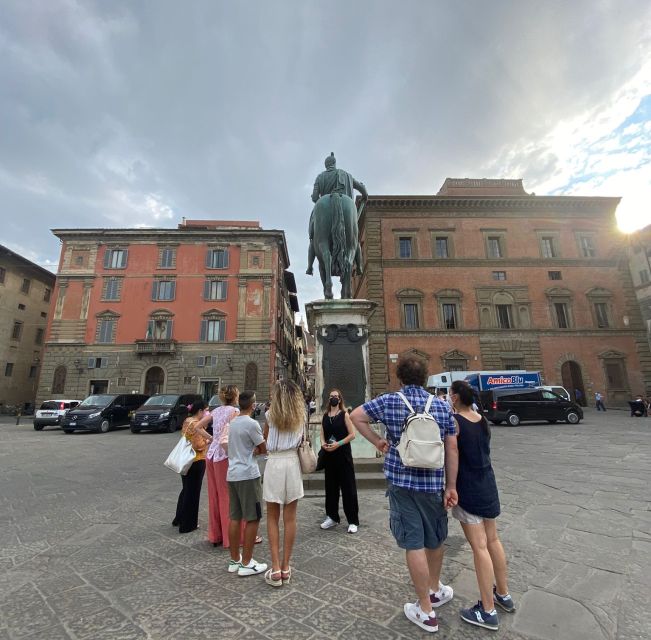
The walk continues to Ponte Vecchio, with about 15 minutes for guided sightseeing. The bridge is famous for its shops and river views, but here it serves as part of the route into Oltrarno and a chance to consider Florence as a connected city rather than a collection of isolated monuments.
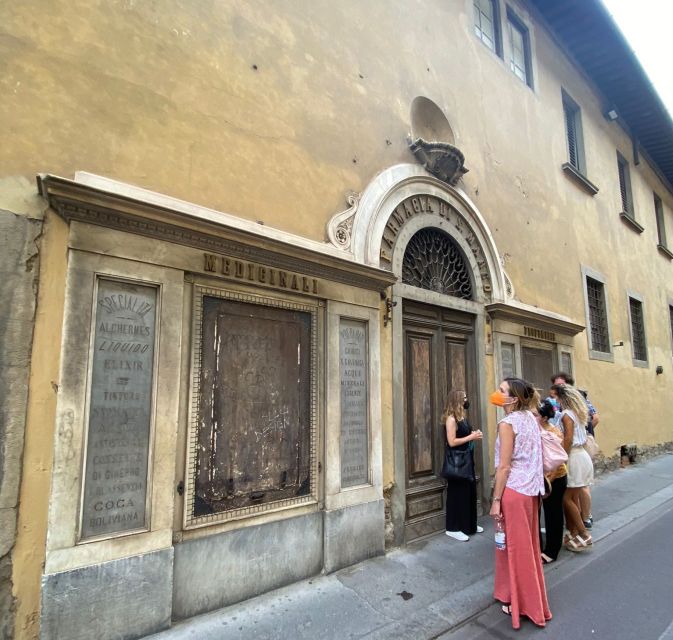
Oltrarno brings a change of setting and keeps the walk moving. The route includes about 30 minutes of guided exploration in this part of town. You’ll hear about the Templars, the Cathars, and Florence’s first Masonic lodge, subjects that broaden the tour beyond church symbolism and Medici intellectual life.
The exact amount of time spent at each feature can vary because this is a private group. That is an advantage if you have questions, but it also means you should speak up. If the group spends longer on Savonarola or the Academy, another subject may receive less time.
Wear comfortable shoes and clothes. The experience is a walking tour lasting three hours, with several stops and transitions through central Florence. It runs rain or shine, so a light rain layer is sensible even when the forecast looks kind.
The suspected arsenic poisoning of two Medici-era thinkers
One of the tour’s most intriguing stories concerns Pico della Mirandola and Agnolo Poliziano. Both were intellectuals connected with the circle of Lorenzo the Magnificent, and both died in 1494 in what is presented as an arsenic poisoning mystery.
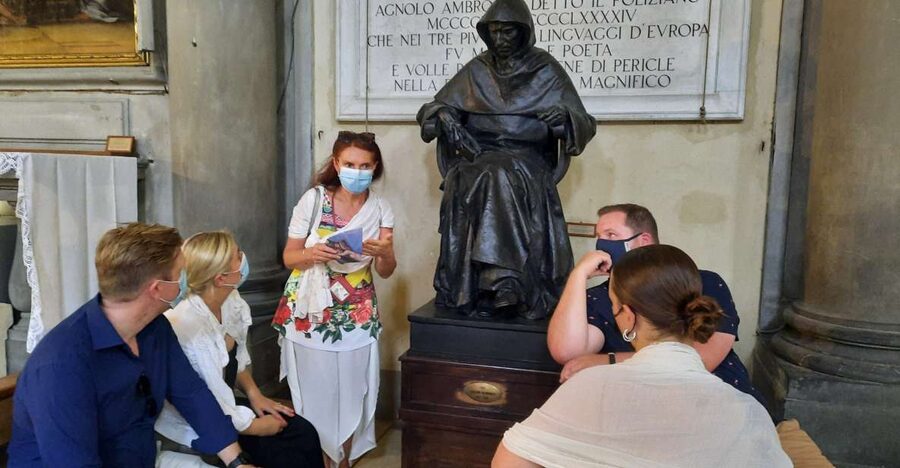
The two men rest together in the Church of San Marco. Their deaths give the tour a human focus. Instead of looking only at mysterious marks on stone, you’ll consider rivalries, intellectual circles, and the danger surrounding influential people in Renaissance Florence.
The wording matters here. This is presented as an investigation into suspected poisoning, not a simple solved crime. If you like historical puzzles, that uncertainty is part of the appeal. If you prefer firm answers, you may find some of the tour’s mysteries less satisfying.
The story also returns to the Neoplatonic Florentine Academy and the role of Cosimo de’ Medici. You’ll see how philosophical ideas shaped literary and artistic culture, while also learning that intellectual life could sit beside superstition, occult practice, and political danger.
The Museum of Masonic Symbols
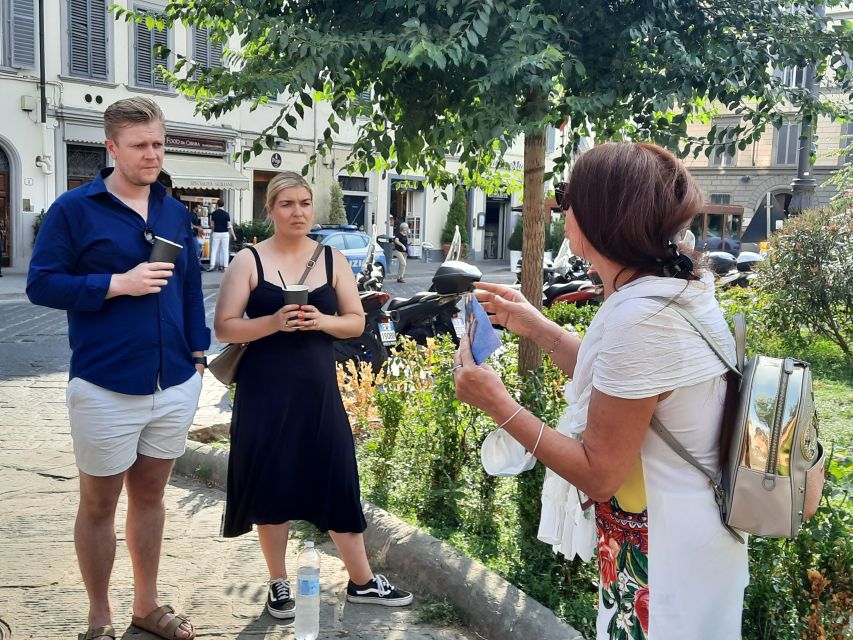
The final hour takes place at the Museum of Masonic Symbols, described as the first Italian museum devoted to Masonic ideology. Admission is included, and the tour finishes there.
This museum gives the experience a proper ending. Much of the earlier walk asks you to spot signs in public places. Here, you can examine objects made for ritual and study, with symbols that are etched, embroidered, printed, and engraved.
The museum visit should appeal most to people who want more than legends. It provides a chance to consider how symbols are used inside an organized philosophy. Your guide explains Masonic ideas and the objects on display, helping connect the museum to the earlier stories about lodges, secret knowledge, and coded meaning.
At one hour, this is not a rushed final stop. It accounts for one-third of the tour, so the museum is central rather than an afterthought. If you are booking mainly for street photography and Renaissance architecture, that balance may feel less suitable. If you are curious about ritual objects and Masonic thought, it gives the tour a stronger finish.
The listed end point is the Museum of Masonic Symbols. The meeting details also describe the activity as ending back at the meeting point, so confirm the exact return arrangement when booking.
Price, private format, and practical value
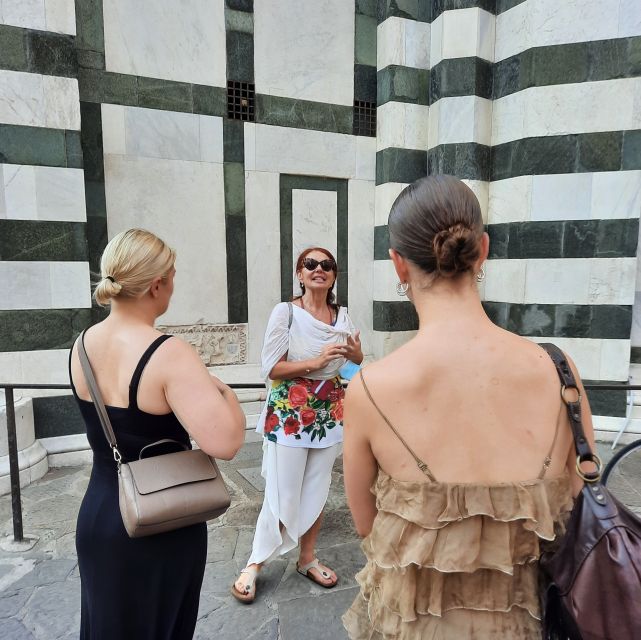
The price is $215.24 per person. That is a serious sum for three hours, especially in Florence, where many public walking tours cost much less. The value depends heavily on your interest in this particular subject and on the size of your private group.
You are paying for a licensed guide, a private format, and entrance to the Museum of Masonic Symbols. The private setting matters because you can ask the guide to spend more time on the Baptistery palindrome, basilica facades, Savonarola, or the Masonic exhibits.
For one or two people, the cost may feel high. For a larger private group, the per-person price may make more sense, particularly if everyone wants the same unusual theme. This is not the tour I would choose for a first general introduction to Florence. It works better after you have seen the main sights, or for a return visit when you want a different angle.
The experience is offered in English, Italian, French, and Spanish. It is wheelchair accessible, though the route includes several walking sections, so you should still discuss your needs when arranging the tour.
Cancellation is free up to 24 hours before the start, and you can reserve now while paying later. Those terms help if your Florence schedule is still moving. The tour runs in all weather, so your clothing and footwear matter more than they would on a short indoor visit.
Who will enjoy this Florence mystery walk
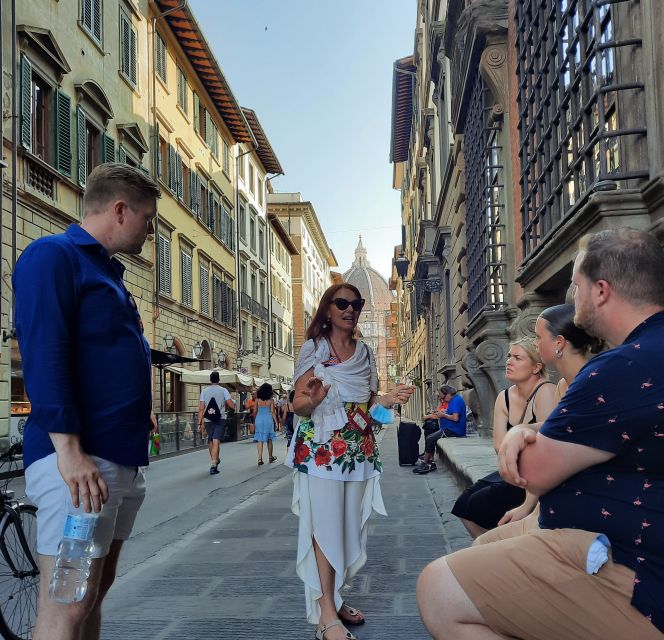
I would recommend this experience to you if you enjoy:
- Renaissance personalities with complicated endings
- Symbols whose meanings are debated or unclear
- Stories about alchemy, magic, secret societies, and philosophy
- Walking between major sights while hearing less familiar background
- A private guide who can adapt the conversation
- A museum visit focused on ritual objects and Masonic ideology
I would be more cautious if you want a gentle family outing or a standard tour of Florence’s art. The stories include executions, poisoning, murder, secret killings of disabled infants, and religious conflict.
You should also book with realistic expectations about the architecture. The tour discusses coded details and esoteric signs on the city’s churches and monuments, but one experience with Susanna left a guest wanting more detailed analysis of the facades. Tell your guide at the beginning that close inspection of symbols is a priority.
Should you book this tour?
Book it if Florence’s unanswered questions interest you more than a standard list of masterpieces. The combination of Savonarola’s execution, the Baptistery palindrome, the Medici intellectual circle, Pazzino de’ Pazzi, and the Masonic museum creates a distinctive three-hour route.
I especially like the final museum visit and the private format. They make the experience feel more focused than a simple walk past unusual details. Susanna has also been praised as a superb, friendly guide, so requesting her when possible may be worthwhile, though guide availability is not guaranteed.
Skip it if $215.24 per person feels too steep for a specialized walk, or if you want every basilica facade explained in architectural detail. For the right audience, this is an unusual way to see Florence. For everyone else, a standard art or city highlights tour may offer better value.
FAQ
How long does the Florence occult and esotericism tour last?
The tour lasts three hours.
Where does the tour begin?
Meet your guide in the middle of Piazza San Marco at the Monument to General Manfredo Fanti.
Where does the tour finish?
The listed finish is the Museum of Masonic Symbols. The meeting information also describes the activity as ending back at the meeting point, so confirm the exact return arrangement when booking.
Is admission to the Museum of Masonic Symbols included?
Yes. Entrance to the Museum of Masonic Symbols is included.
Is this a private tour?
Yes. The activity is offered as a private group experience.
Which languages are available?
The tour is available in English, Italian, French, and Spanish.
Is the tour wheelchair accessible?
Yes, the activity is listed as wheelchair accessible.
Does the tour run in bad weather?
Yes. The tour takes place rain or shine.
What should I bring?
Bring comfortable shoes and comfortable clothes. A passport or ID card is required, with a copy accepted. Children also need a passport or ID card.
Can I cancel for a full refund?
Yes. You can cancel up to 24 hours in advance for a full refund.
Latest additions around Florence
- Florence: Cathedral Tour & Brunelleschi’s Dome Climb Ticket★ 5.0 · 3 reviews
- Palatina Gallery and Pitti Guided Tour in Florence★ 5.0 · 3 reviews
- Florence Uffizi Gallery Skip-the-line Tour w Art Historian Guide★ 5.0 · 3 reviews
- Private Tour: Pisa and Lucca from Florence★ 5.0 · 3 reviews
- San Gimignano Bike Tour (SOFT)★ 4.5 · 3 reviews
- Florence: Tour of Florence by rickshaw★ 5.0 · 3 reviews
- Center of Florence by golf cart★ 5.0 · 3 reviews
- From Firenze | Chianti day tour in a classic car★ 5.0 · 3 reviews
Florence Walking Tours, compared.

Skip the line: Uffizi and Accademia Small Group Walking Tour
Read our review →
Renaissance and Medici Tales Guided Walking Tour
Read our review →
Skip-the-Line Florence Highlights and David Walking Tour
Read our review →
Dark Mysteries and Legends Guided Walking Tour
Read our review →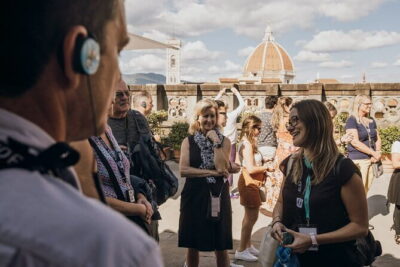
Florence in a Day: Michelangelo’s David, Uffizi and Guided City Walking Tour
Read our review →Browse the lists this tour appears in