
Reviewed · MUSEUMS
Florence: National Archeological Museum of Florence
Florence is famous for Renaissance paintings, but this museum takes you much further back, to the Etruscans, ancient Greeks, Romans, and Egyptians. The National Archaeological Museum occupies a former convent where Maria Maddalena de Medici once lived, giving your visit an unusual blend of Medici-era Florence and the ancient world.
I like the way this tour brings together two especially strong collections: the Etruscan artifacts and bronzes, followed by one of Italy’s largest Egyptian displays. I also like that a private guide can adjust explanations for different ages. Guide Stefania, praised for her patient and precise style, made the material accessible to a family whose grandchildren were 10 and 17.
The main drawback is time. Two hours is enough for a guided introduction, but not enough to study every object in a museum with thousands of artifacts. If you want to linger over inscriptions, burial goods, and small Egyptian objects, you may need to return on your own.
In This Review
- Key points to know before you book
- Why this small-known Florence museum deserves time
- Starting at the former Crocetta convent
- Etruscan burial goods from Populonia to Vulci
- The Chimera and Florence’s fascination with bronze
- Greek, Roman, and Renaissance bronzes upstairs
- The François Vase and its mythological scenes
- The Egyptian Museum with 14,000 artifacts
- The Inghirami tomb in the museum garden
- How much can you see in two hours?
- Who gets the best value from this tour?
- Should you book the National Archaeological Museum tour?
- FAQ
- Where do I meet the guide?
- How long does the tour last?
- Which languages are available?
- Is this a private group experience?
- Is the museum wheelchair accessible?
- Can I cancel or pay later?
Key points to know before you book
- See the Chimera and other monumental bronzes: The large bronze works are among the museum’s most striking pieces, including the famous Chimera restored in the 1500s by Benvenuto Cellini.
- Follow Florence’s story through an old convent: The museum began in a former Crocetta convent connected with Maria Maddalena de Medici.
- View the François Vase: This famous Greek vessel carries a series of scenes from Greek mythology across its surface.
- Explore more than 14,000 Egyptian objects: The Egyptian section includes steles, vases, ushabti, amulets, bronzes, mummies, a war chariot, and a statue of Amenophis III.
- End with an Etruscan tomb: The garden contains a reconstruction of the Inghirami tomb from Volterra, with original alabaster urns.
- Book a private tour in your language: English, Italian, Spanish, German, and French are available, with skip-the-ticket-line entry and wheelchair access.
Why this small-known Florence museum deserves time
You probably do not come to Florence first for Egyptian mummies or Etruscan urns. The city’s big-name sights usually win that contest. Yet this museum gives you a useful change of pace from Renaissance art, and it helps explain the older cultures that shaped Tuscany.
The collection is not just a parade of old objects. You see how people buried their dead, represented gods and heroes, used bronze, and told stories through images. That makes the visit especially worthwhile if you enjoy history but prefer objects with a clear human purpose.
The tour is built around a 15-minute introduction in Piazza della Santissima Annunziata, followed by about 105 minutes inside the museum. The square gives you a short orientation before you enter. You meet your guide in front of the museum, at the SS. Annunziata square, rather than wandering through Florence trying to find the correct doorway.
I appreciate this simple meeting point. The museum is close to some of Florence’s best-known sights, but a clear rendezvous still matters when you have a timed appointment. The listed meeting coordinates are 43.7766227722168, 11.261474609375.
More museums worth an hour:
- Florence: Skip-The-Line Uffizi Gallery Timed Entry Ticket
★ 4.5 · 27,832 reviews - Florence: Leonardo Interactive Museum Entry Ticket
★ 4.5 · 11,763 reviews - Florence Accademia Gallery Tour with Entrance Ticket Included
★ 4.5 · 6,148 reviews
Starting at the former Crocetta convent
The building itself gives the tour a good opening. Before you see a single mummy or bronze statue, you learn that the museum was once the convent of the Crocetta, where Maria Maddalena de Medici lived.
That detail helps place the museum within Florence’s own story. You are not entering a modern display hall designed only for artifacts. You are walking into an older Florentine setting that later became a home for objects from several ancient cultures.
Your guide can use this first section to set up the main themes of the visit: Etruscan life in Tuscany, Greek influence, Roman collecting, Renaissance interest in antiquity, and Egypt’s long artistic tradition. With only two hours, this context is useful because it gives you a framework for the rooms ahead.
A private tour also means you can ask for clarification as you go. The available languages are English, Italian, Spanish, German, and French. The information supplied for the tour does not promise a particular guide for every departure, but Stefania is one guide associated with the experience, and her explanations were praised for being patient, precise, and professional.
Etruscan burial goods from Populonia to Vulci
The first major collection takes you into Etruscan territory. You see burial goods from the area between Populonia and Vulci, places linked to the aristocratic culture of ancient Etruria.
These objects are valuable because they offer more than a look at luxury. Burial goods can show what a society thought a person needed after death, what objects signaled rank, and how artistic styles moved around central Italy. Your guide helps turn individual vessels and grave objects into evidence about Etruscan life.
This part may be particularly useful if you plan to visit other Tuscan sites connected with the Etruscans. Even if you do not, it gives Florence a longer timeline. The city’s artistic story did not begin with the Medici or the Renaissance. The museum reminds you that central Italy had complex cultures long before modern Tuscany took shape.
The limitation is the same one found in many archaeology museums: small objects can require close attention. If your group includes children, the guide’s storytelling matters. The family experience with Stefania suggests that the material can hold the interest of both a 10-year-old and a 17-year-old when the stories and details are explained clearly.
The Chimera and Florence’s fascination with bronze
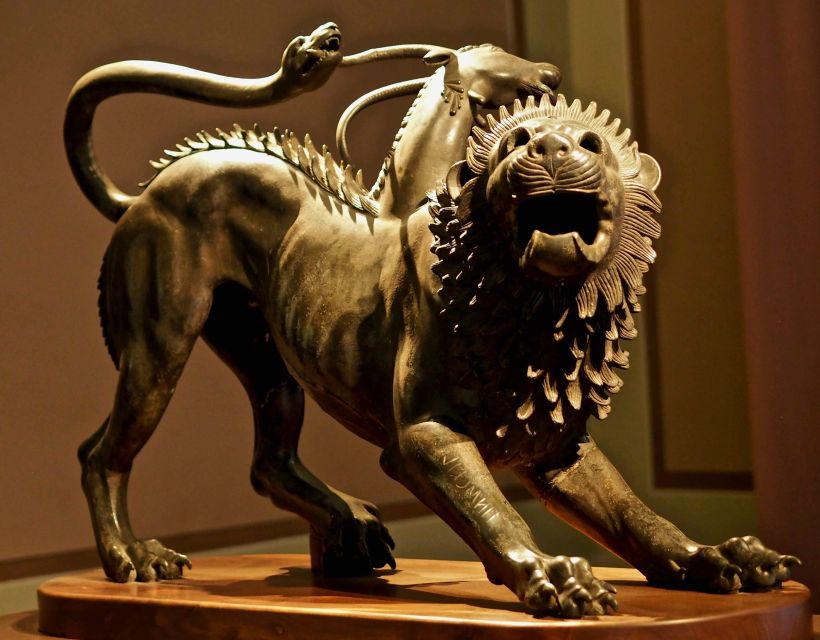
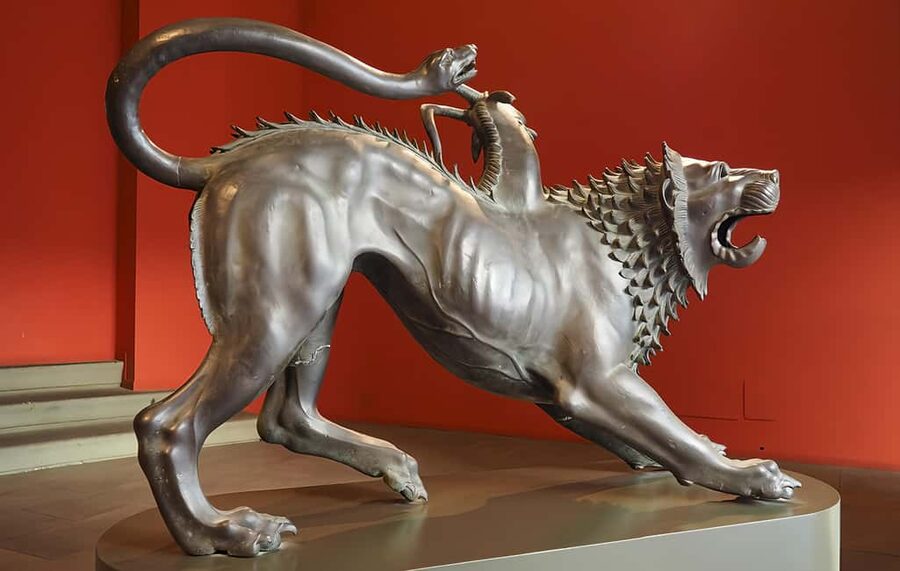
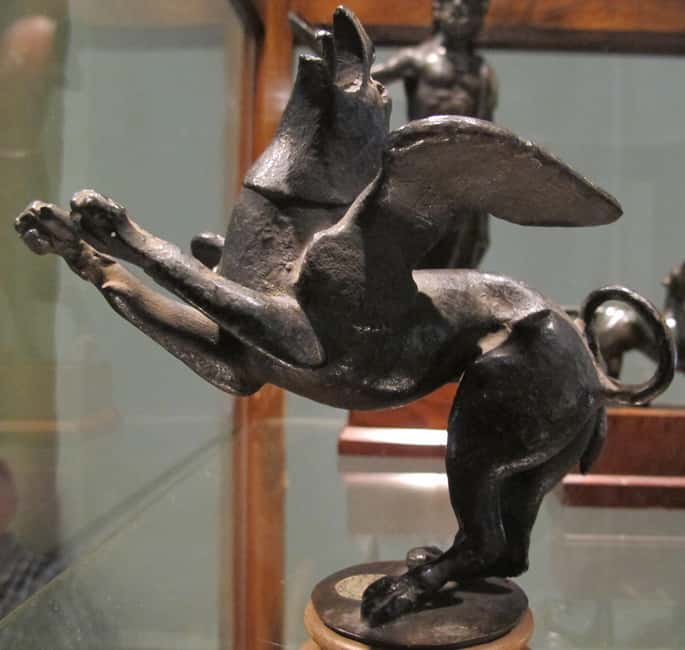
On the first floor, the tour reaches some of its most eye-catching objects: large bronze statues of the Chimera. The Chimera is a creature from Greek mythology, usually shown with parts of different animals. In Florence, the statue also has a Renaissance connection because it was restored in 1500 by Benvenuto Cellini.
This is a fine example of how the museum mixes ancient work with later Florentine history. You are looking at an ancient bronze, but you are also seeing how Renaissance artists and collectors treated the ancient past. Florence did not simply preserve antiquity. It repaired, interpreted, and sometimes reshaped it.
The Chimera makes a strong stop during a guided tour because its form is easy to read at a glance. You do not need a long lecture to see why it caught the attention of Renaissance Florence. Still, the restoration story adds a second layer for adults who want more than mythology.
This room can be one of the tour’s best moments for people who are tiring of paintings and marble sculpture. Bronze has a different presence. It can look tense and lively, and the large scale makes these statues easier to appreciate than tiny fragments or damaged inscriptions.
A different way to spend the same Florence day:
- Tuscany Day Trip from Florence: Siena, San Gimignano, Pisa and Lunch at a Winery
★ 5.0 · 21,634 reviews - Florence: Timed Entrance Ticket to Michelangelo’s David
★ 4.6 · 16,983 reviews - Florence: Michelangelo’s David Skip-the-Line Entry Ticket
★ 4.5 · 12,764 reviews - The Best tour in Florence: Renaissance & Medici Tales – guided by a STORYTELLER
★ 5.0 · 12,316 reviews
Greek, Roman, and Renaissance bronzes upstairs
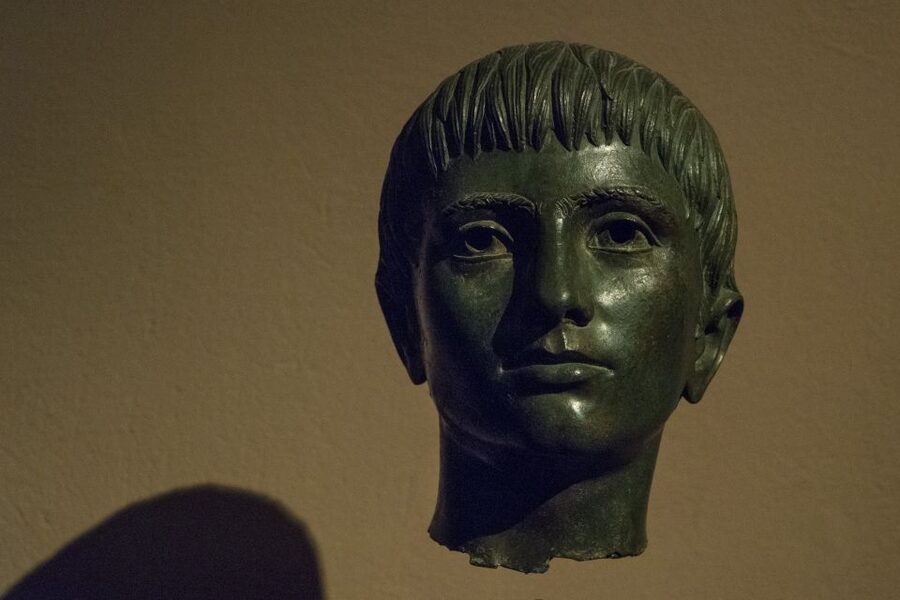
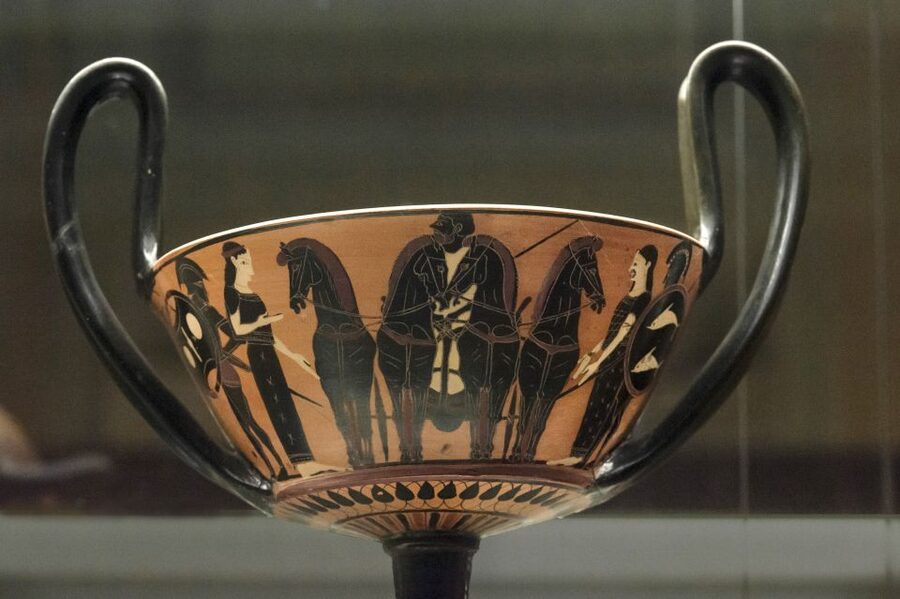
The second floor continues with Greek, Roman, and Renaissance bronze works. The range matters. Instead of placing every object in a single ancient period, the museum lets you compare how artists in different eras handled the human body, movement, and ideal beauty.
Several works receive special attention:
- The Torso of Livorno: This fragment shows how much can be communicated by posture and anatomy even when a sculpture is incomplete.
- The Medici Riccardi horse head: Its connection with Florence’s powerful Medici family brings the ancient collection back into the city’s political and artistic world.
- The Idolino of Pesaro: This bronze gives you another chance to compare ancient technique and the Renaissance taste for classical forms.
The precise order of the rooms can vary with museum operations, but the guided route is designed to cover these main works. Ask your guide to pause if one style interests you more than another. In a private group, that question is more practical than it would be on a large scheduled walk.
I would not expect every bronze to make an instant impression. Some objects need time and comparison. The payoff comes when you look from one work to the next and notice changes in proportion, surface, pose, and purpose.
The François Vase and its mythological scenes
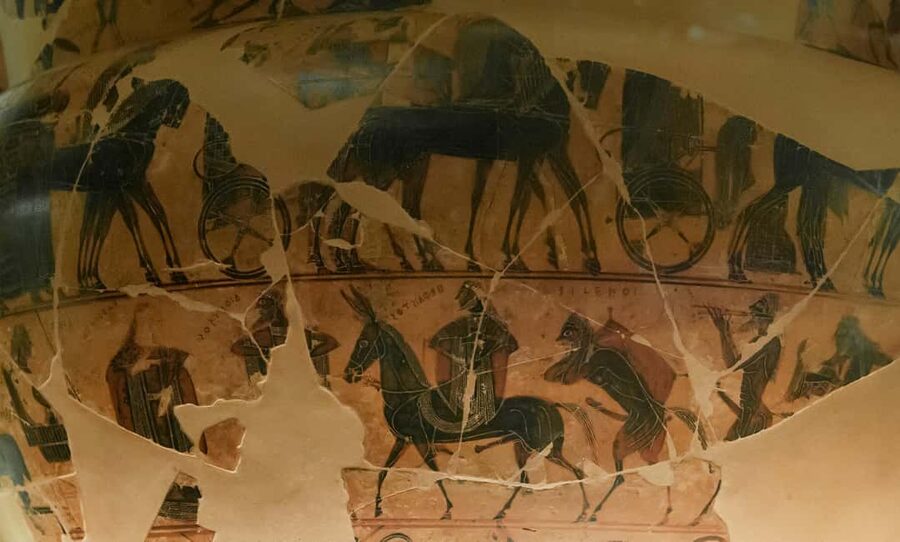
The François Vase is one of the most important objects in the Greek collection. It is not famous simply because it is old. Its surface carries a series of mythological tales from ancient Greece, turning the vessel into a painted record of heroes, gods, battles, and family stories.
Your guide can help you read the scenes rather than seeing only a crowded pattern of black and red figures. That support makes a major difference. Without context, the vase can feel visually busy. With a guide, you can begin to understand how the images work and why the object matters.
This is a stop where you should take your time, even during a quick tour. Look closely at the bands of decoration and notice how many stories share the same surface. The vase is a reminder that ancient art often worked as both an object and a narrative.
The museum’s Greek collection is not limited to the François Vase, but the vase gives the tour a clear centerpiece. If you have already seen Florence’s Renaissance paintings, this is a chance to view storytelling in a completely different visual language.
The Egyptian Museum with 14,000 artifacts
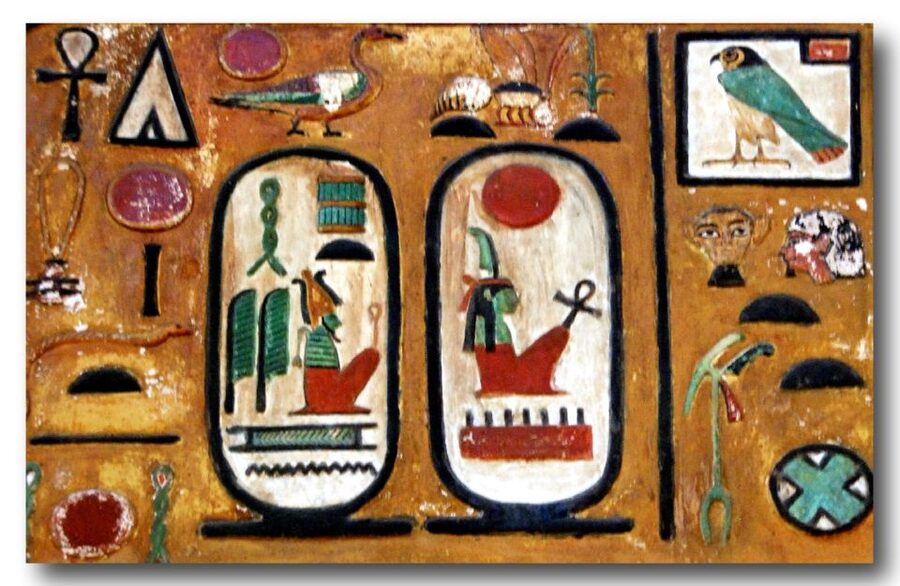
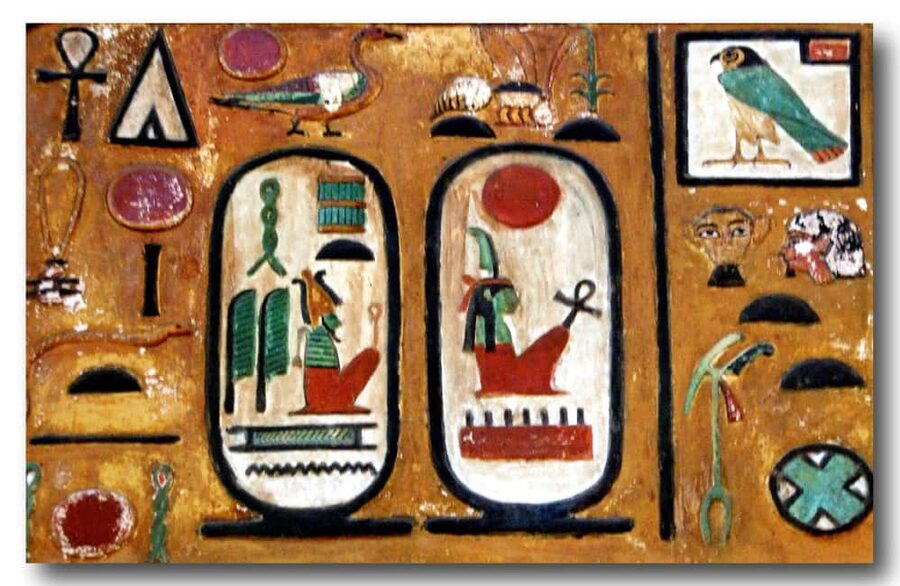
The Egyptian Museum contains more than 14,000 artifacts, making it the second largest collection of Egyptian objects in Italy. That figure tells you two things. First, the section has real depth. Second, the two-hour tour can only select highlights.
You may see steles, vases, ushabti, amulets, and bronzes. Each type of object offers a different clue about Egyptian religious practice, daily life, or burial customs. Ushabti, for example, are small funerary figures connected with service in the afterlife. Amulets show how protective symbols were carried or placed with the dead.
The tour also includes the statue of Amenophis III, a war chariot from the seventeenth dynasty, and perfectly preserved mummies. These larger or more immediately recognizable objects help keep the Egyptian section varied.
I like this part for the contrast it brings after the Greek and Roman bronzes. You move from idealized bodies and mythological scenes to objects tied closely to ritual, kingship, protection, and death. The change makes the museum feel broader than a single-culture collection.
At the same time, you should set realistic expectations. Fourteen thousand artifacts cannot be covered in detail in one visit. Your guide will point out selected pieces, explain why they matter, and keep the route moving. If Egyptian archaeology is your main reason for booking, ask about the highlights at the start so you can use the available time well.
The Inghirami tomb in the museum garden
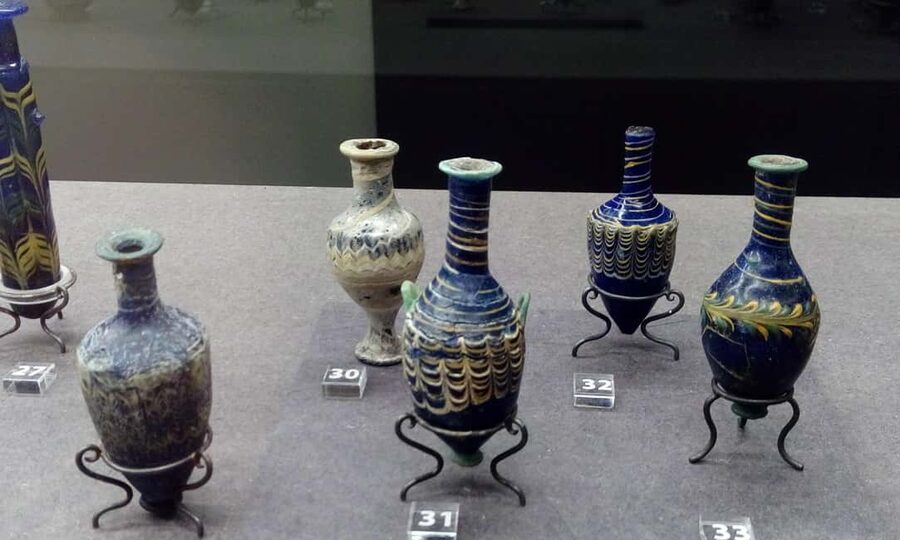
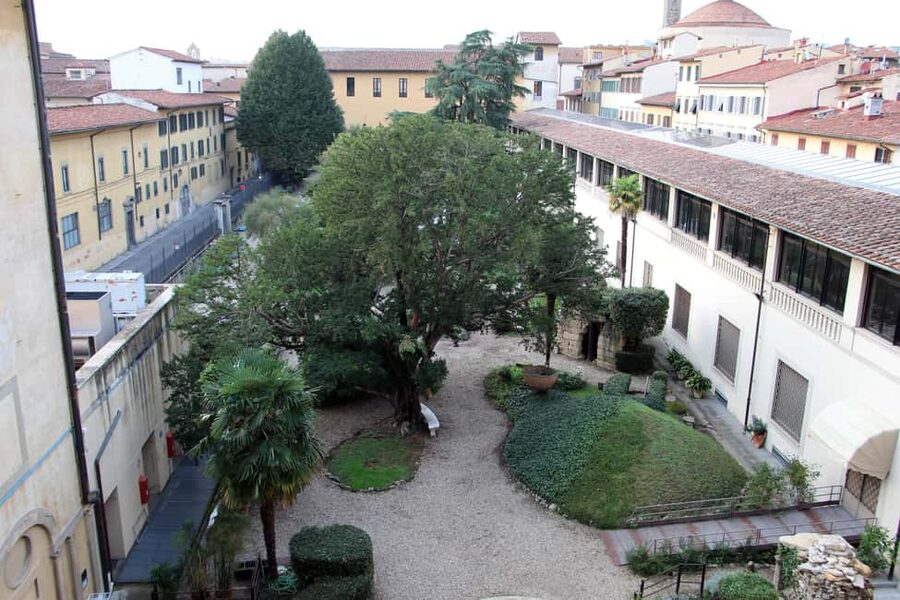
The tour finishes in the garden, where you see a reconstruction of the Etruscan Inghirami tomb from Volterra. The tomb contains the original alabaster urns that were placed there in ancient times.
This final stop works well because it returns you to Tuscany. After Greek, Roman, and Egyptian objects, you see Etruscan funerary art in a setting that helps you picture how the urns were arranged. The garden also gives the tour a change of rhythm after the indoor galleries.
The original alabaster urns are the key reason to pay attention here. They are not simply modern copies added to create atmosphere. Their material and placement connect the reconstruction with the people and burial customs represented in the Etruscan collection.
You may find this less immediately dramatic than the Chimera or the mummies, but it is an important ending. The tomb ties together the museum’s focus on death, memory, status, and the way ancient societies preserved stories about their communities.
How much can you see in two hours?
The scheduled duration is two hours, with about 15 minutes in the square and 105 minutes at the museum. That is a sensible length for a focused introduction, especially if Florence is one stop on a busy sightseeing day.
You should not treat it as a complete museum study visit. The collection is too large, and the Egyptian section alone has more than 14,000 objects. Instead, think of the tour as a guided route through the museum’s essential highlights.
A private group helps here. You are not sharing the guide with a large crowd, and the tour can respond to your interests. The available information does not give a maximum group size, so I would confirm the exact arrangement when booking if group privacy is important to you.
The skip-the-ticket-line feature adds value when the museum is busy, though the experience still depends on the museum’s operating conditions. Wheelchair access is also listed, which makes this a practical choice for visitors who need an accessible activity. If accessibility is crucial for you, confirm current arrangements before arrival.
Who gets the best value from this tour?
I would recommend this experience to you if you have already seen Florence’s headline Renaissance sights and want a different side of the city. It also suits anyone interested in archaeology, mythology, Egyptian culture, funerary art, or bronze sculpture.
Families can benefit from the guide’s explanations. The example of a 10-year-old and a 17-year-old enjoying the presentation suggests that the tour can work across age groups, especially when the guide connects objects with stories and clear details.
The tour is also a good fit if you prefer a private setting and want to ask questions. A self-guided visit may cost less, depending on the ticket price, but it asks you to supply the connections between the Etruscans, Greeks, Romans, Renaissance collectors, and Egyptians.
The value depends on your interests and the current booking price, which is not specified in the supplied information. If you would otherwise walk quickly past unfamiliar artifacts, a guide can make the admission more useful. If you already know the museum well and want to spend hours examining every case, a two-hour guided route may feel too short.
The reserve-now-and-pay-later option gives you some planning flexibility, and free cancellation is available up to 24 hours before the activity for a full refund. Those terms are useful when your Florence schedule may change, but check the conditions shown at booking.
Should you book the National Archaeological Museum tour?
Book it if you want ancient Florence rather than another Renaissance highlight. The Chimera, François Vase, Egyptian mummies, and Inghirami tomb give the tour a clear range, while a private guide helps explain why the objects matter.
Skip it if you have little interest in archaeology or want a slow, unstructured museum visit. Two hours gives you a strong introduction, not a full survey of 14,000 Egyptian objects and the wider Greek, Roman, and Etruscan holdings.
For most curious visitors, I see this as a smart add-on to Florence’s better-known museums. It offers material you will not find in a standard painting-focused tour, and the guide-led format helps you get your bearings fast without losing the human stories behind the objects.
FAQ
Where do I meet the guide?
Meet the guide in front of the National Archaeological Museum of Florence in Piazza della Santissima Annunziata. The listed meeting coordinates are 43.7766227722168, 11.261474609375.
How long does the tour last?
The full activity lasts two hours. The plan includes a 15-minute guided visit in Piazza della Santissima Annunziata and about 105 minutes inside the museum.
Which languages are available?
The tour is offered in English, Italian, Spanish, German, and French.
Is this a private group experience?
Yes. The activity is listed as a private group tour.
Is the museum wheelchair accessible?
Yes. Wheelchair accessibility is listed for this activity.
Can I cancel or pay later?
You can cancel up to 24 hours before the activity for a full refund. The reserve-now-and-pay-later option lets you book without paying at the time of reservation.
Latest additions around Florence
- Florence: Cathedral Tour & Brunelleschi’s Dome Climb Ticket★ 5.0 · 3 reviews
- Palatina Gallery and Pitti Guided Tour in Florence★ 5.0 · 3 reviews
- Florence Uffizi Gallery Skip-the-line Tour w Art Historian Guide★ 5.0 · 3 reviews
- Private Tour: Pisa and Lucca from Florence★ 5.0 · 3 reviews
- San Gimignano Bike Tour (SOFT)★ 4.5 · 3 reviews
- Florence: Tour of Florence by rickshaw★ 5.0 · 3 reviews
- Center of Florence by golf cart★ 5.0 · 3 reviews
- From Florence: Tour to Siena and San Gimignano by Minivan★ 4.5 · 3 reviews
Museums, compared.
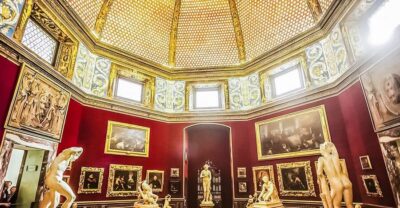
Skip-The-Line Uffizi Gallery Timed Entry Ticket
Read our review →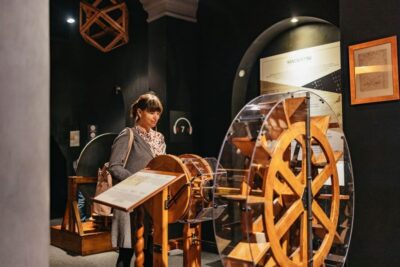

Florence Accademia Gallery Tour with Entrance Ticket Included
Read our review →


Accademia Gallery Guided Tour with Entry Ticket
Read our review →
Golf Cart Tour to Fiesole Roman Theatre and Museum
Read our review →
Uffizi Gallery and Accademia Gallery Guided Tour
Read our review →Browse the lists this tour appears in