
Reviewed · TUSCAN COOKING CLASSES
Florence: Market to Table Cooking Lesson
Florence’s best food lesson begins before you reach the kitchen. You visit the central market with your chef, learn how locals choose meat, cheese, vegetables, and specialty products, then turn those ingredients into a full Tuscan meal. I especially like the market tasting, including truffle products, and the chance to roll your own pasta rather than simply watch a demonstration.
I also like the practical range of the class: pasta, sauce, bruschetta, a meat or fish course, and tiramisu give you several skills to take home. The main drawback is that the class involves a good deal of standing, and the hands-on time can vary with the group size and the chef. On Sundays and bank holidays, the market visit is skipped.
In This Review
- Key points at a glance
- Why this Florence cooking class is more than a pasta lesson
- Meeting at Via Panicale and entering the market
- From the market to the cooking school by minivan
- Making pasta, ragù, and bruschetta from scratch
- The hands-on balance: useful, but not always equal
- Tiramisu and the reward of sitting down to lunch
- What you can take home from the lesson
- Value compared with other Florence food classes
- Who should book this cooking lesson?
- Practical advice for getting the most from the morning
- FAQ
- Where does the Florence cooking class meet?
- How long does the activity last?
- Is the class conducted in English?
- What food will I make?
- Does the market visit take place every day?
- Is the class suitable for someone with gluten intolerance?
- Should you book this Florence market-to-table class?
Key points at a glance
- Market first, kitchen second: Meet the chef at Florence’s central market and learn how local produce and specialty foods are selected.
- Fresh pasta by hand: Roll and shape pasta dough, with tagliatelle or linguine-style pasta appearing in past classes.
- A full Tuscan meal: Prepare bruschetta, a sauce such as ragù or Bolognese, a meat or fish course, and tiramisu.
- Useful home-cooking lessons: Expect advice on cutting vegetables, choosing ingredients, handling pasta dough, and using fewer herbs and spices.
- Lunch with Italian wine: Sit down to eat the food you helped prepare, with red or white Italian wine.
- A small-group feel, with some variation: Past groups ranged from about 6 to 17 people, so the amount of hands-on work may differ.
Why this Florence cooking class is more than a pasta lesson
Many Florence cooking classes focus on one narrow skill, usually pasta. This one aims higher. In four and a half hours, you get a market orientation, a cooking lesson, a multi-course meal, wine, and a certificate at the end.
That broader format matters because Tuscan cooking is less about complicated recipes than about buying good ingredients and treating them simply. The chef explains where the food comes from, how to judge quality, and why Italian cooks often rely on a few strong ingredients instead of a long list of herbs and spices.
I would choose this experience for someone who wants a practical food activity, not just a meal with a show attached. You should leave knowing how to make fresh pasta and ragù, but also how to think about the ingredients in your own kitchen.
The tone is friendly and social. Solo participants can easily meet people at the shared workstations, while couples and families have a clear activity to enjoy together. The English-speaking guide keeps the class accessible, though the pace can slow if a session includes several languages.
More cooking classes in Florence:
- Florence: Pasta Cooking Class with Unlimited Wine
★ 4.9 · 10,285 reviews - Florence Pizza or Pasta Class with Gelato Making at a Tuscan Farm
★ 5.0 · 6,801 reviews - Florence: Pasta & Tiramisu Cooking Class with Unlimited Wine
★ 4.9 · 6,708 reviews
Meeting at Via Panicale and entering the market
The meeting point is Via Panicale, 43/r, 50123 Firenze, near Florence’s central market area. Arrive ready to walk and stand. The day begins with the chef, rather than with a long classroom introduction, which gets you into the food side of Florence quickly.
The market visit is the most distinctive part of the experience. You are guided through stalls connected with the daily food culture of the city, including butchers, bakers, and farmers. The chef explains different kinds of meat, seasonal vegetables, cheeses, and other products used in Tuscan cooking.
This is useful even if you never make the class recipes again. You learn what to look for when buying local food, how varieties differ, and which ingredients suit certain dishes. One market session included a tasting of truffle oils, pastes, and cheeses, a pleasant bonus for anyone curious about Tuscany’s prized truffle products.
The market is not guaranteed every day. It is closed on Sundays and bank holidays, so the visit is left out on those dates. The cooking class still takes place, but you lose the shopping and tasting portion that gives the day much of its local flavor.
The market visit can also vary in depth. A past group felt that too much time was spent discussing steak before learning that the dish would use ground beef, while another group found the meat, cheese, and produce explanations especially helpful. That tells you something important: the quality of the market portion depends on how tightly the chef manages the time and on the questions raised by the group.
From the market to the cooking school by minivan
After the market, you ride by minivan to the cooking school. This transfer keeps the experience together and saves you from having to find a second location on your own.
The day is listed as four and a half hours, so expect a substantial half-day commitment. It is best placed on a morning or afternoon when you do not have a tight museum reservation or train departure immediately afterward. One class began about 15 minutes late because a participant was lost and finished later than planned.
The transfer also creates a natural break between the market and the kitchen. At the school, the chef can shift from explaining ingredients to showing you how they become lunch.
Making pasta, ragù, and bruschetta from scratch
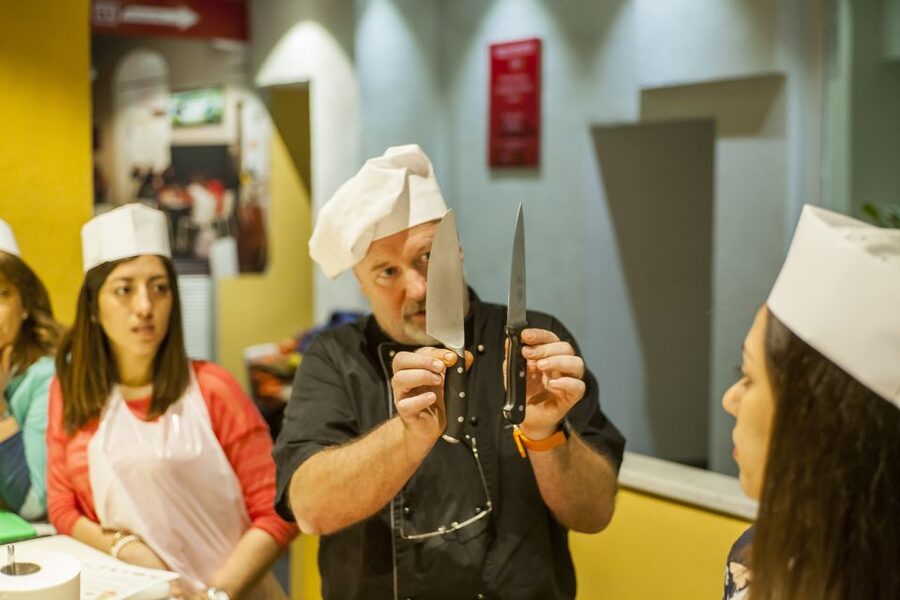
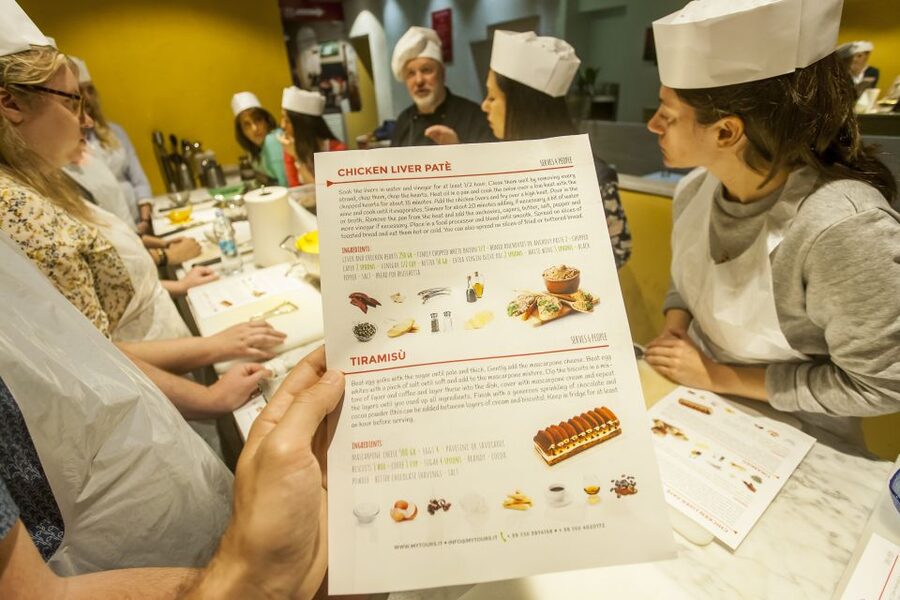
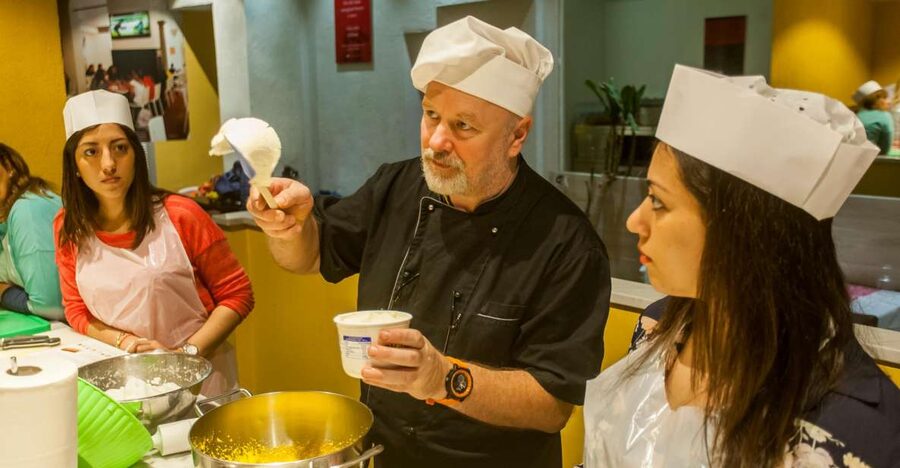
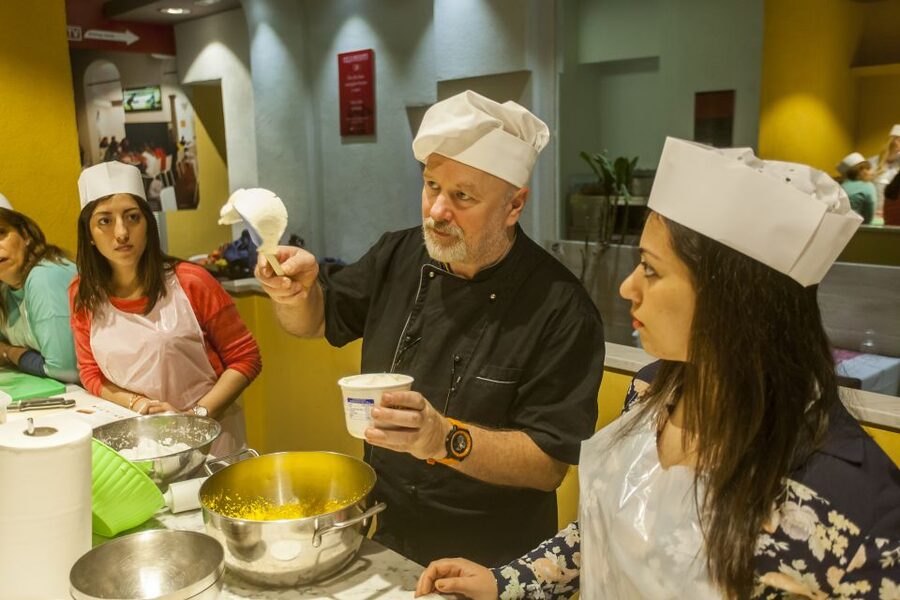
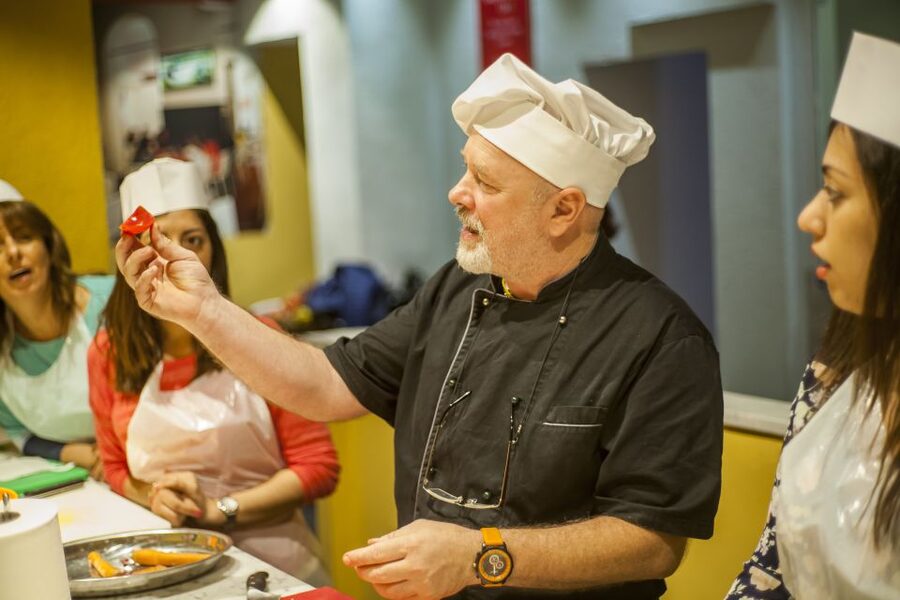
The kitchen portion is the heart of the class. The chef demonstrates each step, then assigns work around the group so everyone can take part. Past menus have included bruschetta, homemade tagliatelle or linguine, ragù or Bolognese sauce, and tiramisu. The exact meat or fish dish and sauce may change with the season and the class plan.
Fresh pasta is usually the highlight. You work with pasta dough, roll it, and shape it into noodles. This is not just a photo opportunity. You get a feel for the dough and see how a basic mixture of flour and eggs becomes something you can repeat at home.
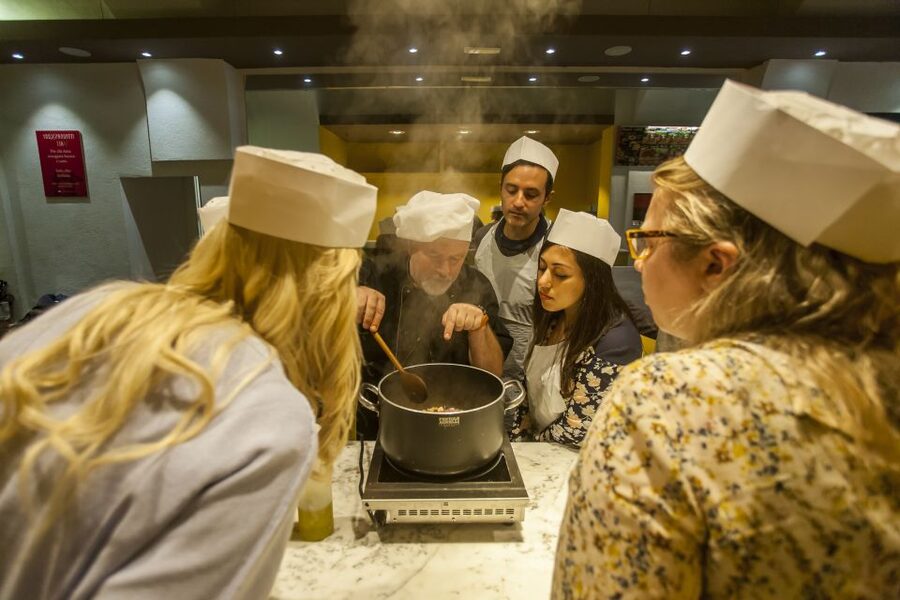
The sauce lesson adds useful depth. Ragù is built as a group, with the chef explaining the ingredients and the order of preparation. You may not personally stir every stage, since some slow steps have to be kept moving for the whole class, but you see how the pieces fit together.
Bruschetta offers a simpler lesson in balance. Good bread, ripe produce, and careful seasoning do much of the work. It is the sort of dish you can recreate quickly after returning home, especially when you want a taste of the class without making fresh pasta.
The chefs have received especially strong praise for their teaching style. Julio has been described as patient, funny, and enthusiastic, while Emanuele was noted for keeping a mixed group moving at a good pace. Thomas was valued for explaining both the food and the cooking techniques. Other sessions featured Andrea, Antonio, and chefs named Katherine’s group found friendly and informative.
Names and teaching styles can change, but the pattern is clear: the chef is central to the experience. Ask questions as you cook. If you simply wait for your turn, you may miss the small tips that make the class worth taking.
More Florence options worth a look before you decide
- Cooking Class and Lunch at a Tuscan Farmhouse with Local Market Tour from Florence
★ 5.0 · 4,831 reviews - Small Group Cooking Class & Market Food Tour in Florence
★ 5.0 · 1,574 reviews - Pasta and Tiramisu Cooking Class with optional Local Market Tour
★ 5.0 · 515 reviews - Florence: Cooking Class with Local Food Market Tour
★ 4.9 · 407 reviews
The hands-on balance: useful, but not always equal
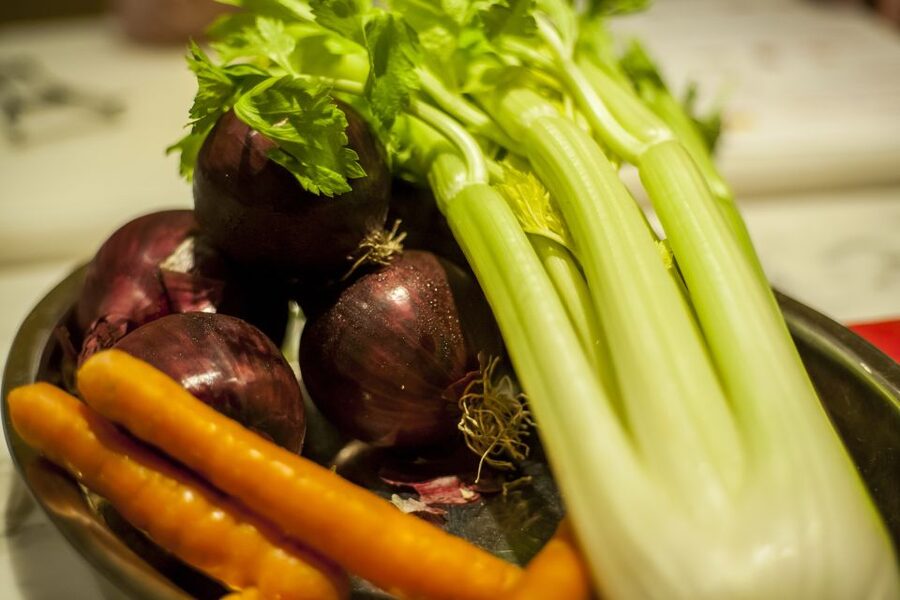
This is a guided group class, not a private chef apprenticeship. You will participate, but you will not necessarily prepare every part of every dish from start to finish.
A smaller group can make the lesson feel personal. Past sessions had six or seven people, and those groups allowed each person to roll pasta, chop, and work closely with the chef. A group of about ten also received plenty of attention. One session had 17 people and was still considered a workable size, though a larger group naturally means more shared tasks.
The chef speeds up repetitive jobs so lunch arrives within the allotted time. That is sensible, but it means some stages are demonstrations rather than individual practice. If your main goal is intensive technique training, look for a private or very small class instead.
You should also expect to stand for much of the cooking. Several people wished for stools during the lesson, especially after walking through Florence. If you have trouble standing for long periods, ask the provider about seating before booking. The activity also requires climbing and descending stairs.
Tiramisu and the reward of sitting down to lunch
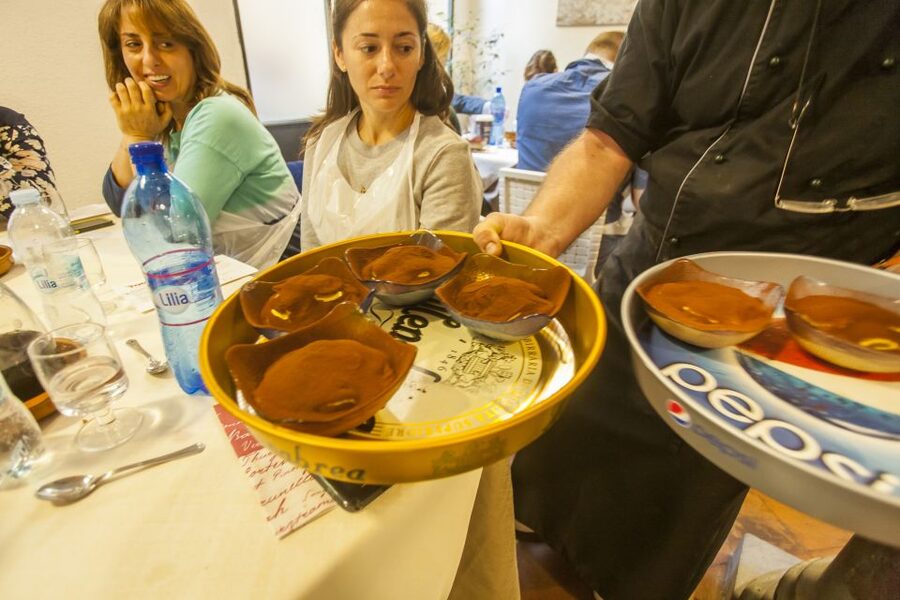
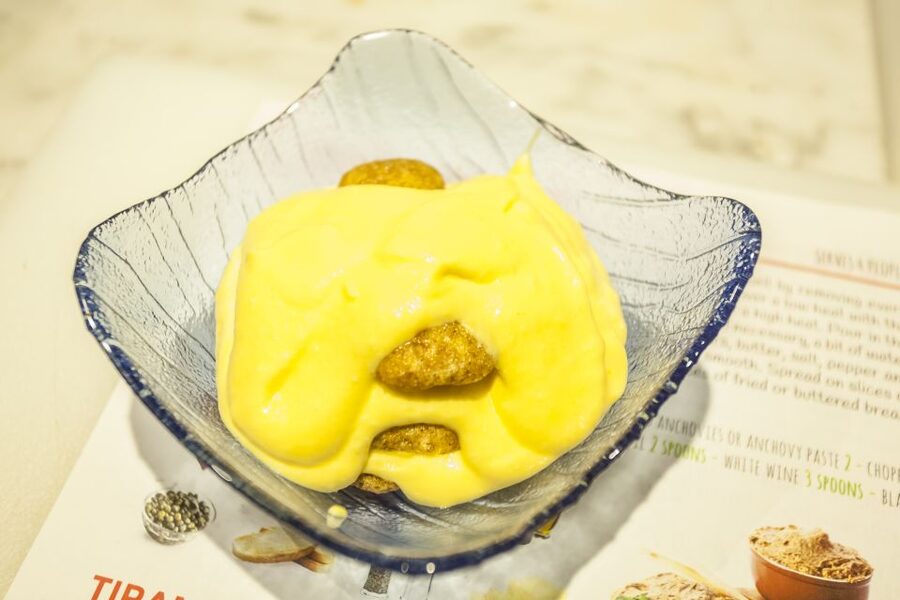
Dessert is usually tiramisu, made from scratch. It is a fitting finish because the method is approachable and easy to repeat at home. The class covers the basic preparation, and several people left eager to make it again for family celebrations.
Once the dishes are ready, the group sits down to eat. This is more satisfying than a quick taste at the counter because you can see the full result of the work: bruschetta, pasta and sauce, the main course, and dessert.
Italian wine is served with the meal, with red or white available. The wine helps turn the lesson into a relaxed Tuscan lunch, but remember that you still need to return to your hotel or continue sightseeing afterward. If you are sensitive to heavy food, the menu may feel rich, particularly when pasta, meat sauce, wine, and tiramisu arrive in one sitting.
The meal also gives you a chance to ask final questions. Pay attention to proportions, timing, and the chef’s small corrections. Those details are often more useful than memorizing a recipe word for word.
What you can take home from the lesson
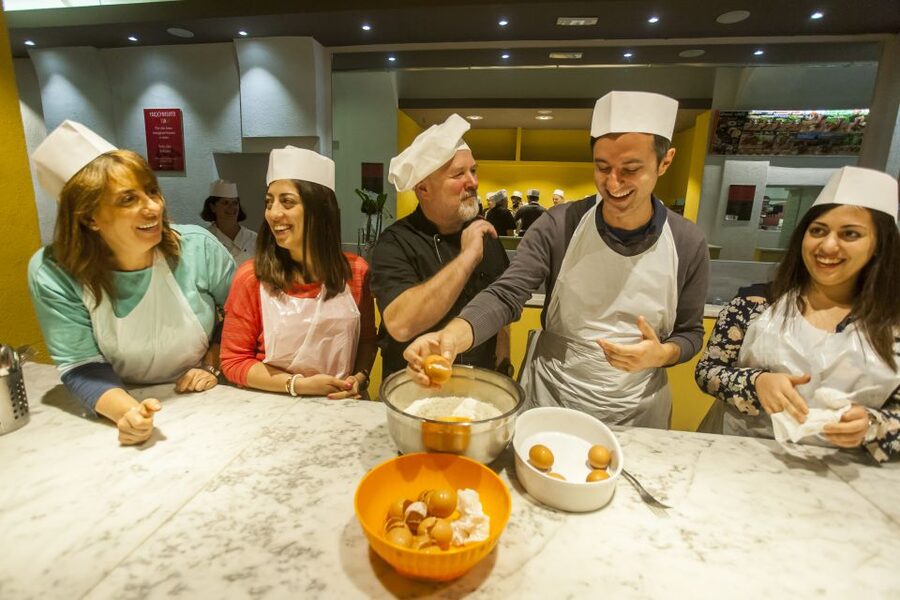
The most valuable souvenir is the confidence to make the meal again. The dishes are broken into manageable steps, and the class shows how straightforward Italian food can be when the ingredients are good.
You may pick up tips on:
- Cutting vegetables evenly and safely
- Choosing meat and other market ingredients
- Making and handling fresh pasta dough
- Building a ragù or Bolognese sauce
- Using herbs and seasoning with restraint
- Preparing tiramisu at home
- Matching simple ingredients without overcomplicating the dish
A few past participants expected recipes to arrive by email and did not receive them. The experience includes a graduation certificate, but you should not assume that recipes will be sent unless the provider confirms this. Take careful notes during the class, and ask about the recipes before you leave.
The certificate is a lighthearted extra rather than a major reason to book. It can be fun for children, first-time cooks, or anyone who likes a souvenir with a story attached.
Value compared with other Florence food classes
A price is not provided here, so I cannot judge the exact cost against competing classes. I can judge what the fee is meant to cover: a market visit when available, transport by minivan, an English-speaking chef, several cooking projects, a full meal, wine, and a certificate.
That is good value if you want a half-day activity that combines food culture and instruction. A shorter pasta-only class may suit you better if you want one focused skill and less time on your feet. A farm-based class may offer a more rural setting, while classes advertised with unlimited wine may appeal more to people who care about the social meal than the market lesson.
This experience earns its keep through variety. You are not paying only to eat pasta. You are paying for the market context, the chance to handle dough, the chef’s advice, and a meal that you helped produce.
The market component is also a useful point of difference. It takes you beyond Florence’s famous sights and shows how food is bought and discussed in the city. If the class falls on a Sunday or bank holiday, compare the price with your expectations because the market portion will be missing.
Who should book this cooking lesson?
I would recommend it to:
- First-time visitors who want a break from churches and museums
- Couples looking for a shared activity with a meal at the end
- Solo visitors who enjoy meeting people over food
- Home cooks who want practical pasta and sauce skills
- Families with older children who can manage stairs and several hours of standing
- Anyone who prefers a full Tuscan menu to a single-recipe class
It is less suitable for people with gluten intolerance, since pasta and other wheat-based foods are central to the lesson. It may also frustrate serious cooks who want every participant to prepare every dish independently.
The class is conducted in English with a live guide. If your group includes several languages, explanations can take longer, and the flow may feel less smooth. Still, the chefs have shown patience with mixed groups, and the food work gives people a common focus.
Practical advice for getting the most from the morning
Wear comfortable shoes and arrive at the Via Panicale meeting point with enough time to find it. You will walk through the market, move to the school, stand at the workstations, and use stairs.
Go hungry, but not starving. The meal comes after several hours of cooking, and the food can be filling. If you have dietary restrictions, check before booking rather than expecting the menu to be changed.
Ask the chef what you will personally do. In a small class, you may roll your own dough and handle more stages. In a larger group, work may be divided among participants.
Bring a phone or small notebook for notes. Write down ingredient amounts, resting times, and the chef’s corrections, particularly if recipes are important to you. Do not rely only on a promised follow-up email.
Plan the rest of your day loosely. The class lasts 4.5 hours, starting times vary, and a late arrival by one participant has caused a delayed finish in the past. You can cancel for a full refund up to 24 hours ahead, and reserve now while paying later, which helps if your Florence plans are still shifting.
FAQ
Where does the Florence cooking class meet?
Meet at Via Panicale, 43/r, 50123 Firenze. The coordinates are 43.77748489379883, 11.253640174865723.
How long does the activity last?
The cooking experience lasts 4.5 hours, including the market visit when the market is open, the minivan transfer, cooking, and the meal.
Is the class conducted in English?
Yes. The activity has a live English-speaking guide, and English is the listed language.
What food will I make?
The menu uses fresh, seasonal ingredients and may include homemade pasta, tomato sauce, ragù, Bolognese, or pesto, plus a meat or fish dish and dessert. Past classes made bruschetta, fresh pasta, ragù, and tiramisu.
Does the market visit take place every day?
No. The central market is closed on Sundays and bank holidays, so the market visit is skipped on those dates.
Is the class suitable for someone with gluten intolerance?
No. The activity is not suitable for people with gluten intolerance because homemade pasta and other wheat-based foods are part of the class.
Should you book this Florence market-to-table class?
Book it if you want to understand Tuscan food by buying, making, and eating it in one half-day. The strongest parts are the central market orientation, fresh pasta practice, patient chef instruction, and the full lunch with wine.
Skip it if you need a gluten-free activity, dislike standing, or want a quiet private lesson with complete control over every dish. Also think twice if your date is a Sunday or bank holiday and the market is a key reason for booking.
For most food-minded visitors, this is a good use of four and a half hours in Florence. You get a taste of local shopping, a useful set of kitchen skills, and a meal you can try to recreate long after the certificate has found its way into your suitcase.
More Workshops in Florence
- Florence: Pasta Cooking Class with Unlimited Wine
★ 5.0 · 6,413 reviews - Pastamania – Florence Pasta Making Class
★ 5.0 · 3,050 reviews - Florence: Cooking Class Pasta & Tiramisu Making Unlimited Wine
★ 5.0 · 2,234 reviews - Florence Cooking Class The Art of Making Gelato & Authentic Pizza
★ 5.0 · 2,053 reviews
More Shopping Tours in Florence
- Florence Central Market Food Tour with Eating Europe
★ 5.0 · 224 reviews - The Original Florence Street Food & Market Tour (by Streaty)
★ 5.0 · 158 reviews - Florence Cooking Course with Historic Local Market Visit
★ 4.5 · 151 reviews - Tuscan Cooking Course with Florence Central Market Visit
★ 4.6 · 101 reviews
Latest additions around Florence
- Florence: Cathedral Tour & Brunelleschi’s Dome Climb Ticket★ 5.0 · 3 reviews
- Palatina Gallery and Pitti Guided Tour in Florence★ 5.0 · 3 reviews
- Florence Uffizi Gallery Skip-the-line Tour w Art Historian Guide★ 5.0 · 3 reviews
- Private Tour: Pisa and Lucca from Florence★ 5.0 · 3 reviews
- San Gimignano Bike Tour (SOFT)★ 4.5 · 3 reviews
- Florence: Tour of Florence by rickshaw★ 5.0 · 3 reviews
- Center of Florence by golf cart★ 5.0 · 3 reviews
- From Florence: Tour to Siena and San Gimignano by Minivan★ 4.5 · 3 reviews
Tuscan Cooking Classes, compared.
Florence Pizza or Pasta Class with Gelato Making at a Tuscan Farm
Read our review →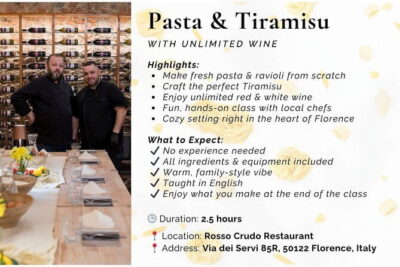
Pasta & Tiramisu Cooking Class with Unlimited Wine
Read our review →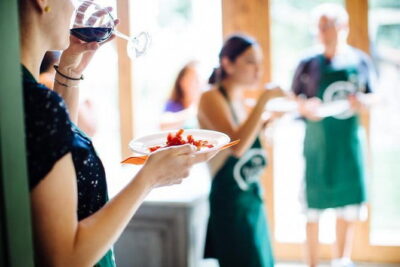
Cooking Class and Lunch at a Tuscan Farmhouse with Local Market Tour from Florence
Read our review →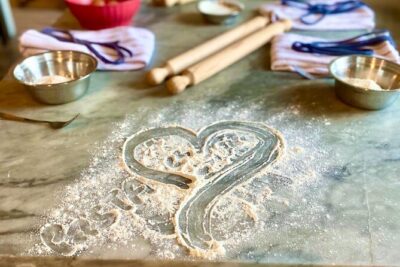
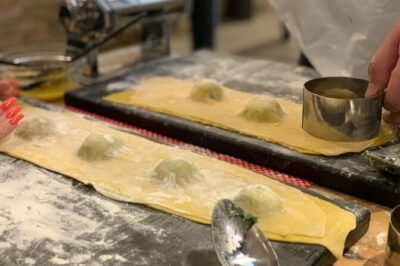
Cooking Class Pasta & Tiramisu Making Unlimited Wine
Read our review →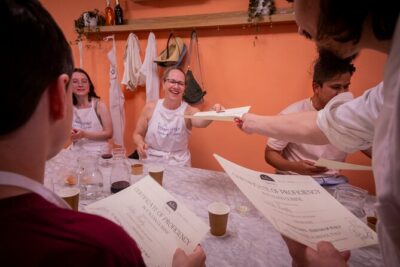
Florence Cooking Class The Art of Making Gelato & Authentic Pizza
Read our review →Browse the lists this tour appears in