
Reviewed · FLORENCE
Florence: Leonardo Drawings
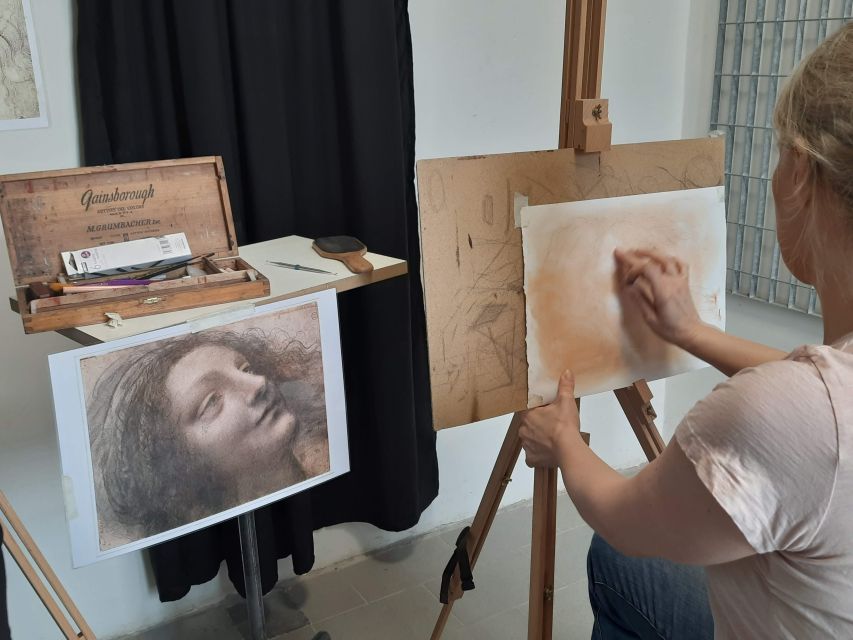
Leonardo da Vinci’s sketches come alive when you stop looking at them as museum treasures and start asking how they were made. At Geko Art Studio, you work through a traditional drawing process with sanguine, sepia, and charcoal, following the methods used by Renaissance artists.
I like the careful, step-by-step teaching, which makes this a real class rather than a quick craft activity. I also like that you receive all the tools, along with useful background on Leonardo and Renaissance art. The main drawback is location: the studio sits outside Florence’s central sightseeing zone, so allow time to reach the glass-door meeting point.
In This Review
- Key Points
- Why Leonardo’s Drawing Method Makes This Class Special
- Arriving at Geko Art Studio
- The First Stage: Paper, Easel, and Traditional Tools
- Working Through a Leonardo Sketch
- Sanguine, Sepia, and Charcoal Explained
- Renaissance Context Without a Lecture Hall
- A Coffee Break in the Middle of the Session
- What the $182 Price Really Buys
- Who Will Get the Most From This Experience
- Timing, Language, and Practical Details
- Should You Book the Leonardo Drawing Class?
- FAQ
- How long does the Leonardo drawing experience last?
- Where is the meeting point?
- What drawing materials are included?
- Is a coffee break included?
- Do I need previous drawing experience?
- What languages are available?
- Is this a private activity?
- What time can I take the class?
- Is transport to the studio included?
- Can I cancel for a full refund?
Key Points
- Use Renaissance drawing materials: Work with sanguine, sepia, charcoal, pencil, paper, an easel, and an eraser.
- Study one famous Leonardo sketch: Your finished work follows a drawing by the Tuscan master.
- Suitable for beginners: The instructor guides you through each stage, even if you have not drawn for years.
- Private three-hour session: You get focused attention rather than being folded into a large public class.
- Choose from several time windows: Sessions are commonly arranged for 10 am to 1 pm or 2 pm to 5 pm, with some evening availability.
- Take a break in the studio: Coffee, cookies, water, and juice are included.
Why Leonardo’s Drawing Method Makes This Class Special
Many Florence art activities ask you to admire Renaissance work. This one asks you to slow down and make something with your own hands.
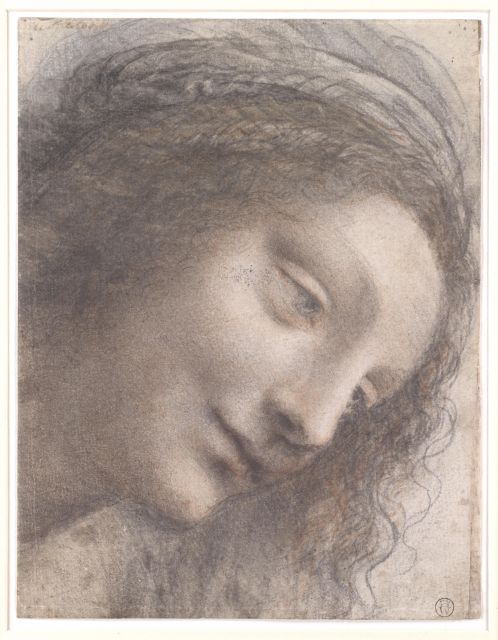
Leonardo’s drawings are famous for their observation, careful lines, soft shading, and sense of movement. You are not simply copying a picture without context. The teacher explains the materials and shows how the process unfolds, giving you a practical way to understand what makes these sketches so effective.
That matters even if you do not think of yourself as an artist. Drawing forces you to look closely. You begin to notice the way a line suggests weight, how charcoal creates shadow, and how a red-brown sanguine pencil can give a figure warmth. A museum visit can offer inspiration, but this class gives you a working connection to the image.
The experience is designed around one of Leonardo’s famous sketches. The supplied details do not identify the exact drawing in advance, so you should not book expecting a specific portrait, anatomical study, or machine design. The teacher guides you through the chosen example and its techniques during the session.
Other Florence outings people weigh against this one:
- Florence: Skip-The-Line Uffizi Gallery Timed Entry Ticket
★ 4.5 · 27,832 reviews - Tuscany Day Trip from Florence: Siena, San Gimignano, Pisa and Lunch at a Winery
★ 5.0 · 21,634 reviews - Florence: Timed Entrance Ticket to Michelangelo’s David
★ 4.6 · 16,983 reviews
Arriving at Geko Art Studio
The meeting point is the glass door of Geko Art Studio. The studio is a little outside Florence’s center, and the walk from the main central area can take about 32 minutes. That is manageable for many people, but it is not a class you should squeeze between two tightly timed museum reservations.
I would give yourself extra time to find the door and arrive calm. Drawing benefits from a quiet start, and rushing across town can take the pleasure out of the first few minutes.
Transport to and from the atelier is not included. You are responsible for reaching the studio, and any shipping cost is also separate if you later need artwork sent elsewhere. The activity is listed as wheelchair accessible, which is useful for anyone who needs a more carefully planned art stop.
The session is a private group experience. That can mean one person, a couple, a family, or a small party, depending on the booking. A private format is especially helpful here because drawing instruction works best when the teacher can look at your paper and adjust the advice to your pace.
The First Stage: Paper, Easel, and Traditional Tools
You do not need to bring a sketchbook or a pencil case. Materials provided include an easel, paper, pencil, sanguine pencil, charcoal, and eraser.
The material list is one of the strengths of the experience. Sanguine and charcoal are not necessarily familiar to casual sketchers, and buying a full set of supplies for one class would be inconvenient. You can try the tools as part of the lesson without guessing which grades, surfaces, or accessories to purchase.
The teacher introduces the traditional drawing process step by step. Expect attention to the basic structure of the sketch before the darker marks and softer shading are added. The supplied description does not give a minute-by-minute lesson plan, so the exact pace may depend on the group and your drawing level.
That flexibility is a benefit for beginners. You are not expected to keep up with a professional artist. At the same time, experienced art students can use the class to refine their handling of charcoal and older drawing methods instead of being given only a simplified tourist demonstration.
Working Through a Leonardo Sketch
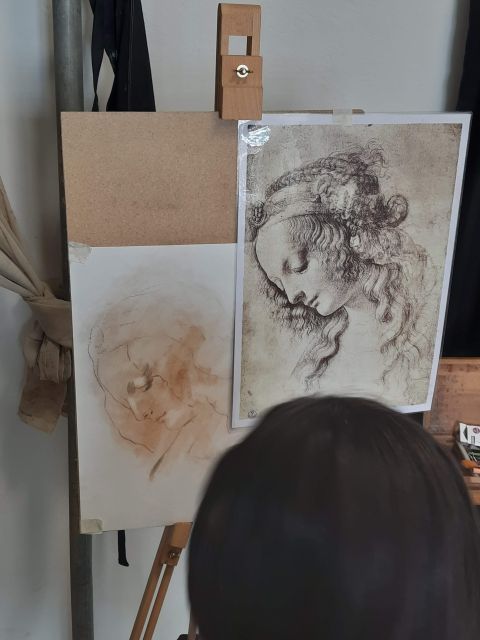
The central part of the class is reproducing one of Leonardo’s well-known sketches. You work from the example while the instructor explains how the image can be built using the supplied materials.
For a beginner, the most useful part may be learning how to approach the page without trying to finish everything at once. You receive guidance as the drawing develops, which gives you a chance to correct mistakes and understand why certain marks work better than others.
If you already draw, you may appreciate the chance to focus on a classic technique rather than produce a casual souvenir. One participant with substantial art-class experience found the lesson offered new material, which suggests that the class is not aimed only at first-time sketchers.
The instruction is available in English, Italian, and Spanish. That language choice makes it easier to ask about technique, history, or materials in a language you are comfortable using.
Do not expect an exact replica worthy of a museum wall after three hours. The value is in learning how the image is constructed and leaving with a better feel for the tools. Your result will depend on your experience, attention, and the complexity of the selected sketch.
A different way to spend the same Florence day:
- Florence: Michelangelo’s David Skip-the-Line Entry Ticket
★ 4.5 · 12,764 reviews - The Best tour in Florence: Renaissance & Medici Tales – guided by a STORYTELLER
★ 5.0 · 12,316 reviews - Florence: Leonardo Interactive Museum Entry Ticket
★ 4.5 · 11,763 reviews - The Best Tour in Florence: Renaissance and Medici Tales
★ 5.0 · 10,810 reviews
Sanguine, Sepia, and Charcoal Explained
The class gives you contact with several traditional drawing approaches rather than limiting you to an ordinary graphite pencil.
Sanguine is a reddish-brown drawing medium often associated with Renaissance studies. It can give a sketch a warmer, more human tone than plain gray graphite.
Sepia adds another earth-colored option, while charcoal is useful for stronger darks, broad tones, and soft transitions. The eraser becomes part of the process too, allowing you to lift marks and shape highlights rather than treating every correction as a failure.
These materials help explain why Leonardo’s drawings can look both precise and atmospheric. A line can describe an edge, while a smudged area suggests shadow or depth. Working with several tools lets you see that effect on your own paper.
The lesson also helps you understand the limits of these materials. Charcoal can spread easily, and softer marks may need careful handling. That is part of the fun, but it also means you should not expect a spotless, effortless process.
Renaissance Context Without a Lecture Hall
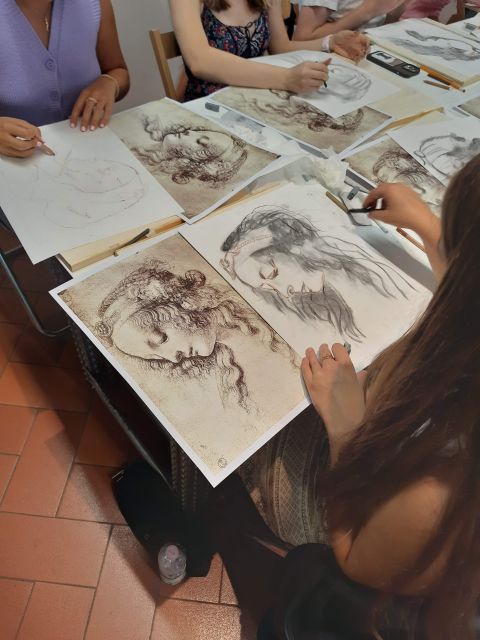
The drawing instruction comes with historical and cultural information about Leonardo’s life and the Renaissance period. This context gives the exercise more purpose.
You learn about the world behind the sketch instead of treating Leonardo as only a famous name. The teacher connects the techniques and materials to the artistic culture of the time, helping you see why drawing was such an important part of Renaissance work.
The class appears to keep this background tied to the activity. You are there to draw, not sit through a long academic talk. That balance suits anyone who wants more than a souvenir workshop but less than a formal art-history course.
I especially like this approach for families and mixed groups. One person can focus on the practical process, while another can enjoy the cultural side. A daughter who attended a class returned home inspired, and the experience also helped a former sketcher regain confidence after years away from drawing.
A Coffee Break in the Middle of the Session
The three-hour format includes a coffee break with cookies, water, and juice. This is a small detail, but it matters during a focused lesson.
Drawing for several hours takes concentration, especially when you are working with unfamiliar tools. A short pause gives you time to step back from the paper and look at the work with fresh eyes. It also makes the session feel less like a rushed appointment.
Do not mistake the break for a full meal. It is a simple refreshment stop, so plan lunch or dinner separately around the class time.
The available time windows are normally 10 am to 1 pm and 2 pm to 5 pm. Some days also offer a 5:30 pm to 8:30 pm session. The exact appointment is arranged personally with the studio, so the time shown at booking may need confirmation.
After booking, the studio contacts you by WhatsApp or email as the date approaches. If timing is important, you can contact Geko Art Studio directly at [email protected].
What the $182 Price Really Buys
At $182 per person, this is not a cheap drop-in activity. You are paying for a private three-hour lesson, an instructor, a studio setting, art materials, cultural explanation, and refreshments.
The value depends on what you want from Florence. If you want a quick, low-cost activity between major sights, the price may feel high. If you want focused instruction and a hands-on connection with Renaissance art, the cost becomes easier to justify.
You also avoid the small but real expense of purchasing suitable paper, an easel, drawing tools, and several different media yourself. The instructor’s guidance is the key part of the price. Without that help, you could copy a Leonardo image at home, but you would miss the corrections, demonstrations, and context that make the process useful.
Private groups may find the price easier to accept because the lesson is not built around a crowded class. For a family, couple, or group of friends with a shared interest in art, it can be a more personal alternative to another standard sightseeing stop.
Remember the extras. Transport is not included, and shipping costs are separate if needed. The class also does not include a meal beyond the coffee break.
Who Will Get the Most From This Experience
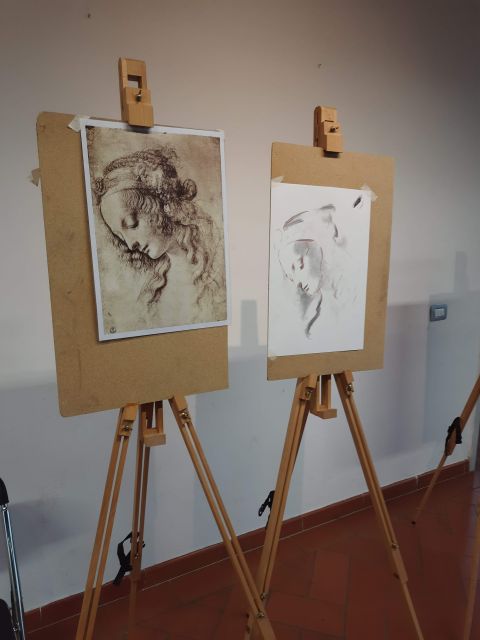
You should consider this class if you like art, want to try a traditional technique, or need a slower activity during a busy Florence visit.
It works well for:
- Beginners who want clear guidance without pressure
- Intermediate artists looking to work with charcoal and older methods
- Experienced art students who want a fresh approach to classic drawing
- Families with older children or teenagers interested in art
- Couples or friends seeking a private cultural activity
- Anyone who has not drawn for years and wants a supportive restart
You do not need previous drawing experience. The teachers guide you through the sketch, and the private format allows the lesson to adjust to your ability.
You may enjoy it less if you want a broad tour of Leonardo’s original works, a museum visit, or a fast demonstration with little hands-on work. This is a practical studio class centered on making one drawing.
The tone is supportive and relaxed, but it still asks you to concentrate. Bring patience rather than a need to produce a perfect picture immediately.
Timing, Language, and Practical Details
The experience lasts three hours. Instruction is available in English, Italian, and Spanish.
The time is arranged directly with the studio. Typical options are 10 am to 1 pm and 2 pm to 5 pm, with occasional availability from 5:30 pm to 8:30 pm. Confirm the time before building the rest of your Florence day around it.
The activity is private and wheelchair accessible. The meeting point is the studio’s glass door. Transport is not part of the booking, so plan your route in advance.
Free cancellation is available up to 24 hours before the activity for a full refund. You can also reserve now and pay later, which helps if your Florence schedule is still taking shape.
Should You Book the Leonardo Drawing Class?
Book it if you want to understand Leonardo through your own hand, not only through a museum label. The combination of traditional media, patient instruction, historical context, and a private studio makes this a thoughtful choice for art lovers.
I would especially recommend it to beginners who feel nervous about drawing. The teacher-led process and encouraging atmosphere give you room to make mistakes, and the class can restore confidence even if you have not picked up a pencil in years.
Think twice if your schedule is tight, your budget is limited, or you only want to see original Renaissance art. The studio is outside the center, the price is significant, and transport is extra.
For the right person, though, this is a memorable three hours in Florence. You leave with a drawing, a better sense of how Leonardo’s images were built, and a practical appreciation for the tools behind Renaissance art.
FAQ
How long does the Leonardo drawing experience last?
The activity lasts three hours.
Where is the meeting point?
Meet at the glass door of Geko Art Studio in Florence.
What drawing materials are included?
The studio provides an easel, paper, pencil, sanguine pencil, charcoal, and eraser.
Is a coffee break included?
Yes. The break includes coffee, cookies, water, and juice.
Do I need previous drawing experience?
No. The class is suitable for beginners, and the teacher guides you through the drawing step by step.
What languages are available?
Instruction is available in English, Italian, and Spanish.
Is this a private activity?
Yes. The experience is offered for a private group.
What time can I take the class?
The usual time windows are 10 am to 1 pm and 2 pm to 5 pm. Some days also have a 5:30 pm to 8:30 pm option. The studio confirms the exact time personally after booking.
Is transport to the studio included?
No. Transport to and from the atelier is not included. Shipping costs are also separate.
Can I cancel for a full refund?
Yes. You can cancel up to 24 hours in advance for a full refund. You can also reserve now and pay later.
Latest additions around Florence
- Florence: Cathedral Tour & Brunelleschi’s Dome Climb Ticket★ 5.0 · 3 reviews
- Palatina Gallery and Pitti Guided Tour in Florence★ 5.0 · 3 reviews
- Florence Uffizi Gallery Skip-the-line Tour w Art Historian Guide★ 5.0 · 3 reviews
- Private Tour: Pisa and Lucca from Florence★ 5.0 · 3 reviews
- San Gimignano Bike Tour (SOFT)★ 4.5 · 3 reviews
- Florence: Tour of Florence by rickshaw★ 5.0 · 3 reviews
- Center of Florence by golf cart★ 5.0 · 3 reviews
- From Firenze | Chianti day tour in a classic car★ 5.0 · 3 reviews