
Reviewed · FLORENCE
Florence: Italian Opera
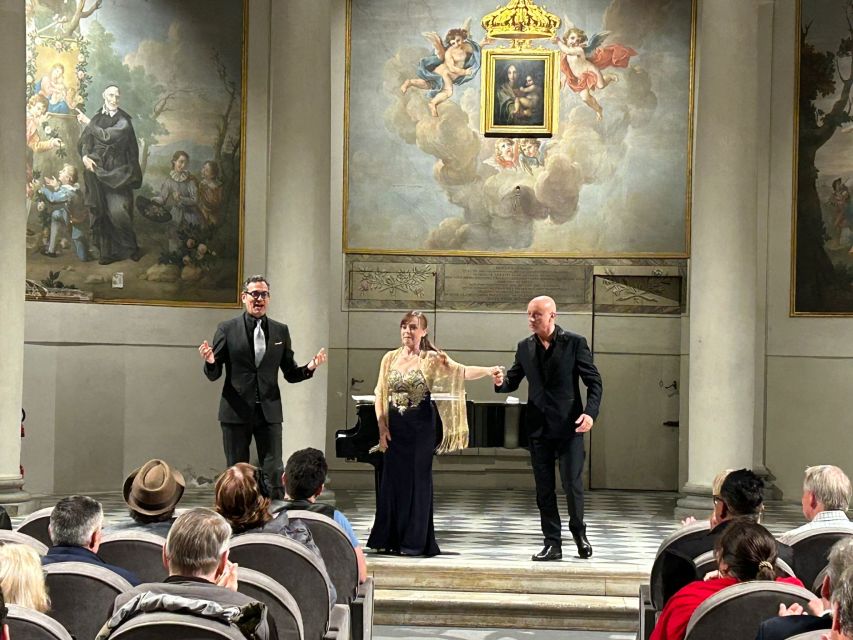
Florence gives you opera in a wonderfully direct form: two singers, one pianist, and famous arias performed in a historic hall rather than a huge theater. You’ll hear pieces such as O mio babbino caro, La ci darem la mano, and Largo al factotum, with the music carrying the evening instead of elaborate scenery or costumes.
I like the beautiful acoustics and intimate scale, which let you hear the singers clearly. I also like the program’s mix of Puccini, Verdi, Mozart, and Rossini, since you get comic scenes, romantic arias, and dramatic showpieces in one sitting.
The main point to check is the venue and seating category before booking. The meeting point can change with your option, and one review found the program details less clear than expected, with more piano interludes than ideal.
In This Review
- Key points at a glance
- What this Florence opera evening is really like
- The venue near Ponte Vecchio
- First half: Rossini opens the evening
- Intermission and the second half
- Why the short selections work for first-time listeners
- Seating, sound, and the value of the ticket
- The garden, tea room, and evening plans
- Who will enjoy this most
- Booking details worth checking
- Should you book Florence Italian Opera?
- FAQ
- Where does the opera concert take place?
- How much does the experience cost?
- How long is the activity?
- Which composers are included?
- Which pieces are performed?
- Who performs in the concert?
- Are food and drinks included?
Key points at a glance
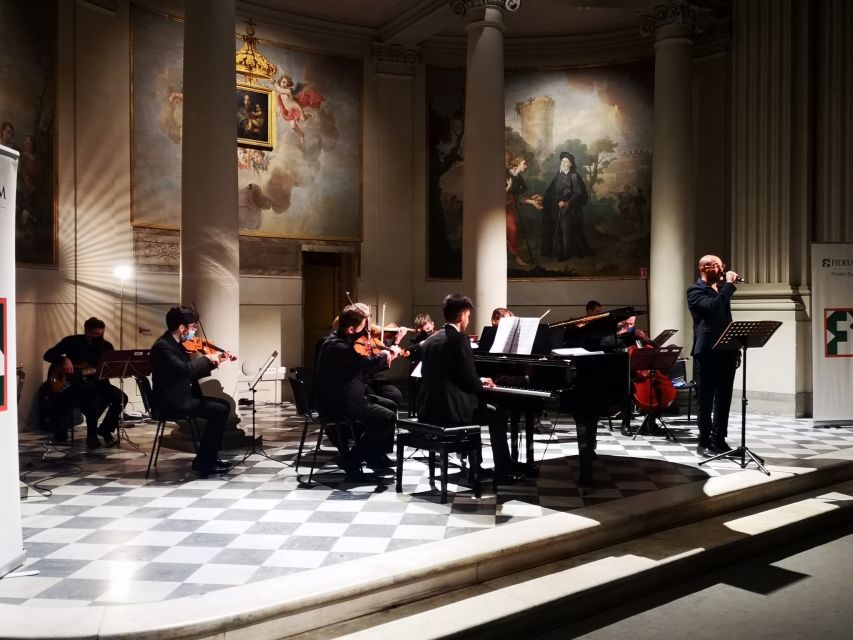
- Historic Florence setting: The Auditorium of Santo Stefano is close to Ponte Vecchio and combines Romanesque, Gothic, and Baroque details.
- Famous opera favorites: The program includes music from The Barber of Seville, Tosca, La Bohème, La Traviata, Falstaff, and Don Giovanni.
- Three seating categories: You can choose among seating levels, with middle or VIP seats a sensible pick if you want a more central view.
- Small professional cast: Soprano Alessia Battini, baritone David Ciarrocchi, and pianist Gianni Cigna lead the performance.
- Extras before or after the concert: The venue has a garden and tea room where you can relax or buy a drink.
- Easy first opera: The familiar music and short selections make this a friendly introduction for newcomers.
What this Florence opera evening is really like
This is not a full staged opera with sets, a chorus, and a large orchestra. It is a concert built around selected arias and duets, performed by two vocalists with piano accompaniment.
That format has a real advantage. You do not need to know the plot of an entire opera before you sit down. Each selection offers a compact burst of character, comedy, romance, or drama. If you are new to opera, that makes the evening easier to follow and less demanding.
The cast features soprano Alessia Battini, baritone David Ciarrocchi, and pianist Gianni Cigna. Battini is presented as an emerging Italian singer with a strong lyrical voice and expressive stage presence. Ciarrocchi has performed in major productions and is associated with the Teatro del Maggio Musicale Fiorentino, with Mozart and Verdi among his important roles.
Cigna serves as pianist and vocal coach. That matters more than it may first appear. In this kind of performance, the pianist is not simply filling in for an orchestra. The piano supplies rhythm, mood, dramatic tension, and the musical cues the singers need. A skilled accompanist can make the program feel like a proper dramatic performance rather than a string of disconnected songs.
Other Florence outings people weigh against this one:
- Florence: Skip-The-Line Uffizi Gallery Timed Entry Ticket
★ 4.5 · 27,832 reviews - Tuscany Day Trip from Florence: Siena, San Gimignano, Pisa and Lunch at a Winery
★ 5.0 · 21,634 reviews - Florence: Timed Entrance Ticket to Michelangelo’s David
★ 4.6 · 16,983 reviews
The venue near Ponte Vecchio
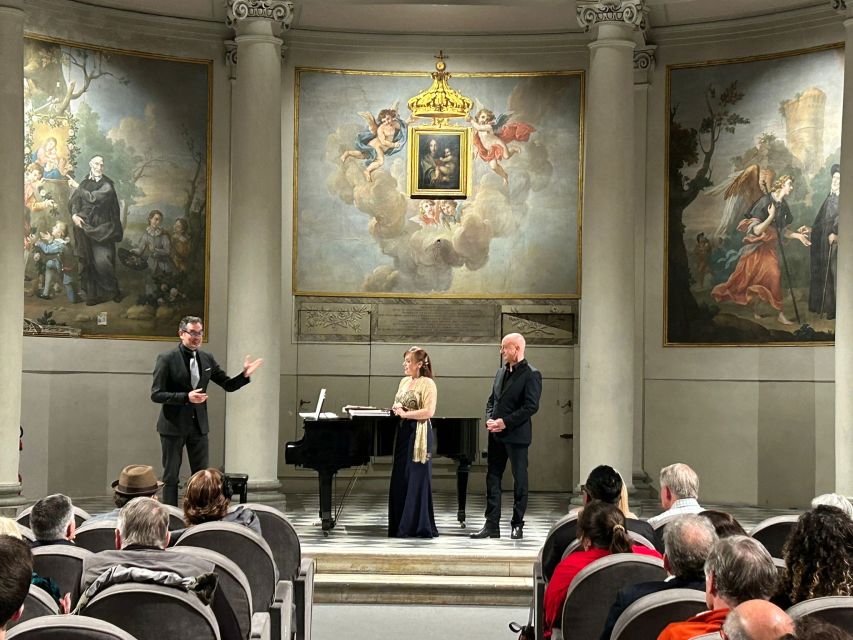
The Auditorium of Santo Stefano is the more atmospheric setting described for this experience. It sits in central Florence, next to Ponte Vecchio, so you can pair the concert with an evening walk along the Arno and through the old center.
The building began in Romanesque style and later received Gothic and Baroque changes. That combination gives the interior a layered look rather than a single neat architectural style. The building has also survived serious damage from World War II, the 1966 Florence flood, and the 1993 Georgofili bombing before restoration in the late 1990s.
You are there for the music, but the room forms an important part of the evening. Historic churches and halls can make a small vocal performance feel larger, especially when the acoustics carry an unamplified voice through the space.
The other possible setting is the Zeffirelli Concert Hall. Since the meeting point and venue can vary by booking option, check your confirmation carefully. Do not assume that every ticket category uses the same entrance or room.
A useful practical detail: the venue also offers a garden and tea room. Food and drinks are not included, but these spaces give you somewhere to pause before or after the performance.
First half: Rossini opens the evening
The program begins with G. Rossini’s Largo al factotum from The Barber of Seville. This is one of opera’s great comic introductions, associated with the fast-talking Figaro. It gives the baritone an immediate chance to show timing, agility, and personality.
Next comes Puccini’s Tre sbirri una carrozza from Tosca. The mood shifts from comic energy to darker drama. Hearing these contrasting pieces early helps you understand the range of the evening: opera here is not one long stream of solemn singing.
A piano solo follows as an intermezzo. This is a good moment to listen to Cigna’s role without the singers in front of him. It also gives the program a pause before the soprano returns with Quando me’n vo from La Bohème.
That aria, often called Musetta’s waltz, has a teasing, elegant character. It is a strong choice for a concert setting because the singer can communicate personality through voice and movement without needing a full café scene or stage set.
The first half continues with Verdi’s È strano… Sempre libera from La Traviata. This is one of the evening’s major soprano pieces, moving from reflection into brilliant, demanding vocal writing. You can expect a sharper dramatic edge here than in the Rossini and Puccini selections.
The final first-half selection is Mozart’s Cinque, dieci, venti from The Marriage of Figaro. This brings the baritone back into a comic world. It is a lively piece, and Mozart’s clean musical structure offers a useful contrast to Puccini’s warmer, more sweeping melodies.
Intermission and the second half
There is an intermission between the two parts. The exact length is not provided, so use the break to stretch, visit the facilities, or step into the garden or tea room if available at your venue.
The second half opens with Puccini’s O mio babbino caro from Gianni Schicchi. This is probably the most instantly familiar soprano selection on the program for many first-time opera listeners. Its compact length and clear emotional appeal make it an effective way to draw you back into the music after the break.
Verdi’s È sogno o realtà from Falstaff follows. This piece shifts toward comic drama and gives the baritone another chance to show character. Placing Verdi’s serious La Traviata selection in the first half and this lighter work later helps keep the program varied.
Mozart’s La ci darem la mano from Don Giovanni is a duet for soprano and baritone. This is one of the evening’s most useful selections for anyone who wants to understand how opera works as theater. You hear two characters responding to each other, not just one singer delivering a solo.
The concert closes with Rossini’s Dunque io son from The Barber of Seville. It brings the program back to the comic world of Figaro and gives both singers a lively finish. Ending with Rossini should leave the room on a brisker note than a solemn final aria would.
A different way to spend the same Florence day:
- Florence: Michelangelo’s David Skip-the-Line Entry Ticket
★ 4.5 · 12,764 reviews - The Best tour in Florence: Renaissance & Medici Tales – guided by a STORYTELLER
★ 5.0 · 12,316 reviews - Florence: Leonardo Interactive Museum Entry Ticket
★ 4.5 · 11,763 reviews - The Best Tour in Florence: Renaissance and Medici Tales
★ 5.0 · 10,810 reviews
Why the short selections work for first-time listeners
A complete opera can last several hours and may require some preparation. You need to keep track of characters, relationships, disguises, political conflicts, and sometimes a plot that is easier to understand with a synopsis in hand.
This concert removes much of that homework. The program uses well-known excerpts, so you can focus on the sound of the Italian language, the vocal skill, and the contrast between composers.
You will not get the full emotional arc of La Bohème or Tosca. That is the tradeoff. The selections are snapshots rather than complete stories, and the printed program is useful for identifying each piece and its source.
One practical concern is that the program information should be clear before the concert begins. A printed program is included, but the exact works and performers may not always be obvious during booking. If knowing the order matters to you, check the current program details and your selected venue in advance.
Seating, sound, and the value of the ticket
The advertised price is $41 per person, with three seating categories available. For a concert with only two singers and a pianist, seating can affect how connected you feel to the performance more than it would at a large opera house.
A higher category may give you a more central or favorable position, though the exact arrangement is not specified. One useful piece of advice from the available experience is that the room may not feel overcrowded, meaning even a lower category could offer a satisfactory view. If you want to limit risk, middle seats are a reasonable compromise between price and position.
VIP is worth considering if this is a special evening or you care about being close to the performers. It is not automatically necessary for good sound, particularly in a room praised for its acoustics.
At $41, I see this as a good-value introduction to opera in Florence. You are paying for live voices, a pianist, a central historic setting, and a program filled with major works. You are not paying for a complete production, orchestra, costumes, or stage machinery, so compare it with what you actually want.
If your goal is a relaxed cultural evening with famous music, the price is fair. If your goal is a full-scale opera production, this will feel limited.
The garden, tea room, and evening plans
The garden and tea room add flexibility, but they are not part of the ticket price. You can use the setting for a drink if you arrive early or want to linger after the performance, but plan to pay separately.
Food and drinks are not included. That is easy to manage because the concert is in central Florence, where you can eat before or after, but you should not expect a dinner-and-show package.
The evening also works well as part of a walking plan. The Auditorium of Santo Stefano is near Ponte Vecchio, so you can see the bridge and the surrounding streets before the music. Keep an eye on the venue listed for your option, since the Zeffirelli Concert Hall and Santo Stefano Auditorium are different locations.
Who will enjoy this most
I would recommend this for someone attending opera for the first time. The familiar arias make it approachable, and the one-day activity format fits neatly into a Florence visit without taking over your whole schedule.
It also suits couples looking for an atmospheric evening, music fans who want a short sampler of Italian opera, and families with older children who can appreciate live performance. The accessible format can help you decide if you want to attend a longer opera later.
Experienced opera lovers may still enjoy the voices and room, especially if they value intimate performances. But you should book with the right expectations. This is a highlights concert, not a complete staging, and the piano replaces the full orchestra.
The activity is wheelchair accessible. Since the meeting point may vary by booking option, you should confirm the location and access details before setting out.
Booking details worth checking
You receive a concert ticket and a printed program. Hotel pickup, hotel drop-off, food, and drinks are not included, so plan your own route to the venue.
The activity is valid for one day, but the starting time depends on availability. Since this is an evening performance, check the selected date and time before arranging dinner or another timed Florence visit.
You can cancel up to 24 hours in advance for a full refund. Reserve-now, pay-later booking is also available, which is useful when your Florence schedule is still changing.
The booking option matters here. Confirm the seating category, meeting point, venue, and current program before paying. Those details affect the experience more than small differences in price.
Should you book Florence Italian Opera?
Book it if you want a compact, atmospheric introduction to Puccini, Verdi, Mozart, and Rossini, performed by two singers and a pianist in a historic Florence setting. The strongest reasons are the familiar program, the close-up concert format, and the excellent setting near Ponte Vecchio.
Choose middle or VIP seating if you want the safest view, though a lower category may still work if the room is arranged with open sightlines. Read the program details carefully, especially if you want a specific aria or prefer fewer piano interludes.
Skip it if you are looking for a full opera with scenery, chorus, orchestra, and a complete plot. For everyone else, $41 buys a polished cultural evening and a pleasant way to hear the music that makes Italian opera such a lasting part of Florence.
FAQ
Where does the opera concert take place?
The concert takes place at either the Zeffirelli Concert Hall or the Auditorium of Santo Stefano in Florence, depending on the option booked. The meeting point may vary, so check your selected option carefully.
How much does the experience cost?
The listed price is $41 per person. Three seating categories are available.
How long is the activity?
The activity is valid for one day, with the performance scheduled in the evening. Starting times depend on availability.
Which composers are included?
The program includes works by G. Rossini, G. Puccini, G. Verdi, and W. A. Mozart.
Which pieces are performed?
The program includes selections from The Barber of Seville, Tosca, La Bohème, La Traviata, The Marriage of Figaro, Gianni Schicchi, Falstaff, and Don Giovanni.
Who performs in the concert?
The listed performers are soprano Alessia Battini, baritone David Ciarrocchi, and pianist Gianni Cigna.
Are food and drinks included?
No. Food and drinks are not included, though you may be able to relax in the venue’s garden or tea room.
Latest additions around Florence
- Florence: Cathedral Tour & Brunelleschi’s Dome Climb Ticket★ 5.0 · 3 reviews
- Palatina Gallery and Pitti Guided Tour in Florence★ 5.0 · 3 reviews
- Florence Uffizi Gallery Skip-the-line Tour w Art Historian Guide★ 5.0 · 3 reviews
- Private Tour: Pisa and Lucca from Florence★ 5.0 · 3 reviews
- San Gimignano Bike Tour (SOFT)★ 4.5 · 3 reviews
- Florence: Tour of Florence by rickshaw★ 5.0 · 3 reviews
- Center of Florence by golf cart★ 5.0 · 3 reviews
- From Firenze | Chianti day tour in a classic car★ 5.0 · 3 reviews