
Reviewed · ACCADEMIA GALLERY TOURS
Florence: Highlights and Small-Group Accademia Tour
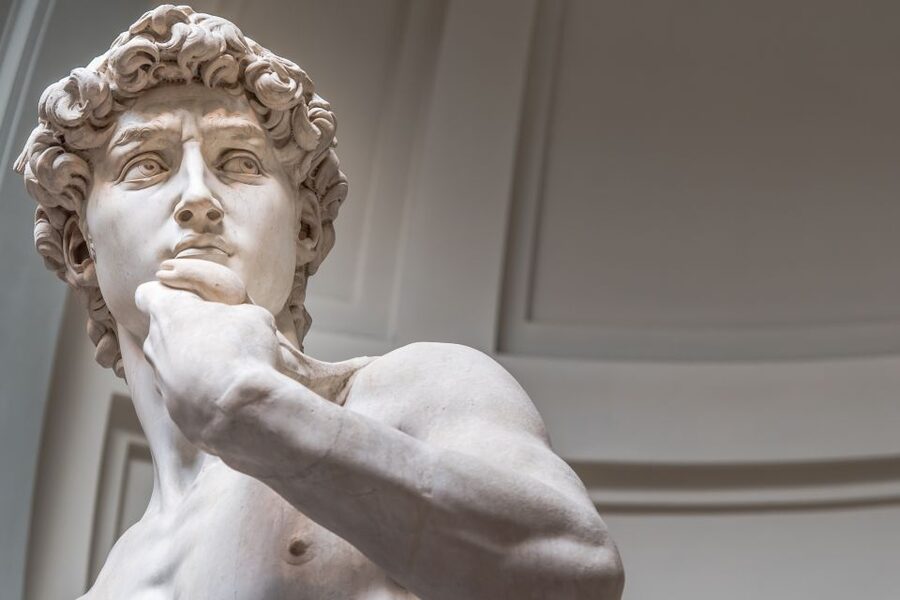
The original Michelangelo’s David is the star here, but the smart part of this tour is the route leading up to it. In about three hours, you move from Roman Florence to the Medici world, across the Arno, through the Duomo quarter, and finally into the Accademia.
I like the clear city orientation and the chance to see Florence’s major landmarks on foot. I also like that the Accademia visit comes after the outdoor sights, so David feels like the grand finale rather than an isolated museum stop. The main consideration is pace: this is a lot of Florence in a short time, and one guide has been reported walking ahead of the group, so stay alert at crossings and busy piazzas.
In This Review
- Key points at a glance
- Why this Florence route works
- Starting at Republic Square and Florence’s Roman roots
- Piazza della Signoria and the Medici story
- Ponte Vecchio and the Vasari Corridor
- Palazzo Pitti and the Oltrarno side
- Ponte Santa Trinita and the best bridge photograph
- Via Tornabuoni and Palazzo Strozzi
- The Duomo, Brunelleschi’s dome, and the Baptistery
- Entering the Accademia to meet David
- How much walking and what to wear
- Languages, guides, and group choices
- Is $117 a good value?
- My practical verdict
- FAQ
- How long does the Florence and Accademia tour last?
- What languages are available?
- Is Michelangelo’s David included?
- Is entry to Florence Cathedral guaranteed?
- Can I bring luggage or a large bag?
- Can I cancel the tour or pay later?
Key points at a glance
- David comes at the end: Save your most famous museum stop for the final part of the walk.
- A smart central route: See Republic Square, Piazza della Signoria, Ponte Vecchio, Pitti Palace, the Duomo, and more without arranging separate transport.
- The Oltrarno adds variety: Cross the river for artisan shops, cafés, and a less formal side of Florence.
- Ponte Vecchio gets two views: Hear about the Vasari Corridor, then photograph the famous bridge from Ponte Santa Trinita.
- The $117 price covers the guide and Accademia entry: That can be useful when you want a single, organized introduction to Florence.
- A few practical limits matter: Bags and luggage are not allowed, and a long queue can reduce the benefit of priority entry.
Why this Florence route works
Florence is compact, but its famous sights are packed close together. That makes a walking tour especially useful during a first visit. Instead of spending time figuring out which street connects to which piazza, you can focus on the city’s story and let the guide handle the route.
This tour is not just a trip from one museum to another. It begins in the civic center, crosses the river, passes through the commercial heart of town, and ends among Florence’s religious landmarks and Renaissance sculpture. You get a basic map in your head, which is useful for the rest of your stay.
The group format should also feel more personal than a large coach excursion. A private option is available if you want a more tailored experience, but the standard tour is designed for people who want an efficient introduction without paying private-tour prices.
More Accademia and David visits:
- Florence: Timed Entrance Ticket to Michelangelo’s David
★ 4.6 · 16,983 reviews - Florence: Michelangelo’s David Skip-the-Line Entry Ticket
★ 4.5 · 12,764 reviews - Florence Accademia Gallery Tour with Entrance Ticket Included
★ 4.5 · 6,148 reviews
Starting at Republic Square and Florence’s Roman roots
Meet at the central column in Piazza della Repubblica, the one topped by a statue of a lady. This is an easy central location, but look for the correct column before the tour begins. In a busy square, a precise meeting point matters.
The piazza occupies the area of Florence’s ancient Roman Forum. Today, it is surrounded by cafés, shops, and grand buildings, so the Roman past is not immediately obvious. That contrast is part of the fun. You begin in modern Florence, then learn to read the city beneath its current streets.
I like this as a starting point because it gives you a quick sense of scale. Florence is not huge, and many of the main sights can be reached on foot. At the same time, the concentration of churches, palaces, bridges, and museums can be confusing without some guidance.
Piazza della Signoria and the Medici story
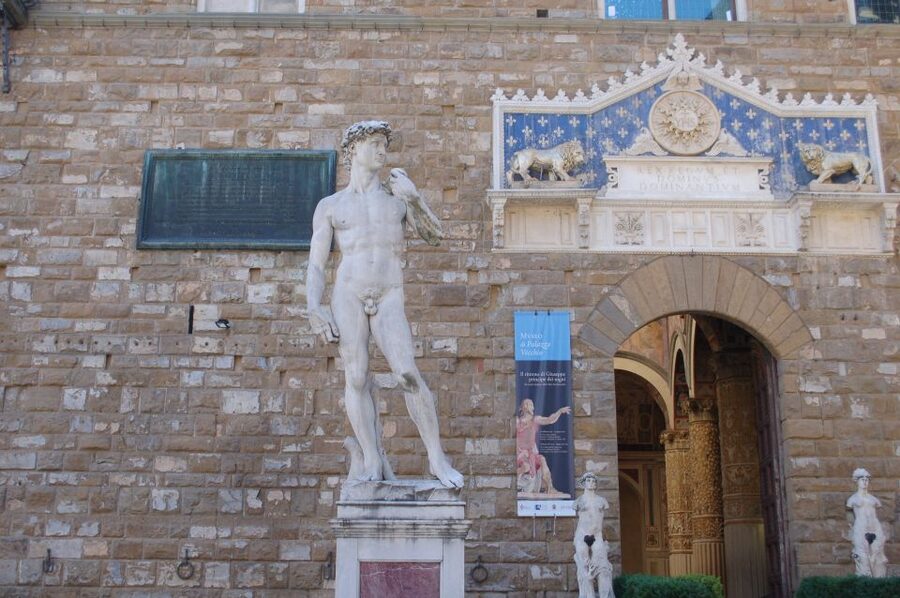
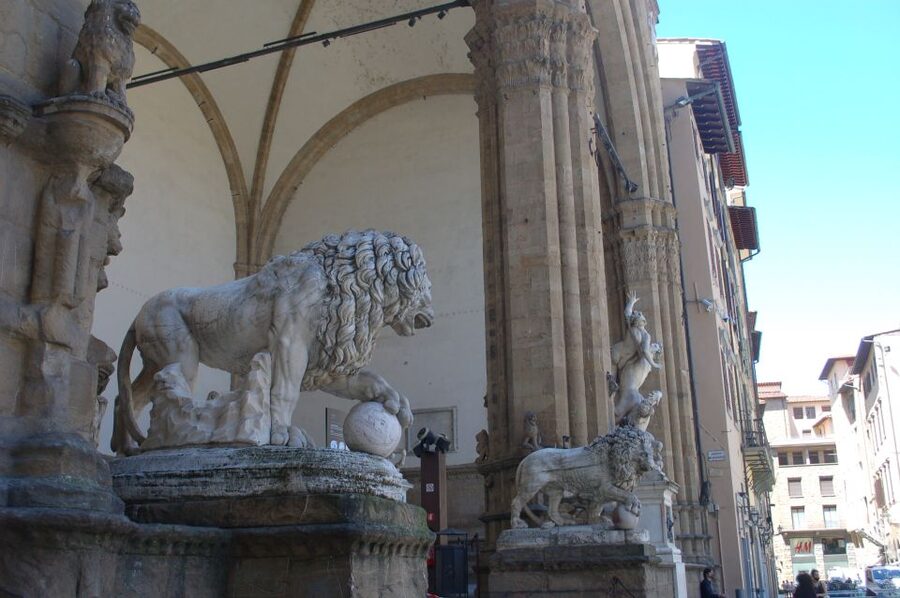
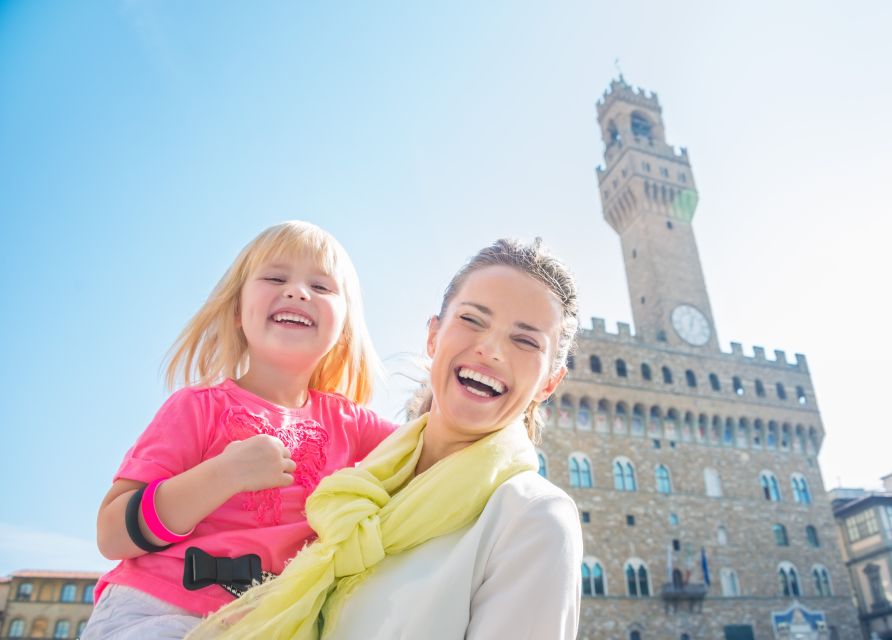
From Republic Square, the walk continues to Piazza della Signoria, Florence’s political center. This is one of the most rewarding outdoor stops because the square works as both a public space and an open-air sculpture display.
The guide explains the Florentine Republic, the Medici family, and Palazzo Vecchio. Those subjects help make sense of Florence’s grand buildings. This was not simply a city of wealthy merchants and pretty facades. It was a place shaped by political rivalry, powerful families, civic pride, and artistic competition.
Take time to look at the sculptures around the square. The setting gives you a useful preview of the art you will see later at the Accademia. Here, though, the statues belong to a public space, surrounded by city life. The square can be crowded, and it is easy for a group to spread out while people stop for photos.
That is where you should keep an eye on the guide. One guest, Paul, found that the guide sometimes walked well ahead without a flag or another clear marker. This is not a reason to reject the tour, but it is a practical warning. Stay close, especially when leaving the piazza.
Ponte Vecchio and the Vasari Corridor
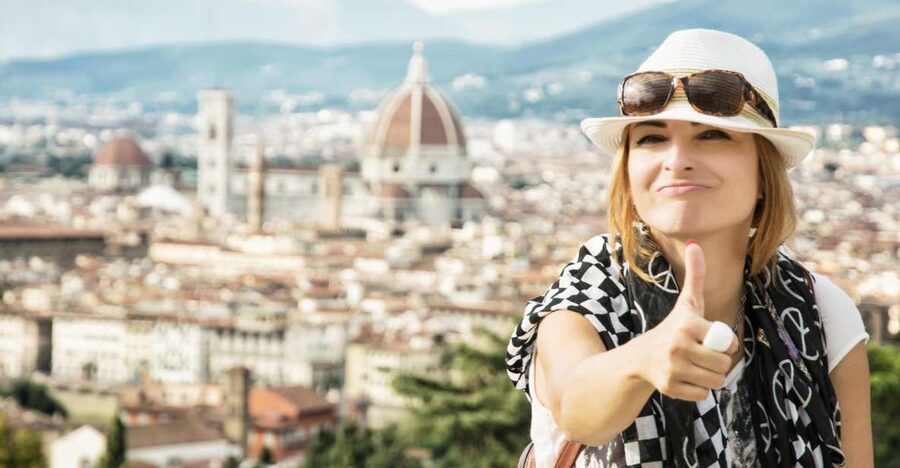
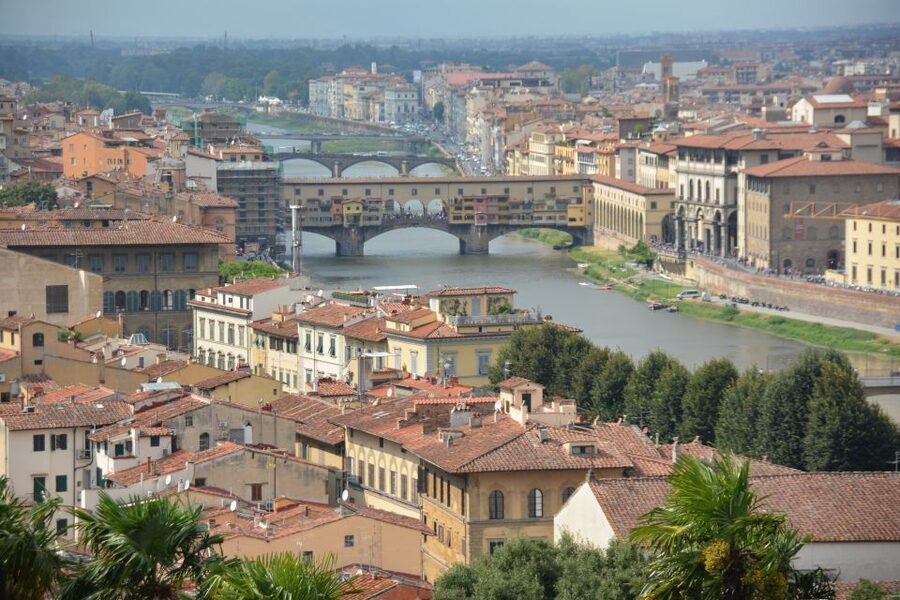
The route then reaches Ponte Vecchio, Florence’s best-known bridge. Its jewelry shops and tightly packed buildings make it unlike the broad stone bridges you may know from other European cities.
You will hear about the Vasari Corridor, the elevated passage that runs above the bridge. It was built as a private route for the Medici family, linking Palazzo Vecchio with Palazzo Pitti. Even without entering the corridor, knowing its purpose changes how you see the bridge. The upper passage was not decoration. It was a way for rulers to move through the city apart from ordinary street traffic.
Ponte Vecchio is often crowded, so this stop is more about seeing the structure and hearing its story than enjoying a quiet crossing. Keep your belongings secure and expect a slower walk through the shops.
A different way to spend the same Florence day:
- Florence: Skip-The-Line Uffizi Gallery Timed Entry Ticket
★ 4.5 · 27,832 reviews - Tuscany Day Trip from Florence: Siena, San Gimignano, Pisa and Lunch at a Winery
★ 5.0 · 21,634 reviews - The Best tour in Florence: Renaissance & Medici Tales – guided by a STORYTELLER
★ 5.0 · 12,316 reviews - Florence: Leonardo Interactive Museum Entry Ticket
★ 4.5 · 11,763 reviews
Palazzo Pitti and the Oltrarno side
After crossing the Arno, you reach Palazzo Pitti, the former residence of Florence’s grand dukes. The palace is presented from the outside on this tour, not as a separate museum visit. Its large scale gives you a sense of the power held by the families who lived there.
The route then continues through the Oltrarno. This part of Florence is described as more bohemian, with artists, workshops, and cafés. It provides a welcome change from the grand political and religious monuments in the city center.
I like having the Oltrarno included because it keeps the tour from becoming a nonstop procession of famous facades. You see a part of Florence associated with working studios and everyday life, even though the visit remains focused on central landmarks.
Do not expect a long café break or time to browse every workshop. The tour lasts only two and a half to three hours, and food and drinks are not included. Treat this stretch as a quick look at the neighborhood rather than a leisurely afternoon there.
Ponte Santa Trinita and the best bridge photograph
The group crosses back over Ponte Santa Trinita and stops for a view of Ponte Vecchio from the river. This is one of the tour’s most useful photo stops because the famous bridge is easier to appreciate from a little distance.
From this angle, you can see the bridge’s unusual buildings, the Arno, and the city’s layered riverfront. It is a brief pause, but it breaks up the walking and gives you a chance to take the classic Florence picture.
The guide also connects the view to the Vasari Corridor and the Medici route. That kind of explanation is valuable because it turns a photo stop into part of the city’s larger story.
Via Tornabuoni and Palazzo Strozzi
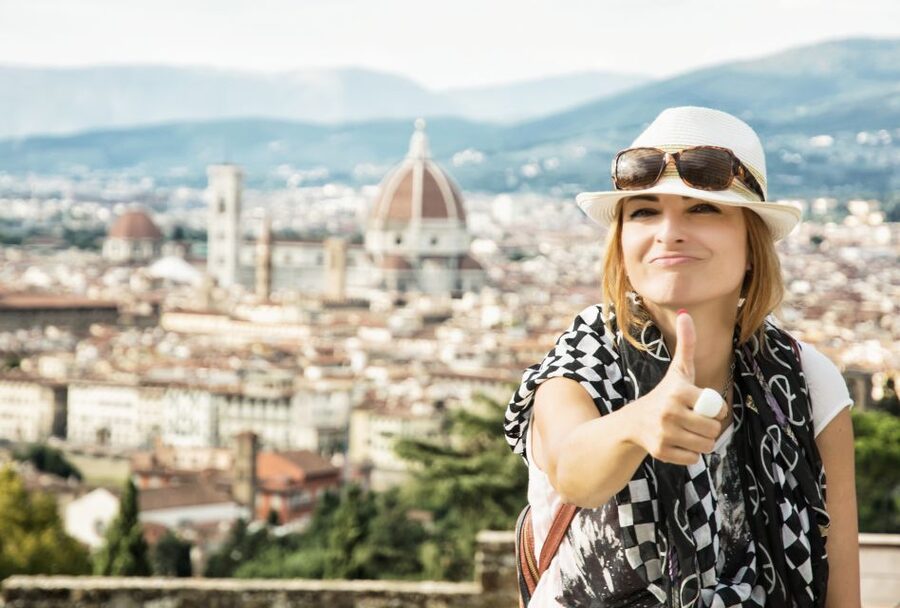
Back in the central city, the tour follows Via Tornabuoni, Florence’s fashion street. The polished storefronts and elegant windows show a different side of the city from the medieval bridge and political square.
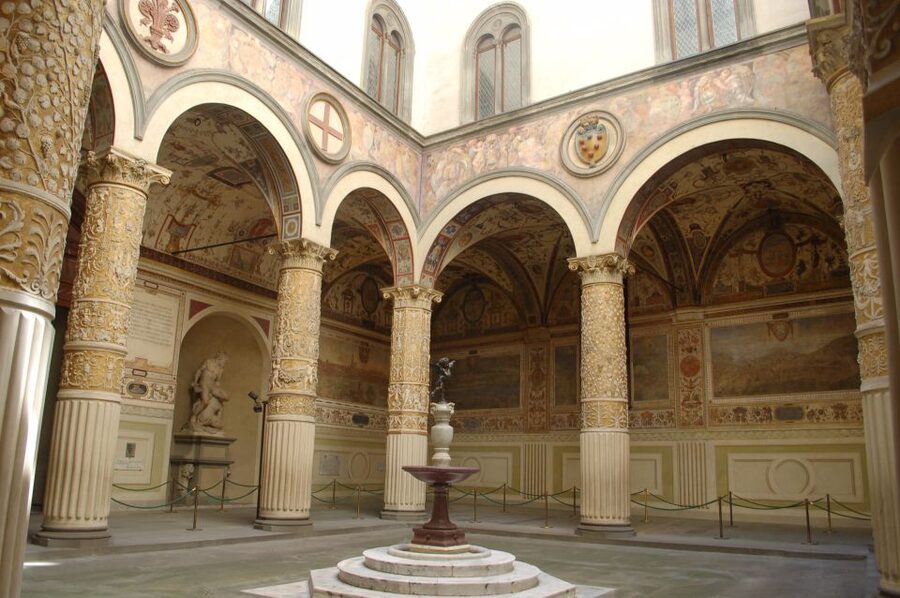
The walk passes through the courtyard of Palazzo Strozzi, one of Florence’s finest examples of Renaissance architecture. A courtyard visit is a good way to notice the balance, proportion, and strong geometric lines that define the period.
This section is less about entering a major attraction and more about seeing how Florence uses its streets and palace courtyards as public spaces. You may find the contrast interesting: one moment you are looking at luxury fashion, and the next you are standing inside a Renaissance palace setting.
The Duomo, Brunelleschi’s dome, and the Baptistery
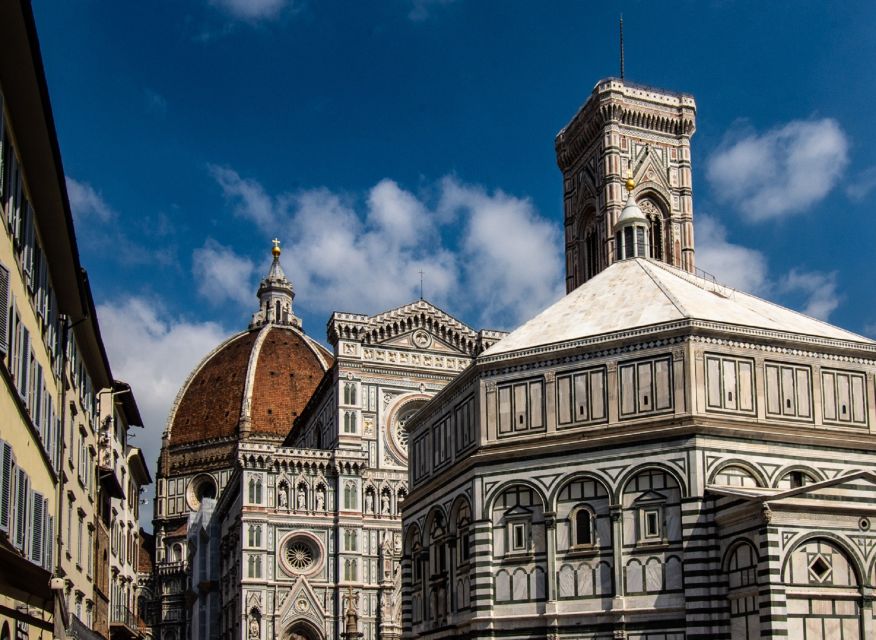
The next major stop is the Duomo complex. You will see Florence Cathedral, Brunelleschi’s famous dome, and the Baptistery. Even from outside, this is a powerful group of buildings, with its colored marble surfaces and monumental scale.
The guide explains the buildings as part of Florence’s religious and architectural identity. Brunelleschi’s dome is especially important because it represents both engineering skill and the ambition of Renaissance Florence. You do not need to climb the dome to appreciate its effect on the city skyline.
If the line is not too long, the tour may also enter the cathedral. This is an important qualification. The interior visit is not guaranteed, and the cathedral is not accessible on Sunday morning. If seeing the inside is a priority, check the day and timing before booking.
The tour does not include a dome climb or a separate Baptistery admission. You are seeing the main complex as part of a guided city walk, not taking a full Duomo museum tour.
Entering the Accademia to meet David
After the outdoor route, you walk to the Accademia Gallery. The ticket includes preferential entrance, often described as skip-the-line access. In practice, this means you avoid the regular ticket line, but it does not promise an instant entry if the museum is heavily crowded.
There is also a special note about the first Sunday of each month. Entrance is free then, but tickets cannot be reserved ahead of time, so entry is not guaranteed. I would avoid choosing that date if seeing David is the central reason for booking.
Inside, the focus is Michelangelo’s David and the Prisoners. The guide discusses the statues and Michelangelo’s life, helping you look beyond David’s fame. The Prisoners are particularly useful for understanding Michelangelo’s sculptural process, since their unfinished forms suggest figures still emerging from the stone.
The Accademia can be crowded. That does not make the visit pointless, but it does affect how long you can stand in front of the works and how easily you can hear. Carolyn found the museum crowded but still had a meaningful visit with her guide, Jessica. If Jessica is leading your departure, you can expect the art discussion to be an important part of the museum stop.
The museum visit is not a full survey of every gallery. It is a focused look at the pieces that matter most for a first visit. That focus is a good fit if you want context without spending half a day in an art museum.
How much walking and what to wear
The tour lasts roughly two and a half to three hours and uses city streets, squares, bridges, and museum floors. You should wear comfortable shoes, not stylish shoes that punish you after the first hour.
There is no included meal or drink stop, so bring water if you need it. Large bags and luggage are not allowed. You also need a passport or identity card, including identification for children.
Florence’s central streets can be busy, and the group may need to move together through crowded areas. Since one guide has been noted as walking ahead, keep the guide in sight and make sure children stay close. The tour is listed as wheelchair accessible, but the route includes historic streets and bridges, so you may still want to confirm the details for your specific needs.
Languages, guides, and group choices
The live guide is available in English, French, German, Italian, or Spanish. An audio guide is also included in those languages. That gives you some flexibility, though the quality of a walking tour depends heavily on how clearly the guide handles the group in real time.
The guide makes a real difference at the Accademia. Jessica received especially strong praise for making the David visit meaningful despite the crowds. Other guide names are not provided, so you should think of Jessica’s performance as a helpful example rather than a guarantee that she will lead your departure.
A private group is available if you want a slower pace or have specific interests. The standard small-group format is likely the better value for most first-time visitors who want the main sights explained in one organized route.
Is $117 a good value?
At $117 per person, this is not a budget stroll. The price includes a three-hour guided walk and the Accademia entrance, but not food, drinks, or extra museum admissions.
I see the value in the combination. You are paying for a guide through many of Florence’s key areas and for help with one of the city’s most difficult museum visits. If you tried to arrange the Accademia separately, then booked another guided walk for the historic center, your schedule could become more complicated.
The value is weaker if you already know Florence well or plan to spend several days exploring each neighborhood at your own pace. It is also less appealing if you want a long museum visit, a dome climb, or extensive free time at each stop.
For a first day in Florence, the price can make sense. You get your bearings, see the major sights, and finish with David. Just remember that the tour is an overview, not a slow study of every monument.
My practical verdict
I would book this tour if I had a short stay in Florence and wanted one efficient introduction to the city plus a guided Accademia visit. The route covers an impressive amount of ground, and the order of the stops gives the day a natural build toward David.
I would choose something else if I wanted a relaxed pace, a full visit inside the Duomo complex, or lots of time in the Oltrarno workshops and cafés. The tour works best for first-time visitors, art lovers who want help with Michelangelo, and anyone who prefers a guide to explain the city while they walk.
Book with comfortable shoes, carry only a small bag, and avoid the first Sunday of the month if David is non-negotiable. Keep close to the guide, especially in crowded piazzas. With those expectations, this is a strong Florence overview and a sensible way to put the city’s major sights into context.
FAQ
How long does the Florence and Accademia tour last?
The tour lasts approximately two and a half to three hours, depending on the scheduled departure and conditions at the sites.
What languages are available?
Live tours are available in English, French, German, Italian, and Spanish. An audio guide is also included in those languages.
Is Michelangelo’s David included?
Yes. The tour includes preferential entrance to the Accademia Gallery, where you see the original Michelangelo’s David and the Prisoners.
Is entry to Florence Cathedral guaranteed?
No. The cathedral interior is visited only if the line is not too long. The cathedral is also not accessible on Sunday morning.
Can I bring luggage or a large bag?
No. Luggage and large bags are not allowed. You should also bring a passport or identity card, including identification for children.
Can I cancel the tour or pay later?
You can cancel up to 24 hours in advance for a full refund. A reserve-now, pay-later option is also available.
Latest additions around Florence
- Florence: Cathedral Tour & Brunelleschi’s Dome Climb Ticket★ 5.0 · 3 reviews
- Palatina Gallery and Pitti Guided Tour in Florence★ 5.0 · 3 reviews
- Florence Uffizi Gallery Skip-the-line Tour w Art Historian Guide★ 5.0 · 3 reviews
- Private Tour: Pisa and Lucca from Florence★ 5.0 · 3 reviews
- San Gimignano Bike Tour (SOFT)★ 4.5 · 3 reviews
- Florence: Tour of Florence by rickshaw★ 5.0 · 3 reviews
- Center of Florence by golf cart★ 5.0 · 3 reviews
- From Florence: Tour to Siena and San Gimignano by Minivan★ 4.5 · 3 reviews
Accademia Gallery Tours, compared.

Timed Entrance Ticket to Michelangelo’s David
Read our review →
Michelangelo’s David Skip-the-Line Entry Ticket
Read our review →
Florence Accademia Gallery Tour with Entrance Ticket Included
Read our review →

Timed Entry Ticket to Michelangelo’s David & eBook
Read our review →
Skip the line: Uffizi and Accademia Small Group Walking Tour
Read our review →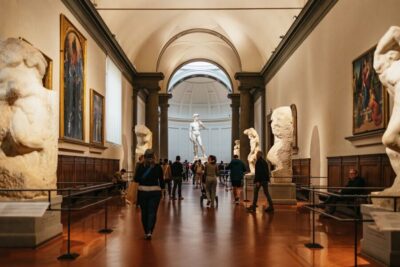

Accademia Gallery Guided Tour with Entry Ticket
Read our review →Browse the lists this tour appears in