
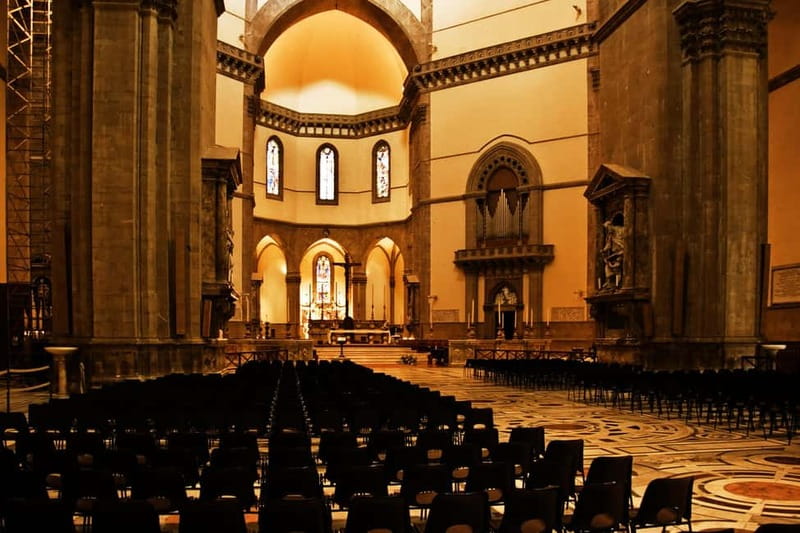
Reviewed · FLORENCE DUOMO TOURS
Florence Duomo Square Guided Walking Tour with Entry Tickets
The best part of this Florence tour is that it puts the city’s grandest collection of buildings into a clear story. In 90 minutes, your guide connects Brunelleschi’s red dome, Giotto’s Bell Tower, the Baptistery, and the Opera del Duomo Museum instead of leaving you to puzzle out the details alone.
I like the small-group format and the use of a radio headset, since Piazza del Duomo can be noisy and packed. I also like that the ticket covers the Baptistery and Opera del Duomo Museum, giving you more than a quick look at the cathedral facade. The main drawback is important: entry to the cathedral and a climb of Brunelleschi’s dome are not included.
- Brunelleschi’s red dome: Learn how Florence’s famous cupola changed medieval building design.
- Two valuable interiors: Enter the Baptistery of Saint John and the Opera del Duomo Museum with the tour ticket.
- Certified local guides: Guides such as Giacomo, Leonardo, Francesca, Silvia, and Martina have been praised for clear explanations and strong knowledge of Florence.
- Useful headset system: Hear the guide more easily while walking through a crowded square.
- Flexible ticket use: After first validation, the ticket remains valid for 72 hours for the listed sites.
- Short, central format: The 1.5-hour tour works well as a first introduction to Florence’s historic center.
In This Review
- Why Duomo Square Deserves a Guided Visit
- Meeting Near the Lindt Chocolate Shop
- The Duomo Complex: One Square, Several Stories
- Opera del Duomo Museum and Its Major Works
- Brunelleschi’s Red Dome from the Square
- Giotto’s Bell Tower and Florentine Gothic Design
- The Loggia del Bigallo and a Smaller Florence Detail
- Entering the Baptistery Through the Gates of Paradise
- What the Guides Add to the Experience
- Group Size, Timing, and Physical Comfort
- How to Get the Best Value From the Ticket
- Who Should Book This Duomo Tour?
- Should You Book the Florence Duomo Square Tour?
- FAQ
- How long does the Florence Duomo Square tour last?
- What does the tour ticket include?
- Is entry to Florence Cathedral included?
- Can I climb Brunelleschi’s dome on this tour?
- How long is the ticket valid after I use it?
- What languages are available?
- What should I wear for the tour?
Why Duomo Square Deserves a Guided Visit
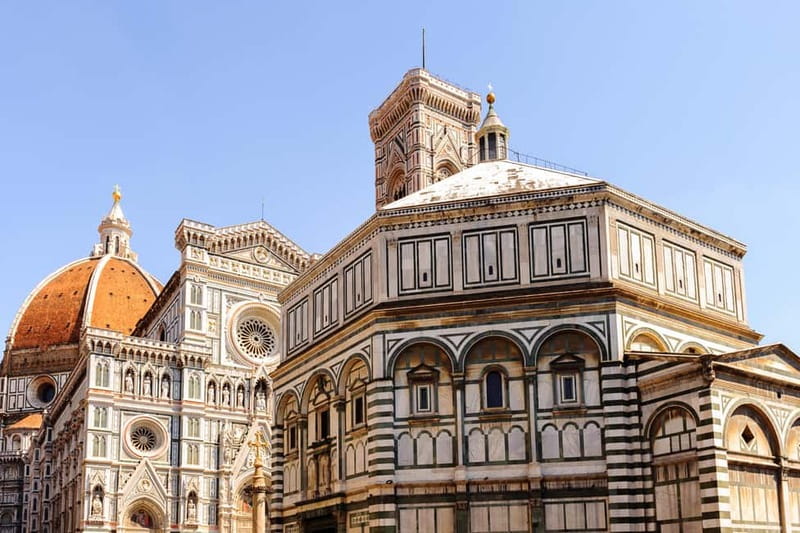
Florence’s Duomo Complex is not one monument. It is a tightly packed group of buildings created over centuries, each with a different job and a different look.
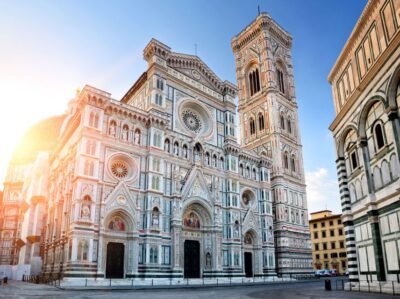
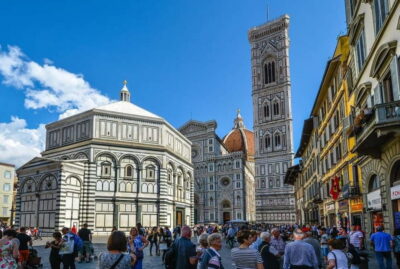
The Cathedral of Santa Maria del Fiore catches your eye first. Its white, green, and pink marble facade is hard to take in all at once. Then the red dome pulls your attention upward, followed by Giotto’s Bell Tower and the striped Baptistery across the square.
I find this is exactly the sort of place where a guide earns the fee. You can see the buildings by yourself, of course, but a good explanation helps you notice why the structures look different, how they fit together, and which artists shaped them.
This tour costs about $33 per person. That is a fair price for a certified guide, a 90-minute visit, and admission to the Baptistery and Opera del Duomo Museum. It is especially useful if you want a compact orientation before exploring Florence on your own.
The value depends on your expectations. If you want to climb the dome or spend a long time inside the cathedral, this is the wrong ticket. If you want the main architectural story and two included interiors without arranging several separate visits, it is a practical choice.
Meeting Near the Lindt Chocolate Shop
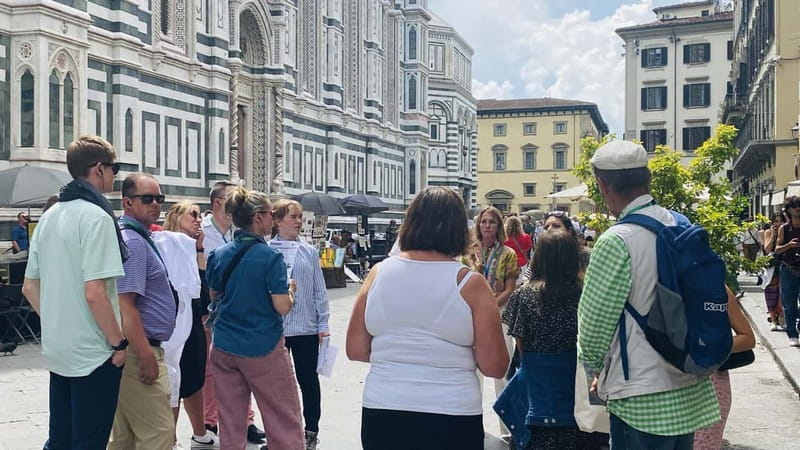
The listed meeting point is the Lindt Chocolate Shop Firenze Duomo, though the exact meeting location can vary with the option you book. Check your confirmation carefully rather than relying only on a general map pin.
The meeting area is in the heart of Florence’s historic center. Give yourself time to arrive, especially if you are coming from another part of town. Streets around the Duomo are easy to recognize but can be crowded, and a small change in the meeting point matters when you are trying to find a guide with a flag or sign.
One useful detail is the radio system. Your guide can speak while the group walks, and you can hear the explanation without standing shoulder to shoulder around the guide. This matters in Piazza del Duomo, where the square can be loud and packed with people.
Wear comfortable shoes. The tour is entirely on foot, and the paving around the complex is not the place for flimsy footwear. You should also bring a passport or ID card, as identification may be required for entry.
More Duomo climbs and cathedral visits:
- Florence: Duomo Cathedral Guided Tour
★ 3.9 · 5,970 reviews - Florence: Brunelleschi’s Dome Climb Entry Ticket & Duomo
★ 4.5 · 3,815 reviews - Florence: Duomo Guided Tour with Optional Dome Climb Upgrade
★ 4.1 · 3,706 reviews
The Duomo Complex: One Square, Several Stories
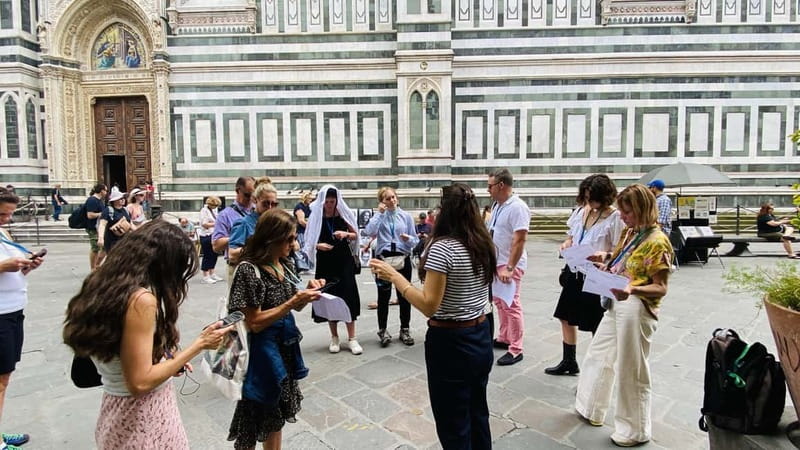
The tour begins around Piazza del Duomo, where your guide sets the scene before taking you to the individual buildings. This opening explanation is useful because the square can feel visually overwhelming.
Your guide discusses the cathedral, the dome, the bell tower, the Baptistery, and the museum as parts of one civic and religious project. Florence used this group of buildings to display its wealth, skill, and artistic ambition.
The guide may also point out the work of major artists connected with the complex, including Michelangelo, Donatello, Lorenzo Ghiberti, Luca della Robbia, and Arnolfo di Cambio. These names can blur together when you rush through Florence’s museums. Here, the setting gives them a clear connection.
A good guide also helps you read the buildings from the outside. Look at the marble patterns, the repeated arches, the sculptural details, and the way each structure meets the square. You will get more from later independent visits if you first understand what you are looking at.
Opera del Duomo Museum and Its Major Works
The Museo dell’Opera del Duomo was created to preserve and display works connected with the cathedral complex. It is not simply a side stop. For many people, it is the place where the Duomo story finally makes sense.
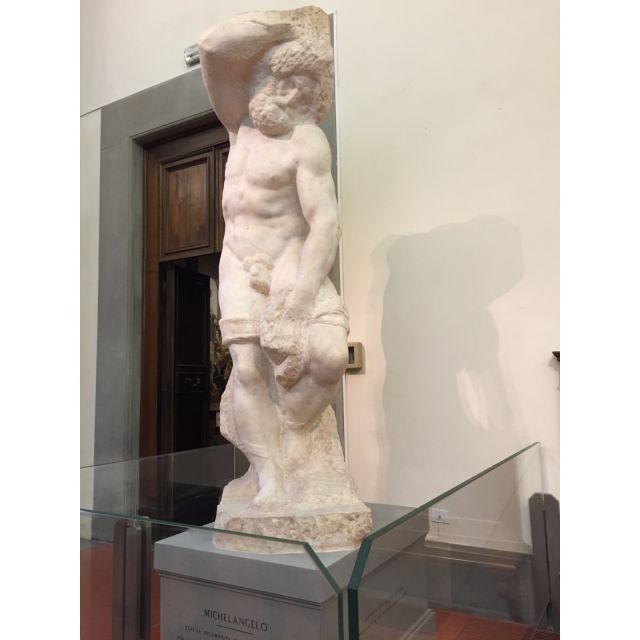
Inside, you can see important works associated with artists such as Michelangelo, Donatello, Ghiberti, and della Robbia. The museum protects works that once served outdoors or in the cathedral buildings, where weather, pollution, and time could damage them.
The guide provides an introduction to the museum and its art. That context is valuable because a sculpture can look like an isolated masterpiece when you do not know where it belonged or why it was made.
The museum also gives you a closer look at details that are difficult to study from the square. Outdoor sculpture is often placed high above eye level. Inside the museum, you can inspect the carving, expressions, folds, and technical skill more closely.
I like the way this stop balances the huge scale of the dome and cathedral. You move from a building that dominates the skyline to individual works made by hand. The change of scale keeps the tour from becoming a parade of facades.
Since the overall experience lasts only 1.5 hours, do not expect a long, leisurely museum visit. The guided portion is an introduction, not a full museum study. If you enjoy sculpture, plan to return during the ticket’s 72-hour validity period and give the collection more time.
Brunelleschi’s Red Dome from the Square
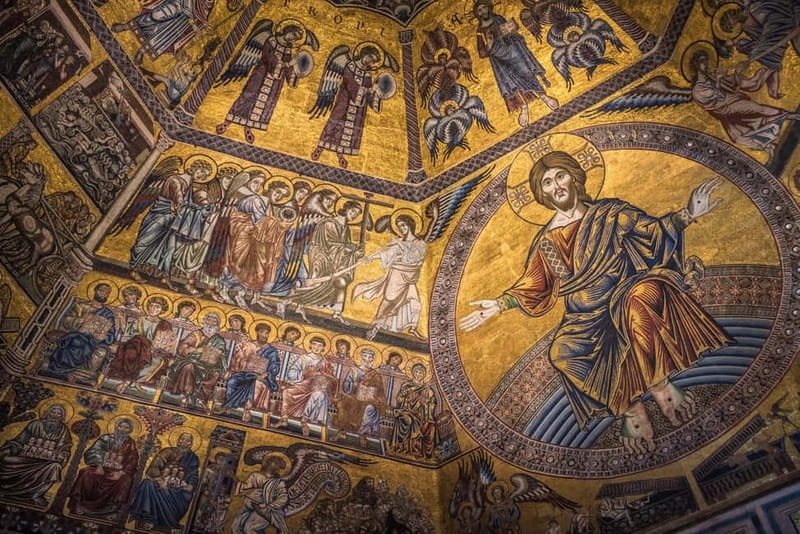
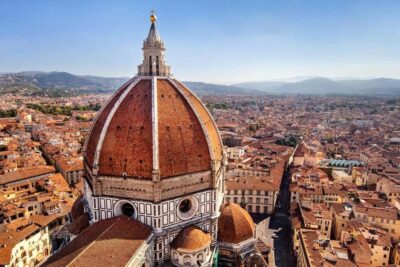
As you cross Piazza del Duomo, the dome becomes the tour’s main visual event. Filippo Brunelleschi completed it in 1436, and it was once known as the largest building in medieval Europe.
The guide explains why the cupola was such a major achievement. You learn about the building challenge and the ideas that allowed Brunelleschi’s design to rise above the cathedral. Supplied guide details and explanations can vary, but past guide performances have included visual aids about how the dome was built.
This is where a guide with an architecture background can add real value. Giacomo, for example, has been praised for explaining the church and dome in architectural detail while speaking clearly enough for a group to follow. That kind of explanation is far more useful than simply hearing that Brunelleschi built a famous dome.
The tour does not include the climb to the top. Some online descriptions and customer experiences connected with similar Duomo products refer to cupola climbs, but this activity specifically excludes the reservation to climb the cupola. Do not book it expecting panoramic views from the roof.
You can enter the cathedral separately, and the information provided says you do not need a ticket to visit it. You can go inside before or after the tour, subject to the cathedral’s own opening and entry arrangements. The included ticket is for the Baptistery and Duomo Museum.
More walking routes in Florence:
- Florence: Guided Walking Tour
★ 4.5 · 3,334 reviews - Skip the line: Uffizi and Accademia Small Group Walking Tour
★ 4.5 · 3,135 reviews - Florence: Guided Walking Tour
★ 4.6 · 1,602 reviews - Florence: Renaissance and Medici Tales Guided Walking Tour
★ 4.8 · 1,549 reviews
Giotto’s Bell Tower and Florentine Gothic Design
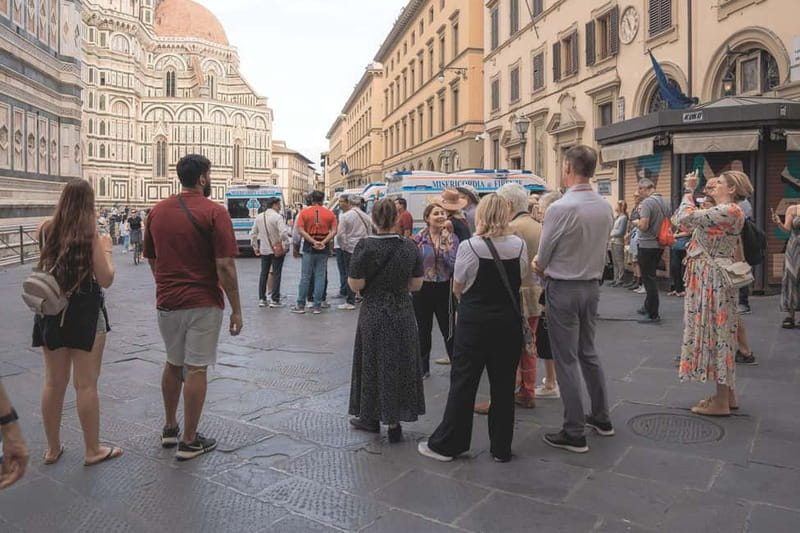
Giotto’s Bell Tower rises beside the Cathedral of Santa Maria del Fiore. It is one of the square’s most recognizable features and a fine example of Florentine Gothic architecture.
The tour focuses on the exterior, so you can study the tower without adding a climb to the scheduled route. Your guide explains its place in the Duomo Complex and points out the relationship between the tower, cathedral, and Baptistery.
This stop is a good reminder that Florence’s main religious buildings were designed as a group. The tower is not merely a tall building beside the cathedral. Its marble decoration, vertical shape, and sculptural treatment contribute to the visual balance of the entire square.
You may see people climbing the tower or discussing the dome climb during your visit. Those activities are not part of this booking. If you want a high viewpoint, you need a separate ticket or a different tour.
The Loggia del Bigallo and a Smaller Florence Detail
The exterior of the Loggia del Bigallo is an easy detail to miss when the cathedral and dome are competing for attention. Your guide walks you past this late Gothic building and shares its unusual historical connection.
This is one of the tour’s useful habits: it gives attention to smaller structures that you might otherwise ignore. Florence rewards that kind of looking. The main sights are spectacular, but the city’s character often appears in the buildings between them.
The Loggia del Bigallo also helps break up the focus on famous names. You are not only hearing about Brunelleschi and Michelangelo. You are seeing how the square worked as a public and religious space over time.
The stop is brief, but it adds texture to the walk. If you are already familiar with the Duomo, these side details may be the part you value most.
Entering the Baptistery Through the Gates of Paradise
The Baptistery of Saint John sits across from the cathedral. It is one of Florence’s oldest and most important religious buildings, and the tour takes you inside.
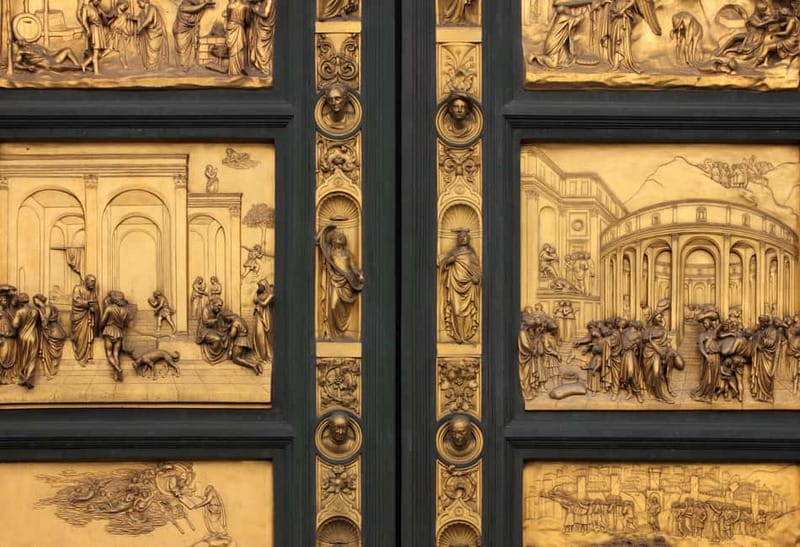
Your guide explains both the architecture and the artistic details. The entrance is associated with Ghiberti’s famous bronze doors, often called the Gates of Paradise. The name alone can make the doorway sound like a quick photo stop, but the panels deserve a closer look.
Inside, the Baptistery offers a different atmosphere from the bright marble exterior of the cathedral. Look upward toward the decorated interior and pay attention to the building’s shape, surfaces, and sense of age.
A dress code applies. Men and women must cover their knees and shoulders to enter places of worship and selected museums. Sleeveless or short-sleeved shirts may be accepted in some cases, but carrying a light shawl or long-sleeved layer is the safer plan.
The Baptistery is included in the ticket, and the ticket is valid for 72 hours after first validation for the listed locations. This gives you a useful option: stay with the guide for the introduction, then return later if the group moves faster than you would like.
What the Guides Add to the Experience
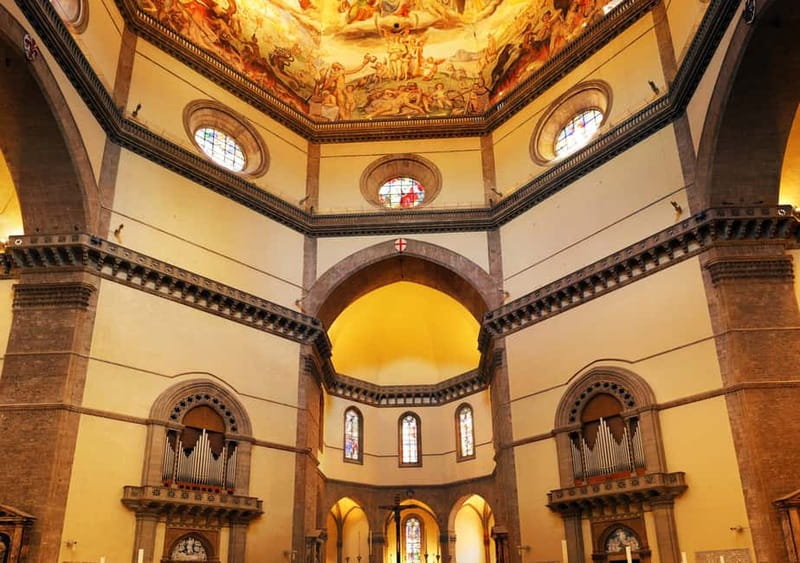
The guide is the most important variable in a short walking tour. The names associated with this experience include Giacomo, Leonardo, Francesca, Silvia, Martina, Thomas, and others.
Giacomo has been praised for clear explanations, a friendly manner, and architectural detail. Leonardo has been singled out for explaining the history of Florence and the construction of the dome, while also offering practical suggestions for seeing more of the city.
Francesca has been described as attentive during the walk, and Silvia and Martina have been praised for clear, well-spoken explanations. Thomas has been noted for connecting the Duomo to wider stories about Florence.
You cannot choose a particular guide unless the booking option allows it, so treat these names as examples of the level of guiding reported for the experience, not a guarantee of who you will meet.
The available languages are English, Italian, French, Spanish, and German. Confirm your language when you choose a time. A live guide and headset are included, which makes this more personal than an audio guide but more organized than wandering without a plan.
Group Size, Timing, and Physical Comfort
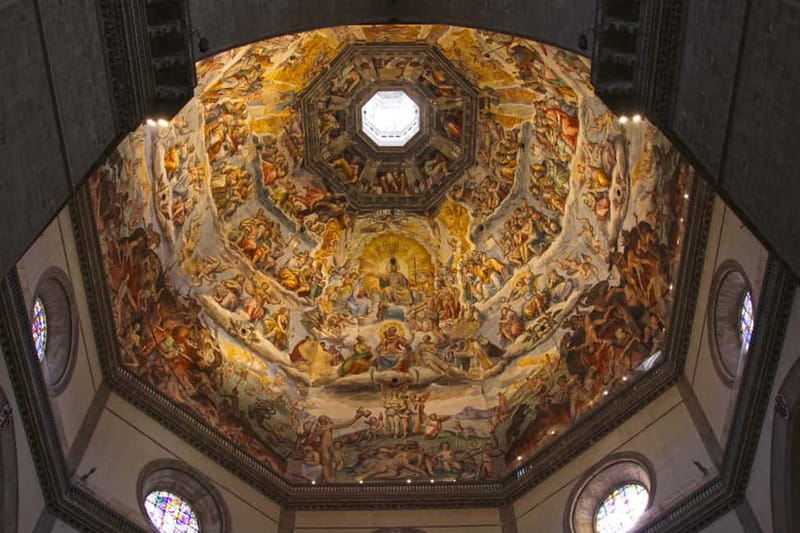
The tour is described as a small-group walk, though the exact group size may vary. A larger booking may be split into two groups. That is generally a good arrangement because it keeps the guide closer to the people listening.
The 1.5-hour length is a useful middle ground. You get a proper introduction without giving up half a day. It fits well on a first afternoon in Florence, before a museum reservation, or as a way to orient yourself at the beginning of a longer stay.
The tour is not wheelchair or stroller accessible. There are no elevators, and pets are not allowed. These restrictions matter because the route includes historic buildings and uneven access conditions.
The experience is not designed for a private, slow-paced inspection of every artwork. You will be moving between sites and listening as the group progresses. If you have limited mobility, need frequent pauses, or want extensive time in the museum, ask about suitability before booking.
How to Get the Best Value From the Ticket
To get the most from the $33 price, treat the guided hour and a half as your introduction, then use the 72-hour ticket validity for your own follow-up visits.
Do not rush away from the Opera del Duomo Museum if sculpture interests you. Return when you are fresh, and give yourself time to look at the works without trying to keep pace with the group.
You can also visit the Baptistery again within the ticket’s valid period, as long as it is among the locations covered by your ticket. The cathedral is a separate matter, but no ticket is needed for cathedral entry according to the supplied information. You can visit it before or after the tour.
Book this experience for the explanation, organization, and included interiors, not for a climb or a long cathedral visit. That simple distinction will prevent most disappointment.
Free cancellation is available up to 24 hours before the start time for a full refund. You can also reserve now and pay later, which helps if your Florence schedule is still taking shape. The operator may cancel if too few people are booked, in which case an alternative or full refund is offered.
Who Should Book This Duomo Tour?
I would recommend it to a first-time visitor who wants the Duomo Complex explained by a local guide rather than viewed as a series of impressive surfaces.
It also suits you if you have limited time in Florence. The central location, short duration, and included Baptistery and museum ticket make it easy to fit into a busy day.
Families may appreciate the compact format, though younger children still need to follow the dress rules and stay with the group. The headset should help them hear the guide in the crowded square.
Art and architecture fans will get the most from the museum and the explanations of Brunelleschi’s dome. The tour is also useful for anyone who wants to understand Florence’s major sights before visiting other museums and churches.
I would choose a different product if your main goal is climbing Brunelleschi’s dome, climbing Giotto’s Bell Tower, or spending extensive time inside the cathedral. Those are not included here.
Should You Book the Florence Duomo Square Tour?
Book this tour if you want a clear, guided introduction to Florence’s most important square for $33. The strongest reasons are the certified guide, the small-group setup, the headset, and entry to both the Baptistery and Opera del Duomo Museum.
Book it early in your Florence stay if possible. You can then use the 72-hour ticket validity to revisit the included sites at your own speed and enter the cathedral separately.
Skip it if you prefer to wander alone, already know the Duomo’s history, or specifically want a cupola climb. For everyone else, it is a sensible way to turn an overwhelming square into a sequence of memorable buildings, artists, and engineering challenges.
FAQ
How long does the Florence Duomo Square tour last?
The guided walking tour lasts 1.5 hours. Check availability for the exact starting times offered on your date.
What does the tour ticket include?
The ticket includes entry to the Baptistery of Saint John and the Opera del Duomo Museum of Florence. The guided walking tour around Duomo Square and a certified guide are also included.
Is entry to Florence Cathedral included?
No. Entrance to the cathedral is not included in this activity. The supplied information says you do not need a ticket to visit the cathedral and may enter before or after the tour.
Can I climb Brunelleschi’s dome on this tour?
No. The reservation to climb the cupola is not included. Book a separate cupola experience if reaching the top is your main goal.
How long is the ticket valid after I use it?
After first validation, the ticket is valid for 72 hours for the locations listed for the ticket. This allows you to use the included access on your own time within that period.
What languages are available?
Live guides are available in English, Italian, French, Spanish, and German. A radio system is provided so you can hear the guide during the walk.
What should I wear for the tour?
You should wear comfortable shoes and dress modestly for places of worship and selected museums. Knees and shoulders must be covered for both men and women. A light shawl or long-sleeved top is useful if your clothing may not meet the rules.
More Skip-the-Line Entries
- Florence: Skip-The-Line Uffizi Gallery Timed Entry Ticket
★ 4.5 · 27,832 reviews - Florence: Timed Entrance Ticket to Michelangelo’s David
★ 4.6 · 16,983 reviews - Florence: Michelangelo’s David Skip-the-Line Entry Ticket
★ 4.5 · 12,764 reviews - Florence: Leonardo Interactive Museum Entry Ticket
★ 4.5 · 11,763 reviews
Latest additions around Florence
- Florence: Cathedral Tour & Brunelleschi’s Dome Climb Ticket★ 5.0 · 3 reviews
- Palatina Gallery and Pitti Guided Tour in Florence★ 5.0 · 3 reviews
- Florence Uffizi Gallery Skip-the-line Tour w Art Historian Guide★ 5.0 · 3 reviews
- Private Tour: Pisa and Lucca from Florence★ 5.0 · 3 reviews
- San Gimignano Bike Tour (SOFT)★ 4.5 · 3 reviews
- Florence: Tour of Florence by rickshaw★ 5.0 · 3 reviews
- Center of Florence by golf cart★ 5.0 · 3 reviews
- From Firenze | Chianti day tour in a classic car★ 5.0 · 3 reviews
Florence Duomo Tours, compared.
Brunelleschi’s Dome Climb Entry Ticket & Duomo
Read our review →
Duomo Guided Tour with Optional Dome Climb Upgrade
Read our review →
Skip-the-Line Duomo, Baptistery, Giotto Bell Tower
Read our review →
Best of Florence: Small Group Tour Skip-the-Line David & Accademia with Duomo
Read our review →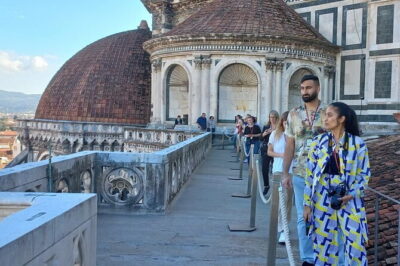
Florence Skip-the-Line Duomo Tour with Guide & Brunelleschi Dome
Read our review →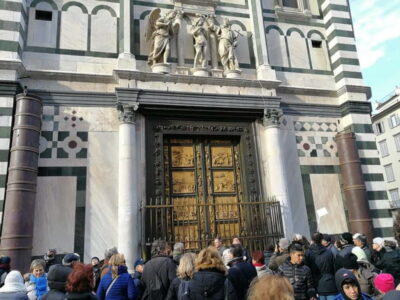
Duomo Area Tour and Brunelleschi Dome Climb Ticket
Read our review →Browse the lists this tour appears in