
Reviewed · MUSEUMS
Florence: Bargello Museum Guided Tour with Entry Ticket
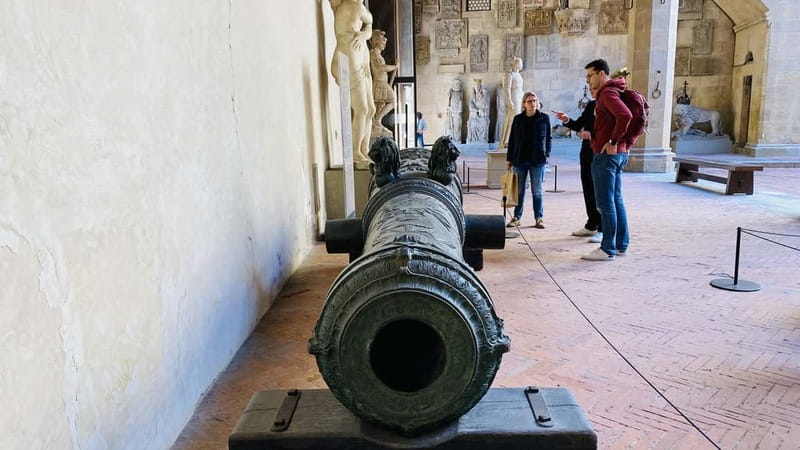
The Bargello is Florence’s answer to the Uffizi for sculpture lovers. Inside this stern medieval palace, you’ll see Donatello’s David and St. George, Michelangelo’s Bacchus and Tondo Pitti, and Renaissance works displayed in rooms that once served the city’s rulers and jailers. The building itself is part of the story, not just a box for art.
I like the reserved entrance, which removes one small worry in busy Florence. I also like the guide’s focus: instead of racing through every room, you get context for the major works and a clear path through the collection. The guide named Matt has been especially praised for pointing out details that can be missed, even by people returning to the museum.
One caution: the information for this experience gives both a one-hour duration and a tour description of about two hours. Check the exact time when you book. If you want a long, unhurried museum visit, you may still want to return on your own after the guided portion.
In This Review
- Key points to know before you book
- Why the Bargello deserves time in Florence
- Meeting near the palace and getting inside
- The Bargello’s civic past before the sculptures
- Donatello and the early Renaissance
- Michelangelo’s Bacchus and Tondo Pitti
- Ammannati, Cellini, and Giambologna
- Ivories, bronzes, and older works
- The Della Robbia rooms upstairs
- How long the visit really takes
- What the $44.41 price buys you
- Who will get the most from this tour
- Small practical details that make a difference
- Should you book the Bargello guided tour?
- FAQ
- How much does the Bargello guided tour cost?
- How long does the tour last?
- Which artworks are included?
- What languages are available?
- Is the tour wheelchair accessible?
- Can I cancel the booking?
Key points to know before you book
- Donatello gets the attention he deserves: See David and St. George in a museum especially strong in early Renaissance sculpture.
- Michelangelo is a major focus: The guide highlights four works, including Bacchus and Tondo Pitti.
- The palace has had several lives: It served as a civic headquarters, the seat of the Podesta, a police residence, and a prison.
- You get reserved museum entry: This is useful during Florence’s busiest periods, though museum delays or strikes can still affect access.
- The tour covers more than famous names: Expect Cellini, Ammannati, Giambologna, Verrocchio, the Della Robbia family, ivories, bronzes, and Roman and Byzantine pieces.
- Language and group choices are flexible: Tours are offered in English, Italian, French, Spanish, and German, with a private group option available.
Why the Bargello deserves time in Florence
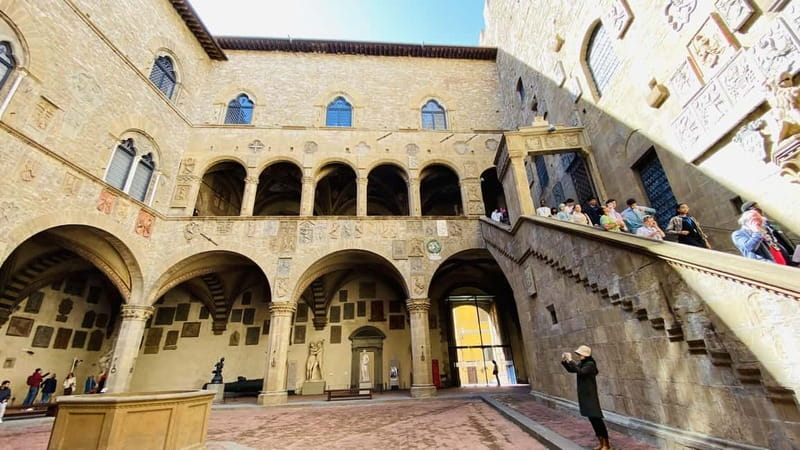
Many first-time visitors build their Florence plans around the Uffizi and Accademia. That makes sense, but the Bargello offers something different. Its collection is centered on sculpture, and the setting feels more intimate than Florence’s larger art museums.
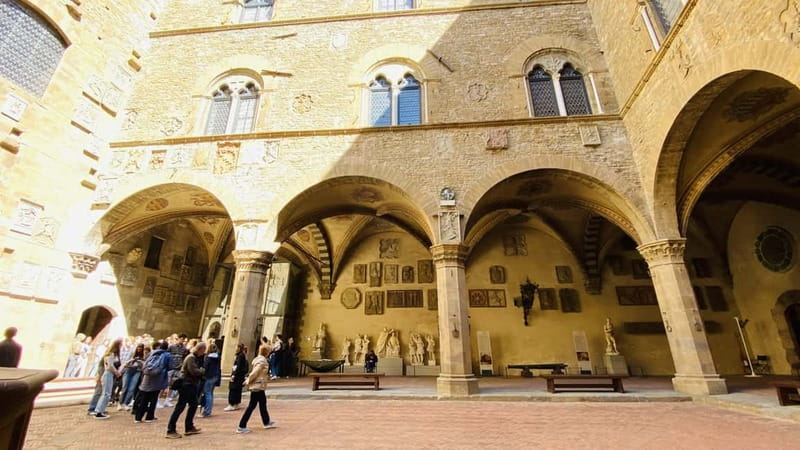
You enter a former palace with a serious civic past. The building first served as the headquarters of the Capitano del Popolo, then became the residence of the Podesta, the city’s chief authority. Later, it housed the head of the police and was used as a prison.
That sequence matters because it changes how you read the rooms. You are not simply moving from one white gallery to another. The art is tied to a working government building with a long, sometimes grim public life.
A guide helps you make sense of that setting quickly. The Bargello contains many artists, materials, and periods, and a short visit can otherwise become a parade of names. A professional local guide gives you a route and explains why certain pieces deserve your attention.
More skip-the-line entries:
- Florence: Skip-The-Line Uffizi Gallery Timed Entry Ticket
★ 4.5 · 27,832 reviews - Florence: Timed Entrance Ticket to Michelangelo’s David
★ 4.6 · 16,983 reviews - Florence: Michelangelo’s David Skip-the-Line Entry Ticket
★ 4.5 · 12,764 reviews
Meeting near the palace and getting inside
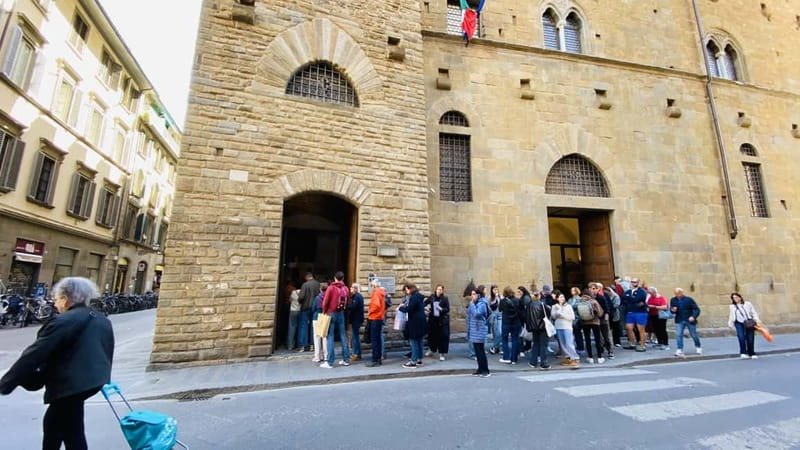
The starting point can vary with the option you choose. The listed meeting choices are near the equestrian statue of Cosimo I de’ Medici and the National Museum of Bargello, so you should check the precise meeting instructions before setting out.
The tour ends back at the meeting point. There is no hotel pickup, drop-off, food, drink, or transportation included, so plan to reach the museum yourself.
Your reserved admission is the practical heart of the booking. Florence can feel crowded, especially in peak periods, and having an entry reservation means you do not need to begin your visit by waiting for a standard museum ticket. Skip-the-line access is promised except in cases such as delays or strikes connected with museum management.
Bring a passport or identity card, and wear comfortable shoes. The museum and tour are wheelchair accessible. Pets and smoking are not allowed.
The Bargello’s civic past before the sculptures
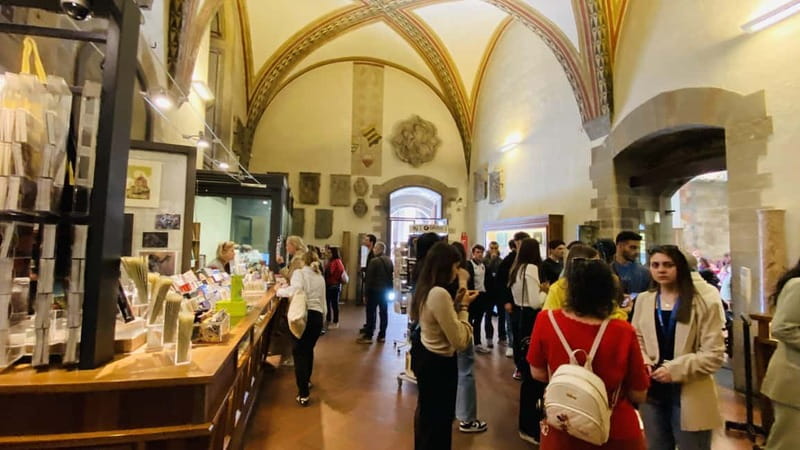
The opening explanation gives you a useful frame for the visit. Before looking at Michelangelo or Donatello, you learn what the Bargello was built to do.
Its earlier role as a headquarters and official residence explains the palace’s authority. Its later use by the police and as a prison adds another layer. You can then see the museum not only as a place that preserves art, but as a building shaped by power, law, and punishment.
This part should appeal to you if you like Florence beyond its postcard image. The guide does not begin with a random list of artists. Instead, the tour connects the museum to the city that produced and used it.
The setting also gives the visit a manageable scale. You are not trying to cover an entire palace complex at the speed of a large museum tour. The stated route is designed to show the collection’s main sections without making you feel buried under information.
Donatello and the early Renaissance
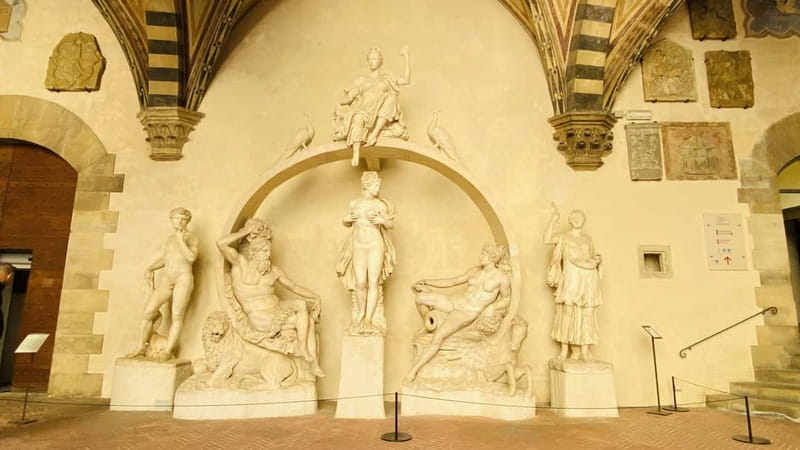
Donatello is one of the central reasons to choose the Bargello. The tour highlights his David and St. George, two works that help explain the early Renaissance’s renewed interest in the human figure.
You will not just be told that Donatello was important. The guide can help you look closely at what makes his sculpture different from earlier medieval work, and how the pieces fit into the development of Renaissance art. That kind of explanation is useful because sculpture often requires more careful looking than a large painted scene.
The tour also covers Verrocchio. Seeing Donatello and Verrocchio within the same visit gives you a stronger sense of artistic change than seeing either name in isolation.
I especially like this part for visitors who know the broad outline of the Renaissance but want a clearer connection between famous artists. The museum gives you a concentrated look at sculpture’s development, and the guide keeps the discussion tied to objects in front of you.
More museums worth an hour:
- Florence: Leonardo Interactive Museum Entry Ticket
★ 4.5 · 11,763 reviews - Florence Accademia Gallery Tour with Entrance Ticket Included
★ 4.5 · 6,148 reviews - Uffizi Gallery Small Group Tour with Guide
★ 4.5 · 4,923 reviews - Florence: Accademia Gallery Guided Tour
★ 4.6 · 4,156 reviews
Michelangelo’s Bacchus and Tondo Pitti
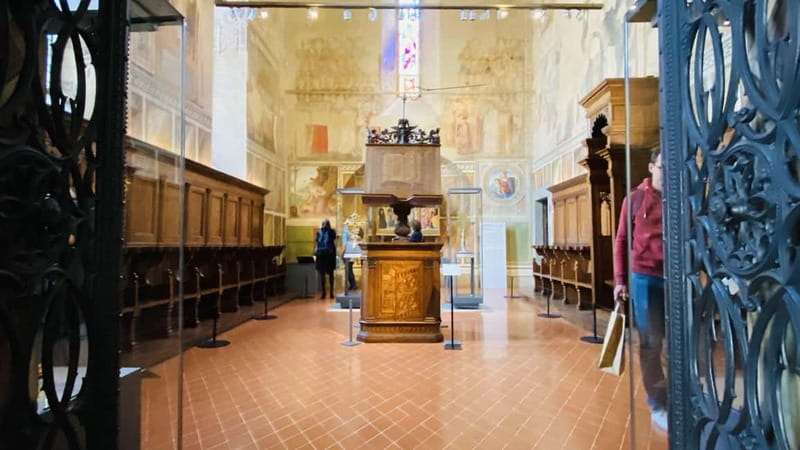
The ground-floor rooms focus on Tuscan works from the 16th century, with particular attention given to four Michelangelo masterpieces. Bacchus and Tondo Pitti are two of the named highlights.
A guided explanation is useful here because Michelangelo’s fame can make it easy to stop at recognition. You see the name, take a photograph if allowed, and move on. A guide can slow that process down and direct your eye to the work itself.
The Bargello’s Michelangelo section is also a good reason to book a tour rather than rely only on a quick independent visit. The museum holds many important objects, and without a plan you may not know which rooms deserve the most time.
The exact balance depends on the guide and the group. A strong guide will focus on the main sculptures while still keeping the tour moving. Matt, one of the named guides associated with the experience, is noted for showing repeat visitors things they had missed on earlier visits. That is a useful sign for anyone who has already been to the Bargello and wants more than a basic introduction.
Ammannati, Cellini, and Giambologna
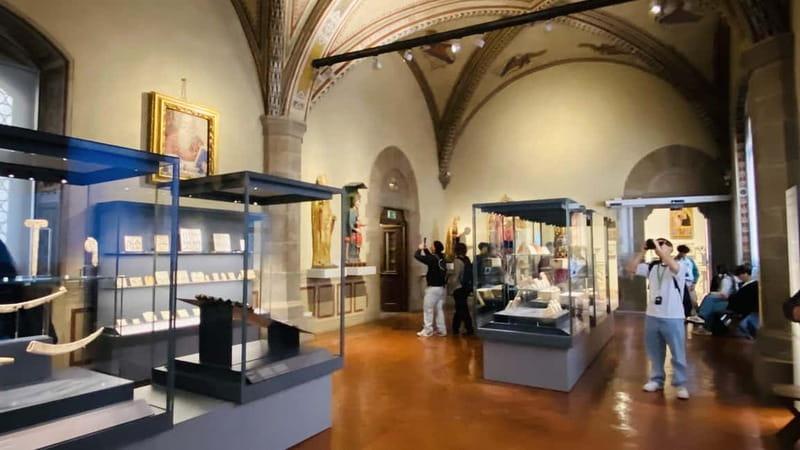
The tour does not stop with the two most famous names. You will also see work by Bartolomeo Ammannati, Benvenuto Cellini, and Giambologna.
This broader selection keeps the visit from becoming a Michelangelo and Donatello checklist. The later Renaissance rooms show how artists handled the human body, movement, decoration, and technical skill in different ways.
Cellini is also part of Florence’s strong tradition of precious metalwork and sculpture. Giambologna brings another important voice to the collection. Ammannati adds to the picture of 16th-century Tuscan art.
You do not need a detailed art-history background to follow this section. The point of having a guide is to explain the differences in plain language, then give you enough time to look for yourself.
Ivories, bronzes, and older works
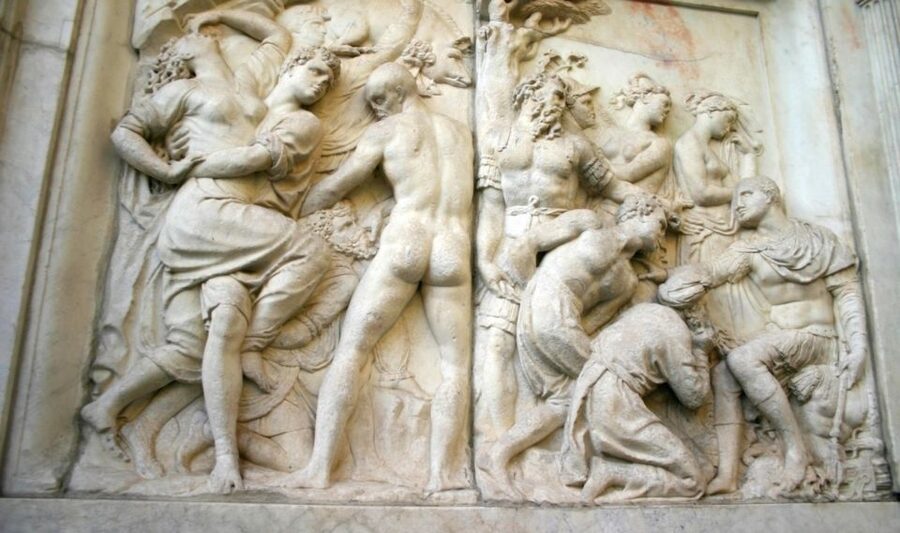
The Bargello also holds precious ivories and bronzes, including Roman and Byzantine examples. These objects broaden the visit beyond the familiar marble masterpieces.
This is where a guided route can save you time. Smaller works may not announce themselves as loudly as a famous statue, and it is easy to pass them by. A guide can point out why a material, technique, or earlier tradition matters.
The Roman and Byzantine pieces also help place Renaissance art in a longer story. Florence’s artists did not work in a vacuum. They inherited, studied, and responded to earlier objects and styles.
If your main interest is only Michelangelo, this section may feel less urgent. If you enjoy craft, materials, and the way collections bring different centuries together, it adds real value to the visit.
The Della Robbia rooms upstairs
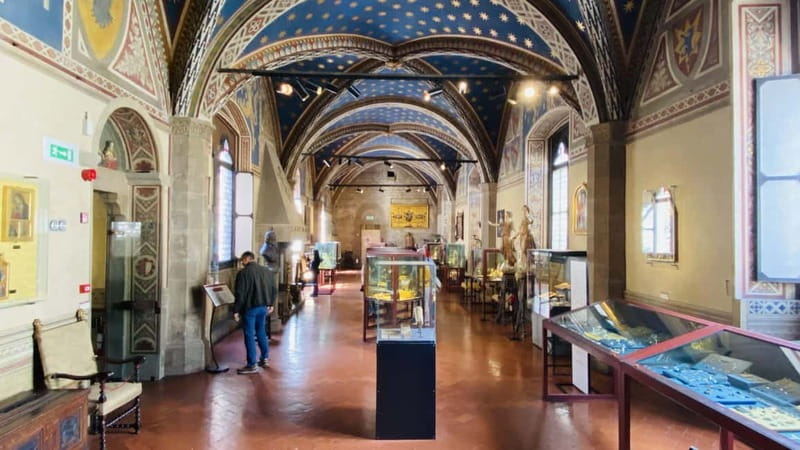
The second floor is devoted to glazed terracotta by Andrea and Giovanni Della Robbia. This is one of the clearest changes of mood in the tour.
The Della Robbia family is known for its glazed terracotta work, and these rooms let you see that medium as a major artistic form rather than a side note. The guide explains the works while moving you through a section with its own identity.
This stop is important because it breaks up the run of marble and bronze sculpture. You get a different surface, color treatment, and sense of decoration. It also gives the tour a satisfying final chapter after the earlier Renaissance and 16th-century rooms.
The upstairs section may be less familiar to you than Michelangelo or Donatello. That is exactly why the guide’s role matters. Without some background, you might give these rooms only a quick glance. With context, they become part of the museum’s larger story.
How long the visit really takes
The booking information lists a duration of one hour, while the description says the tour takes about two hours and describes that as the right amount of time to see the collection without feeling overwhelmed.
Treat the exact timing as something to confirm before booking. Tour length can affect the rest of your Florence plans, especially if you are also visiting the Duomo, Uffizi, or Accademia on the same day.
The stated plan gives you a guided route through the main rooms, then allows you to return to anything you want to see again after the tour. That is a good arrangement. You get a clear introduction first, then can spend extra time with a sculpture that caught your attention.
If your schedule is tight, the shorter published duration may fit neatly into your day. If the tour runs closer to two hours, allow room for that. The Bargello is near other central Florence sights, but you still need time to walk between appointments.
What the $44.41 price buys you
At $44.41 per person, this is not the cheapest way to enter a museum. You are paying for more than the ticket: the price includes a certified guide, a radio system, and reserved entrance to the Bargello.
The value depends on how you like to visit museums. If you prefer to read every label and set your own route, a standard admission may suit you better. If you want help finding the important works and understanding their place in Florence’s art story, the added cost can be sensible.
The radio system is a small but useful inclusion. In a group, you can hear the guide without needing to stand shoulder to shoulder or miss half a sentence while looking at a sculpture.
The strongest value comes from the guide’s interpretation. The most highly praised quality is clear, attentive explanation, with the guide adjusting the level so it does not feel too basic or too academic. That matters at the Bargello, where the collection is compact but packed with names and objects.
A private group is available if you want a more personal format. The standard tour may be the better deal for solo visitors and couples, while a private option can make sense for families or groups who want more control over the pace.
Who will get the most from this tour
I would choose this experience if you want a focused introduction to Renaissance sculpture and do not want to spend your first visit guessing what matters.
It is a good fit for:
- First-time visitors to Florence who want more than the city’s headline museums
- Art lovers interested in Donatello, Michelangelo, Verrocchio, and Renaissance sculpture
- Visitors who value a local guide’s explanation over a self-guided route
- People visiting during a busy season who want reserved entry
- Repeat Bargello visitors who want to notice details they missed before
- Families or mixed-interest groups who need a clear, manageable visit
You might skip it if you already know the Bargello well and prefer a long, silent visit at your own pace. You may also want a different plan if your only priority is seeing one particular sculpture and leaving quickly.
The tour is offered in English, Italian, French, Spanish, and German. Check the language and starting time when you select your option.
Small practical details that make a difference
The meeting point may change depending on the option booked, so do not rely only on a general map pin. Confirm the exact location and arrive with your identification ready.
The activity requires a minimum number of participants to operate. If that number is not reached, the tour can be canceled after confirmation, with an alternative or full refund offered.
You can cancel up to 24 hours in advance for a full refund, and the reserve-now, pay-later option lets you hold a place without paying immediately. Those terms are useful when your Florence schedule is still shifting.
Wheelchair access is available. Comfortable shoes are still a wise choice because you will be walking through the museum and getting to the meeting point on foot.
Should you book the Bargello guided tour?
Book it if you want a short, organized visit built around Donatello and Michelangelo, with enough context to understand the palace and the wider collection. The reserved entry and radio system add practical value, while the guides’ clear explanations are the main reason to choose this over simply buying admission.
I would be especially inclined to book if this is your first Bargello visit, if Florence is crowded, or if you have already been once and want to catch details you missed. Just confirm the actual duration and meeting point, since the published timing is inconsistent.
If you prefer complete freedom or plan to spend half a day studying every room, buy your ticket and visit independently. For most people with limited time, though, this is a sensible way to meet Florence’s sculpture collection without getting lost in it.
FAQ
How much does the Bargello guided tour cost?
The listed price is $44.41 per person. It includes the certified guide, radio system, and reserved entrance ticket to the Bargello Museum.
How long does the tour last?
The activity information lists one hour, while the description says the guided visit takes about two hours. Check the exact duration and starting time when you select your booking option.
Which artworks are included?
The tour highlights Donatello’s David and St. George, Michelangelo’s Bacchus and Tondo Pitti, plus three other Michelangelo works. It also covers pieces by Ammannati, Cellini, Giambologna, Verrocchio, Andrea Della Robbia, and Giovanni Della Robbia.
What languages are available?
The live guide is available in English, Italian, French, Spanish, and German.
Is the tour wheelchair accessible?
Yes. The tour is described as wheelchair accessible.
Can I cancel the booking?
Yes. You can cancel up to 24 hours before the activity for a full refund. The tour also offers a reserve-now, pay-later option.
Latest additions around Florence
- Florence: Cathedral Tour & Brunelleschi’s Dome Climb Ticket★ 5.0 · 3 reviews
- Palatina Gallery and Pitti Guided Tour in Florence★ 5.0 · 3 reviews
- Florence Uffizi Gallery Skip-the-line Tour w Art Historian Guide★ 5.0 · 3 reviews
- Private Tour: Pisa and Lucca from Florence★ 5.0 · 3 reviews
- San Gimignano Bike Tour (SOFT)★ 4.5 · 3 reviews
- Florence: Tour of Florence by rickshaw★ 5.0 · 3 reviews
- Center of Florence by golf cart★ 5.0 · 3 reviews
- From Firenze | Chianti day tour in a classic car★ 5.0 · 3 reviews
Museums, compared.
Skip-The-Line Uffizi Gallery Timed Entry Ticket
Read our review →

Florence Accademia Gallery Tour with Entrance Ticket Included
Read our review →


Accademia Gallery Guided Tour with Entry Ticket
Read our review →
Golf Cart Tour to Fiesole Roman Theatre and Museum
Read our review →
Uffizi Gallery and Accademia Gallery Guided Tour
Read our review →Browse the lists this tour appears in