
Reviewed · WORKSHOPS
Florence: Artisanal Crafts and Workshops Guided Tour
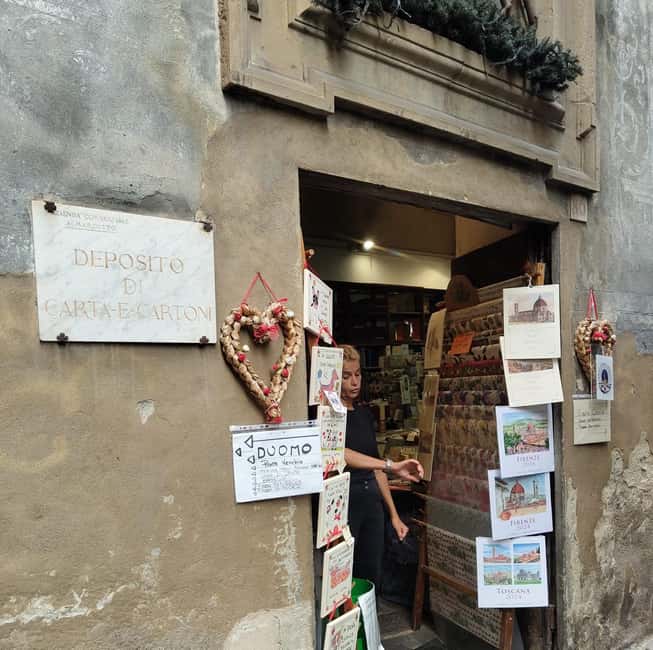
Florence’s finest craft is often found away from its famous paintings. This private tour takes you into working workshops where artisans shape leather, gold, stone, perfume, books, and carved frames. The most unusual stop is the Lastrucci family workshop, one of the few places still making Florentine commesso, a painstaking picture-making technique using fitted semi-precious stones.
I like the tour’s personal pace and its mix of famous names with smaller working studios. I also like that Martina Cappello asks about your interests and can shape the experience around them. The main drawback is practical: three hours goes quickly, and the historic workshops require moderate walking and are not suitable for wheelchair users or people with mobility impairments.
In This Review
- Key points
- Why Florence’s workshops are worth your time
- Starting at Piazza della Repubblica
- Leatherwork at Scuola del Cuoio
- Goldsmithing and Florentine stone pictures
- Santa Maria Novella and the roots of Florentine perfume
- Carving and the frames of Bottega d’Arte Maselli
- Bookbinding and the quieter side of craft
- The guide and the private-tour advantage
- Is $116 a fair price for three hours?
- Who should book this Florence craft tour?
- Practical details before you go
- Should you book it?
- FAQ
- How long does the Florence crafts tour last?
- What language is the tour offered in?
- Is this a private tour?
- Where is the meeting point?
- Is the tour suitable for wheelchair users?
- Can I buy products during the tour?
Key points
- Florentine commesso in the Lastrucci workshop: See semi-precious stones fitted together to form detailed images.
- Leather inside Santa Croce: Visit the respected Scuola del Cuoio and learn how Florence’s leather tradition continues today.
- Santa Maria Novella pharmacy: Enter a Dominican-founded establishment dating to 1221, with deep links to Florentine perfumery.
- Several craft traditions in one walk: Goldsmithing, bookbinding, perfume, carving, and leatherwork all appear within a three-hour route.
- A private tour with Martina Cappello: The guide can ask about your interests beforehand and set a comfortable walking pace.
- A good choice for repeat visitors: This tour shows Florence through its makers, not only through its major museums and churches.
Why Florence’s workshops are worth your time
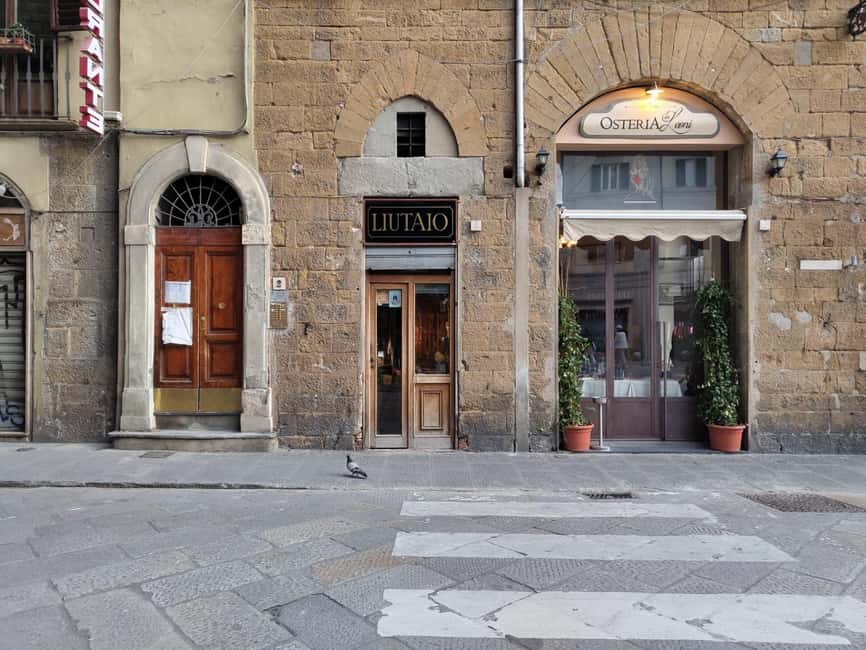
Florence is easy to admire from the outside. You see the cathedral dome, walk across the Ponte Vecchio, and study Renaissance paintings. Yet the city’s artistic identity also lives in smaller rooms where a craftsperson works with a hand tool, a piece of leather, or a stone no bigger than a coin.
That is the focus here. You are not simply passing a shop window. You are being introduced to traditions that grew alongside Florence’s art. A painted panel needed a fine frame. A Renaissance noblewoman needed jewelry and precious stones. A church or palace needed carved details, leather goods, books, and fragrant preparations.
I find this useful because it connects the grand art you see in Florence with the practical skills behind it. The tour also gives you a better eye for objects in museums and historic churches. After seeing how much effort goes into a leather edge, a gold setting, or a fitted stone image, you look at decorative work differently.
The format is a private group, with a live guide in English or Spanish. That matters here. Workshops are small, and a private visit allows more room for questions than a large group would. Martina’s approach, based on the available details, includes asking about your interests before meeting and keeping a comfortable pace.
More Florence options worth a look before you decide
- Florence: Pasta Cooking Class with Unlimited Wine
★ 4.9 · 10,285 reviews - Florence Pizza or Pasta Class with Gelato Making at a Tuscan Farm
★ 5.0 · 6,801 reviews - Florence: Pasta & Tiramisu Cooking Class with Unlimited Wine
★ 4.9 · 6,708 reviews
Starting at Piazza della Repubblica
The stated meeting point is beside the obelisk in Piazza della Repubblica, a central place that is easy to locate in Florence. Hotel pickup and drop-off are included, so confirm the exact arrangement when booking, especially if you prefer to begin at your accommodation rather than at the square.
The tour lasts three hours. That is long enough to build a clear picture of Florentine craft, but not long enough to linger at every stop. Think of it as an introduction to several traditions rather than a hands-on workshop course.
Wear comfortable walking shoes. You will move through central Florence and enter historic premises where floors, doorways, and stairs may not be modern or spacious. Food and drinks are not allowed inside the workshops, and photography is usually permitted, though you should follow each artisan’s instructions.
Leatherwork at Scuola del Cuoio
The leather portion takes place at the renowned Scuola del Cuoio inside the Santa Croce complex, with possible related stops at the Il Bisonte leather goods premises or Stefano Bemer’s refined boutique. The exact combination can vary, so the experience is best understood as an introduction to Florence’s leather tradition rather than a guaranteed visit to every named location.
Scuola del Cuoio is especially meaningful because it links craft with place. You are seeing leatherwork inside one of Florence’s major religious complexes, not in a detached modern showroom. The setting helps explain why leather became such an important Florentine trade and why careful finishing still matters.
Pay attention to the surfaces and edges. Fine leatherwork is not only about a handsome finished bag or belt. It is also about cutting, joining, polishing, and handling the material so it wears well. The tour gives you a chance to see the work close up and understand that the price of a handmade object reflects time and skill, not just a fashionable label.
This stop may appeal to shoppers, but you do not need to buy anything to enjoy it. Personal purchases are not included in the tour price, and shopping expenses are your responsibility. I would treat any purchase as optional. The real value is the explanation of how the object was made.
Goldsmithing and Florentine stone pictures
Goldsmithing has a long place in Tuscany, reaching back to the Etruscan age. On this tour, you may see the craft in smaller workshops, including Arlo Haisek’s studio and the Lastrucci family workshop in the old Spedale di San Francesco.
The Lastrucci visit is one of the most distinctive parts of the route. The family is among the very few still working with the Florentine commesso technique. Instead of painting an image, the craftsperson cuts and fits pieces of colored stone so closely that they create a picture.
This process rewards patience rather than speed. The stones must be selected for color and pattern, then shaped to fit a particular design. The result can resemble a painting, but the material itself supplies the color. If you have seen ornate stone panels in Florentine churches or palaces, this stop can help you understand the labor behind them.
The goldsmithing visits add a different kind of precision. Here, the focus is on small-scale work with precious metals and semi-precious stones. You might find the contrast useful: commesso depends on carefully fitted stone surfaces, while goldsmithing depends on delicate settings and fine metalwork.
Because these are working studios, the experience may feel more intimate than a museum display. At the same time, small workshops can be less comfortable for people with limited mobility. The tour is specifically not suitable for wheelchair users or people with mobility impairments.
A different way to spend the same Florence day:
- Florence: Skip-The-Line Uffizi Gallery Timed Entry Ticket
★ 4.5 · 27,832 reviews - Tuscany Day Trip from Florence: Siena, San Gimignano, Pisa and Lunch at a Winery
★ 5.0 · 21,634 reviews - Florence: Timed Entrance Ticket to Michelangelo’s David
★ 4.6 · 16,983 reviews - Florence: Michelangelo’s David Skip-the-Line Entry Ticket
★ 4.5 · 12,764 reviews
Santa Maria Novella and the roots of Florentine perfume
Santa Maria Novella is more than a fragrance shop. The establishment was founded in 1221 by Dominican friars, and its apothecary tradition is tied to the early preparation of medicines, soaps, scents, and other products.
Entering this historic pharmacy gives the tour a different mood from the metal and leather workshops. Here, presentation matters as much as production. Bottles, rooms, and fragrances connect modern shopping with an old tradition of apothecary practice.
The story of Renato Bianco adds a memorable Florentine link. He was a master perfumer connected with Catherine de’ Medici and carried the fragrance Aqua della Regina to the French court. The name recalls the elegance associated with Florence, but the useful point for you is that perfume was part of the city’s cultural and commercial reach.
You will also hear about perfumery at Aquaflor, where room fragrances can be purchased. This is a clear shopping opportunity, so set your expectations before arriving. The tour fee does not cover purchases, and you are under no obligation to buy.
If you enjoy scent, this may be one of the most engaging stops. If you prefer visual crafts, it may feel less substantial than the stone or leather workshops. That balance is part of the route’s appeal: it does not treat Florentine artistry as one single skill.
Carving and the frames of Bottega d’Arte Maselli
At Bottega d’Arte Maselli, the subject shifts to carving and decorative frames. The workshop is known for ornate frames and has framed works associated with artists such as Leonardo da Vinci and Rosso Fiorentino.
A frame can disappear when you look at a painting. This stop encourages you to notice it. In the Renaissance and later periods, a frame was not always a plain border. It could shape the way a work was presented, add status to a room, and require its own artistic design.
The carving visit rounds out the tour well because it shows how Florence’s art depended on supporting crafts. The city’s masterpieces did not exist in isolation. They were displayed, protected, and finished by specialists in wood, stone, metal, leather, and other materials.
As with the other workshops, the attraction is seeing the work in an artisan setting. You may not receive a full demonstration of every stage, since the whole experience covers several crafts in only three hours. Still, the guide’s explanations help you understand what you are looking at rather than simply moving from one attractive object to the next.
Bookbinding and the quieter side of craft
Bookbinding is another part of Florence’s handmade tradition included in the tour. It may receive less attention than leather, gold, or perfume, but it helps show how craft shaped daily cultural life.
A handmade book is both a useful object and a work of design. The cover, paper, stitching, and finish all affect how it feels in your hands. Florence’s bookbinding tradition fits naturally with the city’s long connection to scholarship, religious texts, art, and fine publishing.
This stop may be especially worthwhile if you enjoy stationery, old books, or careful handwork. It is also a reminder that the tour is not only about luxury goods. These traditions served practical needs while also allowing artisans to show skill and taste.
The provided details do not specify a single bookbinding workshop by name, so I would not book this expecting a particular studio or a hands-on lesson. Instead, consider it one part of a broad look at Florentine craftsmanship.
The guide and the private-tour advantage
Martina Cappello is the named experience provider, and the tour is designed as a private group. The strongest practical benefit is flexibility. You can discuss your interests before meeting, and the pace can be adjusted to suit the group.
That matters on a craft tour. One person may want to ask about leather construction, while another may care more about perfume or stonework. In a private setting, the guide can spend more time where your curiosity is strongest.
Martina has been praised for explaining both the history and the present-day culture of the artisans. That combination is important. A tour that only tells old stories can make craft seem frozen in the past. A tour that only shows products can miss the reasons these traditions matter in Florence.
English and Spanish are available. The guide also helps make sense of unfamiliar techniques. You may not remember every Italian term, but you should leave knowing why commesso is unusual, why Santa Maria Novella matters, and why handmade leather costs more than factory production.
Is $116 a fair price for three hours?
At $116 per person, this is not a low-cost walking tour. The value depends on what you want from Florence.
You are paying for a private experience, a live guide, access to historic workshops, admission to Scuola del Cuoio and the Lastrucci family workshop, and a visit to Santa Maria Novella. Hotel pickup and drop-off are also included. Food, drinks, and shopping are not.
For someone who would otherwise spend several hours browsing craft stores without understanding what makes the work special, the price can make sense. The guide provides context and access, and the private format gives you room to ask questions.
The cost may feel high if you mainly want to shop or if you prefer a standard museum visit. It is also less suitable if you want a long, slow look at one craft. This tour covers many subjects quickly. I would choose it for range, access, and conversation, not for a single extended demonstration.
Who should book this Florence craft tour?
I would recommend it most strongly to first-time visitors who want a different side of Florence, repeat visitors who have already seen the major museums, and anyone who enjoys handmade objects.
It also suits shoppers who want to understand quality before buying leather, jewelry, perfume, or carved goods. You can make better decisions when you know what kind of labor and material goes into an object.
Art students, designers, photographers, and people interested in traditional trades may find plenty to think about. Photography is usually allowed, but you should ask before photographing an artisan or a work in progress.
Families can consider it if everyone is comfortable with walking and quiet workshop visits. The tour is not designed for anyone with mobility limitations, and the historic locations may create physical barriers. The private format is helpful for group needs, but it does not remove those access limits.
Book with the expectation that the route may include several possible workshop locations. Since the tour’s strength is its broad look at Florentine making, the precise balance of stops may depend on workshop availability and your interests.
Practical details before you go
The meeting point is Piazza della Repubblica beside the obelisk. Hotel pickup and drop-off are included, so confirm the exact pickup plan before the tour begins.
The duration is three hours, with starting times based on availability. Comfortable walking shoes are essential because the route involves a moderate amount of walking.
English and Spanish tours are offered. Photography is usually allowed, but workshop rules come first. Do not bring food or drinks into the workspaces.
You can cancel up to 24 hours in advance for a full refund, and the reserve-now, pay-later option keeps you from paying at the time of booking. Those policies are useful if your Florence plans are still shifting.
Should you book it?
Book this tour if you want Florence to feel like a city of working makers, not only a collection of famous monuments. The Lastrucci commesso workshop, Santa Maria Novella, and Scuola del Cuoio give the route real character, while Martina’s personal approach adds flexibility.
Skip it if you dislike shopping-related stops, want a long hands-on class, or have difficulty walking through historic buildings. At $116, the tour earns its price through private guiding and workshop access, but it is not meant to be a bargain introduction.
For the right visitor, this is a smart way to spend three hours. You leave with more than a list of shops. You gain a clearer sense of how Florentine art has always depended on patient, skilled hands.
FAQ
How long does the Florence crafts tour last?
The tour lasts three hours.
What language is the tour offered in?
The live tour is available in English or Spanish.
Is this a private tour?
Yes. The experience is operated as a private group tour.
Where is the meeting point?
The meeting point is Piazza della Repubblica, next to the obelisk. Hotel pickup and drop-off are included, so confirm the pickup details when booking.
Is the tour suitable for wheelchair users?
No. The tour is not suitable for wheelchair users or people with mobility impairments because the workshops are in historic locations and involve moderate walking.
Can I buy products during the tour?
Yes, personal shopping is possible at places such as Aquaflor, but shopping expenses are not included in the tour price. Food and drinks are also not included.
Latest additions around Florence
- Florence: Cathedral Tour & Brunelleschi’s Dome Climb Ticket★ 5.0 · 3 reviews
- Palatina Gallery and Pitti Guided Tour in Florence★ 5.0 · 3 reviews
- Florence Uffizi Gallery Skip-the-line Tour w Art Historian Guide★ 5.0 · 3 reviews
- Private Tour: Pisa and Lucca from Florence★ 5.0 · 3 reviews
- San Gimignano Bike Tour (SOFT)★ 4.5 · 3 reviews
- Florence: Tour of Florence by rickshaw★ 5.0 · 3 reviews
- Center of Florence by golf cart★ 5.0 · 3 reviews
- From Firenze | Chianti day tour in a classic car★ 5.0 · 3 reviews
Workshops, compared.

Florence Pizza or Pasta Class with Gelato Making at a Tuscan Farm
Read our review →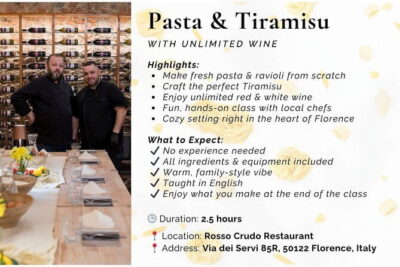
Pasta & Tiramisu Cooking Class with Unlimited Wine
Read our review →
Cooking Class and Lunch at a Tuscan Farmhouse with Local Market Tour from Florence
Read our review →
Cooking Class Pasta & Tiramisu Making Unlimited Wine
Read our review →
Florence Cooking Class The Art of Making Gelato & Authentic Pizza
Read our review →Browse the lists this tour appears in