
Reviewed · FLORENCE WALKING TOURS
Experience Florence’s Art and Architecture on a Walking Tour
Florence’s historic center is compact, but its story is not. In about two hours and 15 minutes, this walk links Santa Maria Novella, the cathedral, Orsanmichele, Piazza della Signoria, and Santa Croce, with side trips into shopping streets and the city’s old wine-window tradition. It is a fast way to get your bearings before choosing which museums and churches deserve your time.
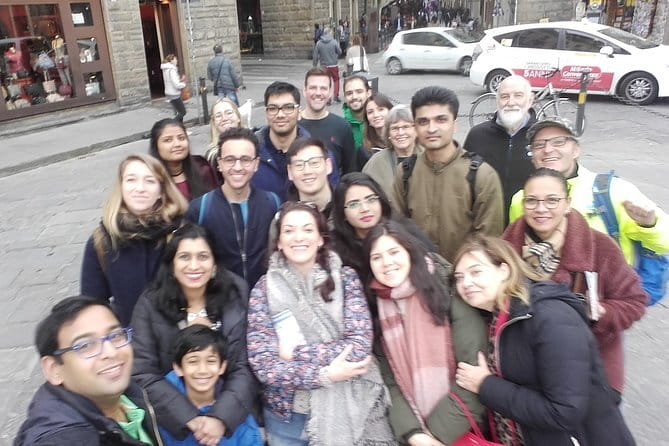
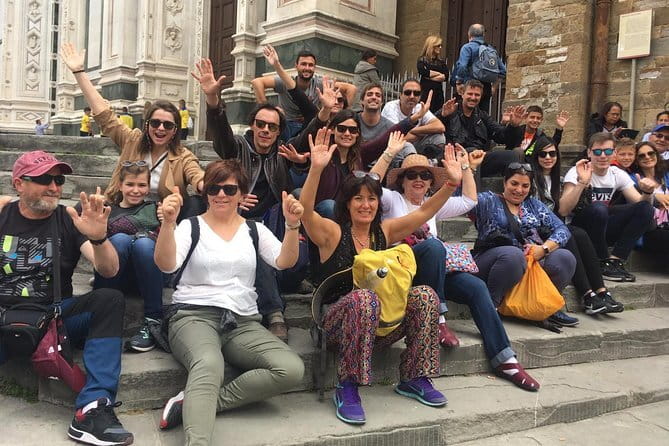
I like two things right away. First, the price is remarkably low at $3.63, with the guide’s work left to your discretion through a tip. Second, the route gives you both famous sights and smaller details, including the wine windows that are easy to miss on your own. Guides such as Ludi, also called Ludovica, and Natalia are praised for clear English, lively storytelling, and useful tips about food, toilets, viewpoints, and less-visited corners.
The main concern is sound. This is an outdoor walking tour through busy streets, and a few people have struggled to hear the guide even with a mini-speaker. Groups are meant to be no larger than 20, but one reported August departure grew beyond 40. If you need quiet conditions or a headset, this may not be the best fit.
In This Review
- Key points at a glance
- What this Florence walk does best
- Santa Maria Novella starts the story
- Via de’ Tornabuoni and Florence’s polished side
- Piazza della Repubblica reveals Roman Florence
- The cathedral complex: Florence’s unforgettable skyline
- Orsanmichele brings art into a former market building
- Piazza della Signoria is Florence’s outdoor history book
- Santa Croce closes the walk with famous names
- The guides make the difference
- Group size, sound, and the real cost
- Who should book this walk
- Should you book it?
- FAQ
- Where does the Florence walking tour start?
- What time does the tour begin?
- Where does the tour finish?
- How long does the walk last?
- Is the tour offered in English?
- Are admission tickets included?
- How many people can join the tour?
- Can I cancel for a full refund?
Key points at a glance
- A brisk Florence orientation: Cover seven central stops in one morning without paying a full museum-tour price.
- Excellent guide variety: Ludi, Natalia, and other English-speaking guides bring different personal stories and local suggestions.
- Big sights without long admissions: See the cathedral, Uffizi exterior, Ponte Vecchio area, and Palazzo Vecchio without entrance tickets included.
- Small details matter: Watch for Florence’s old wine windows and less-touristy streets along the way.
- A tip-based bargain: The listed $3.63 fee is low, but you should budget a fair tip for the guide.
- Hearing is the weak point: Ask to stay close to the guide, especially in crowded squares.
What this Florence walk does best
This is an orientation tour, not a museum visit. You will not go inside the cathedral complex, Uffizi Gallery, Palazzo Vecchio, or Santa Croce as part of the standard route. Instead, the guide explains what you are looking at, points out the details worth remembering, and helps you understand how Florence fits together.
That distinction matters. Florence can feel like a catalogue of masterpieces at first: a striped cathedral, a grand palace, a statue of David, a church filled with famous names. A good guide gives those sights a sequence. You begin near the main railway station and finish in Santa Croce, crossing the old center as the city’s religious, commercial, and political story unfolds.
The walk is offered in English and begins at 10:30 a.m. in front of Santa Maria Novella. It ends at Santa Croce, so you finish in a useful part of town rather than circling back to the starting point. From there, you can continue sightseeing, find lunch, or visit the basilica if you buy a separate admission.
The route is designed for most people who can walk for just over two hours. It uses city streets and public squares, with no special fitness requirement stated. Wear comfortable shoes, and remember that Florence’s stone streets can be hard on your feet.
More walking routes in Florence:
- Florence: Guided Walking Tour
★ 4.5 · 3,334 reviews - Skip the line: Uffizi and Accademia Small Group Walking Tour
★ 4.5 · 3,135 reviews - Florence: Guided Walking Tour
★ 4.6 · 1,602 reviews
Santa Maria Novella starts the story
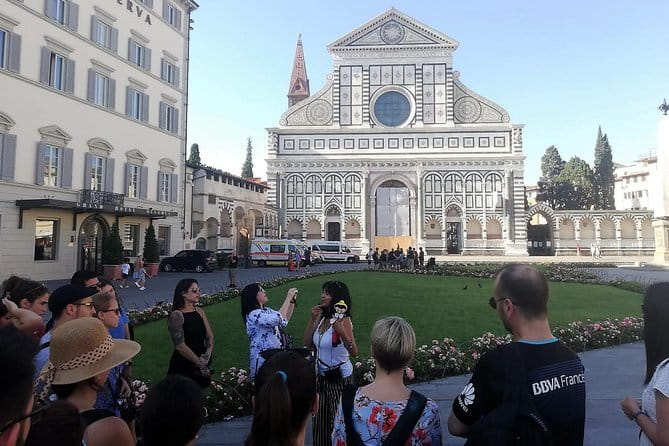
The opening stop is the Basilica of Santa Maria Novella, where the guide spends about 10 minutes explaining the church’s story. This is a strong starting point because the basilica sits close to the train station, making the meeting point easy to reach by public transportation.
The church’s exterior is one of Florence’s clearest introductions to order and proportion. The pale marble design gives you an early lesson in the city’s love of geometric façades, while the interior holds centuries of religious art. Since the stop is outside and the admission ticket is not included, you should not expect a full church visit during the tour.
Still, the explanation helps you decide if you want to return later. The walk gives you a quick first look, then keeps moving. That pace is useful if you have only one morning or want to save your detailed interior visits for after the guide has shown you where everything is.
Via de’ Tornabuoni and Florence’s polished side
The next 10-minute section follows Via de’ Tornabuoni, Piazza Antinori, Palazzo Strozzi, and Piazza Santa Trinita. This is Florence’s elegant shopping and palace district, a change from the religious focus of the opening stop.
Here, the guide connects architecture with the city’s wealthy families and public life. Palazzo Strozzi is especially useful as a reference point because it helps you see how a powerful family announced its status through scale, stone, and urban position.
I like this part because it prevents the tour from becoming a simple list of churches. Florence was also a city of merchants, bankers, fashion, and family rivalry. A short walk through these streets shows how those forces shaped the center you see today.
The stop is brief, so look closely while you walk. You may not get a long pause at every building, but the route gives you enough context to return later with a better eye.
Piazza della Repubblica reveals Roman Florence
Piazza della Repubblica gets only about five minutes, but it covers an important layer of the city. The guide discusses Florence in Roman times, adding an older foundation beneath the Renaissance image most people carry with them.
The square is broad and open compared with the narrow streets nearby. That change in scale helps you understand how Florence has been altered over time. It is also a handy point for getting your map bearings, since several major streets meet here.
This is one of the faster stops, so you should treat it as a short history lesson rather than a full visit. The value is in the connection between ancient Florence and the later city around it.
A different way to spend the same Florence day:
- Florence: Skip-The-Line Uffizi Gallery Timed Entry Ticket
★ 4.5 · 27,832 reviews - Tuscany Day Trip from Florence: Siena, San Gimignano, Pisa and Lunch at a Winery
★ 5.0 · 21,634 reviews - Florence: Timed Entrance Ticket to Michelangelo’s David
★ 4.6 · 16,983 reviews - Florence: Michelangelo’s David Skip-the-Line Entry Ticket
★ 4.5 · 12,764 reviews
The cathedral complex: Florence’s unforgettable skyline
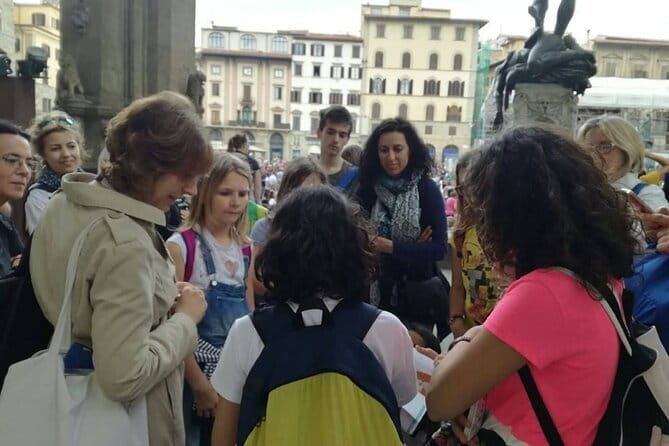
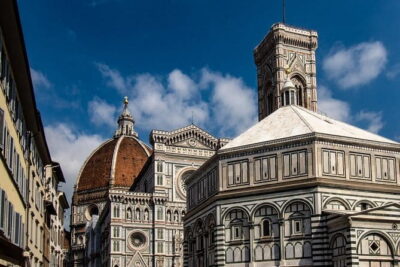
The cathedral stop is about 10 minutes and includes the Cathedral of Santa Maria del Fiore, the Baptistery, Giotto’s Campanile, and Brunelleschi’s dome. This is the visual high point of the walk, but it is also where expectations need to be clear.
The admission ticket is not included. The tour takes place outside, with the guide explaining the buildings and their place in Florentine architecture. If you want to climb the dome or tower, enter the cathedral, or visit the Baptistery, you will need separate arrangements.
Even from the square, the complex gives you plenty to study. The cathedral’s enormous dome changed the city’s profile, while the bell tower and Baptistery create a carefully balanced group of buildings. Your guide can help you separate the major parts, which is useful when the square becomes crowded and every façade competes for attention.
Plan your photographs before the group moves on. Ten minutes passes quickly here. If the square is noisy, stay near the guide and avoid drifting toward the edge of the group.
Orsanmichele brings art into a former market building
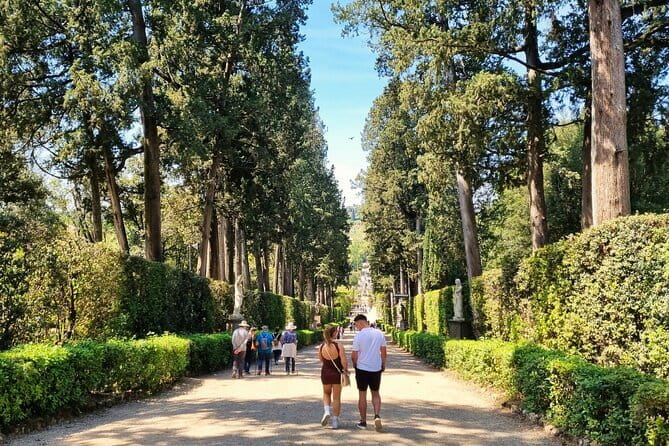
The Church and Museum of Orsanmichele receives another 10-minute stop. This building is a fine example of Florence’s habit of giving practical civic spaces a second life. The guide discusses the statues linked with artists including Donatello, Ghiberti, Giambologna, Brunelleschi, Verrocchio, Sangallo, and Orcagna.
The short explanation helps you see the building as more than a church façade. Its sculpture program reflects the influence of Florence’s guilds and the city’s competitive art culture. You will hear about important artists without spending hours inside a museum.
Admission is listed as free for this stop, though the tour does not promise an extended interior visit. Treat it as a focused introduction. If one artist or statue catches your attention, note it and return later when you have more time.
Piazza della Signoria is Florence’s outdoor history book
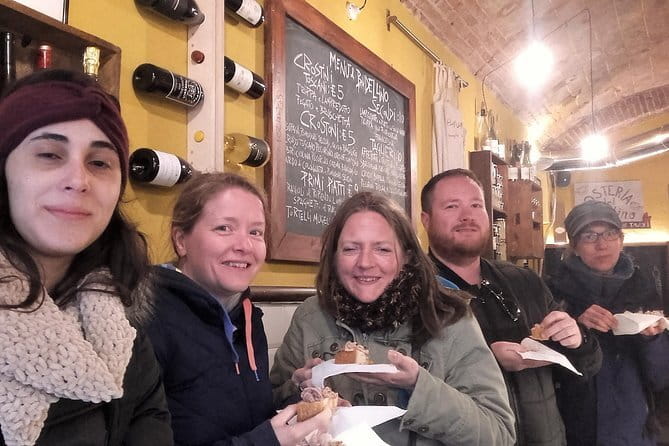
The 15-minute stop at Piazza della Signoria is the longest on the route. That makes sense. Few places in Florence pack so many landmarks into one view.
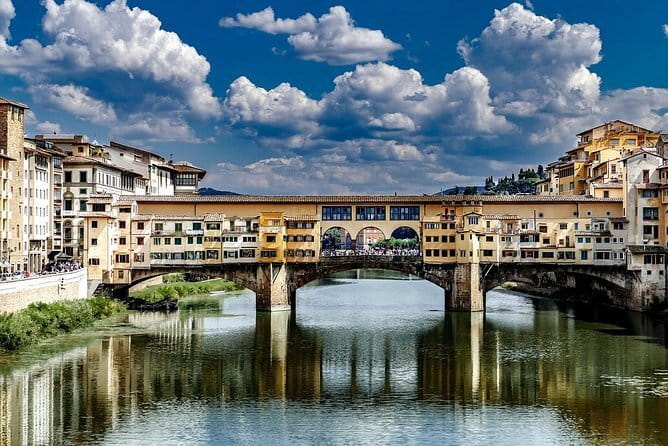
The guide points out Palazzo Vecchio, the Uffizi, the Loggia dei Lanzi, Arnolfo’s Tower, and the route toward Ponte Vecchio. The discussion also includes David, Marzocco, Cosimo de’ Medici, Perseus, and Cellini. Some works are copies or references rather than the originals you may know from museums, so this is a good place to ask questions about what you are actually seeing.
I find this section especially useful because the square is not just a pretty open space. It was built for power. Palazzo Vecchio represents civic government and Medici authority, while the statues and surrounding buildings turn political messages into public art.
The Uffizi and Palazzo Vecchio are viewed from outside, and admission is not included. That keeps the tour affordable and moving, but it also means you should not book this walk expecting an art-gallery visit.
Santa Croce closes the walk with famous names
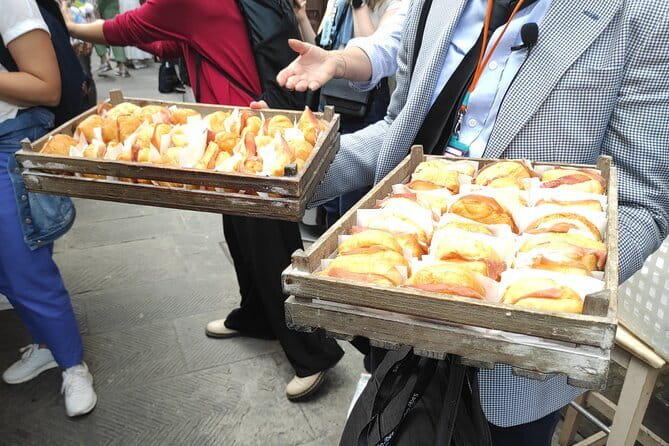
The final stop is the Basilica of Santa Croce, where the guide discusses the church’s story and the monument to Dante. The tour ends in front of the basilica at Piazza di Santa Croce, about 18R, making this a practical place to continue your day.
Santa Croce is closely tied to the memory of Florence’s artists, writers, scientists, and political figures. Even a short introduction can help you decide if the church belongs on your paid sightseeing list. The basilica itself is not included as an admission during the walk.
The ending also gives the route a satisfying shape. You begin near Santa Maria Novella and finish east of the central shopping streets, passing through the city’s religious, commercial, artistic, and political core. It feels less like a random collection of stops and more like a useful first chapter.
The guides make the difference
The strongest part of this experience is the guide. Ludi, also known as Ludovica, is praised for her passion, local insight, and ability to add practical advice. Natalia is noted for her explanations of Florence, art, and the Medici family, as well as her patient and friendly manner. Another guide, Ryan, is described as keeping a group together at a comfortable walking speed, even when a city marathon complicated the route.
The guide may not be one of these people on your date, so expect some variation in style. That is normal for a small operator. The common goal is a clear English explanation of the city, with time for photographs and questions.
Several useful details make this more than a standard monument loop. You might hear about food stops, toilets, viewpoints, less familiar streets, and the small wine windows built into old buildings. These windows are among the tour’s best details because you would be unlikely to notice them while rushing between the cathedral and the Uffizi.
A good guide also changes the experience in hot weather. One guide has been praised for finding shade during a very warm walk. That does not remove the need for water, but it shows the practical value of having someone who knows the streets.
Group size, sound, and the real cost
The tour is described as having a maximum of 20 people. That is a reasonable size for a walking route, since you can usually stay close enough to follow the explanation without blocking the pavement.
The important caveat is that one August departure grew beyond 40 people when people arrived without reservations. The provider said it intended to enforce the limit more strictly. I would still keep your reservation confirmation handy and arrive early, especially during busy summer periods.
Sound is the most serious practical issue. The guide may use a mini-speaker, but Florence’s squares can be noisy. One person left partway through after being unable to hear. To improve your chances, stay near the guide, avoid walking at the rear, and speak up promptly if the sound is poor. The tour is not supplied with personal headsets.
At $3.63, this is an unusually inexpensive introduction to Florence. The low fee does not mean the guide works for free. It is a tip-based format, so you should decide on a fair tip according to the quality and length of the walk. Even after adding a tip, the total can be far below a conventional private or small-group city tour.
The value is best if you want orientation, not entry tickets. You are paying for the route, explanations, and local pointers. You are not paying for access to the cathedral dome, Uffizi, Palazzo Vecchio, or Santa Croce.
Who should book this walk
I would choose this tour if you are new to Florence, have limited time, or want a quick framework before visiting museums on your own. It also suits a first morning in the city because the route covers the major central sights without consuming an entire day.
It works well for a solo visitor who wants a social introduction, a couple trying to sort out the city map, or a family that wants history in manageable pieces. The guide-led pace can also help you avoid wasting time deciding which street leads to which square.
I would be more cautious if you want detailed art analysis, long interior visits, or guaranteed quiet audio. This is an express overview. You will see a lot, but you will not study each monument at length.
Book with realistic expectations, wear comfortable shoes, and treat the walk as a foundation for the rest of your Florence stay. Mark the places you want to revisit, then return independently when you can spend more time inside.
Should you book it?
Yes, if you want a low-cost, English-language introduction to Florence and understand that the tour is mainly outdoors. The route is well chosen, the guides can add useful local details, and the price leaves room in your budget for museum tickets and lunch.
I would skip it only if poor sound would make the experience frustrating or if you already know Florence well and want a specialist art tour. For most first-time visitors, this is a smart way to see the city’s main bones, hear the Medici story, spot details such as the wine windows, and decide what deserves a closer look.
Free cancellation is available up to 24 hours before the 10:30 a.m. start. Bad weather or too few bookings can lead to a new date or a full refund.
FAQ
Where does the Florence walking tour start?
It starts at Piazza di Santa Maria Novella, 4n, 50123 Florence, in front of the Basilica of Santa Maria Novella.
What time does the tour begin?
The tour begins at 10:30 a.m.
Where does the tour finish?
It ends at Piazza di Santa Croce, 18R, in front of the Basilica di Santa Croce.
How long does the walk last?
The tour lasts approximately 2 hours and 15 minutes.
Is the tour offered in English?
Yes. English is the listed tour language.
Are admission tickets included?
The standard walk is mainly an outdoor sightseeing experience. Admission to the cathedral complex is not included, and the tour does not include entry to the other major churches, museums, or palaces along the route.
How many people can join the tour?
The stated maximum is 20 people. A larger group has occurred during a busy August period, so it is wise to arrive on time and keep your booking confirmation available.
Can I cancel for a full refund?
Yes, if you cancel at least 24 hours before the local start time. Cancellations or changes made less than 24 hours before the tour are not refunded or accepted.
Latest additions around Florence
- Florence: Cathedral Tour & Brunelleschi’s Dome Climb Ticket★ 5.0 · 3 reviews
- Palatina Gallery and Pitti Guided Tour in Florence★ 5.0 · 3 reviews
- Florence Uffizi Gallery Skip-the-line Tour w Art Historian Guide★ 5.0 · 3 reviews
- Private Tour: Pisa and Lucca from Florence★ 5.0 · 3 reviews
- San Gimignano Bike Tour (SOFT)★ 4.5 · 3 reviews
- Florence: Tour of Florence by rickshaw★ 5.0 · 3 reviews
- Center of Florence by golf cart★ 5.0 · 3 reviews
- The David from Michelangelo.★ 5.0 · 3 reviews
Florence Walking Tours, compared.

Skip the line: Uffizi and Accademia Small Group Walking Tour
Read our review →
Renaissance and Medici Tales Guided Walking Tour
Read our review →
Skip-the-Line Florence Highlights and David Walking Tour
Read our review →
Dark Mysteries and Legends Guided Walking Tour
Read our review →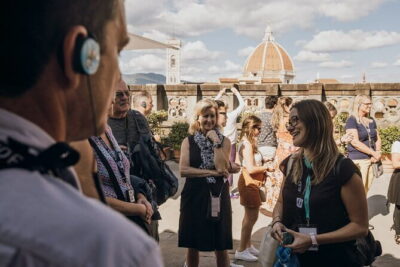
Florence in a Day: Michelangelo’s David, Uffizi and Guided City Walking Tour
Read our review →Browse the lists this tour appears in