
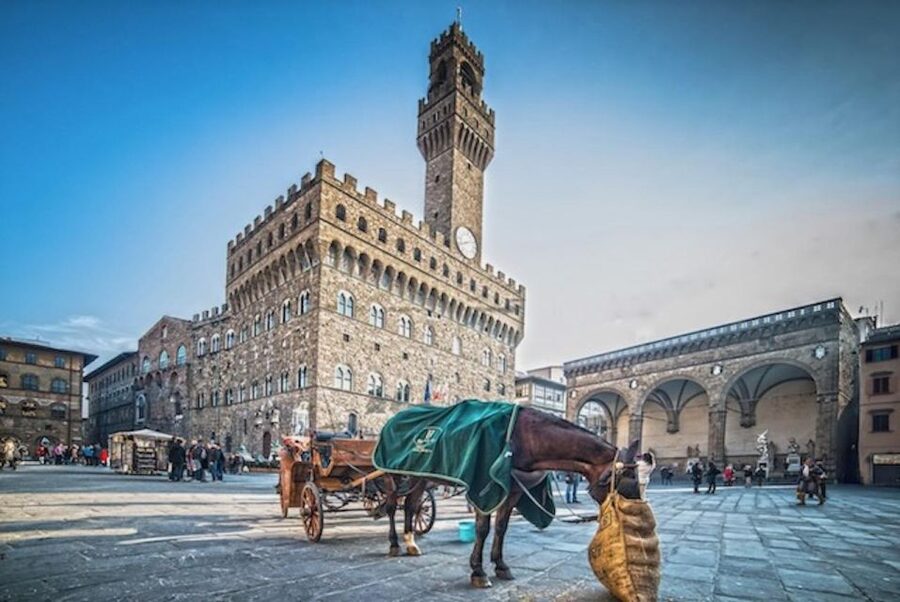
Reviewed · FLORENCE WALKING TOURS
Essential Florence Walking Tour to discover its history
Florence’s story is packed into a remarkably small area, and this three-hour walk connects the pieces well. You’ll move from Roman foundations and medieval tower homes to Medici palaces, Renaissance workshops, churches, bridges, and the artisan streets across the Arno. The guide adds the human drama: family power, murder, betrayal, art, and religion.
I like the clear historical progression, which helps you understand why Florence became so wealthy and influential. I also like the gelato tasting and the headsets, two small touches that make a busy city walk easier and more enjoyable. The main consideration is physical: expect cobblestones, a brisk three-hour outing, and some steps. It is not suitable for children under eight, wheelchair users, people with mobility impairments, recent surgery, or back problems.
In This Review
- Key points at a glance
- Why this Florence walk works as a first introduction
- Piazza della Repubblica and Florence’s Roman roots
- Medieval streets, tower homes, and the story of power
- Orsanmichele and the working world of Renaissance art
- Dante’s home and the religious centre
- Santa Maria Novella and Renaissance palace façades
- Via Tornabuoni and Via Maggio
- Santa Trinita and Ghirlandaio’s frescoes
- Ponte Vecchio, the Vasari Corridor, and Medici influence
- Oltrarno, Pitti Palace, and Santa Felicita
- What the $41 price really covers
- Gelato, headsets, and the practical side
- Who should book this walking tour
- Should you book the Essential Florence Walking Tour?
- FAQ
- How long does the Essential Florence Walking Tour last?
- What language is the tour offered in?
- Is gelato included?
- Are headsets provided?
- Does the tour enter the Duomo?
- Is the tour suitable for wheelchair users or people with mobility problems?
Key points at a glance

- Roman beginnings in Piazza della Repubblica: Start with Florence’s earliest urban story before moving into the medieval city.
- Medici power in plain sight: See palaces, churches, and public spaces tied to the family that shaped Florence.
- Art and architecture outdoors: View Orsanmichele, the Duomo complex, Dante’s home, Via Tornabuoni, and the Ponte Vecchio area.
- A rare interior visit: Enter Santa Trinita to see frescoes by Ghirlandaio.
- Oltrarno with gelato: Cross the river, pass artisan workshops and Medici landmarks, then enjoy Italian gelato.
- English-only, guide-led walking: Becky, Lisa, and Andrea have each led especially engaging versions of this route, with headsets provided.
Why this Florence walk works as a first introduction
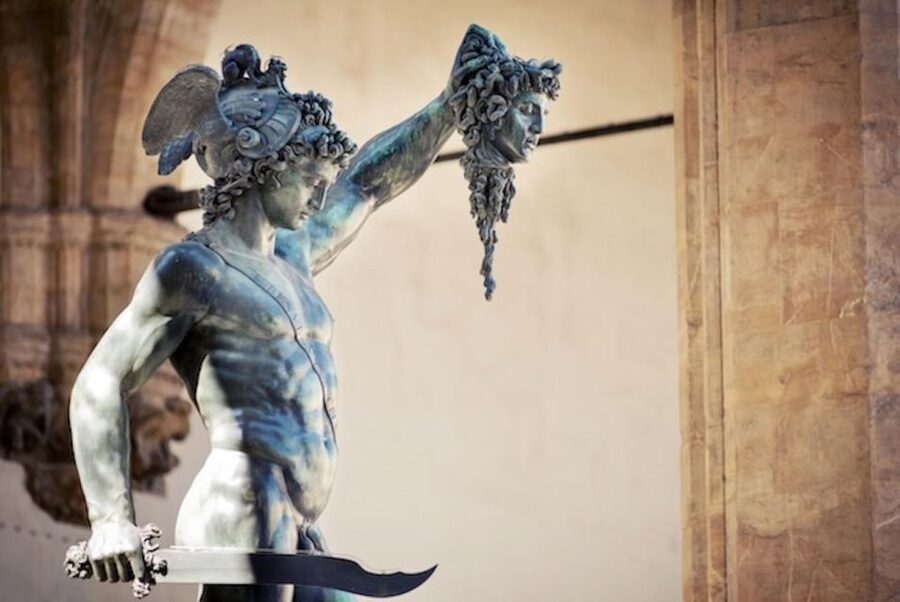
I see this tour as a strong opening chapter for a Florence visit. It does not focus on one museum or a single famous building. Instead, it shows you how the city fits together, from its Roman grid to the commercial streets, religious centre, ruling family, river crossings, and working-class artisan quarter.
That broad view matters because Florence can feel like a parade of beautiful façades at first. The Duomo is spectacular, but without context, it is just one grand building among many. Here, you learn how religion shaped daily life, how banking money supported art, and how the Medici family used architecture to project authority.
The storytelling style is a major part of the appeal. Guides Becky, Lisa, and Andrea have received especially warm praise for making the material lively, interactive, and easy to follow. Becky’s background in art history is useful when the walk turns to painters, sculpture, and architectural periods. You can expect more than dates and names. The guide points out details you might otherwise pass without noticing.
The route is also useful for orientation. After three hours, you’ll know where the Duomo, Ponte Vecchio, Via Tornabuoni, Via Maggio, Santa Maria Novella, and Oltrarno fit on the map. That can save time later, especially if you plan to visit museums or return to a church on your own.
More walking routes in Florence:
- Florence: Guided Walking Tour
★ 4.5 · 3,334 reviews - Skip the line: Uffizi and Accademia Small Group Walking Tour
★ 4.5 · 3,135 reviews - Florence: Guided Walking Tour
★ 4.6 · 1,602 reviews
Piazza della Repubblica and Florence’s Roman roots
The walk begins at Piazza della Repubblica, a broad square in the heart of the city. The first lesson concerns Florence’s Roman founding, giving you a quick sense of how the modern centre grew from an ancient settlement.
This is a smart starting point because the square’s open shape differs from Florence’s older lanes. From here, the guide helps you read the city as a sequence of eras. You begin with Roman planning, move into medieval Florence, and then see how trade, banking, and political control helped the city gain wealth.
Listen closely at this stage. The value is not only in memorising the founding date or spotting an old street line. You are learning the framework used for the rest of the tour: Florence was shaped by money, faith, family rivalry, craft, and art.
Medieval streets, tower homes, and the story of power

Florence’s medieval period comes alive through its streets and buildings. The city’s tower homes recall a time when powerful families lived close together and displayed their status through fortified-looking residences. These structures also help explain why Florence feels dense and vertical in its oldest quarters.
The guide connects the physical city with its political rise. You’ll hear how Florence built influence and wealth, then how the Medici family became central to that story. Expect accounts of ambition, rivalry, murder, and betrayal alongside the art and architecture. That mix keeps the tour from becoming a dry procession of monuments.
I particularly value this kind of explanation when looking at palaces. A Renaissance façade is not only a pretty wall. Its size, stonework, position, and decoration could announce a family’s money and social reach. The route helps you read those signals.
Orsanmichele and the working world of Renaissance art
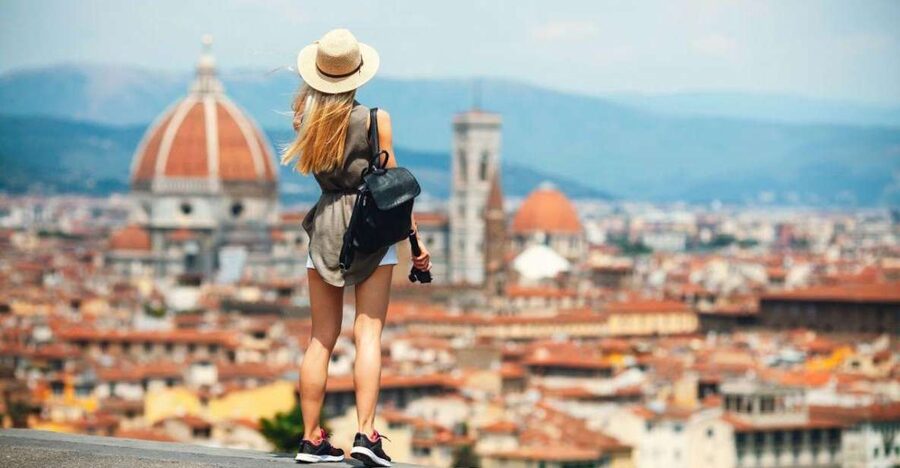
Orsanmichele is one of the most interesting stops because it links religion, trade, and sculpture. You’ll see the building from the outside and learn about its famous statues by artists including Donatello and Ghiberti.
The stop also gives useful context for the way art was produced in Florence. The tour discusses the creation of David and the workshops used by artists of the period. You should not expect a museum visit or a chance to examine every sculpture up close, but the explanation can make later museum visits more rewarding.
For me, this is where the walk’s focus on details pays off. You begin to see Florence not as a city decorated by a few famous masters, but as a place where guilds, patrons, workshops, churches, and wealthy families all helped shape the art you came to see.
More history-first plans:
- Tipsy Tour: Guided Bar Crawl In Florence with Dark History
★ 5.0 · 271 reviews - Florence Cooking Course with Historic Local Market Visit
★ 4.5 · 151 reviews - Florence: Medici Family History Tour
★ 4.3 · 93 reviews - Historical Guided Tour of Florence’s Iconic Cathedral
★ 3.5 · 88 reviews
Dante’s home and the religious centre
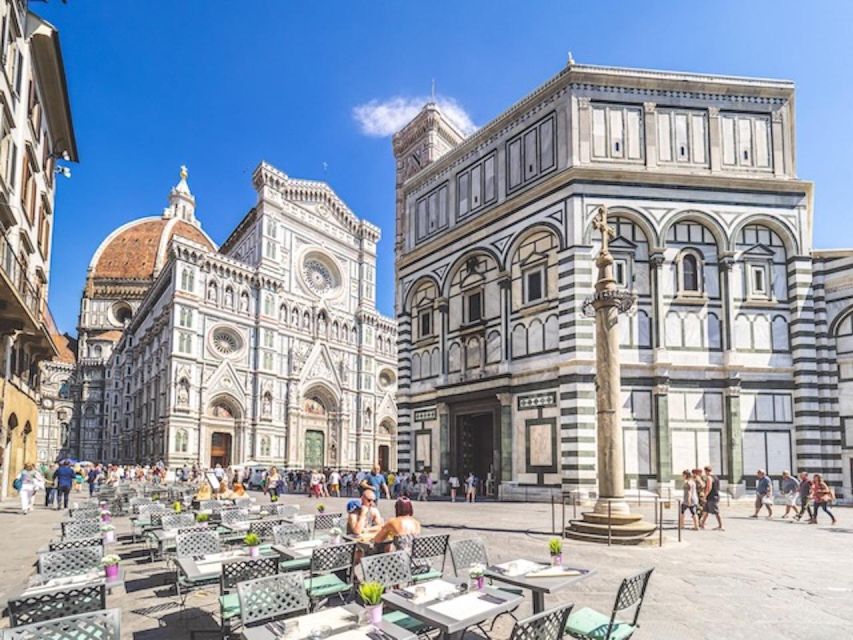
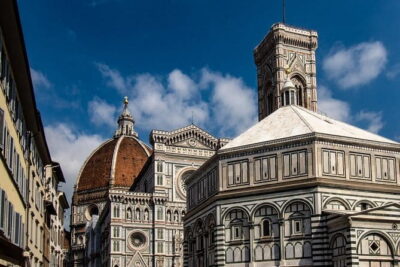
The route passes Dante’s house, viewed from outside, then continues toward Florence’s religious centre. You’ll see the Duomo, Baptistery, and Campanile from the exterior.
This is one of the tour’s most important stretches, yet it comes with a clear limit: it is not an interior Duomo visit. You will not climb the dome or enter the Baptistery as part of the tour. Instead, the guide explains how these buildings worked together and why religion touched nearly every part of Florentine life.
That outside perspective is still valuable. The scale and decoration of the complex are easier to appreciate once you understand its religious role and the competition involved in building such major monuments. Your guide can also help separate the medieval elements from later Renaissance work, something that is difficult to do by sight alone.
If the Duomo is a high priority for you, book any desired interior entry or dome climb separately. This walking tour gives context, not admission.
Santa Maria Novella and Renaissance palace façades
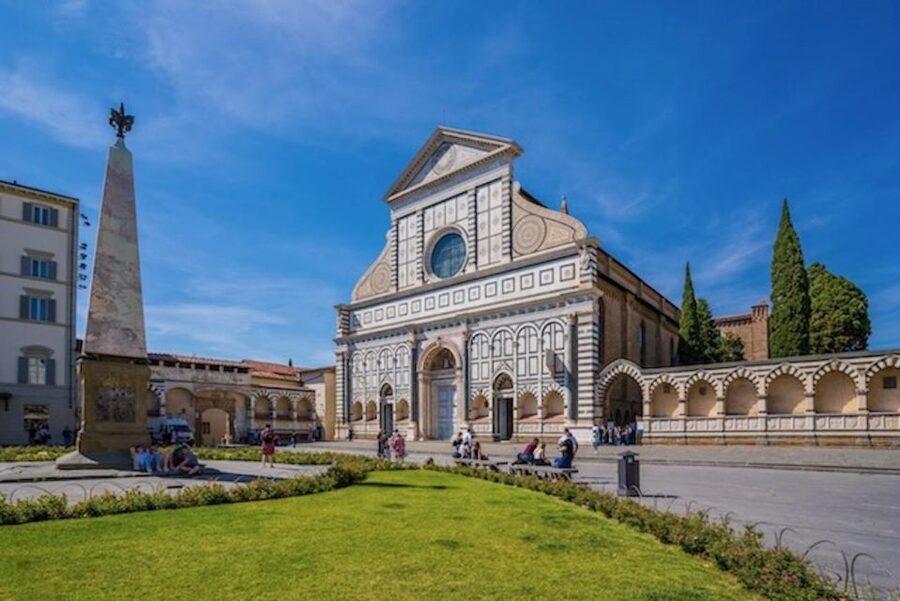
Santa Maria Novella is another exterior stop. Its façade and position near one of Florence’s main arrival points make it a useful example of how religious buildings shaped the city.
The walk then brings you past Rucellai Palace and Strozzi Palace, both important examples of Renaissance architecture. You’ll learn to compare medieval and Renaissance ideas through the buildings themselves. The shift is not simply from old to new. It reflects changes in wealth, taste, mathematics, and the way powerful families wanted to be seen.
This part suits you if architecture often feels confusing. Rather than asking you to admire a palace without explanation, the guide points out the features that reveal its period and purpose. You may find that later walks through Florence become more rewarding because you have a better eye for proportion, stonework, and façade design.
Via Tornabuoni and Via Maggio
Via Tornabuoni brings the tour into Florence’s best-known designer shopping street. The setting offers a useful contrast: an old urban route now associated with high-end retail, but still framed by historic buildings.
You’ll also encounter Via Maggio, known for antique shopping. These streets show how Florence’s commercial identity has changed while its old building stock remains in place. I like this portion because it moves beyond the standard postcard sights. You get a feel for how people use the historic centre today.
There may be moments when traffic, shoppers, or crowds make it harder to hear or keep pace. The included headsets help. Wear shoes with solid support, since cobblestones and hard paving can become tiring well before the three hours are over.
Santa Trinita and Ghirlandaio’s frescoes
Santa Trinita is the notable interior visit on the route. You’ll go inside to admire magnificent frescoes by Ghirlandaio, making this stop more than a quick exterior look.
The church helps connect the tour’s art lessons with a real interior setting. Frescoes were not simply decoration. They conveyed religious stories to people who might not read, honored patrons, and filled sacred spaces with visual meaning.
This is also a good place to slow down mentally. The route covers many sites, so a church interior provides a quieter chance to look at color, figures, composition, and the relationship between art and worship. The visit is not a replacement for Florence’s major museums, but it gives you a more intimate taste of the city’s artistic world.
Ponte Vecchio, the Vasari Corridor, and Medici influence
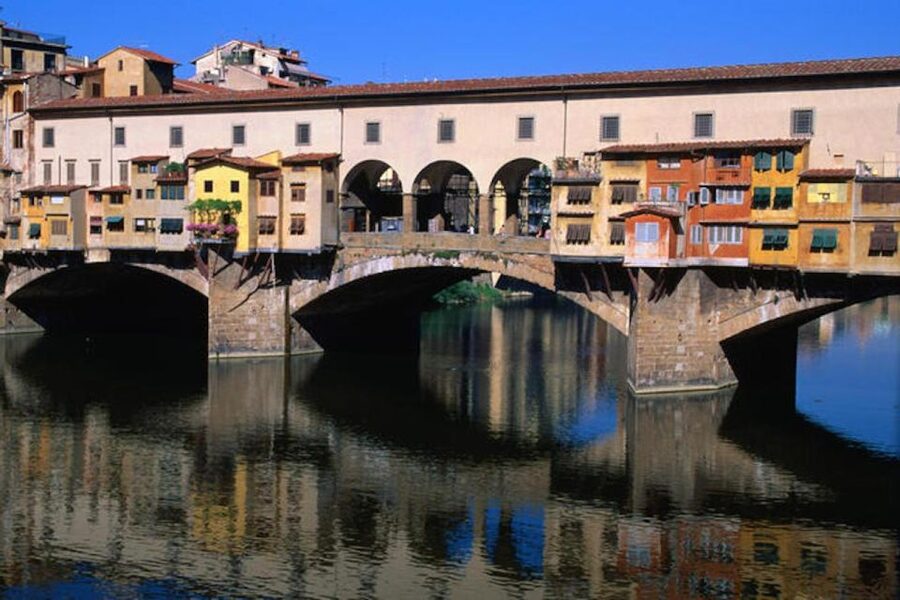
The walk continues across the Santa Trinita and Ponte Vecchio bridges. Both crossings offer a change of view and a reminder that the Arno is central to Florence’s story.
From the Ponte Vecchio area, you’ll learn about the Vasari Corridor, the elevated passage associated with the Medici family. The corridor helped connect Medici residences and reflects the family’s need for controlled movement through the city. You should expect to see it from the outside rather than take a corridor tour.
Ponte Vecchio can be crowded, especially during busy periods. Keep your belongings secure and stay close enough to hear the guide. The headsets are helpful here, though they cannot remove the need to pay attention when the group crosses a busy public space.
Oltrarno, Pitti Palace, and Santa Felicita
After crossing the river, the route enters the Oltrarno, where cobblestone streets and artisan workshops give the walk a different feel. This part is less about grand civic monuments and more about the working side of Florence.
You’ll see Pitti Palace from outside, the former Medici residence, and pass Santa Felicita, one of Florence’s oldest churches. Together, these stops show the contrast between private power and older religious life.
The Oltrarno section is one reason I would choose this tour over a route limited to the Duomo and Piazza della Signoria. You get a sense of how the city extends beyond the main tourist core. The artisan workshops add texture, though the tour does not promise shopping time or workshop visits. You are walking through the area with commentary, not joining a craft class.
What the $41 price really covers
At $41 per person, this is a reasonable price for a three-hour, guide-led introduction to Florence. You are paying for a live English guide, headsets, a planned route through many major areas, a Santa Trinita interior visit, and Italian gelato.
The value is strongest if you want context. A free walk can point out a palace or bridge, but this tour is designed to explain why the building matters and how it connects to the city’s political and artistic story. The guide’s ability to answer questions also adds value, especially if this is your first time in Florence.
It is less useful if you only want museum entry or long periods inside churches. Most stops are viewed from outside, and the pace covers a lot of ground. You will need to choose separate tickets for attractions such as the Duomo interior or major art museums.
Gelato, headsets, and the practical side
The gelato tasting is a pleasant finish or pause in a history-heavy walk. It gives you a simple taste of Italy without taking time away from the route. The exact shop or flavor is not specified, so think of it as an included tasting rather than a full food tour.
Headsets are included and worth having in Florence. Narrow streets, passing groups, and public squares can make a live explanation hard to catch. You can focus on the buildings instead of standing shoulder to shoulder with the guide.
Wear comfortable clothes and proper walking shoes. Sandals and flip-flops are not allowed, and the route includes cobblestones and steps. The tour is not suitable for children under eight, people with back problems, recent surgery, mobility impairments, or wheelchair users.
The tour runs in English only. You can cancel up to 24 hours before the start for a full refund, and reserve now while paying later, which is useful when your Florence plans are still shifting.
Who should book this walking tour
I would recommend it to first-time Florence visitors who want a strong sense of the city before tackling museums on their own. It also suits anyone who enjoys stories about powerful families, art, architecture, church interiors, and the sometimes ruthless politics behind beautiful buildings.
It is a good match for curious adults and older children, but not for young children under eight. You should be comfortable walking for three hours and managing steps. If you have limited mobility or serious back concerns, choose a shorter or more accessible city experience instead.
The tour also suits repeat visitors who want to connect familiar sights. You might already know the Duomo or Ponte Vecchio, but a guide can show you how those places relate to medieval trade, Medici authority, artists’ workshops, and the Oltrarno.
Should you book the Essential Florence Walking Tour?
Book it if you want history with a human voice, not just a checklist of landmarks. The route covers an impressive range, from Piazza della Repubblica and Dante’s home to Orsanmichele, the Duomo, Santa Trinita, Ponte Vecchio, Pitti Palace, and the artisan streets of Oltrarno.
I would be especially happy to join this tour early in a Florence stay. It gives you a map in your head, introduces the main architectural periods, and helps you decide which churches, museums, and palaces deserve a later visit. Guides such as Becky, Lisa, and Andrea have shown the value of lively explanation, clear answers, and close attention to overlooked details.
Skip it if you need extensive interior access, cannot manage a long walk, or prefer a slow, food-first experience. For most fit visitors seeking an engaging three-hour introduction, $41 is fair value, and the gelato is a welcome bonus.
FAQ
How long does the Essential Florence Walking Tour last?
The tour lasts three hours.
What language is the tour offered in?
The live tour and included audio support are offered in English only.
Is gelato included?
Yes. An Italian gelato tasting is included in the tour.
Are headsets provided?
Yes. Headsets are included so you can hear the guide during the walk.
Does the tour enter the Duomo?
The Duomo, Baptistery, and Campanile are viewed from outside. The tour does include an interior visit to Santa Trinita to see Ghirlandaio’s frescoes.
Is the tour suitable for wheelchair users or people with mobility problems?
No. The walk includes cobblestones and steps and is not suitable for wheelchair users, people with mobility impairments, people with back problems, or people who have had recent surgery. Comfortable shoes are required, and sandals or flip-flops are not allowed.
Latest additions around Florence
- Florence: Cathedral Tour & Brunelleschi’s Dome Climb Ticket★ 5.0 · 3 reviews
- Palatina Gallery and Pitti Guided Tour in Florence★ 5.0 · 3 reviews
- Florence Uffizi Gallery Skip-the-line Tour w Art Historian Guide★ 5.0 · 3 reviews
- Private Tour: Pisa and Lucca from Florence★ 5.0 · 3 reviews
- San Gimignano Bike Tour (SOFT)★ 4.5 · 3 reviews
- Florence: Tour of Florence by rickshaw★ 5.0 · 3 reviews
- Center of Florence by golf cart★ 5.0 · 3 reviews
- From Firenze | Chianti day tour in a classic car★ 5.0 · 3 reviews
Florence Walking Tours, compared.

Skip the line: Uffizi and Accademia Small Group Walking Tour
Read our review →
Renaissance and Medici Tales Guided Walking Tour
Read our review →
Skip-the-Line Florence Highlights and David Walking Tour
Read our review →
Dark Mysteries and Legends Guided Walking Tour
Read our review →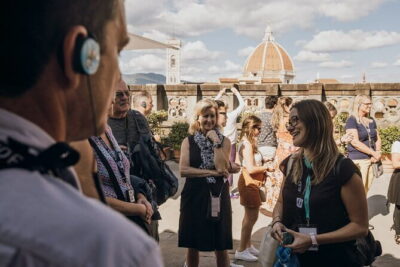
Florence in a Day: Michelangelo’s David, Uffizi and Guided City Walking Tour
Read our review →Browse the lists this tour appears in