
Reviewed · FLORENCE
Discovering Bees in Volterra
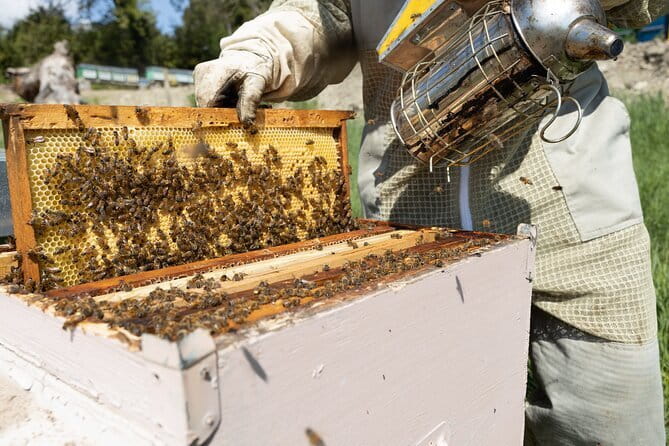
The most unusual part of this Tuscan outing happens inside the apiary, where you can watch bees working in their hive while staying completely protected. Valentina explains the queen, worker bees, and drones, while the beekeeper works outside and shows you how the hive functions.
I like the short walk past old farm tools still used until the 1970s, and I like the hands-on finish: fresh honey extraction followed by tasting. The family welcome from Valentina, her parents, and the wider farm team gives the visit a personal feel that a standard food tour often lacks.
The main drawback is the access road to the farm. It is unpaved and bumpy, so allow extra care if you are driving. Also, the experience lasts about 90 minutes, making it a focused apiary visit rather than a full-day Volterra excursion.
In This Review
- Key points about Discovering Bees in Volterra
- Why a bee visit belongs on a Volterra itinerary
- The 500-meter walk through old farm life
- Inside the apiary, watch the colony at work
- Seeing the beekeeper work outside the hive
- Honey, pollen, propolis, and royal jelly
- Fresh extraction and tasting at the laboratory
- A warm family setting, with several names involved
- Is $24.10 a fair price for 90 minutes?
- Who should book this apiary visit?
- Should you book Discovering Bees in Volterra?
- FAQ
- Where does the bee experience begin?
- Where does the activity end?
- How long does Discovering Bees in Volterra last?
- How much does the experience cost?
- Is the tour offered in English?
- Is this a private tour?
- How far is the walk to the apiary?
- What will I learn about inside the apiary?
- Can I taste or buy honey?
- Can I cancel for a full refund?
Key points about Discovering Bees in Volterra
- Safe hive viewing: Watch bees at work from inside the apiary house without entering the hive itself.
- A 500-meter farm walk: See old agricultural tools that remained in use through the 1970s.
- Valentina’s family guidance: Valentina leads the explanations, with family members helping demonstrate the work and welcome you.
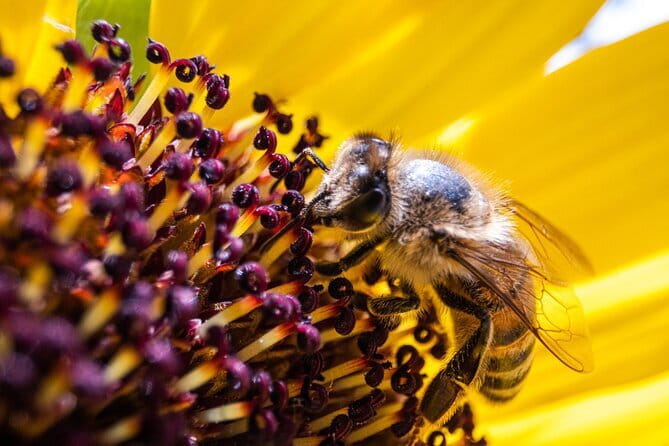
- More than honey: Learn how bees produce propolis, pollen, and royal jelly as well as honey.
- Fresh extraction and tasting: See honey removed in the laboratory, taste it fresh, and shop for products made at the farm.
- A private experience: Only your own group participates, with the tour offered in English.
Why a bee visit belongs on a Volterra itinerary
Volterra is known for its stone streets, alabaster workshops, and Etruscan past. This visit gives you a different way to understand the area: through the small creatures that support farm life and local food production.
You do not simply arrive, taste honey, and leave. The visit begins with a short walk to the apiary, then builds from basic bee biology to practical beekeeping. That order works well because you first see the setting, then meet the colony, and finally taste what the bees and beekeeper produce.
I especially like that the experience does not treat honey as the only thing that matters. Bees also produce propolis, pollen, and royal jelly, and each has a place in the story of the hive. For children, the subject is lively and easy to picture. For adults, it offers a clearer sense of the work behind a jar of local honey.
The setting also feels tied to a real working family property. Valentina and her parents present the apiary as part of an ongoing family tradition, not as a staged attraction built only for short visits. That does not make the tour rough or disorganized. The available details point to careful safety arrangements and a friendly, well-run visit.
Other Florence outings people weigh against this one:
- Florence: Skip-The-Line Uffizi Gallery Timed Entry Ticket
★ 4.5 · 27,832 reviews - Tuscany Day Trip from Florence: Siena, San Gimignano, Pisa and Lunch at a Winery
★ 5.0 · 21,634 reviews - Florence: Timed Entrance Ticket to Michelangelo’s David
★ 4.6 · 16,983 reviews
The 500-meter walk through old farm life
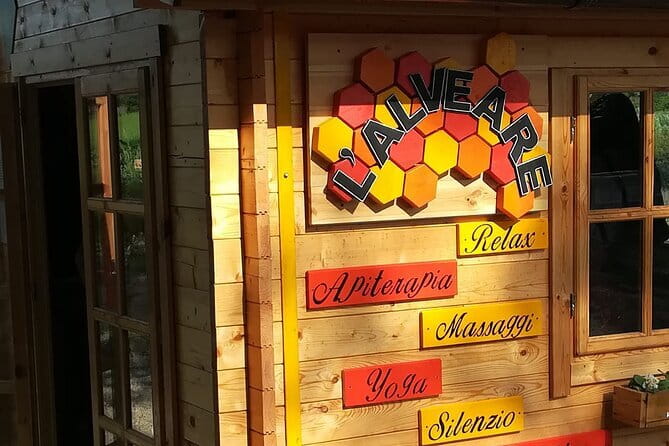
The walking section is short, about 500 meters, so it should not tire most people. It matters because it connects the apiary with the working farm around it rather than treating the bees as an isolated display.
During the walk, you can see old agricultural tools that were still used until the 1970s. That detail gives the visit a useful sense of time. You get a glimpse of how farming was done by hand and with simple equipment before reaching the modern beekeeping work.
This is not a guided tour of every part of the farm, so keep your expectations in check. The walk is an introduction to the property, not a long countryside hike. It does, however, make the apiary visit feel more rooted in local life.
The approach road deserves a practical warning. It is described as unpaved and bumpy, and that may be the least comfortable part of the outing. If you are driving, take it slowly and expect a rural access route rather than a smooth urban road.
Inside the apiary, watch the colony at work
The central feature is observation from inside the apiary house. You can look at the bees as they carry out their tasks while remaining in a protected area. This is a good arrangement for people who are curious but uneasy around insects.
The point is not simply to look at a mass of moving bees. Valentina explains how the colony is organized and helps you understand what you are seeing. The three castes are covered:
- The queen bee, whose role is central to the colony
- Worker bees, which handle many of the daily jobs
- Drones, whose story includes both comic and sad elements
The explanation of the drone is a memorable touch. It gives the lesson some humor while showing that hive life is not as simple as the familiar queen-and-worker story. You are likely to remember the drone because the subject is presented as a character in the colony, not just a term in a biology lesson.
One particularly engaging activity is looking for the queen among the thousands of bees. It turns observation into a small challenge for the group. You may need patience, but that is part of the point: a hive is a busy, tightly organized society, and the queen is not always easy to spot.
Seeing the beekeeper work outside the hive
While you observe from the protected area, the beekeeper demonstrates the work outside the house. This gives you two views at once. You can watch the bees close up, then see how the person caring for the colony handles the practical side of beekeeping.
That balance is important. A talk about bees can become too abstract, while a demonstration without explanation can be hard to follow. Here, the family approach links the two. Valentina explains the life of the colony, and the beekeeper shows what that means in practice.
The experience is designed with safety in mind, but you should still follow all instructions carefully. Protective suits are part of the visit, and several accounts describe putting them on with a little nervousness before becoming more comfortable around the bees.
The tour can suit different ages because the subject works on several levels. Children can focus on finding the queen and watching the insects move. Adults can pay closer attention to the work, the products, and the family’s connection to the land.
A different way to spend the same Florence day:
- Florence: Michelangelo’s David Skip-the-Line Entry Ticket
★ 4.5 · 12,764 reviews - The Best tour in Florence: Renaissance & Medici Tales – guided by a STORYTELLER
★ 5.0 · 12,316 reviews - Florence: Leonardo Interactive Museum Entry Ticket
★ 4.5 · 11,763 reviews - The Best Tour in Florence: Renaissance and Medici Tales
★ 5.0 · 10,810 reviews
Honey, pollen, propolis, and royal jelly

A strong part of the visit is the explanation that a hive produces far more than honey. You learn about propolis, pollen, and royal jelly, and how these products fit into the life of the colony.
This makes the tasting more meaningful. Instead of sampling a sweet spread with no context, you have just seen how the hive operates and heard about the materials connected with it. The lesson stays practical and easy to connect with the jars and products on sale.
The range of honey can also make the final tasting more interesting than a single sample. The selection includes familiar types such as millefiori and more unusual varieties, including ivy honey. The exact selection may vary, but the experience gives you a chance to compare different flavors rather than treating all honey as the same.
If you already buy honey at home, this is still useful because you can think about taste in a more specific way. If you know little about honey, the tasting gives you a simple starting point. You can ask questions, compare types, and decide what you actually like before purchasing.
Fresh extraction and tasting at the laboratory
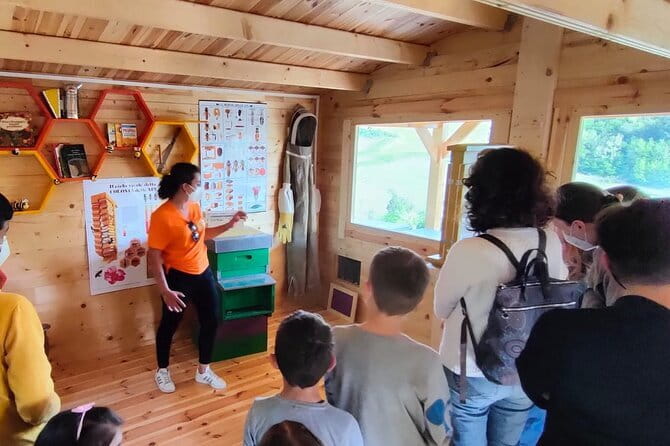
After the apiary visit, you return to the point of sale and laboratory. There, you can take part in honey extraction and taste honey that has just been removed.
This is the most hands-on part of the visit. You are no longer only watching the beekeeper or listening to an explanation. You see how the product moves from the hive into the extraction process and then onto the tasting table.
The timing is helpful for families. After the concentration needed to observe bees and follow the explanations, the tasting gives everyone a relaxed finish. It also provides a natural chance to ask final questions.
Local products are available for purchase at the farm. Honey and pollen are specifically mentioned, along with the chance to buy products made at the property. I would treat this as an optional shopping stop, not an obligation. The value is that you can taste first and purchase only what suits you.
A warm family setting, with several names involved
Valentina is the main guide named in the experience, and her enthusiasm for bees comes through clearly in the way the visit is described. Her mother also helps welcome and engage with the group. Other family members, including Biagio and Simone, may take part in demonstrations or hosting depending on the visit.
That family involvement is one of the strongest reasons to choose this experience. You are not moving through a large group with a guide rushing to the next stop. The activity is private, so only your group participates, which allows the pace and questions to feel more personal.
The farm team also includes Sandra and Fabrizio, who are connected with the upkeep and hospitality of the property. Other named family members have been involved in related visits to the surrounding area, including explanations about an alabaster quarry. Do not book this bee visit expecting the quarry tour to be included, but the connection helps place the apiary within the wider Volterra area.
The atmosphere is friendly and informal, but the work itself is treated seriously. The family’s care for the bees, the property, and visitors is central to the experience.
Is $24.10 a fair price for 90 minutes?
At $24.10 per person, this is a reasonable price for a private, English-language activity that includes a guided walk, apiary observation, beekeeping demonstration, honey extraction, and tasting.
The value is strongest if you want a small local experience rather than a major sightseeing attraction. You are paying for access to a working apiary, direct family guidance, and a tasting that connects to what you have just learned. The private format also matters. Your group is not sharing the experience with a large crowd.
The price may feel less useful if you only want to see Volterra’s main historic sights or if you are not interested in food production and rural life. At 90 minutes, it is not meant to replace a full day in town. It works better as an addition to a Volterra visit.
The activity is booked an average of 55 days ahead, which suggests you should reserve early if your dates are fixed. Confirmation is normally sent at booking, though a booking made within one day of the visit is confirmed as soon as possible and depends on availability.
Who should book this apiary visit?
I would choose this for families, curious food lovers, and anyone looking for a different Tuscan activity. It gives children something concrete to watch and adults enough detail to make the outing worthwhile.
It also suits people who prefer meeting a local family to joining a large sightseeing group. The private format is a real advantage if your group has children, questions, or mixed interest levels.
You should think twice if you strongly dislike bees or feel uncomfortable wearing protective clothing. The bees are observed safely, but the subject remains close and hands-on. The rough access road may also be a concern for anyone who needs a particularly smooth arrival.
Most people can take part, and service animals are allowed. The experience is offered in English. Since good weather is required, keep a little flexibility in your schedule if possible. A weather cancellation brings the choice of another date or a full refund.
Should you book Discovering Bees in Volterra?
Book it if you want to add a personal, rural experience to time in Volterra. The strongest reasons are the safe view into the hive, Valentina’s engaging explanations, the family setting, and the chance to taste honey immediately after seeing how it is extracted.
Skip it if your schedule is packed with historic sights or if a bumpy rural road and close contact with bees sound unpleasant. For everyone else, the $24.10 cost is fair, the 90-minute format is easy to fit into a day, and the visit offers a memorable look at an important part of Tuscan farm life.
FAQ
Where does the bee experience begin?
It begins at Miele del FertiPodere Torricella, 65, 56048 Volterra PI, Italy.
Where does the activity end?
The experience ends back at the same meeting point where it begins.
How long does Discovering Bees in Volterra last?
The visit lasts approximately 1 hour and 30 minutes.
How much does the experience cost?
The listed price is $24.10 per person.
Is the tour offered in English?
Yes, the activity is offered in English.
Is this a private tour?
Yes. Only your own group participates in the activity.
How far is the walk to the apiary?
The walk to the educational apiary is about 500 meters.
What will I learn about inside the apiary?
You will learn about queen bees, worker bees, and drones, and about products made inside the hive, including honey, propolis, pollen, and royal jelly.
Can I taste or buy honey?
Yes. You can take part in honey extraction, taste freshly extracted honey, and purchase local products at the point of sale.
Can I cancel for a full refund?
Yes, if you cancel at least 24 hours before the experience starts. Cancellations or changes made less than 24 hours before the start time are not refunded or accepted. If poor weather causes cancellation, you will be offered another date or a full refund.
Latest additions around Florence
- Florence: Cathedral Tour & Brunelleschi’s Dome Climb Ticket★ 5.0 · 3 reviews
- Palatina Gallery and Pitti Guided Tour in Florence★ 5.0 · 3 reviews
- San Gimignano Bike Tour (SOFT)★ 4.5 · 3 reviews
- Florence Uffizi Gallery Skip-the-line Tour w Art Historian Guide★ 5.0 · 3 reviews
- Private Tour: Pisa and Lucca from Florence★ 5.0 · 3 reviews
- Florence: Tour of Florence by rickshaw★ 5.0 · 3 reviews
- Center of Florence by golf cart★ 5.0 · 3 reviews
- From Firenze | Chianti day tour in a classic car★ 5.0 · 3 reviews