Reviewed · GUIDED
Bargello private tour with a 5-star tour guide
The Bargello is Florence’s best short visit for sculpture, especially if you want to stand close to works by Donatello and Michelangelo without the crowds of the Uffizi. In one focused hour, your private guide leads you through a former palace and prison, explaining the artists, rivalries, and commissions that shaped Renaissance Florence.
I like the private format, which gives you room to ask questions and set the pace. I also like the included admission and headsets, useful in echoing museum rooms. The main caution is the price: $112.95 per person is a serious charge for an hour, and the quality depends heavily on the guide assigned that day.
In This Review
- Key points to know before booking
- Why the Bargello deserves an hour of your Florence day
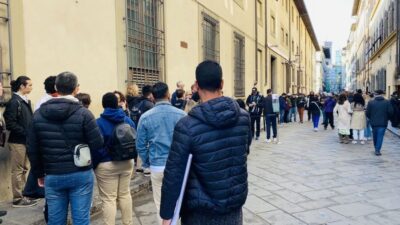
- Meeting your guide at Via del Proconsolo 4
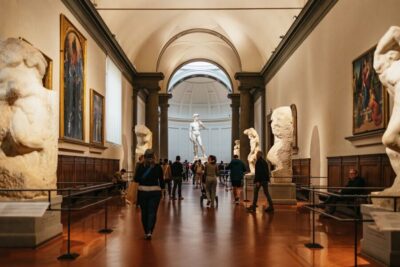
- Inside the Bargello: a fast route through Florentine sculpture
- Donatello and the changing language of sculpture
- The Baptistery doors and Brunelleschi’s unexpected lesson
- Verrocchio, Leonardo’s teacher, and the pressure of comparison
- Michelangelo’s Brutus, tondo, and criticized Bacchus
- Giambologna, Cellini, and the craft behind bronze
- What the private format is really worth
- Who will enjoy this Bargello tour most?
- Timing, booking, and cancellation details
- Should you book the Bargello private tour?
- FAQ
- Where does the Bargello private tour begin?
- Where does the tour end?
- How long does the tour last?
- Is museum admission included?
- Is this a private tour?
- What happens if I need to cancel?
Key points to know before booking
- Donatello is the star: See his David and St. George, then hear how his work changed Florentine sculpture.
- Michelangelo appears in a compact setting: Look for Brutus, a marble tondo, and Bacchus.
- The private guide changes the visit: You avoid a large group and can ask for special interests.
- The museum is often quiet: It is a useful choice when Florence’s main galleries feel crowded.
- The tour lasts about one hour: It suits a busy sightseeing day, but art lovers may want extra time afterward.
- Meet at the museum entrance: The stated meeting point is Museo Nazionale del Bargello, Via del Proconsolo 4.
Why the Bargello deserves an hour of your Florence day
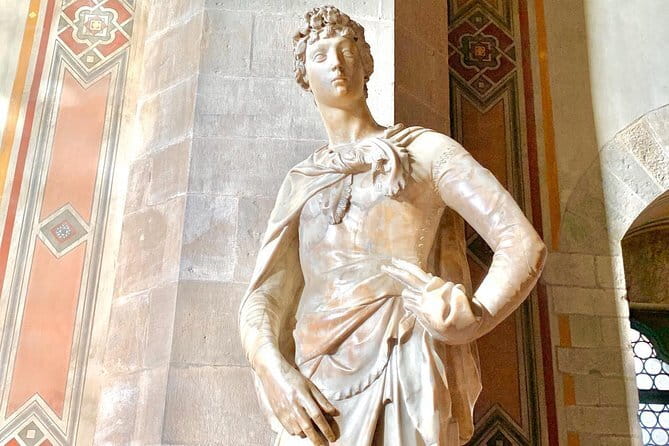
Florence is packed with famous churches, paintings, and grand public squares. Sculpture can get pushed aside, yet the Bargello offers one of the city’s clearest looks at how Renaissance artists worked in marble, bronze, and other materials.
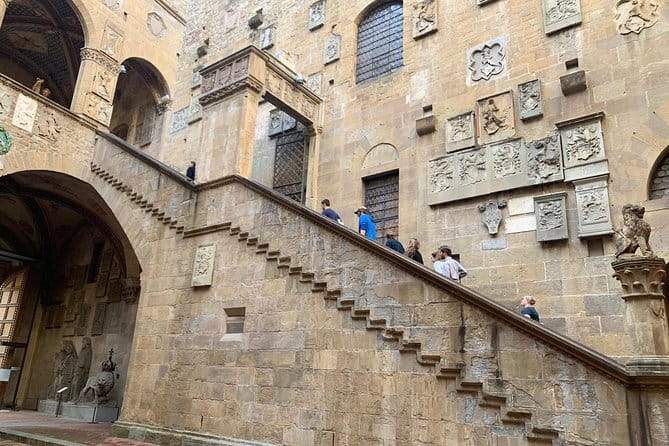
The museum occupies a serious old building with an equally serious past. It once served as a palace and prison, and the tour brings out the contrast between its harsh civic role and the refined sculpture now displayed inside.
That setting gives the visit a different feel from a large picture gallery. You are not simply moving from one painted wall to another. You are looking at objects made to be seen from several angles, often with details that reward close inspection.
The private tour is built around that close look. Your guide can point out gestures, facial expressions, folds, tools, and surface details that are easy to miss when you walk through alone.
The Bargello is also a smart stop for repeat visitors to Florence. If you have already seen the Uffizi or Accademia, this museum adds a different chapter to the city’s art story. If this is your first visit, it offers a compact introduction to several major sculptors.
More Florence options worth a look before you decide
- Cinque Terre and Pisa Tower Tour from Florence Semi Private
★ 5.0 · 1,406 reviews - From Florence: Private Chianti Hills Tour with Tasting
★ 4.3 · 809 reviews - Private Self-Guided E-Bike Ride in Tuscany with Vineyard Visit
★ 5.0 · 775 reviews
Meeting your guide at Via del Proconsolo 4
You meet at the entrance of the Museo Nazionale del Bargello at Via del Proconsolo 4. The activity ends back at the same meeting point, so you do not need to arrange a separate pickup or find your way to another part of Florence afterward.
The museum is near public transportation, though the tour does not include hotel pickup or drop-off. Plan to reach the entrance with enough time to identify your guide and settle in before the scheduled start.
There is one practical point worth handling carefully. The meeting instructions have caused confusion when one person waited inside and the guide waited outside. Confirm the exact meeting spot in advance, and keep your phone available around the start time.
The guide may be Ana, Anna, Glenda, or another licensed English-speaking professional. Ana has been praised for explaining both the museum’s past and the relationships among its artists. Anna is a historian who brings strong enthusiasm for Florence and the art. Glenda has a talent for covering the main works efficiently, and once helped a group see a copy of Donatello’s St. George nearby when the original was temporarily unavailable.
Because the guide can vary, you should share your interests before the tour if possible. Tell the provider if you care most about Donatello, Michelangelo, bronze casting, Florentine politics, or the story of the Baptistery doors.
Inside the Bargello: a fast route through Florentine sculpture
The tour begins with an overview of the building and its place in Florence. That opening matters because the Bargello is not just a container for art. Its former civic and judicial role helps explain why power, reputation, religion, and public display appear so often in the stories behind the works.
From there, the guide introduces the museum’s central strength: its collection of Florentine sculpture. The route is designed to cover major names in about an hour, so expect a selective visit rather than an examination of every room.
The headsets help your guide speak clearly while you look at the objects. You can stay focused on the sculpture instead of standing shoulder to shoulder just to catch the explanation.
The private setup also makes questions easier. You can stop briefly for a detail, ask how a statue was made, or request more context about an artist without holding up a large group.
Still, one hour passes quickly. If you like to linger over every piece, the guided portion may feel brisk. Think of it as a well-shaped introduction, not a full museum study session.
Donatello and the changing language of sculpture
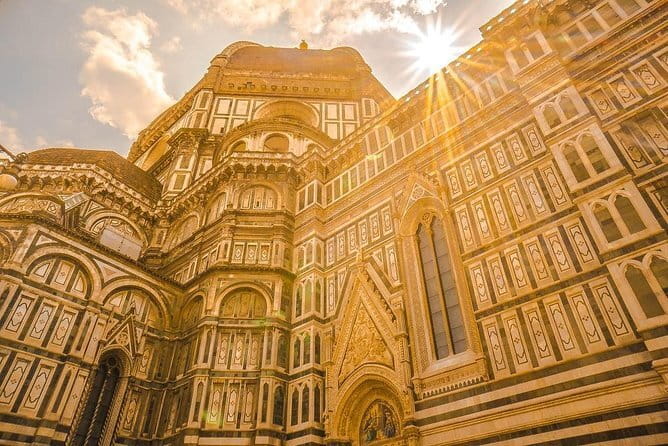
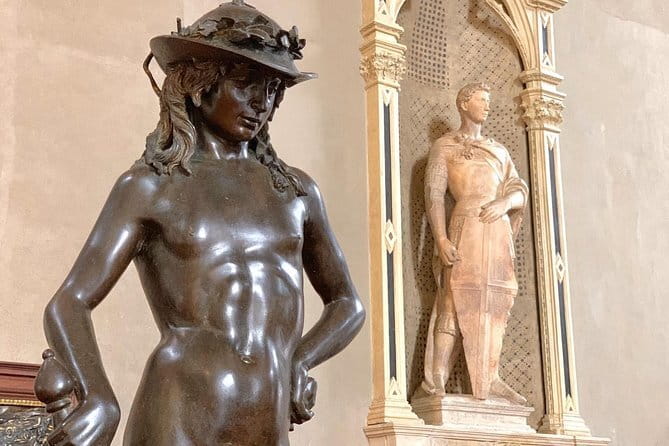
Donatello receives major attention, and rightly so. The tour uses his David and St. George to show how he pushed Florentine sculpture in new directions.
The David is especially useful for understanding the changing mood of Renaissance art. The guide can help you look beyond the famous name and consider the figure’s pose, expression, and treatment of the human body.
St. George offers a different kind of lesson. It connects sculpture to the guilds and public life of Florence, where religious and civic groups commissioned works to express their identity and status.
The tour also links the original St. George with a copy near the Guild Church. That detail could matter if the original is being moved or temporarily cannot be seen. You still receive context for the work rather than simply arriving at an empty display area.
I like this part of the tour because it shows Donatello as a maker who changed the direction of Florentine art, not just as a famous name on a museum label. Your guide can explain what made his figures feel more active, alert, and human.
A different way to spend the same Florence day:
- Florence: Skip-The-Line Uffizi Gallery Timed Entry Ticket
★ 4.5 · 27,832 reviews - Tuscany Day Trip from Florence: Siena, San Gimignano, Pisa and Lunch at a Winery
★ 5.0 · 21,634 reviews - Florence: Timed Entrance Ticket to Michelangelo’s David
★ 4.6 · 16,983 reviews - Florence: Michelangelo’s David Skip-the-Line Entry Ticket
★ 4.5 · 12,764 reviews
The Baptistery doors and Brunelleschi’s unexpected lesson
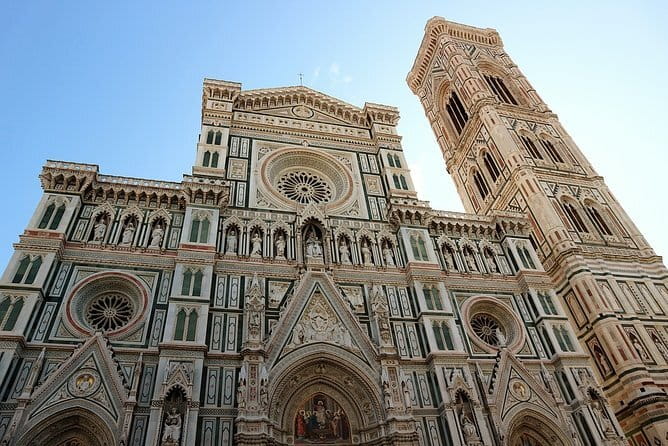
The competition for Florence’s Baptistery doors gives the tour a strong story line. It brings together artistic skill, civic pride, and ambition in a way that makes the period easier to understand.
The guide explains Brunelleschi’s failure in the competition and how that setback later connected to his greatest success. This is a useful reminder that Renaissance careers were not smooth climbs from one triumph to the next.
The story also gives you a way to think about competition among Florentine artists. Commissions were public contests, and the result could shape a sculptor’s reputation for years.
This section is valuable even if you already know the broad outline. The private format lets you ask how the competition affected the artists involved and how the doors fit into Florence’s wider artistic culture.
Do not expect the entire Baptistery door project to become a separate tour. It works here as a compact case study, linking the museum’s sculptures with the city outside.
Verrocchio, Leonardo’s teacher, and the pressure of comparison
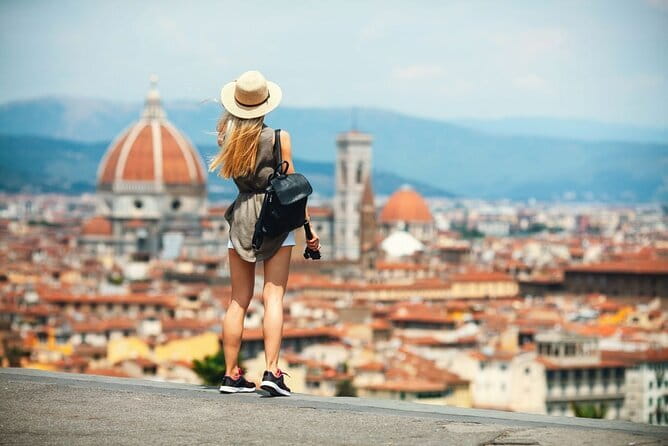
Andrea del Verrocchio adds another layer to the visit. He is presented as Leonardo da Vinci’s master, and the tour explores how the apprentice eventually surpassed his teacher.
That relationship gives you more than a list of dates and names. It raises a question that runs through the whole museum: how does an artist absorb a tradition, then move beyond it?
Your guide can place Verrocchio’s work beside the achievements of his pupils and peers. Look carefully at the handling of the body, the expression, and the balance between natural observation and ideal beauty.
This is a good moment to ask questions if you have an interest in Leonardo. The Bargello is not a Leonardo-focused museum, but Verrocchio provides a clear route into the artistic world that shaped him.
The short time limit means you will not receive an exhaustive biography. Instead, you get a useful connection between the workshop system, artistic training, and the rapid changes taking place in Florence.
Michelangelo’s Brutus, tondo, and criticized Bacchus
Michelangelo’s works give the tour another high point. You see Brutus, a marble tondo, and Bacchus, with attention to the criticism that Bacchus originally received from its patron.
The story of Bacchus is a good antidote to the idea that famous artists were always immediately understood. A work could be technically impressive and still fail to satisfy the person who commissioned it.
The tondo format also gives your guide a chance to explain how a circular composition affects the figures and the viewer’s eye. At the Bargello, you can get close enough to study details that may be lost in a large church or public square.
Brutus brings politics and personality into the conversation. The guide can connect the sculpture to Michelangelo’s interest in powerful figures and the political climate around him.
If Michelangelo is your main reason for booking, keep your expectations measured. The tour includes several important works, but the Bargello is not the same kind of concentrated single-artist experience as the Accademia’s David.
Giambologna, Cellini, and the craft behind bronze
The final part of the route turns toward Giambologna and Benvenuto Cellini. Cellini is especially familiar to anyone who has seen the Perseus in Piazza della Signoria, and the museum offers a chance to discuss the person and process behind that famous bronze.
The tour explains how bronze sculpture is made. That practical detail helps you read the objects differently. You begin to think about molds, casting, finishing, balance, and the technical problems involved in making a complicated figure.
Giambologna brings another style and set of concerns into view. His works can be admired for movement and twisting forms, but the guide can also help you understand the skill required to make those poses hold together in three dimensions.
I find this section useful because it moves beyond famous names. You are not only asking who made the sculpture. You are also considering how the artist solved the problem of turning an idea into a stable, durable object.
The Bargello is a particularly good setting for this conversation because the collection allows you to compare materials and methods at close range. The one-hour route cannot cover every technical point, but it gives you enough to notice the craft during the rest of your Florence visit.
What the private format is really worth
The $112.95 per person price includes museum admission, a licensed guide, and headsets. The tour is private, so only your own group participates. That makes the price easier to understand for couples, families, or small groups who value direct attention.
It is not a budget museum visit. If you are comfortable reading labels and prefer to move alone, buying admission without a guide will cost less. The tour earns its extra cost through interpretation, structure, and the chance to ask questions.
Group discounts may improve the value for a larger private party. The exact saving is not provided, so check the price for your group before booking rather than assuming the discount will be substantial.
The strongest value comes when you prepare a little. Read a short introduction to Donatello and Michelangelo, then use the hour to ask focused questions. A private guide is most useful when you want conversation, not just a speech.
The quiet setting also matters. You are paying partly to avoid the stress of a large group and to see sculptures without a crowd pressing around you. For some people, that calmer access is worth more than an extra hour spent wandering alone.
Who will enjoy this Bargello tour most?
I would recommend it to first-time Florence visitors who want a clear introduction to sculpture without committing half a day to a museum. It also suits couples and families who want a private explanation rather than a group lecture.
Art students and Renaissance fans should like the artist connections, especially the sections on Donatello, Verrocchio, Michelangelo, Giambologna, and Cellini. Ask for extra detail in advance if you have a strong interest in bronze casting or Florentine competition.
This is less suitable if you dislike guided visits or want unlimited time with each object. The one-hour schedule is efficient, but it places a natural limit on quiet personal study.
The tour is also a good choice for a packed itinerary. You can fit it between other central Florence sights without losing an entire morning. Just remember that a short visit works best when you accept the guide’s selected route.
The experience is offered in English. Most travelers can participate, and the museum is near public transportation. No special mobility details are provided, so contact the provider directly if your group has specific access needs.
Timing, booking, and cancellation details
The activity is booked an average of 31 days ahead, which suggests you should reserve early if your Florence dates are fixed. Confirmation arrives at booking, and the tour is offered as a private activity for your group.
Free cancellation is available until 24 hours before the start time for a full refund. Changes or cancellations made inside that 24-hour window are not accepted for a refund, and the cut-off follows local Florence time.
Because the meeting point is specific and the tour is short, arriving at the wrong door can waste a large part of your visit. Confirm that you are meeting at the Bargello entrance on Via del Proconsolo 4, not simply somewhere inside the museum.
Food, drinks, pickup, and drop-off are not included. That is not a problem for most visitors, since the tour ends where it begins and lasts only about an hour, but plan your café stop separately.
Should you book the Bargello private tour?
Book this tour if you want a focused, private introduction to Florentine sculpture and value a guide who can connect the works to the artists’ rivalries, training, and working methods. The quiet museum setting, included admission, headsets, and chance to ask questions make it more personal than a large group visit.
Think twice if $112.95 per person feels high for a one-hour activity or if you prefer to explore museums alone. The guide is the heart of the experience, and although Ana, Anna, and Glenda have each made a strong impression in their own way, the assigned guide can vary. For the best result, state your interests when booking, confirm the meeting point, and reserve well ahead.
FAQ
Where does the Bargello private tour begin?
It begins at the entrance of Museo Nazionale del Bargello, Via del Proconsolo 4, 50122 Florence, Italy.
Where does the tour end?
The activity ends back at the meeting point at the Bargello Museum.
How long does the tour last?
The tour lasts approximately one hour.
Is museum admission included?
Yes. Entry tickets to the Bargello Museum are included in the price.
Is this a private tour?
Yes. Only your group participates in the activity.
What happens if I need to cancel?
You can cancel at least 24 hours before the local start time for a full refund. Cancellations or changes made less than 24 hours before the start time are not accepted for a refund.
Latest additions around Florence
- Florence: Cathedral Tour & Brunelleschi’s Dome Climb Ticket★ 5.0 · 3 reviews
- Palatina Gallery and Pitti Guided Tour in Florence★ 5.0 · 3 reviews
- Florence Uffizi Gallery Skip-the-line Tour w Art Historian Guide★ 5.0 · 3 reviews
- Private Tour: Pisa and Lucca from Florence★ 5.0 · 3 reviews
- San Gimignano Bike Tour (SOFT)★ 4.5 · 3 reviews
- Florence: Tour of Florence by rickshaw★ 5.0 · 3 reviews
- Center of Florence by golf cart★ 5.0 · 3 reviews
- From Firenze | Chianti day tour in a classic car★ 5.0 · 3 reviews
Guided, compared.

The Best tour in Florence: Renaissance & Medici Tales – guided by a STORYTELLER
Read our review →

Duomo Guided Tour with Optional Dome Climb Upgrade
Read our review →