
Reviewed · ACCADEMIA GALLERY TOURS
Bargello Museum: Face to Face with Donatello’s David
The Bargello is Florence’s best answer to anyone who wants major Renaissance sculpture without the crush of the Uffizi. In one hour, you’ll face Donatello’s David, Michelangelo’s Bacchus, and Giambologna’s Flying Mercury, while a guide explains why these works changed Italian art. I like the reserved entry and the radio headset, which lets you hear the guide clearly in the large stone rooms.
I also like the compact route. You get a strong introduction to the museum without trying to absorb every object in the building. The main caution is that renovation work can close important rooms, including sections of the second floor, so the exact collection on view may differ from what you expect.
In This Review
- Key points before you book
- Why the Bargello deserves a place on your Florence list
- Starting at Via del Proconsolo, 4
- Donatello’s David and the early Renaissance
- Michelangelo in four very different works
- Cellini, Ammannati, and Giambologna’s Flying Mercury
- The second floor and the Della Robbia family
- What the one-hour format really gives you
- Is $58.87 a fair price?
- Who should book this Bargello tour?
- Should you book it?
- FAQ
- How long does the Bargello Museum tour last?
- What is included in the price?
- Is skip-the-line entry included?
- Where does the tour meet?
- Is the tour offered in English?
- How many people can join the group?
- What happens if I need to cancel?
Key points before you book
- Donatello’s David is the star: See the early Renaissance sculpture that helped make the Bargello essential for anyone interested in Florence’s art.
- Michelangelo gets serious attention: The route focuses on Bacchus, the Tondo Pitti, Brutus, and David-Apollo.
- One hour keeps the visit manageable: You receive a focused introduction, then can return to the rooms on your own.
- Reserved entry saves time: Skip-the-line access is included, except in cases of museum delays or strikes.
- Headsets make group touring easier: You can follow the guide’s explanation even when standing away from the group.
- Renovations may affect the visit: Some rooms or wings may be closed, so ask about current access if a particular work matters most to you.
Why the Bargello deserves a place on your Florence list
Florence has famous museums that can leave you worn out before lunch. The Bargello offers a different experience. It is smaller, more focused, and built around sculpture rather than a broad sweep of painting, drawing, and decorative art.
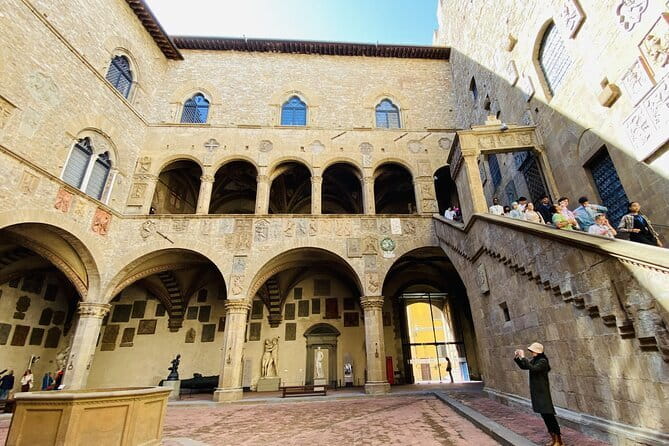
The building itself gives the visit a strong sense of place. It once served as the headquarters of the Capitano del Popolo, then the residence of the Podestà, the city’s lord. Later, it became associated with the head of the police and was used as a prison. You are not simply entering a gallery with white walls. You are walking through an old civic palace whose rooms carry the marks of Florence’s political past.
That setting helps the art make sense. Medieval authority, religious devotion, political power, and family prestige all appear in the sculptures and objects displayed here. A good guide connects those threads without turning the hour into a lecture.
This tour is particularly useful if you know the names Donatello and Michelangelo but want a clearer picture of what they actually changed. Sculpture is easy to admire quickly. It is harder to understand how a pose, facial expression, surface, or turn of the body could signal a new age. The guide’s role is to slow you down at the right works.
More Accademia and David visits:
- Florence: Timed Entrance Ticket to Michelangelo’s David
★ 4.6 · 16,983 reviews - Florence: Michelangelo’s David Skip-the-Line Entry Ticket
★ 4.5 · 12,764 reviews - Florence Accademia Gallery Tour with Entrance Ticket Included
★ 4.5 · 6,148 reviews
Starting at Via del Proconsolo, 4
The meeting point is Museo Nazionale del Bargello at Via del Proconsolo, 4. Your guide or a representative provides the reserved entrance ticket before the tour begins, so arrive early enough to find the address and be ready at the stated start time.
This detail matters. Late arrivals cannot join the group, and the missed visit is not refunded or rescheduled. Florence’s center is walkable, but street names and small entrances can still cause confusion, particularly when you are coming from another museum or a busy piazza.
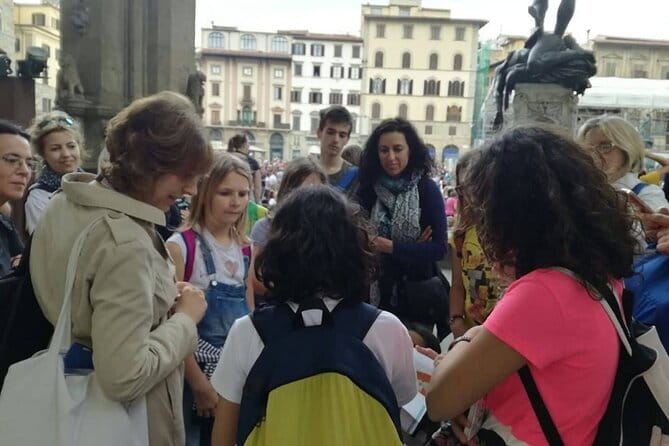
The group can include up to 25 people. That is not a private tour, but the radio system helps. You will not need to stand shoulder to shoulder with the guide or strain to catch every word. The system is especially helpful in the Bargello’s broad rooms, where sound can carry in unpredictable ways.
The tour needs at least two participants to operate. If that minimum is not met, the experience may be canceled after confirmation, with an alternative or full refund offered. That is worth keeping in mind if your schedule is tight.
Donatello’s David and the early Renaissance
The central reason to book is the early Renaissance section. Your guide focuses on Donatello’s Saint George, the Lion, and David, along with works by Verrocchio.
Donatello’s David deserves time. It is not just another famous statue to check off a list. The work raises questions about the relationship between the biblical subject, classical sculpture, and the politics of Florence. A guide can point out what makes the figure unusual and help you compare it with later versions of David.
Saint George offers a different kind of energy. The subject is a saint prepared to act, and the work helps show how sculpture could suggest alertness and movement without actually moving. The Lion gives you another way to see Donatello’s command of animal form and symbolic power.
Verrocchio adds an important bridge between generations. He was a major artist in his own right, but his workshop also matters because of its connection to the artistic world that produced Leonardo and other leading figures. The tour does not attempt to cover every name linked to Florence. Instead, it gives you a practical way to see how artists learned from one another.
This is where a lively guide makes a real difference. Francesca has been praised for making historical material fun, while Martina has been noted for giving just enough background before returning attention to the objects. Matteo has also led tours that connect the museum’s art to the Florence you already see outside.
Guide assignments can change, so you should not book on the assumption that one particular person will lead your group. Still, the range of strong guide feedback suggests that the operator has several capable English-speaking guides.
Michelangelo in four very different works
The ground-floor rooms include four Michelangelo works: Bacchus, the Tondo Pitti, Brutus, and David-Apollo. Seeing them together is valuable because they do not present one single version of the artist.
Bacchus has an uneasy, human quality. It is not a simple image of a perfect classical god. Your guide can draw attention to the figure’s pose, expression, and physical presence, helping you look beyond the label and consider what Michelangelo was doing with the subject.
The Tondo Pitti is a relief showing the Madonna and Child. Here, the shallow depth changes the way the figures occupy space. It is a good opportunity to think about the difference between a fully three-dimensional statue and a work that emerges from a flat surface.
Brutus brings politics into the room. David-Apollo adds another layer of uncertainty and interpretation. Together, these works show why Michelangelo cannot be reduced to a few grand monuments. His art shifts between religious subjects, classical references, political ideas, and unfinished or debated identities.
The hour-long format means you will not receive an exhaustive lecture on Michelangelo’s career. That is probably a strength for most people. You get the works most connected to the museum and enough context to continue looking with purpose.
One fair criticism is that not every guide will spend much time on technique. Some tours lean more toward historical setting and artist biographies than the practical details of carving, modeling, or surface treatment. If you want a technical sculpture class, this may feel too light. If you want a clear first encounter with the major works, the balance is more suitable.
More museums worth an hour:
- Florence: Skip-The-Line Uffizi Gallery Timed Entry Ticket
★ 4.5 · 27,832 reviews - Florence: Leonardo Interactive Museum Entry Ticket
★ 4.5 · 11,763 reviews - Uffizi Gallery Small Group Tour with Guide
★ 4.5 · 4,923 reviews - Florence: Accademia Gallery Guided Tour
★ 4.6 · 4,156 reviews
Cellini, Ammannati, and Giambologna’s Flying Mercury
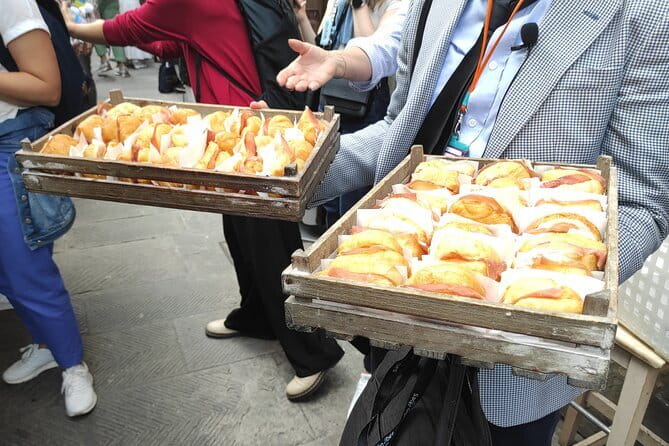
The route also introduces sixteenth-century Tuscan sculpture. Bartolomeo Ammannati and Benvenuto Cellini help widen your view beyond the most famous names.
Cellini’s work brings the courtly, polished side of Renaissance art into focus. Ammannati offers another example of how sculpture developed after the first generation of Renaissance masters. The point is not to memorize every artist. It is to see that Florence’s artistic story continued after Donatello and Michelangelo.
Giambologna’s Flying Mercury is one of the liveliest works on the route. The figure appears to rise into space, and the pose rewards a slow look from different angles. This is exactly the sort of object that benefits from a guide. On your own, you might admire the movement and walk on. With explanation, you can think about balance, illusion, and how the sculptor directs your eye.
The museum also holds works from the Carrand collection, including ivories and bronzes. Roman and Byzantine examples add a wider historical range to a building often associated mainly with Florentine Renaissance sculpture.
That variety is useful, but it can also make the visit feel dense. You are moving from large marble and bronze figures to smaller decorative objects, then later to glazed terracotta. The guide’s choices matter. A strong presentation keeps the route from becoming a parade of names and dates.
The second floor and the Della Robbia family
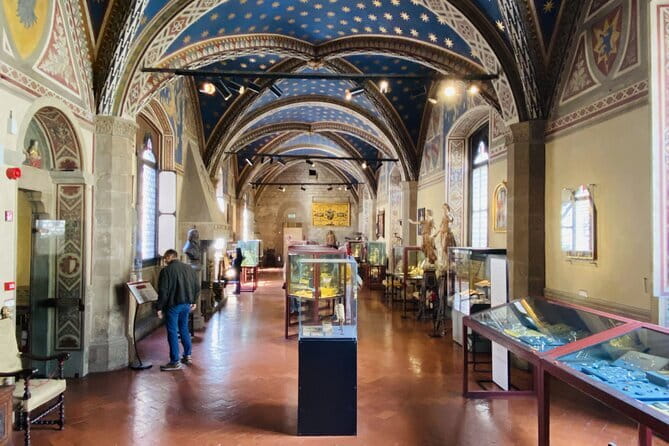
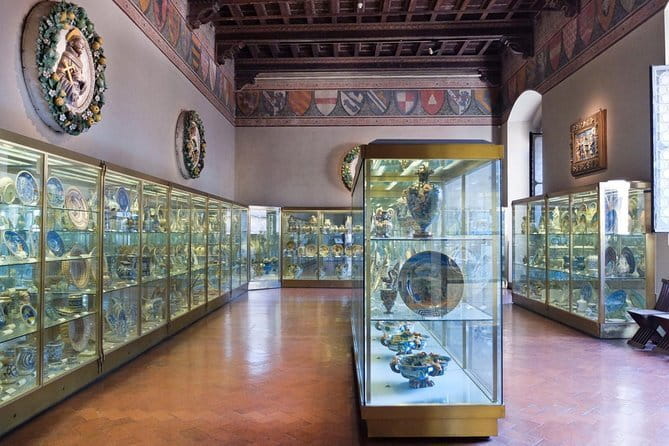
The second floor is devoted to glazed terracotta by Andrea and Giovanni della Robbia. These works offer a clear change in color, material, and mood after the darker bronze and marble pieces downstairs.
The Della Robbia family developed a distinctive use of colored glaze that made terracotta durable and visually bright. The surfaces can look almost porcelain-like, but the material and process tell a different story. A guide can help you notice how the technique affects facial features, drapery, borders, and repeated decorative patterns.
This section is an important part of the tour, but it comes with a practical warning. At least one past visit found half of the second floor closed for renovation, including pieces the guide considered among the museum’s best. Renovation conditions can change, and closures are outside the tour company’s control.
If a particular Della Robbia work is the main reason you want to visit, check the current museum situation before booking or contact the operator. The tour can adapt, but it cannot show objects behind a closed barrier.
The good news is that a one-hour visit leaves you time to return to the open rooms afterward. You are not rushed out when the guided portion ends. If the guide has introduced a sculpture that caught your eye, you can take another look without trying to listen and photograph at the same time.
What the one-hour format really gives you
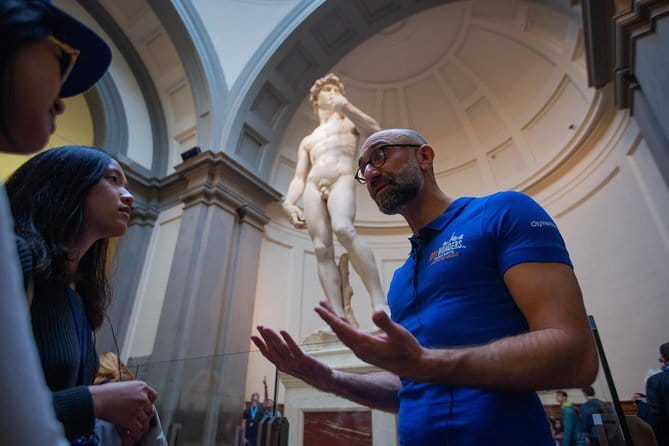
One hour is enough for an introduction, not a full study of the Bargello. That distinction is important.
I like this length for a first visit because the museum can feel unfamiliar if you enter without a plan. The guide gives you a route, points out the major works, and explains why they matter. You leave with a mental map instead of wandering past important pieces without realizing it.
The tradeoff is limited depth. You may not have time for every room, every artist, or extended discussion of technique. A guide may also need to adjust the pace for a group with mixed interests. Someone who wants a short and focused look will appreciate this. An art specialist may want to stay longer and explore alone afterward.
The tour is offered in English, and headsets are supplied. Previous guides have included Matteo, Guido, Lara, Hilary, Martina, Francesca, Helena, Ivano, and others. The strongest guide experiences have been described as warm, clear, and good at connecting Florence’s political story to the art. One weaker experience found the presentation too dry and lacking detail about methods and artistic significance.
That range is a reminder to judge the format, not expect a guaranteed personality. You are paying for an official guide, reserved admission, and a structured route. The exact style will depend on who leads your group.
Is $58.87 a fair price?
At $58.87 per person, this is not the cheapest way to enter the Bargello. The price makes more sense if you value three things: a reserved ticket, an English-speaking guide, and a fast introduction to the museum’s best-known sculptures.
If you already understand Renaissance art and enjoy reading labels at your own pace, you may prefer buying admission separately and spending longer inside. The guided hour is most valuable when you want context, are short on time, or feel unsure how to approach sculpture.
The small-group ceiling of 25 is reasonable, though the experience will feel more personal if the actual group is smaller. One time slot has operated with only two people, creating what was effectively a private tour. You cannot count on that, but it shows how much the experience can change with group size.
The tour also includes group discounts, which may improve the value for families or larger parties. Food, drinks, transportation, and hotel pickup are not included. Since the meeting point is central and the tour ends there, you need to arrange your own way to and from the museum.
Free cancellation is available up to 24 hours before the start time. Cancellations or changes inside that window are not refunded or accepted. The activity also requires good weather according to its booking conditions, and a cancellation for weather or an insufficient number of participants brings an alternative or full refund.
Who should book this Bargello tour?
I would choose this tour for a first-time Florence visitor who wants to understand sculpture without giving half a day to a museum. It also suits anyone who has already seen the Uffizi and Accademia and wants something calmer and more focused.
Families can make it work, too. One guide handled a family group that included children aged four and six with patience and flexibility. Still, the subject is art history, so very young children may enjoy the grand figures more than the explanations.
This is a good pick for you if:
- You want to see Donatello and Michelangelo with a clear route.
- You prefer a guide to explain political and artistic context.
- You value reserved entry during a busy Florence visit.
- You want a short museum visit with time to continue on your own.
- You appreciate sculpture but do not yet know how to read it.
You may want another option if you need a long technical discussion, guaranteed access to a particular room, or a private guide. Renovation closures and guide style are the two main variables.
Should you book it?
Book this Bargello tour if you want an efficient, guided introduction to one of Florence’s most important sculpture collections. The combination of Donatello’s David, four Michelangelo works, Giambologna’s Flying Mercury, and the Della Robbia terracotta gives you a strong artistic range in a short visit.
I would treat the $58.87 price as a convenience fee for reserved admission and expert orientation, not simply as the cost of a museum ticket. Arrive early, confirm the meeting point, and keep a little time afterward to revisit the rooms that interest you.
If current renovations have closed the works you most want to see, wait or confirm access first. Otherwise, this is a smart choice for making the Bargello feel understandable rather than daunting.
FAQ
How long does the Bargello Museum tour last?
The guided visit lasts approximately one hour. You can return to works you want to see again after the guided portion ends.
What is included in the price?
The price includes an official certified guide, a radio headset system, and a reserved entrance ticket to the Bargello Museum.
Is skip-the-line entry included?
Yes. Skip-the-line access is guaranteed, except in cases of delays or strikes caused by museum management.
Where does the tour meet?
The meeting point is Museo Nazionale del Bargello, Via del Proconsolo, 4, 50122 Florence, Italy. The activity ends back at the meeting point.
Is the tour offered in English?
Yes. The experience is offered in English.
How many people can join the group?
The tour can have a maximum of 25 participants. It requires at least two guests to operate.
What happens if I need to cancel?
You can cancel at least 24 hours before the start time for a full refund. Cancellations or changes made less than 24 hours before the start time are not refunded or accepted.
Latest additions around Florence
- Florence: Cathedral Tour & Brunelleschi’s Dome Climb Ticket★ 5.0 · 3 reviews
- Palatina Gallery and Pitti Guided Tour in Florence★ 5.0 · 3 reviews
- San Gimignano Bike Tour (SOFT)★ 4.5 · 3 reviews
- Florence Uffizi Gallery Skip-the-line Tour w Art Historian Guide★ 5.0 · 3 reviews
- Private Tour: Pisa and Lucca from Florence★ 5.0 · 3 reviews
- Florence: Tour of Florence by rickshaw★ 5.0 · 3 reviews
- Center of Florence by golf cart★ 5.0 · 3 reviews
- From Firenze | Chianti day tour in a classic car★ 5.0 · 3 reviews
Accademia Gallery Tours, compared.

Timed Entrance Ticket to Michelangelo’s David
Read our review →
Michelangelo’s David Skip-the-Line Entry Ticket
Read our review →
Florence Accademia Gallery Tour with Entrance Ticket Included
Read our review →

Timed Entry Ticket to Michelangelo’s David & eBook
Read our review →
Skip the line: Uffizi and Accademia Small Group Walking Tour
Read our review →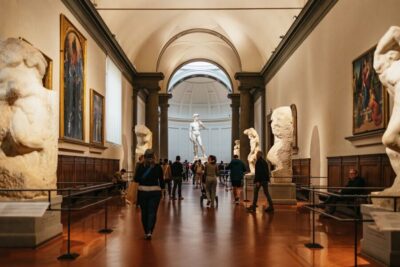

Accademia Gallery Guided Tour with Entry Ticket
Read our review →Browse the lists this tour appears in