
Reviewed · ACCADEMIA GALLERY TOURS
Afternoon Access to Accademia Gallery: David & Stradivarius
The Accademia’s musical-instrument collection gives this short tour an unusual twist: you see a 1690 Stradivarius violin and Florence’s first modern piano before meeting the museum’s star, Michelangelo’s David. I like that the route reaches beyond the famous statue, and I like the small group, limited to nine people, which makes it easier to hear the guide.
The main consideration is time. The activity is listed as 70 minutes, while the description also calls it a 1.5-hour tour, so you should allow at least 90 minutes in your Florence schedule. The 3:15 PM start is fixed, and arriving at the 3 PM meeting time matters.
In This Review
- Key points at a glance
- Why the Accademia deserves more than a quick David photo
- Meeting the guide at 3 PM
- Skip-the-line entry and what it really saves
- The Stradivarius from 1690
- Florence’s first modern piano
- Michelangelo’s works and the moment with David
- What the guides add
- How long the visit feels
- Who gets the best value from this tour
- Practical value at $80
- My booking advice
- FAQ
- Where does the tour meet?
- What time does the tour start?
- How long does the tour last?
- Is skip-the-line admission included?
- What language is the tour conducted in?
- How large is the group?
Key points at a glance

- A 1690 Stradivarius: See an original violin made by Antonio Stradivari for Florence’s Great Prince.
- Michelangelo’s David: Spend guided time with Florence’s most famous sculpture and the Accademia’s main attraction.
- A rare musical detour: Visit the collection connected with the Conservatorio Luigi Cherubini, including Florence’s first modern piano.
- Small group of nine: A compact group should make it easier to follow the English commentary and ask questions.
- Skip-the-line entry: Your admission ticket avoids the regular ticket queue, a useful benefit at a popular Florence museum.
- Strong guide focus: Elisabetta and Leonardo are named examples of guides who brought history, art, and local stories to life.
Why the Accademia deserves more than a quick David photo
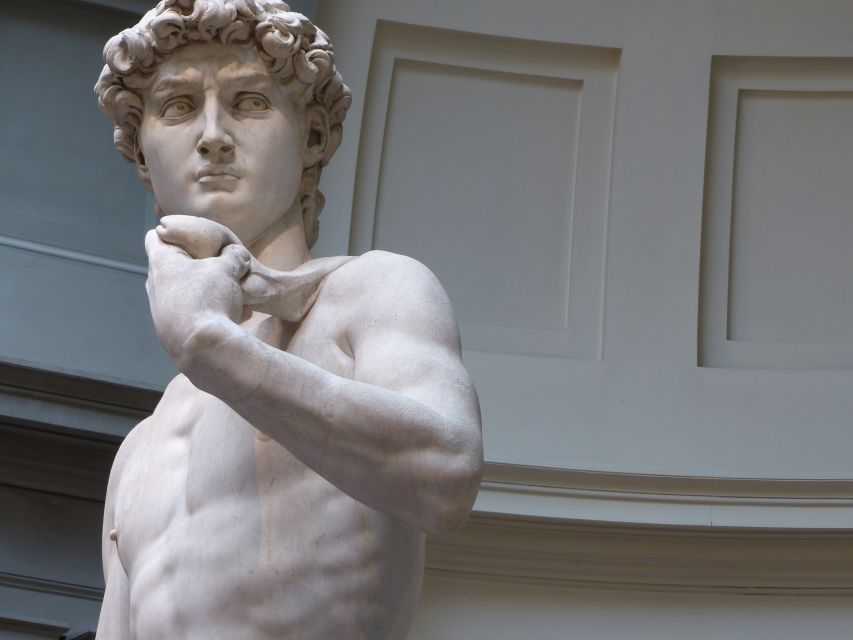
Many people enter the Accademia with one goal: see David, take a picture, and leave. That is understandable. Michelangelo’s colossal marble figure is the symbol of Florence, and it deserves its fame.
But the museum is more rewarding when someone points out the smaller treasures around it. This tour is designed to do just that. You begin with musical instruments, then move toward the sculpture rooms and Michelangelo’s work, giving you a wider sense of what the Accademia contains.
The museum is smaller than the Uffizi Gallery, which helps. You are not trying to cover a huge building packed with rooms. In a little over an hour, a guide can give you a clear path through the main highlights without turning the visit into a long art lecture.
I especially like the contrast between the instruments and David. The Stradivarius asks you to think about sound, craft, and delicate materials. David is all marble, muscle, and monumental scale. Seen in the same visit, they show two very different kinds of artistic achievement.
More Accademia and David visits:
- Florence: Timed Entrance Ticket to Michelangelo’s David
★ 4.6 · 16,983 reviews - Florence: Michelangelo’s David Skip-the-Line Entry Ticket
★ 4.5 · 12,764 reviews - Florence Accademia Gallery Tour with Entrance Ticket Included
★ 4.5 · 6,148 reviews
Meeting the guide at 3 PM
The meeting point is in front of the Accademia’s main entrance, beside the ticket office at building number 47, marked in blue. Your guide holds a Keys of Italy sign. The meeting time is 3 PM, and the tour starts sharply at 3:15 PM.
That 15-minute gap is useful for finding the right person and organizing the group, but do not treat it as spare time for sightseeing. Florence’s streets around the Accademia can be busy, and the entrance area is not the place to arrive casually at the last second.
I would aim to be in the area a little before 3 PM. Have your booking information ready, then look for the guide’s sign. Since the tour uses reserved skip-the-line admission, missing the group could be more troublesome than arriving early.
The tour is in English and limited to nine participants. That is a good size for a museum visit. You will not get the intimacy of a private tour, but you should have a better chance of hearing the explanation than you would in a large group.
Skip-the-line entry and what it really saves
The included admission ticket lets you bypass the regular ticket line. This does not mean you walk straight through without meeting the guide or following the group’s entry process. It means you avoid spending part of your afternoon waiting to buy or collect ordinary admission.
At $80 per person, the ticket and guide make up most of the value. If you only want a quick look at David, the price may feel high for a short museum visit. If you want context, a timed entry, and help finding the less obvious collection of instruments, the cost is easier to justify.
The value also depends on your Florence schedule. A self-guided visit can cost less, but you would need to arrange your own admission and decide what deserves your attention. This tour gives you a set time, a guide, and a route that includes more than the museum’s most famous room.
The skip-the-line benefit is most useful when your time in Florence is tight. You can plan the rest of the afternoon around a known 3:15 PM entry rather than gamble on an open ticket slot.
The Stradivarius from 1690
The tour first highlights the musical-instrument collection in the Conservatorio Luigi Cherubini section of the museum. This part is easy to miss if you enter thinking only about David, so the guide’s role is important.
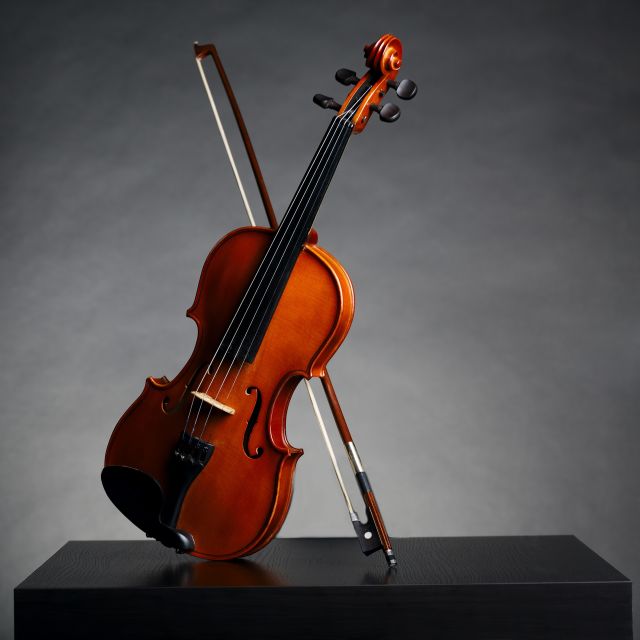
The main prize here is an original Stradivarius violin from 1690. Antonio Stradivari made it for the Great Prince, giving the instrument a direct link to Florence’s courtly past. You are not simply looking at an old violin. You are seeing a carefully made object connected with one of the most celebrated names in musical history.
A violin can look modest beside a towering marble sculpture. That is part of its appeal. Its scale forces you to look closely at the workmanship and imagine the care required to make an instrument capable of producing great music.
The exact amount of time spent here depends on the guide and the pace of the group. The supplied description places the instruments before the Michelangelo rooms, so you should expect this to be a focused stop rather than a long concert or demonstration. There is no indication that the violin is played during the visit.
For me, this section gives the tour its best reason to exist. Many guided Accademia visits concentrate almost entirely on David. This one adds a specific object that you might otherwise pass without noticing.
More museums worth an hour:
- Florence: Skip-The-Line Uffizi Gallery Timed Entry Ticket
★ 4.5 · 27,832 reviews - Florence: Leonardo Interactive Museum Entry Ticket
★ 4.5 · 11,763 reviews - Uffizi Gallery Small Group Tour with Guide
★ 4.5 · 4,923 reviews - Florence: Accademia Gallery Guided Tour
★ 4.6 · 4,156 reviews
Florence’s first modern piano
The same collection includes the first modern piano, invented in Florence. That detail changes how you read the museum. Florence is not presented only as a city of painters and sculptors. You also see its part in the development of musical instruments.
The piano is valuable as an idea as much as an object. It represents a change in how musicians could create and control sound. A guide can connect that instrument with the Stradivarius and explain why the collection belongs in a museum best known for sculpture.
You should keep your expectations practical. The activity promises to show you the instrument, not to offer a performance or a technical workshop. The appeal is historical and visual, with the guide supplying the meaning.
This is also where a small group helps. Musical instruments often require more explanation than a famous statue because their importance is not instantly clear. With only nine people, you should be able to stay close enough to follow the guide’s comments.
Michelangelo’s works and the moment with David
After the instrument collection, the tour moves to the Accademia’s other major treasures, including a room filled with Michelangelo’s works. The museum’s main event is David, but seeing related work first can help you understand the statue as part of a larger artistic story.
When you reach David, the guide will point out details and share stories about the sculpture. The description promises secrets and entertaining anecdotes rather than a dry list of dates. That approach suits this museum, where a good explanation can make the familiar feel new again.
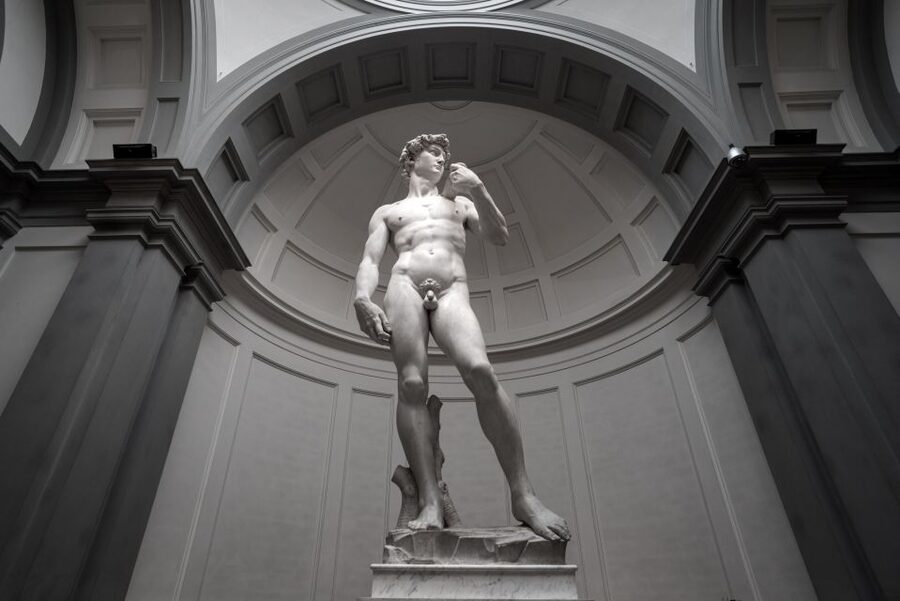
David is often reproduced in photographs, souvenirs, and travel books. The original has a different force. The scale, the marble, and the care in the figure’s pose are easier to appreciate when you are standing in front of it. A guide can also direct your eyes to details you may miss while the room is full of people.
You should not expect unlimited quiet time with the statue. The Accademia is popular, and the tour has a set schedule. Still, guided commentary can help you make better use of the few minutes you have instead of wandering without a plan.
The reviews of this experience praise the guides most strongly. Elisabetta is described as engaging and able to bring the history to life. Leonardo, a native of Florence, was praised for his passion and for explaining interesting points in the exhibits. Those details matter because David is not hard to find. The real service is helping you understand what you are seeing.
What the guides add
The guide is a certified professional who leads the tour in English. The strongest part of the experience appears to be the human delivery, not simply the included admission.
Elisabetta is one named guide associated with the tour. Her approach is described as engaging throughout the visit, which is useful in a museum where it would be easy to lose focus among familiar works. Leonardo is another named guide, noted for his Florentine background, lively delivery, and willingness to take a group photo when asked.
You should not assume that one particular guide will lead your departure. Guide assignments can vary. Still, these examples show what to hope for: clear explanations, local feeling, and small details that make the museum less formal and more approachable.
A good guide also manages the clock. With the Stradivarius, piano, Michelangelo’s room, and David all competing for attention, the route needs a steady pace. The compact group size should make that easier than a large coach-style museum visit.
How long the visit feels
The published duration is 70 minutes, while the tour description refers to a 1.5-hour small-group tour. That is a real planning point, not a minor wording issue. I would reserve at least 90 minutes from the 3 PM meeting time, and more if you have a dinner reservation immediately afterward.
The official start is 3:15 PM sharp. The meeting process begins at 3 PM, so the full experience occupies part of your late afternoon. You might have time for another Florence sight afterward, but do not schedule it too tightly until you know the actual finish time.
Seventy minutes is enough for a focused introduction to the Accademia. It is not enough for a slow, room-by-room museum study. The tour works best if you want the main works explained without spending half a day indoors.
You will also want to protect some time after the tour if David leaves you wanting more. The guide’s route gives you an organized first visit, but a short tour cannot cover every work in detail.
Who gets the best value from this tour
I would recommend this experience to a first-time Florence visitor who wants a clear introduction to the Accademia without handling the museum alone. It is also a good fit if you care about music, design, or unusual museum objects as much as famous sculpture.
The tour suits you especially well if:
- You want to see David but also need help finding the musical-instrument collection.
- You have limited time and prefer a fixed entry over uncertain ticket arrangements.
- You enjoy history told through small details and local anecdotes.
- You prefer an English-speaking guide and a group of no more than nine.
- You are willing to pay more for guidance and skip-the-line access.
I would be less enthusiastic if your only goal is to stand before David for as long as possible. A guided route has its own timing, and the instrument collection takes part of the visit. That is the point of this tour, but it may not match every museum plan.
The experience may also be less suitable for someone who prefers complete independence. You will follow the guide’s route and schedule rather than choosing every room yourself.
Practical value at $80
At $80, this is not a bargain admission-only visit. The price pays for three things: skip-the-line entry, a certified English-speaking guide, and a small group capped at nine people.
I think the strongest value comes from the combination of access and interpretation. David is easy to identify, but the Stradivarius and first modern piano are easier to miss. If the guide gives those objects proper attention, the tour offers a more distinctive visit than a basic David-focused entry.
The price also buys simplicity. You meet at one place, enter with the group, and receive a planned explanation of the museum’s best-known works. That can be worth it during a short stay, when a wasted hour in a ticket queue affects the rest of your day.
On the other hand, the value drops if you already know the Accademia well or want a long, independent look at the collection. The 70-minute listing means you are paying for a concentrated introduction, not an all-afternoon museum experience.
Free cancellation up to 24 hours before the start and the option to reserve now and pay later make the booking less rigid. On the first Sunday of each month, museum entry is free, but advance tickets cannot be reserved and entry is not guaranteed. That makes this paid tour less attractive on that particular day unless guaranteed access matters more to you than saving money.
My booking advice
I would book this tour if you want David explained by a live guide and like the idea of adding two unusual musical objects to the visit. The 1690 Stradivarius and Florence’s first modern piano give the experience a clear identity beyond the usual statue stop.
Before booking, make sure the 3 PM meeting time works and leave room around the stated duration discrepancy. Arrive at the main entrance, beside the blue building number 47 and ticket office, with time to find the Keys of Italy sign.
The tour earns its price when you value planning, a small group, and the guide’s stories. It is less compelling if you want the lowest-cost entry or a leisurely solo visit. For most first visits to Florence, though, this is a focused and well-shaped way to meet David without ignoring the Accademia’s quieter treasures.
FAQ
Where does the tour meet?
Meet at 3 PM in front of the Accademia Gallery’s main entrance, beside the ticket office at blue building number 47. The guide will hold a Keys of Italy sign.
What time does the tour start?
The tour starts at 3:15 PM sharp. The stated meeting time is 3 PM.
How long does the tour last?
The activity information lists a duration of 70 minutes. The description also refers to a 1.5-hour tour, so allow at least 90 minutes in your schedule.
Is skip-the-line admission included?
Yes. The admission ticket with skip-the-line entrance is included.
What language is the tour conducted in?
The live guided tour is conducted in English.
How large is the group?
The tour is limited to nine participants.
Latest additions around Florence
- Florence: Cathedral Tour & Brunelleschi’s Dome Climb Ticket★ 5.0 · 3 reviews
- Palatina Gallery and Pitti Guided Tour in Florence★ 5.0 · 3 reviews
- Florence Uffizi Gallery Skip-the-line Tour w Art Historian Guide★ 5.0 · 3 reviews
- Private Tour: Pisa and Lucca from Florence★ 5.0 · 3 reviews
- San Gimignano Bike Tour (SOFT)★ 4.5 · 3 reviews
- Center of Florence by golf cart★ 5.0 · 3 reviews
- Florence: Tour of Florence by rickshaw★ 5.0 · 3 reviews
- From Firenze | Chianti day tour in a classic car★ 5.0 · 3 reviews
Accademia Gallery Tours, compared.

Timed Entrance Ticket to Michelangelo’s David
Read our review →
Michelangelo’s David Skip-the-Line Entry Ticket
Read our review →
Florence Accademia Gallery Tour with Entrance Ticket Included
Read our review →

Timed Entry Ticket to Michelangelo’s David & eBook
Read our review →
Skip the line: Uffizi and Accademia Small Group Walking Tour
Read our review →

Accademia Gallery Guided Tour with Entry Ticket
Read our review →Browse the lists this tour appears in