Reviewed · WINE TOURS
Wine Tasting Experience with Seven Types of Tuscan Wine
Florence is a fine place to taste Tuscany without giving up half a day to a vineyard transfer. In 90 minutes, you move from crisp Vernaccia to powerful Brunello, with a sommelier explaining what makes each bottle different and local food keeping the wine in balance.
I like the broad lineup, especially the chance to compare Chianti Classico, Nobile di Montepulciano, and Brunello in one sitting. I also like the flexible, friendly teaching style reported from guides such as Vinci and Jessica, who adjust suggestions to your taste instead of treating the session like a fixed lecture.
The one drawback is pace. Seven wines in an hour and a half is a lot, particularly if you want long talks about every bottle. Arrive early, bring identification, and remember that a late arrival cannot join or receive a refund.
In This Review
- Key points at a glance
- Seven Tuscan wines, one compact Florence tasting
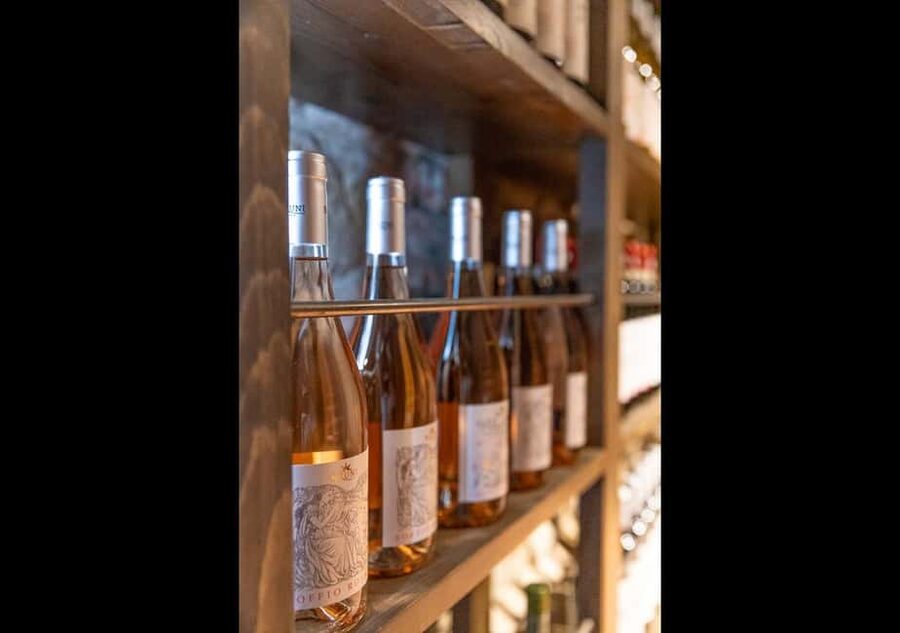
- Vernaccia starts the tasting with freshness
- Bolgheri Rosso brings darker fruit and weight
- Chianti Classico shows Tuscany’s classic side
- Nobile di Montepulciano adds smooth tannins
- Chianti Classico Riserva adds age and detail
- Brunello di Montalcino is the big finish
- Miraia closes with an age-worthy Tuscan style
- Antipasti turn the tasting into a small meal
- The guides keep the lesson friendly
- Why $65 can be good value in Florence
- Who should book this experience
- Meeting point and timing details that matter
- Should you book the Florence wine tasting?
- FAQ
- Where does the wine tasting take place?
- How long does the experience last?
- Which wines are included?
- What food is included?
- Are vegetarian or gluten-free options available?
- Which languages are available?
- Is the activity wheelchair accessible?
- What happens if I need to cancel?
Key points at a glance
- Seven wines in 90 minutes: The tasting covers Vernaccia, Bolgheri Rosso, Chianti Classico, Nobile di Montepulciano, Chianti Classico Riserva, Brunello di Montalcino, and Miraia Tuscan wine.
- Food is part of the lesson: Expect Tuscan appetizers such as olives, bruschetta, salami, and prosciutto, with cheese and other local products also appearing in the spread.
- A useful Florence alternative: You get a quick introduction to Tuscany’s wine regions without spending 10 to 12 hours on an out-of-town excursion.
- Guides make the difference: Vinci and Jessica are named by past participants as warm, attentive wine educators who explain bottles clearly.
- Good for beginners and wine fans: You can ask basic questions, compare styles, and receive alternate suggestions if a wine does not suit you.
- Practical setup: The tasting is held at Vino Tasting Global, Via del Gomitolo dell’Oro, 11r, in Florence, in an air-conditioned space with WiFi and wheelchair access.
Seven Tuscan wines, one compact Florence tasting
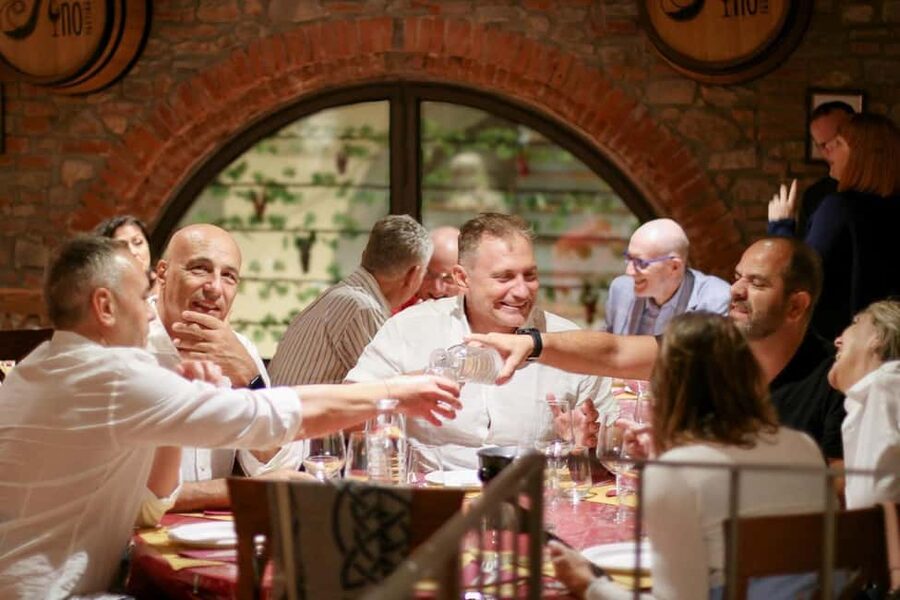
This is not a vineyard visit. It is a guided tasting class in Florence, designed to give you a quick sense of the region’s range. That distinction matters. You will not walk through a vineyard or meet a winemaker, but you also will not spend hours on a bus getting to and from the countryside.
The tasting begins with seven pours and a platter of Tuscan snacks. The guide works through the wines one by one, explaining flavors, regional character, and food matches. You are encouraged to compare rather than simply drink, which makes the session useful even if your wine vocabulary begins and ends with red or white.
The lineup moves from lighter and fresher styles toward fuller, more structured reds. That order gives your palate a logical route through Tuscany. It also lets you see why one bottle works better with olives or bruschetta, while another needs the heavier flavor of cured meat.
The official format lasts 1.5 hours. Some sessions may feel more relaxed, especially when the group asks questions, but you should plan around the stated 90 minutes rather than count on extra time.
More Florence wine afternoons:
- Tuscany Day Trip from Florence: Siena, San Gimignano, Pisa and Lunch at a Winery
★ 5.0 · 21,634 reviews - Florence: Pasta Cooking Class with Unlimited Wine
★ 4.9 · 10,285 reviews - Florence: Chianti Wineries Tour with Wine Tasting
★ 4.5 · 8,301 reviews
Vernaccia starts the tasting with freshness
Your first wine is Vernaccia, a white wine associated with San Gimignano. Here, it serves as a clean opening to the lineup, with crisp and mineral notes that wake up your palate before the reds arrive.
This is a smart first pour. Starting with a fresh white gives you a reference point for the wines that follow. You can pay attention to acidity, texture, and finish without the weight of tannins from the start.
Vernaccia also reminds you that Tuscan wine is not only about red Sangiovese. If you usually order white wine, this opening course gives you something familiar before the tasting shifts into more serious reds.
Bolgheri Rosso brings darker fruit and weight
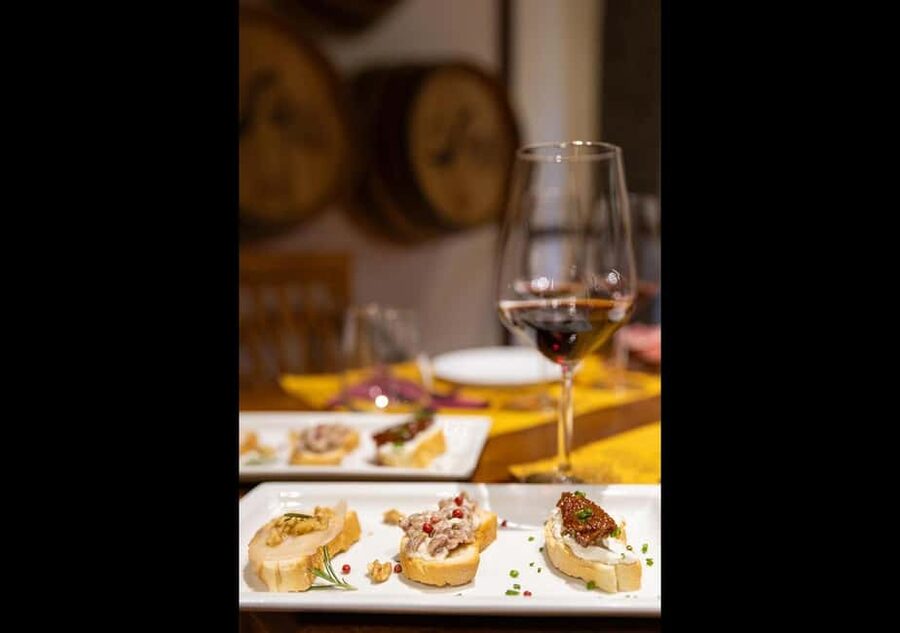
Next comes Bolgheri Rosso, described as bold and opulent. Bolgheri is on Tuscany’s coast, and this wine offers a different feel from the more traditional inland styles later in the tasting.
You can expect a fuller red with dark fruit and a broad presence. The point is not to decide that one style is better than another. It is to notice how place and grape choices create different results within the same region.
The food pairing helps here. Cured meats and savory antipasti can soften the impression of a larger red, while olive oil and bruschetta give you a chance to compare the wine with lighter, saltier flavors.
Chianti Classico shows Tuscany’s classic side
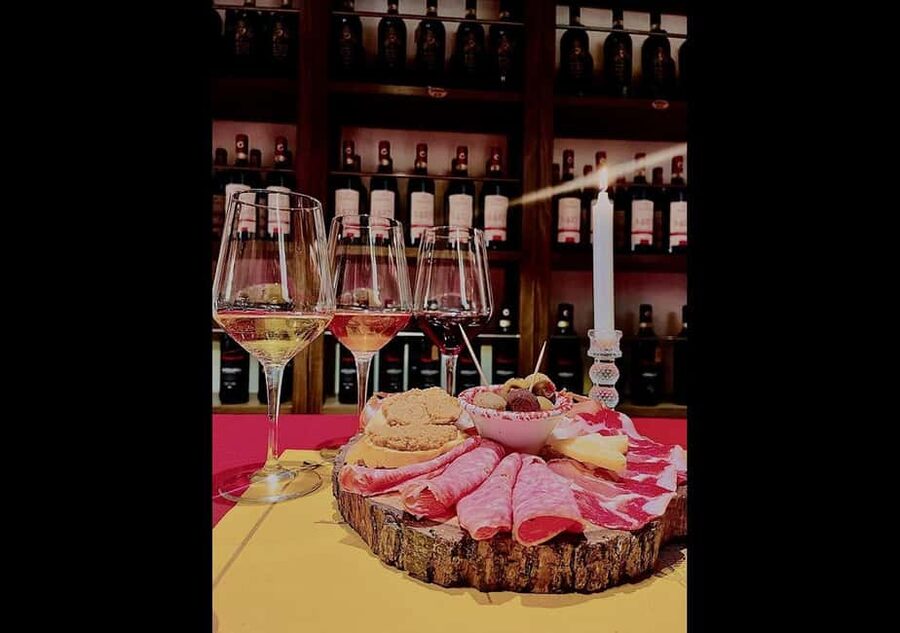
The Chianti Classico portion brings you into one of Tuscany’s best-known wine areas. This base expression is associated with cherry and earth notes, giving you a classic example of the region’s traditional red style.
For many people, Chianti is the bottle they first connect with Tuscany. This tasting gives you a better way to understand it than simply ordering a glass with dinner. You can test its fruit, acidity, and earthy character alongside the other wines on the table.
Pay attention to how the Chianti Classico feels next to the Bolgheri Rosso. The comparison is one of the most useful parts of the session. Bolgheri may feel darker and broader, while Chianti Classico can seem brighter and more savory.
A different way to spend the same Florence day:
- Florence: Skip-The-Line Uffizi Gallery Timed Entry Ticket
★ 4.5 · 27,832 reviews - Florence: Timed Entrance Ticket to Michelangelo’s David
★ 4.6 · 16,983 reviews - Florence: Michelangelo’s David Skip-the-Line Entry Ticket
★ 4.5 · 12,764 reviews - The Best tour in Florence: Renaissance & Medici Tales – guided by a STORYTELLER
★ 5.0 · 12,316 reviews
Nobile di Montepulciano adds smooth tannins
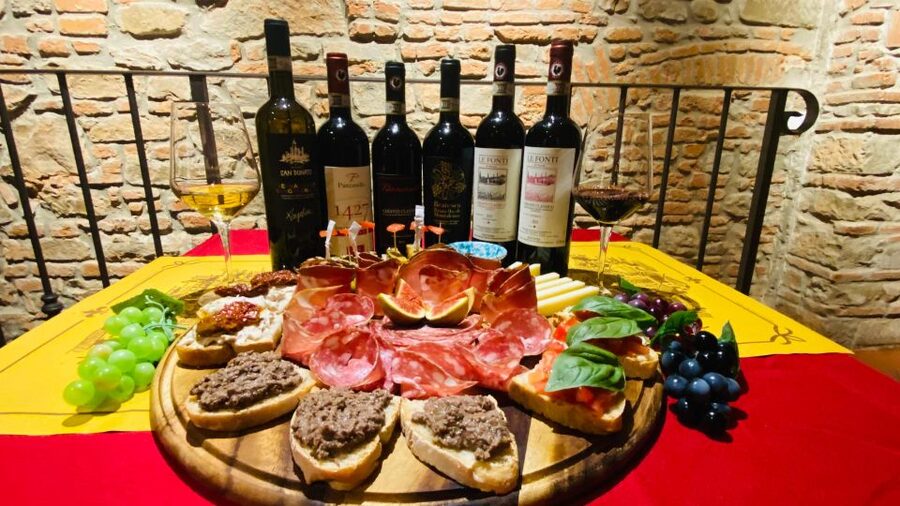
The Nobile di Montepulciano base offers another Tuscan red with a different profile. It is presented as smooth, with dark-fruit flavors and softer tannins than you might expect from a young, structured Italian red.
This is a good point to ask questions. If you like red wine but dislike a drying finish, explain that to your guide. The hosts are used to adjusting recommendations and suggesting alternatives when a particular bottle is not a good match for your taste.
That personal element is a real benefit. You are not required to pretend you like every wine. A useful tasting should help you understand your own preferences, and this format appears to make room for that.
Chianti Classico Riserva adds age and detail
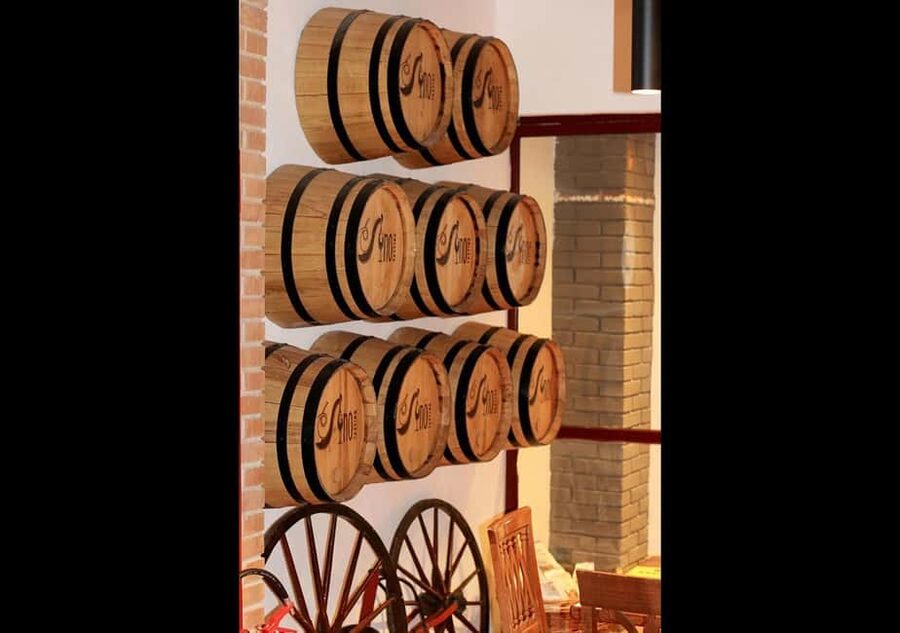
The Chianti Classico Riserva follows the standard Chianti Classico with a more nuanced, aged expression. Tasting these side by side helps you understand what time and cellar treatment can do to a familiar regional style.
The Riserva should feel more layered and settled than the base wine. You might notice greater depth, a longer finish, or a more integrated balance between fruit, earth, and oak. The guide’s explanation matters here because the difference can be subtle if you are new to wine.
This is also where the session can shift from a simple sampling to a short wine class. You are learning not only names, but also how classifications and aging affect what reaches your glass.
Brunello di Montalcino is the big finish
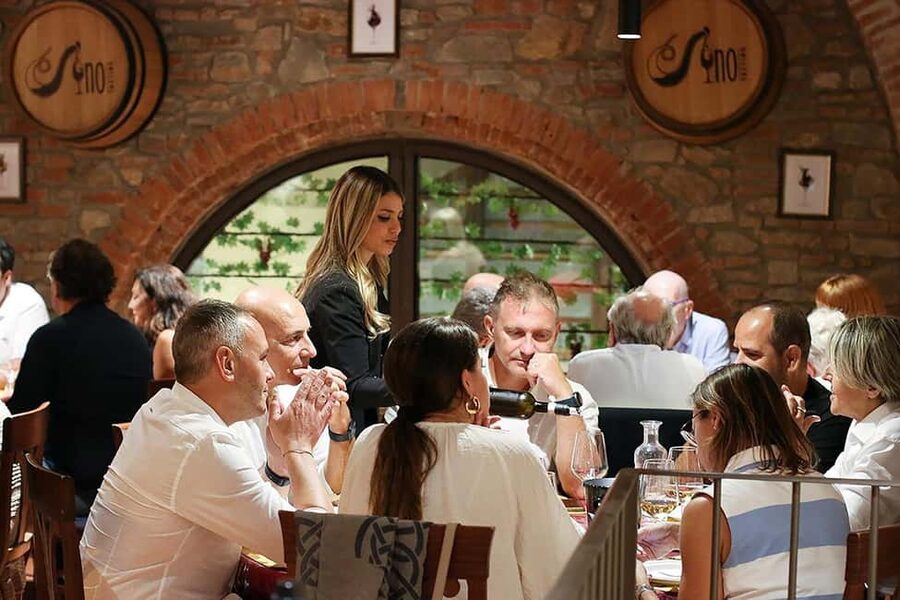
Brunello di Montalcino is the headline bottle for many people, and it arrives late in the sequence for good reason. Known for power, structure, and complex flavors, it needs a palate that has already worked through lighter and medium-bodied wines.
Brunello comes from Montalcino, a southern Tuscan area famous for its Sangiovese-based wines. The pour lets you see why this name commands attention and a higher price in wine shops and restaurants.
Do not rush this glass. Smell it, take a small sip, and compare it with the earlier Chianti wines. The contrast is the lesson. Brunello is not simply a stronger Chianti. It has its own balance of fruit, tannin, acidity, and age-worthiness.
If you are new to wine, you may not immediately prefer Brunello. That is fine. The value comes from understanding what makes it different, not from choosing the most prestigious bottle as your favorite.
Miraia closes with an age-worthy Tuscan style
The final wine is Miraia, described as elegant and suitable for aging. It gives the tasting a quieter finish after Brunello’s more forceful character.
Ending with this wine lets you compare two substantial Tuscan reds rather than treating Brunello as the automatic winner. You might find Miraia more polished or restrained, depending on your palate and the particular pour offered during your session.
The closing comparison is especially useful if you are thinking of buying a bottle during your time in Italy. Your guide can help you identify the kinds of red wine you actually enjoy, not just the famous labels you have heard about.
Antipasti turn the tasting into a small meal
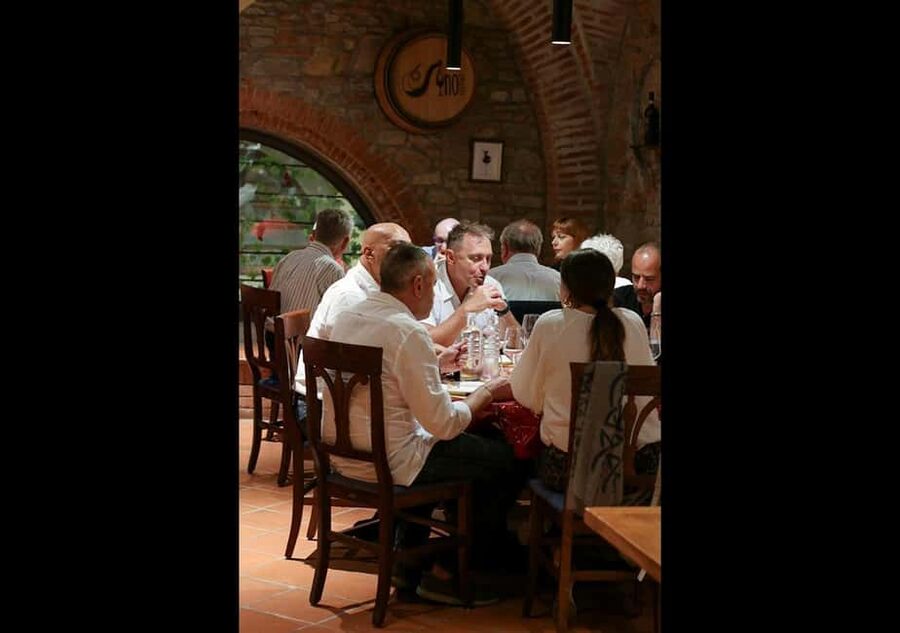
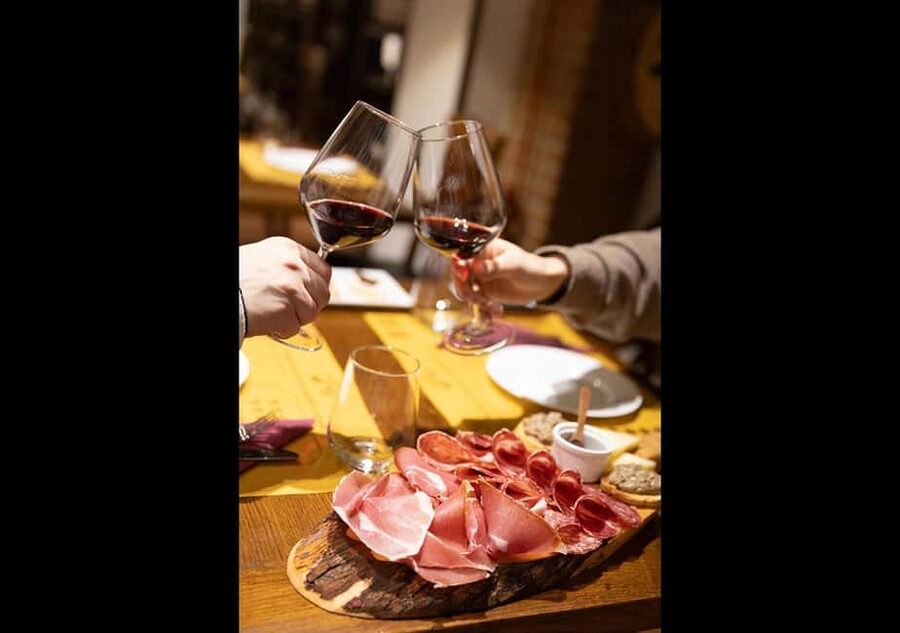
The food is more than decoration. The included platter features Italian olives, bruschetta, salami, and prosciutto. Cheese and other local products may also be included, and the spread can be more generous than a few token bites.
Food changes your perception of wine. Salt can make fruit seem brighter, fat can soften tannins, and bread gives your palate a reset between samples. You will get more from the class if you taste the same wine both before and after a bite.
The pairings also make this a practical option before dinner. It is not a full meal, and the price does not include other food or drinks, but the appetizers should take the edge off your appetite. If you need a substantial lunch or dinner, plan one separately.
Vegetarian and gluten-free menus are available on request. Tell the provider about allergies or intolerances when booking and again before the tasting. Do not assume a request made at the last minute can be handled easily.
Some participants also receive olive oil as part of the tasting experience. Since the formal inclusions focus on wine and Tuscan appetizers, ask at booking if olive oil is important to you.
The guides keep the lesson friendly
The guide is central to this experience. A weak presenter can turn seven wines into seven hurried pours. A good one helps you notice what is in the glass without making you feel as if you are taking an exam.
Vinci is praised for a warm welcome, strong wine knowledge, and the ability to ask about your preferences. Jessica is also described as clear and perceptive, offering explanations and similar wine suggestions. The specific guide can vary, but the setup includes a live guide in English or Italian.
You should feel free to say that you dislike a wine. The session is designed for curious newcomers as well as people who already know their way around a wine list. If you prefer lighter reds, less oak, more acidity, or a softer finish, say so early.
A helpful tip is to ask the guide to repeat the wine names and regions before the end. Seven bottles is a lot to remember, and you may want to use the information later when shopping or ordering in a restaurant.
Why $65 can be good value in Florence
At $65 per person, this is not the cheapest way to drink wine in Florence. You can order a glass or two at a wine bar for less. But a fair comparison includes the seven wines, the guided instruction, and the food platter.
It is also cheaper in time than a full Tuscan countryside excursion. If your Florence schedule is tight, this gives you a regional introduction in one and a half hours. You avoid transport, long waits, and the risk of spending most of a day on logistics.
The value is strongest if you want context. Seven random pours would not justify the price as easily. Here, the lineup has a clear progression, and the comparisons between Chianti Classico and Riserva, or Brunello and Miraia, give the tasting a purpose.
The value is weaker if you are looking for a full winery visit, a large meal, or a private tasting with guaranteed bottles. None of those is promised. Think of this as a compact wine class with substantial snacks, not a day in the vineyards.
Who should book this experience
I would choose this for a first visit to Florence when you want a taste of Tuscany but cannot spare a full day outside the city. It also suits couples, friends, and solo wine drinkers who prefer an indoor activity with food and conversation.
Beginners should feel comfortable. You do not need to know Italian wine classifications before arriving. The guide supplies the structure, and the chance to compare seven styles makes the information easier to remember.
Experienced wine drinkers can enjoy it too, especially if they want to compare several Tuscan categories in one place. Just keep expectations realistic. This is a broad introduction, not a specialist seminar or a rare-vintage tasting.
It is not suitable for pregnant women. Alcoholic drinks are available only to participants aged 17 and above, and everyone should carry a valid passport or identification document.
The space is wheelchair accessible, air-conditioned, and equipped with WiFi. That makes it a useful choice in hot weather or when you need a break from Florence’s streets. Hotel pickup and drop-off are not included, so you need to reach the meeting point yourself.
Meeting point and timing details that matter
Meet at Vino Tasting Global Srl, Via del Gomitolo dell’Oro, 11r, 50123 Firenze FI, Italy. Check your confirmation carefully and allow enough time to find the address.
Late arrival is a serious issue here. If you arrive after the start time, you cannot join, and you will not receive a refund or a rescheduled booking. This is especially important if you are fitting the tasting between a museum reservation and dinner.
Free cancellation is available up to 24 hours before the activity for a full refund. You can also reserve now and pay later, which helps if your Florence plans are still shifting. The session requires a minimum number of participants to operate, so confirmation details matter.
Should you book the Florence wine tasting?
Book it if you want a well-paced introduction to Tuscan wine in central Florence, with enough food to make the tasting comfortable and enough explanation to make the bottles memorable. The range from Vernaccia to Brunello is strong, and the guides appear to be the main reason the experience feels personal rather than mechanical.
Skip it if your priority is a countryside estate, vineyard views, cellar access, or a full regional meal. You will be indoors at a tasting venue, not touring rural Tuscany.
For most people with limited time, the $65 price is reasonable. Arrive early, carry identification, request dietary needs in advance, and tell the sommelier what you already like. You will get much more from the session if the tasting becomes a conversation about your palate, not just a parade of seven glasses.
FAQ
Where does the wine tasting take place?
The experience takes place at Vino Tasting Global Srl, Via del Gomitolo dell’Oro, 11r, 50123 Firenze FI, Italy.
How long does the experience last?
The stated duration is 1.5 hours, or 90 minutes.
Which wines are included?
The tasting includes Vernaccia, Bolgheri Rosso, Chianti Classico, Nobile di Montepulciano, Chianti Classico Riserva, Brunello di Montalcino, and Miraia Tuscan wine.
What food is included?
The included Tuscan appetizer platter features Italian olives, bruschetta, salami, and prosciutto. Cheese and other local products may also be served.
Are vegetarian or gluten-free options available?
Yes. Vegetarian and gluten-free menus are available on request. You should report allergies or intolerances when booking and before the tasting.
Which languages are available?
The live guide can conduct the experience in English or Italian.
Is the activity wheelchair accessible?
Yes. The tasting space is wheelchair accessible, air-conditioned, and has WiFi availability.
What happens if I need to cancel?
You can cancel up to 24 hours in advance for a full refund. If you arrive after the start time, you cannot join and will not receive a refund or rescheduling.
Latest additions around Florence
- Florence: Cathedral Tour & Brunelleschi’s Dome Climb Ticket★ 5.0 · 3 reviews
- Palatina Gallery and Pitti Guided Tour in Florence★ 5.0 · 3 reviews
- Florence Uffizi Gallery Skip-the-line Tour w Art Historian Guide★ 5.0 · 3 reviews
- Private Tour: Pisa and Lucca from Florence★ 5.0 · 3 reviews
- San Gimignano Bike Tour (SOFT)★ 4.5 · 3 reviews
- Florence: Tour of Florence by rickshaw★ 5.0 · 3 reviews
- Center of Florence by golf cart★ 5.0 · 3 reviews
- From Firenze | Chianti day tour in a classic car★ 5.0 · 3 reviews
Wine Tours, compared.
Tuscany Day Trip from Florence: Siena, San Gimignano, Pisa and Lunch at a Winery
Read our review →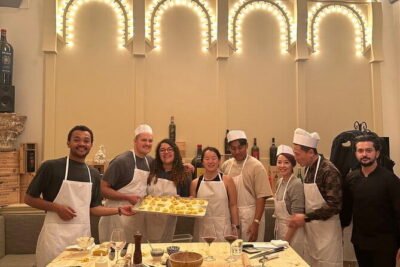
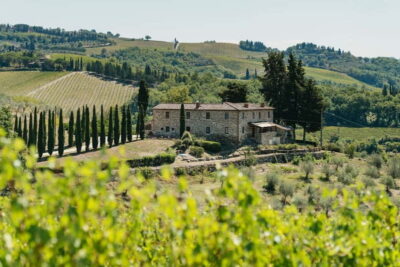
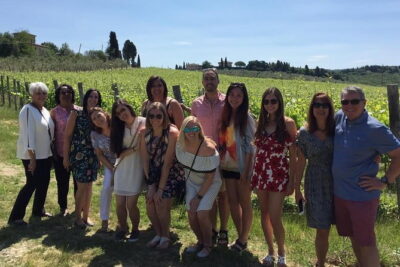
Small-Group Wine Tasting Experience in the Tuscan Countryside
Read our review →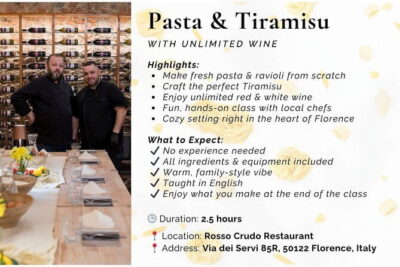
Pasta & Tiramisu Cooking Class with Unlimited Wine
Read our review →
Pisa, Siena and San Gimignano Day Trip with Lunch & Wine Pairing
Read our review →